
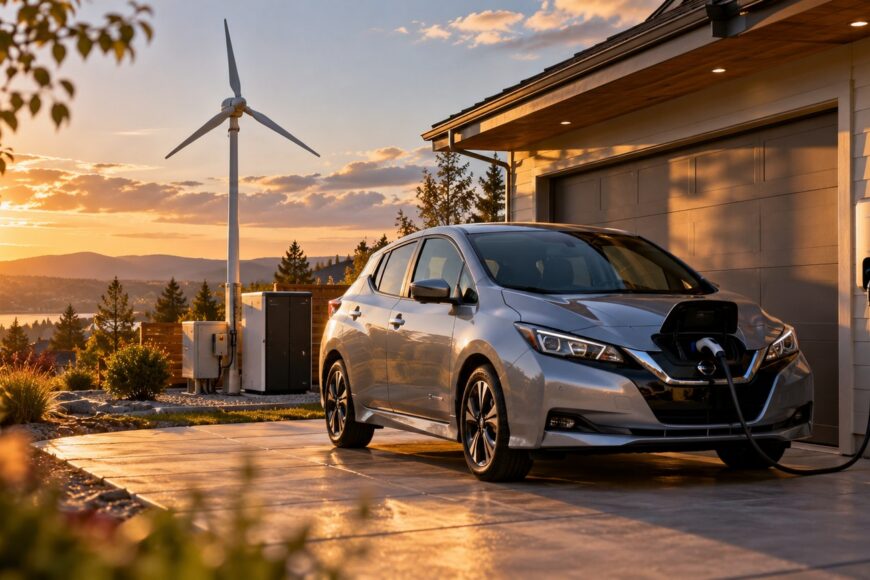
A home wind turbine can contribute to charging a Nissan Leaf, but it usually cannot feed the car directly. A turbine’s output changes with every gust, lull, and controller transition, while the Leaf’s EVSE requires stable, compatible AC power before the car will accept a charge.
The practical choices are a buffered wind system with a battery and inverter, a hybrid system that can use grid power when wind energy is insufficient, or ordinary grid charging. The right option depends on the site’s average wind resource, the Leaf version, local electrical rules, and the full cost of the turbine, mast, storage, protection, installation, and maintenance.
- Can a Home Wind Turbine Charge a Nissan Leaf?
- What the Leaf and Wind System Must Agree On
- The Practical System: Turbine, Battery, Inverter, and EVSE
- Rated Turbine Power Is Not the Same as Charging Energy
- Wind-Powered Leaf Charging Options Compared
- Why Home Wind Charging Often Disappoints
- How to Evaluate a Wind-to-Leaf Project Before Buying Equipment
- Frequently asked questions
- What happens to Leaf charging when the wind suddenly stops?
Can a Home Wind Turbine Charge a Nissan Leaf?
Yes, a home wind turbine can supply some of the energy used to charge a Nissan Leaf when the electrical system converts and controls that energy correctly. The Leaf normally charges at home through AC using the J1772/Type 1 connection. Its EVSE communicates with the vehicle and presents a controlled AC supply to the Leaf’s onboard charger.
Raw turbine output does not provide that controlled supply. Wind generation can rise sharply during a gust, fall during a lull, or pass through unstable operating points as the controller regulates the turbine. Those changes can cause an EVSE to stop charging, especially when there is no battery or inverter capable of maintaining the required electrical conditions.
A workable arrangement generally includes a turbine controller, a battery buffer, an inverter, and a compatible EVSE. The controller manages turbine energy, the battery absorbs short-term variation, and the inverter produces predictable AC for the EVSE. The Leaf then sees an electrical source that behaves more like a suitable home supply.
CHAdeMO is the Leaf’s DC fast-charging connector. It is associated with high-power charging equipment and is separate from the normal AC route used for home charging. A home wind installation should therefore be designed around stable AC delivery to the EVSE, rather than attempting to reproduce a CHAdeMO fast-charging station.
What the Leaf and Wind System Must Agree On
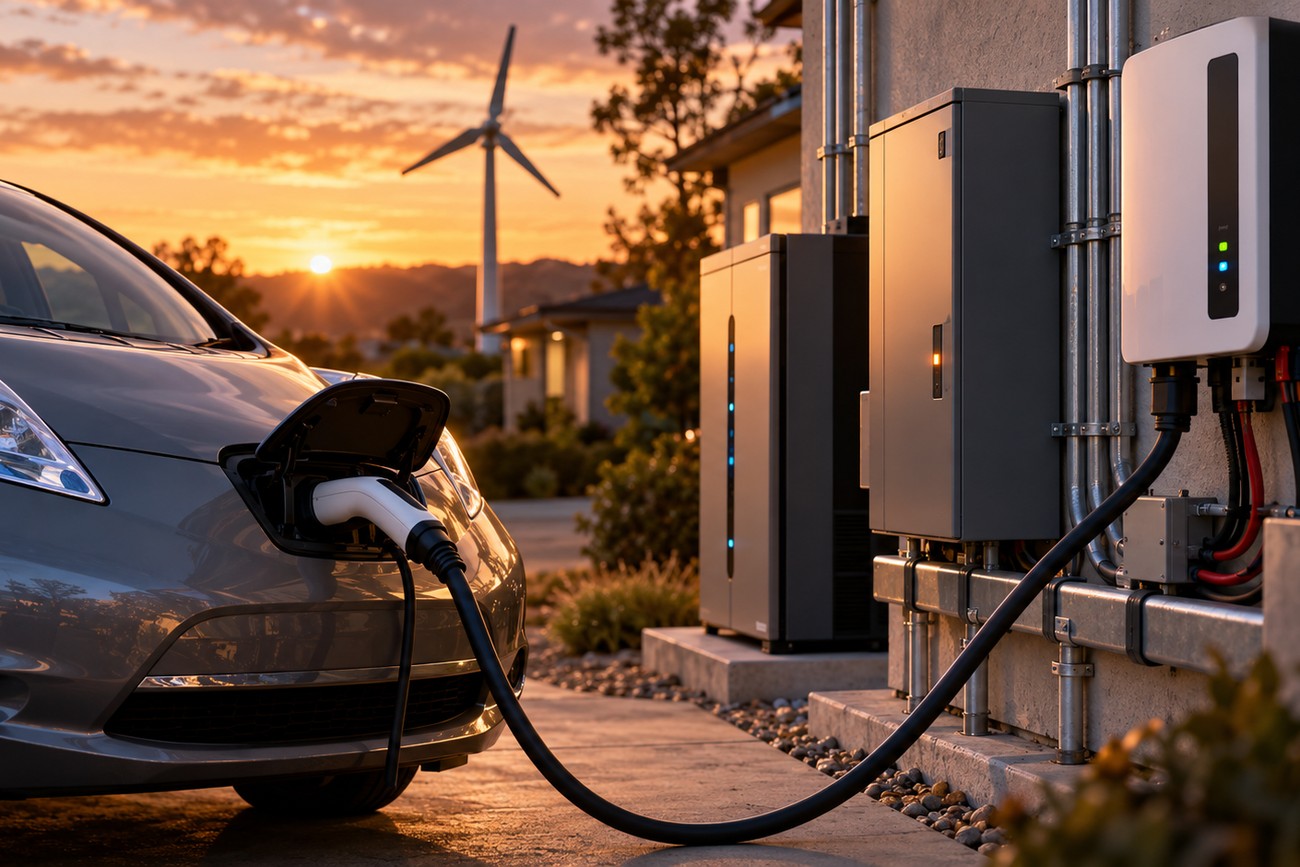
The electrical chain runs from the turbine through its controller and storage system to an inverter, EVSE, and the Leaf’s onboard charger. Each stage has a different job, and compatibility at one point does not guarantee compatibility throughout the system. The inverter must produce AC with suitable voltage, frequency, waveform, and protective behavior for the EVSE.
IEC 61851 covers conductive EV charging systems, while IEC 62196 covers EV plugs, socket-outlets, vehicle connectors, and inlets. These standards help define the charging interface, but they do not replace local electrical requirements or equipment-specific instructions. A Leaf owner must verify the J1772/Type 1 connection, the EVSE rating, and the inverter’s approved operating conditions.
Protection needs equal attention. The installation normally requires appropriate grounding, overcurrent protection, surge protection, emergency disconnection, and suitable lightning protection for the site. A turbine on a mast can increase exposure to storms, and a failure in protection equipment can damage the controller, inverter, EVSE, or vehicle.
This is a system-design task rather than a matter of joining two cables. Local rules may cover planning permission, mast height, electrical inspection, grid connection, battery placement, and emergency access. A qualified installer should confirm the design and protection scheme before equipment is purchased or energized.
The Practical System: Turbine, Battery, Inverter, and EVSE
The common practical arrangement is a wind turbine plus controller, battery, inverter, and compatible EVSE. The turbine feeds regulated energy into the battery system, while the inverter supplies AC to the EVSE. The Leaf receives that AC through its EVSE and uses its onboard charger to charge the traction battery.
The battery buffer smooths short fluctuations that would otherwise reach the car. It can support the EVSE during a gust-to-lull transition, absorb energy when the turbine briefly produces more than the load needs, and provide a stable source during short wind pauses. A larger or more capable system may also coordinate charging with other household loads.
The battery and inverter are the real charging interface in a wind-to-EV system: they help prevent EVSE dropouts during gusts, controller transitions, and short wind pauses.
When the battery is involved, the car is electrically charging from stored energy at that moment. The turbine may have supplied that energy earlier, and it may replenish the battery later. This distinction matters because the car can continue charging during a brief calm only if the storage system and inverter have enough available energy and power.
Grid assistance or another backup source can keep charging available when stored energy is low. In a hybrid design, the system may reserve wind energy for the vehicle, use the grid to finish an overnight charge, or reduce charging power to protect the battery. The control strategy must be agreed with the inverter and EVSE manufacturer; improvised switching can create unsafe or unreliable operating conditions.
Rated Turbine Power Is Not the Same as Charging Energy

A turbine’s nameplate rating is a rated or peak value, not its continuous output or daily energy production. A turbine described by its peak power will reach that level only under suitable wind conditions. The amount of energy available to the Leaf depends on the site’s wind resource over time.
Average output is affected by turbulence, poor siting, calm periods, seasonal variation, downtime, and maintenance. Energy is also lost in the turbine controller, inverter, battery, and wiring. A system can therefore have a substantial advertised rating while delivering modest usable energy to the vehicle on an average day.
Leaf battery capacities range from approximately 24–62 kWh, depending on version. Home charging at 220 V is often quoted at approximately 7–9 hours for a full charge, depending on generation, battery capacity, and charging current. Leaf onboard AC charging is commonly cited around 3.6 kW in practical sources, while higher values may apply to some later versions or particular charging setups.
Those figures describe the vehicle and charging path, not the wind resource. A turbine must first produce enough usable energy to cover conversion and storage losses before the Leaf can receive it. A sensible assessment therefore compares the expected average daily energy reaching the EVSE with the vehicle’s actual charging needs, rather than comparing the turbine’s peak rating with the Leaf’s charger rating.
Charging may also compete with household loads. If the inverter is serving the home, battery, and EVSE together, the Leaf may receive less power than the nominal inverter capacity suggests. Load management can improve reliability, although it adds controls and may extend charging time.
Wind-Powered Leaf Charging Options Compared
These three arrangements differ mainly in how they handle unstable generation and insufficient stored energy.
| Arrangement | Stability | Equipment | Charging reliability | Main failure mode |
|---|---|---|---|---|
| Direct turbine-to-EV charging | Low; raw output varies with wind | Turbine, controller, and charging interface, with major compatibility constraints | Low; the EVSE may stop when voltage, frequency, or available power changes | Gusts and power dips interrupt charging or create unsuitable electrical conditions |
| Turbine plus battery and inverter | Higher; the battery and inverter smooth generation | Turbine, controller, battery, inverter, protection, and compatible EVSE | Moderate to high while stored energy is available | The battery becomes depleted, or the inverter and EVSE are incorrectly matched |
| Wind plus battery with grid backup | Highest; the grid can cover shortfalls | All buffered-system equipment plus approved grid integration and controls | High, subject to system settings and grid availability | Higher cost, conversion losses, maintenance, protection needs, or a control failure |
Why Home Wind Charging Often Disappoints
The most common disappointment is the gap between rated power and average generation. A small turbine may produce far less energy than its nameplate suggests when the site has calm periods, turbulent airflow, seasonal changes, or an unsuitable mounting location. Roof-level or obstructed sites can be particularly problematic because buildings and trees disturb the wind before it reaches the rotor.
That shortfall becomes obvious during overnight charging. The turbine may produce useful energy for part of the night, then stop or fall below the system’s operating threshold. Without enough stored energy or grid assistance, the Leaf may still have an incomplete charge in the morning. A battery improves continuity while also adding cost, space requirements, conversion losses, and maintenance.
Noise and vibration can limit a project even when the electrical design works. A mast requires suitable space, and planning rules or neighbor objections may affect where it can be installed. Winter conditions and calm periods can widen the difference between a marketing estimate and the actual energy delivered to the car.
Storm protection is another practical concern. Turbines, masts, long cable runs, and exposed electronics need a carefully designed grounding and surge-protection strategy. Lightning or a power surge can damage the controller, inverter, battery electronics, or EVSE if protection and emergency isolation are treated as optional.
Compatibility problems can also stop charging. An inverter may be unable to support the EVSE’s expected electrical behavior, or a mobile EVSE may use the wrong connector, current range, or protection arrangement for the Leaf. Once the mast, permits, battery, inverter, protection, installation, and maintenance are included, the total cost can be substantially higher than the turbine price alone.
How to Evaluate a Wind-to-Leaf Project Before Buying Equipment
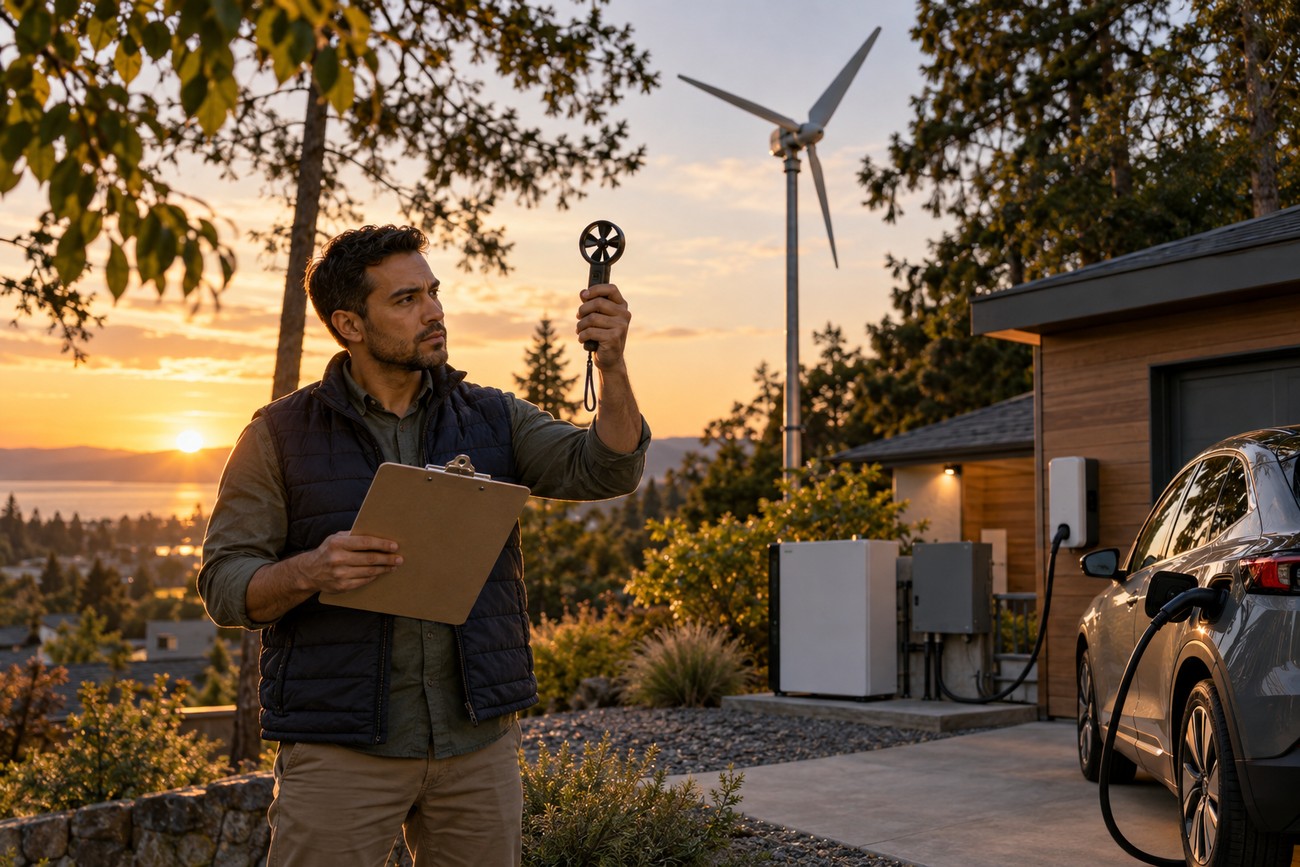
Begin with the site, not the turbine brochure. Assess the actual wind resource at the proposed hub height, including turbulence, obstructions, seasonal variation, and calm periods. The useful figure is expected average output over time, with downtime and maintenance considered, rather than the turbine’s peak rating.
Confirm the Leaf’s version, battery capacity, J1772/Type 1 connection, and charging requirements. Check that the proposed EVSE can communicate correctly with the vehicle and that the inverter can supply stable, compatible AC. Some EVSEs offer adjustable charging current, such as 6–16 A in 1 A steps, but the specific equipment must be verified before relying on that feature.
Model the complete energy path. Include losses in the controller, inverter, battery, and wiring, along with the power used by household loads. The calculation should show how much energy reaches the EVSE during typical and poor wind conditions, and how the system behaves when the battery is nearly empty.
Review planning and electrical requirements before ordering hardware. The assessment may need to cover the mast, foundation, noise, setbacks, grounding, surge protection, lightning protection, emergency isolation, battery location, and inspection. A design that cannot be approved or safely maintained has no practical value.
Finally, compare total ownership cost with grid charging or a hybrid renewable system. Include installation, permits, replacement parts, maintenance, downtime, battery aging, inverter losses, and backup energy. A wind system can make sense where the site has a strong resource and the equipment serves broader household needs; charging one vehicle alone may provide too little utilization to justify the added complexity.
Frequently asked questions
What happens to Leaf charging when the wind suddenly stops?
If the battery buffer and inverter have sufficient stored energy, the inverter can continue supplying stable AC, and the Leaf may keep charging without noticing the wind stoppage. The turbine can resume replenishing the battery when wind returns, subject to the controller’s operating limits and the system’s available capacity.
Without enough stored energy, the EVSE may stop charging rather than gradually reduce the current. EV charging equipment expects defined electrical conditions and control signals; a falling turbine output does not automatically translate into a safe, smooth reduction at the vehicle. Some systems can deliberately lower the charging current, while others will disconnect when their voltage, frequency, or power limits are reached.







