
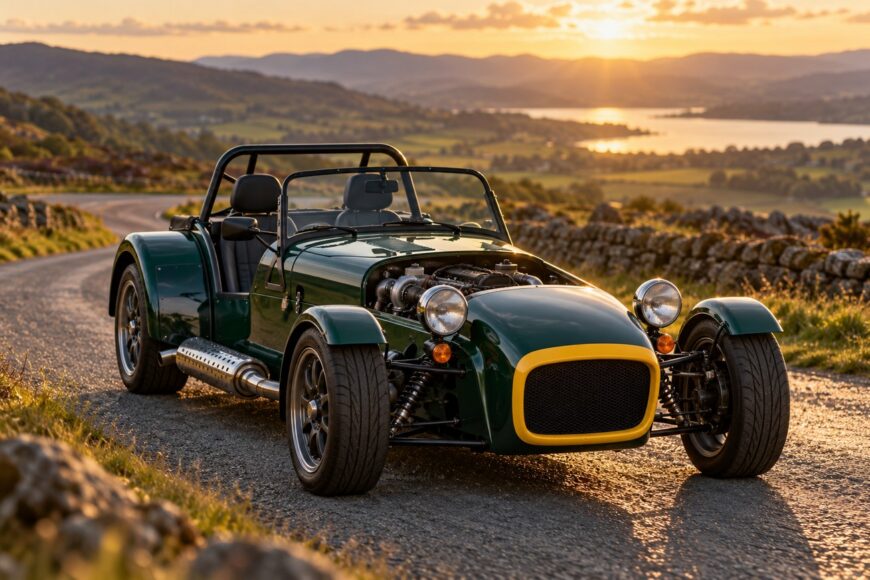
An 80 bhp Caterham sounds like a contradiction. The Seven 160 answers it with a 660 cc three-cylinder Suzuki K6A turbo, a claimed 490 kg mass, short gearing, and narrow tires that let the driver feel the car working at ordinary road speeds. Its performance comes from removing weight and limiting excess grip rather than adding a large engine.
That makes the Seven 160 a fascinating experiment in lightweight sports-car design. It can feel genuinely quick without demanding extreme speeds, yet its modest output does not make it easygoing. The engine needs revs, the cabin offers little shelter, and the short transmission keeps the driver busy.
The central choice is clear. You are buying an unusually communicative road car with a compact Japanese engine or accepting a highly compromised machine whose appeal disappears if you expect effortless torque, simple access, luggage space, and reliable all-weather use.
- What the Caterham Seven 160 Actually Is
- The Numbers Behind the Kei-Engine Experiment
- Why It Feels Quick—and Where It Falls Short
- The Seven 160’s Real-World Compromises
- Buying, Building, and Specifying One
- Is the Caterham Seven 160 the Right Caterham?
- Frequently asked questions
- How much does a Caterham 7 cost?
- What paperwork is needed to register a kit-built Seven 160?
- How much horsepower does a Caterham 7 have?
What the Caterham Seven 160 Actually Is
The Caterham Seven 160 is a lightweight, front-engine, rear-wheel-drive Seven built around a 660 cc three-cylinder Suzuki K6A turbo. Caterham raised its output to 80 bhp at 7000 rpm, compared with approximately 64 bhp in the engine’s original configuration. Power reaches the rear wheels through a five-speed manual gearbox.
The K6A was an unusual choice for a British sports car, although its origins make engineering sense. It comes from a mass-produced Japanese kei-car engine family, so the basic unit was designed around compact dimensions, low mass, and modest operating costs. Caterham used that small package in a chassis where every kilogram has a visible effect on acceleration, braking, and direction changes.
More powerful Sevens deliver their drama through stronger acceleration and a larger reserve of engine performance. The 160 follows a different philosophy. Its limits arrive at speeds that are easier to explore on public roads, and the driver spends more time managing momentum, steering weight, and throttle position than simply waiting for a large engine to dominate the chassis.
The body remains an open Seven with minimal comfort equipment and limited weather protection. That is a design characteristic rather than an accidental defect. The soft top and side screens reduce exposure, but they do not create the sealed, quiet environment of a conventional sports car. You sit close to the road, close to the mechanical noise, and close to every change in weather.
The Numbers Behind the Kei-Engine Experiment
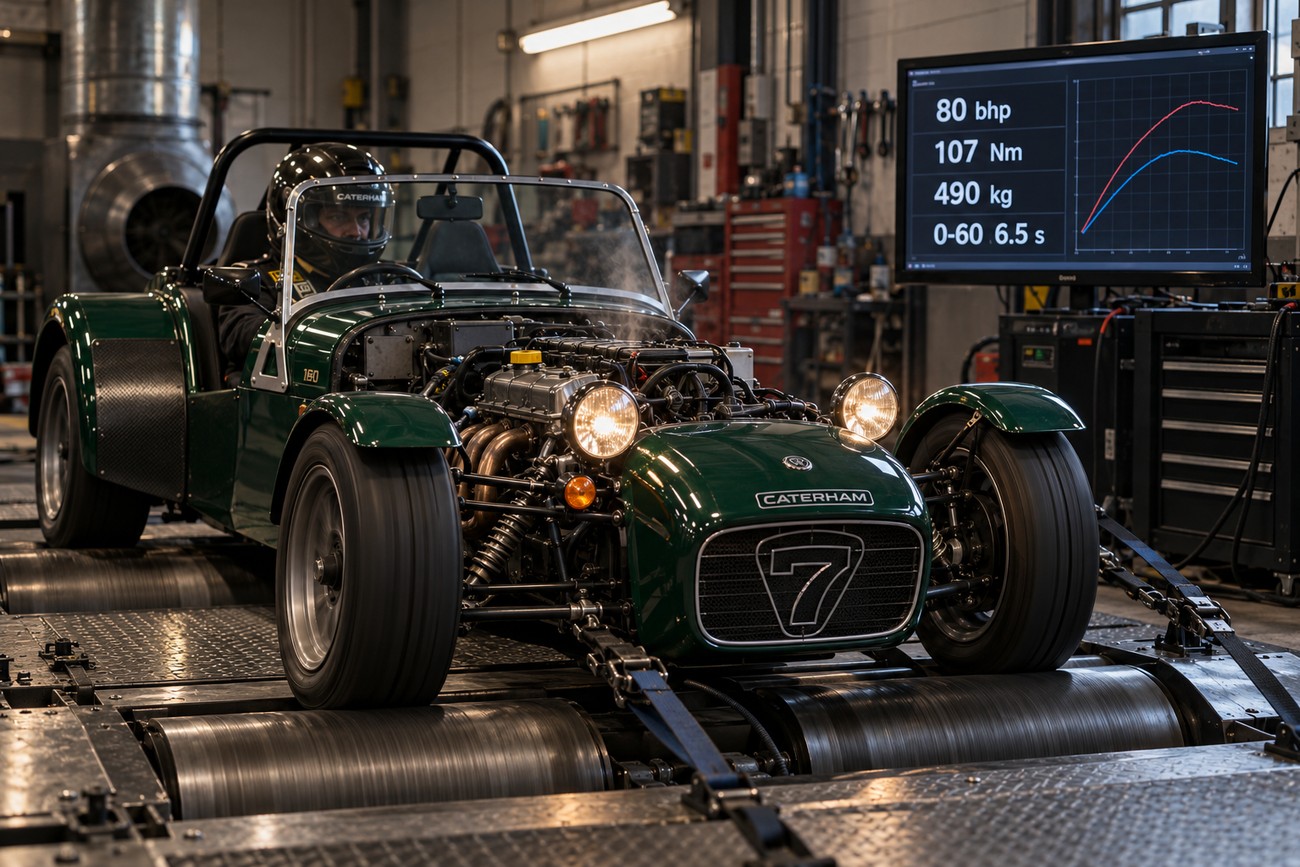
Caterham claimed 80 bhp at 7000 rpm and 79 lb-ft (107 Nm) at 3400 rpm. With an official claimed mass of 490 kg, that works out to approximately 163 bhp per tonne. The figures explain why the Seven 160 can feel lively, but they do not describe the whole experience: the engine’s torque delivery, the gearing, and the tires matter just as much.
The official acceleration claim is 0–60 mph in 6.5 seconds, with an approximately 100 mph claimed top speed. Those numbers are respectable for a small engine, yet they should be treated as specification figures rather than universal results. Some catalogues list approximately 490–500 kg and 6.7–6.9 seconds to 60 mph, depending on specification and method.
Standard equipment reinforces the car’s deliberately modest character. The Seven 160 uses narrow 14-inch steel wheels with 155/65 Avon ZT5 tires. They do not offer the outright grip of wider performance rubber, but their lower grip makes the transition toward the handling limit easier to recognize at road speeds.
Its five-speed gearbox is closely geared. Second gear ends at approximately 45 mph, while third runs to approximately 70 mph. That keeps the engine closer to its useful range and helps compensate for the small displacement, although the same ratios make fast-road cruising more active and less relaxed than the headline acceleration figure might suggest.
Why It Feels Quick—and Where It Falls Short
The Seven 160’s speed comes from the way its components interact. A 490 kg car needs little power to gather momentum, and the short ratios make each gear feel purposeful. The driver gets immediate chassis responses, clear steering information, and a sense of movement that a heavier performance car can mask.
The small tires are central to that impression. Their lower outright grip means the chassis can communicate its approach to the limit without requiring race-track speeds. They also reduce the chance that the engine will overwhelm the rear axle instantly. The result is an accessible, readable car, provided the driver respects the exposed cabin and the consequences of a mistake.
Low-rpm response is less impressive. The maximum torque figure arrives at 3400 rpm, and the engine can feel insufficiently energetic below its useful operating range. The short gearing reduces the perceived turbo lag because a downshift quickly brings the engine back toward its working zone, but it does not create strong low-speed shove.
Choose the correct gear before a corner and keep the engine in its useful rev range; waiting for low-rpm boost to arrive costs momentum and makes the car feel slower than its power-to-weight figure suggests.
That approach makes second and third gears especially important. Second gear ending at approximately 45 mph is useful on tighter roads, where the engine remains active and the driver can exploit the car’s agility. Third gear reaching approximately 70 mph covers a wide section of faster bends, but the frequent shifts become a chore on open roads.
The engine also sounds and feels less overtly sporting than the larger engines fitted to other Seven variants. Buyers expecting a high-revving, theatrical sports-car soundtrack may find the K6A surprisingly workmanlike. The reward is a distinct rhythm: preserve momentum, select the ratio early, and use the chassis rather than relying on abundant thrust.
The Seven 160’s Real-World Compromises
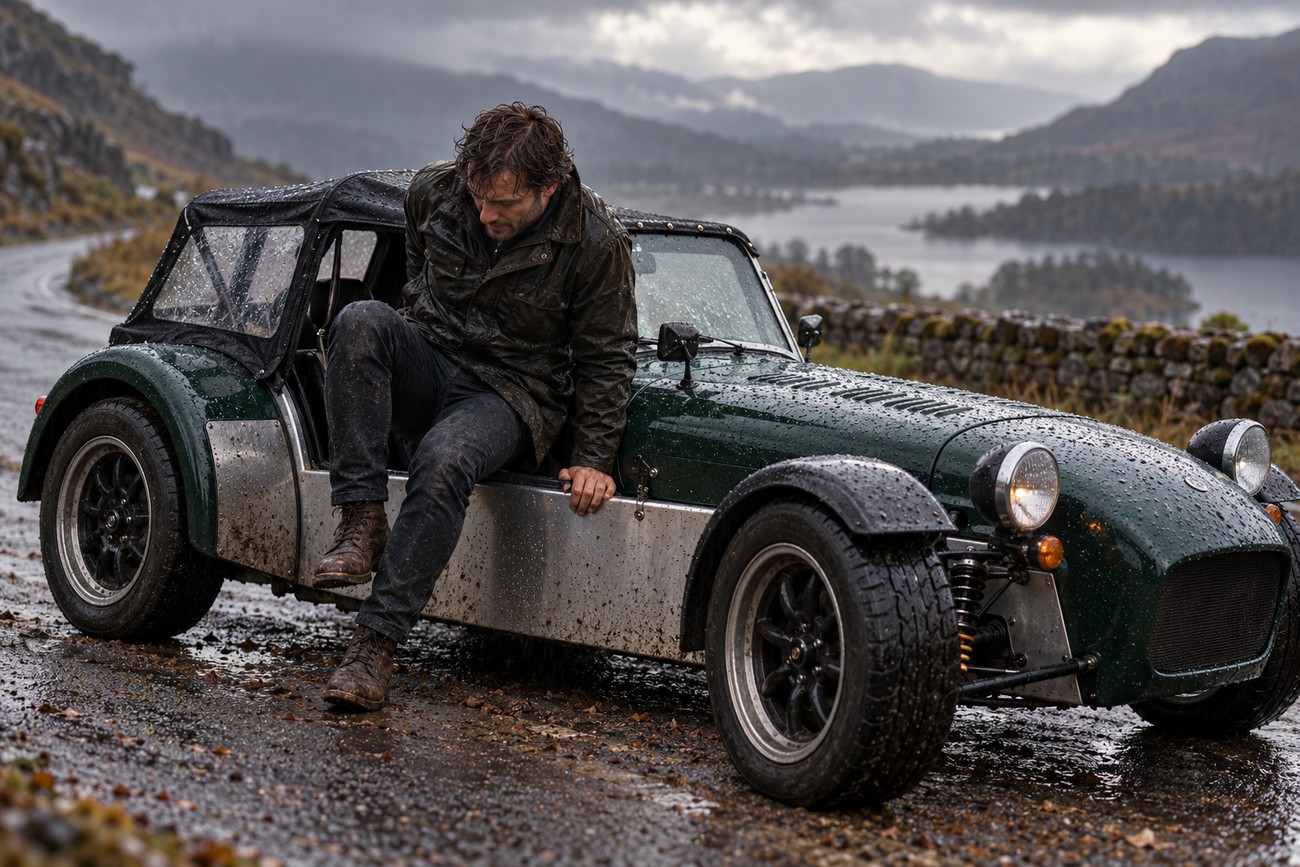
Entry and exit are part of the ownership test. With the soft top installed, access can become extremely awkward, particularly for drivers who are tall, inflexible, or wearing bulky clothing. The low sill and narrow opening demand a deliberate technique, and what feels amusing during a sunny test drive can become irritating when repeated in rain or on a crowded roadside.
Weather protection is similarly limited. The open body leaves occupants exposed to water, dirt, cold, and road debris, while the soft top and side screens only reduce that exposure. They do not make the Seven properly weather-sealed. Leaks, drafts, spray, and wind noise are part of the practical calculation, not occasional inconveniences to be dismissed after purchase.
A proper pre-purchase test should include sitting in the car with the roof fitted, the side screens attached, and a helmet on if track use is planned. Check whether you can enter, close the screen, operate the controls, and see clearly without striking the frame. A Seven that feels perfect with the roof removed may be a poor fit in the configuration you will actually use.
The short gearing creates another ownership compromise. On a winding road it keeps the engine engaged and gives the driver useful control over the car’s pace. On a faster road, the constant work of changing gear can make the journey busy, while the exposed cabin adds fatigue through wind, cold, and noise.
Mechanical simplicity should not be confused with cheap ownership. Small-batch body, suspension, and interior parts can cost disproportionately more than their size suggests, and Caterham-specific components are not priced like mass-market replacements. The K6A may have mass-produced Japanese origins, but the surrounding Seven remains a specialist sports car.
Buying, Building, and Specifying One
Start with the complete specification rather than the 80 bhp headline. The car’s character depends on mass, gearing, tires, weather equipment, and the condition of the chassis. A Seven 160 carrying additional equipment may no longer match the official 490 kg claim, and extra weight can alter both balance and how quickly the car responds to steering and throttle inputs.
The same caution applies to acceleration figures. The 6.5-second 0–60 mph claim belongs to a particular specification and test condition. Some catalogues quote approximately 6.7–6.9 seconds, so a buyer should treat small differences as evidence of varying equipment, test methods, or model details rather than as proof that one car is fundamentally superior.
Kit ownership adds another layer of responsibility. Assembly time, setup work, documentation, and registration can all be substantial, depending on the kit’s state and the local rules. A partially completed car may look cheaper or more attractive than a finished example while transferring considerable labor, troubleshooting, and compliance work to the buyer.
Inspect the exact drivetrain, wheel and tire package, weather equipment, dashboard, suspension specification, and paperwork. Do not infer every detail from the Seven 160 name. An open differential is reported in one aggregated specification, but that claim is not sufficiently confirmed by available official material, so the individual car’s documentation and physical inspection matter.
For a used car, examine the chassis and suspension as carefully as the engine. Check for evidence of poor assembly, neglected setup, or modifications that add weight without improving the car’s intended use. A road-focused 160 with light equipment may deliver a more coherent experience than a heavily optioned example that appears more valuable on paper.
Is the Caterham Seven 160 the Right Caterham?
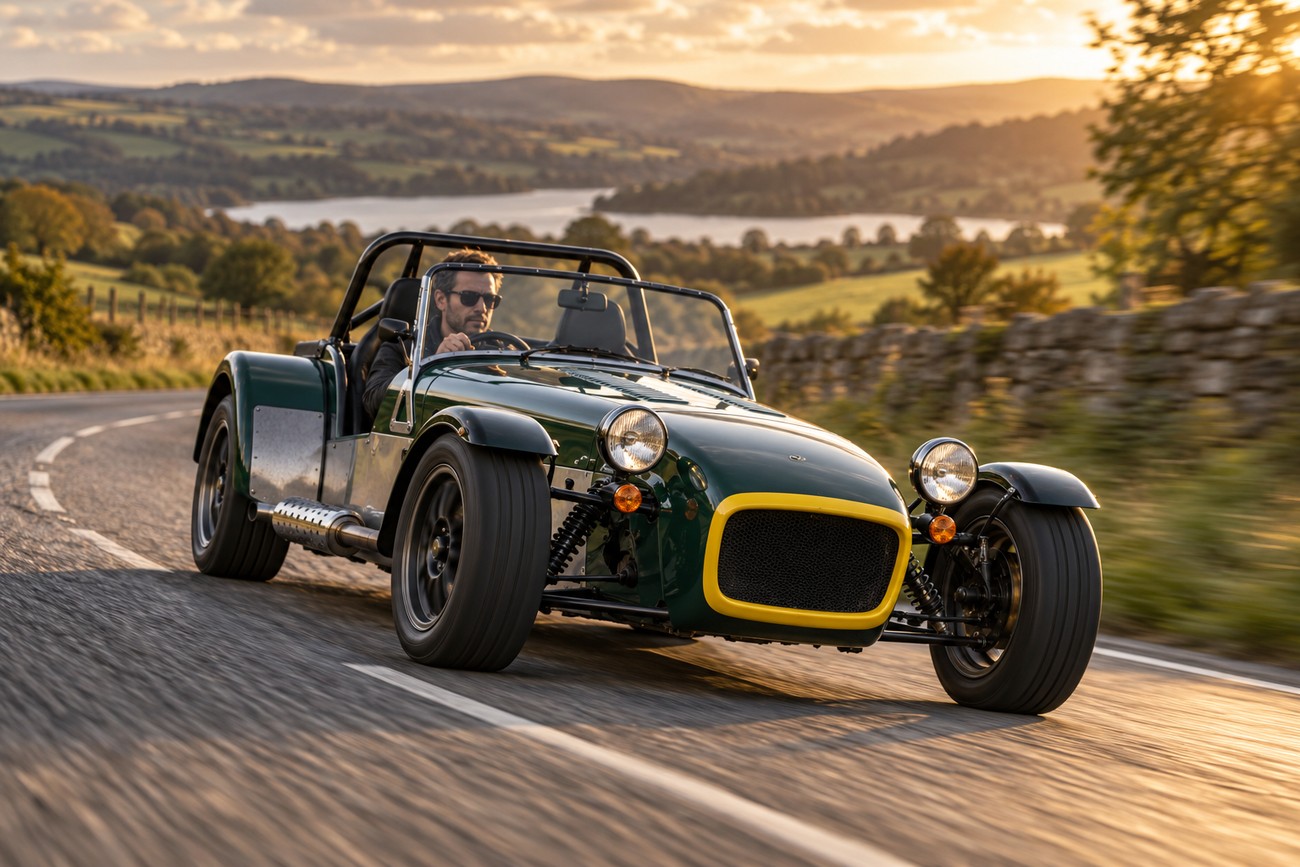
The Seven 160 suits a driver who values feedback over effortless acceleration. Its compact turbo engine, narrow tires, and short gearing create a car that feels active on ordinary roads, while the low mass keeps braking and direction changes immediate. You can enjoy much of its character without reaching the speeds that make more powerful cars difficult to use responsibly.
The familiar objection that 80 bhp is insufficient for a genuine sports car does not survive contact with a car weighing around 490 kg. The approximately 163 bhp-per-tonne figure is only part of the story; the stronger argument is the combination of low mass, accessible grip, close ratios, and constant mechanical involvement.
That advantage depends on realistic expectations. Buyers who want strong low-rpm torque, quiet cruising, simple entry, luggage capacity, or dependable protection from rain and cold should choose a different Seven or a more usable performance car. The 160 is especially poorly suited to anyone treating it as an ordinary daily commuter.
Its appeal is therefore specific rather than universal. The K6A’s kei-car background gives the Seven 160 an unusual engine and a distinctive operating rhythm, while the chassis preserves the traditional Caterham focus on weight and communication. It is a rewarding experiment when those compromises are the point; it is a frustrating purchase when they are treated as problems that ownership will somehow erase.
Frequently asked questions
The Seven 160 needs to be assessed as a specification-sensitive specialist car. The answers below focus on the checks that matter before purchase, especially where advertisements simplify the details.
How much does a Caterham 7 cost?
There is no single meaningful price for a Caterham 7. A factory-built car and a kit-based car can occupy different parts of the market, while age, condition, specification, options, equipment, and local supply materially change the asking price. A finished example may also carry a premium because it avoids the labor and registration work attached to an incomplete kit.
Compare cars by what is included and documented rather than by the advertised figure alone. Confirm whether the price covers the engine and drivetrain, weather equipment, wheels and tires, completed assembly, and registration. A cheaper kit can require substantial additional spending before it becomes a usable, legally registered road car.
What paperwork is needed to register a kit-built Seven 160?
Requirements vary by jurisdiction, so confirm the identity, inspection, emissions, safety, and registration route with the relevant authority before committing to a kit. The required evidence may depend on whether the car is new, partially assembled, previously registered, or built from separately sourced components.
Ask the seller for the complete build documentation, receipts, identification records, and any certificates already issued. Registration should be treated as a purchase condition, not a task to solve afterward. A car that cannot follow the local inspection route may be difficult or impossible to use legally on public roads.
How much horsepower does a Caterham 7 have?
Caterham Sevens use several different engines and power outputs, so the answer depends on the variant. The Seven 160 has 80 bhp from its 660 cc three-cylinder Suzuki K6A turbo, while other Seven models can produce substantially more.
For the 160, horsepower alone is a poor buying guide. Its performance is shaped by the low mass, five-speed gearing, narrow tires, and rear-wheel drive. Verify the exact engine and specification on the individual car rather than assuming that every Caterham 7 carries the same output.







