
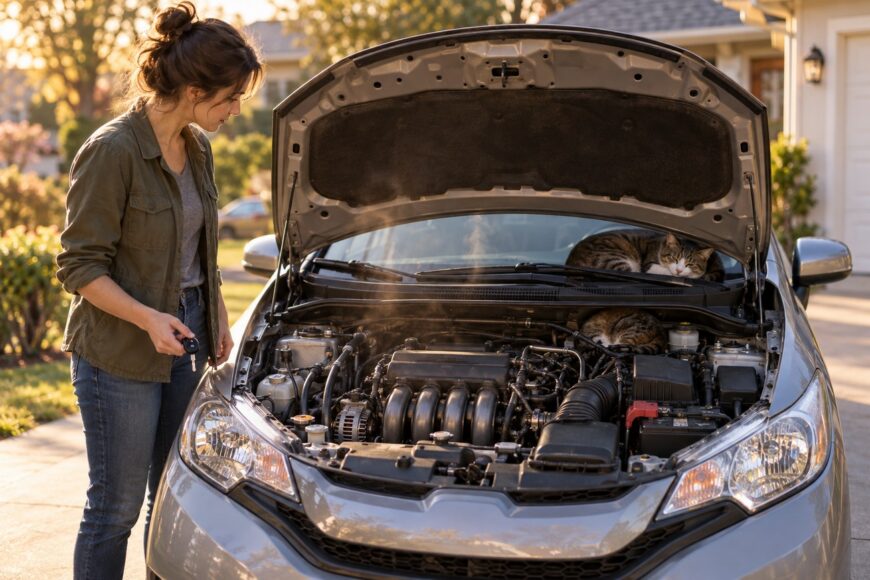
Do not start your Honda Fit if a cat may be inside the engine bay. Belts, pulleys, the cooling fan, hot surfaces, sharp edges, and confined gaps can cause fatal injuries within seconds, even during a brief engine start.
The cat may be above the engine, behind a wheel-well liner, beneath the bumper, or trapped below the lower protective panels. Treat the situation as a rescue problem: inspect safely, arrange professional help when access is unclear, obtain veterinary care after possible contact with moving or hot components, and repair any entry points before driving again.
- Do Not Start the Honda Fit Until You Check for the Cat
- How to Locate a Cat in a Honda Fit Engine Bay
- How to Get the Cat Out Without Making the Situation Worse
- What to Do After the Cat Comes Out
- How to Keep Cats Out of a Honda Fit Engine Bay
- Frequently asked questions
- How do you know if a cat is in your Honda Fit engine bay?
- What should I do if the cat runs away after I start the car?
- How do you keep cats out of your engine bay?
- How do you know if a cat is in your engine?
Do Not Start the Honda Fit Until You Check for the Cat
Switch off the ignition, remove the key, and keep it away from the vehicle while you inspect. A cooling fan may start automatically after shutdown, so wait for it to stop before approaching the engine bay. Keep your hands and face clear of belts, pulleys, fan blades, and narrow spaces throughout the check.
The engine bay can remain dangerously hot after the car is parked. Observed local temperatures after shutdown are about 115–124°F (46–51°C), and individual components may be hotter. A cat hiding for warmth can therefore suffer burns even before the engine is restarted.
Tap the hood and use a short horn signal as warnings. These actions may encourage a loose cat to leave, but neither confirms that the bay is empty. A frightened, injured, or trapped animal may remain silent or move farther into the vehicle.
Use a flashlight from a safe position and inspect before touching anything. Look for movement, eyeshine, fur, or a body outline, but do not place your hand or face between components to test a suspected hiding place.
How to Locate a Cat in a Honda Fit Engine Bay
Start with a visual and auditory check under the hood. Listen for meowing, scratching, or movement, then inspect from several angles without leaning into belts, pulleys, or other components. A cat may retreat deeper when frightened, so repeated poking or reaching can make the rescue harder.
Continue around the vehicle. Check both wheel arches, the area beneath the bumper, the underbody, and the spaces behind lower splash shields and wheel-well liners. A Honda Fit’s lower protective panels should be present and properly secured, but they do not make the engine bay animal-proof.
Missing, cracked, or loose panels can create access routes that are invisible from above. A cat may be inside a wheel arch or behind a lower panel even when the engine compartment looks clear. Use a flashlight rather than relying on touch, and keep your face away from openings.
Do not use water, smoke, chemical repellents, or forceful impacts to drive the cat out. Panic can cause the animal to wedge itself into a tighter gap, increasing the chance of bites, scratches, or injury during removal.
How to Get the Cat Out Without Making the Situation Worse
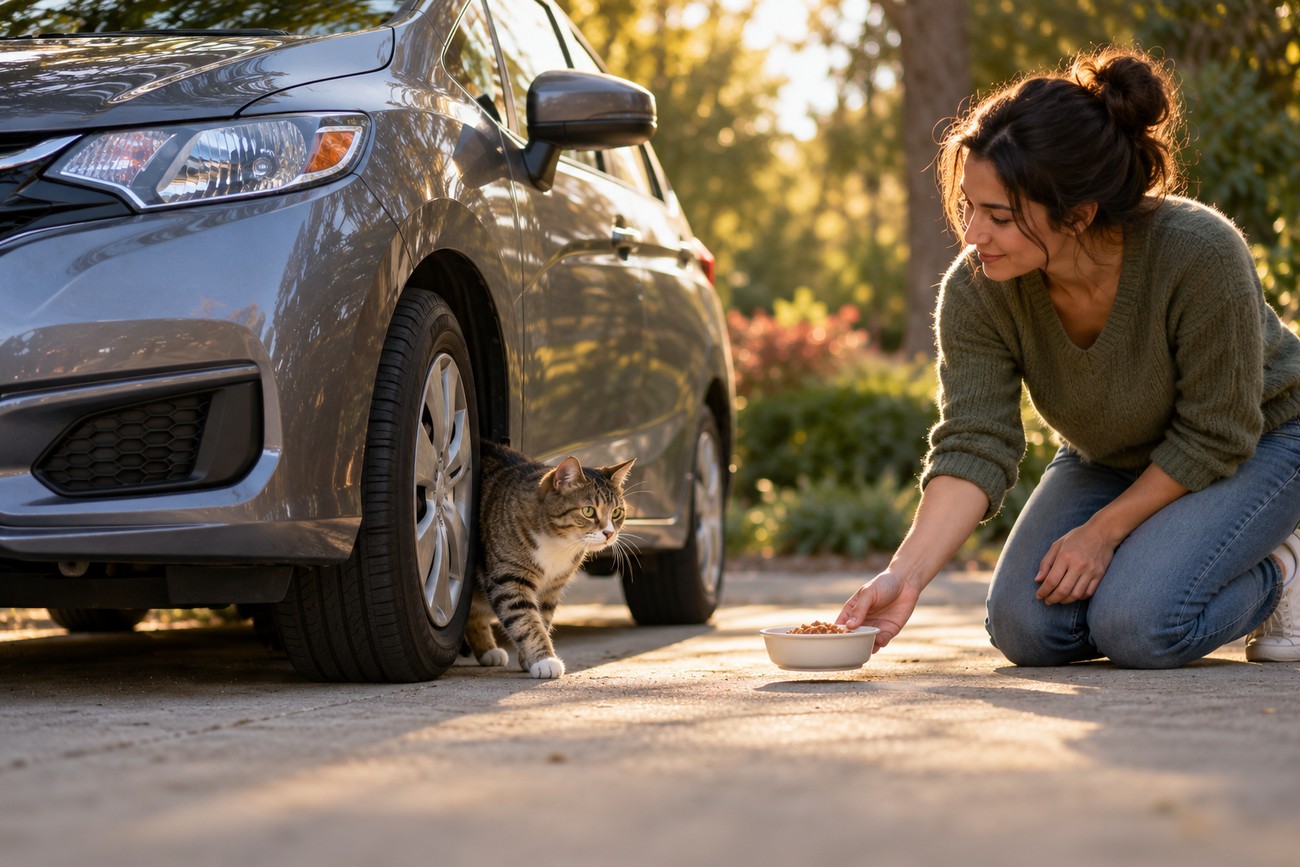
A loose, responsive cat may leave if you provide a clear exit, speak calmly, and place food near the opening. Watch the area around the car so the cat does not run beneath another vehicle. Food helps only when the animal can move freely.
Do not pull on a leg, tail, or body that is wedged in place. A frightened cat may bite or scratch when a hand enters a confined space, and force can worsen an injury or damage the animal’s skin. Keep people away from the vehicle while you determine whether the cat is free to move.
Removing a wheel-well liner or lower splash shield can create a controlled exit and protect the cat from being dragged through a narrow gap. That work is usually safer than blind pulling, especially when the animal’s exact position is uncertain.
Call a mechanic, roadside assistance provider, animal control service, or animal rescue professional if the cat is trapped, injured, resisting, or inaccessible. Tell the responder where you heard or saw the animal and whether the car has been started. If a panel or liner must be removed, the responder can expose the space without reaching blindly near dangerous components.
What to Do After the Cat Comes Out
Keep the cat in a quiet, secure place if you can do so without another struggle. A cat that runs away after a hood tap or horn signal may still be injured, and leaving the engine bay does not rule out shock, burns, cuts, or internal injury.
Veterinary assessment is warranted after possible contact with a running engine, fan, belt, pulley, or hot component, even when the cat appears normal. Internal injuries and shock may produce no obvious blood, limp, or visible wound at first. Follow professional advice about safe containment and observation.
Before driving, inspect the engine bay and the underside of the vehicle for fur, blood, urine, damaged wiring insulation, and coolant traces. Look around the wheel arches and lower panels as well as the top of the engine. Damaged insulation or fluid loss should be assessed by a mechanic before the vehicle is used.
Clean contamination only after the vehicle is cool and safely switched off. If the cat cannot be found after it leaves the vehicle, check nearby hiding places and ask for help locating it; an animal that disappears from view may still need care.
How to Keep Cats Out of a Honda Fit Engine Bay
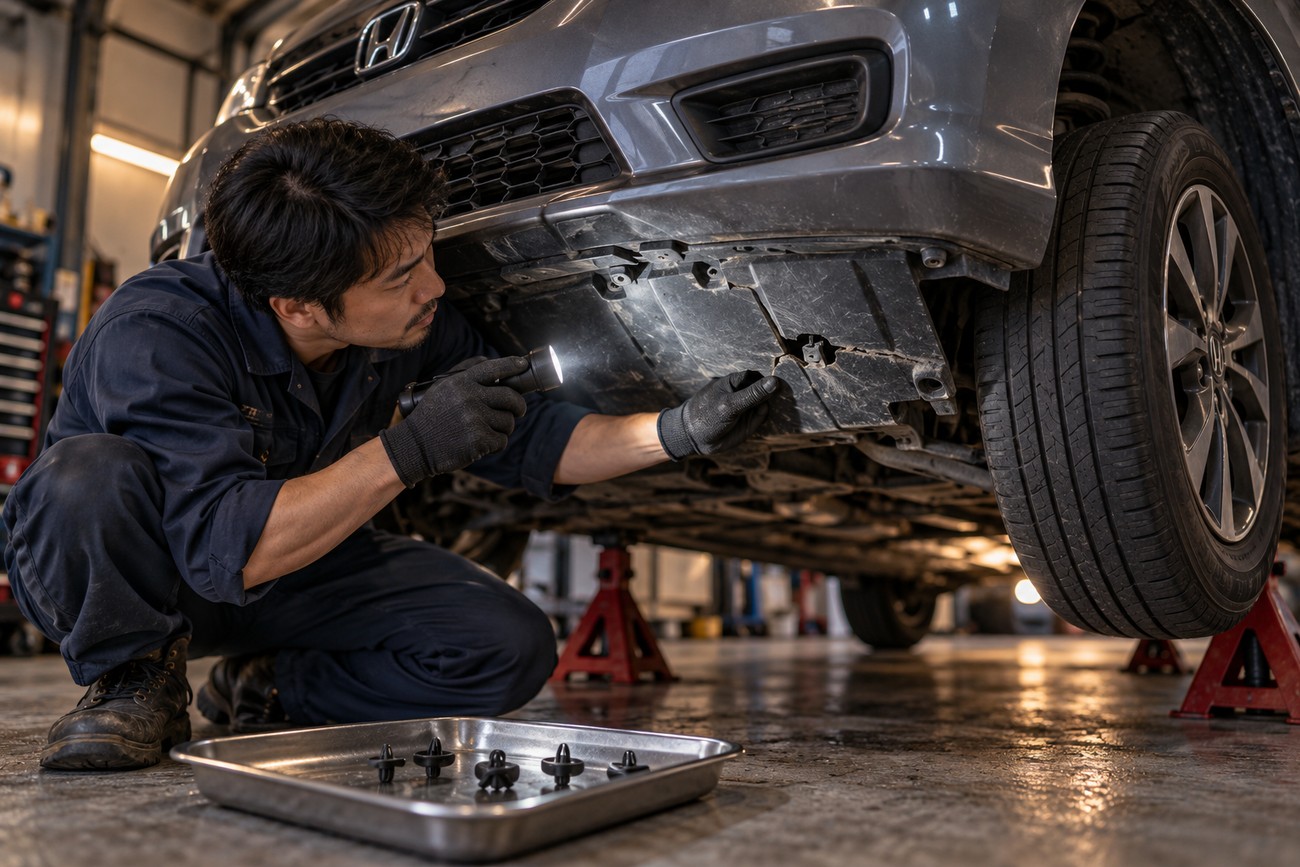
Begin with the vehicle itself. Inspect the lower splash shields and wheel-well liners for cracks, missing sections, or loose fasteners, especially after bodywork or underbody repairs. Restore damaged or missing factory panels with proper fasteners so they sit securely without interfering with service points.
Park thoughtfully when possible. A sheltered, warm vehicle is attractive to cats in cold weather, particularly where other hiding places are limited. Before each start, make the hood tap, short horn signal, and visual check a routine, especially if you have seen cats near the parking area.
Humane deterrence may reduce repeat visits around the parking space, but it should not obstruct the car. Universal mesh, improvised covers, and unapproved barriers can interfere with cooling, maintenance, or electrical components. Do not block ventilation openings or attach material where it could contact moving or hot parts.
Repairing the entry route is more dependable than adding a loose deterrent inside the engine bay. If a cat continues to return, combine panel repair with safer changes around the parking area and seek local animal-control guidance for humane options.
Frequently asked questions
How do you know if a cat is in your Honda Fit engine bay?
Common clues include meowing, scratching, movement, fresh fur, paw marks, or an unusual animal odor. Check whether the sound changes as you look under the hood, around the wheel arches, beneath the bumper, and under the vehicle.
Confirm the location with a flashlight and careful listening, without touching the animal or reaching blindly into a gap. A silent engine bay is not proof that it is empty, particularly if the cat may be frightened or trapped behind a liner or lower panel.
What should I do if the cat runs away after I start the car?
Stop the vehicle as soon as it is safe, switch off the ignition, remove the key, and check the engine bay, wheel arches, underbody, and nearby ground. Look for fur, blood, damaged wiring insulation, or other signs of contact before driving again.
Try to locate the cat and arrange veterinary assessment even if it is walking normally. Possible contact with the cooling fan, belts, pulleys, or hot components can cause internal injury or shock without an obvious external wound.
How do you keep cats out of your engine bay?
Repair damaged or missing lower splash shields and wheel-well liners, and secure them with proper fasteners. These panels reduce access routes, although they do not make a Honda Fit animal-proof.
Use a pre-start warning routine and humane measures around the parking area. Avoid improvised mesh, chemicals, or barriers that could obstruct cooling, service access, or electrical components.
How do you know if a cat is in your engine?
Listen for movement or vocalization after the car has been parked, and inspect for fur, paw marks, or an unusual odor. The cat may be above the engine, inside a wheel arch, beneath the bumper, under the body, or behind a lower protective panel.
Use a flashlight after switching off the ignition, removing the key, and waiting for the cooling fan to stop. If the location remains unclear, or the animal is inaccessible, do not start the vehicle or reach into the space; call a mechanic, roadside assistance provider, animal control service, or rescue professional.







