
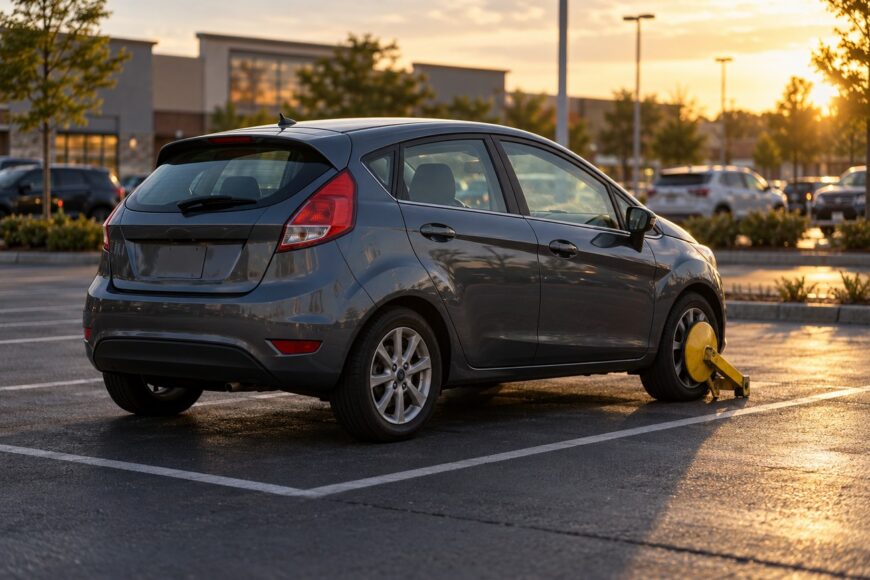
The phrase “car booted at a shopping center” has two possible meanings. In British English, the boot is the luggage compartment of a car, while “booted” can also mean that the vehicle has been immobilized in a car park. Those situations require completely different responses.
If the whole Ford Fiesta has been immobilized, check the shopping-center operator’s instructions before attempting to move it. If the problem is the hatchback boot, the practical concerns are the latch, door adjustment, cargo placement, and accessory fitment. A small mechanical fault or loading mistake can become a safety issue, especially if the lid does not latch securely.
- What “booted” means in a shopping center
- Ford Fiesta boot space: why the published numbers disagree
- When the Fiesta boot will not open or close
- How to load a Fiesta boot without creating a safety problem
- Roof racks and boot accessories: the fitment trap
- Common mistakes, hidden wear, and misleading fixes
- A sensible check before leaving the shopping center
- Frequently asked questions
- What is the most common problem with the Ford Fiesta boot?
- Why would someone’s car get booted at a shopping center?
- Why does my Ford Fiesta boot keep opening on its own?
- What year should I stay away from with a Ford Fiesta?
What “booted” means in a shopping center
A vehicle being “booted” in a shopping-center car park normally refers to a physical immobilization device fitted to a wheel. That meaning is separate from the Fiesta’s boot, which is the rear luggage compartment and its opening hatch. Establishing which situation applies prevents you from inspecting the wrong part of the vehicle.
If the car itself has been immobilized, read the notice attached to the vehicle and follow the shopping-center operator’s stated process. The supplied Fiesta information concerns the hatchback boot, its latch, loading, and accessory compatibility; it does not establish a specific shopping-center enforcement policy or local penalty.
If the issue is the rear hatch, look for a mechanical symptom: the lid will not open, closes poorly, needs repeated adjustment, or appears closed while the vehicle reports a door-related fault. Do not force the handle or drive away simply because the hatch looks nearly shut. A lid that has not latched securely needs attention before the car moves.
Ford Fiesta boot space: why the published numbers disagree
There is no single fixed boot-capacity figure for every Ford Fiesta. Published figures range from approximately 178–455 liters across body styles and specifications. The difference can reflect the generation, body configuration, trim, and the way the seats and luggage area are measured.
Some Mk7 catalogs list approximately 200–1205 liters, depending on body configuration and folded-seat arrangement. The larger figure describes a different loading arrangement from the normal rear-seat-up space, so it should not be treated as the everyday capacity available behind the seats.
Catalog capacity is also a poor substitute for checking the shape of a particular load. A tall box, liquid container, or rigid item may fail to fit even when its calculated volume is below the published figure. Measure the opening, floor length, and available height, then leave room for the hatch to close without pressing against the cargo.
When the Fiesta boot will not open or close
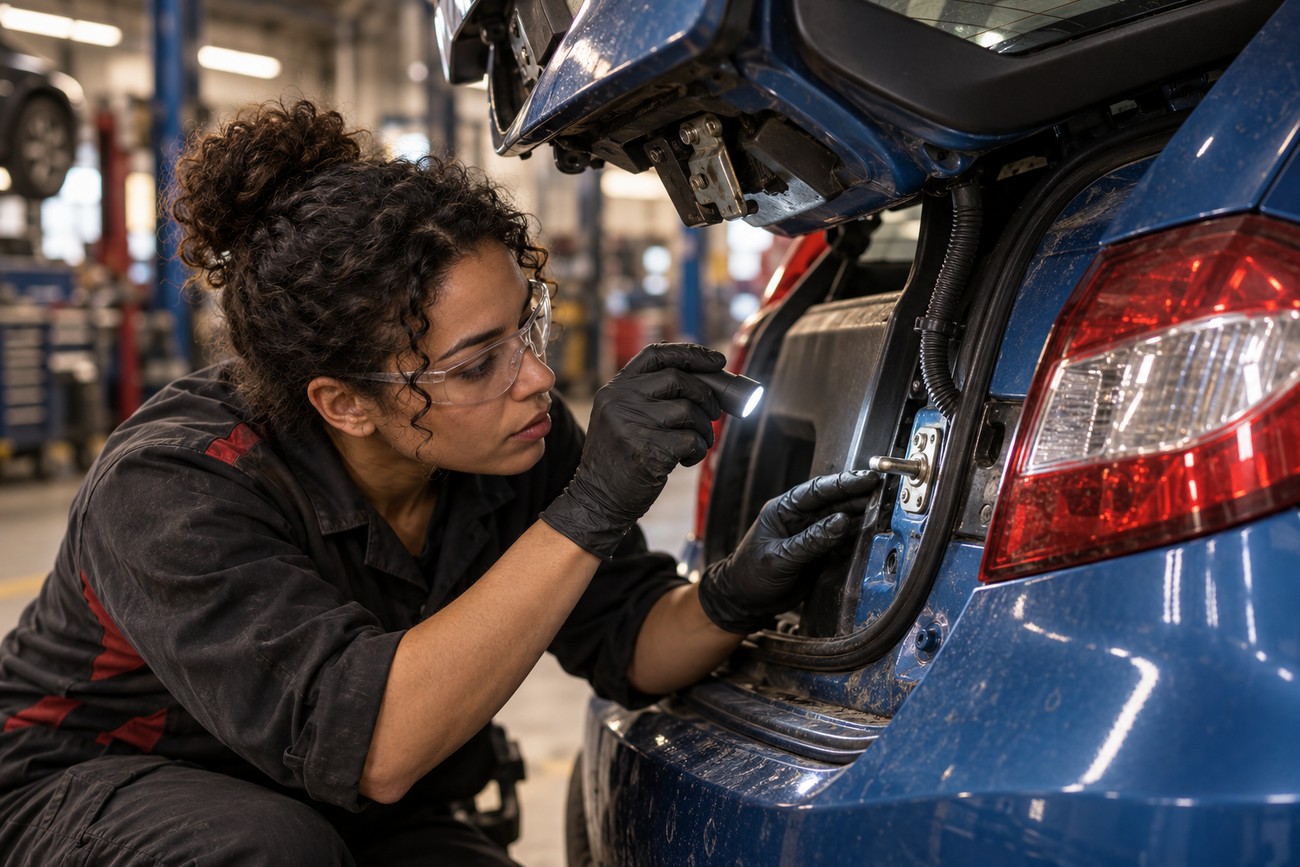
Reported Fiesta symptoms include a boot that becomes impossible to open, a boot door that closes poorly, and temporary improvement after the lock is replaced. The cause may be a seized or failed latch, incorrect door adjustment, or a problem within the lock assembly. These symptoms are sometimes first treated as a general electrical fault.
On some Fiesta Mk6 versions, the boot-lid switch is integrated into the lock. That design matters during diagnosis because a mechanical problem in the latch can affect the switch signal at the same time. A wiring check alone may therefore miss the part that is actually failing.
Some early Fiesta cars are also reported to suffer from frozen front-door locks in winter. This is a source-limited owner-report issue, not a universal defect, but it can make access difficult when the boot or rear doors become the only practical entry route. Drying and lubrication may help temporarily, while a worn or damaged lock may require proper repair or replacement.
Ford guidance says not to drive with the boot lid or door open; confirm that it is securely closed before moving. If the latch will not engage, the door sits out of alignment, or the warning remains after closing, stop driving and arrange a safe inspection rather than relying on a strap or partial closure.
How to load a Fiesta boot without creating a safety problem
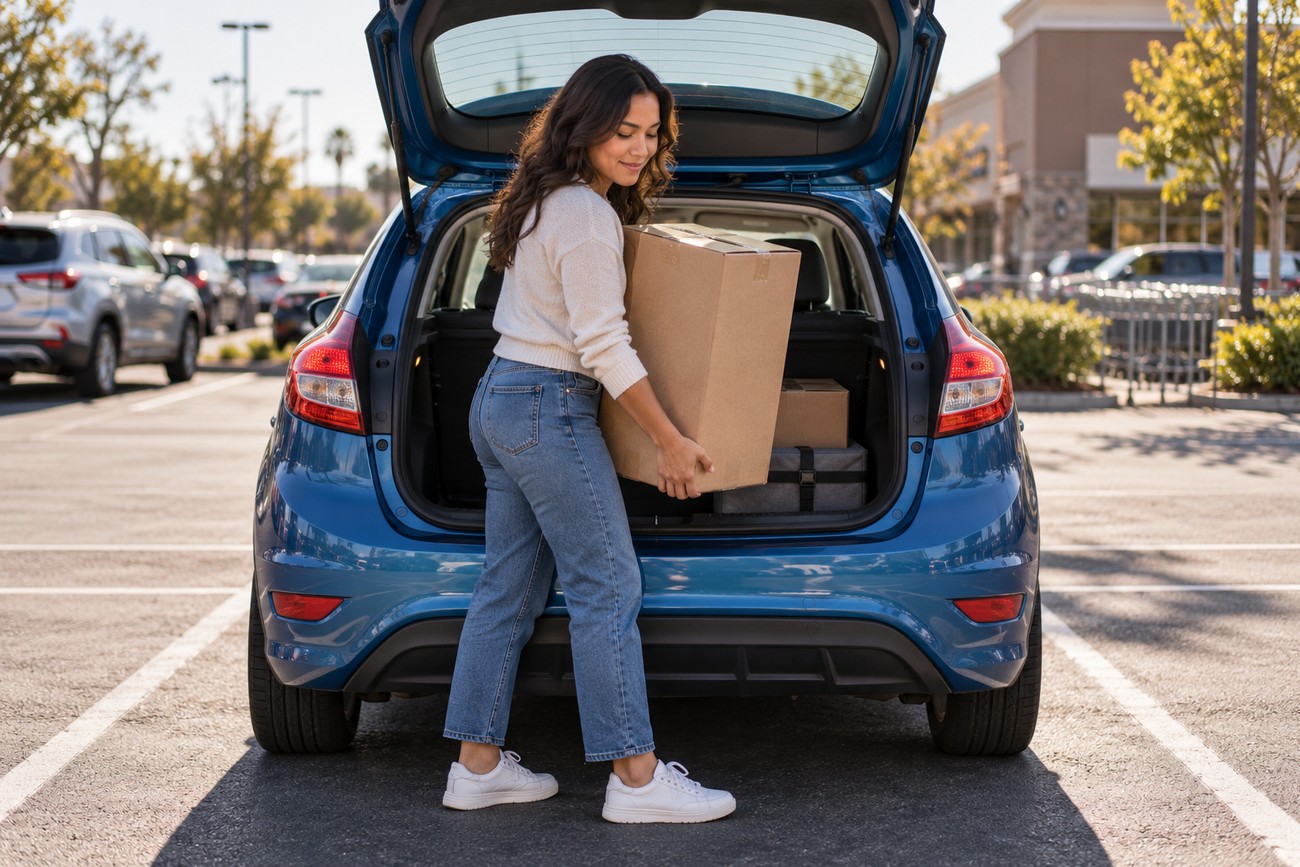
Ford recommends placing cargo as low as possible and close to the front of the luggage compartment. This keeps heavy items nearer the floor and reduces the chance of loose objects shifting toward the hatch or passenger area. It also makes better use of the available space than building an unstable stack near the roofline.
Loose items should be restrained with load straps compliant with the applicable DIN standard. A bag or box that seems harmless while parked can move under braking, particularly if it is placed high or left against the rear seat without restraint.
Do not store heat-sensitive items or liquids in the boot. Heat can affect some goods, while a leaking container can damage trim and create an additional hazard inside the vehicle. Keep the closure path clear so that the latch can engage fully.
The maximum published volume is not automatically the safe usable volume. If the cargo prevents the lid from closing securely, exceeds the vehicle’s permitted loading limits, or blocks the driver’s view, the journey should not begin. Ford guidance also says not to drive with the boot lid or door open.
Roof racks and boot accessories: the fitment trap
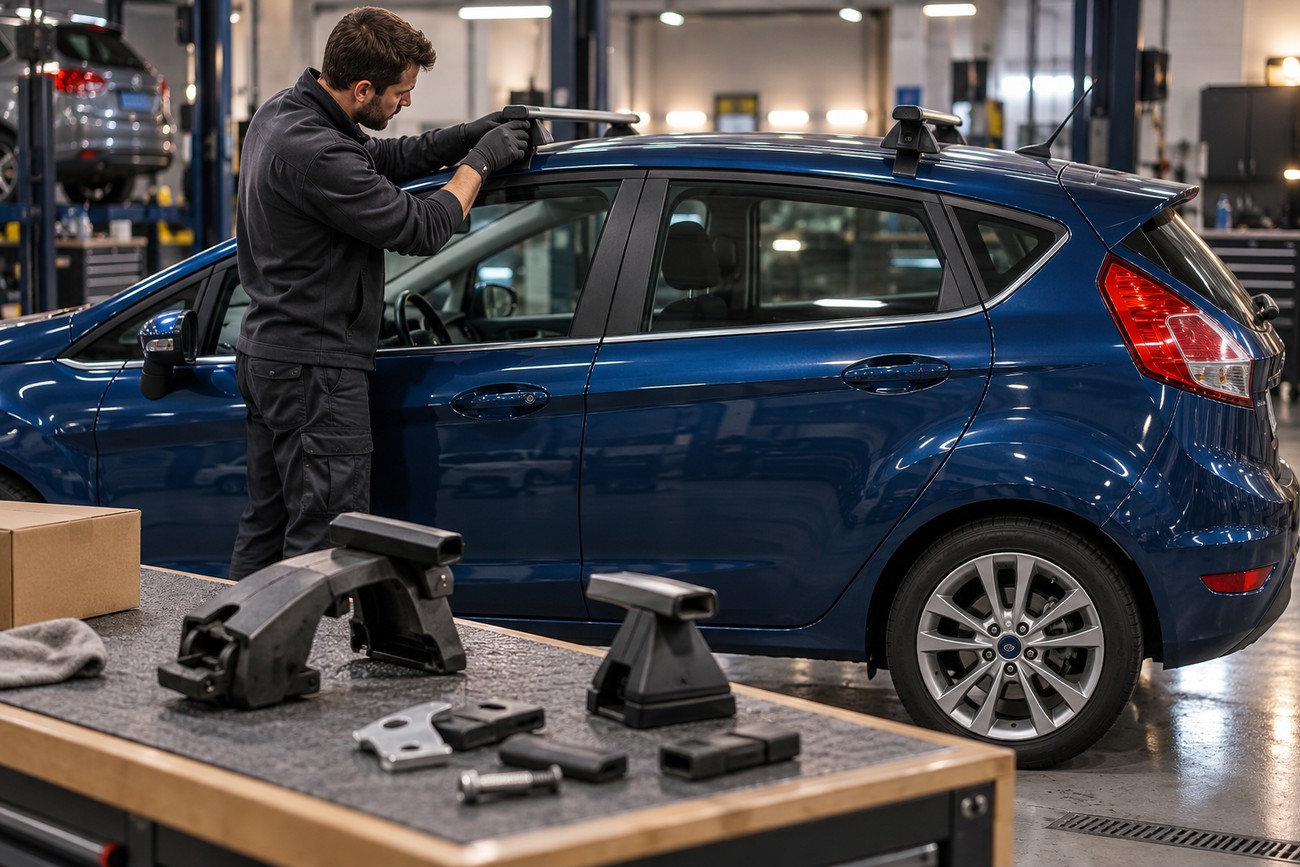
Broad advertising claims often hide the details that determine whether an accessory will fit. A listing such as “fits Ford Fiesta 2015–2020” or “2017–” may omit the body style and roof type. A product advertised for a Fiesta is not automatically verified for every Fiesta built during those years.
Check the generation, number of doors, roof type, rails, door aperture, and mounting points before buying. The same model name can cover different roof structures and attachment arrangements, while a three-door and five-door body may require different parts or positioning.
Generic “universal” wording describes the seller’s intended range, not proof of compatibility with your specific car. Compare the manufacturer’s fitment chart with the vehicle identification details and inspect the mounting instructions. If the chart does not identify the roof and body configuration, treat the claim as unconfirmed.
Fitment also affects safe loading and clearance. An accessory that can be attached physically may still sit incorrectly, interfere with the door seals, or fail to provide the required contact at the mounting points. Do not compensate for uncertain compatibility by overtightening fasteners or modifying the car without verified instructions.
Common mistakes, hidden wear, and misleading fixes
A common mistake is buying a boot or roof accessory by model name alone. Capacity figures create a similar problem: a single number may describe a different body style, generation, or folded-seat configuration. Check the exact vehicle and the actual opening before committing to a purchase or loading plan.
Owners also tend to load high because the Fiesta boot can appear to have unused space above the cargo floor. Ford’s guidance is more specific: place cargo as low as possible and close to the front of the luggage compartment, then restrain loose items with suitable DIN-compliant straps.
A lid that is only partly latched is not safe for driving, even if it appears stable at the curb. A fault that looks electrical may originate in the lock mechanism or boot-door adjustment, particularly where the switch is integrated into the lock. Lubricating or drying the mechanism may provide temporary improvement rather than a permanent repair.
During inspection of an older Fiesta, check the rear bumper where it meets the wing. Some owner reports mention rubbing or catching in this area over time, with a possible corrosion risk. It is not a universal defect, but fresh scuffing, movement, or bubbling paint deserves attention before it develops into a larger bodywork problem.
A sensible check before leaving the shopping center
First identify whether the problem concerns parking enforcement or the hatchback. If the whole vehicle has been immobilized, follow the operator’s instructions. If the rear lid is the issue, inspect the latch area and the door alignment without forcing the mechanism or attempting to bypass the lock.
Remove cargo that is high, loose, heat-sensitive, or pressing against the hatch. Reposition the remaining load as low as possible and toward the front of the boot, using suitable DIN-compliant straps where restraint is needed. This can reveal whether the closure problem is caused by an obstruction rather than a failed part.
Close the lid and check that the latch has engaged fully. The lock, latch, switch, and door adjustment can be related parts of one fault, so repeated slamming is unlikely to provide a reliable fix. A warning light, loose lid, poor alignment, or failed latch should be treated as a reason for inspection.
Do not drive if the boot cannot be securely closed. Ford guidance says not to drive with the boot lid or door open, and a temporary workaround should not replace a proper repair. Arrange assistance or have the car inspected where it is safe to do so.
Frequently asked questions
These answers separate recurring owner-reported symptoms from universal claims and distinguish the Fiesta hatchback boot from the separate car-park meaning of “booted.”
What is the most common problem with the Ford Fiesta boot?
Recurring reports concern the boot latch and door adjustment: the lid may fail to open, close poorly, or appear to improve only temporarily after a lock replacement. That does not mean one fault affects every Fiesta. The exact cause can be mechanical, alignment-related, or connected with the lock’s switch signal.
On some Fiesta Mk6 versions, the boot-lid switch is integrated into the lock. A failed latch can therefore look like an electrical problem, which is why the lock and door alignment should be checked alongside the wiring.
Why would someone’s car get booted at a shopping center?
In the car-park sense, “booted” means the vehicle has been immobilized with a wheel-clamping device or similar equipment. The reason, release process, and any applicable charges depend on the shopping-center operator and local rules.
Check the notice on the vehicle, the car park’s posted terms, and the operator’s contact instructions. This situation is separate from a Ford Fiesta boot lid that will not open or close.
Why does my Ford Fiesta boot keep opening on its own?
A boot that opens or fails to stay shut may have an unlatched lid, a worn or faulty latch, an incorrect switch signal, or a door-alignment problem. If the lid sits unevenly, needs slamming, or changes behavior when pressure is applied near the latch, alignment and the lock assembly deserve inspection.
Do not assume that replacing a switch or applying lubricant has solved the fault permanently. If the latch does not hold securely, keep the vehicle stationary until the mechanism has been repaired and the lid can be confirmed closed.
What year should I stay away from with a Ford Fiesta?
The supplied evidence does not support a blanket year recommendation. Condition-based inspection is more useful: test the boot latch, check door alignment, inspect the front-door locks on early cars for winter-related issues, and look for rear-bumper-to-wing contact and corrosion.
Also verify the exact body style and roof configuration before buying accessories. A well-maintained car with the correct fitment can be a better prospect than a newer example with an unresolved latch, alignment, or bodywork problem.







