

The BMW M5 has long occupied an unusual place in performance-car culture: a fast, discreet sedan that can cover distance with the composure of a luxury car. A Cannonball attempt subjects that formula to a harsher test. Thousands of miles, sustained speed, fuel stops, traffic, heat, weather, and legal exposure turn a comfortable high-performance car into a systems-engineering problem.
The widely cited BMW M5 result is 31 hours and 4 minutes, associated with Alex Roy, Dave Maher, and Cory Welles in a modified 2000 BMW M5 E39. That figure made the sedan part of Cannonball folklore, with a reported average speed of approximately 90 mph and a reported peak of 157 mph. The achievement raises a more useful question than whether the M5 is fast: does the result prove that a production sedan is ideal, or show how much preparation sits behind the badge?
- What the Cannonball Run Actually Measures
- The BMW M5 Record: What Happened in 31 Hours and 4 Minutes
- BMW M5 Generations: Headline Speed Versus Cannonball Relevance
- Why Average Speed and Fuel Strategy Matter More Than a Big Top-Speed Number
- The Hidden Engineering Cost: Heat, Tires, Brakes, and Support Systems
- The Biggest Myths About an M5 Cannonball Run
- Why Cannonball Attempts Create Legal Risk—and Why That Matters
- Frequently asked questions
- What car has the fastest Cannonball Run?
- Why can a Cannonball attempt be illegal?
- How are Cannonball Run times verified?
What the Cannonball Run Actually Measures
The Cannonball Run is an unofficial coast-to-coast interstate time trial historically associated with New York and Santa Monica. It has no single sanctioned race organization, standardized sporting regulations, or universally governing record book. Public-road attempts therefore exist outside the normal structure of organized motorsport.
The commonly cited route distance is approximately 2,800–2,900 miles. An elapsed time reflects the entire journey, including fuel stops, traffic, road closures, weather, navigation decisions, and delays caused by incidents elsewhere on the route. A car’s peak speed matters only during the small portion of the trip when conditions permit it.
Cannonball is a race against elapsed time and route conditions rather than a wheel-to-wheel competition. There is no opposing car to pass on a circuit and no controlled surface to remove uncertainty. The route itself becomes the primary rival, with every interruption affecting the final result.
That distinction explains why a high top-speed figure can mislead. A car capable of a spectacular burst may still lose time through fuel consumption, repeated stops, poor traffic timing, or heat-related problems. The meaningful performance measure is the average speed sustained across the complete route, achieved under conditions that are neither controlled nor repeatable.
The BMW M5 Record: What Happened in 31 Hours and 4 Minutes
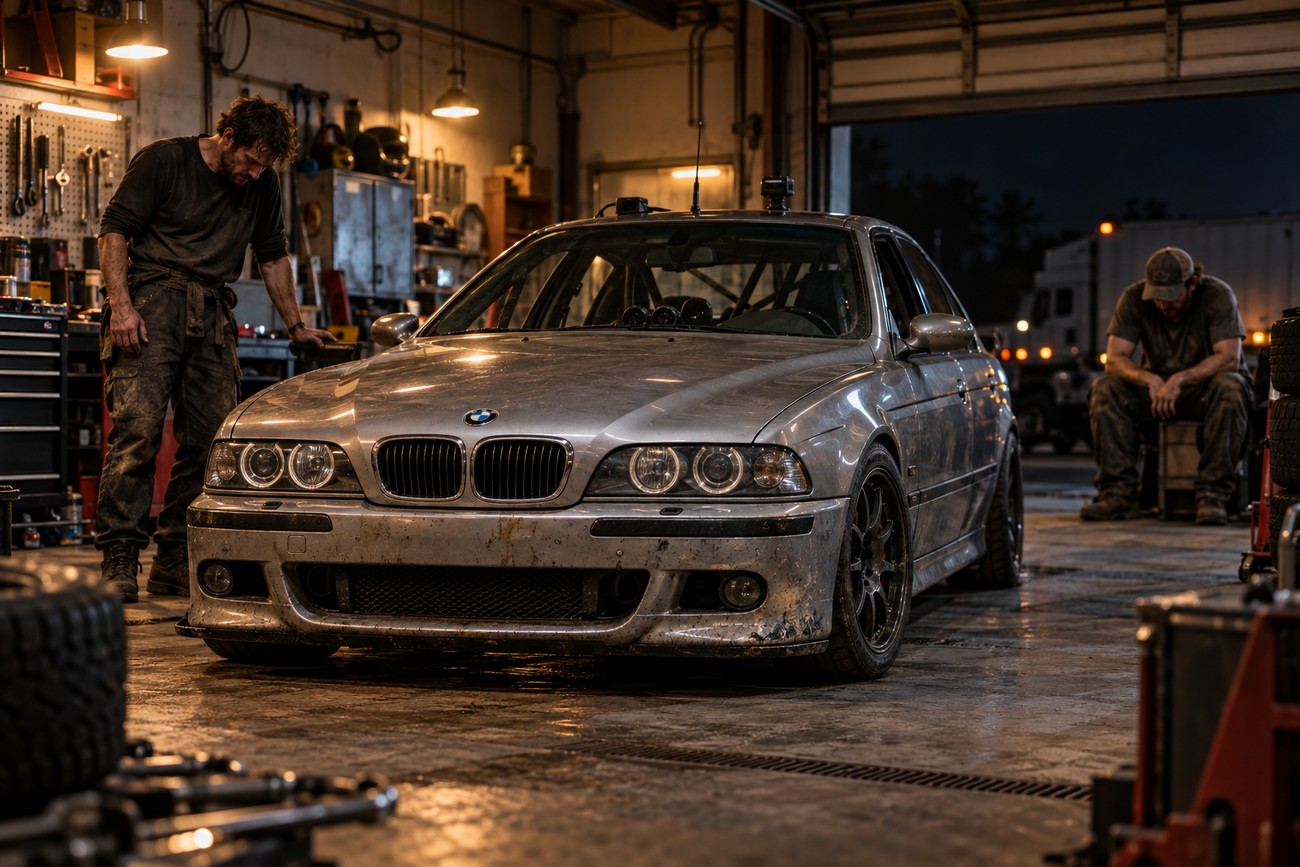
The widely cited BMW M5 Cannonball record is 31 hours and 4 minutes. It is associated with Alex Roy, Dave Maher, and Cory Welles, who used a modified 2000 BMW M5 E39. The reported average speed was approximately 90 mph, while the reported peak speed reached 157 mph.
Those figures describe one prepared attempt under particular conditions. They do not represent a factory test cycle, a repeatable road-going benchmark, or a safe public-road target. The average is especially revealing: a 157 mph peak did not define the result nearly as much as the ability to keep the car moving efficiently across the entire route.
The E39’s underlying credentials were substantial. In factory form, the M5 used a 4.9-liter V8 producing 400 bhp and had an electronically limited top speed of 155 mph. That combination gave the car strong acceleration, long-legged highway ability, and the stability expected of a serious performance sedan.
Its record configuration was materially different from an untouched showroom vehicle. Preparation and support involved cooling, suspension, braking, clutch, communications, navigation, and observation. The headline time therefore belongs to a complete operational system: car, crew, equipment, planning, and circumstances.
BMW M5 Generations: Headline Speed Versus Cannonball Relevance
Factory performance figures answer narrow questions. Acceleration measures how quickly a car gains speed from a standstill, while a governed top speed describes a limit under specified test conditions. Neither figure establishes how a vehicle, its tires, brakes, cooling system, and occupants will cope with hours of demanding highway use.
| Model | Power | Acceleration | Governed top speed | What the figure does not show |
|---|---|---|---|---|
| BMW M5 E39 | 400 bhp | Not specified here | 155 mph electronically limited | It does not establish sustained speed, fuel range, or thermal endurance on a coast-to-coast run. |
| BMW 30 Jahre M5 | 600 hp | 0–100 km/h in 3.9 seconds | Not specified here | Acceleration and power do not reveal route efficiency, tire life, or cooling margin over thousands of miles. |
| Modern M5 Competition | Up to 625 hp | 0–100 km/h in 3.0 seconds | 250 km/h limited, or 305 km/h with the M Driver’s Package | A higher specification does not automatically produce a faster or more reliable coast-to-coast result. |
The newer M5 figures show how far the platform has progressed. BMW’s 30 Jahre M5 was rated at 600 hp and 0–100 km/h in 3.9 seconds. Modern M5 Competition models are rated at up to 625 hp, reach 0–100 km/h in 3.0 seconds, and have a 250 km/h limited top speed, or 305 km/h with the M Driver’s Package.
Those gains can improve overtaking margins and reduce the time needed to reach cruising speed. They also bring greater power, mass, tire loads, and thermal demands. The official figures remain useful for comparing models, yet they cannot be converted into claims about sustained speed under Cannonball conditions.
Why Average Speed and Fuel Strategy Matter More Than a Big Top-Speed Number
The reported M5 record average was about 90 mph despite a 157 mph peak. That gap captures the central arithmetic of a long-distance time trial. A brief high-speed run contributes little if the car later spends time refueling, navigating congestion, waiting behind closures, or dealing with a mechanical problem.
Fuel consumption becomes a strategic constraint as speed rises. Cannonball accounts repeatedly raise the need for careful fuel planning and, in some attempts, additional fuel capacity. Every extra stop costs elapsed time, while running too close to the tank’s usable range introduces its own reliability and logistics risks.
Traffic and incidents can erase the advantage of a powerful engine within minutes. Accidents, road closures, weather, construction, and changing traffic density are external factors that no engine map can solve. A route that appears efficient on a map can become slow when conditions change across several states.
The M5’s ability to sustain high-speed cruising is relevant because a stable, refined car can reduce driver workload and preserve mechanical consistency. That advantage has limits. Prepared record conditions, coordinated support, and exceptional risk tolerance are separate from normal public-road use, where legal and safety margins remain decisive.
The Hidden Engineering Cost: Heat, Tires, Brakes, and Support Systems
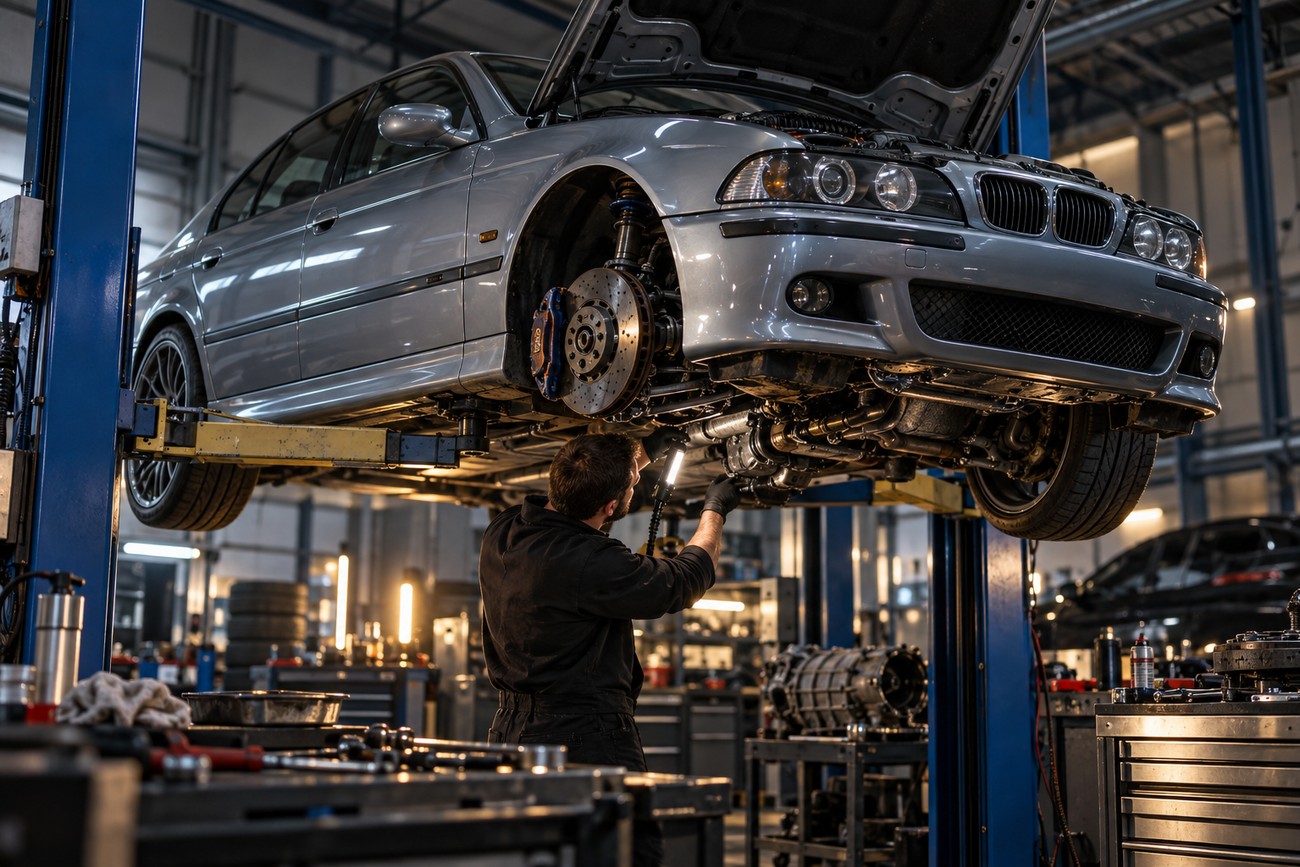
Long-distance high-speed running loads several systems at once. Tires generate heat and face sustained aerodynamic and road-surface forces. Brakes must repeatedly absorb energy, cooling systems must reject heat for hours, and suspension components must control the car over surfaces that are rarely as smooth as a proving ground.
The record E39 was modified for cooling, suspension, braking, clutch, communications, and observation. These changes matter because the car’s limiting factor may appear far from the engine’s advertised output. A drivetrain can remain powerful while a tire, brake component, electrical system, or cooling circuit loses its operating margin.
Thermal margin and component condition matter more than peak dyno output on a long high-speed run; a tire, brake, cooling, or communication failure can erase the power advantage long before the engine reaches its advertised limit.
Support equipment also changes the character of the vehicle. Communications, navigation, and observation systems create an operating network around the car, while the crew manages information and timing. That infrastructure is easy to omit from a dramatic retelling because it cannot be captured in a horsepower figure.
High-speed stability does not remove aerodynamic, surface, or thermal limits. An M5 can feel planted at speed and still encounter a road dip, crosswind, tire problem, or temperature rise that changes the risk calculation immediately. A record-prepared M5 is therefore materially different from a standard road car, even when both carry the same model name.
The Biggest Myths About an M5 Cannonball Run
The first myth is that only a supercar can produce a competitive result. The M5 record shows why that conclusion is too simple. A sedan can be effective when reliability, average speed, driver workload, fuel planning, and preparation matter more than headline top speed alone.
A second myth is that a stock M5 is ready for the task. The record-setting E39 was modified for cooling, suspension, braking, clutch, communications, navigation, and observation. Factory equipment is designed for road use within legal and engineering limits; a record project introduces a different duty cycle and a different set of failure risks.
Peak speed is another misleading benchmark. The reported 157 mph peak sits alongside an average of approximately 90 mph, showing that the result depended on the full route rather than a single maximum-speed run. Fuel stops, traffic, closures, weather, and mechanical margins shape the elapsed time more consistently than the highest number on the speedometer.
The Cannonball is also not simply a fast road trip. It is an unofficial public-road time trial in which extreme speeding and other traffic-law violations can occur. Support crews and sophisticated equipment may improve coordination, yet they do not make the driving lawful or remove the possibility of serious harm.
One disputed claim says that software changes could raise an E39 M5 to 190 mph. That figure is unverified media lore associated with a software modification, not an official BMW specification. It should not be used as evidence of the standard car’s capability or as a basis for judging the record.
Why Cannonball Attempts Create Legal Risk—and Why That Matters
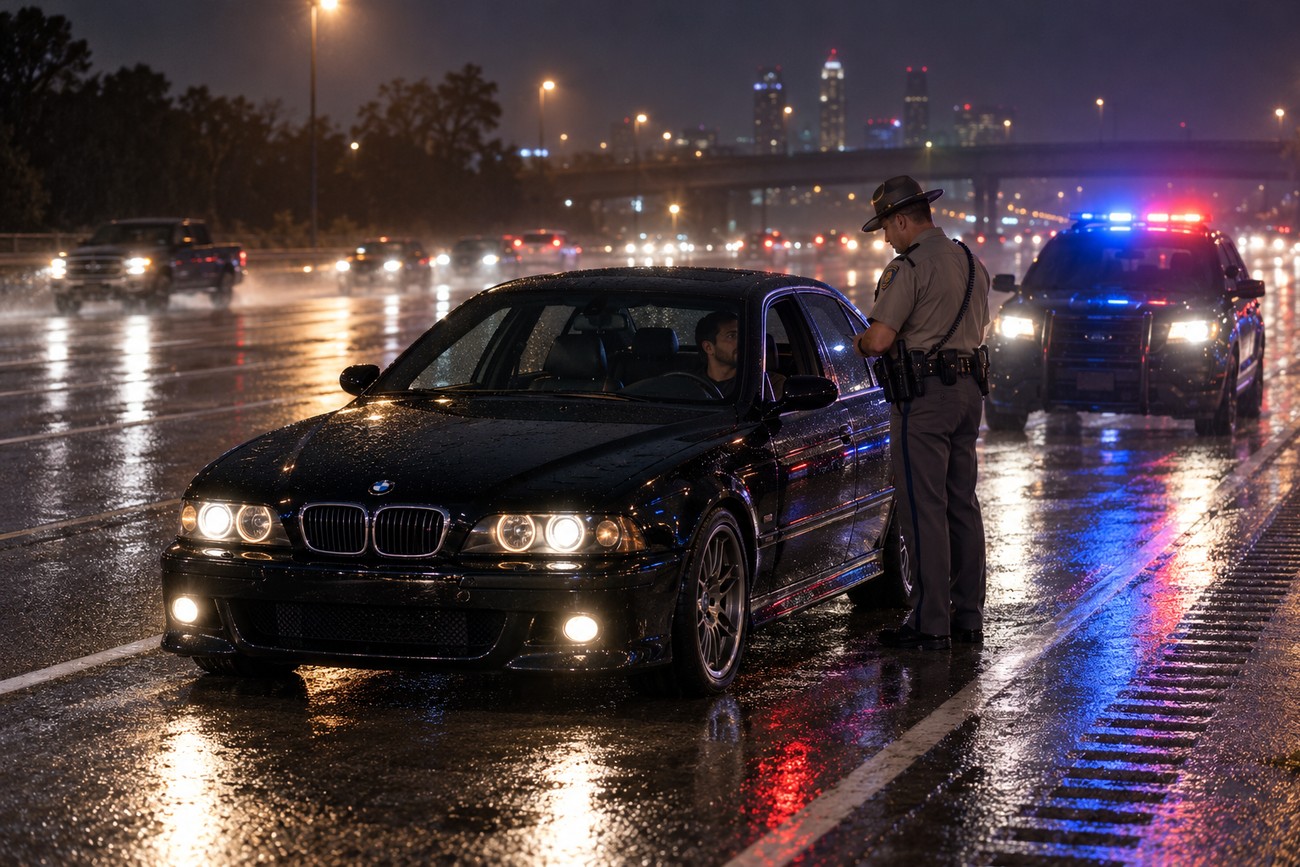
The name Cannonball does not create a special offense. The legal exposure comes from conduct during an attempt, including extreme speeding and potentially reckless or otherwise unlawful driving on public roads. The event is unofficial rather than a sanctioned motorsport competition with closed roads and controlled safety procedures.
Public roads contain people and hazards that a time trial cannot control. Other drivers may change lanes unexpectedly, emergency responders may enter the roadway, and crashes or closures can appear without warning. A fast car, experienced occupants, and support infrastructure do not make those conditions safe or lawful.
Police interaction is one of the risks, yet it is only part of the picture. A stop, collision, road closure, weather event, or mechanical failure can change the outcome immediately. More importantly, a mistake at extreme speed can affect people who have no connection to the attempt.
That is why the record should be treated as automotive history and engineering lore rather than a driving template. The M5’s capabilities are legitimate subjects for analysis; reproducing an illegal public-road time trial is a substantially different matter with potentially severe consequences.
Frequently asked questions
The questions below address the record’s status, the legal issues surrounding the event, and the evidence used to assess reported times. Because the Cannonball has no single governing body, comparisons require careful attention to route, timing, and documentation. These distinctions help separate a widely cited result from a universally verified record.
What car has the fastest Cannonball Run?
There is no universally authoritative answer because Cannonball records vary by era, route, start and finish definition, timing method, and verification standard. The 31 hours and 4 minutes BMW M5 E39 run is widely cited, yet “fastest” remains a disputed label when different attempts do not share identical conditions.
Public accounts may also differ in how much supporting evidence they disclose. A comparison is strongest when the route, timing convention, vehicle preparation, and documentation are clear. Without those details, a headline time can be historically prominent without serving as a definitive official record.
Why can a Cannonball attempt be illegal?
The legal problem comes from the conduct involved, not from a special statute banning the Cannonball name. Extreme speeding, reckless driving, unsafe lane changes, and other ordinary traffic offenses can create criminal or civil exposure depending on the jurisdiction and circumstances.
The unofficial format offers none of the protections of a sanctioned closed-course event. Other road users, emergency personnel, and local communities remain exposed to the consequences of a high-speed attempt. A modified car and a carefully planned support operation do not change that legal reality.
How are Cannonball Run times verified?
Credible verification generally requires synchronized start and finish evidence, fuel receipts, location records, and independent corroboration. Together, these records can establish where the vehicle was, when it began and finished, and whether the claimed route was completed.
Public accounts do not always disclose the same level of documentation. Since the Cannonball has no single governing body or standardized official record book, the quality of verification can vary considerably. A reported time should therefore be described with appropriate caution when its evidence, route definition, or timing method is incomplete.







