
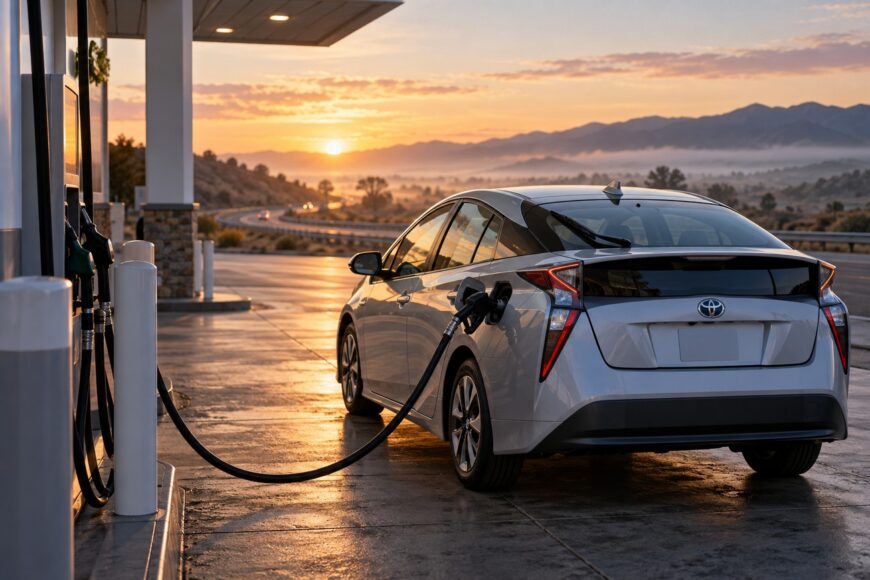
A Toyota Prius can approach or exceed 1,000 miles on one tank in exceptional cases, but that is not a normal or guaranteed result for every generation or configuration. The outcome depends on three linked variables: actual fuel economy, tank capacity, and how much of that capacity can be used safely before refueling.
EPA economy ratings make the distance look theoretically possible because hybrid Prius versions generally sit in the high-40s to 50+ MPG combined range, depending on the version and test cycle. In practice, cold weather, high speeds, cargo, tire choice, and climate-control use can reduce the result substantially. The dashboard’s remaining-range figure is also an estimate, not a promise that the car can safely cover that many more miles.
- Can a Toyota Prius Really Go 1,000 Miles on One Tank?
- The Prius Version and Tank Size Matter More Than Most Drivers Expect
- Why Prius MPG Changes Between City Streets and the Highway
- Why Real-World Range Falls Short of the Dashboard Estimate
- How to Estimate a Prius One-Tank Range Without Fooling Yourself
- What It Takes to Approach 1,000 Miles Safely
- Frequently asked questions
- How far can a Prius drive after the fuel gauge reaches empty?
- Does a Prius Prime count when people claim 1,000 miles on one tank?
- What type of car can actually travel 1,000 miles on one tank?
- How can you verify a Prius 1,000-mile claim?
Can a Toyota Prius Really Go 1,000 Miles on One Tank?
Yes, a 1,000-mile tank is possible on some Prius versions under favorable conditions and with very careful driving. It is easier to approach that figure when the car has a suitable tank size, the route supports steady speeds, and the driver achieves unusually strong real-world MPG. The Prius badge alone does not establish the result.
The basic calculation is simple: estimated miles equal actual MPG multiplied by usable fuel capacity. “Usable” matters because the fuel that can be safely consumed before refueling is not necessarily identical to the tank’s nominal volume. A driver may also stop before the tank is truly empty, particularly when the gauge or warning system becomes uncertain.
Reports of 900–1,000+ miles exist, but they are individual cases rather than proof of normal performance. Such runs usually depend on a specific generation and configuration, a favorable route and weather, light loading, controlled speeds, and a consistent method of filling the tank. They should be treated as efficiency demonstrations, not as a promised ownership figure.
For ordinary travel, a lower and repeatable result is more useful than one exceptional tank. A Prius driven quickly in winter with passengers and luggage can have a dramatically different range from the same car used in mild weather on a smooth, lightly loaded route.
The Prius Version and Tank Size Matter More Than Most Drivers Expect

Prius generations and configurations have noticeably different fuel-tank capacities. That difference changes the distance available even when two cars achieve similar MPG. A version with better economy may still cover less distance if its usable fuel capacity is smaller.
Nominal tank volume is only the starting point. Usable fuel capacity means the amount that can be consumed safely before refueling, taking account of reserve behavior, gauge uncertainty, and the driver’s decision to avoid running out. A calculation based on every advertised unit of tank capacity can therefore make a theoretical range look more dependable than it is.
EPA combined ratings are useful for comparing versions under a standardized test cycle, but they cannot be converted directly into a guaranteed one-tank distance. The ratings for hybrid Prius versions generally fall in the high-40s to 50+ MPG combined range, with the exact result varying by generation, configuration, and test cycle.
Before comparing a 1,000-mile claim with your own car, identify the generation, body and powertrain configuration, and tank specification for that vehicle. Without those details, “a Prius” is too broad a category for a meaningful range prediction.
Why Prius MPG Changes Between City Streets and the Highway
At low load, a Prius may move using its electric motor, while the gasoline engine starts when demanded by the hybrid control system. The car can also recover some energy during deceleration instead of losing all of it as heat through the brakes. These characteristics help explain why city driving can be more efficient than many drivers expect.
Traffic is not automatically ideal, however. Long idling periods, steep hills, aggressive launches, and repeated cold starts can offset the benefits of electric assistance and energy recovery. A short urban trip may also end before the engine and cabin reach efficient operating conditions.
Highway driving changes the balance. At sustained speeds around 75–80 mph and above, aerodynamic drag rises sharply, so the engine must provide more power simply to push the car through the air. The Prius then loses part of its efficiency advantage, and the one-tank range declines faster than a combined rating might suggest.
The useful target is a stable pace rather than driving as slowly as possible. Smooth acceleration, early release of the accelerator, and fewer unnecessary speed changes generally support better economy while keeping the trip practical and predictable.
Why Real-World Range Falls Short of the Dashboard Estimate
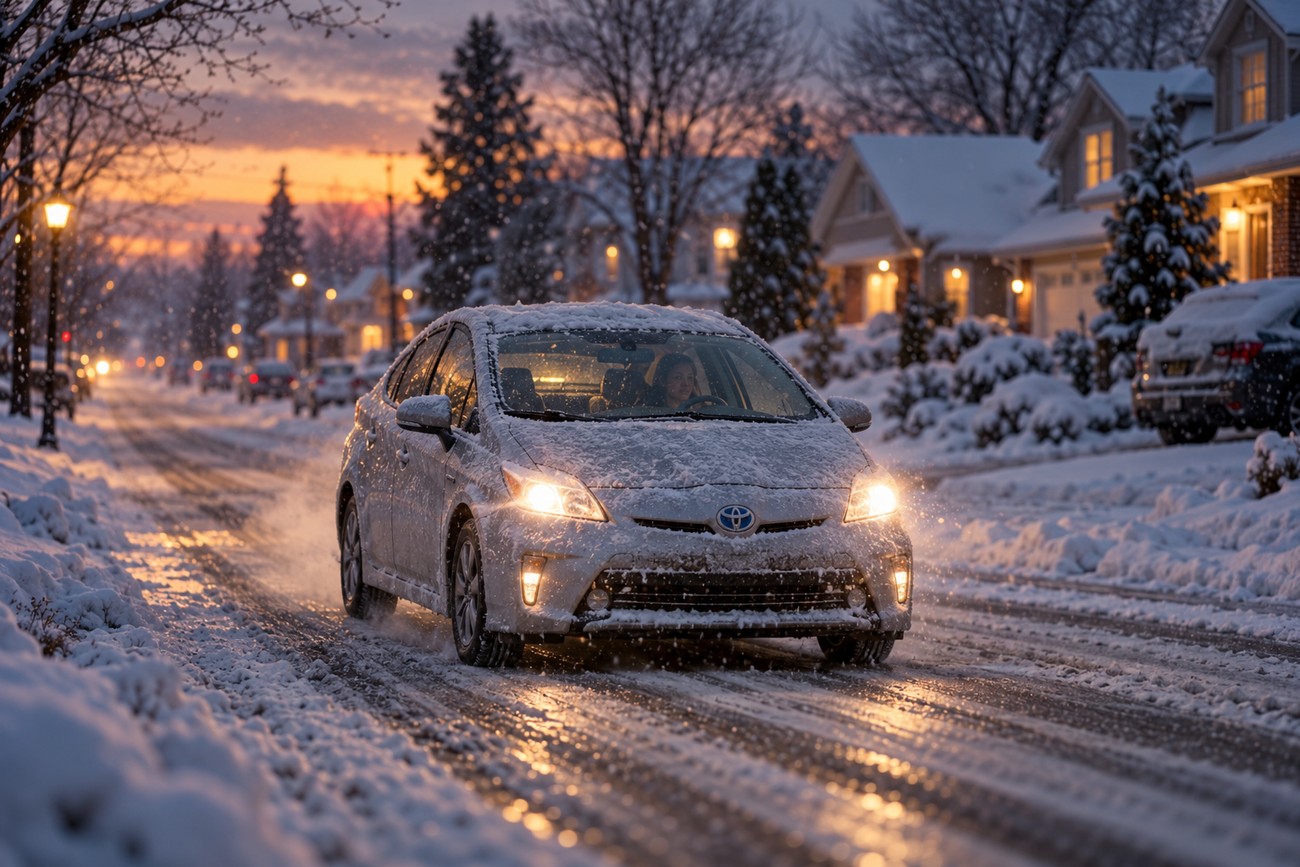
Cold weather is one of the largest reasons a Prius can miss its expected MPG. The engine needs extra warm-up time, the cabin requires heat, and the battery and other systems operate under less favorable conditions. In freezing conditions, the hybrid advantage can weaken noticeably even when the gasoline engine is functioning normally.
Heating, air conditioning, and heated seats all consume energy. Cabin heating can be particularly significant because useful heat often requires the gasoline engine to run or remain warm. A driver who compares a mild-weather trip with a winter commute may blame the battery or engine when the main change is the climate-control load.
Short trips create another trap. The car may spend much of each journey warming the engine, battery system, and interior, leaving little time for efficient steady operation. Several short errands can therefore produce worse economy than one longer trip over the same general distance.
Rolling resistance and aerodynamic drag also matter. Low tire pressure, wider or winter tires, extra cargo, roof-mounted equipment, and open windows all increase the energy required to move the car. Roof accessories are especially costly at highway speed because they disturb airflow when aerodynamic drag is already rising.
Battery aging and the overall condition of the vehicle can change efficiency even if the gasoline engine is operating normally. A single poor tank does not diagnose a fault, but a persistent change across similar routes and weather conditions deserves inspection rather than an assumption that the display is simply wrong.
How to Estimate a Prius One-Tank Range Without Fooling Yourself
The practical check is miles driven divided by gallons added at refueling. Record the odometer or trip distance, then record the amount of fuel added using the same fill-up method each time. Repeating this across several tanks gives a more useful picture than one unusually efficient drive.
Filling to a consistent level matters because stopping at different points changes the apparent fuel economy. Comparing a partial fill with a full fill can make the apparent economy look unusually good or bad, while topping off beyond the normal pump shutoff can introduce its own inconsistency. The aim is a repeatable method, not an attempt to extract every possible drop from the tank.
The remaining-range display is dynamic. It responds to recent driving, speed, weather, route conditions, and changing fuel-economy data, so it can move up or down after a different kind of trip. Treat it as a planning aid, especially near reserve, rather than as a guaranteed measurement.
There is no guaranteed distance after the gauge or display reaches empty. Regularly relying on the reserve increases the risk of running out, and a single tank that reaches an impressive number should not become the baseline for every journey.
What It Takes to Approach 1,000 Miles Safely
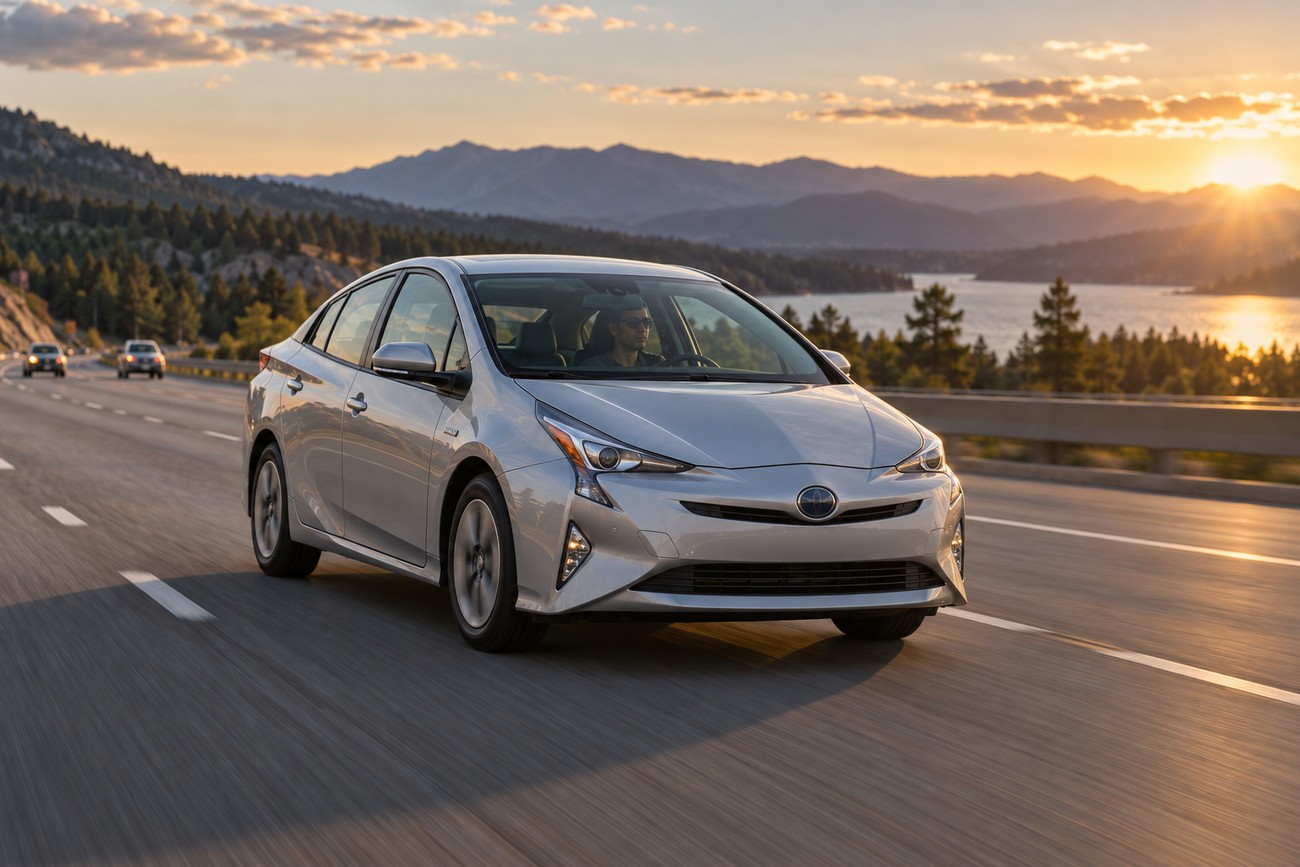
Start with the vehicle in sound condition and set the tires to the manufacturer’s recommended pressure for the load. Remove unnecessary cargo, avoid roof-mounted equipment when it is not needed, and keep windows closed at highway speeds. These measures reduce rolling resistance, weight, and aerodynamic drag without requiring extreme driving.
A stable pace usually matters more than simply driving slowly. Smooth acceleration and braking reduce wasted energy, while anticipating traffic helps avoid repeated speed changes. On a long route, a moderate and consistent speed is generally more useful than alternating between aggressive acceleration and unusually slow sections.
A 1,000-mile attempt normally requires unusually favorable conditions, careful driving, and nearly all usable fuel. That combination leaves little margin for a detour, a headwind, a colder-than-expected night, or an inaccurate assumption about the reserve. Plan refueling around a sensible safety margin instead of trying to prove the last possible mile.
Controlled efficiency testing and normal travel have different goals. For everyday use, a repeatable range with fuel remaining is safer and easier to manage than regularly driving close to empty. The best evidence of performance remains several consistent fuel records, not a dashboard number captured at the end of one exceptional trip.
Frequently asked questions
How far can a Prius drive after the fuel gauge reaches empty?
There is no dependable universal distance after empty. The reserve behavior varies by vehicle and conditions, and the displayed estimate can change as speed, weather, and recent MPG change.
Use the warning as a prompt to refuel, not as a second fuel tank. Continuing to drive until the engine stops can leave you stranded and makes a 1,000-mile result difficult to verify safely.
Does a Prius Prime count when people claim 1,000 miles on one tank?
A Prius Prime requires separate reporting of electric driving and gasoline-only miles. Electric miles obtained from charging are not equivalent to miles covered from the gasoline tank in a conventional Prius.
A credible claim should state how much distance came from external charging, how much came from gasoline, and how many gallons were added. Mixing those figures can make a plug-in result appear comparable to a gasoline-only tank claim when it is measuring something different.
What type of car can actually travel 1,000 miles on one tank?
No single vehicle type guarantees that result. It depends on the combination of real-world MPG and usable fuel capacity: a highly efficient car with a suitable tank can achieve it under favorable conditions, while a less efficient car may need a much larger tank.
Route, speed, temperature, load, tire choice, and climate-control use can change the outcome substantially. A model’s official rating is useful context, but it does not establish a fixed one-tank distance.
How can you verify a Prius 1,000-mile claim?
Record the starting and ending odometer readings, the miles driven, the gallons added, and the fill-up method. The strongest calculation is miles driven divided by gallons added, repeated with consistent fills.
A dashboard screenshot alone is insufficient because the remaining-range display is a dynamic estimate. The claim should also identify the Prius version and distinguish ordinary gasoline miles from any electric miles supplied by external charging.







