
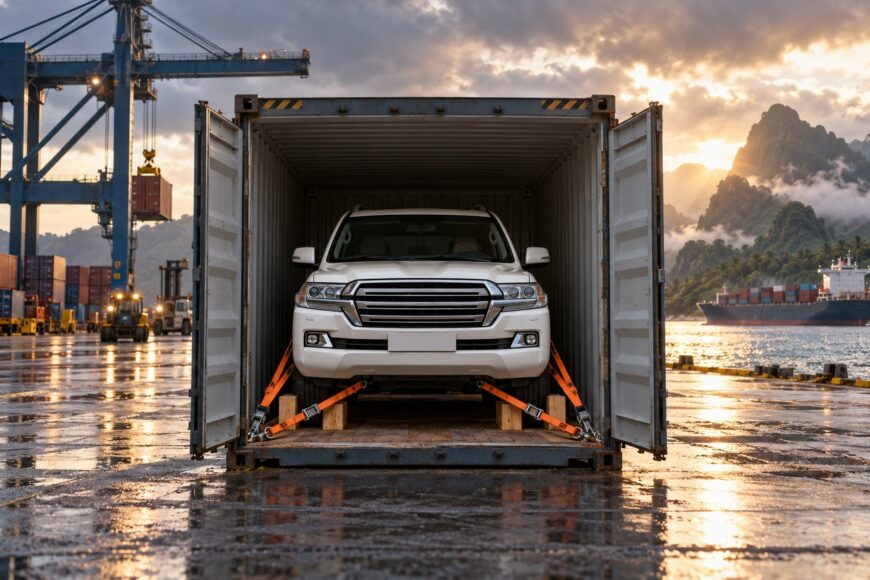
A Land Cruiser cannot simply drive across the Darien Gap. The route between Panama and Colombia is about 97 km of jungle, wetlands, mountains, and rivers, with no continuous road for vehicles: the road ends in Panama and resumes in Colombia.
Rare motorized expeditions have crossed the region with exceptional preparation, large teams, route clearing, winching, and improvised bridges. That history shows that a vehicle can be moved through difficult terrain under expedition conditions. It does not make the Darien Gap a conventional overland route for a Land Cruiser.
For travelers continuing the Pan-American route, the practical solution is to ship the vehicle by container or roll-on/roll-off service while people travel separately by sea or air. The central issues are logistics, recovery, security, and legal coordination, rather than the Land Cruiser’s badge or four-wheel-drive system.
- Can a Land Cruiser Cross the Darien Gap?
- What Makes the Darien Gap Different from Normal Off-Roading?
- Why a Capable Land Cruiser Is Still Not Enough
- What the Famous Motorized Expeditions Actually Prove
- How Vehicles Normally Get Between Panama and Colombia
- The Mistakes That Turn an Expedition into an Emergency
- Frequently asked questions
- How long would it take to drive a Land Cruiser across the Darien Gap?
- What happens if a Land Cruiser breaks down inside the Darien Gap?
- Why is the Land Cruiser being discontinued?
Can a Land Cruiser Cross the Darien Gap?
A Land Cruiser cannot make a continuous road crossing of the Darien Gap because no such road exists. The Darien is the only land break in the Pan-American route, separating the road networks of Panama and Colombia.
The distinction between “crossing the gap” and “driving through the gap” matters. A vehicle can be moved between the two countries by sea, usually in a container or on a roll-on/roll-off service, while its occupants travel separately. That is how most overlanders preserve their vehicle and continue the journey without attempting an unsupported jungle expedition.
A vehicle expedition on the ground would require a prepared route, local knowledge, communications, recovery equipment, spare parts, and enough people to deal with obstacles manually. Even a capable Land Cruiser would be only one component of that operation. It would not create a road, provide fuel, or solve the problem of recovering a disabled vehicle.
The figure of 520,000 migrants who crossed the Darien in 2023 is sometimes used to suggest that the region is broadly passable. It demonstrates passage on foot or partly on foot, not vehicle access. A route that people can cross with difficulty is not automatically suitable for a heavy four-wheel-drive vehicle.
What Makes the Darien Gap Different from Normal Off-Roading?
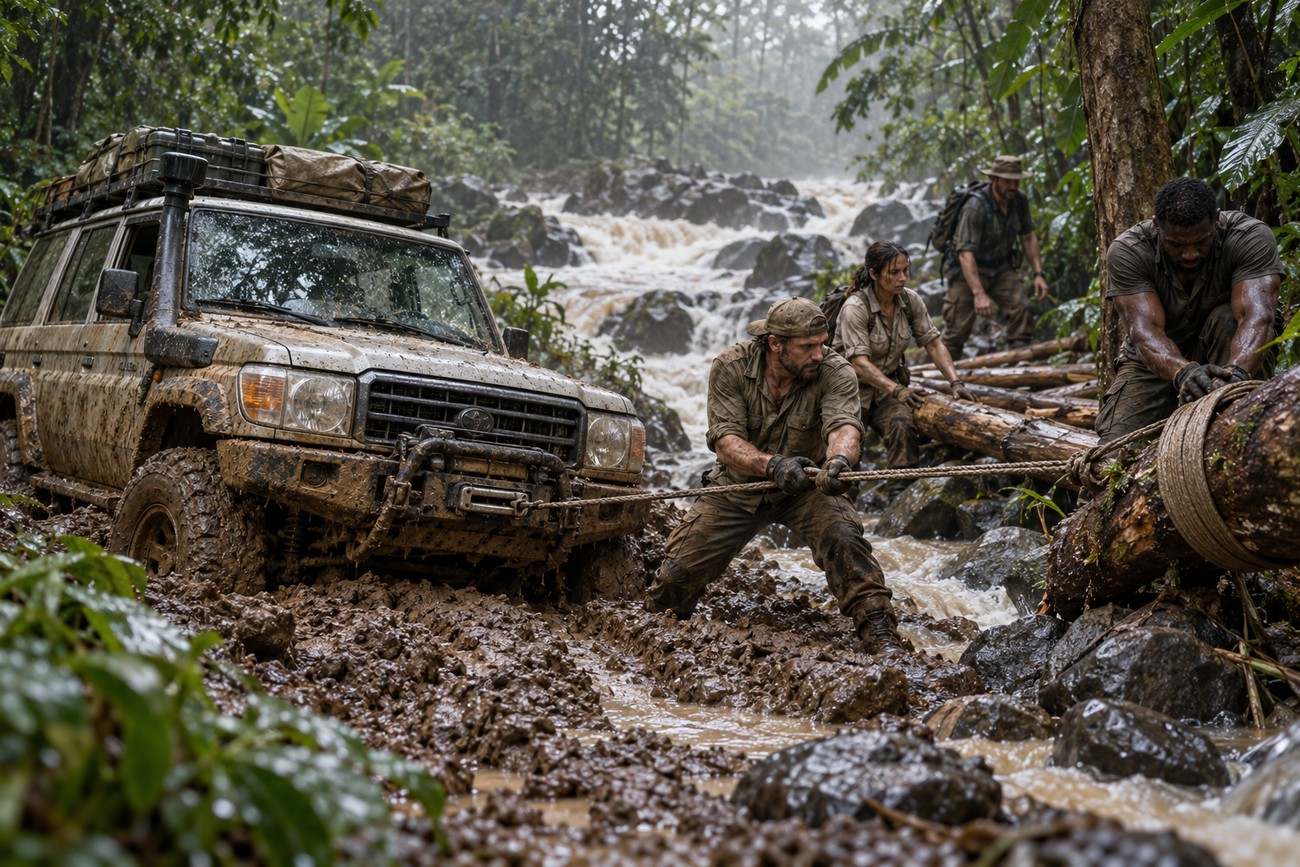
The main difficulty is the accumulation of obstacles. Heavy rainfall can raise rivers, trigger landslides, soften slopes, and erase sections of a route. Mud, fallen trees, rocks, steep ground, and persistent humidity then slow every subsequent task, from moving the vehicle to repairing it.
Historical expedition reports describe hundreds of streams and crossings, along with fallen trees, exposed rocks, log obstacles, and improvised bridges. A vehicle may need to be winched forward, towed, or guided across a structure built by the team. Progress often becomes a sequence of engineering jobs rather than driving sections.
There is little margin for mechanical failure. Fuel, workshops, communications, and dependable vehicle recovery are extremely limited inside the Gap. A damaged suspension component or failed electrical system can therefore stop the expedition for much longer than the repair itself would take in a normal off-road area.
Weather also changes the value of route information. A track that was usable earlier may become a flooded river crossing or an unstable slope after heavy rain. The dry season may make conditions easier, but it does not make the route safe or turn it into a road.
Why a Capable Land Cruiser Is Still Not Enough
Four-wheel drive, ground clearance, and suitable tires help with traction, but traction is only one part of the problem. Water depth and current may determine whether a crossing is possible, while the riverbank may be too soft or steep for a vehicle to exit safely. In such situations, engine power cannot replace route assessment and recovery planning.
Expedition teams may need winches, anchors, saws, ropes, spare parts, communications equipment, and materials for temporary crossings. Fallen trees have to be cut or moved, approaches to rivers may need to be built up, and logs may have to be arranged as a bridge. The vehicle’s ability to drive over an obstacle matters less if the team cannot first create a safe line through it.
Weight is another hidden limitation. A heavily loaded Land Cruiser puts more stress on suspension, tires, driveline components, and improvised bridges. It also sinks more readily into soft ground and becomes harder to move by hand or with a winch. Carrying essential supplies is unavoidable, but treating the vehicle as a mobile warehouse can reduce its ability to proceed.
The essential distinction is between technical capability and engineering support. A Land Cruiser may have the traction to cross a particular patch of mud, yet the expedition may still fail because there is no safe way around the next river, no spare part for a damaged axle, or no reliable method of evacuation.
What the Famous Motorized Expeditions Actually Prove
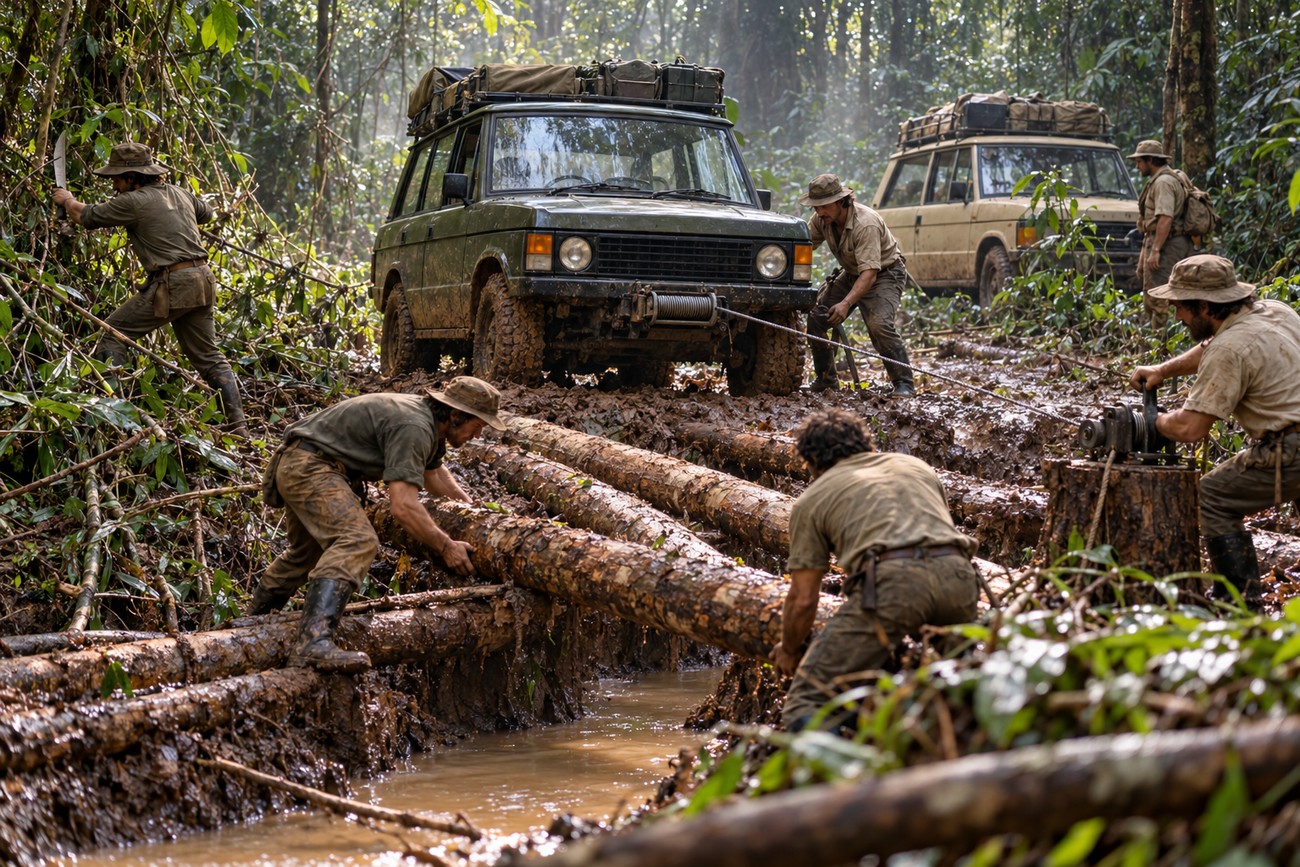
The best-known documented motorized example is the 1972 British Army expedition. A group crossed the Darien using two Range Rover Classics, and a third Land Rover Series II later assisted the operation. This is evidence of what a well-supported expedition achieved, not of a route open to private vehicles.
The crossing involved winching, towing, cutting vegetation, handling fallen trees, and building improvised log crossings. The vehicles did not simply follow a recognizable trail at ordinary off-road speeds. Human labor and route construction were central to moving them.
The expedition also illustrates why vehicle choice alone is a poor measure of feasibility. The operation depended on several vehicles, a trained group, equipment, planning, and the ability to spend substantial time overcoming individual obstacles. A modern Land Cruiser might offer strong mechanical capability, but it would still require the same wider system of support.
Unofficial accounts claim that several other four-wheel-drive groups have crossed the region. Some may describe genuine journeys, partial crossings, or routes that changed over time. Broad documentary confirmation is limited, so these stories should not be treated as a reliable record of regular vehicle access.
How Vehicles Normally Get Between Panama and Colombia
The practical solution is to ship the vehicle by container or roll-on/roll-off service. The owner and passengers generally travel separately by sea or air, then complete the applicable customs and vehicle-entry procedures in the destination country.
This arrangement requires more planning than booking a ship. The vehicle may need to meet carrier requirements, customs documents must match the shipment, and departure dates can affect the entire itinerary. Border procedures, permissions, security, and port schedules matter as much as the ocean crossing itself.
The break in the Pan-American route is both an infrastructure problem and a legal and logistical one. Informal boat arrangements or attempts to follow unauthorized trails should not be treated as standard overland options. Local conditions and security risks can change, and access may be controlled.
Shipping also avoids turning a travel plan into a recovery operation. Once the vehicle arrives in Colombia, the journey can continue on established roads without exposing the occupants and vehicle to the combined risks of jungle terrain, unstable rivers, limited communications, and scarce mechanical support.
The Mistakes That Turn an Expedition into an Emergency
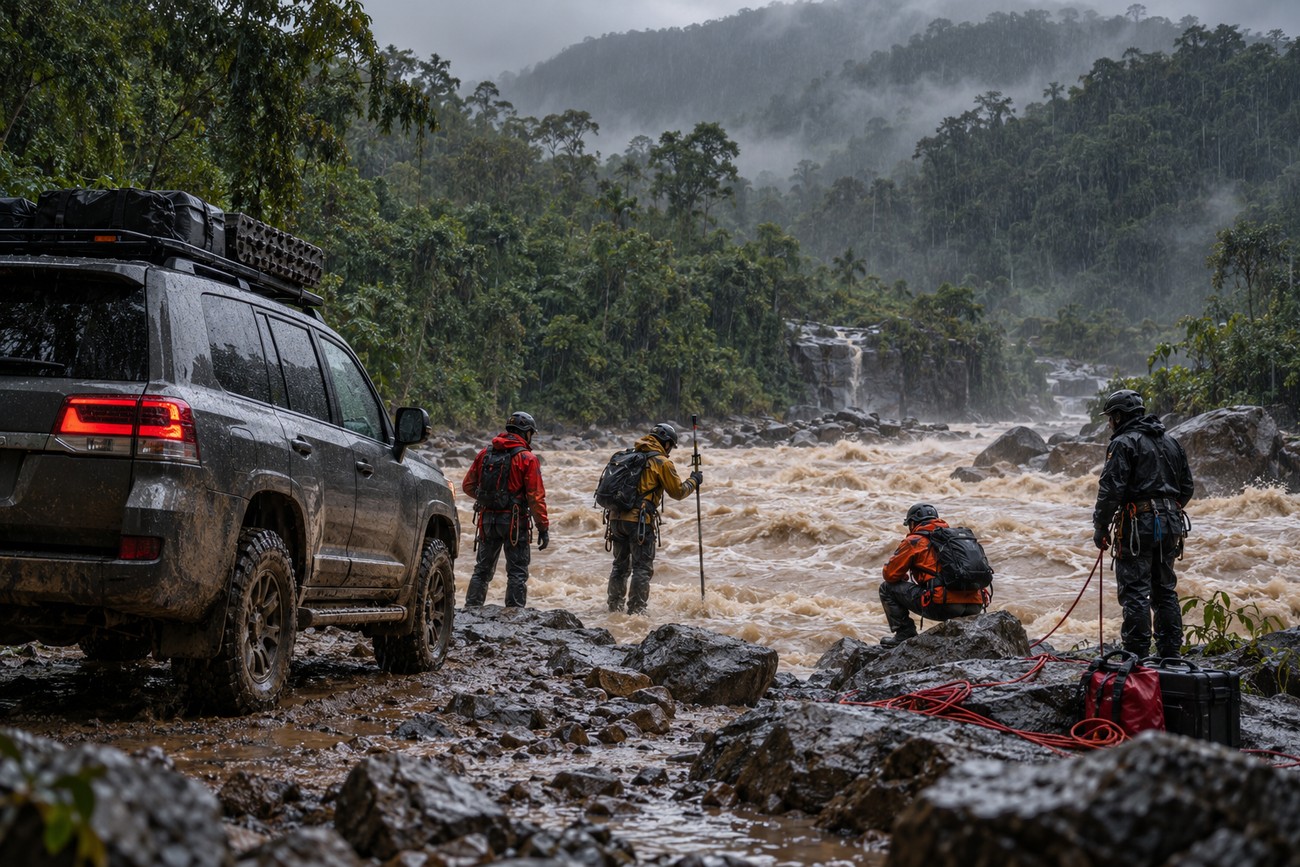
The first mistake is planning the crossing as an advanced off-road tour. A tour normally assumes a defined route, predictable recovery options, and access to assistance. Inside the Darien Gap, a breakdown can become an evacuation problem because reliable roadside recovery is largely absent.
Water is another common source of bad decisions. A shallow-looking crossing may have a strong current, an unstable riverbed, or no usable exit on the far side. Teams must assess depth, flow, entry and exit points, and the effect of recent rain rather than relying on tire choice or momentum.
GPS is useful for orientation, but it is not a substitute for local navigation and route knowledge in dense jungle. Satellite positioning may show a general location while saying little about a fallen tree, a washed-out approach, or a river that has changed course. Carrying excessive weight creates a separate problem by increasing ground pressure and mechanical stress.
Security risks add another layer beyond terrain and vehicle damage. Illegal activity, smuggling networks, and controlled or unauthorized crossings are among the reasons an informal route cannot be treated like a recreational trail. If the goal is simply to continue the Pan-American route, shipping the Land Cruiser is the practical option.
Frequently asked questions
The answers below separate documented expedition history from the practical choices available to modern overlanders.
How long would it take to drive a Land Cruiser across the Darien Gap?
There is no dependable standard travel time for a vehicle expedition. Progress depends on weather, river levels, route clearing, manual bridge work, breakdowns, and the amount of towing or winching required, rather than on distance alone.
That makes a schedule based on about 97 km misleading. Even in the dry season, conditions can remain slow and technically demanding, while a major rainfall event can alter the route and stop movement altogether. A claimed crossing time should therefore be understood as specific to one expedition and its support system.
What happens if a Land Cruiser breaks down inside the Darien Gap?
The team must generally attempt self-recovery using its own parts, tools, winches, manpower, and route support. Ordinary towing or workshop assistance cannot be assumed, and reaching a disabled vehicle may be as difficult as repairing it.
A minor fault can become serious if it immobilizes the vehicle near a river or on unstable ground. The consequences may include abandoning equipment, arranging an evacuation, or waiting for assistance from a group already operating in the area. This recovery burden is one of the strongest practical arguments for shipping the vehicle.
Why is the Land Cruiser being discontinued?
Discontinuation claims usually concern a particular Land Cruiser generation, engine, trim, or market. Manufacturers may change model names, pause sales, or replace one version while continuing related Land Cruiser vehicles elsewhere.
Those market decisions are unrelated to Darien Gap capability. A current vehicle’s availability should be checked for the relevant country and model year, while any assessment of a crossing should focus on route access, support, safety, and logistics rather than on whether a particular version is being discontinued.







