
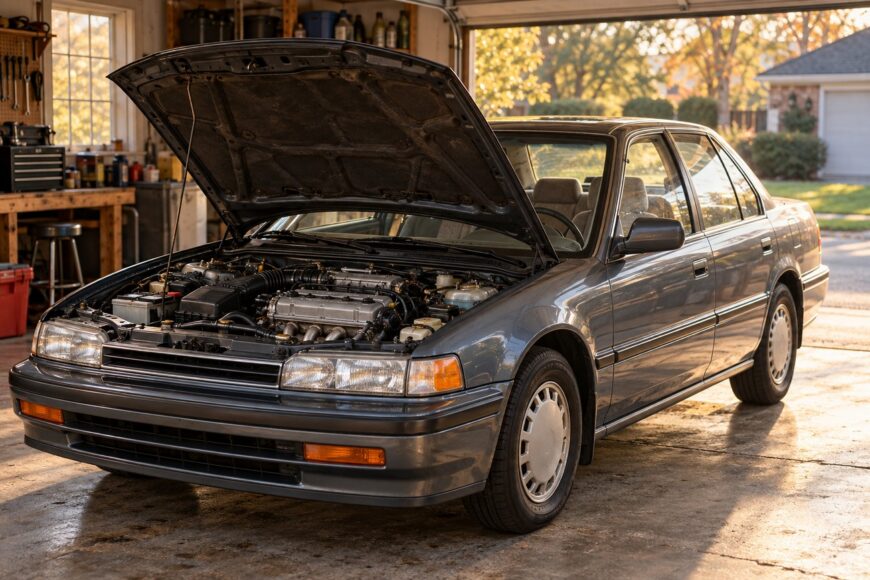
A 1990 Honda Accord owned by Joe reached 1,000,000 miles, or about 1.6 million km, in 15 years. That documented “Million Mile Joe” case proves that an Accord can achieve extraordinary mileage, but it represents an exceptional maintenance-and-use pattern rather than a normal ownership promise.
With rigorous care, 300,000–500,000 miles (about 480,000–800,000 km) can occur, according to a Honda dealer service director’s estimate. Modern Accord powertrains generally offer less margin, while neglected fluids, corrosion, cooling-system failures, and repair costs can end ownership long before the engine reaches an extreme figure.
- Can a Honda Accord really reach one million miles?
- The million-mile Accord was a maintenance project, not a miracle
- Honda Accord powertrains: realistic longevity by type
- Why turbo engines and CVTs change the million-mile equation
- The maintenance strategy that gives an Accord its best chance
- What usually stops an Accord before the engine does?
- How to judge a high-mileage Accord without trusting the odometer
- The myths that make million-mile Accord claims misleading
- Frequently asked questions
- What is bad mileage for a Honda Accord?
- What is the highest mileage a Honda Accord can go?
- How long can a Honda Accord last on the way to a million miles?
Can a Honda Accord really reach one million miles?
Yes, but one million miles is a rare outlier. The 1990 Accord associated with Joe reached 1,000,000 miles in 15 years, an achievement supported by unusually disciplined servicing and sustained use. It should be treated as evidence of what a well-managed car can sometimes achieve, not as a forecast for every Accord.
A more plausible high-mileage range for an exceptionally maintained Accord is 300,000–500,000 miles, or about 480,000–800,000 km. Even that range is not a normal guarantee. It depends on the engine, transmission, climate, driving cycle, maintenance quality, and whether the owner continues repairing the rest of the vehicle.
Reports of Accords reaching 600,000–700,000 miles do exist, but they are isolated local-media cases without mass-market statistical support. Such examples can demonstrate durability, yet they cannot establish a typical service life or justify paying a premium for an unverified high-mileage car.
The million-mile Accord was a maintenance project, not a miracle
The documented million-mile Accord received an oil change every 5,000 miles, and its owner monitored the oil level continuously. The recorded viscosity choices were 10W-30 in summer and 5W-30 in winter. Those details show the level of attention involved, although they are not a universal formula for reaching extreme mileage.
High-mileage examples also tend to receive engine oil, coolant, and transmission-fluid changes more frequently than the minimum factory schedule. Owners commonly use detailed service records to track fluid consumption, temperature changes, noises, and repair history before small faults become major failures.
Use matters as much as service. Gentle driving and substantial highway mileage generally place less stress on an Accord than constant short trips, heavy traffic, repeated cold starts, or taxi-style operation. The million-mile story is therefore a combination of a durable platform, favorable operating conditions, careful monitoring, and repeated replacement of worn ancillary parts.
Honda Accord powertrains: realistic longevity by type
These are practical estimates, not warranties. Engine life is only one part of whole-vehicle life: a transmission, hybrid battery, cooling system, body, or chassis can require uneconomic repairs while the engine is still running.
| Powertrain | Practical longevity estimate | Main durability caveat |
|---|---|---|
| Older naturally aspirated F- and K-series engines | About 300,000–350,000 km with normal use and maintenance | Simpler design helps, but age, oil consumption, cooling faults, and corrosion become increasingly important. |
| 1.5T turbocharged engine | About 200,000–250,000 km in independent technical estimates | Reports include fuel dilution, scoring, and oil consumption, particularly with long oil intervals or poor fuel. |
| 2.0T turbocharged engine | About 200,000–220,000 km in independent technical estimates | Turbocharger and related-system complexity leaves less tolerance for neglected oil service. |
| 2.0 hybrid system | 300,000+ km is possible with correct maintenance | Traction-battery capacity may decline by about 15–20% at 200,000 km and beyond, and replacement can be expensive. |
Broader insurance and statistical estimates place modern Accord real-world lifespan around 167,000–196,000 miles, or approximately 270,000–315,000 km, before serious problems. Hybrid Accords generally show higher longevity estimates than gasoline-only versions, but battery aging remains a separate ownership issue.
Older naturally aspirated engines benefit from a simpler mechanical package. Their practical advantage is the absence of a turbocharger and CVT, although a conventional automatic transmission can still require expensive work, and an old car can accumulate age-related failures.
Why turbo engines and CVTs change the million-mile equation

Owners report fuel dilution, scoring, and oil consumption in turbocharged 1.5T and 2.0T engines. These complaints become more relevant when oil changes are delayed, the engine operates under high load, or fuel quality is poor. They do not mean that every turbo Accord will fail early, but they reduce the value of assuming that modern technology automatically matches older designs over extreme distances.
A turbocharged engine also places greater demands on oil condition and temperature control. Fuel in the oil can reduce lubrication quality, while low oil level or prolonged contamination can accelerate wear. Regular checks can reveal a rising oil level, increasing consumption, or a change in engine noise before the problem becomes a complete failure.
CVT complaints and practical estimates commonly place neglected service life around 150,000–180,000 km. This is not a universal failure deadline, but heat, incorrect fluid, and delayed fluid changes can shorten transmission life substantially. A CVT that behaves normally during a short test drive may still have a poor maintenance history.
Older naturally aspirated Accords with simpler transmissions have fewer components exposed to turbocharging and CVT-specific risks. That does not make every older car a better purchase: rust, age, previous abuse, and automatic-transmission condition can outweigh the simplicity advantage.
The maintenance strategy that gives an Accord its best chance
The strongest strategy is to treat the factory schedule as a baseline rather than a target for every operating condition. Shorter-than-maximum oil intervals can make sense for heavy traffic, repeated short trips, hot climates, high loads, or a turbocharged engine. Use the correct specification and viscosity, buy from reliable sources, and avoid cheap or counterfeit oil and filters.
Check the oil level regularly, especially if the engine has begun using oil. Replace coolant and transmission fluid before neglect turns a routine service into an overheating or transmission repair. Temperature behavior matters: an unexplained rise, a cooling fan that does not operate correctly, or a change in heater output deserves diagnosis before continued driving.
Skipped oil and ATF service can contribute to engine and transmission failure around 150,000–200,000 km. Neglected coolant can lead to overheating, head-gasket failure, or cylinder-head damage. A detailed service and expense log also helps separate a manageable repair from a pattern showing that the entire vehicle is reaching the end of its economical life.
What usually stops an Accord before the engine does?
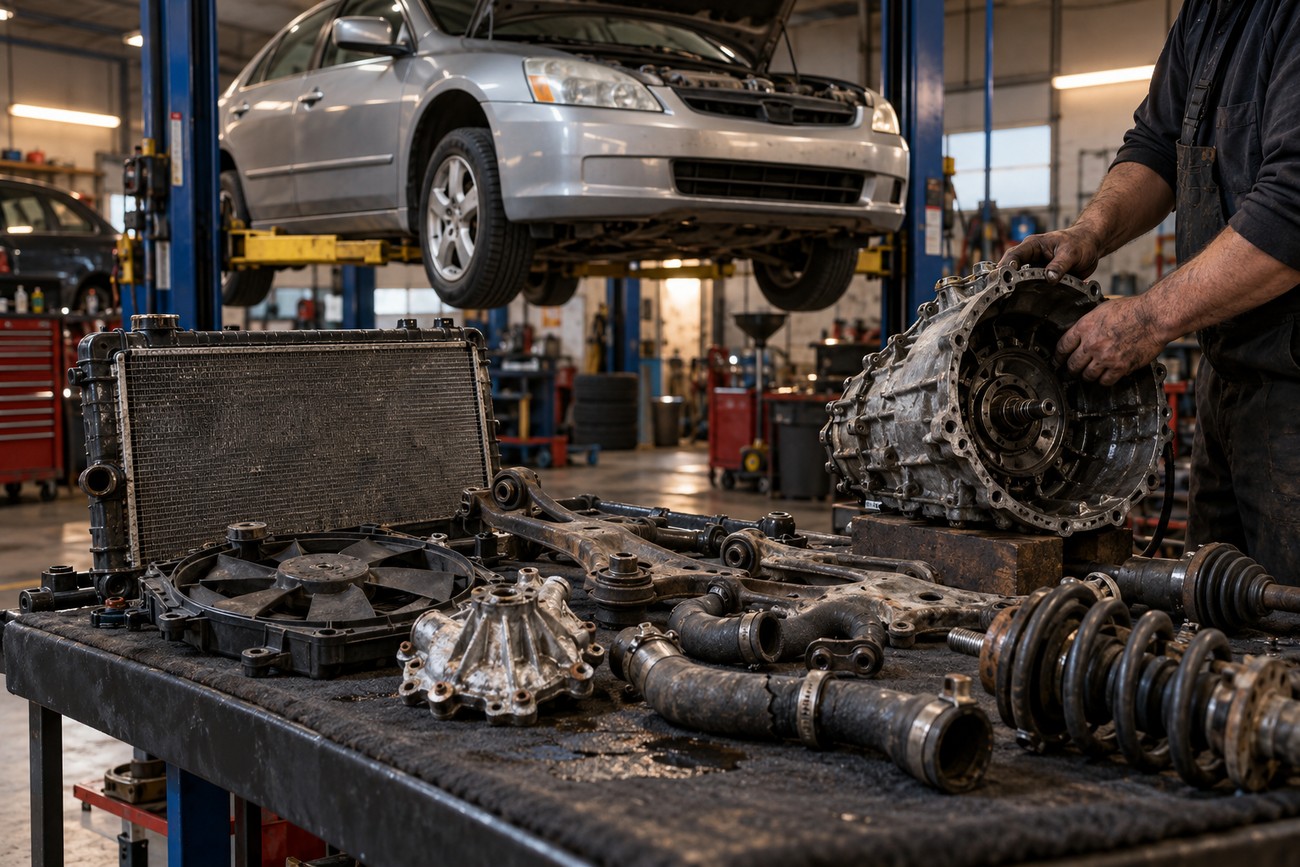
Extreme-mileage ownership is often ended by systems around the engine. Radiators, water pumps, fans, hoses, suspension parts, electrical components, and fuel-system parts may need replacement repeatedly while the basic engine remains usable. A running engine therefore says little about the condition of the rest of the car.
The transmission is a major decision point. A rebuild or replacement can make a million-mile project financially impractical, particularly when the body, suspension, and electronics also need work. This is why transmission behavior and service history deserve as much attention as compression or oil pressure.
At 300,000 km and beyond, repair costs for suspension, cooling, electrical, and fuel systems can exceed the vehicle’s residual value. The car may still be reliable for a dedicated owner, but the same repairs can be irrational for someone seeking inexpensive transportation.
Corrosion, structural fatigue, and age-related body deterioration can end the car before the engine fails. Interior wear is less dangerous, but rust in structural areas, fatigue cracks, or water intrusion can make further mechanical investment difficult to justify.
How to judge a high-mileage Accord without trusting the odometer
There is no mileage number that automatically makes an Accord a bad purchase. In some used-car markets, cars advertised with 300,000 km or more may have rolled-back odometers, so the displayed figure must be checked against service records, inspection findings, and wear patterns.
Look for corroborated maintenance history rather than a single stamped service book. Oil and transmission-fluid receipts, inspection reports, registration records, and consistent dates can support the mileage claim. A heavily worn steering wheel, pedals, seat, switches, or door hardware can contradict a low odometer reading, although no single wear item proves fraud.
An independent inspection should cover transmission engagement, CVT noise and response, fluid condition, cooling-system operation, suspension play, electrical faults, fuel-system condition, and corrosion. A smooth-running engine does not prove that the transmission, cooling system, chassis, or body is healthy.
Buying a turbo Accord or CVT-equipped Accord solely because it is a Honda is a common high-mileage mistake. The right purchase is the example with the strongest evidence of care and the clearest repair budget, regardless of whether its odometer reading looks impressive.
The myths that make million-mile Accord claims misleading
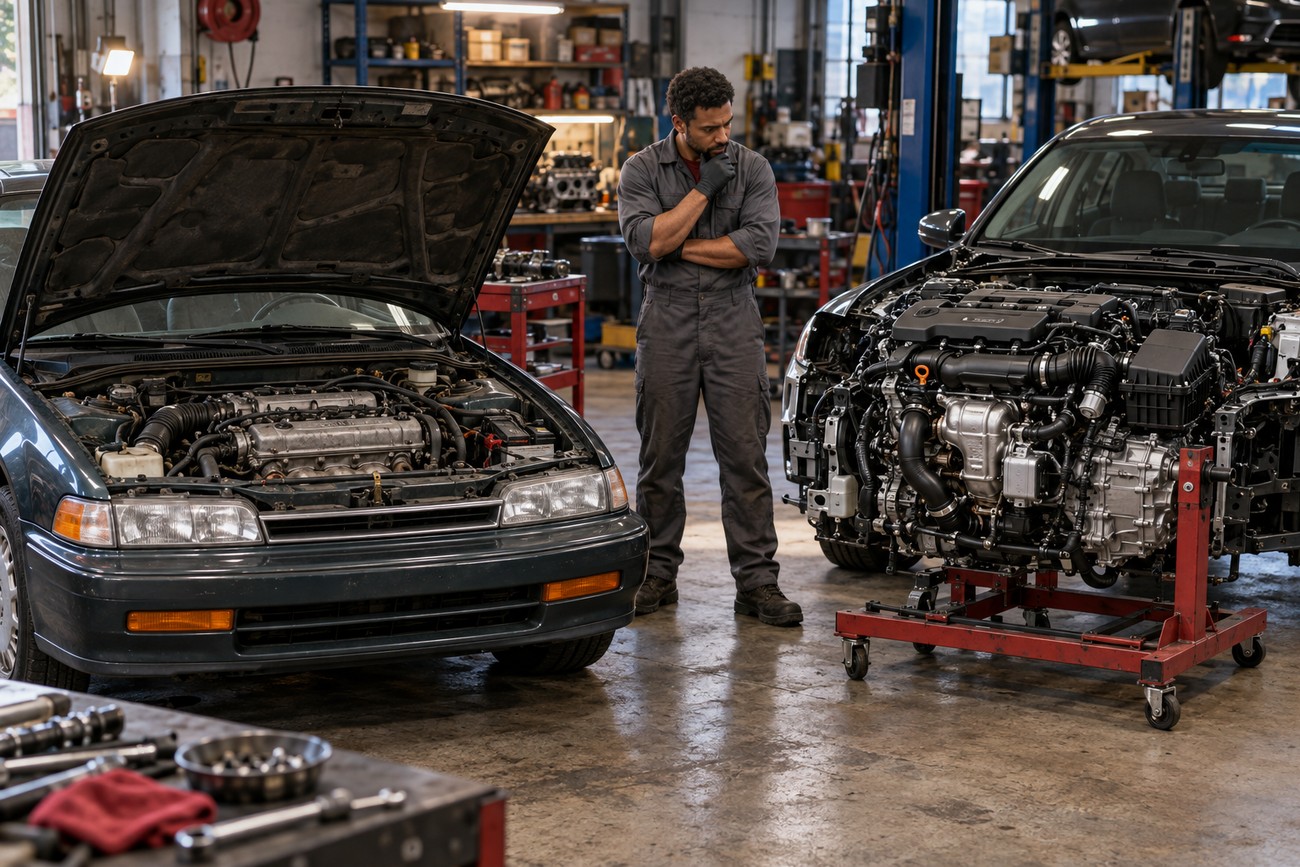
The first myth is that any Accord can reach one million miles if it is driven normally. In reality, one million miles is a rare outlier. Common practical powertrain ranges are far lower, and even a car capable of exceptional engine mileage may lose its economic case through transmission, corrosion, electrical, or chassis repairs.
A second myth says modern turbo technology automatically matches older naturally aspirated engines. Practical evidence in the brief points to less forgiving long-term durability for many turbo and CVT combinations than for older, simpler designs. That is a disputed generalization rather than an absolute rule, so condition and maintenance history still matter more than a slogan about engine type.
Cheap fluids are another false economy. Extreme-mileage examples depend on quality oil, correct service intervals, suitable fuel, and cooling-system care. Counterfeit consumables and skipped coolant service can turn a manageable maintenance plan into premature engine or transmission work.
Finally, a legendary engine cannot guarantee survival of the whole car. The meaningful definition of success is reliable transportation per dollar, taking the engine, transmission, chassis, electronics, body, and repair economics together. A lower-mileage Accord with documented care may be a better ownership proposition than a celebrated high-mileage example that needs everything else rebuilt.
Frequently asked questions
What is bad mileage for a Honda Accord?
There is no universal mileage number that makes an Accord bad. A higher-mileage car with consistent records, little corrosion, a healthy transmission, and affordable upcoming repairs can be a better purchase than a lower-mileage car with an uncertain history.
Judge the car as a system. Confirm the mileage where possible, inspect the cooling system and suspension, evaluate transmission behavior, check for structural rust, and obtain a repair estimate for known faults. The odometer should guide the inspection, not replace it.
What is the highest mileage a Honda Accord can go?
The highest documented example in this brief is a 1990 Accord that reached 1,000,000 miles, or about 1.6 million km, in 15 years. That is an exceptional case. Carefully maintained Accords can sometimes reach 300,000–500,000 miles, while 600,000–700,000-mile reports remain isolated cases without broad statistical support.
The practical limit for a particular car is often set by economics rather than engine failure. Once transmission, corrosion, cooling, suspension, electrical, and body repairs accumulate, keeping the car may cost more than replacing it even if the engine still operates well.
How long can a Honda Accord last on the way to a million miles?
The documented 1990 Accord reached one million miles in 15 years. That pace should not be treated as a normal target because it depended on unusually high use, substantial highway driving, gentle operation, strict servicing, and repeated replacement of ancillary components.
For most owners, a more useful goal is long, predictable service at a sensible repair cost. Reaching a million miles requires the vehicle to survive several cycles of maintenance and component replacement, while the engine, transmission, body, and owner’s budget all remain viable.







