
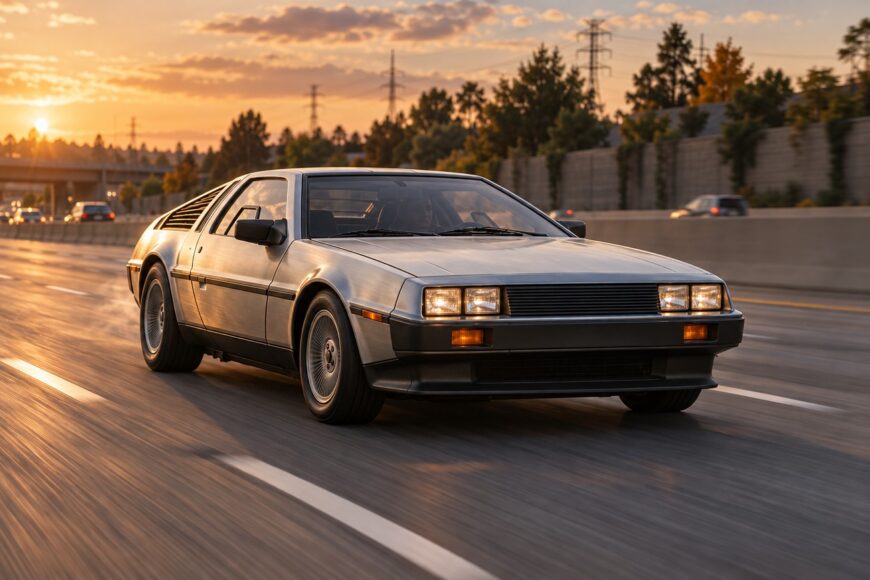
The DeLorean’s cinematic reputation suggests a machine built for spectacular acceleration. The real DMC-12 is more modest: its 2.85-liter PRV V6 produced about 130 hp SAE net, and the car’s performance depends heavily on age, maintenance, and transmission choice.
A healthy DeLorean can reach 88 mph, or 141.6 km/h, without treating that speed as a technical boundary. The drama usually comes from poor fuel delivery, unstable ignition, old tires, dragging brakes, or a tired gearbox. A sound car feels unhurried; a neglected one can feel genuinely defective.
- What 88 mph Means for a Stock DeLorean
- Why Reaching 88 mph Can Feel Like a Long Negotiation
- When “Slow” Actually Means Something Is Wrong
- The Parts That Can Steal Speed Without Looking Broken
- How to Judge a DeLorean Before Blaming the Design
- Frequently asked questions
- Why was 88 mph chosen for Back to the Future?
- What happens when the DeLorean hits 88 mph?
- How fast can a DeLorean go in real life?
What 88 mph Means for a Stock DeLorean
The DMC-12 carries about 2,700–2,900 lb, or approximately 1,220–1,315 kg, depending on market and equipment. That is substantial mass for an engine producing about 130 hp SAE net. The result is adequate road performance with limited reserve for rapid acceleration, especially once speed and aerodynamic resistance begin to rise.
Period factory claims typically placed 0–60 mph acceleration at about 10.5–11.0 seconds. Those figures describe a period test configuration and should not be treated as a promise from every surviving car. Real-world acceleration varied with the manual or automatic transmission, vehicle condition, and weather.
Factory top-speed figures were usually quoted at about 110 mph. That places 88 mph well below the DeLorean’s technical maximum, assuming the car is mechanically sound and tested in appropriate conditions. The speed is therefore a reachable road speed rather than a special operating limit built into the chassis.
The useful distinction is between capability and urgency. A healthy stock DeLorean has enough power to build speed steadily toward 88 mph, while its weight, gearing, and modest output leave little room for a dramatic surge. If the car cannot maintain progress once it is warm and running correctly, its condition deserves attention before the design is blamed.
Why Reaching 88 mph Can Feel Like a Long Negotiation
Acceleration often feels acceptable at urban speeds and increasingly deliberate around 60–70 mph. The final part of the run toward 88 mph can take a long, clear stretch of road, particularly with a passenger, the air conditioning operating, or a rising grade. Headwinds and warm-weather conditions can add to the impression that the car has run out of enthusiasm.
Manual and automatic versions can feel noticeably different. The gearbox determines how effectively the available power stays in the engine’s useful operating range, and an imperfect shift or worn transmission can extend the run. Period results varied from the factory claims for precisely these reasons, along with differences in vehicle condition and weather.
An intact DeLorean may therefore be slow by modern standards without being defective. It should accelerate smoothly, respond consistently, and continue building speed without severe hesitation or surging. A gradual climb in speed is part of the car’s character; an abrupt refusal to pull is evidence of a problem.
Expectations create many false diagnoses. Someone accustomed to a modern performance car may call a stock DMC-12 weak even when it is operating as designed, while a driver familiar with the model may overlook a worsening fuel or ignition fault. The practical test is consistency: the car should repeat its behavior when warm, under load, and on a level road.
When “Slow” Actually Means Something Is Wrong
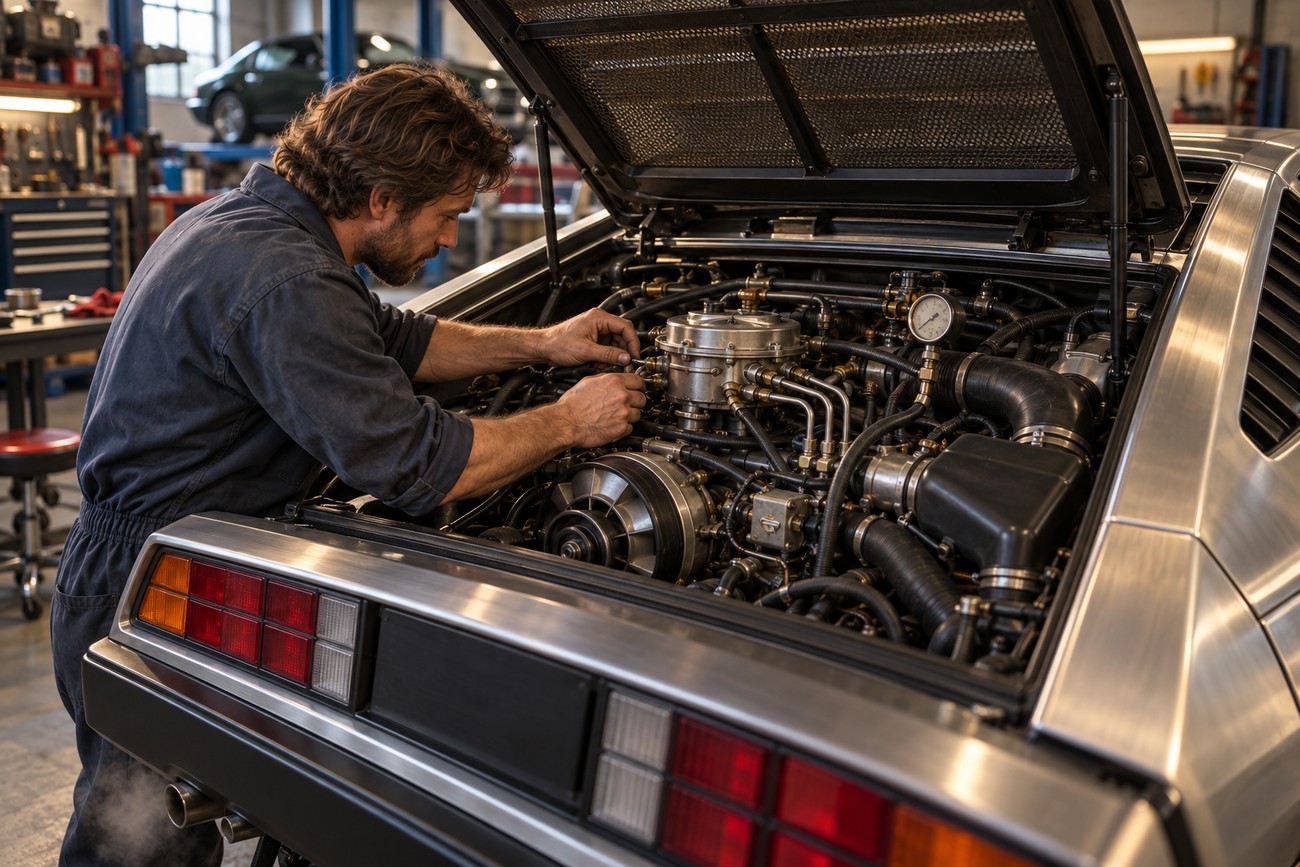
The Bosch K-Jetronic/CIS mechanical fuel-injection system has a major influence on drivability. Vacuum leaks, incorrect fuel pressure, and tired injectors can sharply reduce acceleration, producing flat spots, hesitation, or surging. These faults may appear most clearly during a cold start or when the engine is asked to pull at higher speed.
Fuel hoses and other rubber lines also deserve attention on an older car. Deterioration can affect fuel delivery and reliability even when the engine appears clean and starts readily. Cold-running behavior, warm idle quality, throttle response, and steady acceleration together provide more useful evidence than a brief demonstration in a parking lot.
Fuel pressure, vacuum integrity, ignition timing, and free wheel movement should be verified before engine modifications are recommended. Restoring the systems that deliver and transmit the existing power often changes the diagnosis more than adding power.
Ignition stability matters under load. Aging wiring, connectors, grounds, and electrical contacts can compromise the spark as engine speed and demand rise, causing a car to feel unwilling at exactly the point where it should continue accelerating. Correct timing and a stable ignition supply are essential to judging the PRV V6 fairly.
Cooling-related maintenance belongs in the same inspection because an engine that cannot control temperature will not provide dependable performance. An owner may focus on the speedometer while overlooking a cooling, fuel, or ignition issue that makes sustained high-speed running unsuitable. Hesitation, repeated surging, misfire, or an inability to build speed should lead to diagnosis rather than acceptance as normal DeLorean behavior.
The Parts That Can Steal Speed Without Looking Broken
Dragging brake calipers can masquerade as a weak engine. The car may start and idle normally, yet feel increasingly burdened as speed rises. Restricted wheel movement, worn bearings, and other rotating resistance add a load that the modest-output powertrain cannot easily hide.
A basic road evaluation should include checking how freely the wheels rotate and whether the brakes release cleanly after use. A hot wheel, uneven braking response, or a car that seems to resist coasting warrants inspection before any performance conclusion is drawn. These faults also create safety concerns independent of acceleration.
Old or unsuitable tires affect confidence and safety at 88 mph, even if they do not directly explain every loss of speed. Age can reduce grip and stability, while incorrect pressures can alter steering feel and rolling resistance. High-speed testing belongs only on a properly maintained car, in suitable conditions, and where it is lawful.
Transmission condition influences how effectively the available power reaches the road. Clutch slip, imperfect automatic operation, worn components, or drivetrain losses can turn normal engine output into disappointing acceleration. Two visually similar DeLoreans may perform very differently because restoration quality and mechanical condition vary widely.
How to Judge a DeLorean Before Blaming the Design
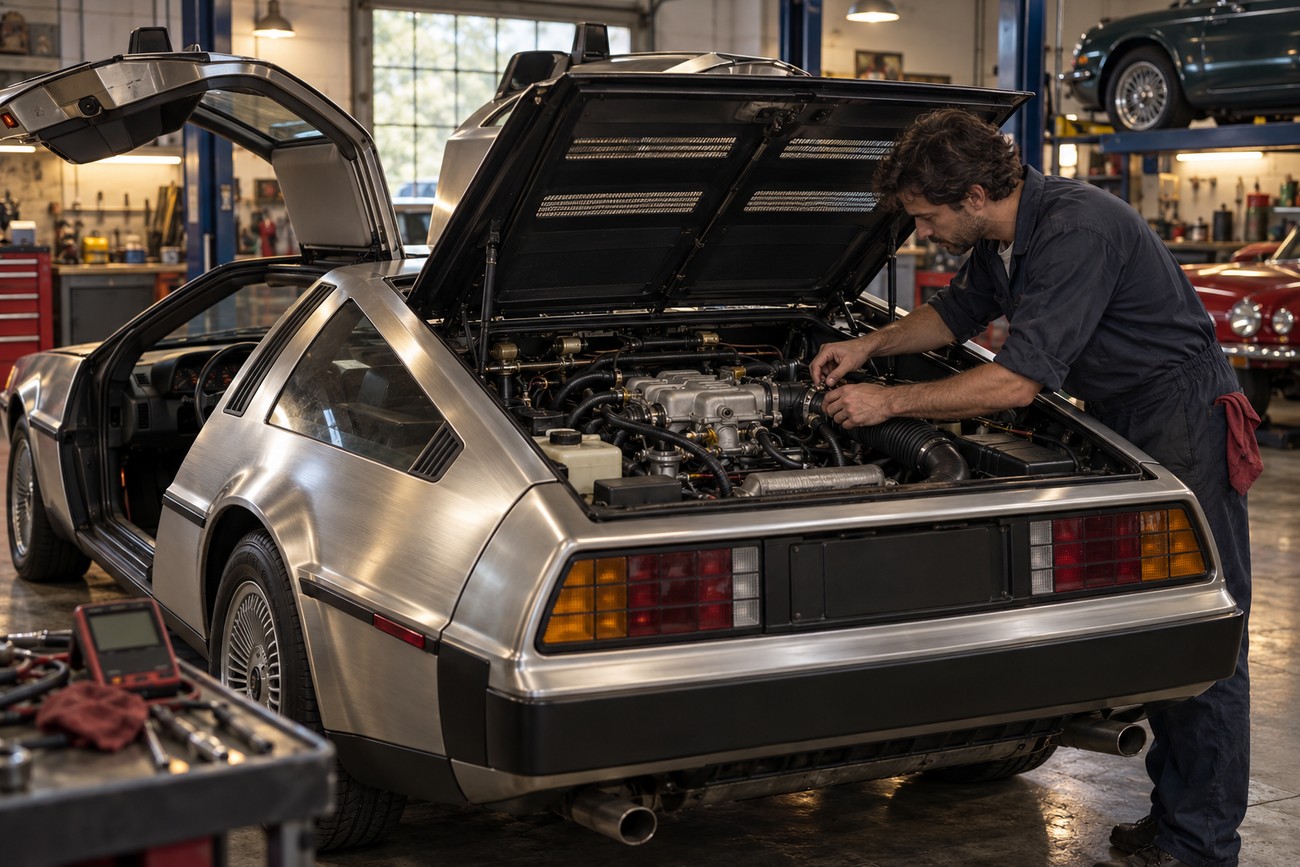
Start with behavior rather than appearance. A visual restoration does not prove mechanical health, so check cold-start behavior, warm running, idle quality, throttle response, and any hesitation under load. The car should transition from cold operation to normal running without persistent stumbling or surging.
Inspect the fuel and vacuum systems, including hose condition, vacuum integrity, fuel pressure, and injector performance. Check ignition consistency under load, since a car that sounds fine at idle can still lose spark quality when accelerating. Service history is valuable, although recent cosmetic work should not be mistaken for evidence of recent mechanical work.
Brake release, wheel freedom, bearing condition, and tire age should be assessed before judging engine power. A restricted wheel or deteriorated tire can make a test drive feel uneasy and slow, while a transmission fault can prevent the engine from using its available output effectively. These checks also establish whether the car is suitable for sustained road speed.
Buyers should resist both extremes: purchasing on movie status alone and dismissing every slow DeLorean as inherently flawed. A stock example will feel unhurried compared with modern traffic, yet it should reach 88 mph in a controlled, repeatable manner when its systems are healthy. Condition determines whether the experience is merely leisurely or genuinely troubled.
Frequently asked questions
Why was 88 mph chosen for Back to the Future?
88 mph was chosen as a fictional story device for the time-travel premise in Back to the Future. The number belongs to the film’s rules and dramatic setup, rather than to a special engineering threshold of the DeLorean.
What happens when the DeLorean hits 88 mph?
In real life, nothing unusual happens at 88 mph. The car simply continues accelerating or cruising according to its condition, gearing, road, and engine performance; time travel is part of the film’s fiction.
How fast can a DeLorean go in real life?
Factory top-speed figures were usually quoted at about 110 mph, so 88 mph is not the DeLorean’s technical maximum. An individual aged car may deliver less, and safe, repeatable speed depends on tires, brakes, fuel delivery, ignition, cooling, transmission condition, and the quality of its restoration.







