
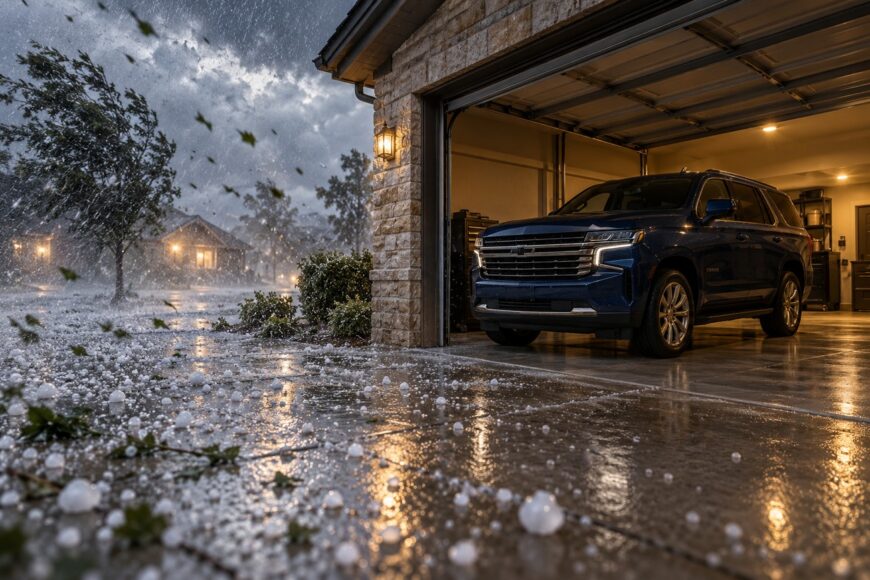
A properly built garage can substantially reduce hail, rain, and flying-debris damage to a Chevy Tahoe, but an ordinary garage is not tornado-proof. Its value depends on whether the roof, walls, door, and foundation connections remain intact under severe wind and impact.
The central distinction is vehicle protection versus human shelter. A garage may give the Tahoe a better chance than outdoor parking, yet the safest place for people during a tornado is a basement, storm shelter, or interior windowless room on the lowest level of a substantial building. Large garage doors and weak roof connections are common failure points, and no normal garage should be expected to guarantee survival in a direct EF4–EF5 impact.
- Can a Garage Protect a Chevy Tahoe From a Tornado?
- Why Garage Doors and Roof Connections Fail First
- What Can Happen to a Chevy Tahoe Inside a Garage?
- How to Make a Garage More Protective for Your Tahoe
- Where People Should Go During a Tornado Warning
- After the Storm: Inspect the Tahoe and Check Coverage
- Frequently asked questions
- What is the strongest car to survive a tornado?
- How should I protect a Tahoe if I do not have a garage?
Can a Garage Protect a Chevy Tahoe From a Tornado?
Yes, a permanent, well-anchored garage can greatly reduce mechanical damage from hail, rain, and flying debris when its roof, walls, and door remain intact. It shields the Tahoe from impacts that would otherwise strike the hood, glass, roof, and body directly. This benefit is substantial during hailstorms and ordinary severe weather, even though it does not make the building tornado-proof.
Protection is a reduction in probability, not a promise of survival. A substantial masonry or concrete garage with a firmly attached roof may perform far better than a lightweight outbuilding, but even reinforced construction can be partly or completely destroyed by a direct EF4–EF5 tornado. The result depends on construction quality, anchoring, wind direction, debris exposure, and the tornado’s path.
A weak garage can fail early in the storm sequence. Once the door, roof, or a wall section gives way, the Tahoe is exposed to wind-driven debris, falling materials, water, and glass. Outdoor parking usually offers little protection from those hazards, while an intact permanent garage can greatly reduce them.
Garage labels should be read carefully. Terms such as wind-rated or hurricane-rated generally describe tested components or resistance to specified wind conditions; they do not mean tornado-proof construction or guaranteed EF4–EF5 performance. The building’s complete structural system matters more than one upgraded product.
Why Garage Doors and Roof Connections Fail First
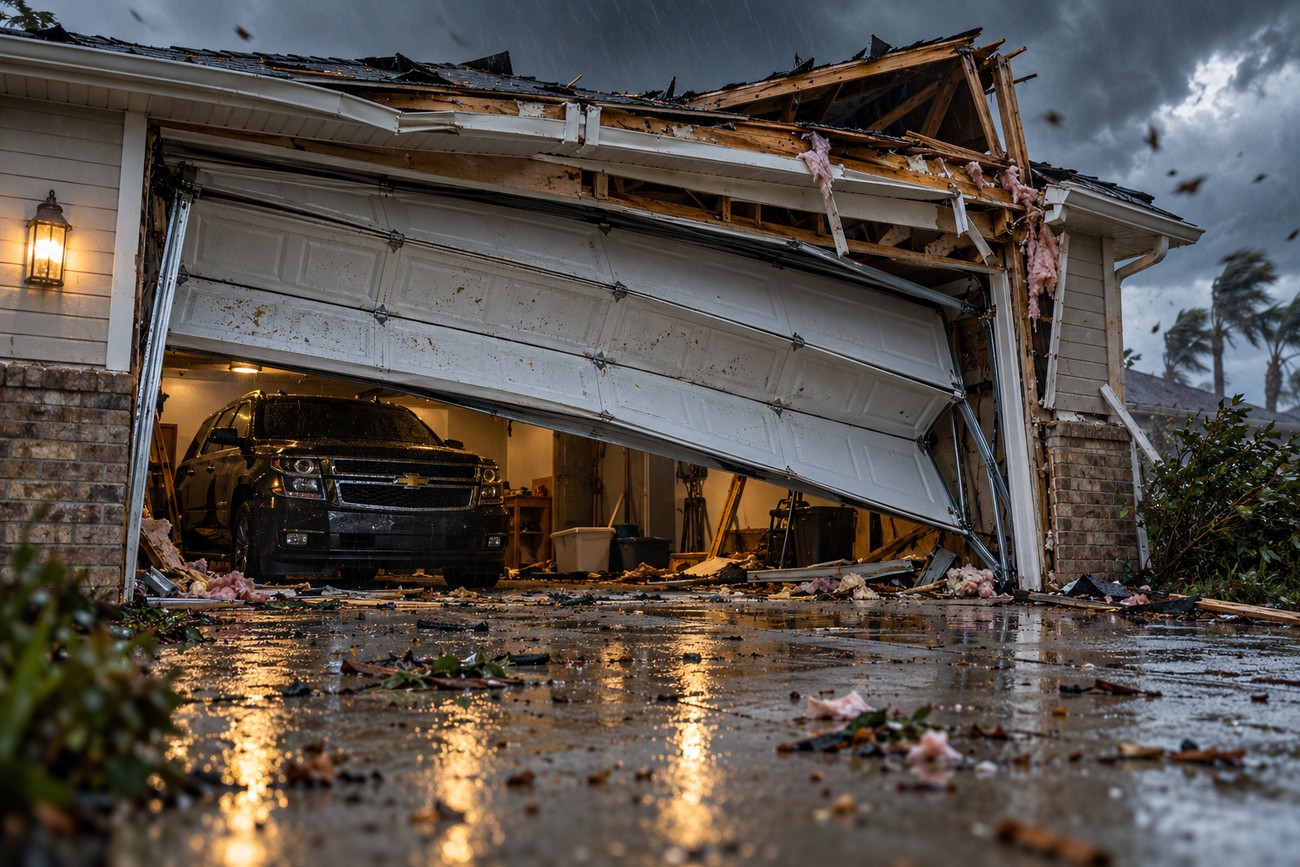
Large garage doors are among the most vulnerable parts of a typical residential building during severe wind and tornado conditions. Their size creates a broad surface for wind pressure, and the panels, tracks, rollers, and fasteners must transfer those forces into the surrounding frame. A door can also be breached by a piece of roofing, lumber, equipment, or another object carried by the wind.
Once the door fails, wind and debris enter the garage rather than flowing around a closed structure. Internal wind loading can rise, stored objects can become additional projectiles, and pressure can act on the roof and walls from directions they were not designed to resist. This failure chain may increase the risk of progressive roof and wall damage.
The same principle applies to the connections between the garage and the rest of the building. A garage attached to a house can become a weak link if its wall framing, roof connections, or foundation anchoring are poorly integrated with the main structure. Damage over the garage may then affect adjoining roof sections or nearby walls, especially where the load path is discontinuous.
A properly specified wind-rated door, stronger tracks, suitable fasteners, added framing, and structural bracing can reduce risk. These improvements help the garage remain closed and transfer forces more effectively, but they do not guarantee survival in EF3–EF5 tornado conditions. Product ratings should be matched to the actual framing and foundation rather than treated as a stand-alone safety certificate.
What Can Happen to a Chevy Tahoe Inside a Garage?
The Tahoe’s relatively high mass may make it harder to move in weaker winds, but weight does not protect it from a collapsing wall or roof. A falling masonry section can crush the roof, windshield, or side of the vehicle regardless of whether the tires remain on the floor. The same applies to large roof components that fall vertically or slide into the garage.
Stored items create a separate source of damage. Unsecured shelves, tools, bicycles, spare parts, lumber, and containers can strike the Tahoe after a door or wall is compromised. A vehicle may remain upright and still suffer broken glass, body damage, punctured panels, or damaged sensors from objects that were originally stored safely around it.
A garage can also remain standing while its openings are damaged. Wind-driven rain and debris may enter through a broken door, window, roof seam, or wall gap, leaving water in the cabin, wiring, and floor coverings. Moisture, chemicals, and contaminated debris can cause delayed corrosion, electrical faults, persistent odors, or damage that is not obvious during a quick visual inspection.
A carport, canopy, mobile garage, or thin metal outbuilding should not be treated as equivalent to a properly anchored permanent structure. These lighter structures may be displaced or destroyed and can add their own panels, fasteners, and contents to the debris field. The Tahoe is generally better protected by a sound enclosed garage, but the structure must be evaluated based on its construction and connections rather than its appearance.
How to Make a Garage More Protective for Your Tahoe
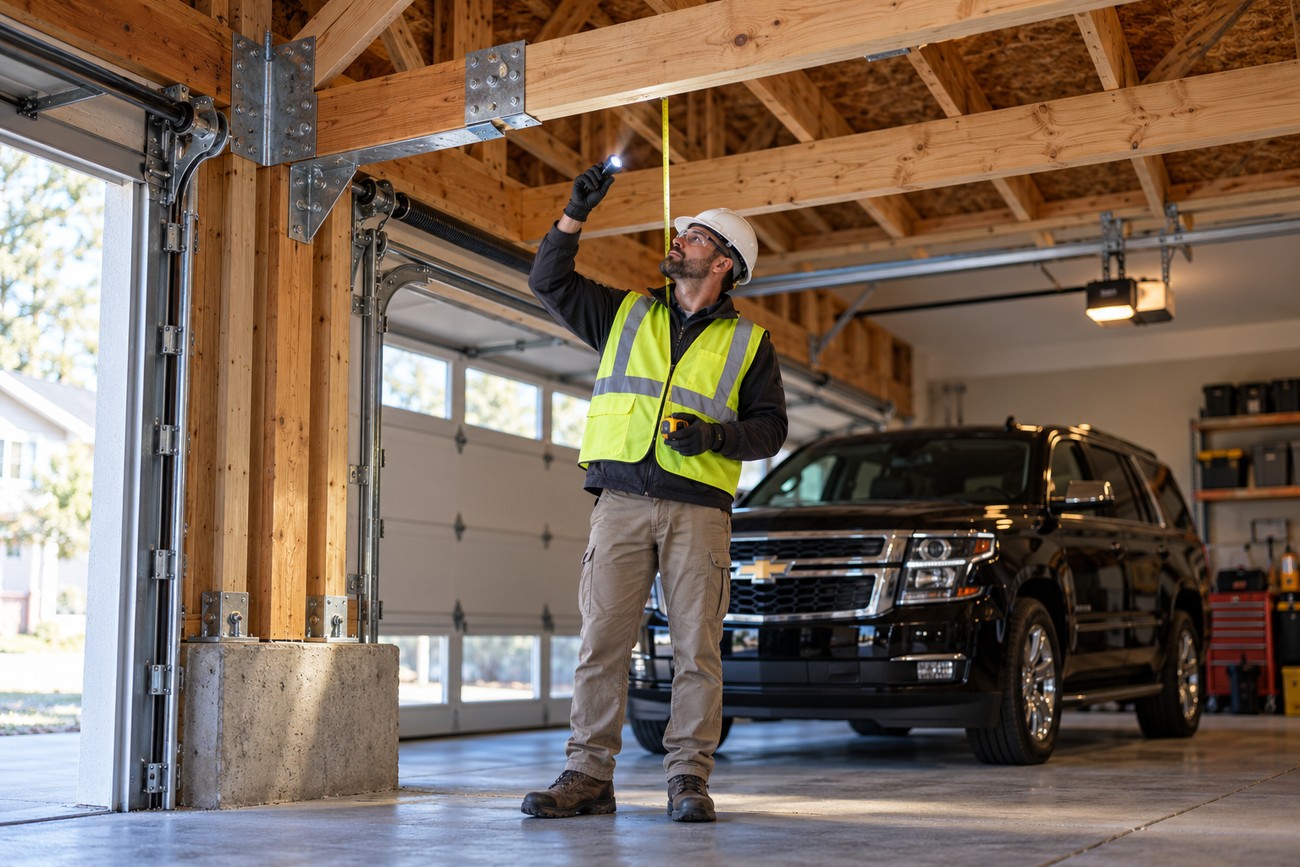
Start with a professional assessment of the complete load path. The key question is how forces travel from the roof and walls through the framing and connections into an adequately anchored foundation. Inspecting the garage door alone can miss weak wall-to-roof joints, inadequate foundation anchors, deteriorated framing, or a poorly integrated connection between an attached garage and the house.
The door label is only one part of the system. A garage performs better when the door, surrounding wall framing, roof connections, and foundation transfer wind forces continuously instead of leaving one weak connection to absorb the load.
Where appropriate, improvements may include a professionally specified wind-rated garage door, stronger tracks and fasteners, additional framing or bracing, and correct anchoring. A qualified contractor or structural professional should determine what the existing building can support before hardware is added. Reinforcing one component without addressing the structure around it may provide less benefit than expected.
Keep the roof firmly attached and in good condition, and maintain effective drainage. A sound roof reduces hail impacts and prevents leaks that can damage the Tahoe’s interior, wiring, and metal surfaces after the wind threat has passed. Modern standing-seam or R-panel metal roofing may outperform deteriorated roofing in wind and hail, although systematic comparisons of garage destruction specifically in tornadoes are limited.
Reduce the contents that can become projectiles. Secure shelving, tools, bicycles, parts, and containers, and leave enough clearance around the Tahoe that falling objects are less likely to strike it. Outside the garage, remove loose materials and assess nearby trees, poles, and other objects that could fall or be carried into the building.
These measures reduce exposure; they do not turn a normal garage into a tornado shelter. If a warning is issued, move people to the safest available refuge rather than staying beside the vehicle to monitor the garage. The best protection for the Tahoe is useful only after personal safety has been addressed.
Where People Should Go During a Tornado Warning
A garage is primarily a vehicle-protection location, not a recommended human refuge. National Weather Service and Red Cross guidance favors a basement or storm shelter when one is available. These locations place more substantial material between people and wind-driven debris than a typical garage does.
Without a basement or storm shelter, use an interior, windowless room on the lowest level of a substantial building. Stay away from garage doors, windows, exterior walls, and large open spaces. Protect your head and neck, and follow local emergency alerts and instructions.
Mobile homes, sheds, outbuildings, carports, canopies, and vehicles are not reliable tornado shelters. A vehicle can be thrown, rolled, or struck by debris, while a lightweight building may fail quickly. People should not remain beside the Tahoe in a garage simply because the vehicle is indoors.
This distinction matters during a rushed response. If the Tahoe is already in a sound garage, leave it there and go to the designated shelter area. Trying to reposition the vehicle during a warning can delay the move to safety and expose you to falling debris, broken glass, or rapidly changing wind conditions.
After the Storm: Inspect the Tahoe and Check Coverage
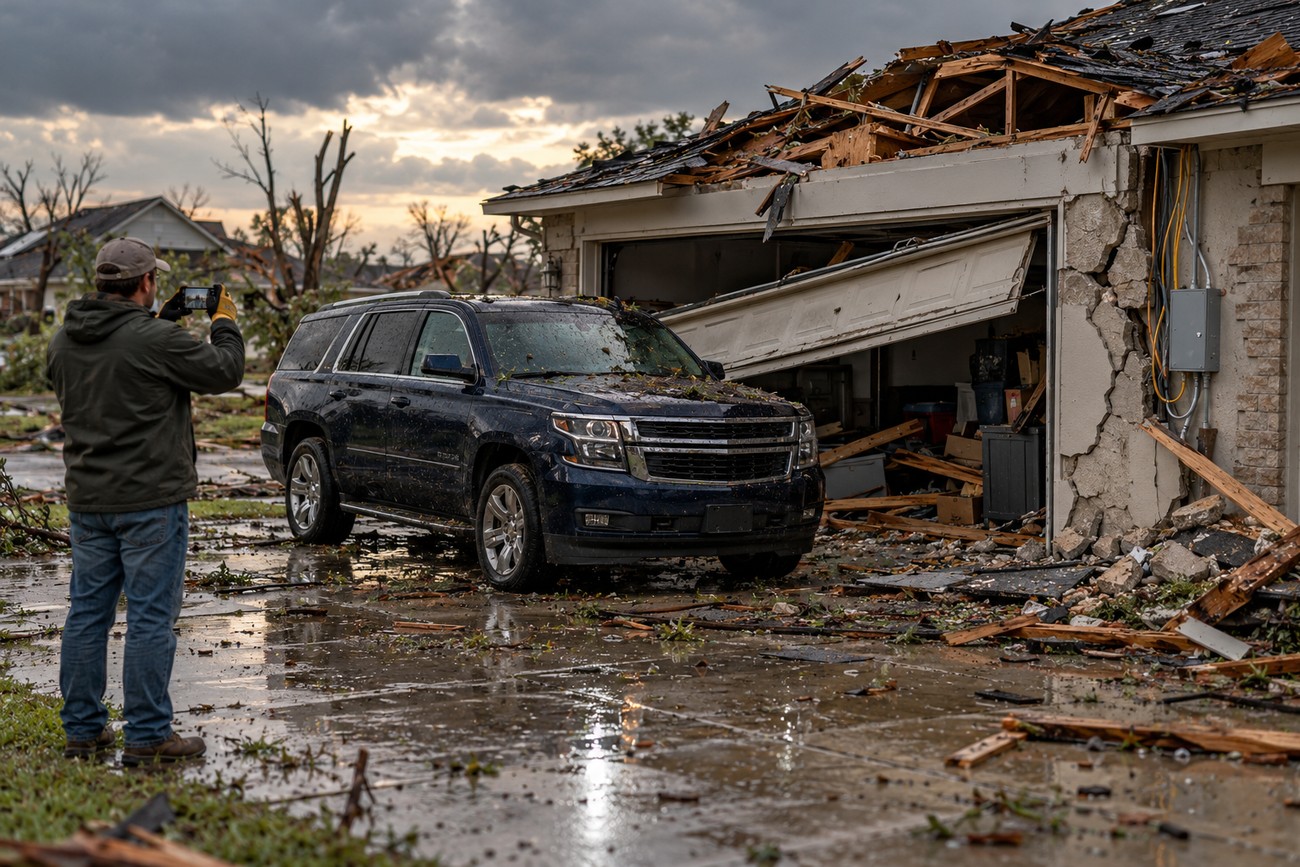
Do not enter a damaged garage until it is reasonably clear that unstable roof sections, walls, and hanging doors will not fall. Look for standing water, broken glass, fuel or chemical leaks, exposed wiring, damaged electrical equipment, and unusual movement or cracking. A Tahoe that appears drivable may still be beneath an unstable structure or surrounded by hazards.
Before moving the vehicle, photograph the garage, door, roof, walls, debris, water intrusion, and every visible area of the Tahoe. Record the date, warning or storm information, and any damaged property around the vehicle. Do not discard damaged parts or begin major cleanup until the relevant insurer or adjuster has explained the documentation requirements, unless immediate action is needed to prevent further danger.
Water, chemicals, and debris can create delayed corrosion and electrical problems. Moisture under carpets, inside doors, beneath trim, or around connectors may not appear during the first inspection. If wiring, fuel, battery components, or safety systems are damaged, arrange a professional evaluation before driving the Tahoe.
Coverage may be handled differently under comprehensive auto insurance and homeowners or dwelling coverage. The result depends on the specific policy, exclusions, deductible, and how the loss is classified. Having the Tahoe inside a garage does not automatically guarantee maximum payment, so notify the relevant insurer promptly and keep copies of reports, photographs, receipts, and communications.
Frequently asked questions
The Tahoe’s size does not change the basic shelter rule: vehicle storage and human protection must be assessed separately. The garage’s structural performance, its surroundings, and the storm’s intensity determine how much risk is reduced.
What is the strongest car to survive a tornado?
No passenger vehicle is designed to guarantee survival in a tornado. A heavy SUV such as a Tahoe may be harder to move in weaker winds, but mass does not protect it from falling walls, roof sections, or high-speed debris.
Vehicle design also cannot compensate for an unsafe location. A structurally sound garage can reduce exposure, while a carport, open lot, or compromised building leaves the vehicle vulnerable regardless of its weight. For people, the correct response remains a basement, storm shelter, or interior room in a substantial building.
How should I protect a Tahoe if I do not have a garage?
Do not rely on a carport or canopy as a tornado shelter for the Tahoe. Before a warning, choose the safest available parking location away from trees, utility poles, loose materials, poorly attached structures, and objects that could become debris. A location with less surrounding exposure may reduce damage, but outdoor parking cannot provide the protection of an intact permanent garage.
During a tornado warning, prioritize timely human shelter over vehicle positioning. Do not delay moving to a basement, storm shelter, or interior windowless room to find a better parking spot. After the threat passes, inspect the area for downed lines, unstable trees, floodwater, and debris before approaching the vehicle.







