

An attractive price and the vague prestige of an “ex-diplomat” Mercedes E-Class can make a difficult car look like a safe shortcut. The label may describe genuine embassy use, a vehicle with diplomatic plates or servicing, or an ordinary corporate car later presented through a more impressive story. It is not normally a special factory trim or a separate E-Class specification.
Your decision should rest on evidence: the document chain, ownership history, operating pattern, technical condition, and total landed cost. A low odometer reading or diplomatic connection does not remove the risks of age, fleet use, long idling, storage, import complications, and expensive Mercedes-specific repairs.
- What “Ex-Diplomat” Really Means on a Mercedes E-Class
- The Real Wear Pattern: Why Low Mileage Can Mislead
- Documents, VIN History and Import Legality
- How to Inspect an Ex-Diplomat E-Class Before Paying
- Which E-Class Years Should You Avoid Buying?
- Frequently asked questions
- Which years of the Mercedes-Benz E-Class should I avoid buying?
- What is the best year for a Mercedes E-Class?
- Can a VIN check prove that an E-Class was used by an embassy?
What “Ex-Diplomat” Really Means on a Mercedes E-Class
An ex-diplomat E-Class is usually a standard service, corporate, or government-use Mercedes rather than a special factory model. It may be a sedan or wagon acquired for official transport and later sold through a fleet operator, auction, leasing company, or reseller. The badge, grille, and equipment may look familiar, yet the original operating conditions can be very different from those of a privately owned car.
The phrase itself has no single international definition. In one country, it may refer to genuine embassy ownership; elsewhere, it may describe diplomatic registration, diplomatic plates, servicing by an official organization, or simply a car that passed through a government-related fleet. A seller’s wording therefore needs to be treated as a claim requiring proof.
Ownership categories matter because they create different risk profiles. An embassy-owned car, an employee’s assigned vehicle, a leasing-company return, an auction car, and a resellers purchase are separate histories. The number of drivers, service approval process, accident reporting, storage conditions, and reason for disposal may differ substantially between them.
Ask for the first registration record, the identity of each owner, service invoices, auction or fleet documentation, and the reason the car left service. Traces such as removed stickers, brackets, additional wiring, or unusual interior wear can support a fleet history, but they do not prove embassy ownership. If the seller cannot distinguish official ownership from diplomatic plates or a corporate lease, the label has little buying value.
The Real Wear Pattern: Why Low Mileage Can Mislead
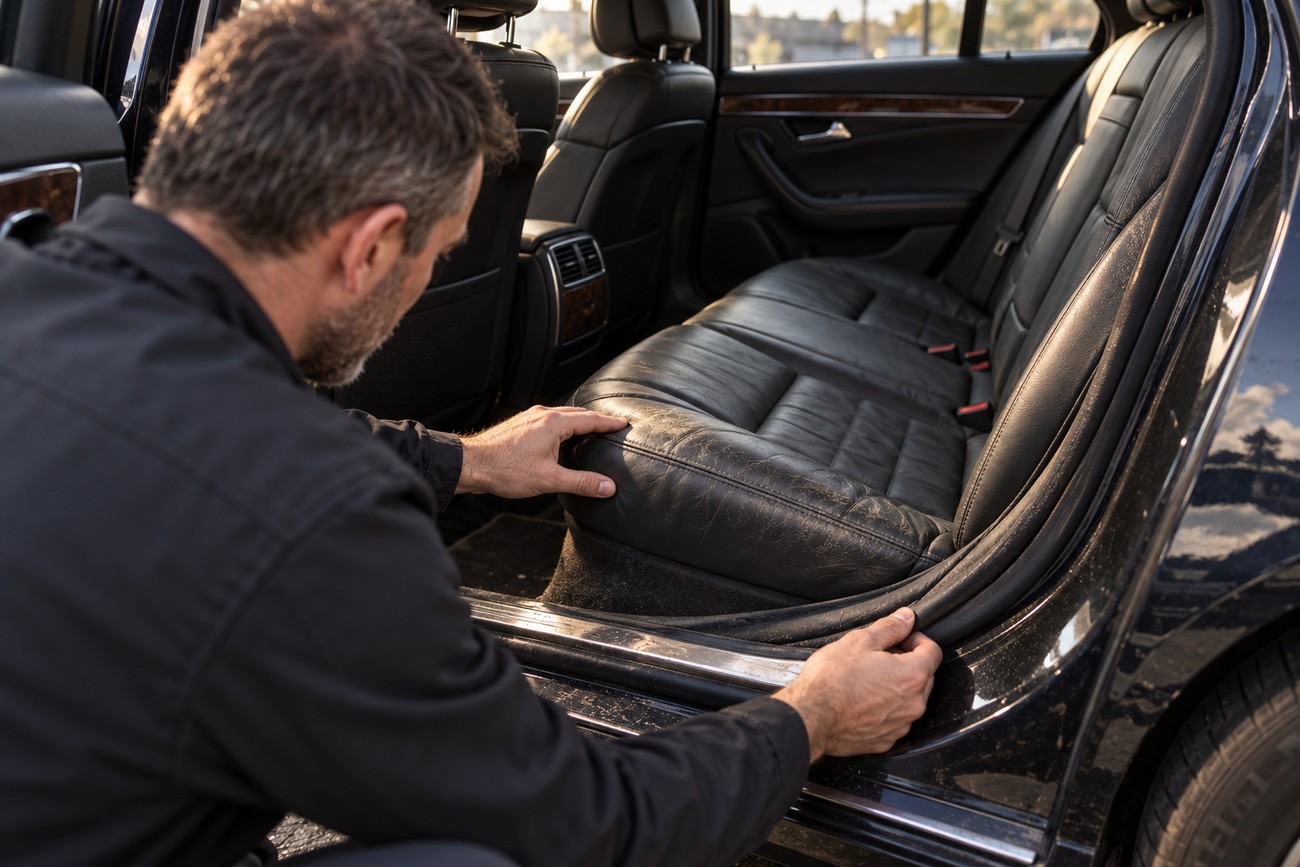
Service cars can accumulate wear in ways the odometer records poorly. Multiple drivers, urban cycles, short trips, passenger loading, frequent door use, and extended idling may stress the car even when annual mileage appears modest. A vehicle used for repeated official transfers can spend much of its life moving slowly, stopping often, and waiting with the engine running.
Low mileage does not cancel age, engine hours, short trips, or storage-related deterioration. Long idling can age the engine and its ancillary systems without adding much distance, while repeated short journeys may leave the battery, cooling system, transmission, and diesel emissions equipment working under less favorable conditions. A low-mileage interior can also be more worn than expected because many people have used the seats, doors, belts, and luggage area.
Scheduled fleet servicing can make the maintenance file look orderly while leaving small electrical, cosmetic, or suspension faults unresolved until they become the next owner’s problem.
Routine fleet servicing is useful evidence, but it is not a guarantee of careful ownership. Consumables may have been replaced on schedule while a minor leak, damaged trim, warning light, worn bushing, or intermittent sensor fault remained in service. Long storage after decommissioning adds another layer of risk: batteries, brakes, seals, sensors, wiring, and fluids can deteriorate while the car stands still.
Judge the car by its present condition and repair reserve. Pay particular attention to suspension, electronics, cooling, automatic transmission, diesel emissions systems, and corrosion. Diplomatic status does not mean better care, and a polished body or clean cabin cannot outweigh evidence of neglected mechanical work.
Documents, VIN History and Import Legality
Paperwork should be the first purchase filter. Before paying for an inspection, establish whether the seller can provide a continuous chain covering registration, deregistration, export papers, VIN history, and customs clearance. The chain should also explain who had the right to sell the vehicle and whether any administrative obligation remains in the country of origin or destination.
Check the VIN on the body, windscreen, identification plates, electronic records, invoices, registration documents, and customs paperwork. Any discrepancy deserves a written explanation from an authoritative source; an informal assurance from a reseller is insufficient. A damaged or altered identification mark, inconsistent model description, or missing export document is a serious stop signal.
Search for ownership changes, liens, registration restrictions, recorded damage, mileage entries, and unresolved finance. Import files also need review for VAT or duty inconsistencies, especially where the car once benefited from a special registration or tax treatment. Customs and registration authorities may require documents that a seller assumes are unnecessary.
Diplomatic status alone does not guarantee customs, tax, or registration benefits. Treatment depends on the country, the vehicle, the transaction, and valid documents. A car that was legally used under one status can still become difficult to register after export if deregistration, ownership transfer, or duty records are incomplete.
Put every promised document in writing before transferring funds. If the seller says the remaining paperwork will arrive later, price the car as an unresolved import problem or walk away. A cheap E-Class becomes expensive quickly when registration is delayed, parts must be sourced for an incompatible specification, or the buyer must resolve someone else’s tax and ownership history.
How to Inspect an Ex-Diplomat E-Class Before Paying
Arrange the inspection while the car is cold and ask the seller not to warm it beforehand. A cold start can expose rough running, misfires, abnormal noises, delayed transmission engagement, weak battery performance, and suspension behavior that disappears after the car has been driven. Record the start-up condition before interpreting the seller’s mileage claim.
Scan every control module rather than reading only the engine computer. The scan should be compared with service intervals, stored faults, warning-light history, and physical wear inside the car. A road test should then cover cold and warm transmission behavior, steering, braking, suspension response, drivetrain noises, and the operation of electrical equipment.
A cold-vehicle inspection is valuable because module data, service intervals, and physical wear often tell a more reliable story together than any one mileage entry.
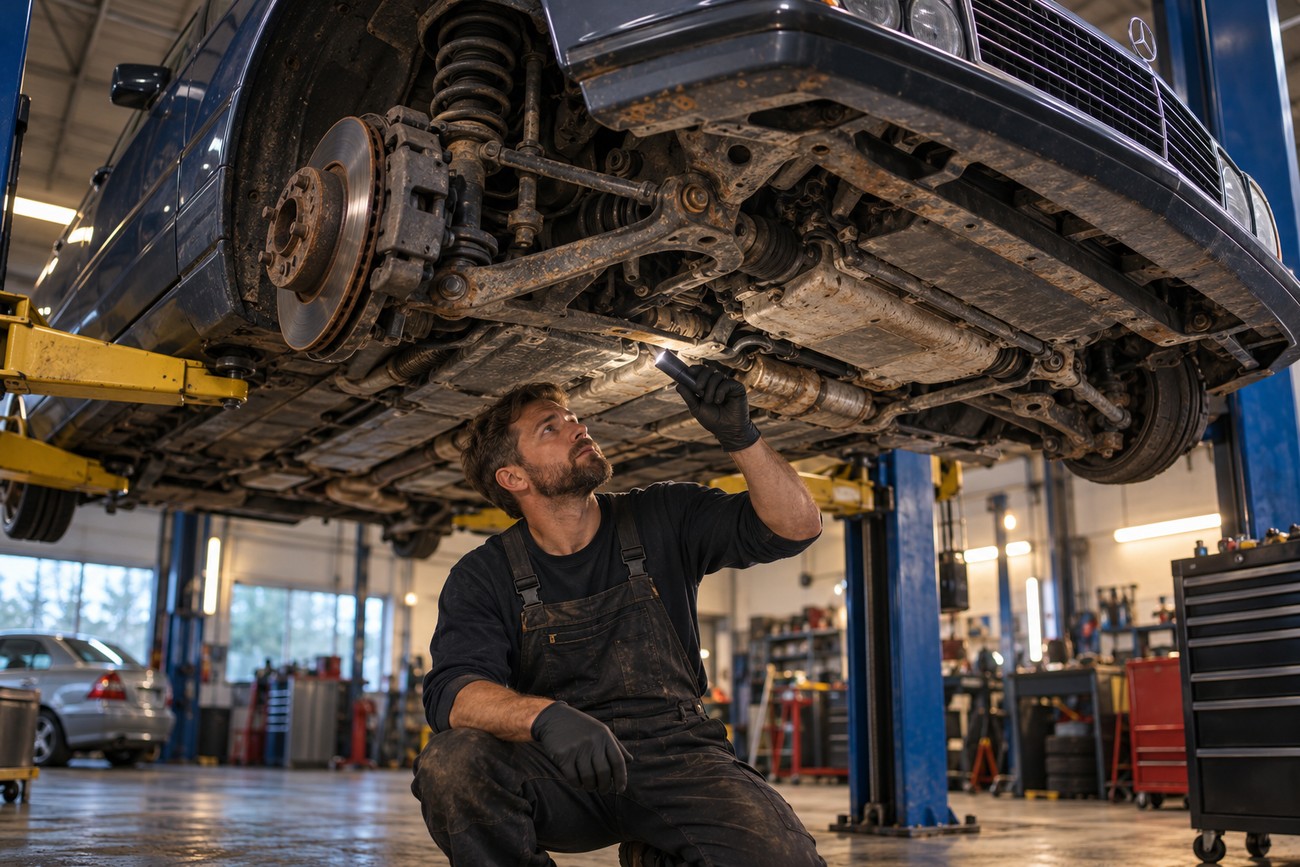
Use a lift to check suspension joints, subframes, underbody corrosion, fluid leaks, brake condition, exhaust components, seals, and evidence of previous repairs. Inspect paint thickness and panel alignment, along with replaced bolt-on parts such as doors, fenders, bumpers, lamps, and mirrors. Diplomatic or fleet use does not exclude parking damage, cosmetic repairs, or more substantial accidents.
Look for remnants of removed equipment: extra wiring, unusual antennas, brackets, drilled mounting points, adhesive marks, and repaired holes. These details may explain the vehicle’s former role and may also reveal poorly removed accessories or wiring faults. Examine the battery, seals, fluids, and brakes closely if the car spent a long period out of service.
Confirm parts and coding by VIN and market specification. Headlamps, navigation, communication equipment, emissions components, control units, and software may differ between markets even when the body and engine appear familiar. A test drive alone cannot reveal a hidden module fault, a corroded connector, an underbody repair, or a part that is physically compatible but electronically wrong.
Which E-Class Years Should You Avoid Buying?
There is no universal best or worst E-Class year based solely on diplomatic history. The relevant risks depend on generation, engine, transmission, emissions equipment, specification, maintenance evidence, and current condition. Age-related wear in suspension, electronics, cooling, automatic transmission, diesel emissions systems, and body corrosion matters more than the word used in the advertisement.
Reject a particular year when its engine and transmission history cannot be verified, its emissions equipment is unclear, or the expected repairs exceed a realistic budget. The same model year can produce very different buying decisions depending on ownership records, storage, accident repairs, parts support, and diagnostic results.
The best example is the one with transparent records, the correct market specification, available parts support, and a repair reserve suited to its age. A documented car with higher mileage may be safer to own than a newer or lower-mileage example whose provenance, equipment, and maintenance cannot be established.
Frequently asked questions
Which years of the Mercedes-Benz E-Class should I avoid buying?
Avoid a year only when the specific engine, transmission, emissions system, or repair history cannot be verified. A blanket blacklist is less useful than checking whether the vehicle’s known age-related risks have been addressed and whether the total repair budget remains realistic.
Unclear ownership, inconsistent VIN records, missing import documents, or a failed cold-start and lift inspection are stronger reasons to reject a car than its model year alone.
What is the best year for a Mercedes E-Class?
The best year is the one attached to a correctly specified car with documented maintenance, reliable parts support, and enough financial reserve for age-related repairs. Service evidence should identify actual work rather than simply repeat the seller’s claim that the car was maintained.
Compare two cars by condition, records, equipment compatibility, and likely ownership cost. A lower-mileage example with unclear provenance may carry more risk than an older car with consistent documentation and a settled repair history.
Can a VIN check prove that an E-Class was used by an embassy?
A VIN check may confirm registration records, mileage entries, or recorded damage events, but it often cannot independently prove diplomatic ownership. Many databases do not identify the full institutional role of an owner or distinguish embassy use from diplomatic plates, servicing, or ordinary corporate operation.
Use the VIN check alongside original ownership documents, registration and deregistration records, export papers, and physical clues such as removed equipment. The complete documentary chain remains more reliable than the diplomatic label in an advertisement.







