
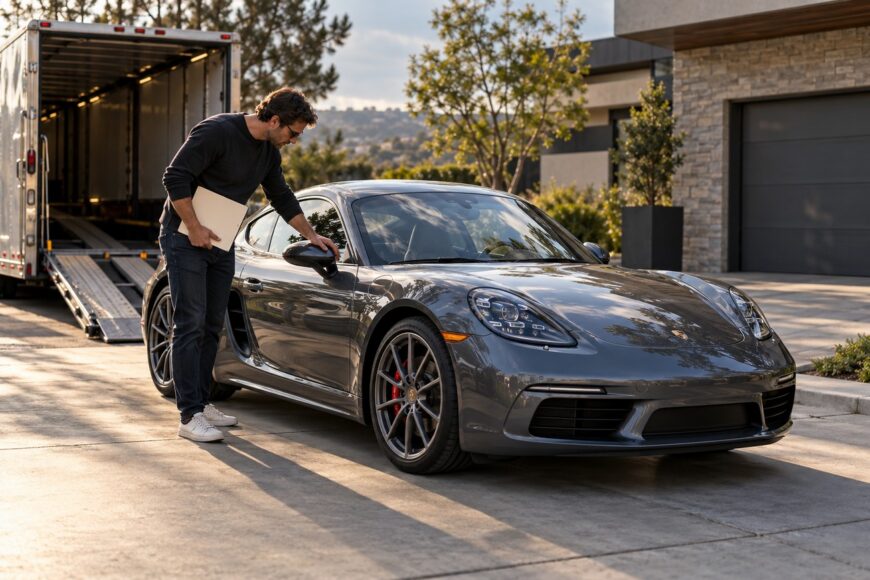
Finding the right Porsche Cayman in another state can widen your choice of cars, specifications, and service histories. It also puts distance between you and the details that matter most: how the engine starts cold, what the underside reveals, and whether the car drives as well as it photographs. An attractive asking price and a clean vehicle history report can still conceal an expensive mismatch.
The decision is whether to pay for independent evidence before committing to the purchase or transport. That means giving a specialist enough time and access to examine the car, then weighing the findings against the seller’s records and the full delivered cost. If the evidence remains incomplete, distance makes that uncertainty more consequential, not less.
- Screen the seller and the car before paying for an inspection
- Arrange an independent Porsche inspection in the right order
- Make the inspection specific to the Cayman in the listing
- Turn the inspection report into a buy, renegotiate, or walk-away decision
- Calculate the delivered price, not just the asking price
- Control payment, pickup, and delivery from a distance
- Frequently asked questions
- What should I do if the Cayman still has a lien?
- What should I do if the Cayman arrives with new damage?
- Which Porsche Cayman model year should I avoid?
- What is known as the poor man’s Porsche?
- What is the downside of buying a car out of state?
Screen the seller and the car before paying for an inspection
Start with the VIN, the seller’s name and connection to the car, service records, and a direct account of known mechanical problems, modifications, accidents, and repairs. Ask which records support the stated mileage and which work was done without paperwork. These requests help you decide whether the listing merits an inspection fee at all.
Request recent, close-up photographs rather than another set of polished listing shots. Include the VIN plates or labels, all tires and their wear patterns, visible brake components, panel gaps, the underside, and the engine area where accessible. Ask for clear views of any disclosed repair, scuffed panel, or fluid residue so the inspector can revisit the same area in person.
A live video call can help establish that the seller has access to the car and can show specific features or blemishes on request. It is a poor substitute for examining paint and repair evidence, finding leaks on a lift, or assessing vibration on a road test. General photos and one video call cannot substitute for an independent inspection.
Use a vehicle history report to screen for recorded events and compare its timeline with the seller’s account. A clean report does not rule out mechanical defects or unreported repairs. If dates, mileage entries, or ownership details conflict, seek an explanation and supporting documents before booking a shop.
Arrange an independent Porsche inspection in the right order

Choose a Porsche specialist yourself, confirm that the shop is independent of the seller, and pay it directly. Agree with the seller on access before the appointment: the car should be left cold, the inspector should be allowed to scan it and put it on a lift, and a road test should be permitted where practical. A specialist Porsche pre-purchase inspection commonly takes 2–4 hours; an inspection with borescope work may take 3–4 hours.
Ask the shop to observe and document the cold start before warm-up or a road test. It should scan the car before anyone clears codes, then inspect accessible mechanical and body areas on a lift. After the road test, the inspector can review how the car behaved and whether new diagnostic information appeared.
If the car is warm or its codes have already been cleared, have the inspector record that limitation, capture pending codes and monitor readiness, and advise whether a later cold-start visit is needed. A quiet warm start cannot recreate evidence that was missed.
Specify what you want in the written report: photographs of material findings, stored and pending fault codes, monitor readiness, fluid leaks, paint and repair evidence, and tire and brake condition. Ask the inspector to state what could not be accessed or tested. Clearing fault codes does not repair the cause; pending codes and monitor readiness add context, especially when a warning light is no longer on.
Confirm the shop’s scope before the seller delivers the car. Paint measurements, a borescope examination, and particular diagnostic tests may require separate authorization, equipment, or time. An inspection reduces uncertainty, but no shop can guarantee that every intermittent fault or hidden defect will appear during its appointment.
Make the inspection specific to the Cayman in the listing
Give the inspector the confirmed model year, engine, transmission, modification list, and available service history. The early 987.1 and revised 987.2 are versions of the 987 Cayman with different mechanical and electronic considerations; neither label alone determines whether a car is worth buying. Condition and documented maintenance should guide the depth of the checks.
Engine condition deserves closer attention when records are thin, oil use is reported, or the inspection finds concerning symptoms. Ask the specialist whether a borescope examination is justified for that particular car and what it can and cannot establish. A tidy engine bay or low odometer reading cannot resolve an unexplained noise, leak, or pattern of oil consumption.
The inspection should also cover the transmission, cooling system, oil leaks, suspension, brakes, electronics, body, and interior. Compare wear on the steering wheel, controls, seats, tires, and brakes with the stated mileage and maintenance records. Inconsistencies need an explanation, even if each mark or worn part seems minor on its own.
Keep the checklist tied to the car’s actual configuration. Turbocharger checks apply only if the particular Cayman has a turbocharged setup; faults associated with unrelated Porsche engines or suspension systems should not be presented as standard Cayman problems. A useful report identifies findings on this VIN rather than recycling a brand-wide list.
Turn the inspection report into a buy, renegotiate, or walk-away decision
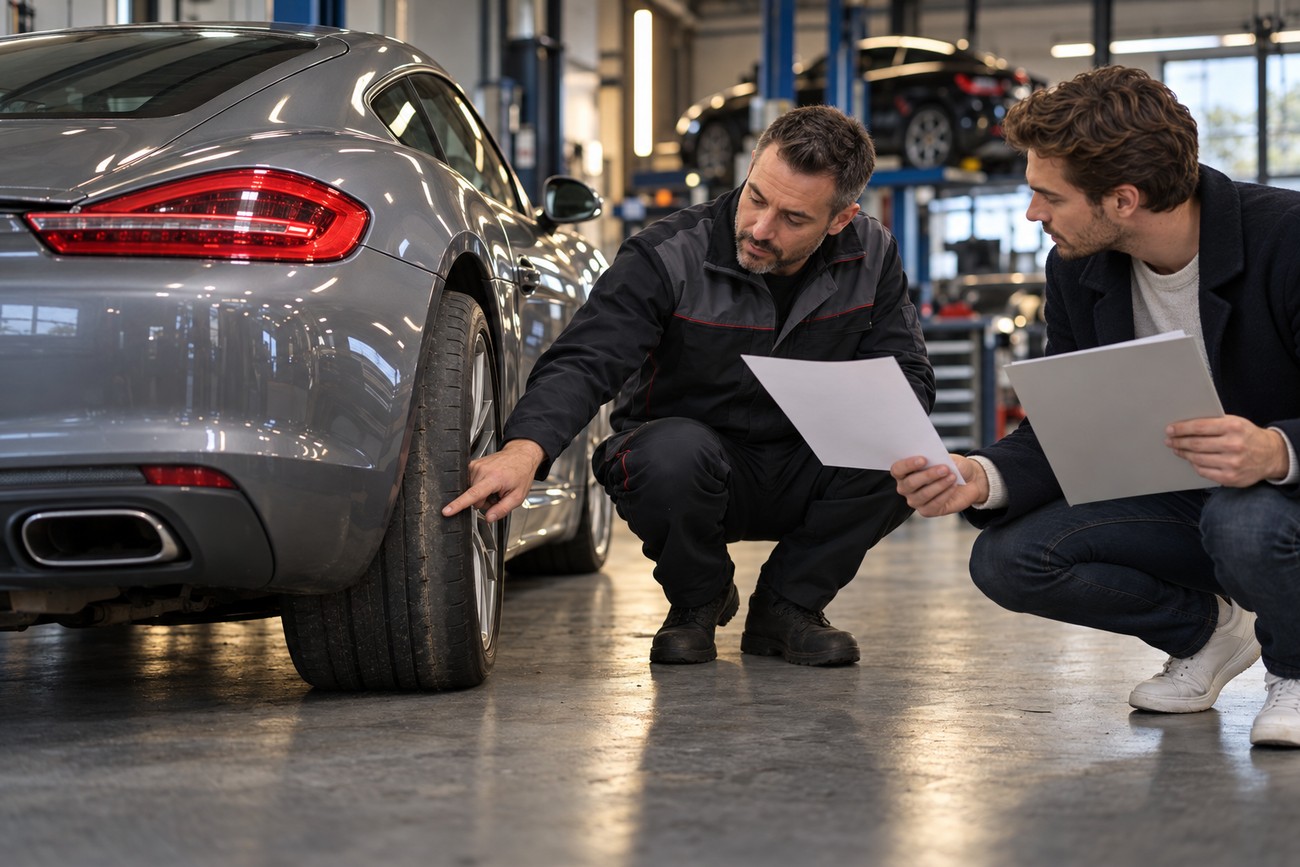
Separate ordinary, documented maintenance from findings whose cause or cost remains unknown. Worn tires and due services can often be priced into a decision; unresolved engine symptoms, evidence of concealed repair, or records that contradict the car merit further investigation. Even an apparently sound used Porsche may need post-purchase maintenance.
For material findings, obtain written repair estimates from a suitable shop rather than relying on the seller’s assurance that a fix is minor. Give each shop the inspection report, including any tests the inspector could not complete. If the seller limits access to the lift, scan, or road test, treat the missing evidence as part of the buying decision.
Reassuring paintwork, low mileage, and a clean vehicle history report do not outweigh conflicting mechanical or repair evidence. Likewise, a recently cleared warning light is not a repair: pending codes and monitor readiness may help the inspector assess what remains unresolved.
Make a revised offer or deposit conditional on clearly written terms where the seller will agree, including which findings require resolution and what happens if they are not resolved. If an important defect cannot be diagnosed before payment, you can decline rather than price an unknown repair as though it were routine maintenance. Keep the final inspection report and agreed disclosures with the sale paperwork.
Calculate the delivered price, not just the asking price
Build a total for your transaction: agreed vehicle price, inspection, applicable taxes, registration, dealer charges, transport, and an allowance for immediate maintenance. The advertised price may exclude several of these items. A lower listing price can lose its advantage once the car and its paperwork reach you.
Ask a dealer for an itemized written buyer’s order before arranging payment. Listing examples include an $85 Document Preparation Charge and a $37 Electronic Filing Fee; amounts and applicability vary. Have the dealer identify any other charges and clarify which items are optional before you compare cars.
Verify taxes and registration requirements for the transaction and the relevant states, including your home state. Do not assume that buying from a state with a lower advertised tax burden determines what you will owe when registering the car. Your motor vehicle agency or an appropriate local professional can help resolve an unclear treatment before funds move.
Leave room for work the inspection identifies and for maintenance that becomes due soon after delivery. Keep that allowance distinct from an unresolved major fault: a budget reserve is useful for known needs, but it does not make an undiagnosed engine concern predictable. Compare the completed total with your budget before authorizing transport.
Control payment, pickup, and delivery from a distance
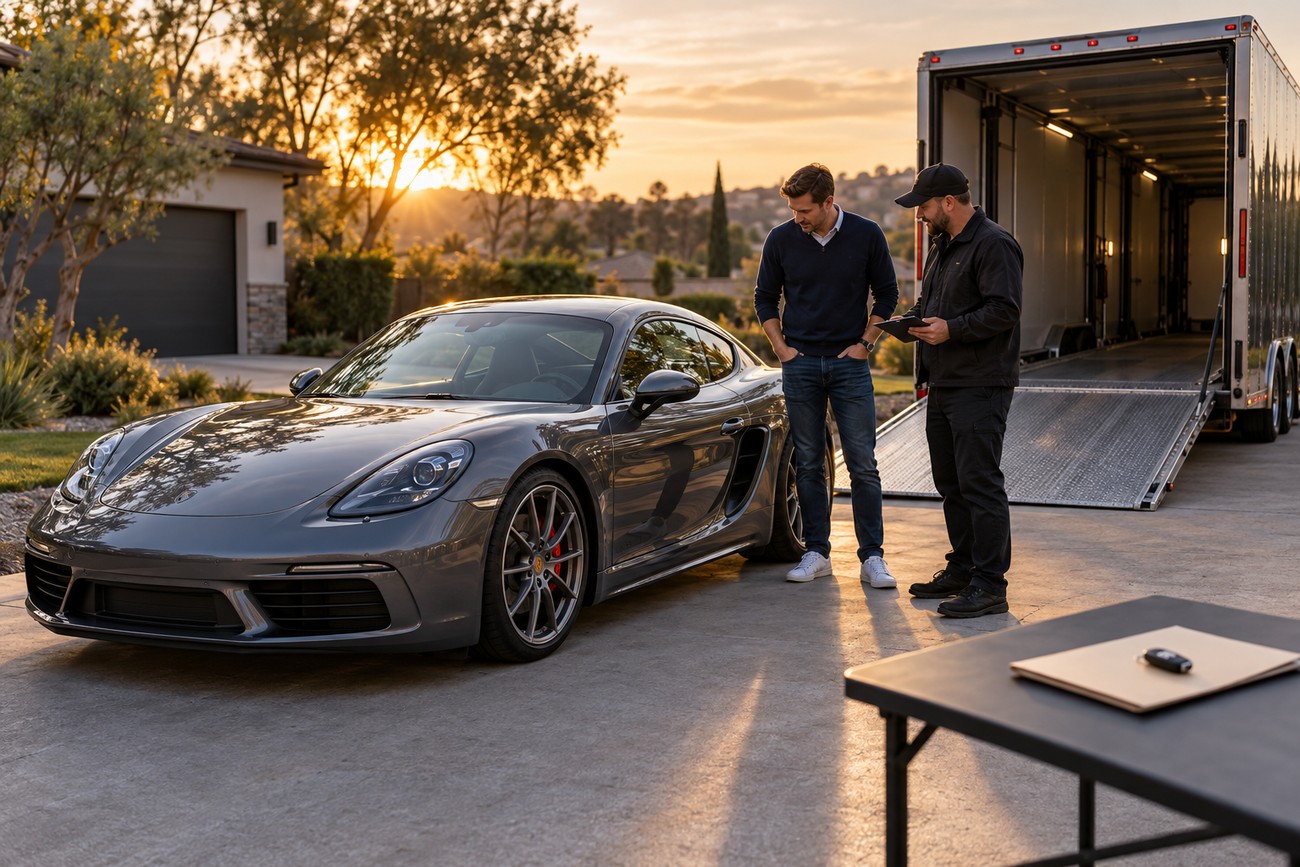
Before releasing funds, confirm the seller’s identity, the VIN on the car and paperwork, the agreed condition, and who can transfer the title. Independently verify payment instructions through a known contact channel, particularly if they change late in the deal. Title, insurance, and return rights depend on the transaction, policy, and applicable state law, so check them before assuming you can drive or register the car on arrival.
Keep the inspection report, disclosures, buyer’s order or sale agreement, and any conditions on payment in writing. Set a pickup date only after the paperwork and payment sequence is clear to both sides. Coordinate with the transporter on who will release the car and what documents the driver needs at collection.
At pickup, ask for dated photographs of the car’s exterior, wheels, glass, interior, and any existing damage, alongside the carrier’s condition record. The seller or pickup contact should note discrepancies before the car leaves. This evidence gives you a point of comparison if visible damage appears during delivery.
Inspect the Cayman promptly when it arrives and compare its condition with the pickup record before signing delivery paperwork without reservations. Record any new damage and follow the carrier’s applicable claim procedure. Photographs at both ends help establish when visible damage occurred, although no shipping arrangement eliminates the risk of damage or a dispute.
Frequently asked questions
Title questions need a documented resolution before payment. Pickup photographs help establish the car’s condition if damage appears on delivery. Model-year labels are less useful than the particular car’s records and inspection results.
What should I do if the Cayman still has a lien?
Verify the lienholder and request a documented payoff and title-release process before paying the seller. Confirm where the payoff must go, who will receive the released title, and when you can expect proof that the lien has been cleared. Do not assume the seller can hand over clear title immediately; the process depends on the lender, transaction, and applicable state rules.
What should I do if the Cayman arrives with new damage?
Photograph the damage before accepting delivery, compare it with the pickup images, and note the discrepancy on the carrier’s paperwork rather than signing a clean condition record. Retain the pickup and delivery evidence, then promptly follow the claim procedure in the transport agreement. Reporting deadlines and coverage terms vary, so check the paperwork without delay.
Which Porsche Cayman model year should I avoid?
There is no single Cayman year that every buyer should avoid. A model year can help you identify which issues to investigate, but the decision should rest on the specific car’s condition, maintenance records, and inspection results. Walk away if significant symptoms remain unexplained or the seller will not allow adequate checks.
What is known as the poor man’s Porsche?
The phrase has been applied to several less expensive Porsche models, often including the Boxster and sometimes the Cayman. It is an informal nickname, not a model designation or a reliable guide to ownership costs.
What is the downside of buying a car out of state?
The main downside is having less direct access to the car while coordinating inspection, paperwork, payment, and transport. A problem discovered at delivery can be harder to resolve because the seller is elsewhere. Clarify title, insurance, registration, and any return terms before purchase; your rights and obligations depend on the contract, policy, and applicable state law.







