
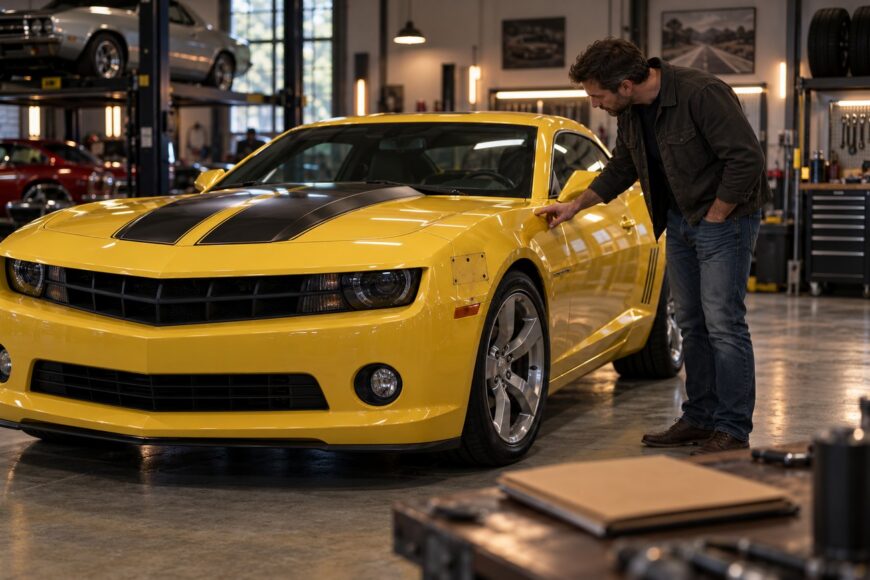
A Camaro can look exactly like the car on screen without ever having been used in the production. Paint, badges, and a familiar silhouette make a convincing replica; a screen-used claim needs documents connecting the production vehicle to this particular car’s VIN. That distinction matters most when the asking price includes a premium for movie history.
Your goal also changes what makes a good purchase. A collector may prize documented filming alterations, while someone planning regular drives may face substantial work to make those same alterations safe and reliable. A buyer who mainly wants the screen appearance may be better served by an honestly described replica. In every case, assess the physical Camaro and its claimed movie history separately.
- Decide What You Are Buying: Artifact, Driver, or Replica
- Trace the Screen-Used Claim to This Specific Camaro
- Verify Factory Identity Without Confusing It With Movie Identity
- Inspect the Damage That Film Stills Cannot Show
- Movie-Car Claims and the Evidence They Require
- Price the Restoration Before You Price the Fame
- Make an Offer That Reflects What Is Actually Proven
- Frequently asked questions
- What is the “holy grail” of Camaros for a movie-car buyer?
- Is there a Camaro model year to avoid when buying a former movie car?
- What is the holy grail of Camaros?
- What Camaro years should you stay away from?
- What is the most sought-after Chevrolet Camaro?
Decide What You Are Buying: Artifact, Driver, or Replica
A documented production car is an artifact whose value may lie in its identifiable role and surviving filming details. If preservation is the aim, replacing worn or altered components can erase evidence a collector wants to keep. Decide which details matter to you before paying for restoration or agreeing to it as a condition of sale.
A road-ready collectible has a different test to pass. It must start, cool, stop, steer, and withstand the use you intend, regardless of how persuasive its paperwork is. Filming modifications can add historical interest while reducing roadworthiness, so a car can succeed as an artifact and still require substantial work before regular driving.
A themed replica can deliver the appearance without the burden of proving screen use. Its value rests on build quality, condition, and how closely its details meet your expectations. A stunt-built production car deserves its own assessment, too: its construction may be central to its history, even if factory originality is limited.
Keep separate valuations for screen-used status and factory-original specification. A production history does not establish that the Camaro left the factory as an SS, Z/28, or Rally Sport. Conversely, a factory-correct car does not acquire a screen-used history because it resembles one seen in a film.
Trace the Screen-Used Claim to This Specific Camaro
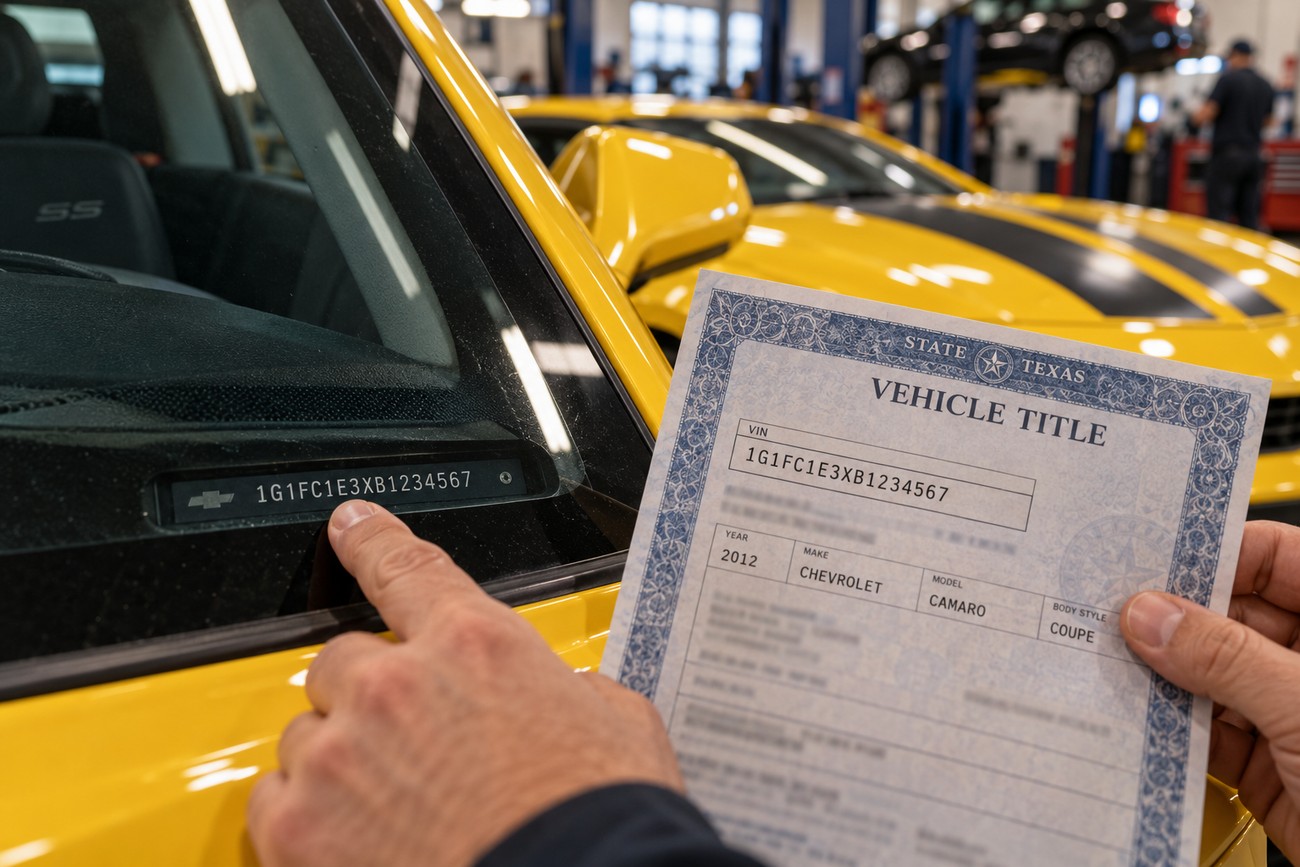
Begin with the specific car in front of you: record its VIN and compare it with the title and ownership documents. Then ask for a document trail connecting that VIN to the vehicle used by the production. A film still or seller account alone cannot make that link, even when the car’s appearance is a close match.
Useful evidence may include production agreements, shooting records, invoices, auction catalogs, and photographs in which the car can be identified. Check what each item actually identifies. A receipt for a Camaro supplied to a production is helpful, for example, but it leaves a gap if it cannot be tied to the VIN being offered.
Follow the car beyond filming. Auction descriptions, sale documents, and records from successive owners can help explain how it reached the current seller and when major changes occurred. Where ownership or identification is unclear, describe the gap rather than letting later paperwork silently fill it.
A production may use visually similar hero, duplicate, stunt, and display cars. Without production records, neither the number of cars nor their individual roles in a particular film should be treated as established. A photograph showing the right paint and trim might identify a type of car used on set while leaving its exact production role unresolved.
Ask the seller to state the claim precisely. “Used in the film,” “supplied to the production,” and “built to resemble the film car” require different support. Clear wording helps you value the evidence you have without dismissing a potentially genuine car merely because its surviving archive is incomplete.
Verify Factory Identity Without Confusing It With Movie Identity
Match the VIN on the Camaro to its title, then assess the claimed year and specification using records appropriate to that year. VIN formats and specification coding vary across 1970–1981 Camaros; 1981 cars used a 17-character VIN. Applying one decoder, or expecting a modern-format VIN on every earlier car, can produce a misleading conclusion.
For a 1970–1981 Camaro, compare the year-appropriate VIN information with the cowl or trim tag and any surviving build sheet. A build sheet may turn up under a rear seat or carpet, near the fuel tank, or within seat springs. Finding one is useful, but its details still need to correspond to the car being examined.
Appearance is a weak shortcut for option verification. RS styling alone does not establish factory Rally Sport equipment; check the Z22 option against applicable factory records. Treat SS and Z/28 badges with similar care, using year-specific identification evidence rather than assuming that later trim reflects the factory build.
An advertised “all-original” Camaro may have factory identifiers or installed components that contradict the description. Ask which parts the seller means are original and what supports that statement. Replacement panels, drivetrain parts, or interior pieces do not automatically disprove a screen-used claim, but they change what you are buying and how much factory originality remains.
Inspect the Damage That Film Stills Cannot Show
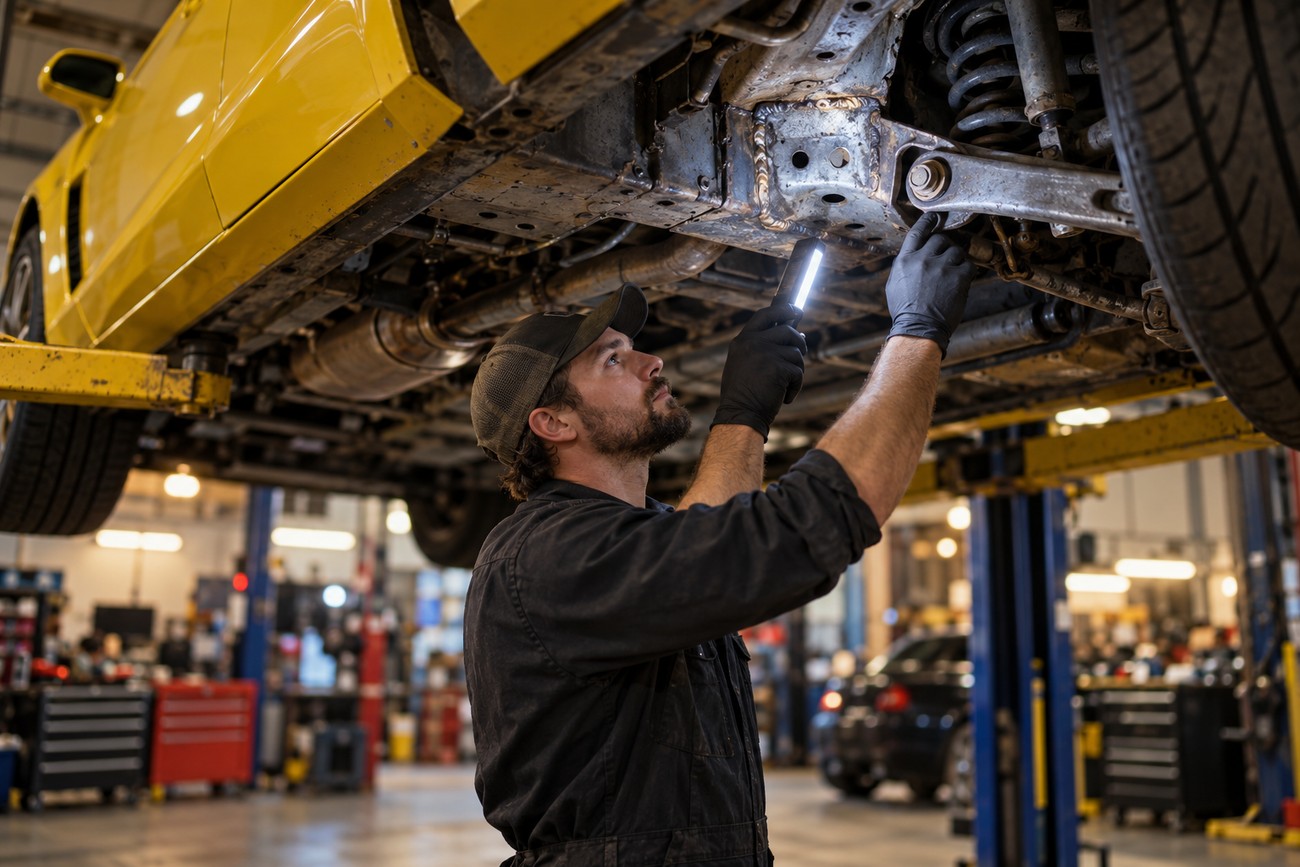
Hire an independent specialist familiar with the Camaro generation being offered and give them access to the underside, interior, and available repair records. Structural rust and old panel repairs can remain hidden beneath paint or trim. An attractive exterior deserves closer examination, especially where suspension loads and previous bodywork meet.
Have the specialist inspect the chassis, suspension mounting points, pillars, floor, and signs of major panel replacement. Look for evidence of camera mounts, added reinforcement, hydraulics, or other filming equipment. Holes, welds, and altered metalwork may be historically interesting, yet they can also signal damage or changes that need further assessment.
Small, accessible mounting holes may be straightforward to document and repair. Added reinforcement or disturbed structural welds call for a chassis-geometry check before you assume the car will align and track properly.
Insist on a cold start and enough running time to assess cooling, leaks, and starting behavior once warm. If a safe road test is possible, assess braking, steering, alignment, and how the car behaves under ordinary loads. A car that photographs well but overheats or wanders on the road carries a repair obligation that provenance cannot settle.
Do not equate a low odometer reading with light use. Repeated takes, idling, towing, and stunt work can wear or stress a production vehicle without adding much distance. If the seller limits inspection or a road test, account for the unresolved condition risk before making an offer.
Movie-Car Claims and the Evidence They Require
Assess each claim on its own evidence; a strong document in one column cannot settle the other three.
| Claim | Evidence to request | What that evidence cannot prove |
|---|---|---|
| This Camaro was used in production | Production records, identifiable photographs, invoices, and ownership records connecting the production vehicle to this VIN. | A screen appearance or production document alone cannot establish factory specification or present condition. |
| It has the claimed factory specification | Year-appropriate VIN information, cowl or trim tag, and any surviving build sheet or applicable factory records. | Factory records do not show that the car appeared on screen or retained every original component. |
| Its installed parts are original | Component identification, dated records, and a physical comparison with the claimed build and known replacements. | A matching appearance, or an OEM, NOS, aftermarket, or reproduction label, does not by itself prove factory installation. |
| It is presently roadworthy | An independent structural and mechanical inspection, plus a safe road test where feasible. | Good inspection results do not authenticate movie history or guarantee freedom from future repairs. |
Price the Restoration Before You Price the Fame
Establish the Camaro’s exact year and version, then have a specialist write a repair scope based on its current condition and filming changes. Separate work needed for safe operation from work intended to recreate a factory build or preserve a screen appearance. Those goals can demand different parts and can even conflict over which alterations should remain.
Parts descriptions deserve close reading. OEM, NOS, aftermarket, and reproduction identify different categories; parts that look alike may differ in fit or fidelity to the original. GM-licensed Restoration Parts labeling identifies participation in that program, not proof that the labeled part was installed on this Camaro at the factory.
A broad parts market does not guarantee that a component fits the exact year, version, and modifications you own. Check availability and compatibility before treating a repair estimate as firm, particularly for uncommon trim or work that must preserve production-era changes. Correcting hidden rust or earlier panelwork can also make a cosmetic restoration substantially more involved than photographs suggest.
Price the intended outcome rather than a generic “full restoration.” A driver may need cooling, braking, and structural work first; an artifact may need careful stabilization with minimal replacement. Obtaining that scope before negotiating keeps the movie premium from absorbing money the car will soon require.
Make an Offer That Reflects What Is Actually Proven
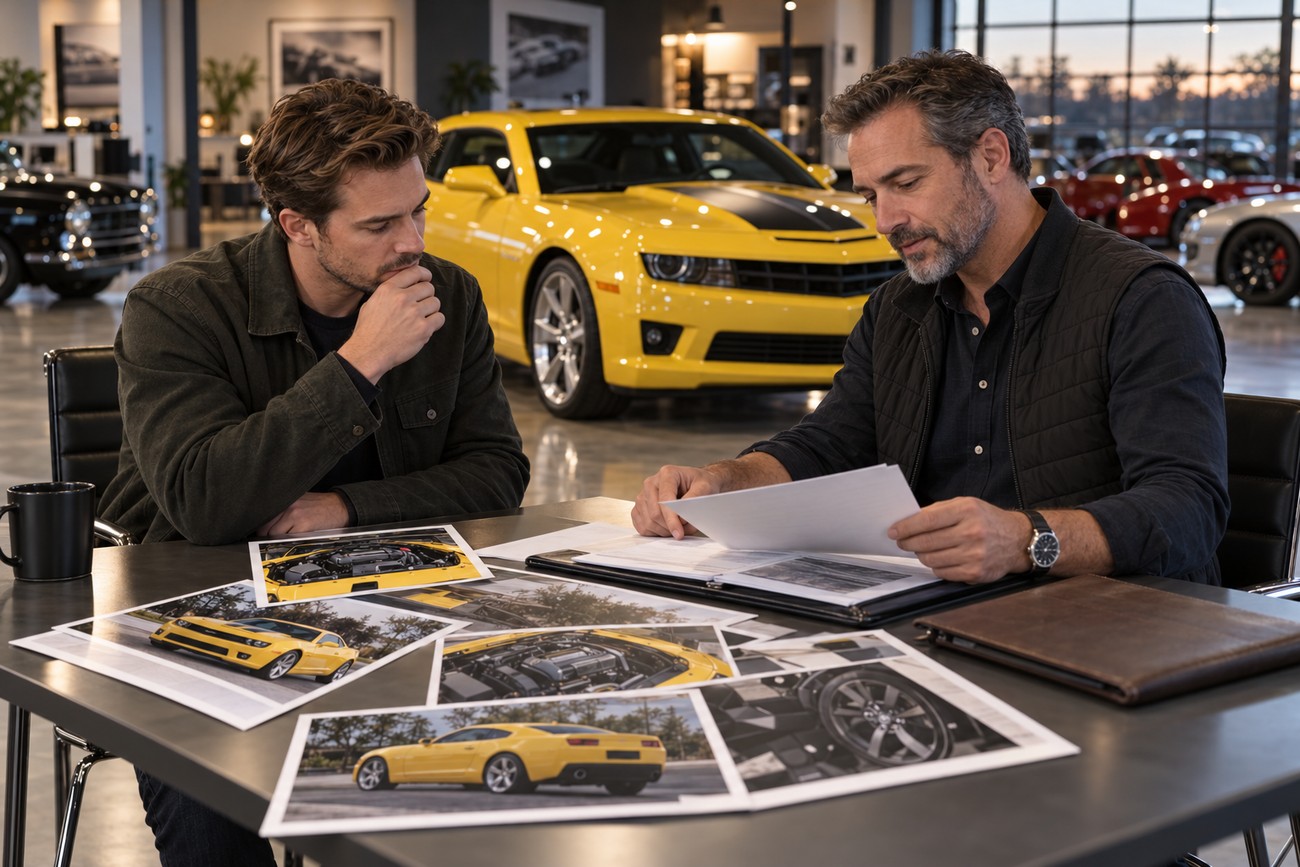
Start with the physical car: its verified factory identity, condition, usable components, and written repair scope. Assess any movie-history premium separately, according to the quality of the document trail linking the production vehicle to this VIN. Screen-used status and factory-original specification are distinct sources of value.
Before committing, have an independent specialist for the relevant Camaro generation review the car and its records. Compare the VIN with the title, identify gaps in ownership and production documentation, and record any inspection limits. A written account of what remains uncertain is more useful in negotiation than a broad claim that the car “checks out.”
If the seller cannot connect this VIN to production records, value the unsupported screen-used claim cautiously. That does not mean declaring the car a fake: it may be a genuine production vehicle with missing records, or a well-built replica worth owning on its own terms. The offer should reflect which claim can presently be defended.
Finally, keep the proposed purchase aligned with its intended use. Confirm locally what inspection, registration, and insurance requirements apply to a modified vehicle before relying on it as a driver. A price that makes sense for display can be difficult to justify if substantial work remains before the car can be used as planned.
Frequently asked questions
Movie-car buying rewards a narrower answer than a general ranking of Camaros. The most desirable choice depends on what you want to own and what you can verify. These distinctions are useful when a famous appearance threatens to outweigh practical ownership plans.
What is the “holy grail” of Camaros for a movie-car buyer?
There is no universal movie-car “holy grail.” A buyer seeking a production artifact may prize a documented car with a significant screen role and surviving filming details, while another may prefer a factory-rare Camaro that is easier to drive or preserve. Decide which source of appeal matters to you before comparing asking prices.
Is there a Camaro model year to avoid when buying a former movie car?
No model year should be ruled out solely because the Camaro has a movie connection. Judge the individual car’s documentation, structural condition, parts needs, and intended use. Year-specific identification and parts compatibility matter more than a blanket avoid list.
What is the holy grail of Camaros?
Classic Camaro collectors do not share one definitive “holy grail.” Some prioritize factory specification and documented rarity; others favor condition, preservation, or a particular generation. A movie connection is another form of appeal, not a substitute for those distinctions.
What Camaro years should you stay away from?
There is no universally unsuitable Camaro year. A poorly repaired example from a sought-after year can be a harder ownership proposition than a sound car from a less celebrated one. Choose a year you can identify accurately, source suitable parts for, and maintain within your intended scope.
What is the most sought-after Chevrolet Camaro?
There is no single most sought-after Camaro for every buyer or market. Demand can favor different factory specifications, generations, preserved examples, or cars with well-documented cultural significance. Compare the particular car’s evidence and condition with the kind of collecting or driving you actually plan to do.







