
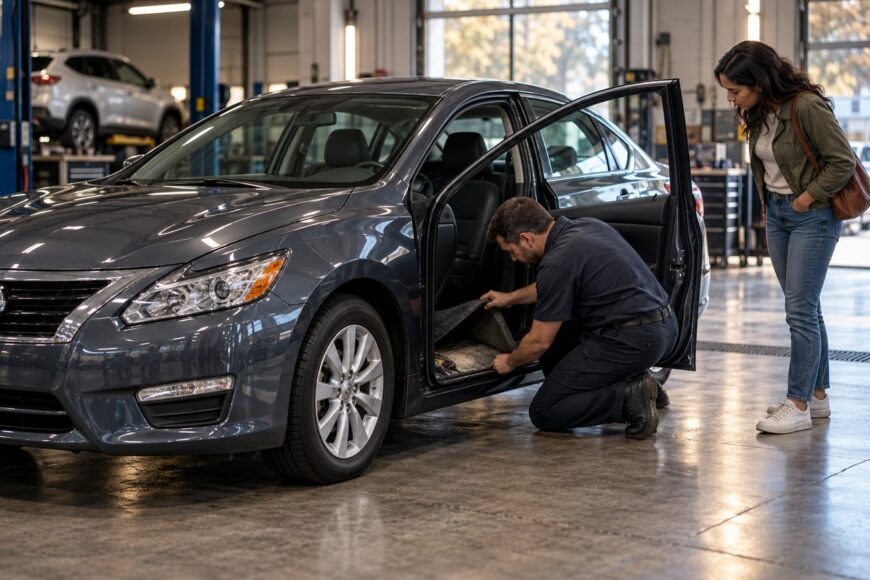
A cheap, clean-looking Nissan Altima with a flood title can appear to offer several years of transportation at a steep discount. The risk is that water damage may leave no obvious clue once the carpet has been replaced, the seats have been cleaned, and the warning lights have been cleared. Electrical faults may emerge months later as intermittent problems with locks, windows, climate controls, ABS, or airbag systems.
The decision should rest on evidence, total ownership cost, and your ability to walk away. A low purchase price does not compensate for an undocumented repair, difficult insurance terms, or a vehicle that becomes hard to resell. Treat the Altima as a damaged vehicle with a repair history to verify, rather than as an ordinary used sedan with an unfortunate title label.
- What a flood brand tells you—and what it cannot
- Reconstruct the flood and the repair, not the seller’s story
- Inspect the Altima where water damage stays hidden
- The expensive faults that can arrive after the cabin dries
- Calculate the real discount before you negotiate
- When buying one is defensible—and when to walk away
- Frequently asked questions
- What is the difference between a flood title and a salvage title?
- What should I do if I discover an undisclosed flood history after purchase?
What a flood brand tells you—and what it cannot
A flood brand flags a serious water-damage history, but its exact meaning depends on the state that issued or recorded it. Flood-brand definitions and registration requirements vary by state, so the brand alone does not establish a universal waterline, the type of water involved, or the quality of repairs. The paperwork may indicate that the vehicle was treated as a total loss under insurance standards without describing every component that was affected.
Start with the current title and compare it with state motor-vehicle records and established vehicle-history reports. Check the reported loss date, location, title changes, odometer entries, inspection records, and any later rebuilt or salvage designation. A report can contain gaps or delayed updates, so the records should agree before you treat the vehicle’s history as reliable.
Registration requirements also vary. Some states require a salvage inspection or another review before issuing a new registration document, while other procedures may use terms such as rebuilt, reconstructed, or prior salvage. A title that looks acceptable in the seller’s state may create additional paperwork or inspection requirements where you live.
Pay attention to unexplained changes in location or branding. A vehicle can move through several states, and the title history may carry more than one designation under state-specific rules. A clean-looking current document does not erase an earlier flood event, so obtain a VIN-based history report and, where available, a direct state-record check before paying a deposit.
Reconstruct the flood and the repair, not the seller’s story
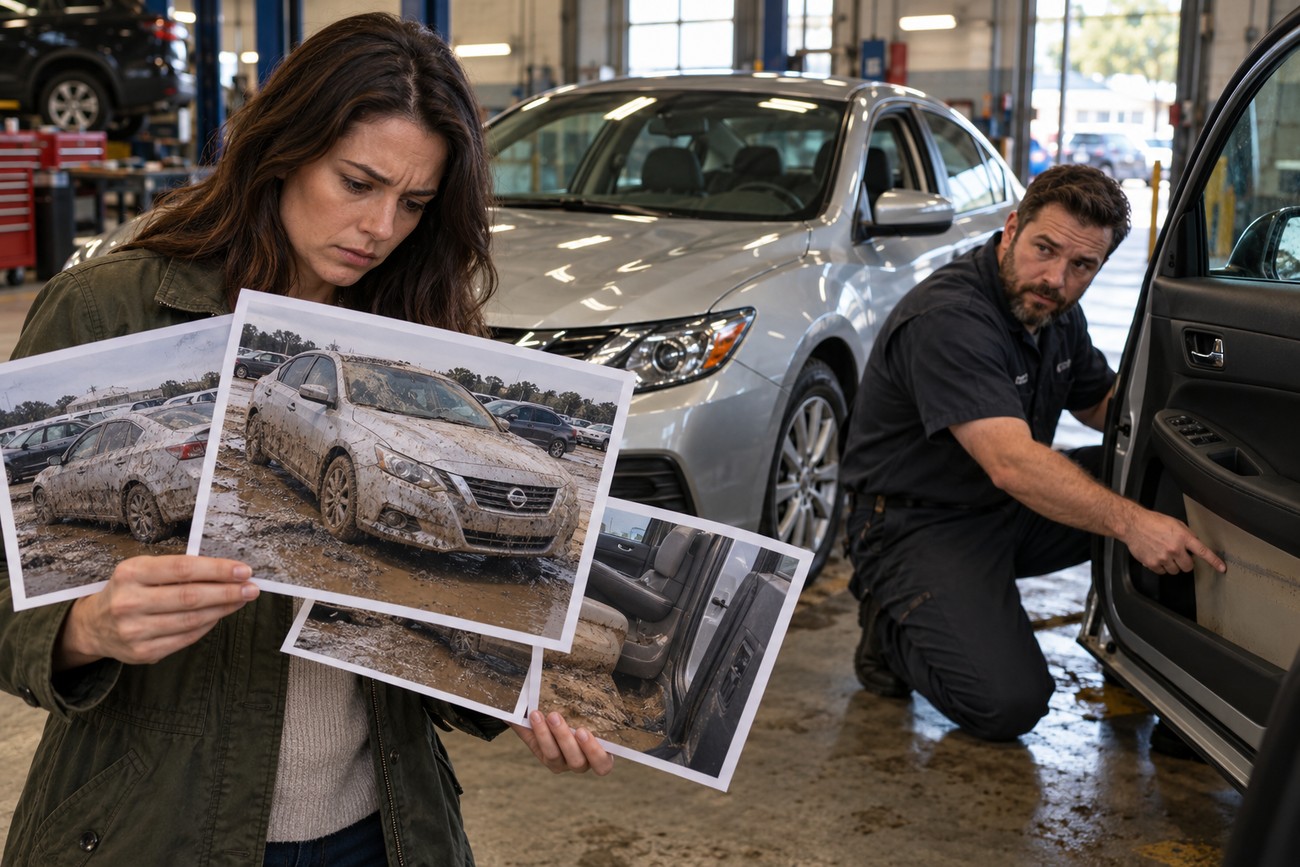
Ask for the auction or insurer photographs before inspecting the car. Images can show the waterline, the condition of the cabin, whether the vehicle sat in mud or standing water, and whether the damage affected the front, rear, or side of the car. Also record the reported loss date and location, since coastal storms can involve saltwater, which brings different corrosion concerns from freshwater flooding.
Saltwater exposure generally accelerates corrosion compared with freshwater exposure. That does not make freshwater damage safe: moisture in connectors, harnesses, control modules, padding, and concealed metal can still create delayed failures. The water type is evidence about risk, not a guarantee about the outcome.
Request itemized repair invoices, parts receipts, photographs taken during disassembly, and any diagnostic reports. Useful documentation should identify replaced modules, wiring repairs, carpet and padding work, seat-belt or airbag work, and the tests performed after reassembly. A claim that the Altima received a “complete rebuild” without supporting records calls for more scrutiny, though it is not proof of fraud.
A dry cabin and a neutral smell establish only the present condition of the cabin. New carpet can conceal old padding, and cleaning can remove odor while leaving corrosion inside a connector or harness. The seller may have dried the car carefully, yet the vehicle still needs an inspection that reaches components the cleaning process could not verify.
Inspect the Altima where water damage stays hidden
Arrange an inspection with an independent mechanic and, ideally, an automotive electrical specialist. The inspection should include lifting or removing enough carpet and padding to examine the floor, seams, drainage areas, and low points. Look for tide marks, silt, staining, mold, dampness, rust, and fasteners or brackets that appear newer than surrounding hardware.
Seat mounts deserve close attention because they can rust even when the visible cabin looks clean. The specialist should inspect accessible low connectors, harness sections, grounds, and control modules for discoloration, residue, damaged seals, cut-and-spliced wires, or signs of forced drying. Module and harness locations vary by Altima model year and configuration, so the technician should use the vehicle’s service information rather than assume every generation has the same layout.
Accessible connector pins and low harness sections can reveal corrosion that a lifted floor mat will miss. A clean diagnostic scan shows no faults detected in the systems checked today; it does not prove that every concealed connection will remain reliable.
Scan the engine, transmission, body, restraint, ABS, and other available vehicle systems with equipment capable of identifying stored, pending, and history faults. Check the readiness status and warning-light behavior during startup, and confirm that safety-system indicators perform their normal self-check. A professional should also inspect airbag-related components and wiring for water exposure, previous replacement, or poor reassembly.
A short test drive should include repeated operation of the windows, locks, mirrors, climate controls, lights, wipers, seat functions, and infotainment equipment. Monitor the ABS, traction-control, airbag, and check-engine warnings before, during, and after the drive. A clean scan and a short test drive cannot rule out later intermittent faults caused by concealed connector or harness corrosion.
The expensive faults that can arrive after the cabin dries
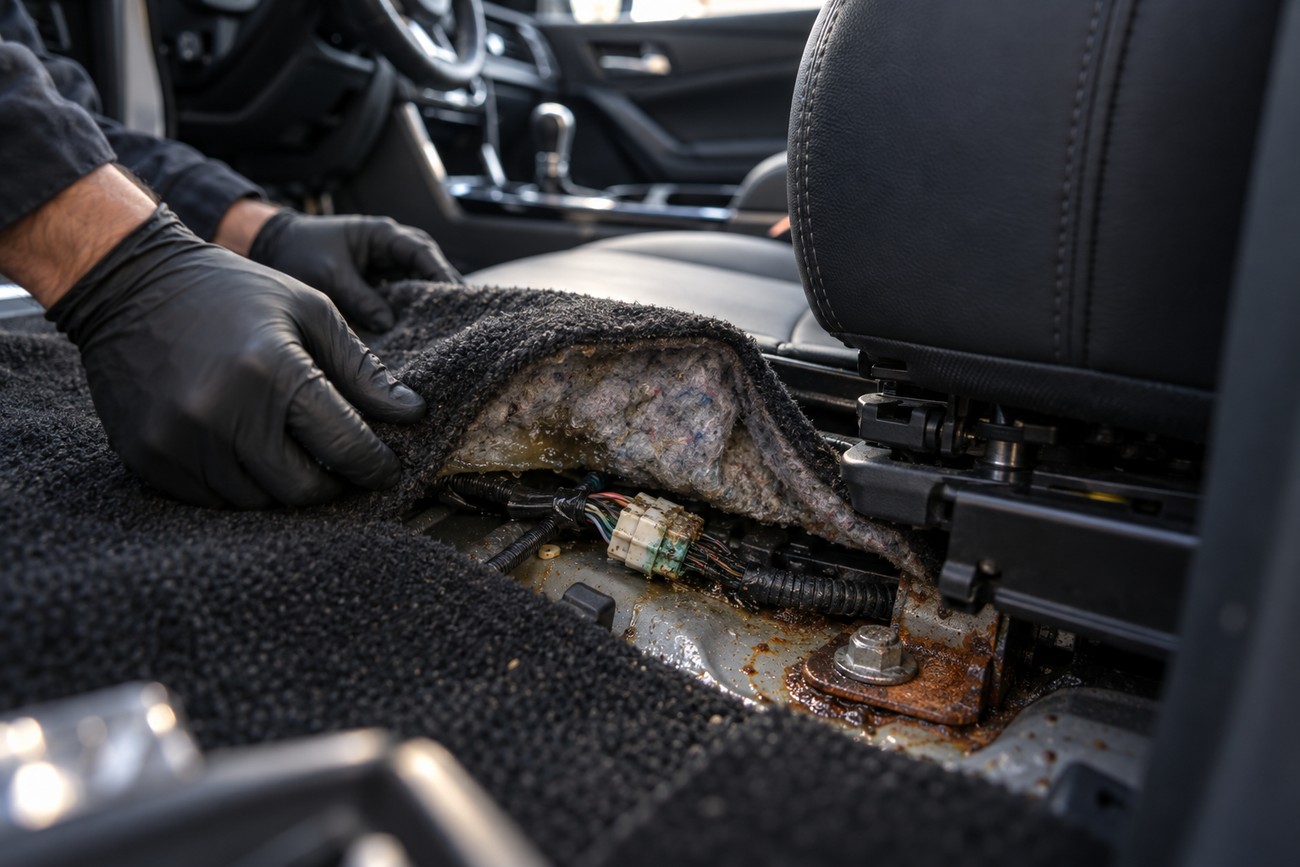
Water damage can leave trapped moisture under padding, inside seams, beneath trim, or around wiring channels. Mold and persistent dampness may return after an apparently successful cleaning, especially if the padding was reused. Rust can develop at seat mounts, hidden brackets, inner floor areas, and other concealed metal surfaces, then become more visible after months of use or winter driving.
Connector and harness corrosion may begin as a small increase in electrical resistance. The result can be an intermittent window, lock, climate-control, or warning-light problem that disappears during a workshop visit and returns later. ABS and airbag faults deserve particular caution because an unstable connection can affect a safety system at the time it is needed.
Repair costs are difficult to guarantee when the extent of water exposure is unknown. Replacing an obvious module may restore normal operation temporarily while leaving corrosion in a connector, splice, ground, or adjoining harness. A shop that declines to provide a long electrical warranty may be acknowledging the limits of what can be verified after the vehicle has been submerged.
Professional drying and cleaning can be valuable repair steps, but they do not demonstrate that inaccessible electrical components are free of corrosion. The claim that a dried flood vehicle is equivalent to a comparable clean-title Altima should therefore be treated as a sales claim. Residual risk remains in areas that were never fully removed, opened, or tested.
Calculate the real discount before you negotiate
Begin with local prices for genuinely comparable clean-title Altimas with the same model year, engine, trim, mileage, condition, and equipment. Then subtract the cost of a specialist inspection and any repairs that are documented but incomplete. Leave room for future electrical diagnosis, because intermittent faults can require more labor to locate than a straightforward mechanical repair.
A price 30–50% below comparable clean-title sedans is an unverified rule of thumb for flood-title vehicles, not a guaranteed market rate. Use local completed-sale evidence, dealer and private-party comparisons, insurance quotes, and the specific Altima’s repair documentation to establish whether the discount compensates for the risk.
Ownership costs include more than repairs. Insurance, financing, registration, and resale outcomes vary by vehicle, provider, and state. Some insurers may offer liability coverage while declining comprehensive or collision coverage, while lenders may refuse the vehicle or offer less favorable terms. Obtain written insurance terms for this specific VIN and confirm registration requirements before committing money.
Resale value remains constrained by the flood history even if the Altima performs well. A future buyer or dealer may discount it heavily or refuse a trade-in because the same uncertainty will transfer to them. If the seller will not provide records, allow a meaningful inspection, or explain the price using verifiable evidence, the sound financial decision may be to leave the car behind.
When buying one is defensible—and when to walk away
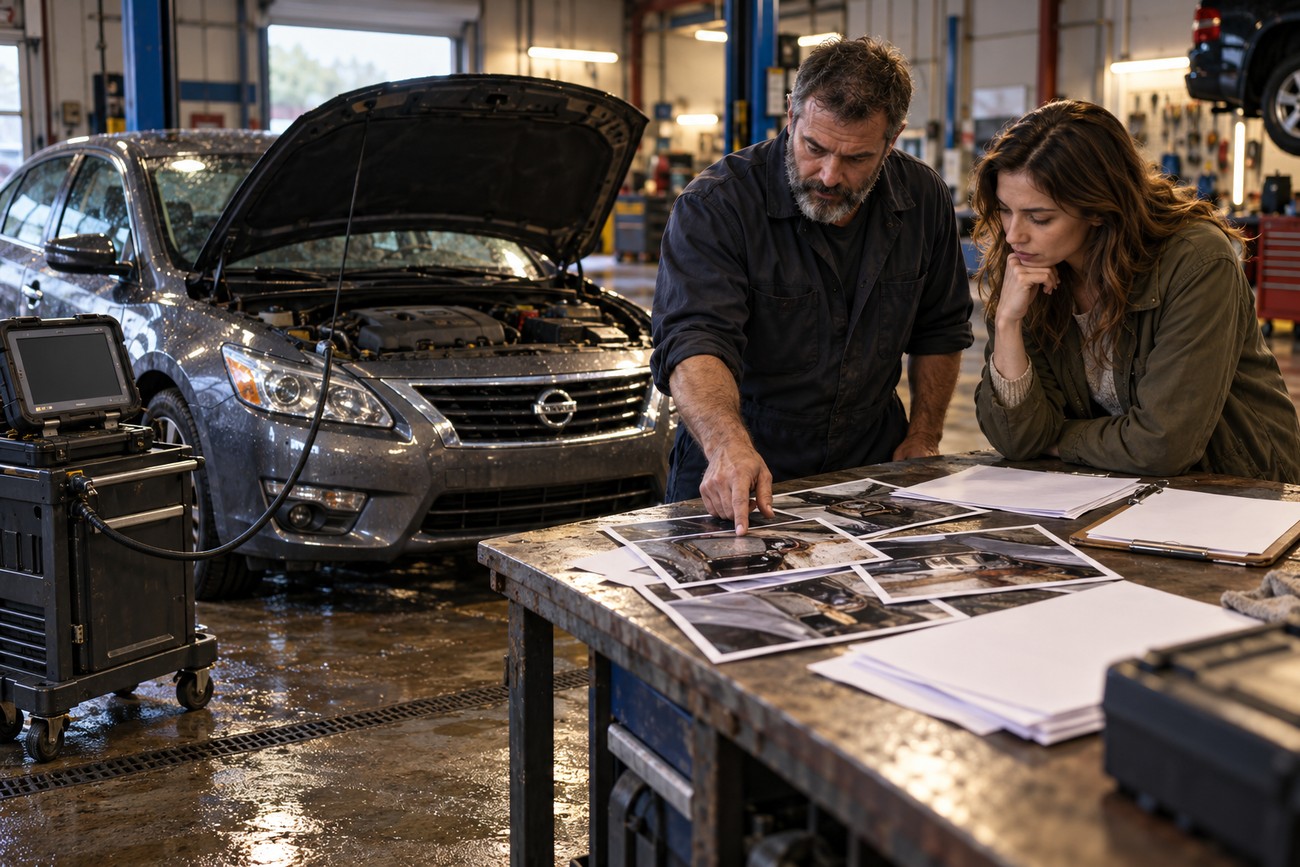
Buying a flood-title Altima can be defensible when the loss history is traceable, the water type and location are reasonably documented, and the repair process is supported by invoices and photographs. The vehicle should pass an independent mechanical and electrical inspection, with no unresolved safety-system faults. Registration and insurance arrangements should be confirmed in writing before the sale.
The price must compensate for reduced resale options and the possibility of future electrical work. A buyer who has a reserve for diagnosis, can keep the car for a long period, and accepts the resale limitation may be better positioned than someone who needs predictable ownership or easy financing. The discount should reflect the specific vehicle’s evidence, rather than a generic percentage applied to every flood-title sedan.
Walk away when records conflict, the seller blocks access to the carpet or low connectors, or the inspection reveals corrosion in critical wiring and modules. Unresolved ABS or airbag warnings, unexplained dashboard faults, damp padding, mold, severe seat-mount rust, and cut-and-spliced harnesses are strong reasons to stop the transaction. A seller’s promise to repair these issues later is weaker than a completed repair that can be independently verified.
Months of trouble-free driving reduce some uncertainty, but they do not eliminate the possibility of later concealed corrosion. Winter road salt and repeated moisture cycles can expose weaknesses that were invisible during an initial inspection. Buy only when the evidence, price, legal arrangements, and your resale options remain acceptable even if a delayed fault appears.
Frequently asked questions
Title terms can overlap, and state rules vary. Compare the current title with state records and a VIN-based report to understand how the damage was recorded. If a flood history emerges only after purchase, preserve the sale documents and document the vehicle’s condition.
What is the difference between a flood title and a salvage title?
A flood title identifies water damage or a water-related total-loss event, while a salvage title is a broader designation for a vehicle declared a total loss or meeting other state salvage criteria. The terms can overlap, and a vehicle’s paperwork may carry more than one designation as it moves through different state systems.
After repair, a state may issue a rebuilt or reconstructed designation, or it may retain another form of branded history. Because definitions and registration requirements vary by state, compare the current title with state motor-vehicle records and a VIN-based history report. The label alone does not establish the waterline, water type, or repair quality.
What should I do if I discover an undisclosed flood history after purchase?
Preserve the original listing, messages, purchase agreement, title documents, disclosure forms, payment records, and photographs. Obtain title-history evidence from the relevant state motor-vehicle agency and a reputable vehicle-history provider, then have an independent specialist document the water damage and any unsafe or concealed repairs.
Take the evidence to the relevant state consumer-protection agency or a qualified attorney. Available remedies depend on the state, the seller’s disclosures, the contract, and whether the history was legally required to be disclosed. Avoid altering or dismantling the vehicle before documenting its condition, unless immediate safety repairs are necessary.







