
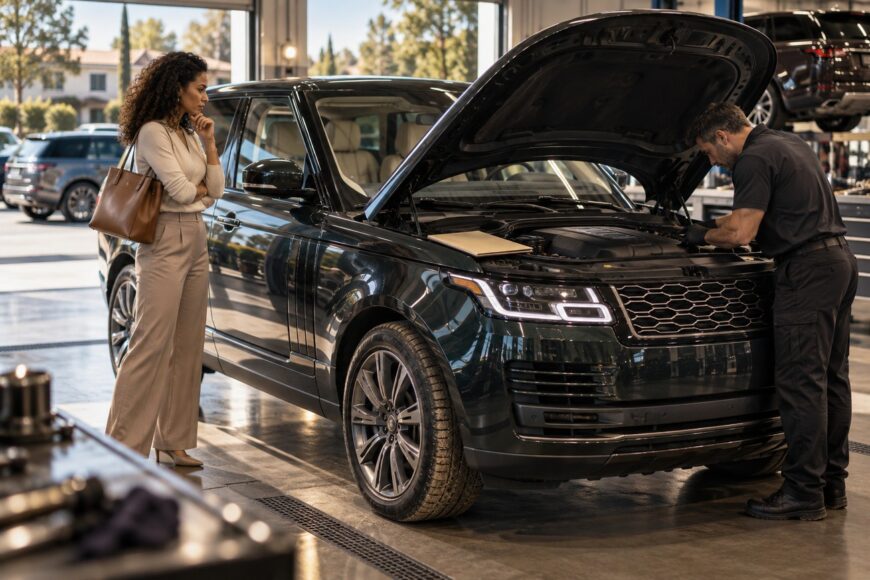
A celebrity-owned Range Rover can look like a shortcut to status, exclusivity, and a good story. It can also be an expensive used luxury SUV with deferred maintenance, worn cosmetics, and a seller’s unverified narrative attached to it. A famous previous owner does not automatically create collectible value, excellent condition, or a sound investment.
The useful test is narrower: does independently documented provenance justify the premium over a comparable Range Rover with the same generation, engine, mileage, specification, and condition? If the evidence ends with an advertisement claiming that a celebrity drove the vehicle, you should value it like an ordinary used SUV and investigate its mechanical condition accordingly.
- The Celebrity Premium Is Not the Same as Collectible Value
- What Evidence Makes a Celebrity-Owned Range Rover Valuable?
- Compare the Price With the Right Range Rover, Not the Legend
- The Hidden Risk: A Famous Range Rover Can Still Be a Tired One
- The Buying Mistakes That Turn Provenance Into an Expensive Story
- A Practical Verdict: When Is the Premium Worth Paying?
- Frequently Asked Questions
- Why do rich people love Range Rovers?
- What is the most reliable second-hand Range Rover?
- What is the best year Range Rover to buy used?
- Why are Range Rovers so unreliable?
The Celebrity Premium Is Not the Same as Collectible Value
A celebrity-owned modern Range Rover and a genuinely collectible vehicle belong to different market categories. A collectible car usually combines rarity, historical importance, strong demand, and a traceable ownership history. A premium luxury SUV may have a famous former owner while remaining a relatively common vehicle whose value is driven mainly by condition and running costs.
Documented celebrity history can add roughly 10–30% to a rare vehicle, and sometimes substantially more at auction when collector demand is strong. That outcome depends on the vehicle and the evidence together. The name alone has little power if the model is common, the service records are incomplete, or the car needs major work.
For modern premium SUVs, condition, mileage, usage pattern, and service records usually matter more than the former owner’s identity. A celebrity may have used the Range Rover for short urban trips, long highway journeys, event transport, or chauffeur work. Those patterns can leave very different mechanical footprints even when the odometer readings look similar.
The claim that a celebrity car is automatically worth 100 times more is a marketing myth, not a general market rule. A tired Range Rover with a famous history remains a tired Range Rover unless rarity, credible provenance, and collector demand create a separate market for it.
What Evidence Makes a Celebrity-Owned Range Rover Valuable?
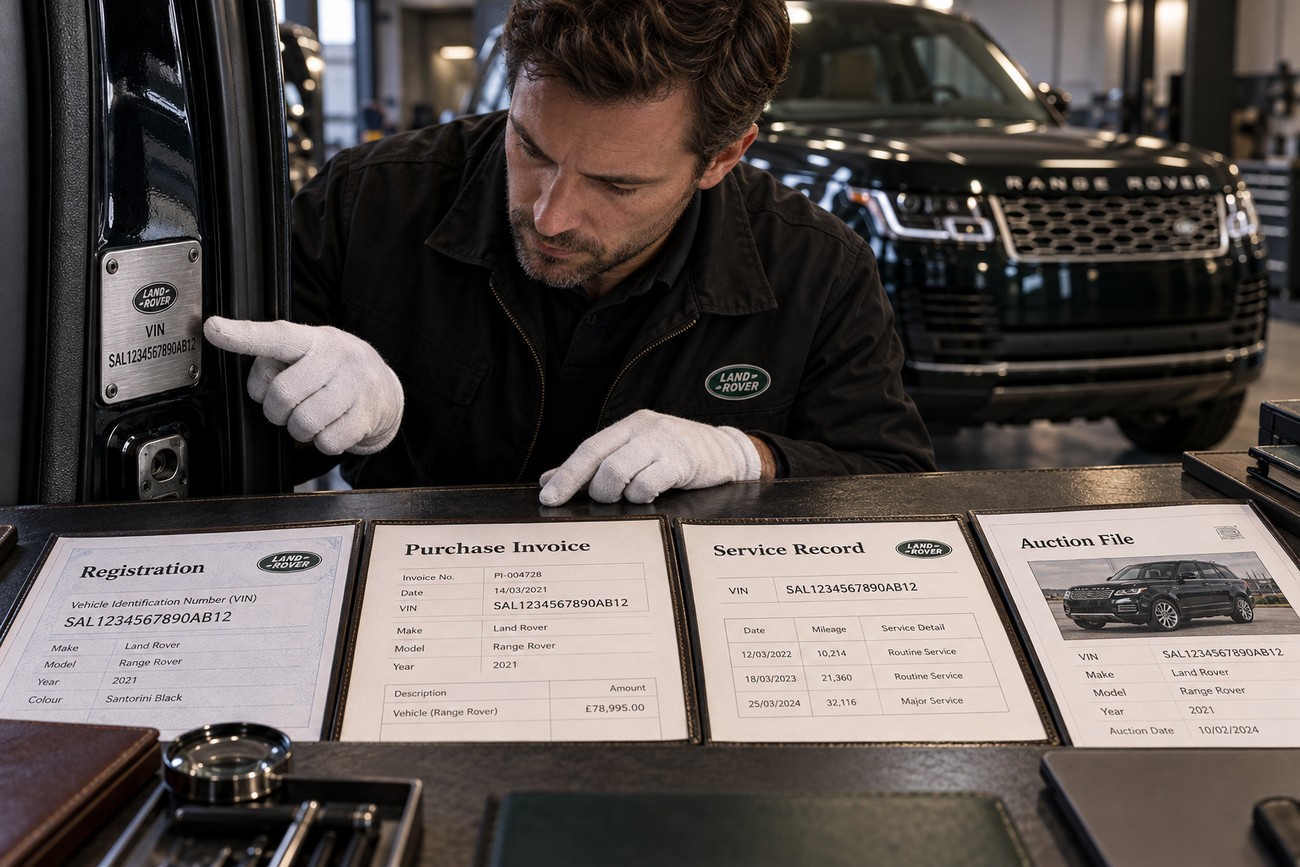
Provenance means a documentable ownership history, rather than a seller’s statement that a celebrity drove the vehicle. The chain should connect the car to the claimed owner through matching VIN data, dates, and credible transfer or registration records. Each link reduces the chance that the story is simply promotional language.
Useful evidence can include registration or transfer records, purchase and sale invoices, service documents, photographs showing the vehicle and its identifying details, and auction documentation. The dates should make sense, and the VIN should match across the available records. A photograph of a famous person beside a Range Rover is supporting context, not proof of ownership by itself.
One missing link can change the conclusion from documented provenance to unverified marketing. A careful review reconciles the VIN, ownership dates, service invoices, photographs, and transfer records before assigning any value to the story.
Service records also help test whether the claimed history is plausible. Invoices from the relevant period, registration information, and consistent mileage entries are more useful than a polished description or social media images. Without verifiable ownership history and collector demand, celebrity status should be treated primarily as a marketing claim.
The practical standard is simple: if the evidence cannot survive independent checking, do not pay for it. You may still like the vehicle, but the purchase decision should then rest on its specification, condition, inspection results, and ownership costs.
Compare the Price With the Right Range Rover, Not the Legend
Begin with a short comparison against ordinary examples that match the celebrity-claimed vehicle. The relevant variables are generation, model year, engine, specification, mileage, usage pattern, service documentation, and inspection results. A high asking price elsewhere in the market does not establish the value of a particular celebrity car.
| Comparison point | Ordinary comparable Range Rover | Celebrity-claimed example | What supports a premium |
|---|---|---|---|
| Year and generation | Same year and generation as the subject car | Must match the comparison set | Rarity or historical importance beyond the badge |
| Engine and specification | Same engine, trim, options, and market specification | Verified equipment and original configuration | A genuinely scarce or desirable specification |
| Mileage and usage | Comparable mileage and operating pattern | Odometer supported by records | Consistent evidence of careful use |
| Service documentation | Complete, credible maintenance history | Records covering the celebrity ownership period and later work | Clear evidence of consistent maintenance |
| Provenance evidence | Normal ownership records | Matching VIN, dates, transfers, invoices, photographs, or auction records | A complete, independently checkable chain |
| Inspection result | Independent inspection with known defects priced in | Same inspection standard, including mechanical and cosmetic checks | No unresolved issues that erase the premium |
| Justifiable premium | Market-supported price for the specification and condition | Additional amount above comparable ordinary cars | Documentation, rarity, collector demand, and condition together |
Russian dealer listings illustrate why broad comparisons mislead: examples include approximately RUB 4.4 million for a 2016 vehicle, RUB 7.9 million for a 2018 vehicle, and RUB 20 million for a 2025 vehicle. These are market-context examples, not a universal valuation formula. The spread is large because year, mileage, generation, specification, and condition differ substantially.
A celebrity Range Rover should therefore be priced against comparable ordinary examples, rather than against the cheapest or most expensive listing available. A newer vehicle with a different generation and engine cannot establish a fair benchmark for an older example simply because both carry the Range Rover name.
Ask the seller to explain the premium in a way that can be checked. If the answer consists mainly of celebrity photographs and vague language about exclusivity, the price gap is probably a marketing decision rather than a market-supported valuation.
The Hidden Risk: A Famous Range Rover Can Still Be a Tired One
Exterior presentation reveals little about the condition of air suspension, electronics, cooling systems, or the transmission. A professionally detailed cabin and freshly polished paint can make a vehicle look ready for a showroom while concealing deferred maintenance underneath. These systems deserve independent testing before any premium is discussed.
Mileage is an incomplete risk measure. Operating conditions, trip length, traffic, climate, loading, and maintenance regularity can matter more than the odometer figure in isolation. A lower-mileage vehicle with neglected servicing may create greater financial exposure than a higher-mileage example with consistent records and timely repairs.
The purchase price also excludes the cost of making the vehicle dependable. A low entry price can be consumed by deferred maintenance, restoration work, electronic diagnosis, suspension repairs, cooling-system work, or transmission-related attention. The seller’s celebrity story does not reduce those bills.
One profile on the L322 “Mummy” claims that a sound later example may cost RUB 2–2.5 million and cover roughly 80,000–250,000 km. That is a single-source estimate, not a universal market rule. It is useful only as a reminder that condition and maintenance history must be assessed alongside the asking price.
Inspection should cover fault-code history, suspension behavior, fluid leaks, cooling performance, transmission operation, electrical functions, body repairs, and evidence of cosmetic wear. The exact scope should reflect the model and inspector’s findings. A celebrity-owned car that fails this process should be valued according to its repair needs, regardless of its story.
The Buying Mistakes That Turn Provenance Into an Expensive Story
The first mistake is buying the emotion instead of the condition. A famous name can make a buyer overlook poor panel alignment, incomplete records, worn interior surfaces, or warning signs during a test drive. The correction is to inspect the vehicle before discussing its provenance premium and to compare the result with an ordinary car of similar specification.
The second mistake is accepting an unsupported celebrity claim. Ask for the VIN-linked ownership chain, dates, invoices, photographs, and transfer evidence. If the seller cannot produce enough material for independent verification, treat the celebrity connection as marketing context and negotiate on the same basis as any other used Range Rover.
The third mistake is ignoring ownership costs. Premium SUV buyers should budget for routine servicing, age-related repairs, specialist diagnosis, and the possibility of deferred work. A transparent service history is more valuable than attractive copy because it gives you a better estimate of what the vehicle may require next.
The fourth mistake is choosing the cheapest example and expecting the initial saving to survive. The cheapest premium Range Rover can be the riskiest entry point when repairs have been postponed. Compare total acquisition and correction costs with the price of a better-documented ordinary car.
Finally, provenance should not be confused with investment liquidity. A tired vehicle can carry a famous history without becoming a high-quality or collectible asset. The next buyer may place little value on the story, leaving you unable to recover the premium at resale.
A Practical Verdict: When Is the Premium Worth Paying?
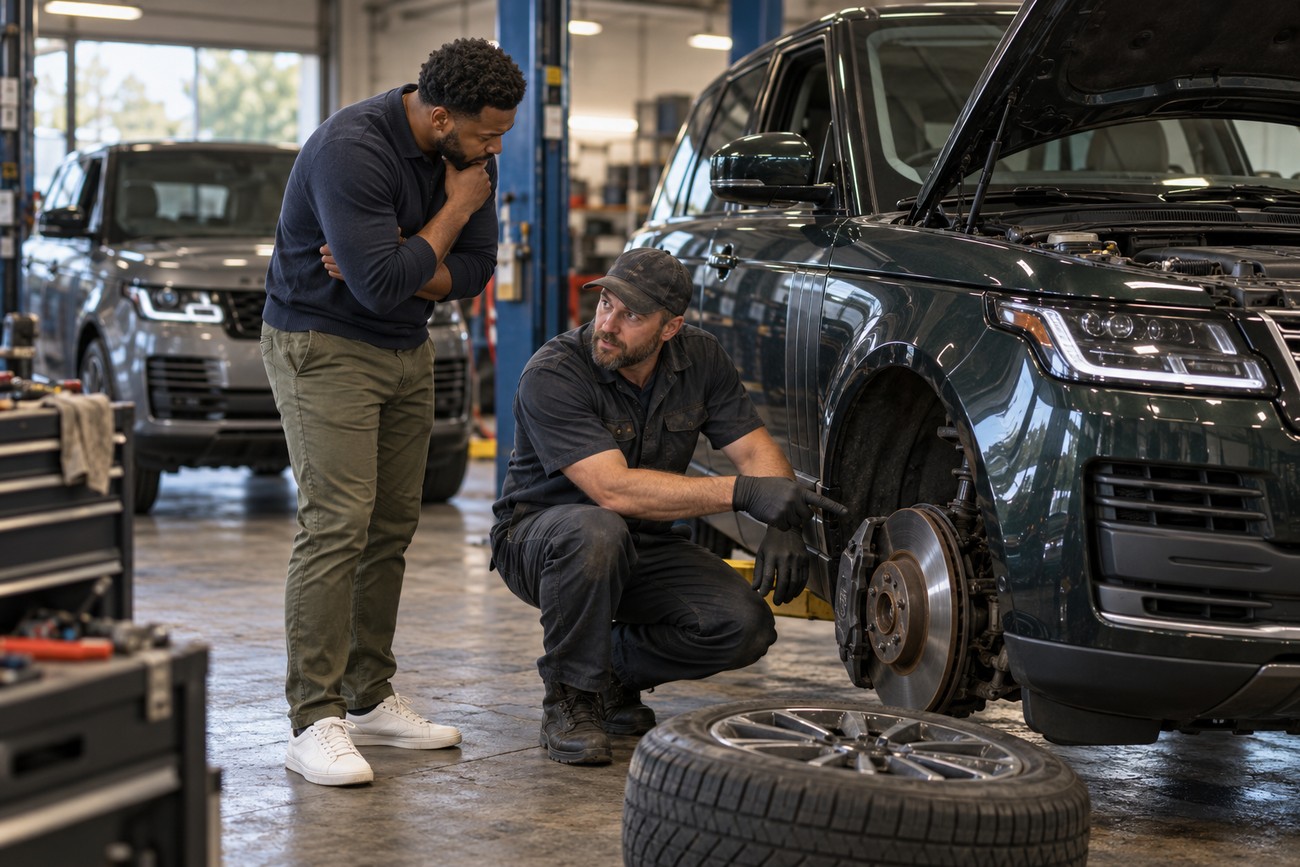
Paying more can be rational when the provenance is independently documented, the vehicle is rare or historically significant, the inspection is strong, and collector demand supports the comparison. The premium must also make sense against similar ordinary Range Rovers. These conditions work together; a celebrity name cannot replace missing maintenance evidence or poor mechanical condition.
For an ordinary modern luxury SUV, service history and mechanical condition generally outweigh celebrity identity. If two vehicles are otherwise similar and one has a credible, complete ownership chain, a moderate premium may reflect personal value and future buyer interest. It still remains a discretionary expense rather than a guaranteed investment.
Resale is the final reality check. The premium may not return if the next buyer does not care about the provenance, especially when the vehicle is common or the documentation is incomplete. Buy the story only if you would be comfortable owning the car after assigning that story no financial value.
The safest rule is conditional: pay a premium only for documented provenance, a successful expert inspection, an understandable gap versus comparable cars, and a story you personally value. Otherwise, buy the best-documented ordinary Range Rover you can find and keep the difference available for ownership costs.
Frequently Asked Questions
These questions address the reasons people choose Range Rovers and the model-selection issues that sit outside a celebrity ownership claim.
Why do rich people love Range Rovers?
Range Rovers combine status signaling with a high seating position, a quiet cabin, generous space, and all-weather utility. They can serve as luxury transport in the city while remaining useful for long trips, poor weather, and varied road conditions. That mix explains the ownership appeal more reliably than the idea that every example is a collectible asset.
The same qualities create a distinction between lifestyle value and investment value. Someone may rationally pay for comfort, presence, and capability even when the vehicle is financially depreciating. A buyer evaluating a used example should separate that personal utility from any claim that celebrity ownership will preserve the price.
What is the most reliable second-hand Range Rover?
There is no universally reliable answer from the available evidence. Reliability depends on the specific generation, engine, specification, maintenance quality, usage pattern, and inspection results. A properly maintained example with complete records is usually a stronger choice than a supposedly desirable year with an unclear history.
Use model selection as a filtering process rather than a badge-based decision. Compare service documentation, known repairs, diagnostic results, and the seller’s willingness to permit an independent inspection. Celebrity history should rank below those checks.
What is the best year Range Rover to buy used?
A year-only answer is unsafe because two vehicles from the same calendar year can differ in generation, engine, specification, mileage, maintenance, and condition. The better comparison uses all of those factors together, followed by an inspection that identifies deferred work.
Year can help define the market group, but it cannot replace vehicle-specific evidence. A well-documented car with sensible maintenance may be preferable to a newer example with an incomplete history and unresolved mechanical concerns.
Why are Range Rovers so unreliable?
Range Rovers use complex luxury systems, including advanced suspension, electronics, cooling components, and sophisticated drivetrains. Complexity increases the number of systems that require correct diagnosis and regular maintenance. When servicing is postponed, several issues can accumulate and create a reputation for unreliability.
That reputation does not mean every Range Rover is inherently unreliable. Condition, usage, repair quality, and maintenance records can separate a manageable used vehicle from one that requires extensive restoration. An independent inspection is the practical way to identify which situation you are buying.







