
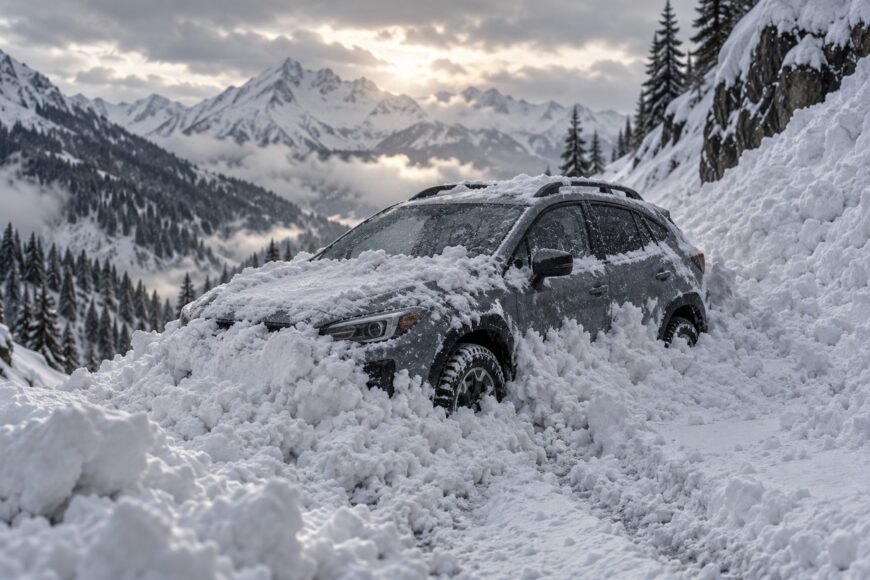
A Subaru Crosstrek can feel reassuringly capable right up to the moment an avalanche turns it into a confined, poorly ventilated space. Symmetrical AWD and X-MODE can improve available traction, yet neither system prevents an avalanche, increases flotation, or guarantees escape after snow packs around the vehicle.
Treat the Crosstrek as transportation to a safer route, rather than as avalanche equipment. The available material documents complaints about deep-snow immobilization, while confirmed reports specifically involving Crosstrek avalanche burial remain limited. No universal survival time applies inside a buried vehicle; snow density, ventilation, damage, and the occupants’ condition all change the risk.
- When a Capable Crosstrek Becomes a Trap
- What AWD, X-MODE, and Ground Clearance Actually Buy You
- Standard Crosstrek vs. Crosstrek Wilderness in Snow
- If the Crosstrek Is Buried: Priorities Inside the Cabin
- The Mistakes That Turn a Snow Stop Into an Emergency
- How to Reduce the Risk Before Driving Into Winter Terrain
- Frequently asked questions
- What is the most common problem with a Subaru Crosstrek in deep snow?
- What should passengers do if a buried Crosstrek has already been running?
- What is the lawsuit against the Subaru Crosstrek?
- What year to stay away from a Subaru Crosstrek?
- What type of person drives a Crosstrek?
When a Capable Crosstrek Becomes a Trap
A Crosstrek may enter soft snow with steady momentum and useful traction, then stop when snow builds against the bumper, sills, protection panels, subframes, or underbody. As the snow compacts, the vehicle can become high-centered. The tires may continue turning while carrying less useful load against the ground.
Current Crosstrek versions have Symmetrical AWD and X-MODE, which improve available traction during ordinary low-grip driving. Those systems cannot prevent an avalanche or keep snow from loading the vehicle. The available complaints mainly concern getting stuck in deep snow, and they do not provide enough confirmed evidence to describe a pattern of Crosstrek-specific avalanche burials.
Burial changes the problem from mobility to atmosphere and rescue. Dense snow can block the exhaust and air intakes, while packed snow around the vehicle can reduce cabin ventilation. Engine exhaust may then enter the cabin, so occupants must assess immediate conditions and shut down the engine and heater when it is safe to do so.
What AWD, X-MODE, and Ground Clearance Actually Buy You
Ground clearance describes the distance to a vehicle’s lowest point on relatively clear ground. A standard Crosstrek has 8.7 inches (approximately 221 mm) of clearance, while the Crosstrek Wilderness has 9.3 inches (approximately 236 mm). Those figures provide useful margin over uneven terrain, but they do not define a safe snow depth.
Snow can accumulate higher than the measured lowest point, especially in a track or drift. Once it reaches the bumpers, sills, protection panels, subframes, or underbody, it can support the vehicle’s weight and remove effective tire contact. AWD may continue transmitting power in that condition, while wheelspin only polishes and compacts the snow beneath the chassis.
X-MODE manages available traction through the vehicle’s control systems. It cannot excavate packed snow, increase flotation, or lift the Crosstrek off its underbody. A driver who keeps applying throttle after the vehicle is high-centered can overheat the drivetrain and make recovery more difficult.
Standard Crosstrek vs. Crosstrek Wilderness in Snow
The Wilderness trim provides more clearance and more favorable approach, departure, and ramp angles. These specifications improve the vehicle’s ability to pass over some obstacles; they do not establish an avalanche-safe route.
| Specification | Standard Crosstrek | Crosstrek Wilderness |
|---|---|---|
| Ground clearance | 8.7 inches (approximately 221 mm) | 9.3 inches (approximately 236 mm) |
| Approach angle | 18° | 20° |
| Departure angle | 30.1° | 33° |
| Ramp angle | 19.7° | 21.1° |
The extra clearance and improved angles can reduce contact with uneven snow and terrain during ordinary travel. They do not prevent snow from packing around the body or turn the vehicle into a floating platform. A higher bumper may clear one drift while the underbody remains suspended on dense snow.
Wilderness equipment can improve traction and geometry, yet the avalanche decision remains unchanged. Avoid avalanche-prone slopes, runout zones, terrain traps, and areas beneath cornices. No Crosstrek trim establishes a safe route through avalanche terrain.
Marketing language about deep snow and off-road capability describes vehicle performance under particular conditions. It does not define a safe snow depth or authorize travel onto a slope that can release.
If the Crosstrek Is Buried: Priorities Inside the Cabin
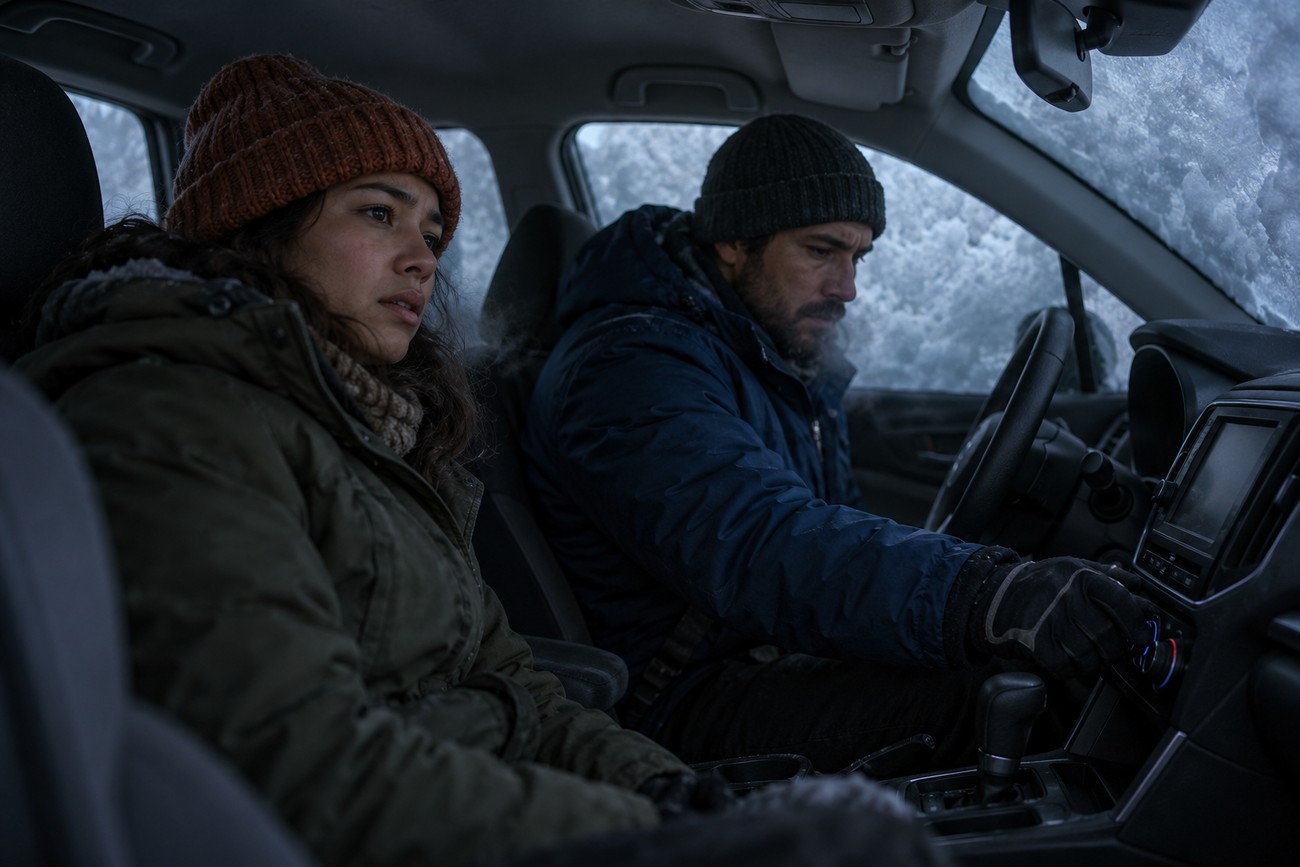
First, assess immediate stability. Listen for continuing movement, determine whether the vehicle is shifting, and avoid actions that could trigger secondary snow movement. A person digging aggressively against a door or directly above occupants can disturb the load and worsen the burial.
After assessing immediate conditions, check whether snow is blocking the exhaust or air intake, then turn off the engine and heater when possible. A running engine can create carbon-monoxide risk, and a blocked exhaust can allow carbon monoxide into the cabin. The cabin is not a sealed survival capsule, so treat ventilation as an urgent concern.
Rescuers first need a controlled air space and a stable work area. Clearing a small breathing space around each face can protect occupants while avoiding a sudden collapse caused by forcing doors or digging directly overhead.
Establish communication and send a precise emergency message if a phone or other device works. Share the location, number of occupants, injuries, vehicle orientation, and any continuing movement. Use available signaling methods without repeatedly opening doors or creating unnecessary drafts.
Clear snow from the face and create a small air pocket. Conserve air by limiting movement and speaking only when necessary. Frantic digging from inside accelerates breathing and may pull snow into the cabin; forcing a door can also admit more snow before an exit is prepared.
Breaking a side window is a last-resort action that requires a plan, eye protection if available, and some way to assess the snow depth outside. Broken glass can cause injury, and an opening may admit snow faster than occupants can clear it. There is no reliable universal number of minutes before suffocation because burial depth, snow density, ventilation, damage, and occupants vary.
The Mistakes That Turn a Snow Stop Into an Emergency
Leaving the engine running without checking the exhaust is one of the most dangerous errors. Snow can cover the tailpipe while the cabin appears intact, allowing exhaust gases to accumulate. A running engine can create carbon-monoxide risk even when the heater and ventilation system are operating.
Wheelspin can feel like progress when the Crosstrek is stuck. In dense snow, it may overheat the drivetrain, dig a polished hole, and compact snow beneath the underbody. Once the vehicle is high-centered, repeated throttle rarely restores the lost contact; it usually makes recovery harder.
X-MODE, a phone, and the factory jack each have limited roles. X-MODE manages traction, a phone may support communication, and a jack may help with certain ordinary roadside problems. None replaces an avalanche transceiver, probe, and shovel, or the training needed to use that equipment effectively.
Route and parking errors create exposure before the vehicle moves. Stopping in an avalanche runout, terrain trap, or beneath a cornice places the vehicle where released snow can concentrate. A capable vehicle can reduce the consequences of rough terrain while doing nothing to reduce the hazard above it.
How to Reduce the Risk Before Driving Into Winter Terrain
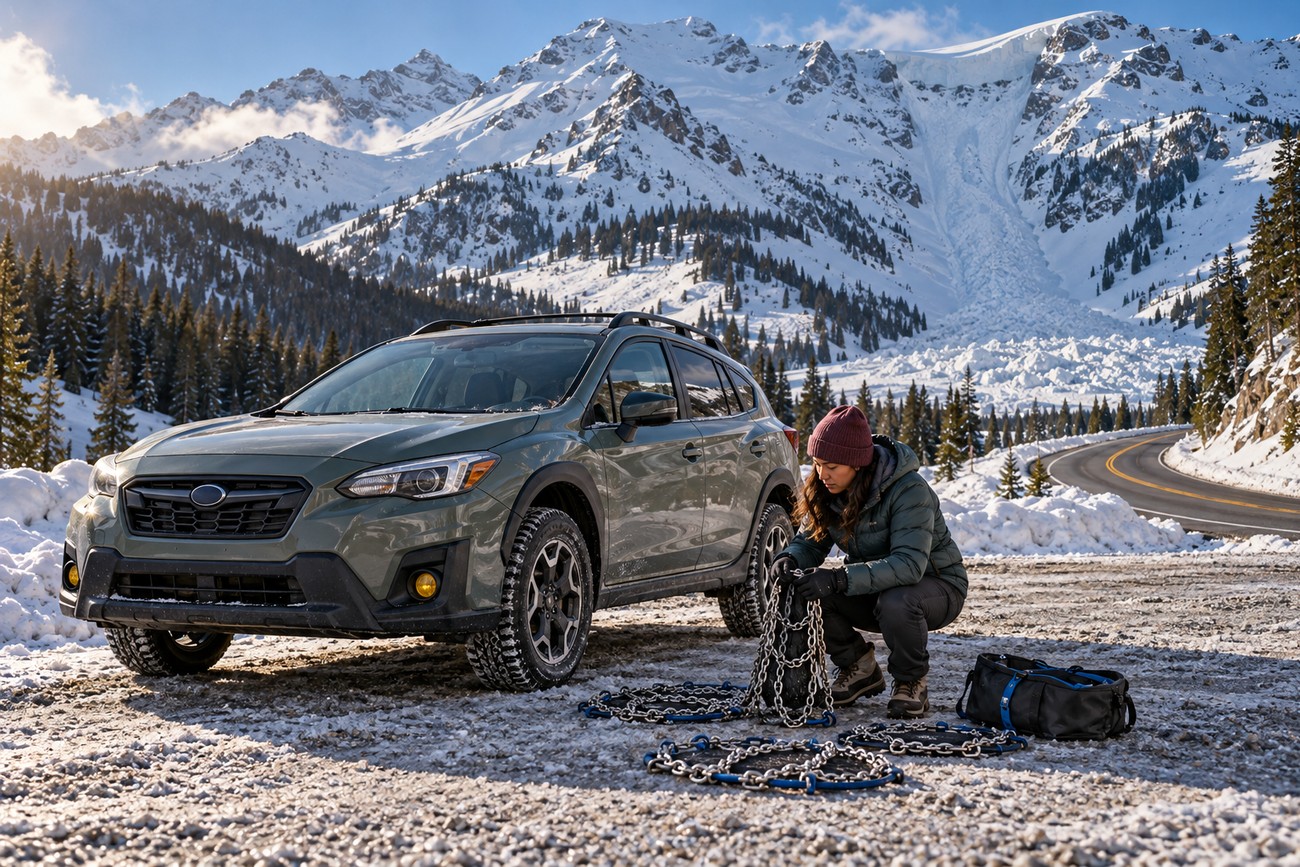
Choose a route outside avalanche terrain whenever possible, and verify the terrain rather than relying on the vehicle’s advertised snow capability. Avoid slopes, runout zones, gullies, and areas beneath cornices when conditions or route information are uncertain. No Crosstrek trim authorizes travel onto an avalanche-prone slope.
Use full winter tires for sustained winter conditions and carry compatible chains where they are appropriate and permitted. Ordinary road or all-season tires do not provide the same snow traction as proper winter tires. Tire grip helps with controlled travel and recovery decisions, while it cannot protect a vehicle from a moving snow mass.
Test communication equipment before departure and carry an avalanche transceiver, probe, and shovel when traveling in avalanche terrain or where companion rescue may be required. Learn the equipment before an emergency; a shovel in its packaging is not a rescue plan. AWD and X-MODE do not replace any of these tools.
Spend preparation time on route selection, weather and avalanche information, tires, chains, communication, and rescue practice before comparing X-MODE settings. Subaru’s deep-snow and off-road marketing does not define a safe snow depth. A conservative route decision usually provides more protection than extracting a little more performance from the vehicle.
Frequently asked questions
The questions below distinguish ordinary deep-snow immobilization from avalanche burial. They also address what the available material does and does not establish about the Crosstrek. Vehicle capability remains separate from route and rescue decisions.
What is the most common problem with a Subaru Crosstrek in deep snow?
The recurring practical problem is high-centering on packed snow. Snow can build around the bumpers and underbody until the tires lose useful contact, allowing the wheels to spin while the vehicle remains fixed.
That complaint concerns ordinary deep-snow immobilization. The available material does not contain enough confirmed reports to establish a specific pattern of Subaru Crosstrek avalanche burial, so the two situations should not be treated as equivalent.
What should passengers do if a buried Crosstrek has already been running?
After checking immediate stability, stop the engine and heater if snow may be blocking the exhaust or intake. Protect the breathing space around each face, communicate the location and number of occupants, and signal rescuers using available devices.
Keep movement and talking limited. Do not begin frantic excavation or force a door without considering secondary snow movement, falling snow, glass, and the depth outside the opening.
What is the lawsuit against the Subaru Crosstrek?
The supplied material does not identify a specific lawsuit involving the Subaru Crosstrek. It provides no supported lawsuit, injury, or model-year claim to report, so a precise legal allegation would be speculation.
What year to stay away from a Subaru Crosstrek?
The supplied evidence does not identify a particular Crosstrek model year to avoid. A purchase decision should be based on the specific vehicle’s condition, maintenance history, tires, safety equipment, and suitability for the route rather than an unsupported blanket warning about one year.
What type of person drives a Crosstrek?
A Crosstrek may suit drivers who want a compact vehicle with all-wheel drive, useful clearance, and light off-road capability. That description says nothing about a driver’s judgment or avalanche knowledge.
Anyone traveling in winter terrain still needs route discipline, suitable tires, communication, and appropriate rescue equipment. Vehicle capability does not substitute for those decisions.







