
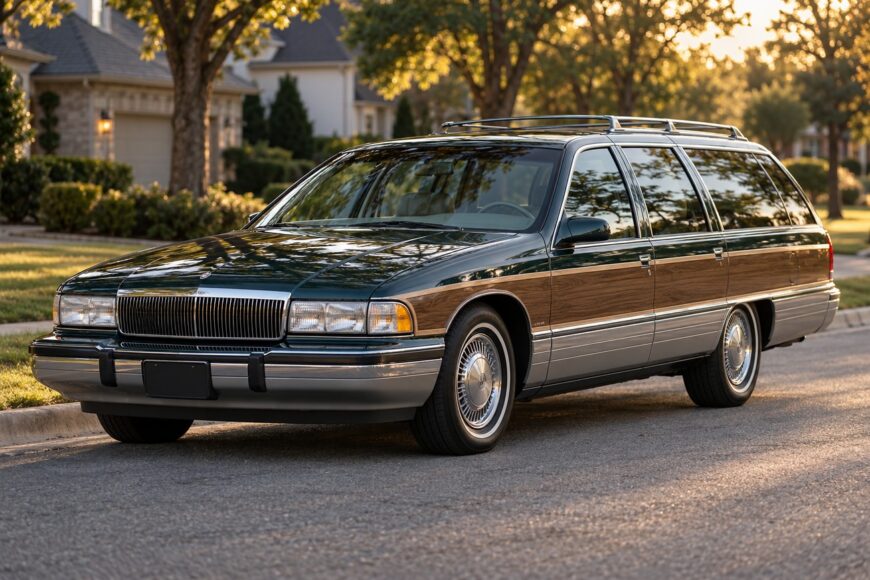
The Buick Roadmaster Estate combines the appeal of a powerful LT1 V8, a huge cargo area, and rear-wheel-drive character in one unusually large American wagon. Its 5.7-liter engine gives the car authority that its formal styling does not suggest, while the body-on-frame chassis and available eight-seat layout make it useful for long trips, family transport, and properly equipped towing.
That appeal comes with serious qualifications. Fuel use is poor by modern standards, city driving exposes cooling weaknesses, and an aging 4L60-E automatic can turn an apparently good car into an expensive project. The Roadmaster Estate is not simply an old wagon, and an LT1 badge does not guarantee reliability. Condition, maintenance history, and the quality of previous repairs matter more than the engine designation alone.
- What the Buick Roadmaster Estate Really Is
- The LT1 Makes This Wagon Faster Than It Looks
- Space, Comfort, and the Limits of the Full-Size Formula
- The Real Ownership Costs: Fuel, Cooling, and the 4L60-E
- What to Inspect Before Buying One
- Is the Roadmaster Estate Still Worth Owning?
- Frequently asked questions
- How much horsepower does a 1996 Buick Roadmaster LT1 have?
- Which year was the best for the Buick Roadmaster Estate?
- How much can a Buick Roadmaster Estate tow?
What the Buick Roadmaster Estate Really Is
The Buick Roadmaster Estate covered here is the 1994–1996 full-size wagon built on GM’s B-body platform. It uses rear-wheel drive and body-on-frame construction, a layout that gives it a distinctly truck-like structural character beneath the Buick trim and soft ride. The mechanical formula is simple by modern standards, yet the car’s size and equipment make inspection more complicated than its basic design suggests.
With a wheelbase of about 115.9 inches and an overall length of about 215 inches, the Estate occupies more road than most modern crossovers. That length creates a broad, stable platform for passengers and luggage, while also making tight parking spaces, narrow ramps, and crowded urban streets demanding. A buyer who measures only the parking space and ignores turning room may find daily use frustrating.
Typical seating is for eight, including a rear-facing third seat in the cargo area. The available woodgrain exterior treatment and rear-facing seat are strong visual and equipment associations with the model rather than separate technical specifications. They help define the wagon’s identity, though the third row also affects rear visibility and leaves less useful cargo room once occupied.
The B-body formula explains much of the Roadmaster’s appeal. It feels substantial, has an easygoing long-distance manner, and offers the kind of open interior that disappeared from many later wagons. It also carries old-school compromises: considerable mass, soft body control, and hardware that may now be difficult to replace in original form, particularly wagon-specific interior or trim parts.
The LT1 Makes This Wagon Faster Than It Looks
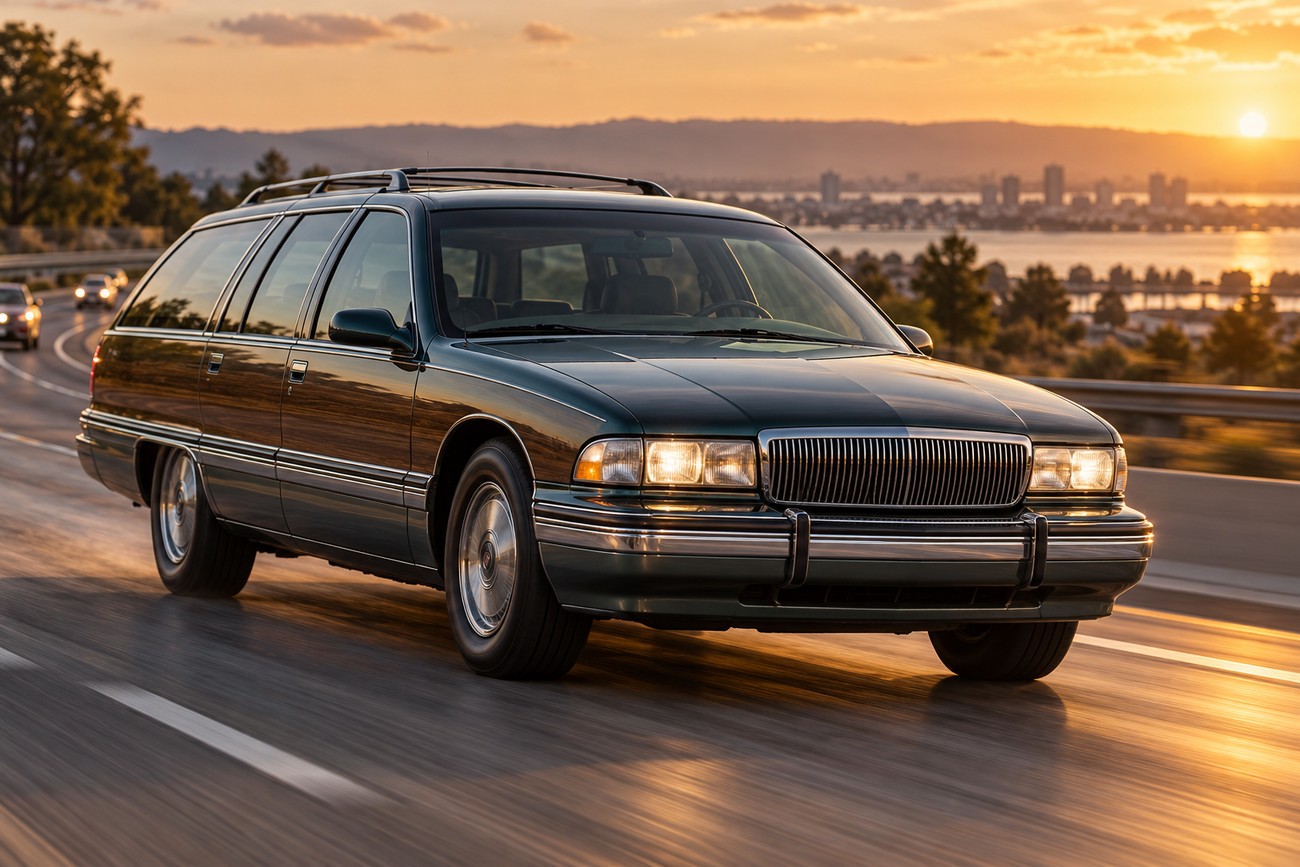
The 5.7-liter LT1 V8 is the mechanical reason the Roadmaster Estate can feel surprisingly lively. The commonly cited Roadmaster rating is 260 hp and 330 lb-ft, enough torque to move the large wagon with confidence in traffic and during highway passing. The engine’s character is strongest in the low and middle ranges, where it builds speed without requiring high rpm.
That response changes the driving impression more than the specification sheet suggests. The wagon remains heavy, but the torque makes its mass feel manageable once moving. A healthy car can accelerate with a calm, effortless shove that contrasts sharply with the upright body and long roofline.
Roadmaster buyers should avoid treating this as a Corvette engine transplanted unchanged. The Buick application has different calibration, packaging, and thermal conditions, all of which influence how the engine feels and how it ages. The engine bay is crowded, and heat management becomes increasingly important as hoses, fans, radiators, and electrical connections grow old.
The LT1 can be durable when maintained correctly, yet its reputation encourages careless buying. An engine that starts easily and sounds smooth at idle may still have cooling-system weaknesses, sensor faults, or a history of deferred service. Strong performance during a short drive proves little if the transmission and cooling system have not been tested under load.
Space, Comfort, and the Limits of the Full-Size Formula
The Estate’s greatest practical strength is the amount of usable cabin space it offers. The typical eight-seat arrangement spans the front and second rows and includes a rear-facing third seat. The long body also provides a large cargo area, making the Buick genuinely useful for road trips, bulky purchases, and family transport.
Its ride is soft and generally well suited to long highway journeys. That comfort comes from suspension tuning that allows noticeable body movement, including roll in corners and nose dive under braking. Steering can feel heavy, and a worn front end makes the car feel vague rather than merely relaxed.
The third row introduces a practical compromise. With rear passengers aboard, luggage space becomes less flexible. Rear visibility is already restricted by the tailgate and roofline, so parking sensors or a carefully planned reversing routine would be useful, although many original cars have neither.
Daily use depends heavily on where you drive. The 215-inch body is manageable with practice, yet modern parking spaces were not designed around it. A Roadmaster can work well as a highway commuter or family cruiser; it is less convincing as a city car that must repeatedly squeeze into compact spaces and make frequent short trips.
The Real Ownership Costs: Fuel, Cooling, and the 4L60-E
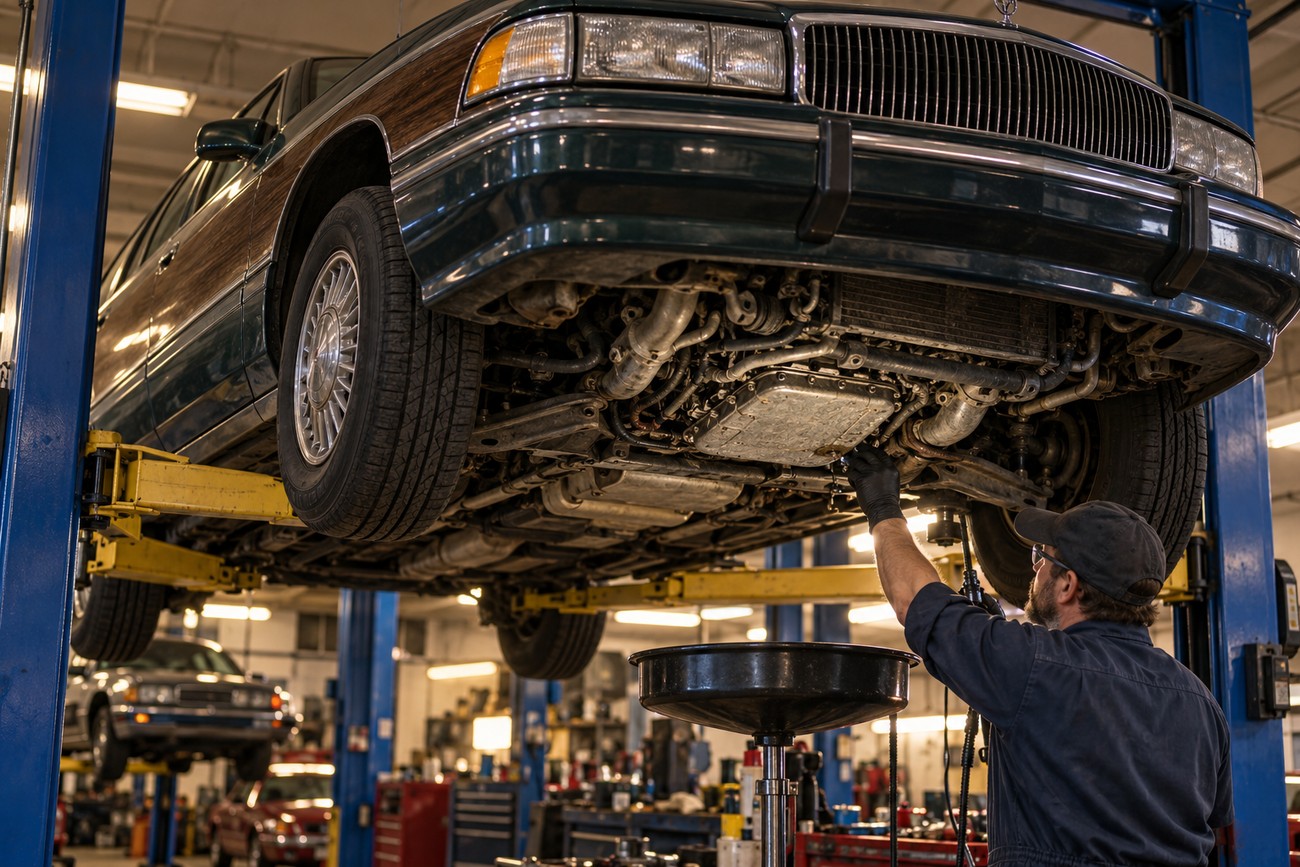
Fuel consumption is the first expense most owners notice. The large body, V8, automatic transmission, and frequent urban acceleration produce fuel economy that is poor by modern standards, especially in city and short-trip use. Highway driving is more favorable, though the car remains an inefficient choice beside contemporary vehicles.
The 4L60-E is the common four-speed electronically controlled automatic. It suits the engine and provides relaxed cruising, yet age, heat, neglected service, and internal wear can produce harsh shifts, slipping, or delayed engagement. A transmission that behaves acceptably during a gentle neighborhood drive may react differently after sustained acceleration or a long period in traffic.
Cooling deserves equal attention. Traffic overheating can be associated with a dirty radiator, old hoses, or weak fan or fan-clutch performance. The LT1’s thermal environment leaves little room for complacency, and a car that runs normally on a cool day can show its weakness when airflow falls and under-hood heat rises.
Owners often focus on the engine because the LT1 is the car’s headline feature. That can obscure the cost of supporting systems. A cooling repair, transmission rebuild, electrical diagnosis, and chassis refresh may each be manageable in isolation; together, they can exceed the apparent bargain price of an unremarkable wagon.
Short trips are especially hard on the ownership equation. They deliver the worst fuel use, provide little opportunity for the car to settle into efficient cruising, and can expose charging, sensor, and cooling problems after long periods of sitting. The Roadmaster rewards regular use and proper maintenance more than sporadic operation as a weekend curiosity.
What to Inspect Before Buying One
Begin with the cooling system rather than the engine sound. Look for evidence of overheating, inspect the radiator and hoses, confirm that the fan or fan clutch responds correctly, and watch the temperature during a proper road test. A clean idle and strong acceleration do not eliminate the risk of a system that fails only after the car is hot.
Evaluate the 4L60-E at several speeds and temperatures. Engagement should be predictable, shifts should not flare or slam, and the transmission should remain consistent after sustained load. Check for leaks and signs of improvised repairs. The same inspection applies to the rear axle and driveshaft area, where neglected service can add noise and vibration that a short test drive may conceal.
A loaded road test can reveal transmission heat or overheating problems that remain invisible during an idle check or a brief trip around the block. Test the car after it has reached operating temperature, then inspect the cooling system again before deciding.
The front suspension deserves a hands-on inspection. Tired springs, ball joints, and control-arm bushings can leave the nose low, the steering imprecise, and the tires wearing unevenly. Shocks and alignment matter greatly on this chassis; replacing one worn component while ignoring the rest often produces a car that still feels unstable.
Brakes and tires are safety-related expenses, not cosmetic upgrades. On a wagon of this size and mass, neglected tires, weak brakes, or poor alignment become obvious during emergency stops and wet-weather driving. Factor those items into the purchase decision before comparing the car with a cheaper-looking example.
Electrical systems also need time. Sensors, connectors, power windows, climate controls, and battery-drain faults can become intermittent after long storage. Long periods of inactivity may damage seals, hoses, brakes, and wiring more severely than a higher odometer reading on a car that was used and maintained regularly.
Finally, inspect for cheap repairs, heavy modifications, and missing wagon-specific parts. Unmodified, well-documented examples are difficult to find, while replacing unusual trim or interior pieces can cost more time and money than expected. A good engine cannot compensate for a neglected chassis, uncertain cooling system, and incomplete body or interior.
Is the Roadmaster Estate Still Worth Owning?
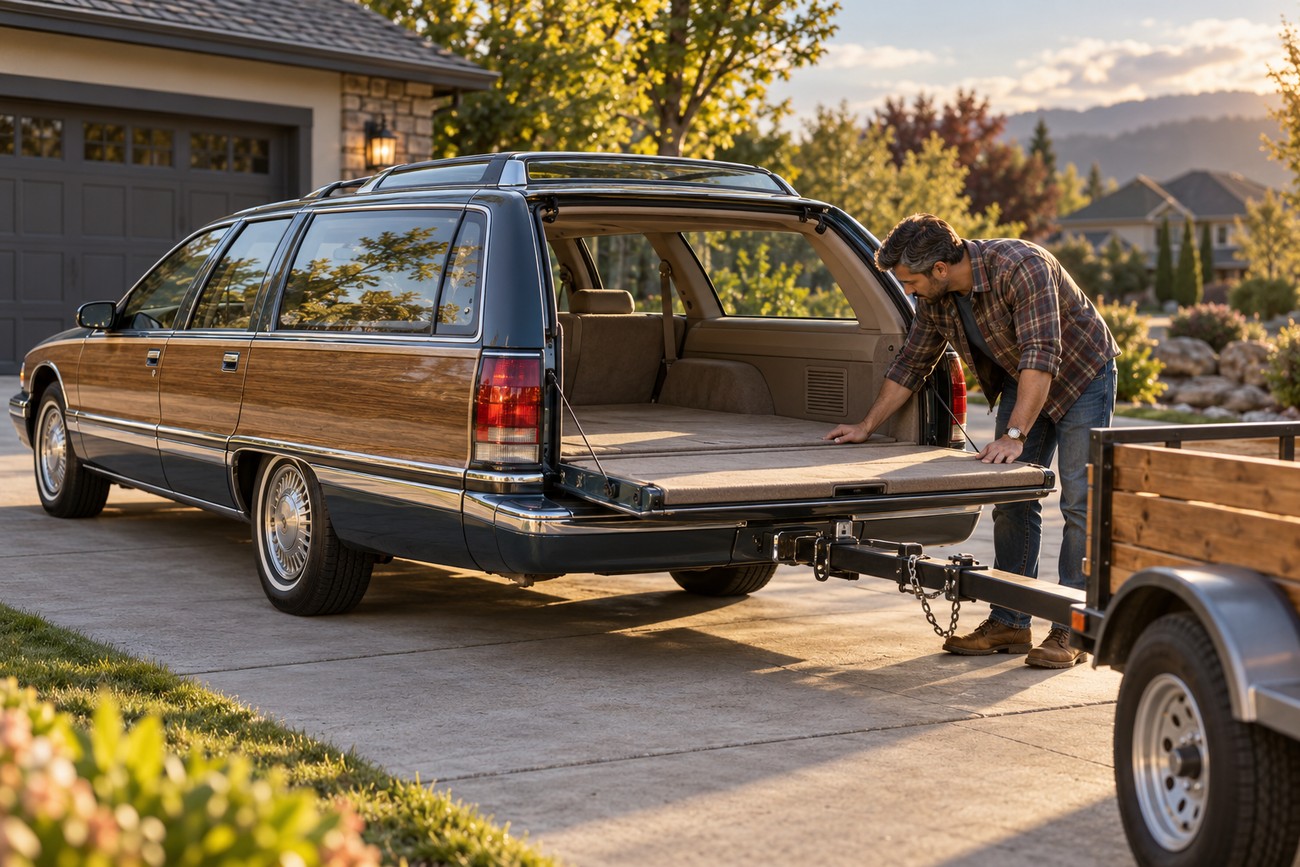
The Roadmaster Estate makes sense for an owner who values a large American rear-wheel-drive wagon as a distinct type of vehicle. Its space, relaxed highway manners, LT1 performance, and visual character remain difficult to duplicate with a modern vehicle. Properly equipped examples are commonly associated with towing capacity around 5,000 lb, although axle choice, cooling equipment, and later-car specifications can require a more conservative limit.
It is a poor match for anyone prioritizing low fuel costs, compact dimensions, or predictable modern handling. The soft suspension permits more roll and dive than many drivers expect, and repairs can involve several systems at once. Ownership is easier when you have access to a technician familiar with older GM electronics and B-body chassis components.
Enthusiasts also value the B-body as a platform for substantial engine conversions, including LS-swap projects. That view reflects the chassis’ size, rear-wheel-drive layout, and aftermarket interest; it is not a universal reason to buy a Roadmaster. A largely original, well-maintained car is usually a better ownership proposition than a poorly executed modification.
The buying decision should therefore begin with cooling health, transmission behavior, and chassis condition. A clean body and desirable LT1 are welcome, but they do not override evidence of overheating, rough shifting, sagging suspension, neglected brakes, or electrical faults. The best Roadmaster Estate is the one with the clearest history and the fewest deferred repairs, regardless of its badge appeal.
Frequently asked questions
The Roadmaster Estate’s specifications vary slightly by model year and equipment, so the answers below separate commonly cited figures from details that require verification on the individual car.
How much horsepower does a 1996 Buick Roadmaster LT1 have?
Some references list the 1996 Roadmaster LT1 at 250 hp, while the commonly cited Roadmaster rating is 260 hp and 330 lb-ft. The lower 1996 figure is generally connected with OBD-II and calibration changes, so presenting one number as universally settled can be misleading.
For a buyer, the distinction matters less than the car’s actual condition. A healthy cooling system, properly operating transmission, and correct engine management will affect the driving experience more than a small difference between published model-year references.
Which year was the best for the Buick Roadmaster Estate?
There is no universal winner among the 1994–1996 cars. Year-specific changes exist, but a well-maintained example with documented cooling and transmission service is usually a safer choice than a supposedly preferable year with long storage, cheap repairs, or a neglected chassis.
Compare cars individually, paying particular attention to cooling behavior, transmission history, front suspension, brakes, and electrical condition. The best year for your needs is the year represented by the soundest, most complete example you can verify.
How much can a Buick Roadmaster Estate tow?
A properly equipped Roadmaster Estate is commonly cited at about 5,000 lb of towing capacity. The usable limit depends on the equipment fitted to the vehicle, including the axle and cooling package, and later cars or different configurations may have more conservative limits.
Before towing, verify the specific vehicle’s documentation and condition. Cooling performance, transmission health, tires, brakes, and the hitch installation all matter, particularly with an aging wagon that may have spent years carrying little or nothing.







