
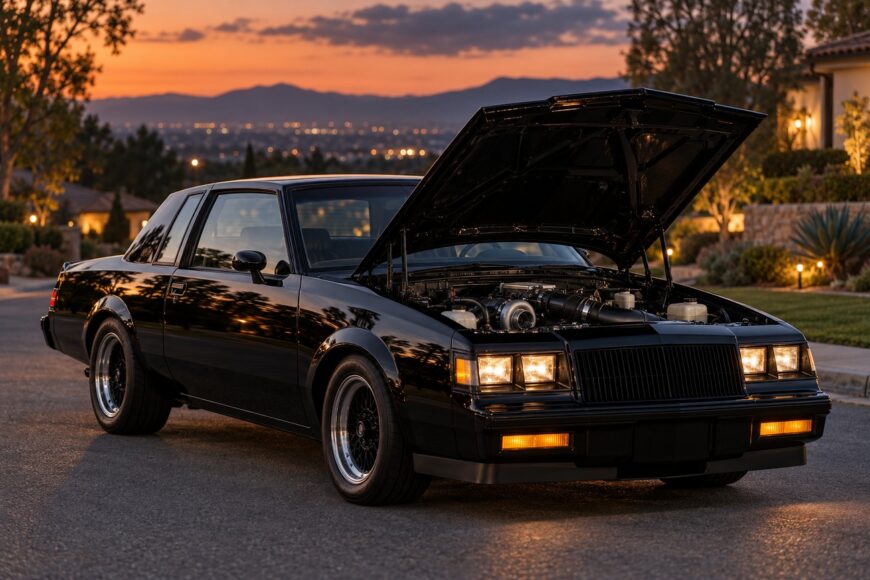
A black Buick with a V6 became an American muscle-car icon, which is the contradiction at the heart of the Grand National. Its reputation rests on turbocharged torque, unusual engineering, and period performance that challenged larger V8s.
The problem is that Grand National identity, performance claims, and condition are often confused. Early cars, later turbo models, T-Types, Turbo-Ts, and the GNX are related, but they are not interchangeable.
Judged properly, the Grand National is both a major historical turbo car and an aging vehicle. Its body, transmission, fuel system, chassis, and documentation matter as much as the legend attached to the badge.
- Why the Grand National Became a Muscle-Car Icon Without a V8
- The LC2 Turbo V6 and the 200-4R: What Actually Makes It Special
- 1984–1987 Grand National: What Changed Each Year
- Horsepower, Quarter-Mile Claims, and Why the Numbers Do Not Match
- Buying a Grand National: Inspect the Body Before You Praise the Turbo
- The Hidden Ownership Problems: Heat, Fuel, Transmission, and Chassis Age
- Stock, Modified, or GNX: Which Grand National Makes Sense Today?
- Grand National Myths That Still Distort the Market
- Frequently asked questions
- How much horsepower did a Buick Grand National 3.8 Turbo have?
- What is the rarest Buick Grand National?
- What is the fastest Buick ever made?
Why the Grand National Became a Muscle-Car Icon Without a V8
The Grand National was a special version of the Buick Regal produced from 1982 through 1987. The earliest cars used naturally aspirated engines, so the name alone does not guarantee the turbocharged specification most enthusiasts have in mind.
The commonly intended turbo Grand National is the 1984–1987 car with Buick’s 3.8-liter turbocharged V6. That engine gave the Regal a distinctive combination of low-rev torque, strong passing power, and rear-wheel drive without following the traditional V8 muscle-car formula.
Buick’s achievement was partly cultural. A restrained, formal-looking coupe with a black exterior and a six-cylinder engine could outrun cars that appeared far more conventional as performance machines. The contrast made the Grand National memorable, while its turbo system gave it a character different from a naturally aspirated V8.
That history also explains why a black Regal is not automatically a Grand National. Correct badges, equipment, VIN information, factory records, and the specific turbo configuration determine what the car is. Treating every black Buick coupe as equivalent is a costly mistake in the collector market.
The LC2 Turbo V6 and the 200-4R: What Actually Makes It Special
The performance engine was the 3.8-liter LC2 turbocharged V6, using electronic fuel injection. Later turbo Grand Nationals added intercooling, improving charge-air control and supporting the stronger output associated with the final model years.
The LC2’s defining sensation comes from torque arriving through the turbo system. That shove can make the car feel deceptively calm before the boost builds, then forcefully accelerate once the engine is working against the converter and rear tires.
Power was sent through the four-speed automatic 200-4R. Buick offered no factory manual-transmission Grand National, so a car with a manual gearbox has been modified, regardless of how convincingly the conversion is presented.
The same torque that creates the car’s appeal also exposes its weak points. Increased boost can produce 200-4R slippage, overheating, and accelerated wear, while poor fuel quality or inadequate fuel-pump pressure can create detonation and engine-damage risk. Heat management becomes increasingly important as modifications move beyond the original setup.
1984–1987 Grand National: What Changed Each Year
The turbo cars developed quickly, although factory horsepower figures remain approximate and depend on period rating conventions. The GNX belongs in a separate category rather than being treated as the final trim level of an ordinary Grand National.
| Model year | Approximate factory horsepower | Key distinction |
|---|---|---|
| 1984 | Approximately 200 hp | Early turbo Grand National; the 3.8-liter LC2 established the later performance identity. |
| 1985 | Approximately 200 hp | Continued development of the turbo V6 Grand National formula. |
| 1986 | Approximately 235 hp | Later turbo specification with intercooling and a substantial output increase. |
| 1987 | Approximately 245 hp | Most sought-after regular Grand National model year; the separate GNX was also offered. |
| 1987 GNX | Separate performance version | Limited-production model, commonly cited as 547 cars; it was not an ordinary Grand National. |
1987 is generally the most desirable regular Grand National because it represents the mature turbo package and carries the strongest historical association with the model. Earlier turbo cars remain genuine Grand Nationals, however, and their value depends on condition, specification, originality, and documentation rather than on the calendar year alone.
Horsepower, Quarter-Mile Claims, and Why the Numbers Do Not Match
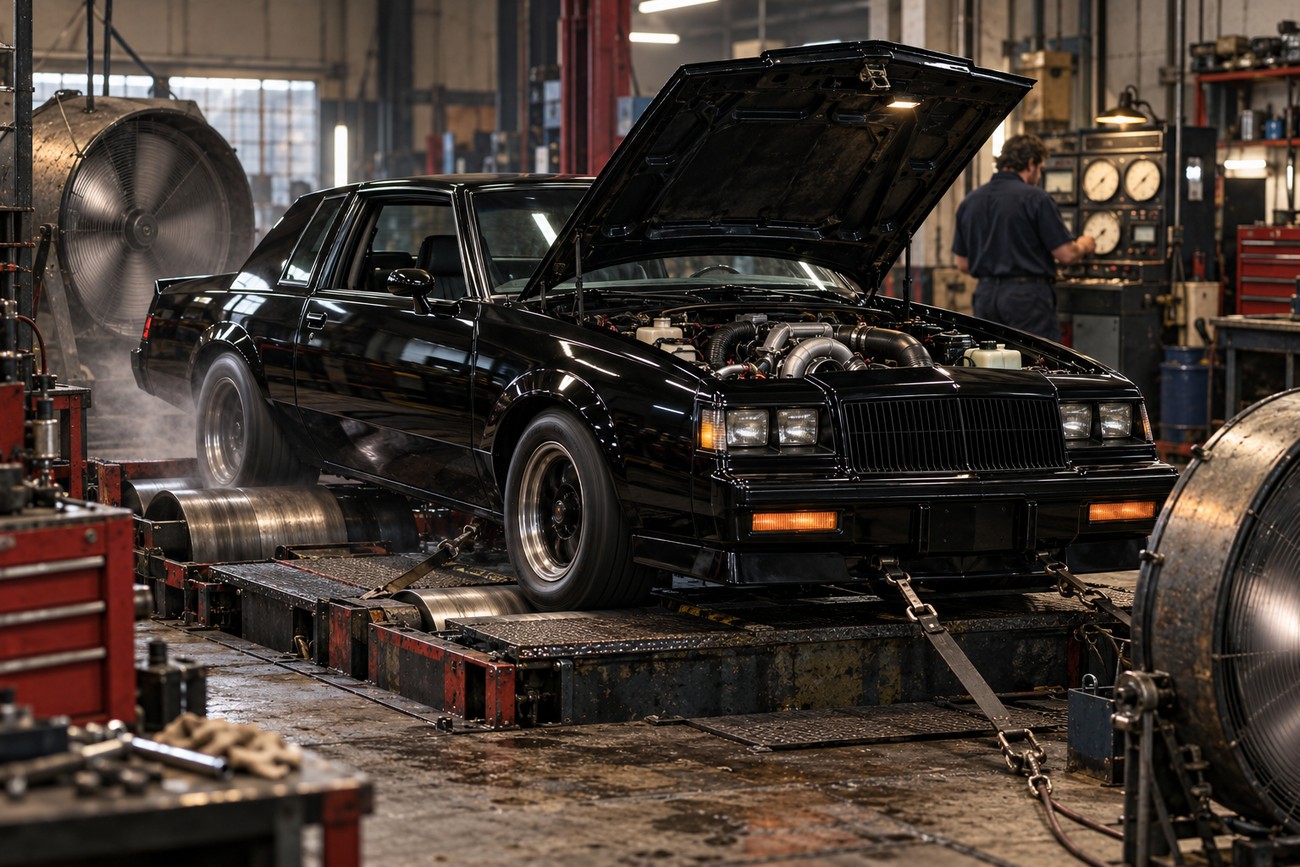
The approximate factory ratings rose from about 200 hp in 1984–1985 to about 235 hp in 1986 and about 245 hp in 1987. Those figures are useful for identifying the model-year hierarchy, but they are poor substitutes for inspecting an individual car.
Factory-era comparisons are complicated by changing SAE measurement methods, drivetrain losses, testing equipment, and vehicle condition. Magazine tests, owner measurements, and advertisements may therefore produce different results without any one figure automatically proving that the others are false.
Real-world acceleration depends heavily on tire traction, boost pressure, fuel quality, tuning, transmission condition, and the engine’s ability to control knock. A poorly maintained car can feel ordinary, while a carefully sorted example may perform far beyond what its factory rating suggests.
The often-repeated GNX 0–60 mph figure of 4.6 seconds should be treated as a commonly cited media and museum claim, not as one universally standardized official measurement. Quarter-mile claims require the same caution, especially when a supposedly stock car has undocumented upgrades.
Buying a Grand National: Inspect the Body Before You Praise the Turbo
Begin with identity and paperwork. Confirm the VIN, model designation, equipment, service history, and consistency between the advertised version and the car in front of you. Grand National, T-Type, Turbo-T, and GNX are related Buick performance identities, but they carry different specifications and market expectations.
Next, inspect the structure before starting the engine. Check the frame, floorpans, wheel arches, trunk, lower body, and signs of water intrusion. A sound body and documented identity are often harder to find than a serviceable turbo engine, and cosmetic repairs can conceal corrosion or previous accident damage.
Seals and weatherstripping deserve close attention because age-related leaks can damage carpets, trim, and interior metal. Look for dampness, staining, unusual cabin noise, squeaks, and evidence that water has been entering through the doors, windows, or trunk.
Examine suspension and brakes during both inspection and road testing. A car that launches hard in a straight line may still have tired springs, worn bushings, weak dampers, or brakes that feel inadequate by modern standards.
Finally, assume that “nearly stock” requires proof. Inspect wiring, boost-control parts, fuel-system components, chips, exhaust changes, and transmission work. Undocumented performance modifications can make the car faster while reducing confidence in its durability and authenticity.
The Hidden Ownership Problems: Heat, Fuel, Transmission, and Chassis Age
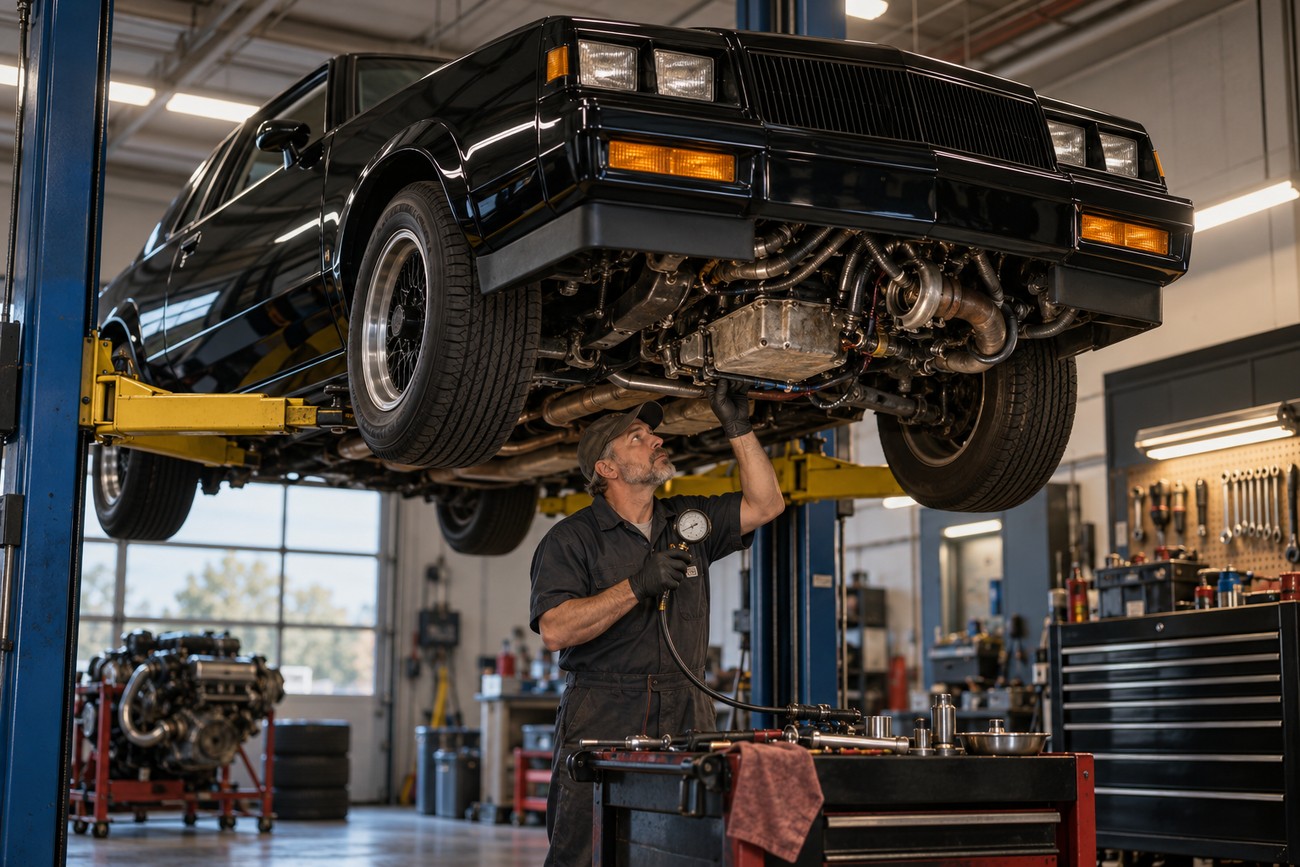
The 200-4R is a major inspection point. Added boost and torque can cause slipping, overheating, and accelerated wear, especially when the transmission has old components or an unknown service history. A test drive should include normal shifting, converter operation, and behavior once the drivetrain is warm.
Fuel delivery is equally important. The LC2 is highly sensitive to fuel quality and fuel-pump pressure, and a weak fuel system can turn increased boost into detonation risk. Aggressive chip changes or higher boost without fuel, knock, and transmission monitoring can cause serious damage even when the engine initially sounds healthy.
Verify fuel-pump pressure and knock control before raising boost; a larger turbo or aggressive chip cannot compensate for an unsafe fuel system.
Heat accumulates under the hood, particularly on modified cars with more demanding turbo systems. Cooling, intake-air temperature, oil control, and transmission temperature all deserve attention because repeated heat exposure can shorten the life of components that appear sound during a short drive.
Age affects the rest of the car as much as the powertrain. Suspension and brakes may feel weak by modern standards, electrical faults can be difficult to trace, and aged seals can produce cabin noise, squeaks, and water leaks. The Grand National’s straight-line character should not be mistaken for modern handling or refinement.
Stock, Modified, or GNX: Which Grand National Makes Sense Today?
A regular Grand National often makes the most sense as a driver’s classic. It offers the historical experience of the turbo V6 without placing every ownership decision under the pressure associated with a top-tier collectible.
Original cars, or cars with reversible upgrades, generally inspire more market confidence. A modified example can be faster, but undocumented engine work, altered wiring, nonstandard turbo hardware, and transmission upgrades may make authentication and future repairs more difficult.
The GNX occupies a separate collectible tier. Its limited production, commonly cited as 547 cars, and distinct historical status mean that buyers should verify documentation and originality with particular care. GNX rarity should never be applied to every 1987 Grand National.
Value depends on year, version, originality, condition, mileage, documentation, and equipment. The best purchase is therefore the car whose identity and mechanical history are clear, rather than the one with the most dramatic boost number.
Grand National Myths That Still Distort the Market
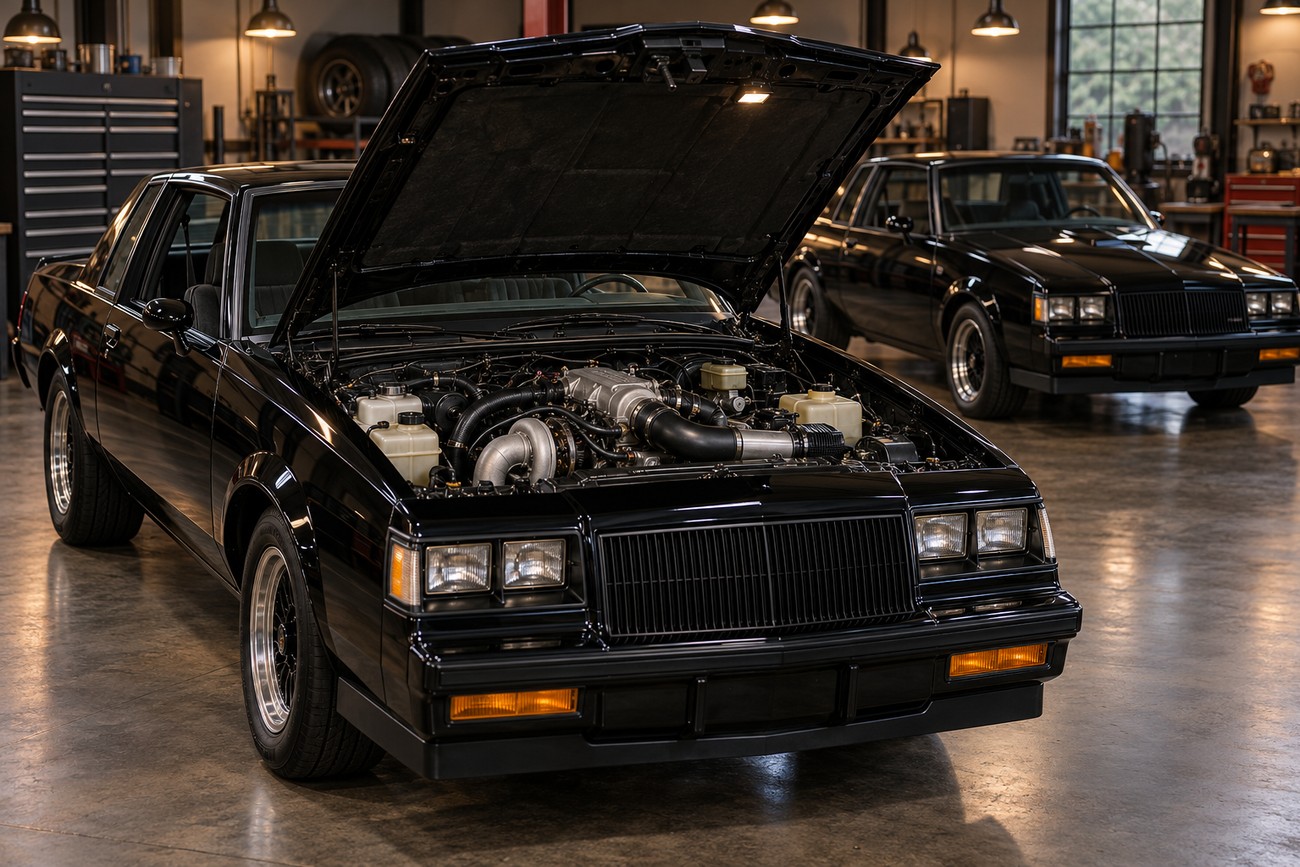
The first myth is that every Grand National is a 1987. In reality, the Grand National was produced from 1982 through 1987, and the turbo Grand National period ran from 1984 through 1987. 1987 is the most desirable regular model year, but earlier turbo cars are genuine members of the same lineage.
The second myth is that the car is effectively a V8 muscle car. Its defining layout was a turbocharged V6, and that difference matters mechanically. Turbo lag, boost control, fuel sensitivity, and automatic-transmission behavior create a driving experience unlike that of a large naturally aspirated V8.
Another misconception treats all Grand Nationals as equally rare and valuable. The market distinguishes among model year, version, condition, mileage, equipment, documentation, and modifications. A GNX, a well-preserved 1987 Grand National, and a worn or incorrectly represented turbo Regal are separate propositions.
Factory horsepower figures also do not provide a perfect comparison with modern vehicles. SAE methods, drivetrain losses, tire technology, testing conditions, and electronic tuning have changed, so a period rating should be used as historical context rather than as an absolute performance ranking.
Frequently asked questions
How much horsepower did a Buick Grand National 3.8 Turbo have?
The approximate factory rating was 200 hp in 1984 and 1985, about 235 hp in 1986, and about 245 hp in 1987. There is no single correct number for every 3.8 Turbo Grand National because model year, SAE test standards, drivetrain losses, and factory rating practices affect the published figure.
Modified-car claims should be kept separate from factory specifications. Boost, fuel delivery, tuning, tire traction, and engine condition can change real-world performance substantially, so the highest quoted figure should not be treated as universal.
What is the rarest Buick Grand National?
The GNX is the rarest and most collectible related model, rather than an ordinary Grand National trim. Its production is commonly cited as 547 cars, although buyers should verify the documentation and source conventions behind any specific claim.
That rarity does not apply to every 1987 Grand National. A regular Grand National must be valued according to its own year, condition, originality, mileage, equipment, and records.
What is the fastest Buick ever made?
There is no single answer without defining the comparison. A period factory production car, a particular model year, and a modified street car represent different categories, and the Grand National’s acceleration reputation often reflects carefully prepared examples rather than every surviving car.
The GNX is especially famous for its period acceleration, while modified LC2 cars can be substantially quicker. For a purchase decision, documented condition and safe tuning are more useful measures than an absolute “fastest Buick” label.







