
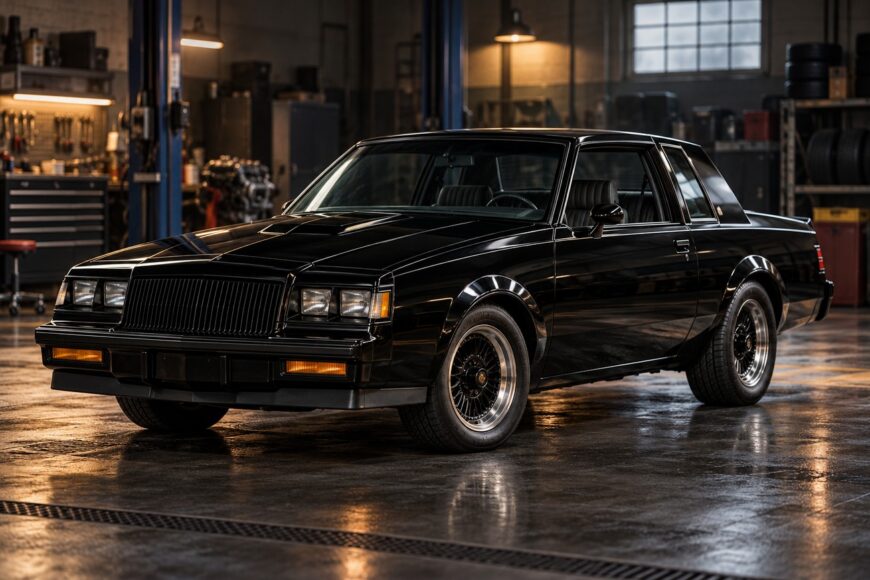
The Buick GNX looks like a machine from a darker, more theatrical universe: black paint, squared-off 1980s proportions, and an attitude that earned it the nickname “Darth Vader’s Car.” Under that image sits an aging 1987 Buick, however, with disputed specifications, an old four-speed automatic, and ownership demands that are easy to underestimate.
Its importance does not rest on one universally accepted horsepower figure or one perfect acceleration number. The GNX matters because rarity, McLaren-associated engineering, cultural status, and documented originality meet in one unusually concentrated package. That combination also makes the car difficult to identify, expensive to restore, and vulnerable to mythology-driven pricing.
- What the Buick GNX Actually Is
- Why People Call It Darth Vader’s Car
- Turbo V6 Engineering and Real-World Performance
- The GNX Numbers Don’t Agree—and That Matters
- How to Tell a Real GNX from a Look-Alike
- Why the 1987 GNX Is So Valuable Today
- Frequently asked questions
- Why is the 1987 Buick GNX worth so much today?
- How fast does a 1987 Buick GNX go from 0 to 60 mph?
- What is the rarest Buick Grand National?
- Was “Darth Vader’s Car” an official Buick name?
What the Buick GNX Actually Is
The 1987 Buick GNX was a limited special version based on the Buick Regal Grand National. It was a two-door coupe with rear-wheel drive, built during the final period of Buick’s celebrated turbo performance program. The basic Regal shape remained recognizable, yet the GNX received a separate engineering and presentation brief.
Performance Vehicle Operations and McLaren Performance Technologies were involved in developing the car. That association is central to the GNX story because it separates the model from a standard Grand National with aftermarket parts. The car represents a factory-backed performance derivative, with its own historical identity and engineering details.
A Grand National is therefore not automatically a GNX. A black Regal with GN-style trim, a modified Grand National, or a modern restomod can resemble the car closely while having a different identity and value. The word GNX in an advertisement is only a claim until the VIN, equipment, documents, and ownership history support it.
This distinction matters in practical terms. A buyer who pays for the rare derivative but receives a cosmetic conversion may face a difficult dispute and a costly correction. Even an authentic car needs careful examination because its age can conceal mechanical and structural deterioration beneath an impressive presentation.
Why People Call It Darth Vader’s Car
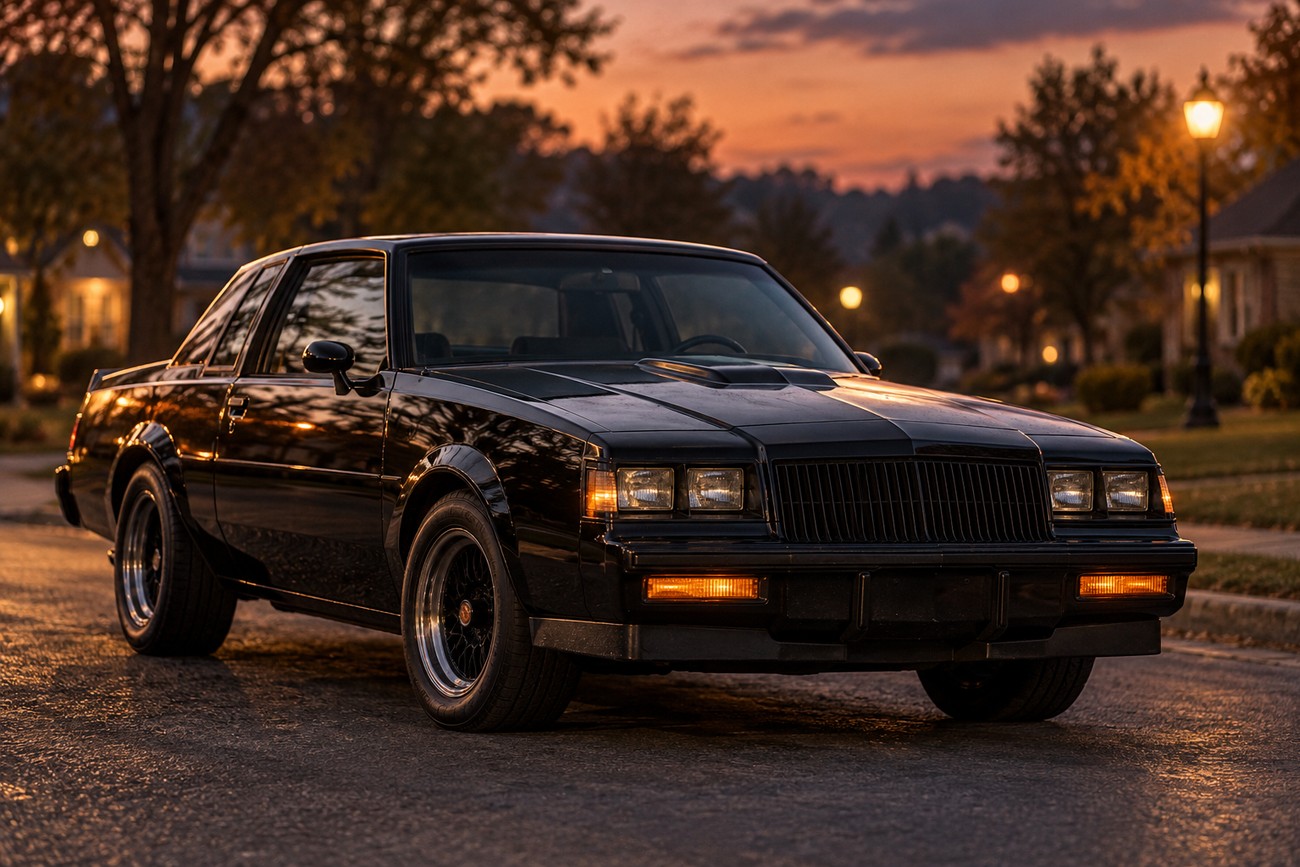
“Darth Vader’s Car” is an informal cultural nickname, not an official Buick designation. The phrase grew from the car’s dark exterior, blacked-out visual treatment, and severe front-end appearance. Its boxy shape also made it look imposing in a period when many performance cars were becoming smoother and less obviously aggressive.
The comparison became more convincing because the GNX could surprise cars that looked faster. The Buick carried a turbocharged V6 and rear-wheel drive in an ordinary-looking American coupe body. To observers, that combination created a menacing sleeper quality: the car projected authority without relying on exotic proportions or a loud multi-cylinder engine.
Media language helped fix the image in enthusiast culture. Once “Darth Vader’s Car” became familiar, it began to describe the GNX’s personality as much as its appearance. The nickname remains useful shorthand, provided it is not mistaken for a factory slogan or a complete technical description.
The label can also inflate expectations. A buyer influenced by the legend may expect a modern sports car with instant response, tight body control, and effortless refinement. The GNX delivers period turbo performance through an older chassis, older automatic transmission, and older interior, so the experience is more distinctive than universally polished.
Turbo V6 Engineering and Real-World Performance
The GNX uses a 3.8-liter turbocharged and intercooled V6, also described as 231 cubic inches or 3791 cm³. Sources identify a Garrett T3 turbocharger with a ceramic wheel and an enlarged intercooler. These changes supported the car’s reputation as a serious factory performance machine rather than a trim package with aggressive graphics.
Power reaches the rear wheels through a four-speed automatic. That choice suits the engine’s torque delivery and gives the car a consistent period driving character, yet it also explains why the GNX does not feel like a modern dual-clutch or manual-transmission sports car. Turbo response, gear selection, and rear-tire traction all influence how the car gathers speed.
The engine’s strongest impression comes when boost arrives. A driver can sense the car changing character as the turbocharger builds pressure, followed by a forceful push from the rear axle. That delivery is part of the appeal, although turbo lag and an old-fashioned chassis response remain part of the package.
Published performance figures need careful labeling. Catalog and period references commonly cite 276 hp, while a Car and Driver test recorded 300 hp and 380 lb-ft. The test result describes that particular measured car and test conditions; it does not erase the catalog figure or prove that every surviving GNX produces the same output today.
On the road, the GNX is quick in the way many powerful 1980s cars are quick: direct, slightly dramatic, and dependent on setup and surface. Its weight, suspension behavior, and four-speed automatic show their age during hard cornering or everyday traffic. A sound example can be thrilling, but buyers should evaluate it as a historic turbo coupe rather than a contemporary sports car.
The GNX Numbers Don’t Agree—and That Matters
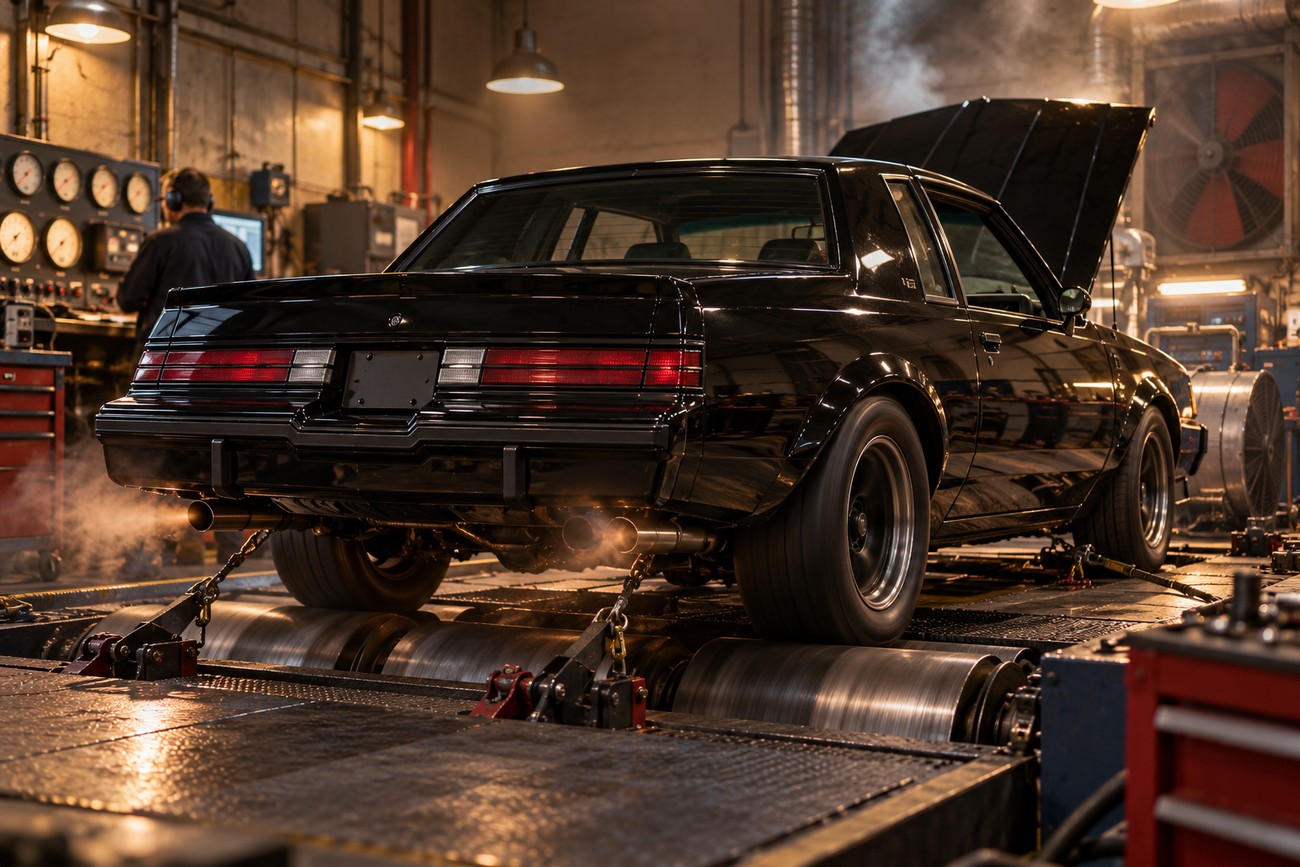
The most familiar power dispute concerns 276 hp versus the 300 hp recorded by Car and Driver. Both figures can appear in responsible discussions when their origins are identified. Catalog values, manufacturer-related references, chassis-dyno interpretations, and independent road tests do not necessarily measure the same thing.
Acceleration figures have the same problem. Published 0–100 km/h times range from approximately 4.7 to 6.0 seconds, depending on the source and test method. Launch technique, tire condition, surface, temperature, timing equipment, and the definition of the measured run can all affect the result.
Top speed is often listed as 200 km/h, with some sources describing that figure as limited. Published weight figures also vary, from approximately 1470 to 1611 kg. Different measurement practices, equipment assumptions, and source errors can produce a wide spread, so a single catalog line should not be treated as an unquestionable specification.
For a collector, this uncertainty has a practical benefit: it discourages false precision. The meaningful question is whether the car’s identity, mechanical condition, and documentation are credible. A claimed acceleration time cannot compensate for a tired turbo system, incorrect equipment, or an unclear history.
How to Tell a Real GNX from a Look-Alike
Start with identity rather than appearance. The VIN should be checked against the claimed model, followed by documented equipment, period records, and provenance. Factory-style badges, black paint, or GNX-inspired wheels can support the story, but they cannot establish it on their own.
Examine the engineering details with the same skepticism. Confirm that the turbocharged and intercooled V6, enlarged intercooler, four-speed automatic, and associated hardware match the expected specification. A car assembled from a Regal or Grand National may be visually convincing while carrying a different mechanical and documentary history.
Low mileage does not cancel age: the turbo system, cooling components, suspension, seals, and interior materials can deteriorate while a car spends years stored or lightly driven.
Inspection should cover the turbo system, cooling system, suspension, rubber components, seals, and interior. Old hoses, deteriorated seals, tired bushings, and neglected cooling parts can create large bills after purchase. A fresh cosmetic restoration may hide these issues, especially if the seller emphasizes paint and presentation while providing little mechanical documentation.
Restomods deserve a separate category. A modified car may be faster, better equipped, or more usable than an original GNX, yet those qualities do not make it an authentic GNX. Ask for invoices, ownership records, inspection access, and evidence of originality before assigning collector-car value.
Rare parts and specialist knowledge increase the cost of mistakes. Restoration work that would be manageable on a more common Regal can become difficult when the correct components, trim, or engineering details are scarce. A professional inspection before purchase is therefore more valuable than relying on a low odometer reading or a polished listing.
Why the 1987 GNX Is So Valuable Today
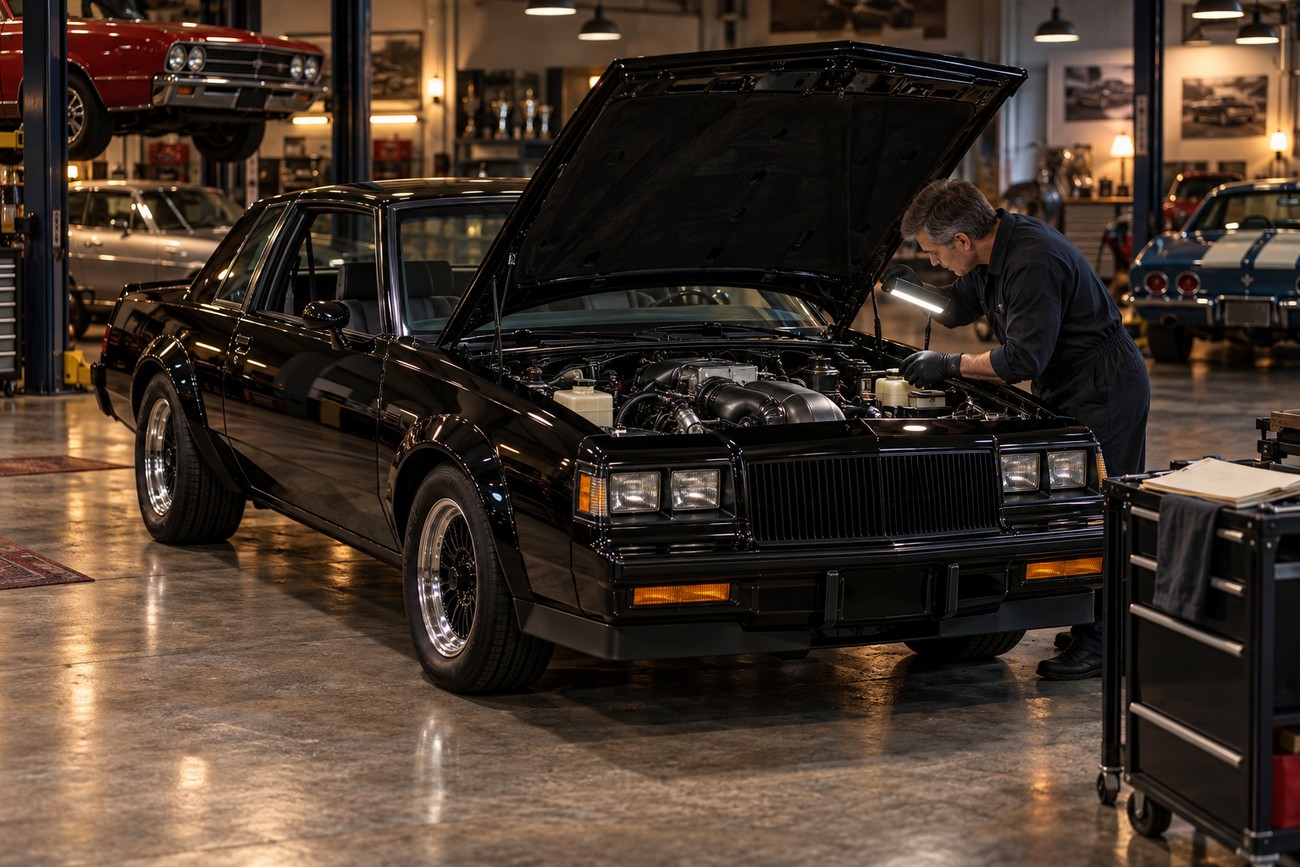
Collector value comes from several linked factors: limited availability, documented originality, historical importance, McLaren Performance Technologies involvement, and cultural recognition. The GNX occupies a distinctive place in the history of American turbo performance because Buick pushed an understated coupe into territory associated with more obvious muscle cars.
Enthusiasts often regard it as a final high point of Buick’s 1980s turbo performance. That status gives the car meaning beyond its acceleration figures. It represents a particular engineering moment, when a traditional American brand used turbocharging, intercooling, and specialist development to create a machine that could unsettle expectations.
Provenance can matter as much as equipment. A documented, original car with a coherent history may command stronger collector interest than a mechanically impressive example with uncertain identity. The market also reflects the “Darth Vader” mythology, which makes the car recognizable even to people who have little interest in Buick engineering.
The hidden risk is that the legend can be priced more aggressively than the condition. A high asking price does not prove that the turbo system, cooling system, suspension, seals, and interior are healthy. The best purchase combines a credible identity with careful inspection, because rarity raises the consequences of restoration rather than removing them.
Frequently asked questions
The GNX is easy to oversimplify because its cultural reputation is stronger than its surviving documentation in many sales listings. These answers separate the model’s identity, measured performance, and collector appeal.
Why is the 1987 Buick GNX worth so much today?
Its value reflects provenance, originality, McLaren association, historical importance, and cultural recognition working together. Scarce replacement parts and specialist restoration requirements also influence pricing because a correct repair can be harder to source than a generic Regal component.
The market rewards a credible story: a verifiable identity, documented ownership, original engineering details, and condition that matches the asking price. A car with a famous name and weak records may be less desirable than a well-documented example with honest age-related wear.
How fast does a 1987 Buick GNX go from 0 to 60 mph?
There is no single universally certified 0–60 mph figure for every GNX. Reported 0–100 km/h times range from approximately 4.7 to 6.0 seconds, and the corresponding 0–60 mph claims vary with test method, launch conditions, tires, surface, temperature, and the individual car.
Car and Driver recorded 300 hp and 380 lb-ft in its test, while catalog and period references commonly cite 276 hp. Those differences help explain why acceleration claims should be treated as test results or published estimates rather than as one definitive factory number.
What is the rarest Buick Grand National?
The GNX is the rare special derivative most commonly identified as the rarest Grand National-related Buick. It is based on the Buick Regal Grand National, yet the names are not interchangeable: an ordinary Grand National does not become a GNX through paint, badges, or performance modifications.
Because production and historical records are often simplified in listings, identity should be verified through VIN, equipment, documentation, and provenance. That approach avoids assigning GNX value to a converted Regal or a modified Grand National.
Was “Darth Vader’s Car” an official Buick name?
No. “Darth Vader’s Car” is an informal nickname created and reinforced by media coverage and enthusiast culture. It refers to the GNX’s dark appearance, aggressive styling, and surprising performance rather than to an official Buick model designation.
The phrase shaped public recognition without changing the car’s formal identity. For buying purposes, the relevant evidence remains the model documentation, original equipment, and mechanical condition, not the nickname used in an advertisement.







