

A Bugatti Chiron and a Boeing 747 make an unlikely drag-race pairing. The jet has four engines and a runway; the hypercar has traction-focused tires and a road. The comparison becomes more misleading when a quoted “180” for a 747 takeoff is treated as though it means 180 mph. Aircraft takeoff discussions often use km/h, and 180 km/h is far below 180 mph.
From a simultaneous standing start, the standard Chiron is the likely first to 180 mph, approximately 290 km/h. That is a qualified judgment, not a measured head-to-head result: the available figures give no verified 747 time to that ground speed. Nor can a takeoff-speed illustration establish that a particular 747 would reach 180 mph before leaving the runway.
- The verdict from a standing start
- Why “180” changes the answer when the units change
- How the Chiron gets to the target speed
- What the 747 must do on its takeoff roll
- Chiron and 747 figures: what they actually measure
- How to judge the race without inventing a 747 time
- When wind, weight, and setup change the comparison
- Three shortcuts that produce the wrong winner
- Frequently asked questions
- How should a real-world Chiron run to 180 mph be verified?
- Which car can beat Bugatti Chiron?
- How fast does a 747 go when taking off?
- Why don’t commercial airlines fly above 40,000 feet?
- What is faster, a Tesla Roadster or a Bugatti Chiron?
The verdict from a standing start
The standard Bugatti Chiron is the likely winner if both vehicles start together and the finish line is the instant each reaches 180 mph over the ground. Bugatti states that the Chiron accelerates from 0–100 km/h in 2.4 seconds. That establishes a rapid initial launch, although the target here is much higher: 180 mph is approximately 290 km/h.
A 747 has a different job. Its takeoff roll builds the airflow needed for flight while accelerating an aircraft whose mass varies substantially with its load. It can travel quickly along the runway, but a quoted rotation speed, liftoff speed, or runway distance does not reveal its elapsed time to 180 mph.
The evidence therefore supports a likely winner without supplying a winning margin. No verified Boeing 747 time to 180 mph is provided, and Bugatti’s official 0–100 km/h figure is not a time to 180 mph either. Assigning a precise gap between the two would require a measured speed trace for both vehicles under defined conditions.
There is also a finish-line problem specific to the jet. Depending on its configuration and the wind, a particular 747 might lift off before reaching 180 mph in ground speed. In that case, a comparison explicitly limited to the takeoff run would have no recorded 747 crossing of the target on the runway.
Why “180” changes the answer when the units change
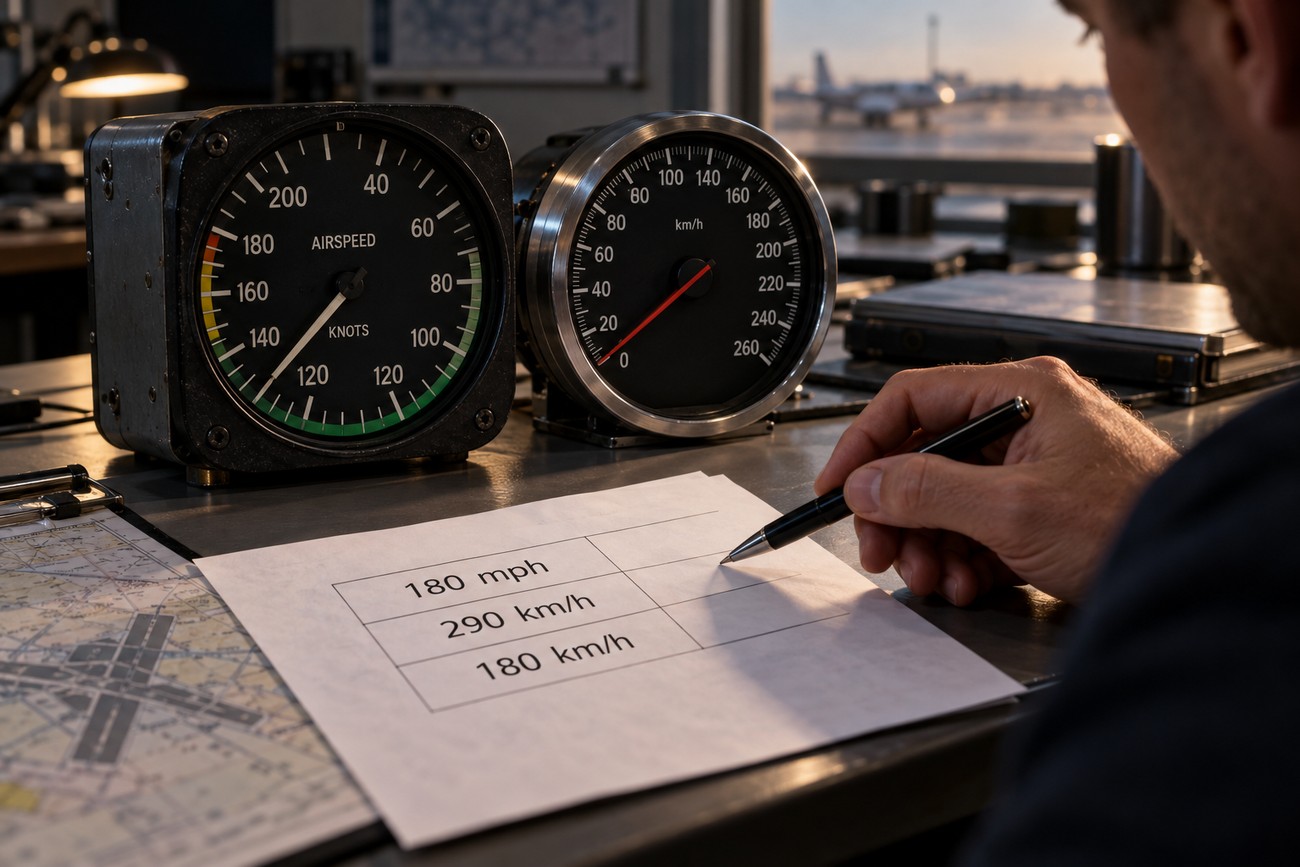
180 mph is approximately 290 km/h; 180 km/h is a different and much lower speed. The number alone cannot serve as a common finish line. A claim that a car reaches 180 mph and a claim that an aircraft begins rotating at 180 km/h describe events at markedly different speed thresholds, even before the aircraft’s airspeed enters the picture.
The takeoff illustration cited in the brief places the start of rotation at roughly 180 km/h and liftoff at roughly 220 km/h. Those are illustrative figures, not universal speeds for the Boeing 747. Neither should be relabeled in mph, and neither establishes whether a particular aircraft reaches approximately 290 km/h during its runway roll.
Rotation means the crew begins raising the nose; liftoff occurs when the aircraft leaves the ground. The two events happen at different points in the roll. Calling either one simply “the takeoff speed” conceals which event is being measured and can turn a rough explanation into an apparently precise performance claim.
Aircraft speed needs one further label. Flight performance depends on speed relative to the surrounding air, while this race needs speed relative to the ground. A headwind can give the wings the required airflow when the aircraft’s ground speed is lower, so even a properly stated takeoff airspeed cannot be used as the race result without conversion and conditions.
How the Chiron gets to the target speed
Bugatti states 0–100 km/h in 2.4 seconds and a maximum speed of 420 km/h for the standard Chiron. The first figure demonstrates its initial acceleration; the second shows that 180 mph, approximately 290 km/h, is below its stated maximum. Neither figure tells us how many seconds the car takes to reach the comparison target.
Extending the 0–100 km/h result in a straight line would assume the car keeps accelerating at the same rate. It does not. Traction is especially important at launch, while aerodynamic drag becomes increasingly consequential as speed rises. Gearing and the engine’s available power across the speed range also shape the time taken to cover the later part of the run.
One source reports 12.7 seconds to 180 mph for a Chiron. Treat that as a single-source, unverified claim, not as a Bugatti-confirmed benchmark or a result from this proposed race. Without clear test conditions and an independently checked speed-and-time record, it cannot supply a dependable margin over the 747.
The exact car matters as much as the headline number. Figures for the standard Chiron and the Chiron Super Sport should not be combined into one performance profile. Launch mode, road surface, traction, and test conditions can also affect a real run, so a published best-case acceleration figure is a reference point rather than a promise for every attempt.
What the 747 must do on its takeoff roll

A 747 accelerates along the runway until its wings can produce the lift needed for that takeoff. The crew uses calculated speeds for the aircraft’s actual loading and configuration; beginning rotation and becoming airborne are separate stages. Reaching 180 mph in ground speed is a different milestone and may or may not occur before liftoff on a given departure.
The variant must be named before its figures mean much. One reference gives a 3,190 m takeoff run for the Boeing 747-200. That distance belongs to a particular reference for that variant; it is not a blanket runway requirement for every 747, and it does not describe the 747-8.
Distance also cannot be converted into time to 180 mph by dividing it by a single quoted speed. The aircraft accelerates throughout the roll, so its speed changes from moment to moment. To find the target time, a test would need the relevant ground-speed profile and confirmation that the aircraft was still on the runway when it crossed approximately 290 km/h.
Weight helps explain why aircraft performance varies, though it cannot determine acceleration by itself. Cited references put the 747-8’s maximum takeoff mass at approximately 442.2–447 tonnes. An actual flight may be lighter, and its engine thrust, aerodynamic drag, runway conditions, and chosen takeoff configuration also affect how the roll develops.
Flap setting and mass alter the airspeed required for takeoff; wind changes how that airspeed relates to motion over the runway. A single “747 liftoff speed” therefore cannot represent every variant and departure. It is especially unsafe to use a speed from an illustrative takeoff account to predict when a loaded aircraft will reach the race target.
Chiron and 747 figures: what they actually measure
These figures answer different questions. Only a recorded time to the same ground-speed target would decide the race directly.
| Figure | Value | Basis or limitation |
|---|---|---|
| Common target | 180 mph, approximately 290 km/h | Must be measured as ground speed for both vehicles. |
| Standard Chiron, 0–100 km/h | 2.4 seconds | Bugatti figure; does not give time to 180 mph. |
| Standard Chiron, maximum speed | 420 km/h | Bugatti figure; a speed ceiling is not an acceleration result. |
| Reported Chiron, 0–180 mph | 12.7 seconds | Single-source, unverified claim; not confirmed by Bugatti’s cited figures. |
| 747-200 takeoff run | 3,190 m | Variant-specific reference distance, not time to 180 mph. |
| 747 time to 180 mph | No verified time supplied | Cannot be inferred from rotation, liftoff, or takeoff-run distance. |
How to judge the race without inventing a 747 time
A fair test would identify the standard Chiron and the exact 747 variant, then start the clock for both from rest at the same instant. Each vehicle would need a time-stamped ground-speed record. The finish would be its first crossing of 180 mph, approximately 290 km/h, rather than the car passing a marker or the aircraft beginning to rotate.
The aircraft record would also need to show where liftoff occurred. If the 747 leaves the runway below the target ground speed, a takeoff-run-only contest cannot assign it a runway time to 180 mph. Its subsequent acceleration in flight would answer a different question.
Conditions should be recorded, too: wind and aircraft configuration for the jet, and version, driving mode, and surface for the car. Those details allow readers to understand what a result represents without pretending it applies to every departure or every Chiron run. Matching the start and measurement standard matters more than making the settings superficially alike.
Until such records exist, the Chiron remains the likely first to the target from a standing start. “Likely” does not encode a measured margin. Neither a 747 takeoff distance nor a rough liftoff speed supplies the missing acceleration curve, so assigning the aircraft an elapsed time would create evidence the comparison does not have.
When wind, weight, and setup change the comparison

A headwind exposes the difference between flying speed and race speed. The wings respond to airflow, which includes the effect of wind over the runway. With a headwind, a 747 can reach a required airspeed at a lower ground speed than it would in still air. It may therefore become airborne without its ground-speed record reaching the contest’s 180 mph threshold.
Aircraft weight and configuration change the picture again. A heavier departure generally requires the takeoff calculation to account for more weight, while flap selection changes lift and drag. The resulting rotation and liftoff speeds belong to that aircraft and departure; even another flight by the same 747 variant may have different values.
The Chiron has its own conditions rather than a fixed result detached from the road. Launch settings and traction affect the start, and the surface and test conditions matter as speed builds. Substituting a Chiron Super Sport result for a standard Chiron result would change the subject of the comparison, even if both carry the Chiron name.
These variables do not reveal a supported crossover point at which the 747 becomes quicker than the car. They explain why a confident-looking race time assembled from unrelated published figures would be unreliable. For an actual matchup, record the conditions and the ground-speed traces first; interpret the elapsed times afterward.
Three shortcuts that produce the wrong winner
The first shortcut is dropping the unit after “180.” At 180 km/h, the target is well below 180 mph, approximately 290 km/h. Treating an illustrative aircraft rotation figure in km/h as though it were an mph reading moves the finish line and makes the comparison invalid before either vehicle starts.
The second is choosing a winner from maximum or cruising speed. Bugatti’s stated 420 km/h maximum speed confirms that the standard Chiron’s published limit exceeds the target, but it does not give its time to 180 mph. An aircraft’s cruising performance is even further removed from its ground-speed acceleration during a takeoff roll.
The third is treating model names as complete test specifications. The 3,190 m takeoff-run reference is for a 747-200 and must not be assigned to every 747. Likewise, a Chiron Super Sport figure should not stand in for a standard Chiron run. Variant labels prevent unlike measurements from masquerading as a single race.
With the target held at the same ground speed and the vehicles starting together, the standard Chiron remains the likely first to 180 mph. The available figures do not turn that judgment into a verified head-to-head time or prove that every 747 reaches the threshold before liftoff.
Frequently asked questions
The answers below distinguish what can be checked in a particular test from performance claims that lack matching conditions.
How should a real-world Chiron run to 180 mph be verified?
Identify the exact Chiron version and record the launch mode, surface, and test conditions. Use a suitable independent, time-stamped speed measurement that shows the car crossing 180 mph in ground speed. A video of a dashboard or a roadside pass may show an impressive run, but it does not by itself provide a reliable elapsed time from rest.
Which car can beat Bugatti Chiron?
That depends on the contest: a car might beat a standard Chiron over a short launch, to 180 mph, around a circuit, or in top speed without winning all four. To establish a specific car as faster to 180 mph, compare independently verified times from identified versions under comparable conditions. A higher advertised maximum speed alone does not settle the acceleration result.
How fast does a 747 go when taking off?
A 747 has no single takeoff speed. Rotation and liftoff happen at different speeds, calculated for the variant, mass, flap setting, and conditions. Rough illustrations of 180 km/h at the start of rotation and 220 km/h at liftoff are not universal 747 specifications; ask whether any quoted speed is airspeed or ground speed before comparing it with a car.
Why don’t commercial airlines fly above 40,000 feet?
Some commercial flights do operate above 40,000 feet, but that altitude is not suitable for every aircraft or phase of flight. As air density falls, the available engine thrust and the margin between low-speed and high-speed operating limits become more restrictive. The aircraft’s certified ceiling, weight, weather, and operational needs determine a suitable cruising altitude.
What is faster, a Tesla Roadster or a Bugatti Chiron?
There is no single answer without specifying which Roadster and what “faster” means. The original Roadster and a proposed later model cannot be treated as one tested car, and acceleration, top speed, and circuit pace are separate measures. A comparison to the standard Chiron needs verified results for the exact vehicles at the same target speed; projected figures are not a measured win.







