
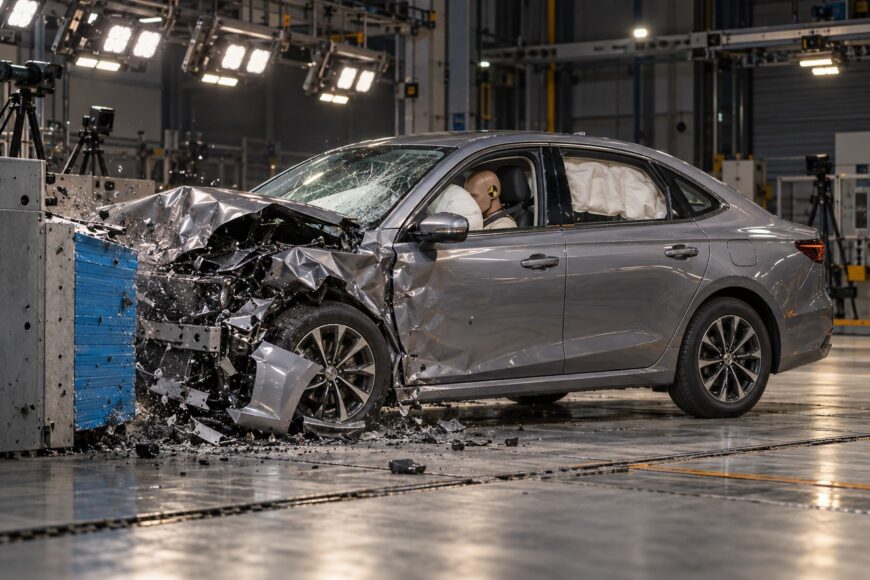
The Brilliance BS6, also marketed as the Zunchi, looked like a substantial business sedan. Its reputation changed sharply after an initial crash test produced just one star out of five for adult occupant protection. The result exposed a gap between the car’s imposing appearance and the strength of the passenger compartment behind its doors and trim.
A later modified BS6 achieved three stars in a test at IDIADA in Spain using the Euro NCAP protocol. That was a meaningful engineering improvement, but it did not erase the original ADAC findings, the limited safety equipment, or the dispute over how the later result should be described. In Europe, the first test remained the reference point, while resale confidence collapsed after the footage became widely known.
- Why the Brilliance BS6 Failed Its First Safety Test
- What the Crash Revealed About Occupant Protection
- One Star Versus Three: The Disputed Retest
- The Equipment Gap Behind the Result
- Ownership After the Crash-Test Headlines
- Is a Used Brilliance BS6 Ever a Rational Buy?
- Frequently asked questions
- Which Chinese car brand is the most reliable?
- What should I check before buying a used Brilliance BS6?
- What car has the worst NCAP rating?
Why the Brilliance BS6 Failed Its First Safety Test
Brilliance developed the BS6, also known as the Zunchi, as a Chinese mid-size sedan intended for European sales from around 2007. Its size, styling, and equipment were aimed at buyers who might otherwise have considered established European, Korean, or Japanese models. That made the safety result especially damaging: the car was being judged as a family and business sedan, rather than as a low-speed city vehicle.
The first assessment took place at the ADAC laboratory in Germany, using Euro NCAP methodology. The frontal test involved a 64 km/h impact with 40% of the front structure overlapping the deformable barrier, followed by a side-impact assessment. The BS6 received one star out of five for adult occupant protection.
That wording matters. The one-star result refers to adult occupant protection in the assessment; it does not mean that every separate aspect of the car received exactly one star. Still, adult protection is the central safety concern in a crash involving the driver or front passenger, and the observed structural behavior made the score more than a routine weakness in equipment or restraint tuning.
Crash tests are designed to make damage measurable under repeatable conditions. A poor score can result from airbags, belt performance, body deformation, or a combination of these factors. In the BS6, the defining problem was the loss of control over the passenger compartment, which turned the test into a widely cited example of why a large body and a low purchase price say little about occupant protection.
What the Crash Revealed About Occupant Protection
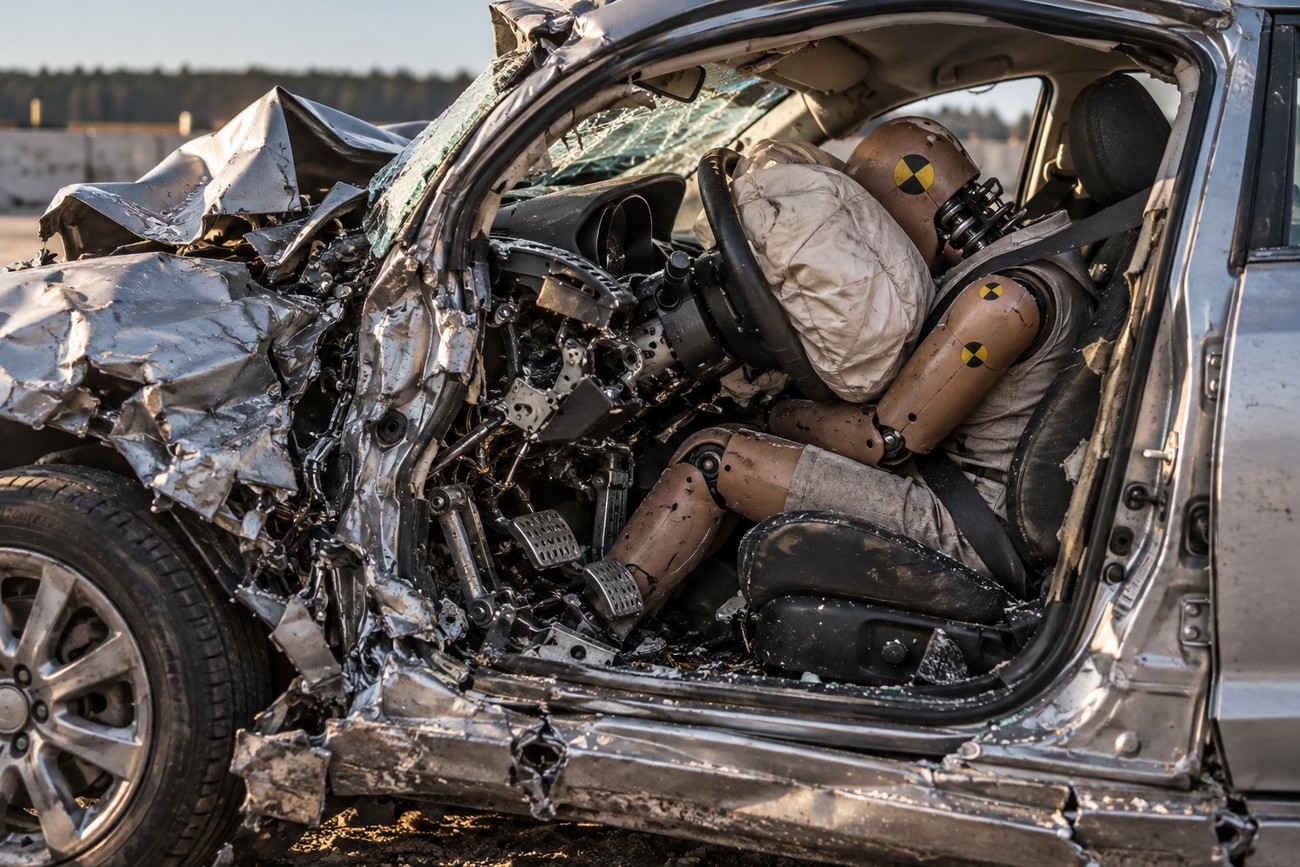
The frontal impact caused extensive deformation of the safety cell. The roof deformed, the driver’s door left its opening, and the sill reportedly split in half. These are serious signs because the passenger compartment should preserve a controlled survival space while the front structure absorbs and manages crash energy.
The pedal assembly moved approximately 32 cm into the cabin, while the dashboard moved approximately 20 cm. Such intrusion can place the lower legs, knees, and chest in the path of hard structures. It also reduces the distance available for the belt and airbag systems to restrain the occupant without contact with the interior.
ADAC’s side-impact assessment was equally severe. It described the loads on the driver’s chest and abdomen as indicating a minimal or almost zero survival chance in a comparable real crash. This was a test assessment under defined conditions, not a prediction about every collision, but it showed that the early European configuration offered little margin in a major side impact.
The lesson extends beyond the BS6 itself. Airbags can cushion an occupant only if the surrounding structure retains the correct space and timing. Two airbags cannot compensate for a weak passenger compartment, uncontrolled deformation, or severe intrusion into the footwell.
One Star Versus Three: The Disputed Retest
Brilliance later modified the BS6 and submitted it to a test at IDIADA in Spain using the Euro NCAP protocol. That car achieved three stars. The later report said that the doors opened after the impact, and child-protection performance was described as satisfactory.
The improvement should be acknowledged. A structure that retains its doors and manages deformation better represents a meaningful change from the first test. It also shows why the exact production version matters: a later engineering revision cannot automatically change the result for an earlier car already on the used market.
The disagreement concerns how the Spanish result was presented. Manufacturer and some Chinese sources treated the three-star IDIADA result as a Euro NCAP success. European reporting emphasized that the test was conducted by IDIADA using the Euro NCAP method, while public Euro NCAP tables did not establish one unified official three-star rating for the BS6.
That distinction is important for buyers because “tested to the Euro NCAP protocol” and “listed with an official Euro NCAP rating” are not interchangeable claims. The original ADAC result remained the key reference in European coverage, and the later three-star result did not place the model alongside stronger contemporary rivals.
The Equipment Gap Behind the Result
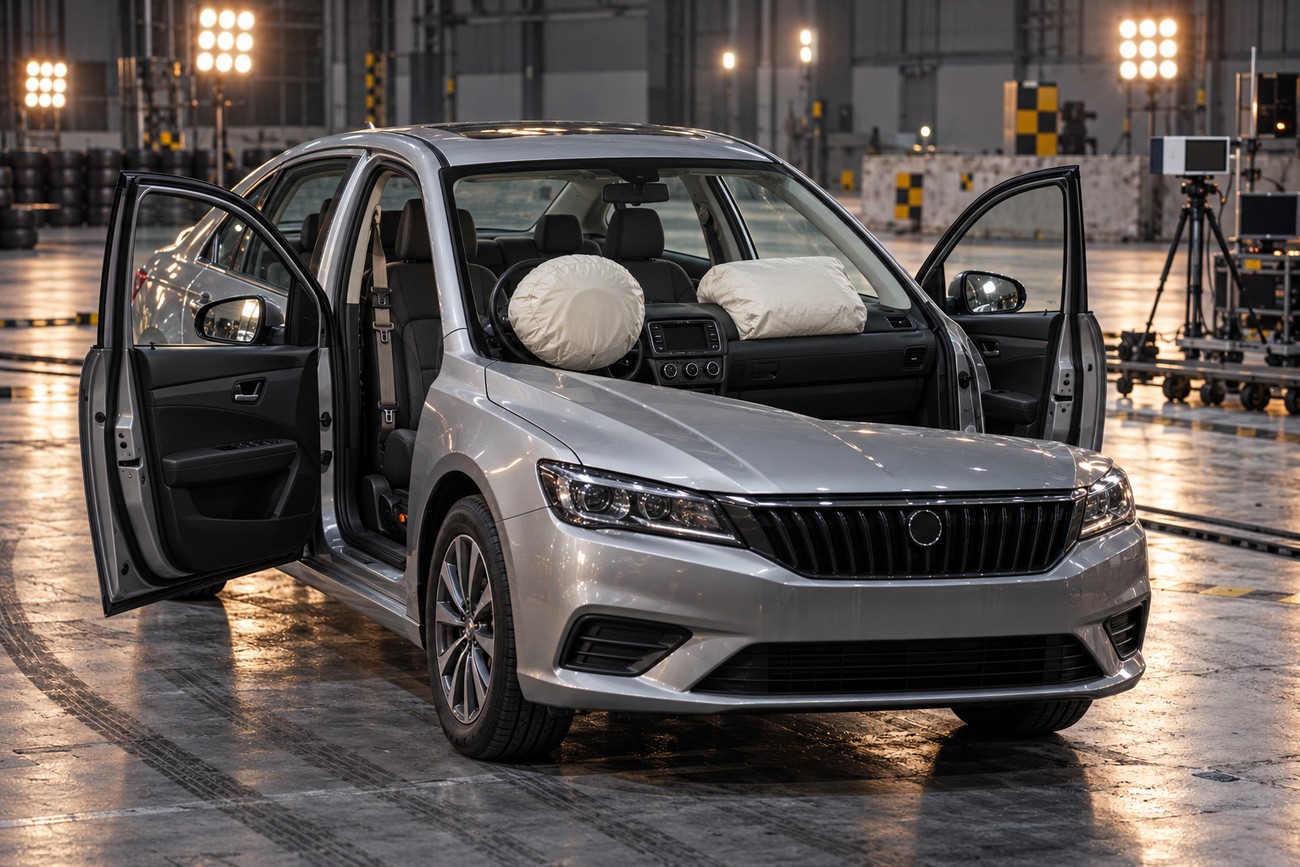
The cited European configuration reportedly had only two airbags. It also lacked electronic stability control, or ESP, and traction control, even as options. That equipment gap made the structural weakness more consequential because the car had fewer layers of protection before and during a crash.
Passive safety describes what happens after a collision begins: the body structure, belts, airbags, seats, and interior surfaces must manage energy and limit injury. Active safety helps a driver avoid losing control in the first place. ESP can help correct a developing skid, while traction control can reduce wheelspin during acceleration. Neither system can repair a weak crash cell, but their absence removes useful assistance in ordinary driving.
The cited Hyundai Sonata, Kia Magentis, and Skoda Superb represented stronger contemporary alternatives in the safety discussion. The later three-star BS6 result still trailed the 4-star-plus level associated with better-rated rivals. Leather upholstery, a long body, and a large cabin could not make the sedan equivalent to those cars in crash protection.
For a family buyer, the practical issue is therefore the complete specification, not the brochure’s impression of size. A sedan can feel solid on a smooth road while offering limited protection in a severe impact. The BS6 became a clear example of why restraint equipment, body engineering, and electronic assistance must be assessed together.
Ownership After the Crash-Test Headlines
European sales are estimated at only about 500–600 vehicles. Once the crash-test footage became known, that small number of cars on the road became a serious ownership problem. A prospective buyer could find the test quickly, while a seller had few alternative buyers to approach if the first negotiation failed.
Owners reported that dealers and traders often refused trade-ins or offered only symbolic money. This weak resale market is more than an inconvenience: it can leave you holding the car when parts, repairs, or a change in family circumstances make continued ownership impractical. A low purchase price may simply reflect the difficulty of finding the next buyer.
Parts could require long waits or ordering through China, and local dealers did not always stock the necessary items. Owner complaints also included fragile interior plastics and rapidly worn materials. These reports do not prove that every BS6 has the same condition, but they are relevant when assessing an old, low-volume model with limited support.
Some owners described early corrosion around door edges and wheel arches. This remains an anecdotal or limited-source concern rather than a universal defect. Similar caution applies to repair-shop stories about reluctance to undertake complex body work because technical data were scarce; the reports point to a support risk that should be checked locally before purchase.
A previous collision deserves particular scrutiny. A repaired BS6 may look acceptable after new panels and paint, while the underlying geometry remains outside factory tolerances. The model’s reputation and limited parts supply make a documented, independently inspected car easier to assess than an inexpensive example with an unclear history.
Is a Used Brilliance BS6 Ever a Rational Buy?
For most buyers, the evidence makes the BS6 a difficult choice to justify. The low price does not remove uncertainty about occupant protection, parts access, complex repairs, or resale. A seller’s phrase such as “improved version” is insufficient unless the exact vehicle, production version, and test history can be identified.
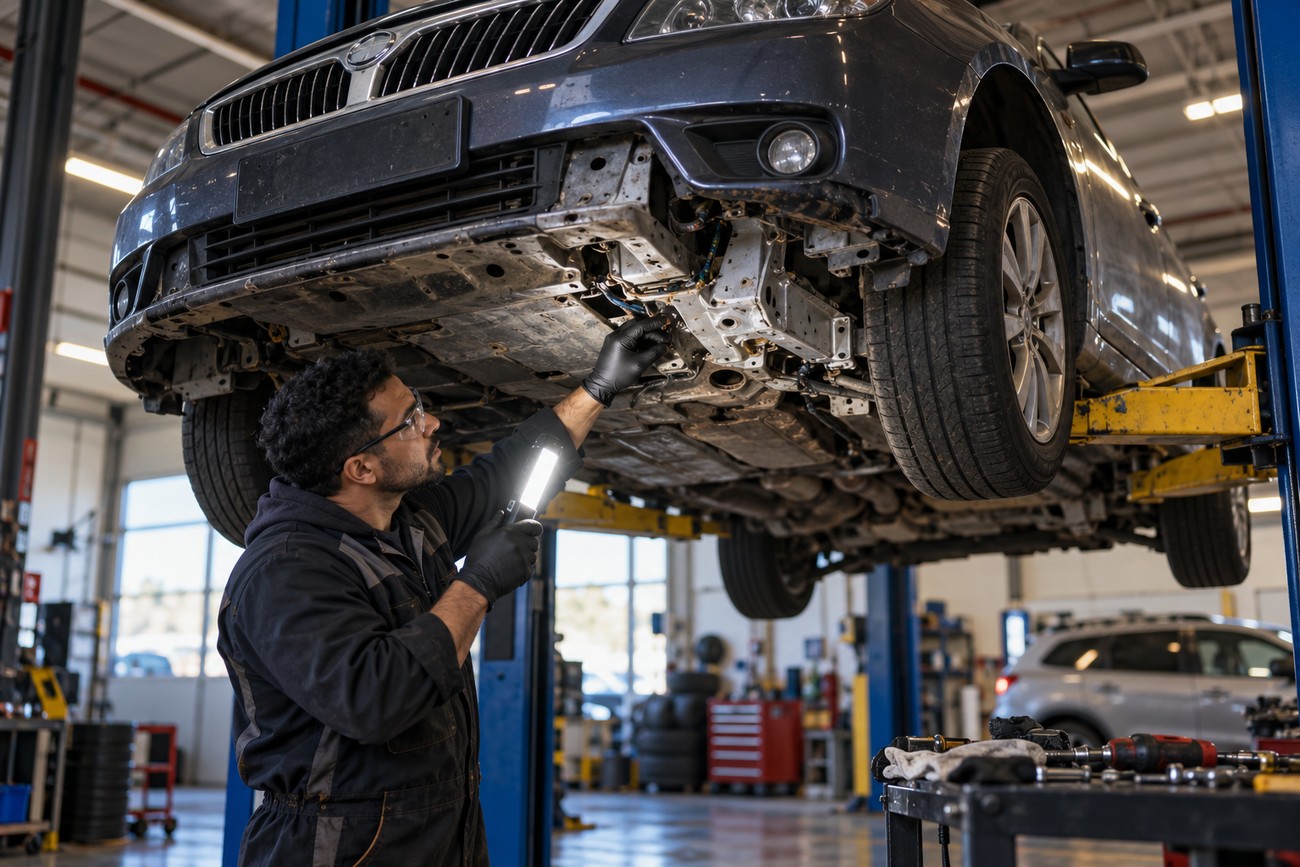
Any serious candidate should have a verifiable VIN, a complete accident history, and an independent structural inspection. Particular attention should go to previous frontal or side damage, the floor and sill areas, the pedal box, restraint components, and signs that airbags or belt pretensioners were replaced after a crash. A basic visual inspection cannot establish that the survival cell is straight.
Some owners reportedly restricted use to city speeds and avoided highways. That is an individual risk-management choice, not a safety certification. Lower speeds may reduce crash energy, but they do not transform the BS6 into a reassuring family or long-distance vehicle.
If someone still considers one, the decision should be treated as a specialist ownership gamble rather than a normal bargain purchase. Compare the car with better-rated contemporary alternatives, price parts and body repairs in advance, and assume that resale will be difficult. The BS6 should not be presented as equivalent to those rivals simply because a modified example later achieved three stars.
Frequently asked questions
The BS6 case also raises broader questions about crash-test labels, brand reliability, and the checks that matter before buying an old, low-volume car.
Which Chinese car brand is the most reliable?
There is no defensible single answer across all Chinese brands and markets. Reliability depends on the specific model, age, engine and transmission, local service support, parts availability, and the quality of previous maintenance.
The BS6’s limited European sales make broad conclusions especially weak. Its ownership record cannot establish that every Chinese car is unreliable, just as one later test cannot prove that every version of this model is equally safe. For a used buyer, model-specific service records, fault data, parts lead times, and access to qualified repairers are more useful than a brand label.
What should I check before buying a used Brilliance BS6?
Verify the VIN and exact production version first, then request any documentation linking that vehicle to the later modified specification. Inspect the airbag warning system, airbags, seat belts, and pretensioners, and look for evidence of replacement parts or dashboard removal.
After any reported crash, obtain an independent structural measurement rather than relying on panel gaps or fresh paint. Check the sills, door edges, wheel arches, and floor for corrosion or repair, and confirm local parts availability before negotiating. A workshop familiar with the model is preferable to a generic visual inspection.
What car has the worst NCAP rating?
There is no single universal “worst NCAP car” because ratings vary by year, protocol, vehicle class, market, and assessment category. A one-star result in one period is not directly comparable with a zero-star result under a later, more demanding protocol.
The early Brilliance BS6 is remembered as a particularly poor case because it received one star out of five for adult occupant protection and showed severe passenger-cell deformation. That makes it a warning example, without proving that it holds the lowest rating in every NCAP comparison.







