
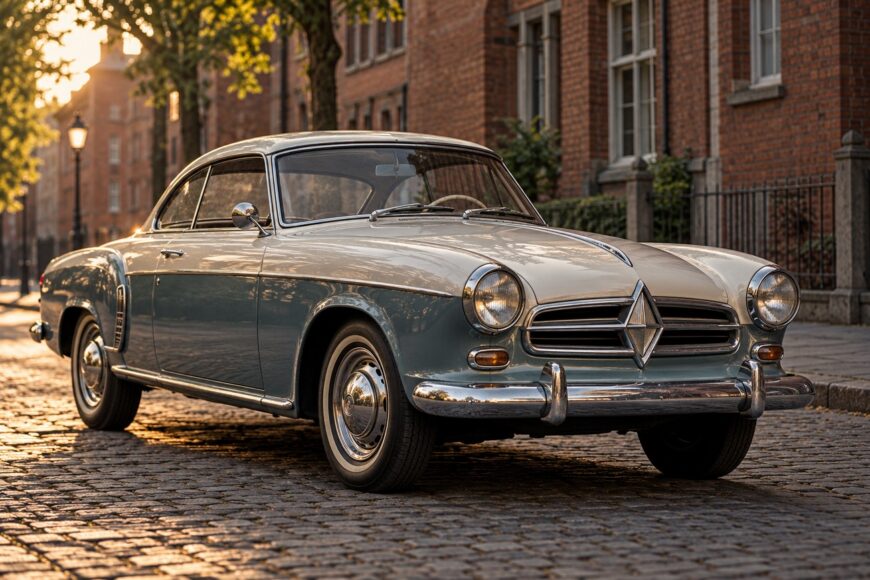
The Borgward Isabella Coupé presents the classic-car buyer with an appealing contradiction. Its low, elegant body suggests a sophisticated grand tourer, while ownership involves hydraulic drum brakes, a 6-volt electrical system, and the difficult search for sound Coupé-specific body parts. A polished example can conceal corrosion, old repairs, or substituted mechanical components.
That makes the Isabella Coupé more than a styling exercise from post-war Bremen. It is a thoughtfully engineered period car with genuine technical interest, provided you assess it as a rare 1950s automobile rather than as a modern traffic appliance. The central issue is whether its elegance is supported by honest structure, correct specification, and a maintenance plan that accepts its age.
- Why the Isabella Coupé Still Stands Out
- Elegant Lines, but Not Just a Showpiece
- The Mechanical Package: Progressive for Its Time
- Performance Meets Period-Correct Limits
- The Ownership Traps Buyers Miss
- What the Myths Get Wrong
- Frequently asked questions
- How many Borgward Isabella Coupés were made?
- What is the average price of a Borgward Isabella?
- How many Borgward Isabellas were made?
- What is considered the prettiest car ever made?
Why the Isabella Coupé Still Stands Out
Borgward’s Isabella occupied a distinctive place in post-war Bremen’s automotive culture. It offered a modern-looking family car at a time when German manufacturers were rebuilding their production and customer base. The Coupé, introduced in 1957, gave that practical foundation a more individual and carefully proportioned body.
Its rarity still shapes the car’s identity. Approximately 9,537 Isabella Coupés were produced, a figure that separates this body style from the much broader Isabella family. That limited production helps explain the car’s appeal at gatherings, while also making an apparently minor body repair more consequential than it would be on a mass-produced Volkswagen or Mercedes.
Specifications for the ordinary Isabella should not be transferred automatically to the Coupé. Early base cars are commonly associated with approximately 60 hp, whereas the Coupé is generally linked with the more powerful TS engine. Published Coupé figures range from 75 to 82 hp, depending on the year, market, and measurement standard.
The result is a car with a stronger identity than its basic mechanical layout might suggest. Its interest lies in the combination of Bremen provenance, elegant coachwork, TS performance, and limited production. That combination rewards careful preservation, though it punishes casual assumptions about parts, performance, and originality.
Elegant Lines, but Not Just a Showpiece
The Coupé’s visual strength comes from proportion rather than decoration. The roofline, glass area, and flowing side surfaces give it a purposeful appearance even when the car is standing still. For an owner, this means the Isabella attracts attention without needing aggressive modifications that would compromise its period character.
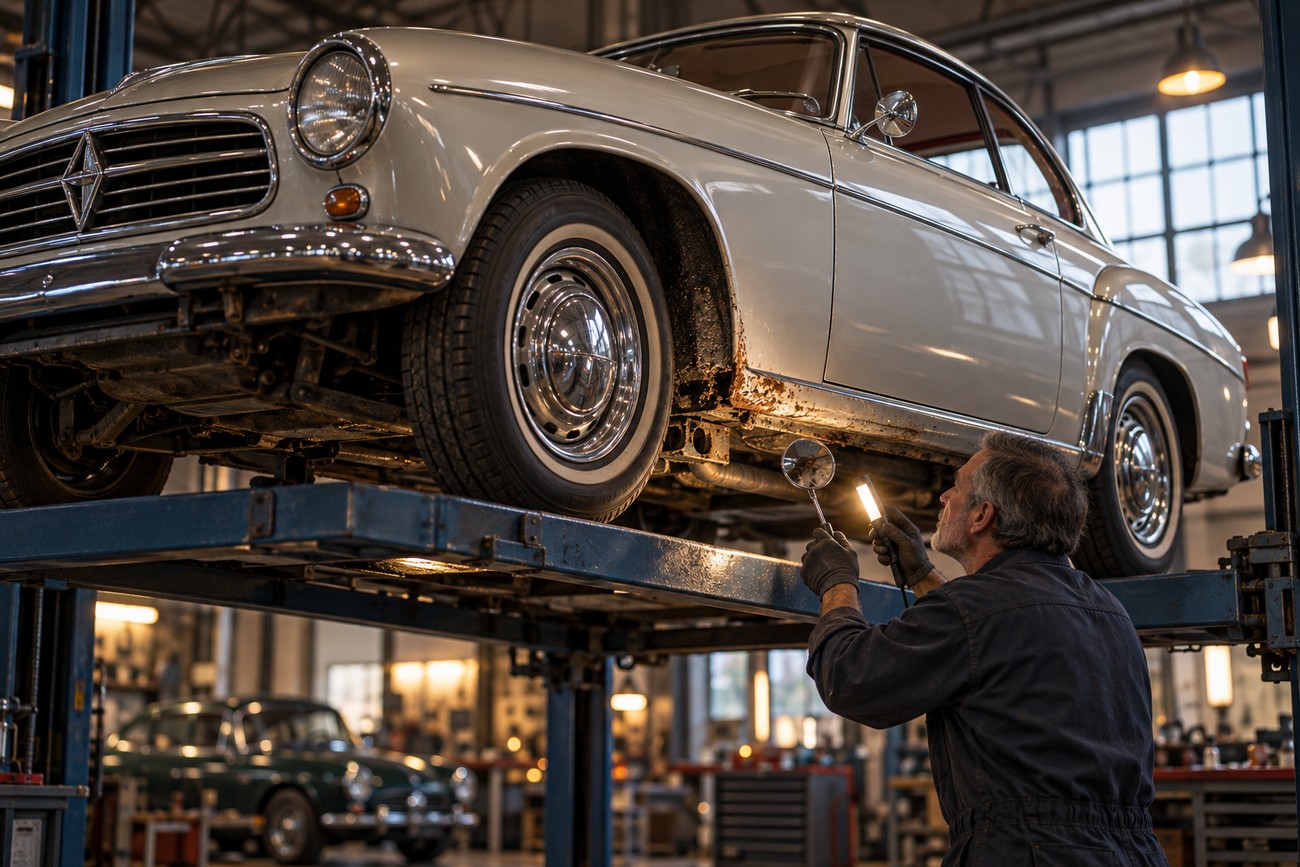
Those surfaces also make poor repairs easier to notice and harder to correct. Rust in the sills, floor, wheel areas, hidden cavities, and suspension mounting points can remain beneath attractive paint. A straight-looking body with glossy refinishing therefore provides only a starting point for inspection.
Before purchase, the car should be raised and examined from below. Pay particular attention to the floor, structural sills, suspension attachment points, inner wings, and the transitions between repaired and original metal. Old filler, uneven seams, fresh underseal, and paint overspray can indicate that the visible finish has been prioritized over durable structural work.
Rare Coupé panels can turn a straightforward restoration into a long and expensive project. A car with replacement mechanical parts may still be usable, but undocumented body repairs deserve greater caution because their quality determines both safety and future repair options. The correct question is whether the structure and restoration history justify the asking price, rather than whether the paint photographs well.
The Mechanical Package: Progressive for Its Time
The Isabella’s basic architecture is straightforward: a 1493 cc inline gasoline OHV four-cylinder, rear-wheel drive, and a four-speed manual transmission. The gearbox has synchronizers on all four forward gears, a progressive feature for its period that makes ordinary driving calmer and less demanding than the unsynchronized transmissions found in many contemporaries.
Full synchronization improves everyday usability, especially in urban traffic and on winding roads where frequent gear changes are unavoidable. It does not make the gearbox maintenance-free. Worn selector linkages can create vague shifts, while tired synchronizes, clutch problems, or excessive drivetrain play can remain hidden during a brief test drive.
The Coupé is usually associated with the TS engine specification, rated at 75–82 hp according to year, market, and measurement method. That range matters during a mechanical assessment: parts and tuning advice for a base Isabella rated at approximately 60 hp may not correspond to the Coupé’s engine, carburetion, or original calibration.
Hydraulic clutch operation is part of the original design and deserves its own inspection. Check pedal feel, clutch engagement, leaks, the master cylinder, and the slave cylinder rather than assuming that a clean gear change proves the system is healthy. A well-maintained car should feel deliberate and predictable; stiffness, slip, or inconsistent engagement usually calls for investigation before touring use.
Performance Meets Period-Correct Limits
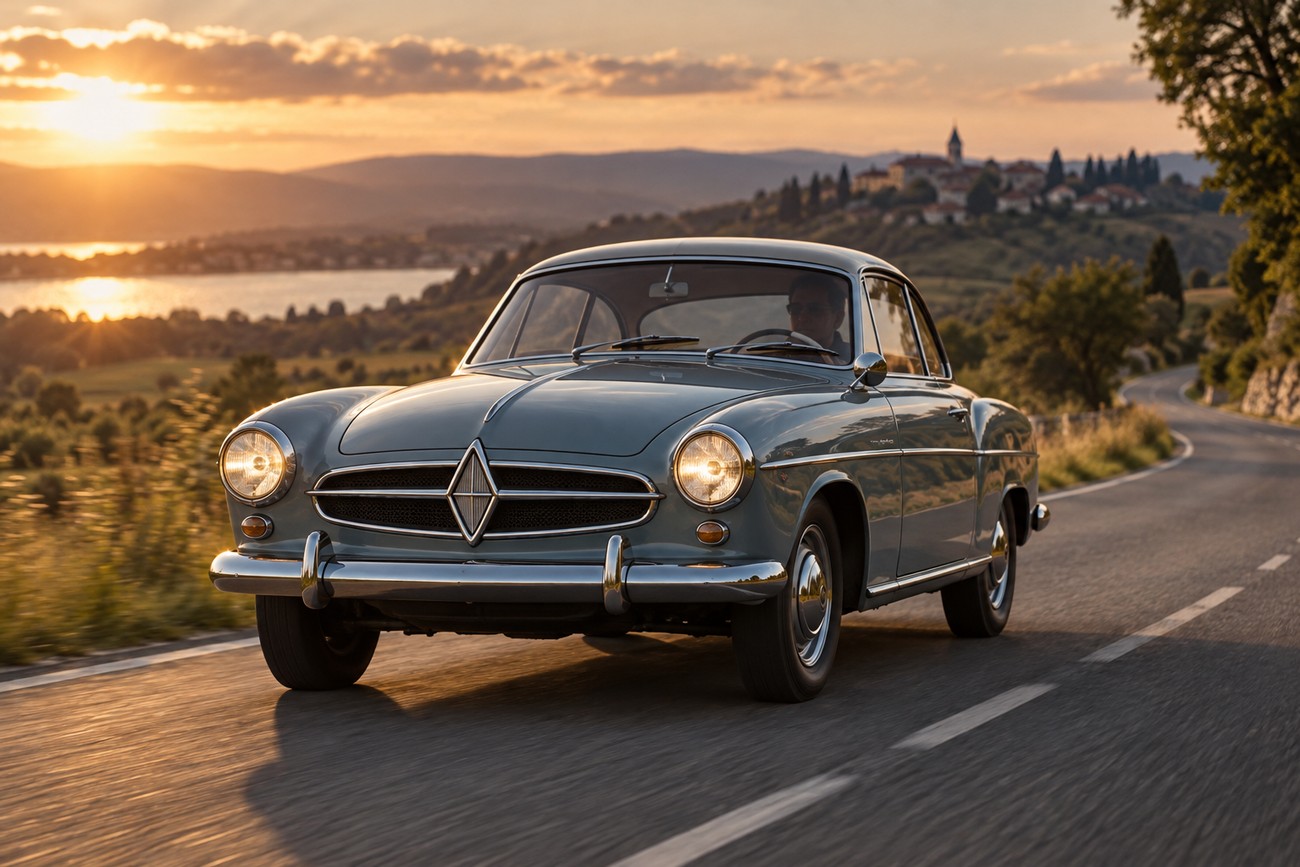
Published Coupé figures suggest a top speed of approximately 150 km/h and 0–100 km/h acceleration in around 19 seconds. Coupé kerb weight is reported at approximately 1,090–1,120 kg, while power figures vary between 75 and 82 hp. These differences reflect specification and testing conventions, so they should be treated as identification clues rather than promises made by every surviving car.
On a clear road, the Isabella can feel lively because its controls and engine response belong to a lighter, less insulated era. Its performance is best understood as sufficient for relaxed touring, overtaking with planning, and secondary roads. The claimed maximum speed does not define a sensible modern highway cruising strategy, particularly when traffic, lighting, visibility, and braking distances are considered.
Hydraulic drum brakes are fitted at all four wheels. For the 1960 version, the drums are specified as 9.1 × 2.0 inches. When correctly adjusted and supplied with sound shoes, hydraulics, and tires, they are adequate for normal period-style use.
The limitation appears during repeated hard stops. Heat builds in the drums, and brake fade can reduce confidence even when the system initially feels strong. Leave greater following distance, anticipate traffic, and inspect the complete braking system before long journeys; a 150 km/h specification is no substitute for the stopping performance and safety systems of a modern car.
The Ownership Traps Buyers Miss
The original electrical system is 6 V, and that detail affects the entire ownership experience. A healthy battery, clean grounds, sound cable connections, a properly functioning starter, and good contact surfaces matter greatly at this voltage. Small resistance in a connection can produce slow cranking, dim lighting, intermittent instruments, or faults that seem to appear without a pattern.
A sensible inspection starts with battery condition, cable ends, and grounding straps. Continue with the starter, generator, relays, switches, and instruments before considering any conversion. Changing to 12 V without checking the generator, starter, gauges, bulbs, and relays can create a mixed system that is harder to diagnose and less faithful to the car’s original design.
Diagnose the 6-volt system in order: battery, grounds, and contacts first, then starter, generator, relays, and instruments. A hurried 12-volt conversion can conceal a bad connection rather than repair it.
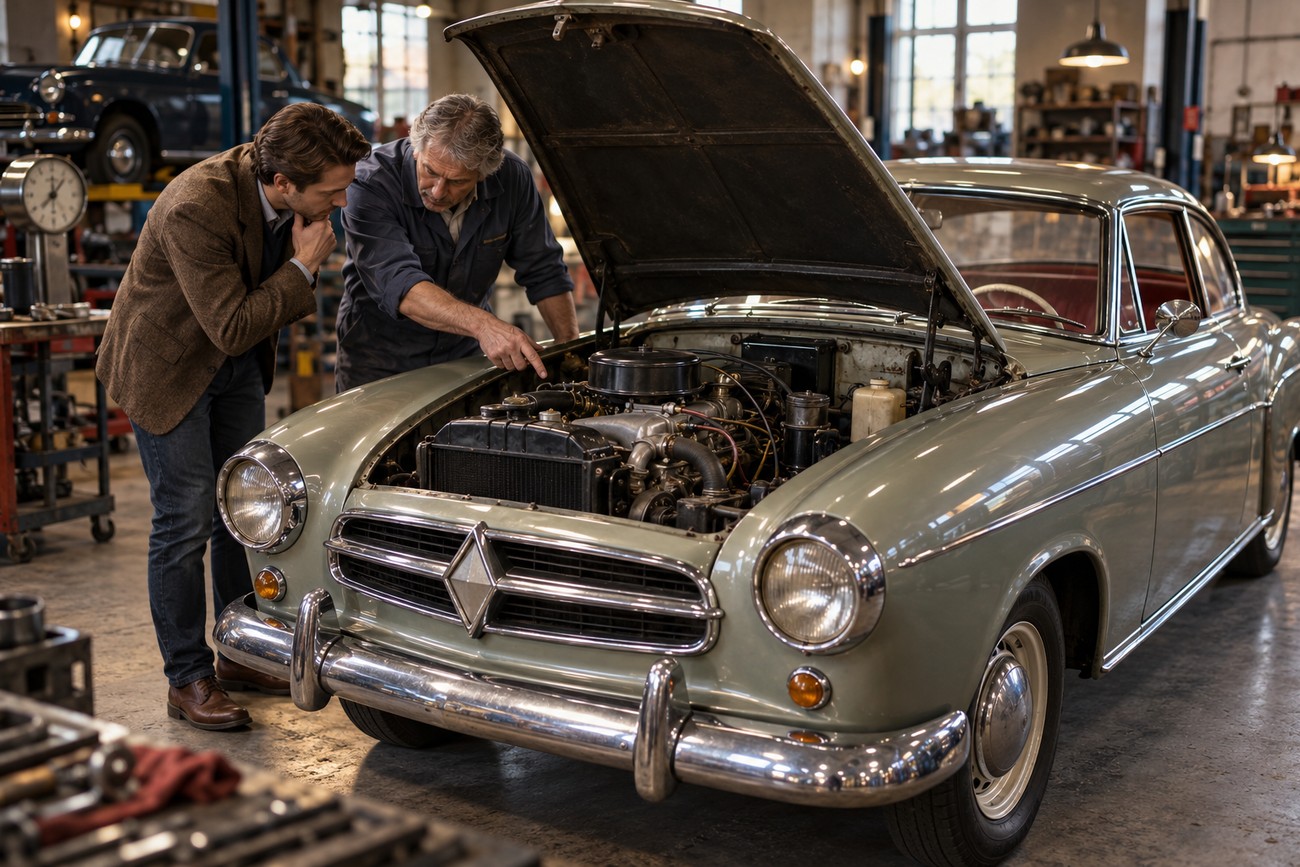
The Solex carburetor and the fuel pump also require deliberate attention. Age can affect seals, diaphragms, float settings, and fuel delivery, so an engine that starts readily when warm may still need a proper rebuild or adjustment. “Close enough” tuning often produces poor cold starting, hesitation, fuel smell, or inconsistent running.
Parts availability is mixed rather than hopeless. Some mechanical, electrical, and hydraulic components can be sourced through marque clubs, specialist suppliers, or repair kits, and certain Bosch electrical items have repairable equivalents. Coupé-specific body panels remain a separate problem, and availability should be checked before disassembly rather than after corrosion has been exposed.
Match every part to the year, body style, TS specification, and catalog number. The word “Isabella” alone is insufficient identification because the range includes different versions and specifications. A seller’s documentation, engine number, gearbox details, wiring arrangement, and restoration invoices can reveal whether the car has been preserved, sympathetically repaired, or assembled from incompatible components.
What the Myths Get Wrong
The first common error is assigning approximately 60 hp to every Isabella Coupé. That figure belongs to the early base Isabella specification. Coupés are generally associated with the TS engine, for which published outputs of 75 hp and 82 hp appear; the correct figure depends on the year, market, and measurement standard.
A second myth assumes that every Coupé drives and weighs the same. Production year, equipment, engine specification, restoration quality, and measurement method all matter. The reported kerb-weight range of approximately 1,090–1,120 kg and the differing power figures show why a chassis number and period documentation are more useful than a generic specification sheet.
Drum brakes are also dismissed too broadly. They can provide adequate braking for normal use when adjusted and maintained correctly. Their weakness appears under repeated intense braking, when heat and fade reduce the margin for error. The car’s intended pace and route should therefore guide its use.
Finally, parts are neither universally unavailable nor guaranteed to be easy to find. Clubs and specialist suppliers can help with mechanical, electrical, and hydraulic components, while particular body panels may remain difficult. A careful owner treats availability as a component-by-component question and confirms supply before committing to a restoration.
Frequently asked questions
These answers separate the rare Coupé from the wider Isabella range and focus on the information that most affects identification, purchase decisions, and ownership planning.
How many Borgward Isabella Coupés were made?
Approximately 9,537 Borgward Isabella Coupés were produced. This figure applies to the Coupé body style and should not be confused with the total production of all Isabella variants.
What is the average price of a Borgward Isabella?
There is no reliable single average price that describes every Borgward Isabella. Value changes substantially with body condition, structural rust, originality, restoration quality, documentation, engine specification, and whether the car is a Coupé or another Isabella body style.
A sound, documented car can represent a more predictable purchase than a cheaper-looking project with hidden corrosion. For the Coupé, the cost and availability of body repairs can outweigh differences in trim or engine output, so inspection quality matters more than a headline average.
How many Borgward Isabellas were made?
The total production figure for the Isabella range depends on the source and on which body styles and production periods are included. The dependable figure for this article is the Coupé total: approximately 9,537 cars. Buyers should therefore avoid using a broad Isabella production number to judge the rarity of a specific Coupé.
What is considered the prettiest car ever made?
There is no objective answer because beauty depends on proportion, period, personal taste, and cultural context. The Borgward Isabella Coupé is often admired for its elegant post-war shape and restrained detailing, which explains its strong reputation among classic-car enthusiasts.
That reputation should remain separate from an inspection result. A beautiful Coupé still needs sound structure, correct brakes, reliable electrics, and documented mechanical work before it becomes a responsible ownership proposition.







