
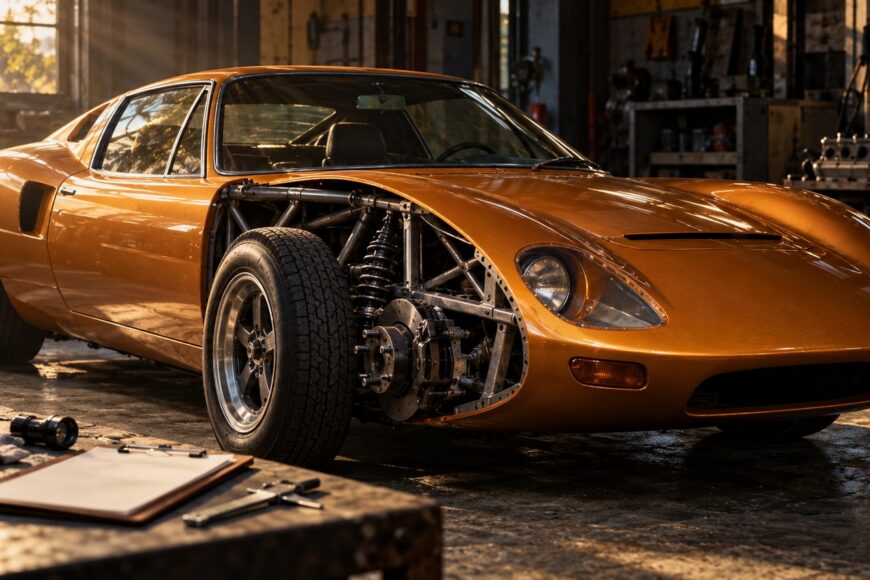
The Bolwell Nagari is an unusually light and rare Australian performance car, yet its fiberglass skin can distract buyers from the steel structure, aging brakes, and uncertain specification underneath. The original car has the ingredients enthusiasts want: a compact body, Ford V8 power, a four-speed manual gearbox, and low mass that gives modest output real authority.
The critical distinction is between generations. The original Mk VIII was front-engined, used a steel backbone chassis, and drove through a rear live axle. The later Mk X, revived in 2008–2009, was a different design with a mid-engine layout, a carbon-fiber tub, and Toyota or Chevrolet power. Engine size, performance figures, and buying advice for one cannot automatically be applied to the other.
- What the Bolwell Nagari Actually Was
- Mk VIII Specifications: A Simple Formula with Serious Character
- Mk VIII vs. Mk X: Two Different Nagaris
- Performance Numbers: What the Period Figures Really Mean
- Why Nagari Ownership Is Harder Than the Fiberglass Suggests
- The Pre-Purchase Inspection: What to Check Before the Engine
- Common Nagari Myths That Mislead Buyers
- Frequently asked questions
- What does “poor man’s supercar” mean when people describe the Nagari?
- What is the price range for a Bolwell Nagari?
- How many Bolwell Nagari were made?
- What is the poor man’s supercar?
What the Bolwell Nagari Actually Was
The original Nagari emerged as a distinctly Australian answer to the small-volume performance car. Its appeal came from combining locally developed bodywork and chassis engineering with readily available Ford mechanical components. That approach delivered a lightweight sports car with serious acceleration potential without requiring a fully bespoke driveline.
Original Mk VIII production ran from 1970 to 1974. Confirmed production was 100 coupes and 18 Sports, for 118 cars total. That number gives the Nagari genuine historical importance, although rarity creates practical complications: parts are scarce, production records can be incomplete, and a surviving car may have changed considerably during its life.
The Coupe and Sports were distinct body variants, rather than interchangeable styles with minor trim differences. Their body panels, weather equipment, glass, interior details, and market desirability can differ, so a seller’s description should be checked against the car itself and its documentation.
Scarcity also makes valuation less straightforward than a simple model-year guide suggests. A carefully documented, structurally sound car with period-correct mechanical may deserve a different assessment from a heavily modified example wearing an attractive fiberglass shell. Provenance, repair quality, specification, and the availability of a specialist inspection matter as much as the badge.
Mk VIII Specifications: A Simple Formula with Serious Character
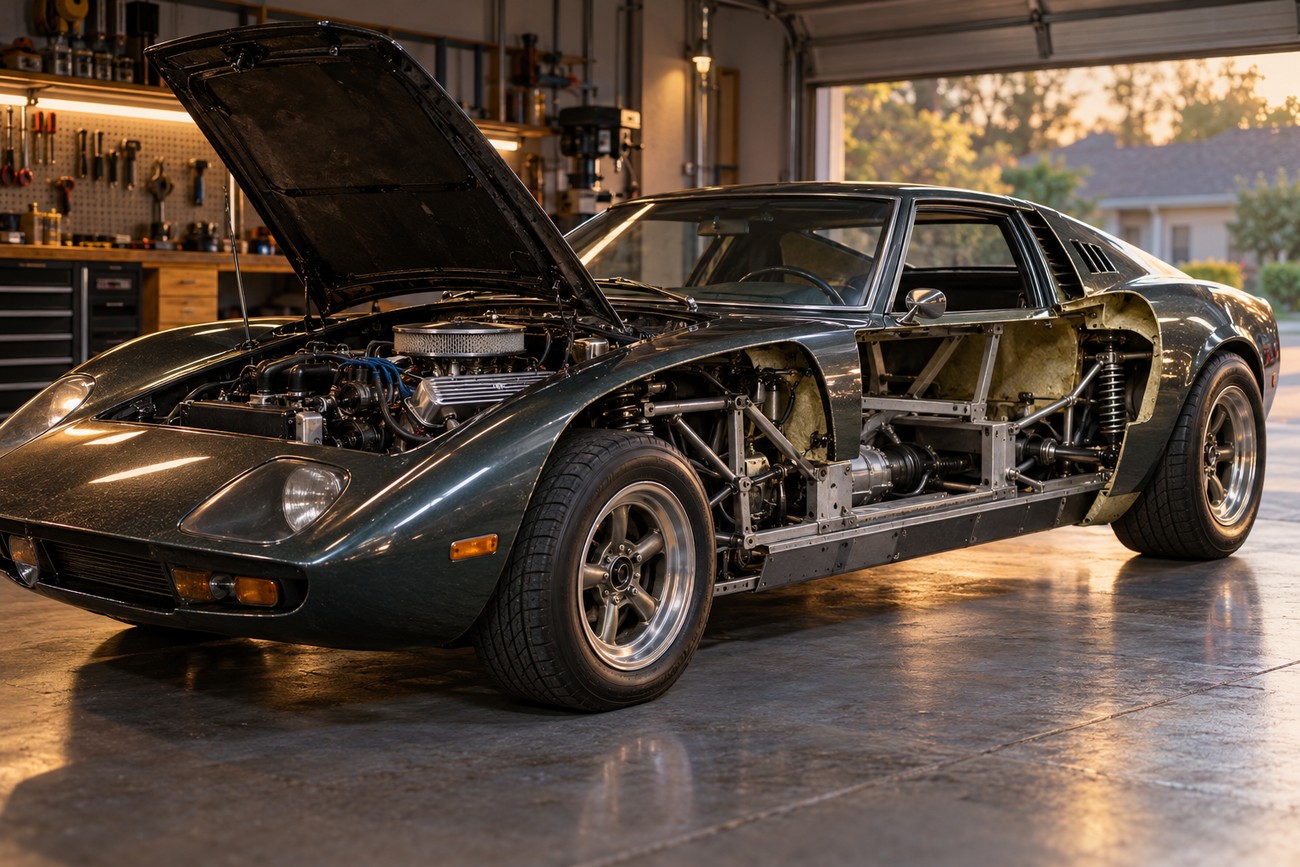
The Mk VIII used a steel backbone chassis with a fiberglass body. Fiberglass reduced the burden of complex body tooling and helped keep the car light, while the central steel structure provided the main load path for the suspension, driveline, and body mounts. That arrangement gives the Nagari its distinctive character, but it also makes the condition of the backbone chassis central to the car’s value.
The standard engine was the Ford Windsor 302 ci (4,958 cm³). A 351 ci engine was available as an option or fitted later, so a surviving Nagari with a larger Ford V8 is not automatically wrong. It does mean that the buyer must establish whether the engine is original, period-correct, documented, or part of a later conversion.
Power reached the rear wheels through a four-speed, fully synchronized Ford Toploader. The gearbox is familiar to specialists and suits the car’s direct, mechanical character. Its presence also reinforces the need to inspect the complete driveline rather than treating a known Ford component as proof that the car remains close to its original specification.
The rear suspension used a live, non-independent axle. That layout is durable and relatively simple, yet it can transmit more disturbance over uneven roads than a modern independent system. Original braking hardware consisted of 11¼-inch ventilated front discs with servo assistance and 10-inch rear drums, a period solution that deserves careful assessment before the car is used regularly in modern traffic.
Mk VIII vs. Mk X: Two Different Nagaris
The generations must be separated before any specification or price comparison begins. The Mk VIII was a front-engine lightweight sports car built around a steel backbone chassis. The Mk X was a later revival with a fundamentally different architecture, so its construction and powertrain cannot be used as evidence for an original Nagari.
| Feature | Mk VIII | Mk X |
|---|---|---|
| Production era | 1970–1974 | Revived in 2008–2009 |
| Engine location | Front-engine | Mid-engine |
| Chassis construction | Steel backbone chassis | Carbon-fiber tub |
| Body material | Fiberglass body | Composite bodywork |
| Engine choices | Ford Windsor 302 ci as standard; 351 ci as an option or later replacement | Toyota 3.5-liter V6 or Chevrolet LS3 6.2-liter V8 |
| Buying risk | Modified cars can obscure original specification and chassis history | Its specifications should not be used to describe an original Mk VIII |
The Mk X was revived in 2008–2009 with a mid-engine layout, a carbon-fiber tub, and a composite body. Its engine versions included a Toyota 3.5-liter V6 and a Chevrolet LS3 6.2-liter V8. Those choices place it in a later engineering and performance context, even though the Nagari name connects the two cars.
For buyers, the distinction affects everything from handling expectations to parts research. A Mk VIII owner is dealing with a front-mounted engine, a live rear axle, steel structural sections, and an older Ford-based mechanical package. A Mk X owner is dealing with a carbon-fiber-centered chassis and different engine access, service requirements, and component sources.
Listings can blur the generations by using broad claims about “the Nagari” or by quoting the later car’s mid-engine layout. Check the chassis, engine location, construction, and paperwork before accepting the model description. A photograph of the body alone is rarely enough to identify the engineering beneath it.
Performance Numbers: What the Period Figures Really Mean
A club specification quotes approximately 220 bhp and 300 lb-ft, approximately 920 kg of mass, a 209 km/h top speed, and a 14.8-second quarter mile. Those figures explain the Nagari’s reputation: even by modern standards, a light car with substantial V8 torque can feel forceful without relying on exotic technology.
They are reference figures for a particular configuration and condition, rather than guarantees for every surviving car. Age, engine health, carburetor setup, gearing, tire condition, exhaust changes, vehicle weight, and the quality of past repairs can all alter the result. Added sound deadening, replacement interiors, cooling equipment, and heavier engines may also move the car away from its original mass.
Sources cite approximately 180 kW, 220 bhp, or 220–250 hp. The difference depends on the engine, market, measurement method, and vehicle. A buyer should therefore treat a power figure as a specification clue and ask how it was measured, rather than using one number to certify originality or value.
Advertising and later retellings quote approximately 6.4 seconds from 0–100 km/h, but there is no single standardized independent result covering all 118 cars. The club-listed quarter mile of 14.8 seconds is a useful period reference, while the actual performance of an individual car depends on its precise mechanical condition and setup.
Why Nagari Ownership Is Harder Than the Fiberglass Suggests
Nagari parts are often found through compatibility rather than through a shelf labeled “Bolwell.” Owners may need to identify suitable Ford, Austin, or Holden components, or have a part remade. That can be manageable for mechanical items, especially when the underlying component is familiar, but it becomes more difficult with glass, seals, trim, and model-specific body fittings.
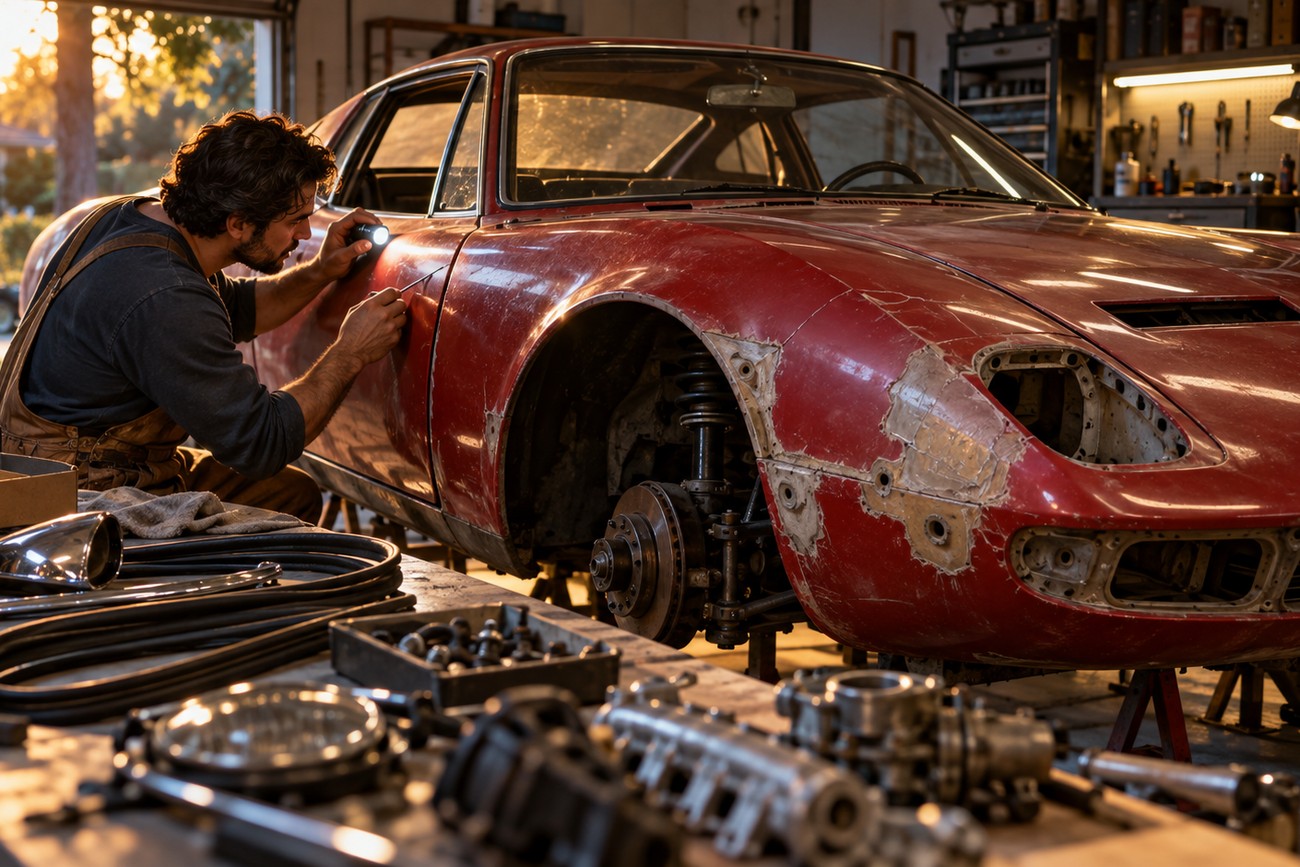
Old fiberglass brings its own inspection problems. Cracks around mounts, evidence of earlier repairs, distorted panels, and poor gaps can indicate long-term movement or impact damage. A fresh paint finish may conceal these issues, particularly where a repair has been shaped and blended rather than properly reinforced.
The steel structure still deserves the same suspicion given to any old performance car. Backbone sections, inserts, brackets, fasteners, and suspension mounting points can corrode beneath or behind the fiberglass. Water can also remain trapped around metal interfaces, so a clean outer body does not establish that the chassis is sound.
Modified cars require additional patience. Engines, axles, carburetors, brakes, and electrical systems may have been replaced or substantially altered, leaving the current specification difficult to reconcile with the original one. The more unusual the conversion, the more important it becomes to document what was changed, how it was engineered, and whether the work can be serviced in the future.
Fiberglass also does not guarantee a low final vehicle weight. Reinforcement, repairs, insulation, replacement glass, interior changes, and a heavier engine or transmission can add up. A prospective owner will gain more from a specialist who understands fiberglass bodies and old frames than from a generic V8 workshop that focuses only on engine condition.
The Pre-Purchase Inspection: What to Check Before the Engine
Start underneath the car, with the backbone frame, before spending time listening to the V8. Look for corrosion, poorly executed repairs, crushed or distorted sections, and evidence that the chassis has been straightened. Alignment matters because a structurally compromised backbone can affect steering, suspension geometry, panel fit, and tire wear at the same time.
Inspect the suspension pickup points for stiffness and signs of movement. Check steering components, wheel alignment, door-aperture symmetry, and the relationship between the wheels and body openings. Unequal gaps or a door that fits only after being forced can point to structural movement rather than a simple fiberglass adjustment.
Suspension pickup-point geometry, door-aperture symmetry, and wheel alignment should be verified before diagnosing the V8; a healthy engine cannot compensate for a chassis that is moving or sitting out of square.
Examine the fiberglass around mounts and hinges, then inspect the underside for old patching, delamination, and water-related damage. Wheel symmetry is especially useful: a car can present attractive paint while one axle sits incorrectly because of repaired frame sections or altered suspension mounting points.
Move on to the brakes, tires, cooling system, and electrical wiring. The original 11¼-inch ventilated front discs with servo assistance and 10-inch rear drums were appropriate to their era, yet modern traffic places greater demands on braking, tires, lights, and seat belts. A car that runs strongly may still need substantial work before it is suitable for regular road use.
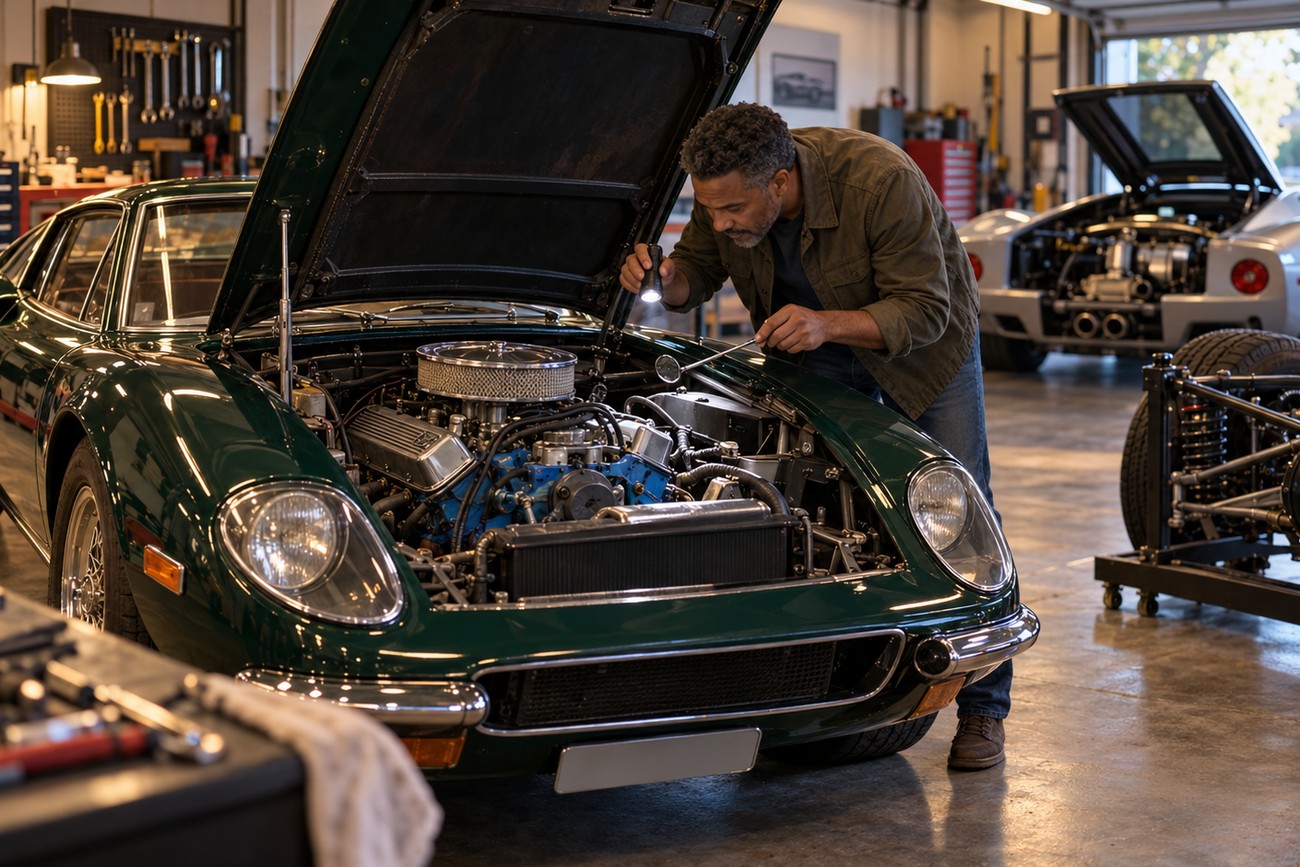
Finally, compare the engine number, block type, carburetor, exhaust, axle, gearbox, and electrical equipment with the available records. A heavier 351 Cleveland has been reported by professional reviewers to worsen balance and handling, although that observation is not universal evidence for every 351-equipped car. The right conclusion depends on the specific installation, suspension setup, cooling system, brakes, tires, and workmanship.
Common Nagari Myths That Mislead Buyers
The original Mk VIII was not mid-engine. It was front-engined, with a steel backbone chassis and a rear live axle; the mid-engine layout belongs to the Mk X revival. Confusing the two produces inaccurate expectations about handling, maintenance access, construction, and value.
The confirmed base engine was the Ford Windsor 302 ci, or 4,958 cm³. A 351 ci engine was an option or a later replacement, rather than the universal base specification. Any car advertised simply as having “the Ford V8” deserves closer scrutiny of its block, ancillary equipment, engine numbers, and history.
Fiberglass resists conventional body rust, but it does not protect the steel chassis, mounts, inserts, brackets, or suspension structure. Rust can therefore be hidden in areas that have little visual connection with the painted body. Treat the shell as one part of the inspection, not as evidence that the entire vehicle is corrosion-free.
Calling the Nagari completely Australian also oversimplifies its origins. The original car used Ford components, while the Mk X used Toyota and Chevrolet engines. The meaningful description is a locally developed performance car that drew on available international mechanical hardware, with each generation requiring its own technical assessment.
Frequently asked questions
What does “poor man’s supercar” mean when people describe the Nagari?
The phrase is an informal comparison, referring to exotic-looking performance and rarity at a more attainable level than a conventional supercar. It is a description of character and positioning, not a technical classification.
It also does not prove a particular acceleration time, power output, or market value. A Nagari’s experience depends heavily on its specification, condition, chassis integrity, and modifications, so the nickname should never replace a proper inspection.
What is the price range for a Bolwell Nagari?
There is no defensible universal price range for the Nagari without current market data and a defined specification. Values can vary substantially according to whether the car is a documented Coupe or Sports, its structural condition, originality, quality of restoration, and the legality of its modifications.
For a purchase decision, compare recent sales of the same body style and inspect the car before treating an advertised figure as a market value. A rare car with serious chassis or fiberglass work ahead of it can cost far more to make usable than its appearance suggests.
How many Bolwell Nagari were made?
Confirmed original production was 100 Coupes and 18 Sports, for 118 cars total, during 1970–1974. The Coupe and Sports figures should be kept separate because they are distinct body variants.
Surviving cars may differ from their production specification after engine, brake, axle, electrical, or body changes. Production rarity therefore helps establish historical importance, while individual documentation determines how confidently a particular car can be identified.
What is the poor man’s supercar?
In Nagari discussions, “poor man’s supercar” commonly refers to the original Bolwell Nagari. The nickname points to its lightweight body, V8 character, scarcity, and exotic performance impression without claiming that it matches a modern supercar in every measurable category.
It is also used loosely for other affordable performance cars, so the phrase alone is too vague for a buying decision. Confirm the exact generation, body style, engine, chassis condition, and documented specification before comparing one Nagari with another.







