

The BMW Z1 makes its entrance by making its doors disappear. Each door drops vertically into the side sill, while the glass descends with it, leaving the flanks open in a way few production cars have matched. The effect is theatrical, yet the mechanism is tied to the car’s structure rather than added as a decorative afterthought.
That same structure creates the Z1’s central ownership conflict. High sills help a roofless body achieve rigidity, while concealed electric drives, toothed belts, plastic body panels, and restricted access create more potential failure points and more specialized repair work. The Z1 deserves analysis as an engineering experiment and a used-car proposition, not merely as a memorable styling exercise.
- Why the BMW Z1’s Doors Drop Into the Sills
- How the Door and Window Mechanism Actually Works
- The Plastic Body and the High-Sill Compromise
- Where Z1 Ownership Becomes Difficult
- What to Inspect Before Buying a BMW Z1
- BMW Z1 Myths That Need a Technical Correction
- BMW Z1 Specifications That Put the Door Trick in Context
- Frequently asked questions
- What BMW has doors that go down?
- How much is a BMW Z1 worth?
- What happens if the BMW Z1’s door electrics fail?
Why the BMW Z1’s Doors Drop Into the Sills
The BMW Z1 was produced from 1989 to 1991 as a two-seat roadster on an E30-based platform. Its defining doors descend vertically into the side sills; they do not fold, hinge outward in a conventional manner, or slide sideways. The glass follows its own synchronized downward movement, allowing the entire side opening to clear without a conventional door occupying the surrounding space.
This arrangement makes sense within an open car whose body must retain useful stiffness without a fixed roof. The Z1 uses high sills as part of its structural concept, giving the lower sides substantial load-bearing importance. The sills also provide space for the vertically moving doors, linking their movement to the car’s packaging and body engineering.
The unusual solution also shaped the Z1’s cultural identity. Many sports cars have distinctive engines, lights, or proportions; the Z1 is generally remembered first for the moment its doors vanish into the body. That fame can obscure the engineering compromise: the memorable mechanism depends on an unusual surrounding structure.
How the Door and Window Mechanism Actually Works
BMW stated that the doors and windows were operated by two electric motors and a toothed belt. The system moves the door vertically, while the window descends separately and synchronously with it. Correct coordination matters because the door, glass, seals, and surrounding bodywork must occupy their intended positions throughout the movement.
The powered system is more involved than the visual motion suggests. Motors, the belt drive, guides, switches, and alignment all contribute to a successful cycle, so a door that eventually reaches the correct position may still have a developing fault. Uneven movement, abnormal noise, hesitation, or inconsistent stopping deserves investigation before the car is treated as mechanically sound.
BMW also provided a freewheel function in the motors to permit manual operation when necessary. This is an emergency or fallback provision, rather than an easy alternative to powered use. Manual operation requires noticeable physical effort, and resistance or stiffness can reveal problems that are easy to overlook during a brief demonstration.
The Plastic Body and the High-Sill Compromise

The Z1 combines a load-bearing sheet-metal structure with plastic outer body panels. The plastic panels form the visible skin over the structural body, while the high sills contribute to rigidity in the roofless roadster. This arrangement helped BMW pursue an unconventional shape without making the outer panels themselves the primary source of structural strength.
High sills bring a practical cost. Entry and exit require more deliberate movement than in an ordinary convertible, and the restriction becomes more apparent in a tight parking space or for anyone with limited flexibility. A short test drive can conceal this issue because the inconvenience recurs every time you enter, leave, or reach into the cabin.
Plastic does not automatically mean fragile, yet it does make conventional bodywork less straightforward. Panel fit, fasteners, surface finish, and replacement availability all matter, and local repairs may require knowledge of materials and construction specific to the Z1. Damage near the sills deserves particular attention because that area also contains the concealed door mechanism and important structural components.
Official descriptions emphasize independent body protection rather than claiming the Z1 has identical passive safety to other BMW models. The Z1 should therefore be assessed on its own structural design and condition. A repaired sill, altered mounting point, or poorly fitted panel can affect both the mechanism and the integrity of the body around it.
Where Z1 Ownership Becomes Difficult
The door mechanism is the largest source of ownership friction. It can be complex and maintenance-sensitive, especially when electric motors, toothed belts, guides, and manual operation are considered together. A fault may require model-specific diagnosis rather than the routine parts-swapping approach available for a more common BMW.
Rare parts can extend repair time and increase the cost of restoration. Plastic panels and concealed sill hardware also complicate conventional bodywork, since a shop familiar with ordinary E30 repairs may still lack the tools, references, or experience needed for a Z1. Finding a technician who understands the model can be as important as finding the part itself.
The manual mode adds another ownership test. It provides useful fallback capability through the motors’ freewheel function, yet the effort required means it should not be treated as casual everyday operation. A car that needs repeated manual assistance may have a developing electrical or mechanical problem that a cosmetic inspection will never reveal.
On a Z1, repeated door cycles are diagnostic work, not theater: uneven belt movement or a changing motor note can reveal trouble before the panels show any visible misalignment.
Enthusiast communities remain an important source of practical maintenance knowledge because ordinary service networks may have little recent experience with the model. Their guides and accumulated observations can help identify correct procedures and compatible solutions. That support is valuable, though it does not remove the need for a sound inspection and documented repair history.
What to Inspect Before Buying a BMW Z1
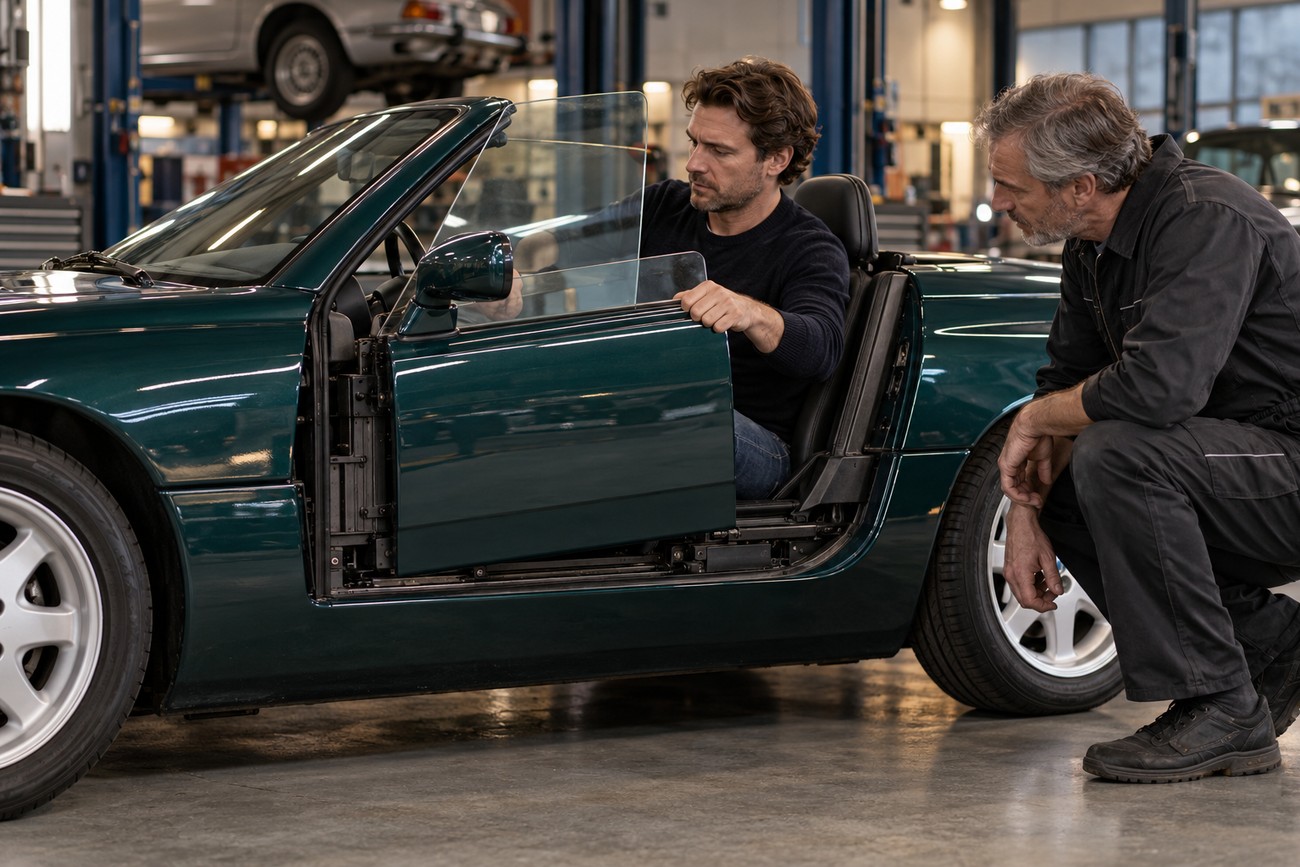
Begin with repeated operation of both doors and windows from the normal controls. Run several complete cycles and watch for hesitation, uneven travel, belt noise, motor strain, delayed synchronization, or a door that stops short of its proper position. Test the manual freewheel operation as well, because powered movement alone does not confirm that the fallback system is usable.
Examine the high sills closely, including their outer surfaces, seams, mounting areas, and accessible structure. Look for corrosion, impact damage, disturbed fasteners, mismatched finishes, or evidence that the mechanism has been removed and refitted. A tidy exterior can coexist with poorly executed work beneath the panels, so inspection access and repair documentation matter.
Check the plastic panels for consistent fit, cracks, distortion, incorrect hardware, and color differences. Panel replacement or repair may require rare parts and specialist knowledge, while a misaligned panel can be a symptom of deeper work around the sill. Documentation should account for body repairs, door-system maintenance, electrical work, and any restoration rather than listing only routine servicing.
Finally, sit in the car and enter and exit several times. The high sills and narrow access are central ergonomic characteristics, not details to assess from photographs. Budget for model-specific specialists and rare parts before buying; emotional appeal is a poor substitute for a technical inspection by someone familiar with the Z1.
BMW Z1 Myths That Need a Technical Correction
The first correction concerns the doors themselves. They do not fold into the sills. They descend vertically into them, with the windows moving separately and synchronously, so the mechanism is closer to a powered vertical lift than to a folding or scissor-door design.
The second myth treats the system as pure marketing theater. Its visual impact became the car’s cultural signature, but the engineering is linked to high sills, structural rigidity, and packaging in a roofless two-seat body. Styling made the solution famous; structural and practical requirements helped shape it.
The third correction is electrical. The doors are electrically driven in normal use, yet BMW included a motor freewheel function that permits manual operation when necessary. That mode demands noticeable physical effort, so it is a fallback capability rather than evidence of a simple mechanical system.
The Z1 is also more than an ordinary convertible wearing unusual panels. Its load-bearing sheet-metal structure, plastic outer body panels, high sills, and concealed door hardware create a distinct engineering and service profile. BMW emphasized that driving with the doors lowered was possible, although the legality of doing so may depend on local regulations.
BMW Z1 Specifications That Put the Door Trick in Context
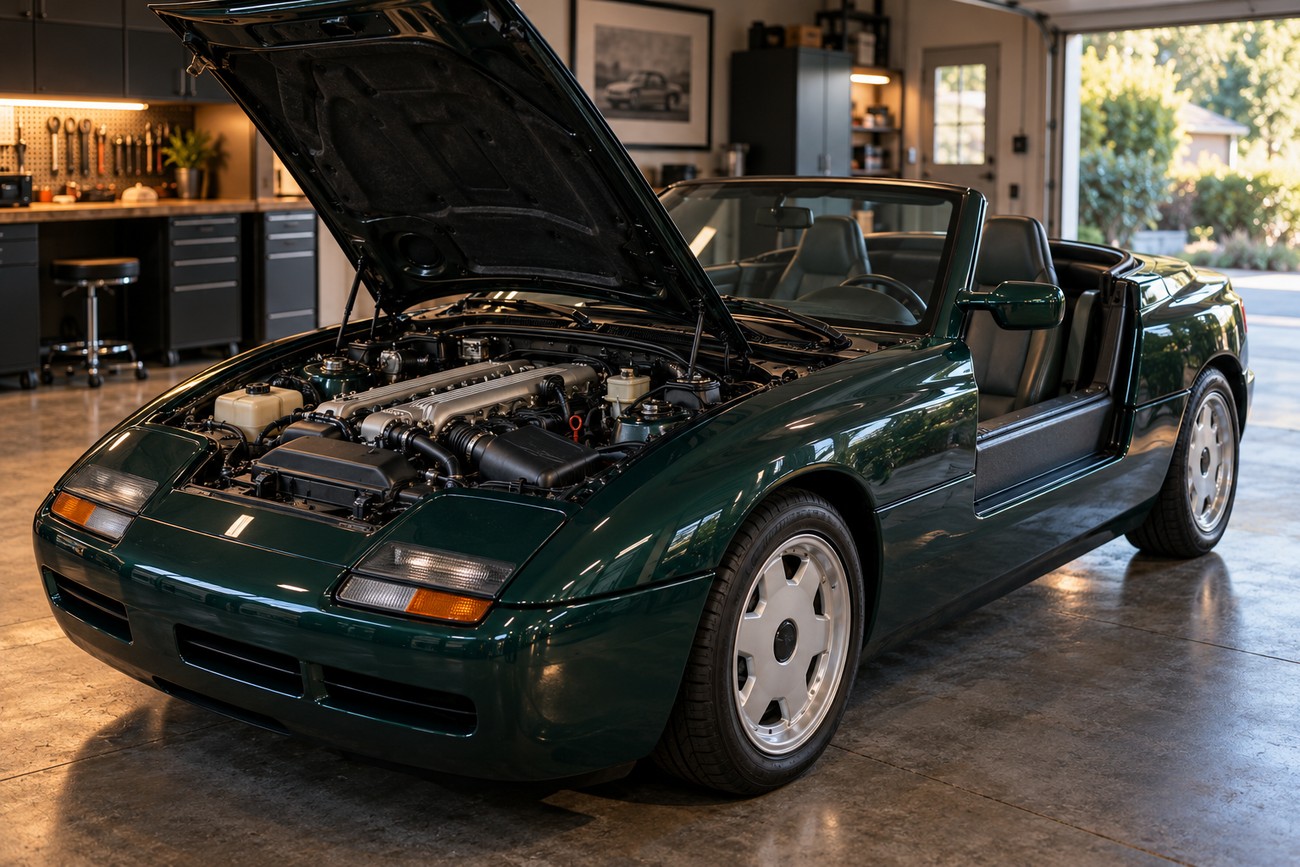
The Z1 is compact by modern standards, measuring 3921 mm long, 1690 mm wide, and 1277 mm high, with a 2400 mm wheelbase. Those dimensions help explain why the car feels concentrated around its occupants and lower body structure. The door system is integrated into a small roadster package rather than added to a large, generously accessible cabin.
Power comes from a 2494 cm³ inline-six. Sources report 168–170 hp, a difference attributed to source or measurement conventions, while torque is commonly stated as 222 N·m. The commonly reported configuration uses a five-speed manual transmission and rear-wheel drive.
Commonly reported performance is 0–100 km/h in 7.9 seconds. That figure places the emphasis on a responsive classic roadster rather than outright modern acceleration, while the inline-six and rear-wheel-drive layout provide the mechanical context behind the car’s driving character.
A 120 mm ground-clearance figure and 260-liter luggage figure appear in user catalogs, but they are not confirmed by the cited official BMW material. Treat those values as catalog-only references rather than definitive factory specifications, especially when comparing cars or planning repairs and transport.
Frequently asked questions
The BMW Z1’s unusual doors create simple search questions with complicated ownership answers. The key distinctions are the direction of door movement, the condition of the hardware, and the specialist knowledge required to evaluate a surviving car. Value and access also depend on details that photographs alone cannot establish.
What BMW has doors that go down?
The BMW Z1 is the BMW model generally meant by this description. Its doors descend vertically into the side sills, while the windows descend separately and synchronously. This differs from conventional sliding doors and from scissor doors, which rotate upward around a hinge.
The Z1’s design is tied to its high-sill, roofless body structure, so the doors are part of the car’s engineering identity rather than a styling feature shared across the BMW range.
How much is a BMW Z1 worth?
There is no single fixed value for every BMW Z1. Originality, functioning door hardware, plastic-panel condition, documentation, and the need for specialist restoration can influence value more decisively than mileage alone.
A low-mileage car with defective motors, belt problems, damaged sills, or undocumented body repairs may require substantial work. A buyer should assess the complete mechanical and structural condition before relying on mileage or appearance as a valuation guide.
What happens if the BMW Z1’s door electrics fail?
The motors include a freewheel function that allows manual operation when necessary. Manual movement requires noticeable physical effort, so a failed electrical system does not automatically make the doors unusable, but it can make access slow and difficult.
Manual operation should be tested before purchase, alongside repeated powered cycles. Resistance, uneven movement, or unusual belt and motor noises can indicate a wider mechanism problem requiring specialist attention.







