
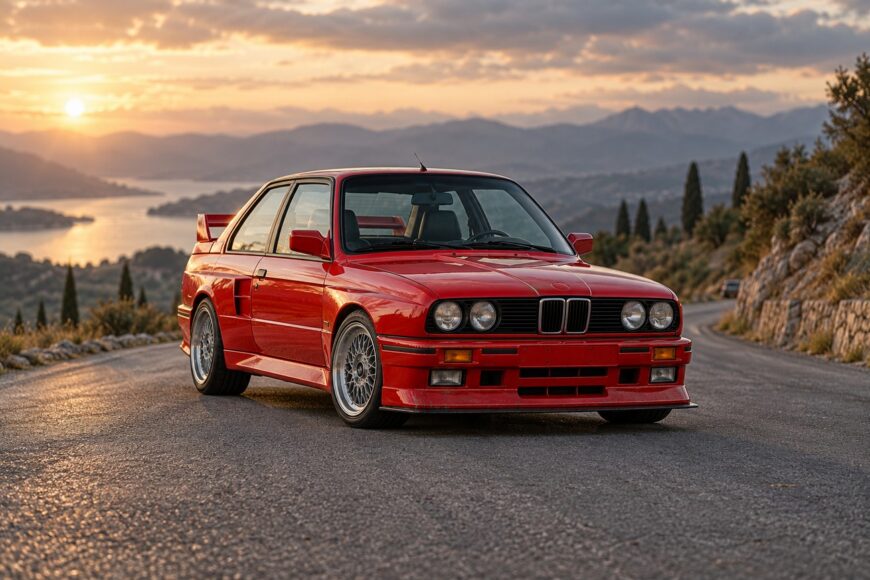
The BMW E30 M3 Sport Evolution is the rarest and most technically serious road-going E30 M3. It is also a car whose collector value can turn an imperfect repair, a missing original component, or an overheated S14 engine into a major liability. Its appeal lies in the same focused engineering that makes it costly to preserve.
Known as the EVO3 or Sport Evo, it deserves to be judged as both a driving machine and an expensive preservation project. A sound example rewards careful use; a visually convincing one with a compromised shell or undocumented engine can be difficult to own, however well it drives on a short test.
- What Makes the Sport Evolution the Ultimate E30 M3?
- The S14B25 EVO and the Hardware Behind the Numbers
- Aero, Weight and the Track-First Driving Experience
- Buying an Original: Authentication Before Emotion
- Ownership Reality: Heat, Parts and City Compromises
- Original, Replica or Track Tool? Value, Myths and Sensible Use
- Frequently asked questions
- How many E30 M3 Sport Evos were made?
- How much is a BMW M3 E30 worth?
- What is the rarest E30 M3?
- Why do some sources list 235 hp while others list 238 hp?
What Makes the Sport Evolution the Ultimate E30 M3?
The Sport Evolution sits above the regular E30 M3 and earlier special editions as the final, most focused road-going specification. Approximately 600 examples were produced. That limited run matters to collectors, but scarcity alone does not make an individual car good: identity, condition, and the survival of its original equipment determine what is actually being bought.
At its center is the S14B25 EVO, a 2467 cm³ four-cylinder engine with more displacement and a distinct internal specification. BMW combined it with lighter components and adjustable aerodynamic parts to serve a homologation-focused purpose. Calling the EVO3 a standard M3 with an exterior kit and software change overlooks the mechanical changes that give it its character.
Thin glass, lighter bumpers and seats, a smaller washer-fluid tank, and revised sound insulation all contribute to the weight-saving package. The front spoiler and rear wing can be set in road or track positions. Together, those details sharpen the car’s response and high-speed behavior while making faithful restoration harder if specialist parts have disappeared.
The “ultimate” label therefore has a practical limit. A sound regular M3 can be more enjoyable than a neglected Sport Evolution, especially if the latter needs structural or engine work. The EVO3’s special status is strongest when its specification remains intact and its condition supports the promise of the badge.
The S14B25 EVO and the Hardware Behind the Numbers
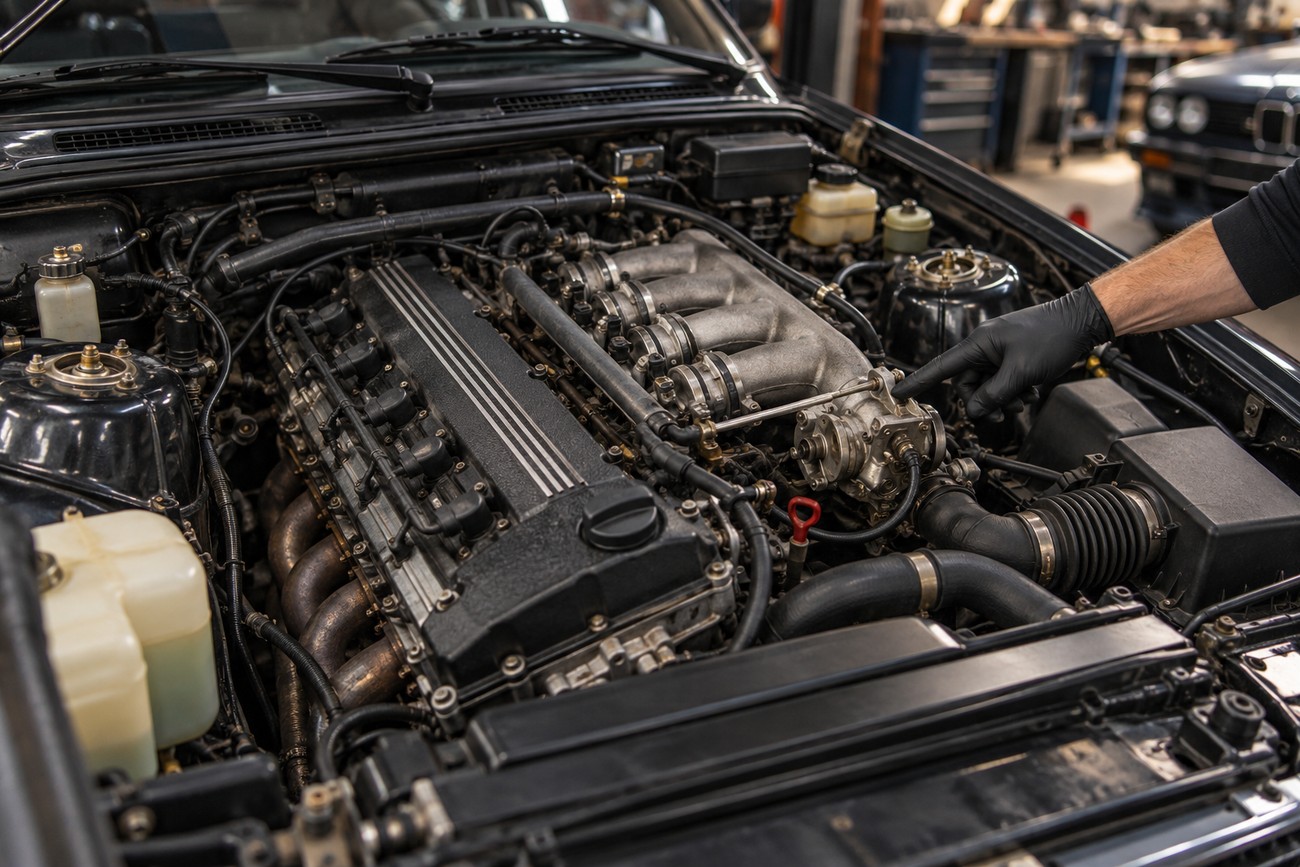
The S14B25 EVO has 2467 cm³ across four cylinders and is commonly specified at 175 kW, approximately 238 hp at 7000 rpm, with 240 Nm at 4750 rpm. Some references list 235 hp; 175 kW and approximately 238 hp is the preferred road-car specification. That discrepancy is worth recognizing when checking documents, rather than treating a different printed figure as proof of a different engine.
Factory and specialist figures put top speed at approximately 248–250 km/h and 0–100 km/h acceleration at approximately 6.4–6.5 seconds. More revealing than either figure is where the engine works: it asks for revs and deliberate gear selection. An EVO3 driven gently through traffic will reveal much less of its purpose than one kept in its effective operating range on an open road.
A five-speed Getrag 265 manual sends power to the rear wheels through a mechanical limited-slip differential. First gear sits down and to the left in the dogleg shift pattern, leaving the frequently used higher gears arranged for purposeful driving. It is a satisfying setup when the linkage and driveline are healthy, although wear or poor adjustment should never be dismissed as period character.
The limited-slip differential helps the driver use the engine’s output when accelerating out of a bend, while the manual gearbox keeps the experience direct. Neither compensates for unsuitable tires, tired suspension, or a poorly maintained engine. Performance figures describe a sound, correctly specified car; they are no substitute for assessing the example in front of you.
Aero, Weight and the Track-First Driving Experience
The Sport Evolution’s lighter glass, bumpers, and seats reduce weight where a driver can feel the benefit in the car’s responses. Its smaller washer-fluid tank and revised sound insulation show how thoroughly BMW pursued that aim. The result also admits more of the mechanical and road noise that a less specialized car would suppress.
Its adjustable front spoiler and rear wing have factory positions for road and track use. More aggressive settings add high-speed downforce, with potential costs in fuel economy and comfort. They should be chosen for the speed, surface, and purpose of the drive; the most assertive position is not a universal shortcut to a quicker lap.
Weight reduction also changes the ownership equation. Thin glass and EVO-specific exterior pieces may be difficult to replace correctly after damage, so even a modest incident can become a search for scarce parts. That risk matters on a track day, where a driver might otherwise treat a curb strike or minor contact as routine.
Modern track performance still depends heavily on professional suspension setup and alignment. Factory settings are a starting point, not a guarantee that decades-old components or present-day tires will work at their best. Sound brakes, suitable tires, and a measured setup do more for usable pace than selecting a wing position in isolation.
Buying an Original: Authentication Before Emotion
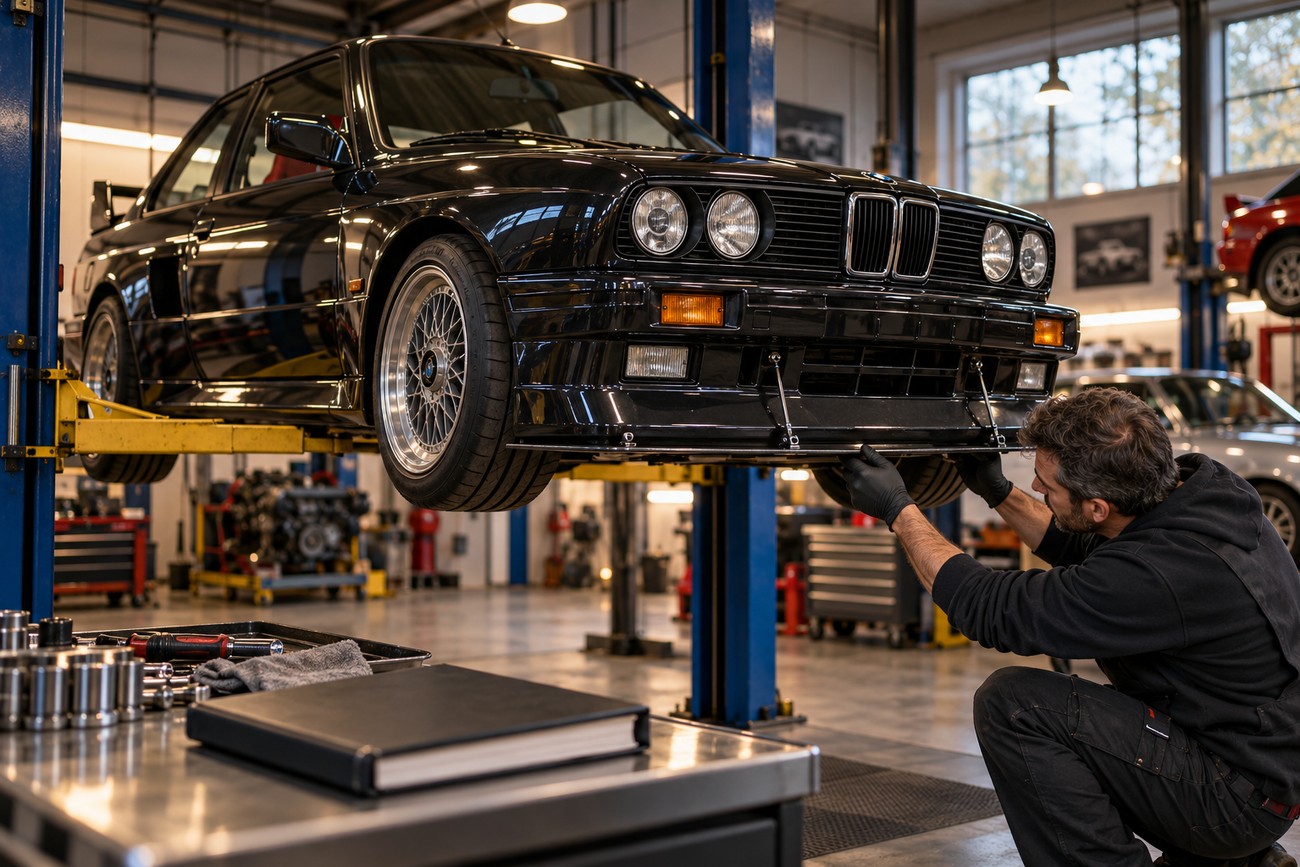
A standard E30 M3 can be modified to resemble an EVO3, so visual similarity cannot establish identity. Check the VIN against credible production and specification records, then reconcile the car’s documented history with what is physically fitted. That work belongs before valuation: a convincing replica and a genuine Sport Evolution with missing parts present different risks.
Trace the Getrag 265, differential, ECU, EVO-specific body parts, and identifiable component numbers wherever records and access permit. Receipts for replacement or restoration work should explain changes rather than merely show that money was spent. Original components kept with the car can be valuable evidence, even when a reversible substitute is currently installed.
Prioritize the shell, traceable EVO-specific parts, and evidence of how the engine behaves from cold to operating temperature before judging paint or wheels. Cosmetic presentation is easier to change than structural repairs or an incomplete identity trail.
Inspect corrosion and repairs around the strut towers, chassis rails, suspension mounting areas, and other stressed parts of the shell. Look for uneven seams, inconsistent finishes, and repairs that do not match the history. A clean exterior cannot rule out concealed damage from earlier road use or repeated track seasons.
Some surviving cars have undergone multiple engine rebuilds or extended track use, neither of which is automatically disqualifying if the work is documented and sound. Poorly explained modifications are a different matter. Establish who did the work, which original parts remain, and whether the car can be returned to its proper specification without rebuilding the project from scratch.
Ownership Reality: Heat, Parts and City Compromises
The S14 rewards attentive maintenance and punishes assumptions about its health. Overheating, unsuitable or neglected oil, and unreliable cooling components can contribute to damaged cylinder heads, worn bearings, and stretched timing chains. Before purchase, arrange compression testing and an endoscopic inspection, then compare those findings with service records and the engine’s behavior during a proper inspection.
Replacement parts need scrutiny as well as the original equipment. Cheap sensors, pumps, or cooling-system components may create temperature or fueling problems that cost far more than the initial saving. Oil choice should reflect the engine’s condition, season, and actual road or track use rather than a generic recommendation.
Modern use calls for at least 98-octane petrol. Keeping the fuel and cooling systems correct is part of protecting an expensive engine, particularly in slow traffic where heat management is less forgiving. A short, cool-running test drive offers limited reassurance if problems emerge only after the car is thoroughly warm.
Original EVO spoilers, wings, bumpers, flares, and glass can be difficult and expensive to replace. Mechanical parts are costly too, and an apparently minor repair may be delayed by the search for the correct component. Insurance and tax can add another burden, while local noise or emissions rules may restrict how an original configuration can be used.
Daily driving compounds those costs with practical irritation. Firm suspension, low clearance, and the dogleg gearbox make congested streets tiring, while parking exposes rare bodywork to casual damage. The Sport Evolution can be driven regularly, but treating it as an ordinary commuter invites expense and frustration.
Original, Replica or Track Tool? Value, Myths and Sensible Use
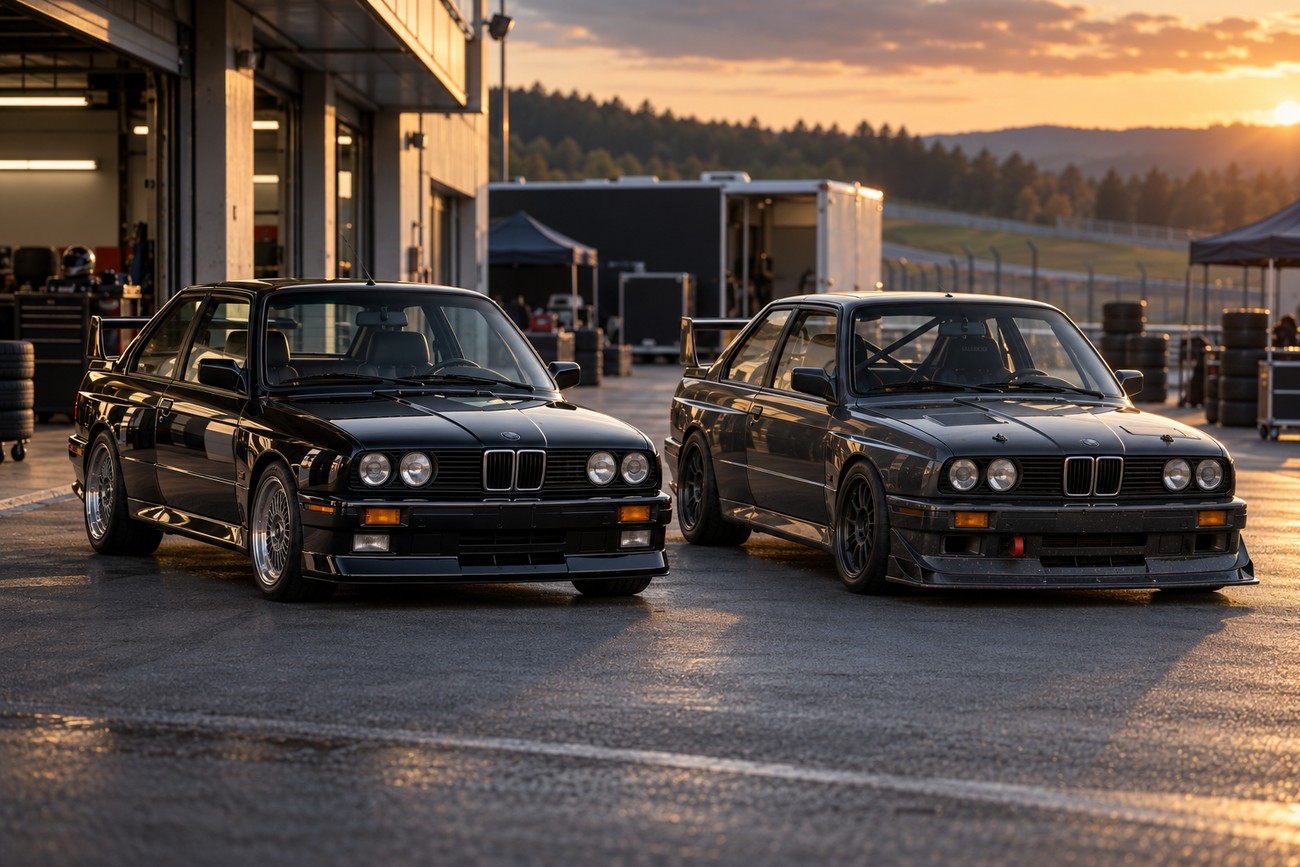
The EVO3 is more than a body kit: its larger-displacement, differently specified engine works with weight reduction and functional aerodynamics. A well-restored regular E30 M3 can be an excellent driver’s car without matching that complete specification. Track results depend on condition, setup, and driver as well as the model name, so neither car earns an automatic advantage in every situation.
A correct-looking replica is rarely a cheap route to the same experience once the appropriate engine and scarce body components are considered. It also cannot acquire the collector premium of genuine identity through parts alone. If driving matters more than provenance, an honest, properly prepared regular M3 may be the clearer purchase.
For an original Sport Evolution, paint, wheels, interior, exhaust, and bodywork all affect collector appeal when they depart from the documented specification. Quality restoration can preserve value, but its records should explain precisely what was repaired and replaced. Reversible changes, with original parts retained, give a future owner more choices than irreversible alterations.
The strongest role for a sound EVO3 is as a collector-grade road car used with intent, with selective track days if its condition and preparation justify them. Regular circuit use increases exposure to heat, wear, and scarce-parts damage; daily commuting offers little chance to enjoy what makes the car special. Preservation and driving need not conflict, provided the owner budgets for both.
Frequently asked questions
Production totals, power figures, and asking prices are often compressed into simple claims. The answers below are most useful when read alongside a particular car’s documents and inspection results.
How many E30 M3 Sport Evos were made?
Approximately 600 Sport Evolution examples were produced. Public references do not always present the total with identical wording or counting conventions, so “approximately” is more careful than claiming a universally agreed, perfectly precise public figure. A listing’s production-count claim does not authenticate the car; its VIN and supporting records must do that.
How much is a BMW M3 E30 worth?
There is no useful universal figure for an E30 M3, especially when a seller claims Sport Evolution status. Establish genuine EVO3 identity first, then assess shell condition, mechanical originality, documentation, and the quality of any restoration. Reversible modifications with retained original parts are easier to evaluate than missing components or unexplained structural repairs.
What is the rarest E30 M3?
The Sport Evolution is generally regarded as the rarest road-going E30 M3 special series, with approximately 600 examples produced. Rarity describes the variant, not the condition of a particular car. Provenance, originality, and repair quality still separate a desirable survivor from a rare example carrying substantial liabilities.
Why do some sources list 235 hp while others list 238 hp?
Both figures appear in references, but BMW M and specialist material commonly gives the road-car specification as 175 kW, approximately 238 hp at 7000 rpm. The recurring 235 hp figure should be treated as a conflicting published specification, not silently substituted for 175 kW. For an individual car, documentation and mechanical checks matter more than the power figure repeated in an advertisement.







