
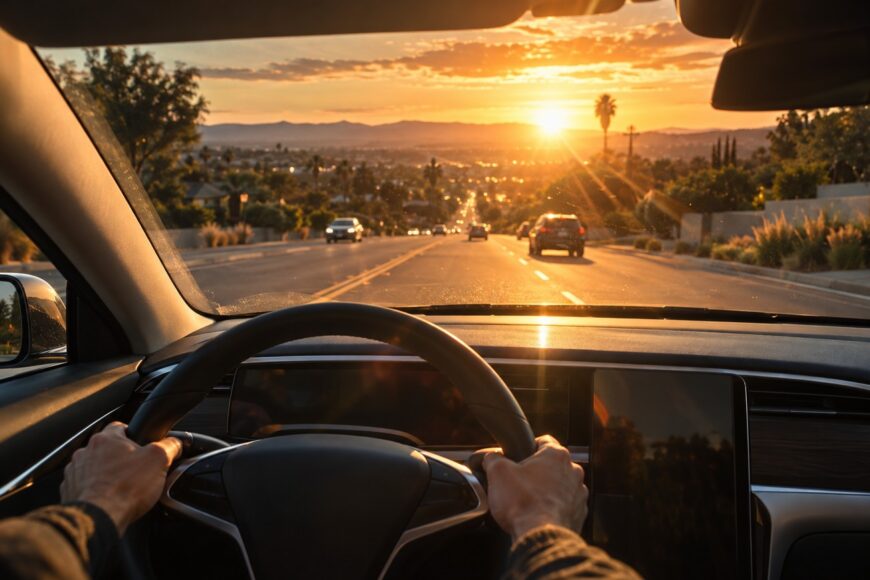
Low sun can make the road, center display, and forward view in a Tesla Model S appear washed out, especially around sunrise and sunset. The effect becomes more severe when the road is wet, pale, snowy, or dusty because reflected or scattered light reduces contrast just as the sun enters the driver’s line of sight.
The Model S’s large glass area and panoramic roof improve natural light and outward visibility in some conditions. They also expose the cabin to more direct sunlight, heat, reflections, and eye strain. Glare therefore needs practical diagnosis: check the glass, seating position, shading, visibility, and lighting conditions before buying film or aftermarket parts.
- Why Sun Glare Can Feel More Intense in a Tesla Model S
- What Glare Does to the Driver, Cameras, and FSD
- A Safe Order of Operations for Reducing Model S Sun Glare
- Inspect the Headlights and Optical Condition Before Upgrading Them
- Sun Glare Fixes: What Helps, What Does Not
- Common Mistakes and the Hidden Trade-Offs
- Frequently asked questions
- What are the most common problems with a Tesla Model S besides sun glare?
- Why are people getting rid of Teslas if glare can be managed?
- What are the most common problems with Tesla Model S?
- How can you reduce sun glare in a car?
- Why are people getting rid of Teslas?
Why Sun Glare Can Feel More Intense in a Tesla Model S
The Model S has a broad windshield, large side windows, and, on equipped vehicles, a panoramic roof. That glass area helps the cabin feel open and gives the driver a wide view, yet it also allows more sunlight into the cabin. Direct light can reflect from the dashboard, screens, trim, and dust on the glass, adding several smaller sources of visual distraction to the main glare.
Low sun is especially difficult because it enters at a shallow angle. A sun visor may block part of the upper windshield while leaving the brightest area directly ahead of the driver. The same angle can make a road, lane marking, or vehicle appear as a low-contrast shape against a bright background. Midday sunlight is often brighter overall, but its higher angle usually produces less direct forward washout.
Body height is reported at about 1435 mm, and adjustable ground clearance reaches up to 170 mm in some references. Those dimensions affect seating and viewing angle, particularly if the driver changes the seat position or ride height, but neither directly removes sun glare. A higher position can change where the sun meets the windshield; it does not restore contrast when the source remains in the optical path.
Some owners associate the problem with windshield geometry or their seating position. That is a reported personal experience rather than a well-measured universal defect. Two drivers in the same Model S can see different glare patterns because of seat height, eye level, visor position, driving direction, and the condition of the glass.
What Glare Does to the Driver, Cameras, and FSD
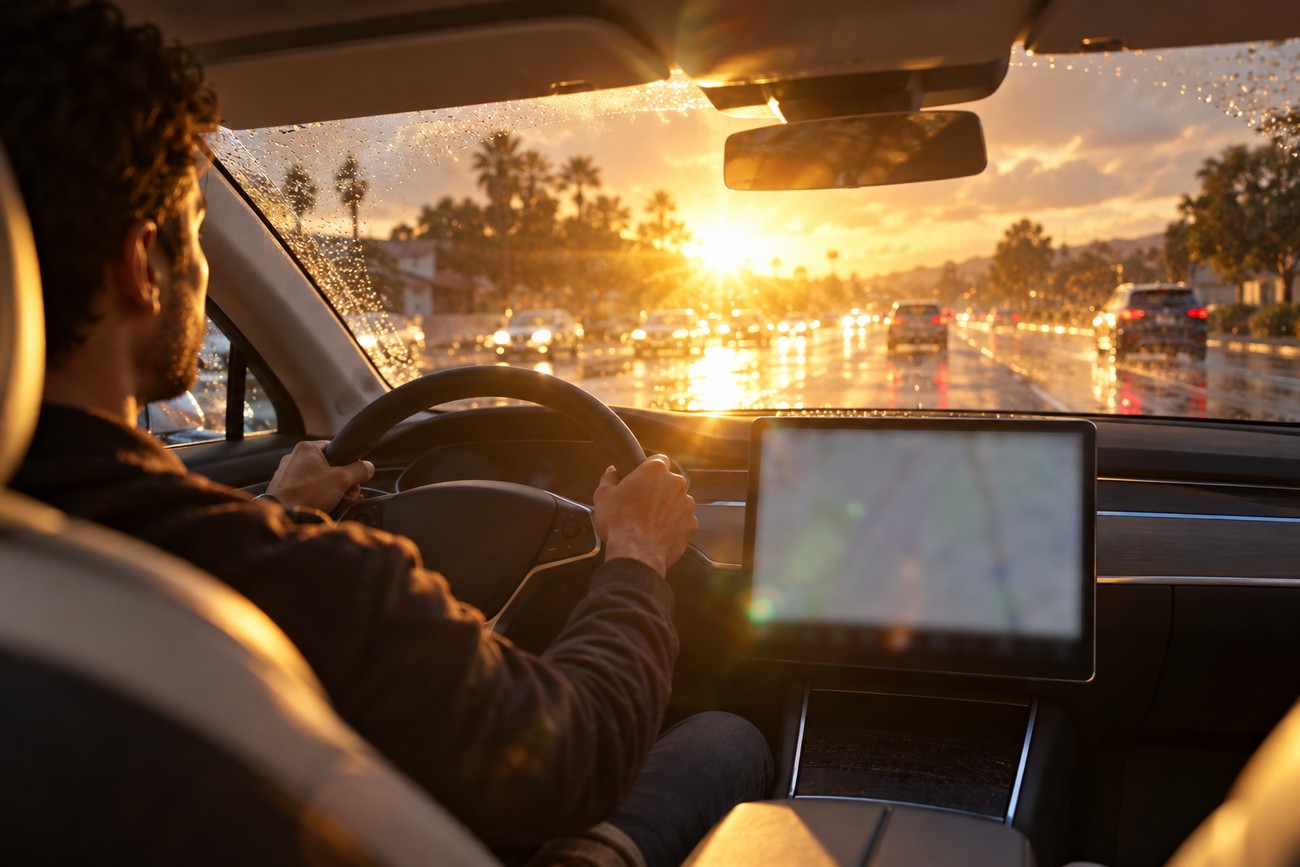
Human vision can adapt to bright surroundings, but adaptation takes time and reduces the detail visible in darker parts of the scene. A clean road may appear to lose lane markings, vehicles may blend into the background, and the center display may become difficult to read. Wet asphalt, white roads, snow, fog, and airborne dust intensify the effect by reflecting or scattering light.
A camera faces a related but different problem. Tesla’s camera-and-AI vision approach can lose useful image detail when direct sunlight overwhelms camera exposure, especially in a high-contrast scene. Bright areas may clip into featureless white, leaving less information for software to distinguish a lane marking, obstacle, or road edge. This is a perception limitation, not proof that every system will fail in every glare event.
NHTSA proceedings concerning Tesla FSD included at least 4 crashes involving conditions such as sun glare, fog, or airborne dust and covered about 2.4 million Tesla vehicles from model years 2016–2024. The investigation context is relevant because it shows why changing visibility conditions deserve attention, though it does not establish that glare caused every event or that every Model S has the same behavior.
Tesla states that FSD and Autopilot are not autonomous driving systems; the driver must remain attentive and ready to intervene. If the road ahead is washed out, the correct response is to reduce speed, increase following distance, and take full control as needed. Driver assistance cannot reliably compensate for a view that the driver or cameras cannot interpret.
A Safe Order of Operations for Reducing Model S Sun Glare
Start with the simplest inspection. Clean both sides of the windshield, including the area in front of the driver and the camera housing, where applicable. Remove oily film, dust, dried washer fluid, and wiper residue, then inspect for fine scratches, chips, haze, or areas that produce halos around headlights and the sun.
Adjust the seat so your eyes sit in a stable position with a clear view below the visor line. Use the sun visor and any available extension without blocking essential forward vision. Where fitted, close the panoramic-roof shade to reduce overhead light and heat; that shade does not remove glare entering through the windshield.
Glare control and heat control overlap, but they are separate tasks. Tint or thermal film may reduce heat and perceived brightness, while overly dark or poorly chosen film can reduce dusk and nighttime visibility. Check local rules, visible-light transmission, windshield restrictions, and the actual view from the driver’s seat before installation.
If direct sunlight leaves the forward view uncertain, slow down and stop relying on driver assistance. A clean windshield cannot eliminate glare when the sun is aligned with the driver’s optical axis. Sunglasses can reduce discomfort for some drivers, but they should preserve clear color and contrast and should never be treated as a substitute for adequate visibility.
Inspect the Headlights and Optical Condition Before Upgrading Them
Sun glare and headlight performance are separate problems, although one often becomes noticeable after the other. Owner and service discussions commonly mention cloudy or fogging Model S headlamp optics, degraded lighting, sealing problems, and lens or module replacement needs, particularly on older vehicles. Moisture, lens haze, and degraded reflectors can reduce useful road illumination even when the lamp still turns on normally.
Replacing a bulb or installing a brighter lamp may leave the underlying optical problem untouched. A damaged lens, weak reflector, poor seal, or incorrect module can scatter light instead of placing it on the road. That scattered light can make the driver feel that the lamp is brighter while reducing useful distance and increasing discomfort for approaching traffic.
A brighter lamp with a damaged or misaligned optic can worsen real-world visibility. After any lens, module, sealant, or aftermarket-light intervention, check the beam pattern and cutoff rather than judging the result from appearance alone.
One aftermarket source claims 16000 lumens and an American-LHD light cutoff. Those figures are marketing material without independent verification. They do not establish road performance, durability, compatibility, or acceptable glare for other drivers.
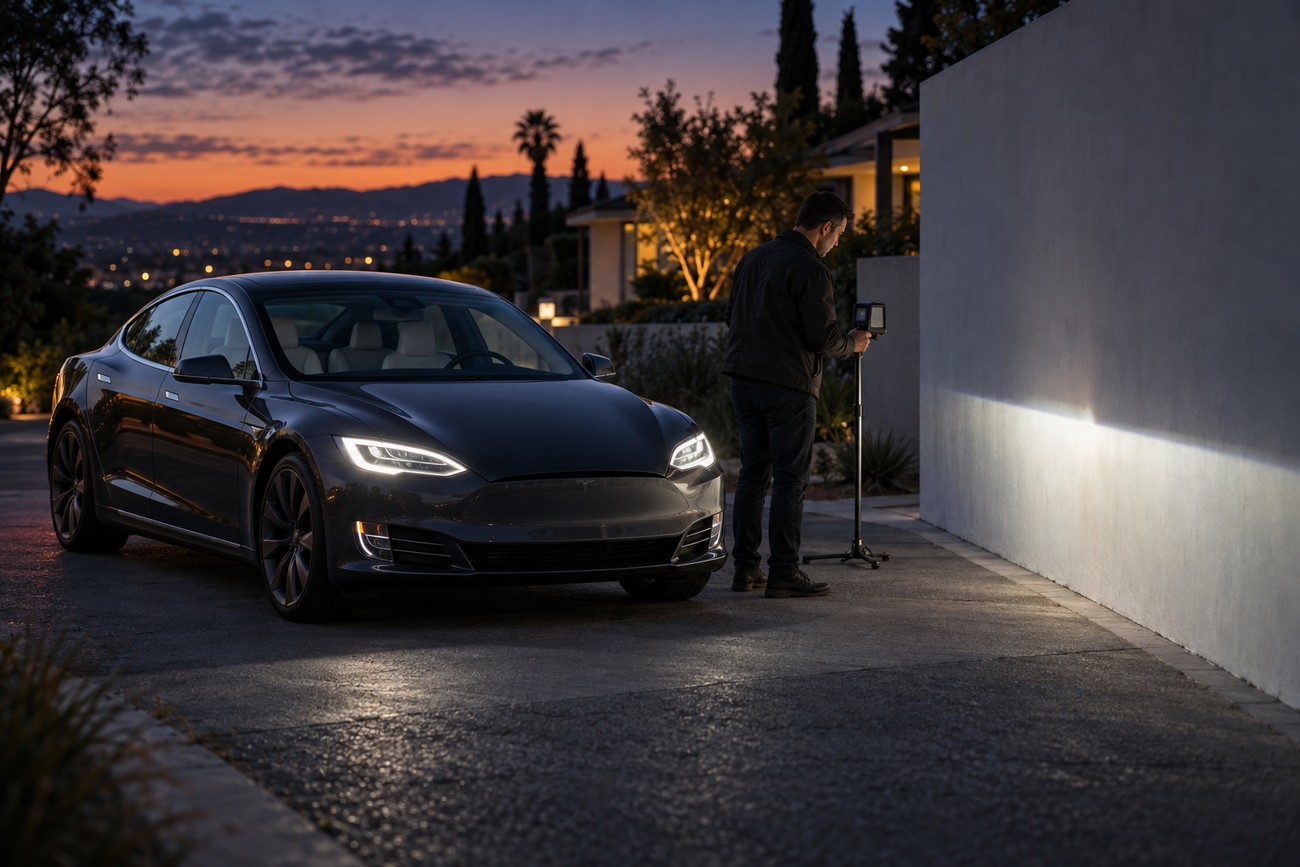
Any lighting repair should include a check of lens clarity, condensation, sealing, aim, and the actual cutoff on a suitable surface or approved measuring equipment. The goal is a controlled beam with useful illumination where the road needs it. Daytime sun glare will remain unchanged, regardless of the advertised headlight output.
Sun Glare Fixes: What Helps, What Does Not
Each intervention addresses a different part of the problem. Use the verification step to confirm that a change improves visibility in real sunrise, sunset, dusk, and nighttime conditions.
| Symptom or intervention | What it can improve | Key limitation | Safer verification step |
|---|---|---|---|
| Windshield cleaning and inspection | Reduces halos, internal reflections, and scattered light caused by film, dirt, or residue; inspection identifies scratches and haze. | Cannot stop direct sunlight aligned with the driver’s view. | Inspect from the driving position in low sun and at night; check for chips, scratches, and uneven haze. |
| Sun visor and panoramic-roof shade | Reduces overhead light, heat, and some reflections inside the cabin. | Roof shading does not block glare entering through the windshield. | Use the shade and visor without restricting forward visibility, then reassess the road and display. |
| Tint or thermal film | May reduce cabin heat and perceived brightness. | Dark or poorly selected film can reduce dusk and nighttime visibility and may violate local rules. | Confirm legal transmission requirements and assess the view in shade, at dusk, and at night before committing. |
| Sunglasses | Can reduce eye discomfort and brightness during a low-sun drive. | Some lenses alter color or reduce contrast, and they cannot restore missing road detail. | Use lenses that preserve clear contrast and remove them if they make signs, markings, or displays harder to read. |
| Headlight restoration | Can recover useful nighttime light when haze, moisture, sealing, or optical degradation is the cause. | It does not cure direct sunlight and may be temporary if the seal remains defective. | Check lens clarity, moisture, beam aim, cutoff, and road illumination after repair. |
| Brighter aftermarket lamps | May improve road illumination if the complete optical system is compatible and correctly aimed. | Advertised lumen figures do not prove beam quality; poor optics can increase glare for oncoming traffic. | Verify cutoff, aim, compatibility, durability, and measured road coverage rather than relying on advertising images. |
| FSD or Autopilot reliance | May assist with driving in suitable conditions when the system can interpret the scene. | It cannot be used as a solution for a blinded driver or camera and remains driver-supervised. | Take control, reduce speed, or stop when glare compromises forward visibility. |
Common Mistakes and the Hidden Trade-Offs
A darker windshield is not automatically a safer windshield. It can reduce perceived brightness while making sunset, dusk, and nighttime scenes harder to read. Excessively dark film may also be unlawful, and a film that looks acceptable in a bright parking area can become a serious limitation on an unlit road.
Brighter headlights do not solve sunlight entering the driver’s or camera’s view. Lighting changes should be judged by cutoff, aim, road illumination, glare to other drivers, compatibility, and durability. Lumen claims and advertising photographs rarely show how the beam behaves on an actual road.
The panoramic roof is a comfort and visibility feature with a clear trade-off in bright conditions. It increases natural light and can improve the sense of openness, while also adding thermal load and eye strain. Closing the shade is a sensible first step during a bright drive, though it cannot address forward windshield glare.
Older Model S vehicles can make the repair decision more complicated. Restoring cloudy optics, correcting sealing, and checking the complete lamp assembly may be more sensible than buying a poorly documented upgrade. A new bulb cannot compensate for a damaged reflector, a misaligned lens, or moisture inside the housing.
Frequently asked questions
What are the most common problems with a Tesla Model S besides sun glare?
For visibility, owner and service discussions commonly mention cloudy headlamp lenses, condensation, degraded reflectors, sealing problems, and the need for lens or module replacement, particularly on older Model S vehicles. These are maintenance or age-related complaints, not proof of a universal defect in every car.
Separating the symptoms helps. A problem that appears only when the sun is low may involve glare and contrast; weak nighttime illumination or persistent halos may point to the optical condition of the headlights or windshield.
Why are people getting rid of Teslas if glare can be managed?
Ownership decisions can involve charging access, repair costs, software expectations, comfort, resale value, and personal preference. Managing glare addresses one visibility concern and does not explain why every owner keeps or sells a vehicle.
A Model S may suit one driver’s routes and climate while another driver finds the glass area, seating position, service cost, or charging arrangements unsuitable. Those decisions should not be treated as evidence that sun glare alone makes every Model S unsuitable.
What are the most common problems with Tesla Model S?
Commonly discussed concerns vary by model year and vehicle condition. They include aging lighting components, cloudy or fogging optics, sealing problems, repair costs, software expectations, charging access, and general wear. Owner reports are useful for identifying inspection points, but they do not establish that every vehicle has each issue.
For a used car, inspect the windshield, panoramic-roof shade, headlights, seals, charging equipment, and service history. A condition-based inspection is more useful than assuming that a particular symptom applies to all Model S vehicles.
How can you reduce sun glare in a car?
Clean and inspect the windshield, adjust the seat and visor, close the panoramic-roof shade where fitted, and reduce speed when the road loses contrast. Consider tint or thermal film only after checking local legality and confirming that dusk and nighttime visibility remain acceptable.
Low sun can still overwhelm a clean windshield. If you cannot identify lane markings, vehicles, or obstacles reliably, take full control and pause the journey if necessary.
Why are people getting rid of Teslas?
People may sell or replace a Tesla because of charging access, repair or insurance costs, changing software expectations, comfort preferences, resale value, ownership needs, or a move to another vehicle type. The reasons differ by driver and do not demonstrate that one Model S defect is responsible.
Sun glare can be managed in many cases through seating, shading, glass inspection, and cautious driving. A decision to keep the car should also consider the vehicle’s optical condition, local driving environment, and the owner’s ability to use driver assistance within its limits.







