
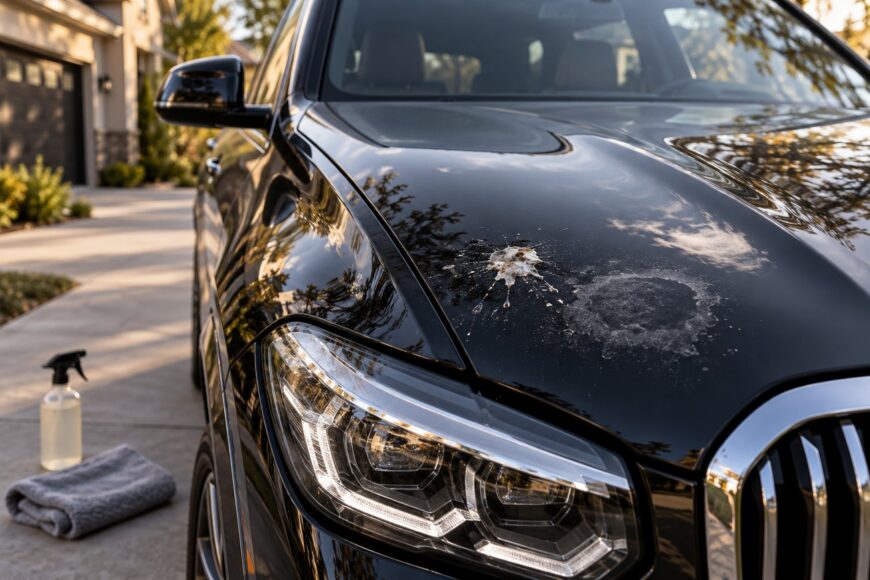
Finding a dull, cloudy mark on a black BMW X5 after washing away bird droppings is frustrating, especially when the panel looked clean moments earlier. The mark may be leftover contamination, micro-scratches from removal, or clear-coat etching. These problems can look similar at first, but they need different treatment.
Heat, direct sunlight, the droppings’ composition, and contact time all affect the result. Bird droppings do not damage every vehicle within minutes, yet a hot, sunlit panel can develop a problem sooner than expected. Begin with a safe assessment and gentle cleaning before reaching for polish, compound, or stronger chemicals.
- Why Bird Droppings Etch Black BMW X5 Paint
- How to Remove Fresh or Dried Bird Poop Without Scratching
- How to Tell Residue, Scratches, and Clear-Coat Etching Apart
- How to Repair Bird-Dropping Etching on BMW Paint
- Mistakes That Turn One Dropping Into a Larger Paint Defect
- Prevention for a Black BMW X5: Protection, Shade, and Fast Cleanup
- Frequently asked questions
- How much does it cost to repair bird-dropping damage on a BMW X5?
- How do you get a bird poop stain off black car paint?
- How do you remove bird poop etching from car paint?
- How do you restore car paint after bird droppings?
- How much does it cost to fix bird poop damage on car paint?
Why Bird Droppings Etch Black BMW X5 Paint
Bird droppings can harm paint through a combination of water, uric acid, salts, and abrasive particles. The risk is not simply “acid in a vacuum.” As the residue dries, moisture leaves the mixture more concentrated, while the solid particles adhere more strongly to the surface.
The clear coat is usually affected before the color layer. If the dropping remains on the vehicle, the contamination can leave a chemically etched area in the clear coat even after the surface has been washed. A deeper mark may therefore remain when the original dirt has disappeared.
Black gloss paint makes the problem easier to see. Haze, dullness, a cloudy spot, and a difference in reflected gloss stand out against a dark, highly reflective panel. A mark that seems minor from several feet away may become obvious when sunlight or garage lighting moves across the X5’s bodywork.
There is no universal instant deadline for damage. Heat, direct sunlight, the droppings’ composition, and prolonged contact accelerate etching, but the process does not always occur within minutes. A shaded vehicle may tolerate the same contamination better than a hot panel parked in full sun, although prompt removal remains the safer choice.
How to Remove Fresh or Dried Bird Poop Without Scratching
Start by moving the X5 into shade and allowing the panel to cool if it is hot. Place a damp, clean microfiber over fresh or dried residue, or apply a suitable detailing spray, so the material can soften before you lift it. The goal is to release the contamination rather than drag it across the clear coat.
Use a clean section of microfiber for each pass and lift the residue with light pressure. Plain water may be enough for fresh contamination, particularly when the dropping has not dried onto the paint. Dried contamination is more concentrated and may require a mild remover or detailer; test any product first on an inconspicuous area.
Rinse or wash the area gently after the residue has been removed, then dry it with a clean, soft towel. Avoid paper towels, clothing, sleeves, or a dry cloth. Dried particles can act as abrasives, so dry wiping may create micro-scratches around the original mark and make the final defect harder to identify.
Water alone often cannot remove dried contamination, and no remover can rebuild clear coat already lost to etching. Strong chemistry and heavy pressure are poor substitutes for softening. Some quick products also reduce existing wax or synthetic protection, so inspect the area afterward and restore protection when appropriate.
How to Tell Residue, Scratches, and Clear-Coat Etching Apart
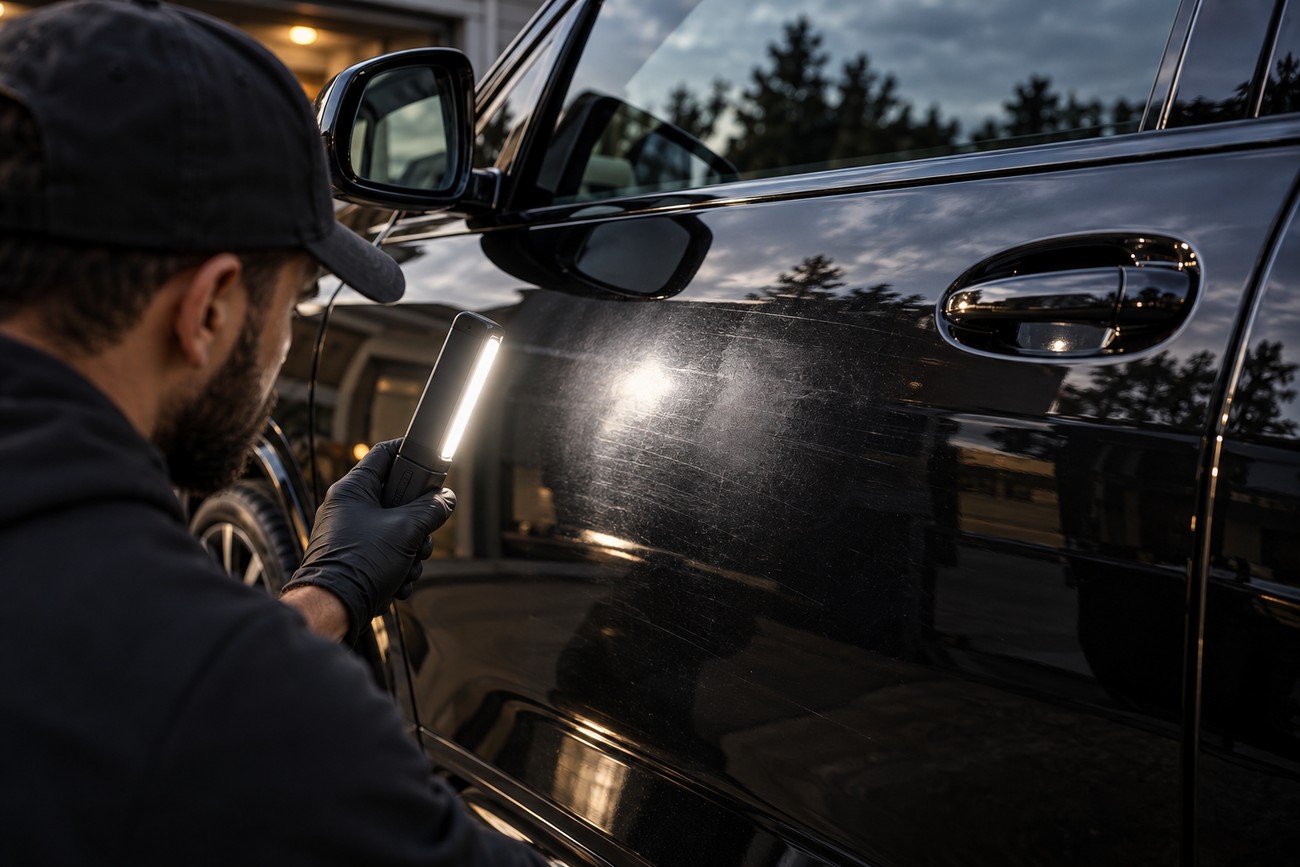
Inspect the panel only after it has been cleaned and fully dried. Look at the mark under different angles of light rather than relying on one view. Raised or textured material suggests remaining contamination, while fine linear marks usually indicate wiping scratches. A cloudy, dull area with no raised material is more consistent with clear-coat etching.
On black paint, the defect may appear only in a reflection. Move around the vehicle, change the light angle, and compare the affected area with the surrounding clear coat. If the mark remains after safe cleaning, it is less likely to be simple dirt. A clean surface can still show haze or a gloss change caused by damage within the clear coat.
Inspection under several light angles prevents a common misdiagnosis: a removal scratch can resemble etching, while clear-coat distortion can look like residue in diffuse light. Correct identification helps avoid polishing a panel before the defect has been properly understood.
The removal attempt itself may have added micro-scratches around the original dropping. Previous polishing history also matters. A thin or previously polished clear coat provides less correction margin, so repeated DIY polishing is not a safe diagnostic shortcut. Removing more clear coat to chase an uncertain mark can create a larger problem.
How to Repair Bird-Dropping Etching on BMW Paint
Use an escalation path rather than starting with the strongest method. Safe cleaning comes first, followed by inspection under controlled lighting. If the mark disappears, further correction is unnecessary. If a superficial clear-coat defect remains, careful machine polishing may reduce or remove the etching.
Machine polishing corrects the clear coat; it does not replace damaged paint. The result depends on how deeply the dropping etched the surface, the condition of the surrounding panel, and the clear coat’s remaining thickness. Superficial etching may respond well, while deeper damage may remain as a localized defect.
Repeated passes or aggressive compounds are particularly risky on a panel that has already been polished. If the mark extends beyond the safely correctable clear coat, a professional may need to consider more invasive refinishing. That decision should follow inspection, not a promise that every stain can be restored completely.
Black paint also makes local correction more demanding. A small polished area may reflect light differently from the rest of the panel, producing a gloss mismatch with neighboring sections. For that reason, the best repair may involve blending the correction across a larger area rather than concentrating all work on the outline of the original dropping.
Mistakes That Turn One Dropping Into a Larger Paint Defect
Leaving the contamination until later is the first avoidable mistake, especially when the X5 is parked in direct sunlight. Heat accelerates drying and chemical activity. Even when no mark is visible from a distance, the panel should be checked after the vehicle cools and the residue is removed.
Dry rubbing with a paper towel, sleeve, or unsuitable cloth can scratch the clear coat. The hard particles in dried residue move across the surface under pressure. Those new lines may surround the original spot, creating a defect that combines chemical etching with mechanical damage.
Strong pressure does not compensate for insufficient softening. If the residue resists, add moisture or use a mild, tested product instead of pressing harder. Aggressive chemicals should also be tested in an inconspicuous area because they may affect the finish or strip wax and synthetic protection.
A product can improve the appearance temporarily while leaving the underlying etching untouched. It may also remove existing protection, changing how the panel sheds water and how easily the next contamination can be cleaned. Gentle inspection after cleaning is more useful than judging the result while the surface is still wet or covered with product.
Prevention for a Black BMW X5: Protection, Shade, and Fast Cleanup
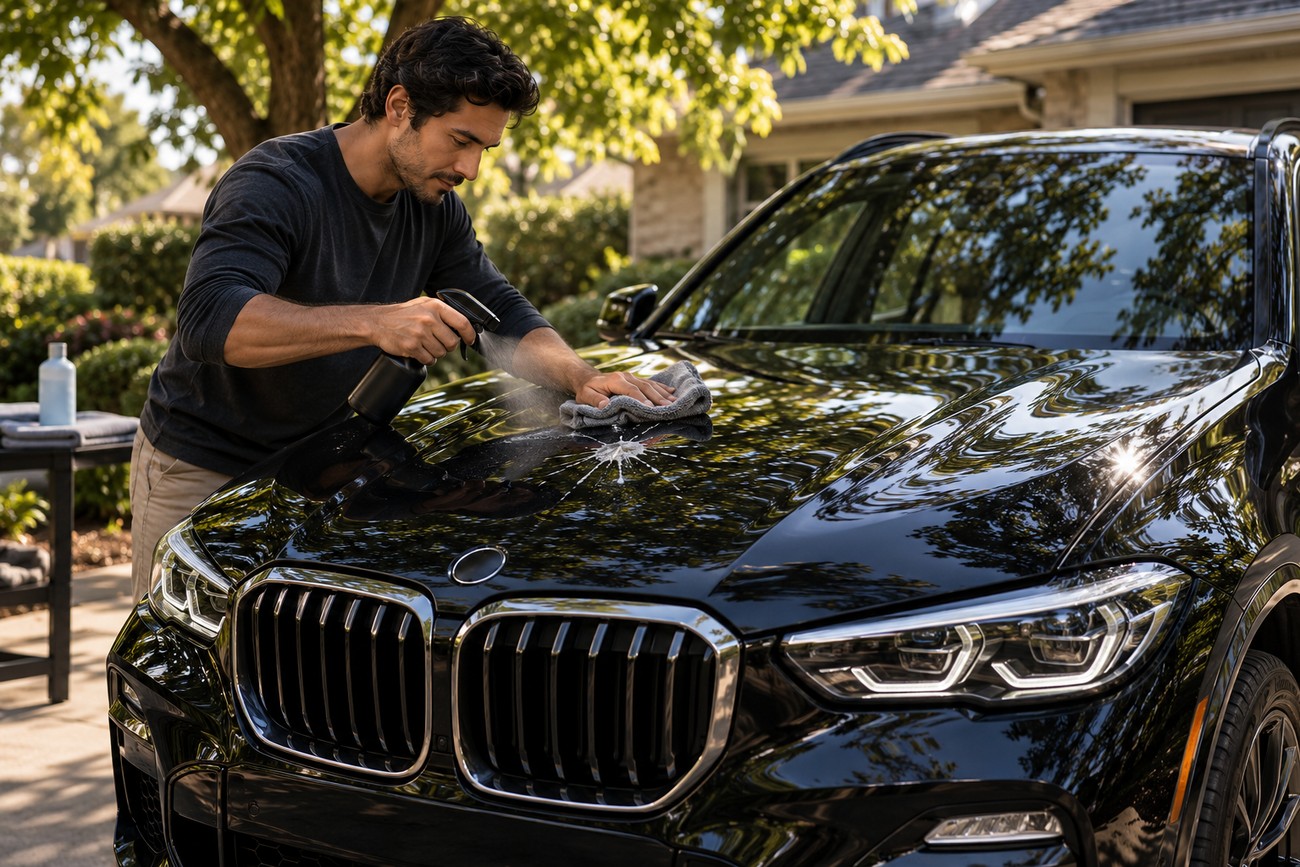
Shade and prompt cleanup are the most practical defenses. Check the X5 after parking beneath trees or in areas where birds gather, and deal with fresh contamination before it dries whenever possible. A quick, gentle response reduces the influence of heat and direct sunlight without requiring aggressive cleaning.
Wax, synthetic sealants, and ceramic coatings can slow exposure and make cleanup easier. They are not an absolute barrier against prolonged chemical contact. A protected panel can still develop etching if contamination remains in heat, so protection should support regular inspection rather than replace it.
Painted plastic elements with comparable coatings can suffer similar damage. Check bumpers, mirror caps, spoilers, and other painted trim rather than limiting inspection to the metal panels. Their shape can also allow residue to sit in a warm, exposed position for longer.
Matte and satin finishes require extra caution. Their appearance is created differently from ordinary gloss paint, and localized correction can change the texture or sheen. Etching on these surfaces is harder to correct, so soften contamination carefully and seek finish-specific advice before polishing.
Frequently asked questions
The right response depends on what remains after safe cleaning: contamination, removal scratches, superficial etching, or deeper clear-coat damage. That distinction determines whether the next step is cleaning, localized polishing, or professional refinishing.
How much does it cost to repair bird-dropping damage on a BMW X5?
There is no single reliable price because contamination removal, localized polishing, and refinishing are different jobs. Removable residue may require only careful cleaning, while clear-coat etching can require machine polishing. Deeper damage may involve refinishing.
Assessment depends on panel size, defect depth, existing clear-coat thickness, prior paint correction, and whether surrounding gloss must be blended. A shop should identify the repair level before quoting rather than treating every bird-dropping mark as the same type of work.
How do you get a bird poop stain off black car paint?
Soften the stain with water or a suitable mild detailing product, then lift it with a clean microfiber and light pressure. Rinse and dry the panel before judging the result. Do not scrape or wipe dried residue across the paint, because abrasive particles can create micro-scratches.
If the stain remains on a clean, dry panel, it may be clear-coat etching rather than leftover bird poop. A clay bar can remove bonded surface contamination, but it cannot rebuild clear coat lost to etching.
How do you remove bird poop etching from car paint?
First remove all contamination safely and inspect the dry panel under several light angles. Persistent superficial etching may require careful machine polishing. Polishing can reduce the defect, but it cannot guarantee complete removal when the damage extends deeply into the clear coat.
Do not repeatedly compound the same area without considering clear-coat thickness. If the vehicle has been polished before, the safe correction margin may be smaller, and professional assessment becomes more important.
How do you restore car paint after bird droppings?
Restoration normally follows three stages: remove the residue, identify any scratches or etching, and correct only the damage that remains. Cleaning may be sufficient for fresh contamination; machine polishing is relevant when superficial clear-coat etching remains.
After correction, restore suitable surface protection and monitor the panel. A localized repair can leave a gloss difference beside untreated paint, while deeper damage may require refinishing rather than additional polishing.
How much does it cost to fix bird poop damage on car paint?
Estimate the job by its repair category instead of by the stain alone. Contamination removal, spot polishing, broader panel correction, and refinishing involve different labor and materials. The relevant factors include correction depth, panel size, prior paint condition, clear-coat thickness, and whether surrounding gloss must be blended.
A visible mark does not automatically mean the entire panel needs repainting, but polishing is not an unlimited solution. A proper inspection can separate a cleanable stain from damage that requires clear-coat correction or refinishing.







