
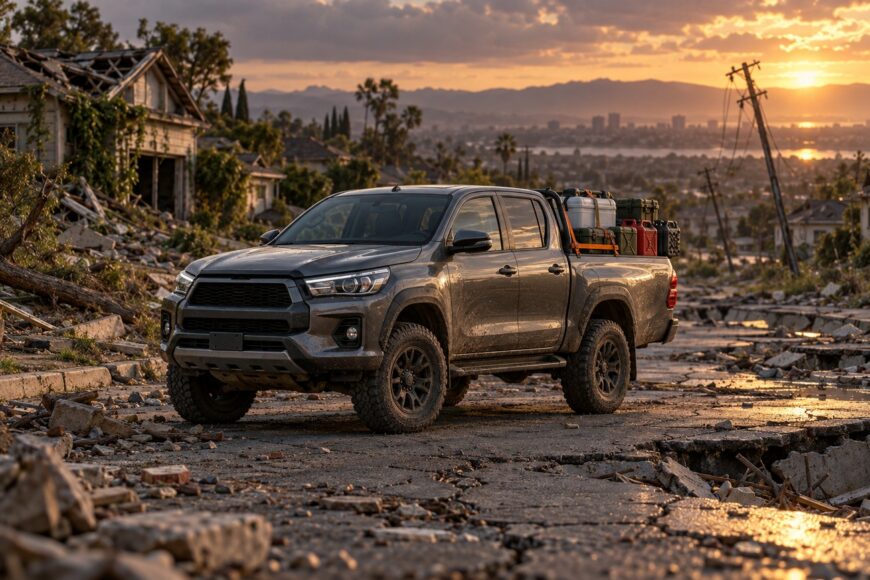
The Toyota Hilux has the right ingredients for a survival vehicle: a body-on-frame chassis, useful ground clearance, a practical cargo bed, and a reputation for continuing to work on rough roads. Depending on the market and version, it is sold with rear-wheel drive or four-wheel drive, diesel or petrol engines, and several cab and transmission combinations. That variety makes it adaptable, but it also makes simple “best apocalypse car” claims unreliable.
Four-wheel drive and a famous badge do not guarantee the best result. Terrain, fuel quality, parts availability, cargo security, repair skills, and the condition of the individual truck matter more than reputation. A well-maintained Hilux with suitable tires may be an excellent compromise; a neglected, overloaded, poorly equipped example may become a heavy liability. The useful answer is therefore a critical assessment rather than a fan verdict.
- Is the Toyota Hilux Really the Best Car for a Zombie Apocalypse?
- What the Hilux Does Well—and Where It Fails
- Which Hilux Configuration Makes the Most Sense?
- Building a Survival-Ready Hilux Without Overloading It
- The Real Failure Points: Fuel, Cooling, Corrosion, and Maintenance
- Hilux vs. Other Apocalypse Vehicles: Choosing by Scenario
- Frequently Asked Questions
- What is the best Toyota Hilux for long-term emergency use?
- How should a Hilux be stored before it is needed in an emergency?
- What is the best vehicle for a zombie apocalypse?
- What is the best Toyota Hilux?
- What would be the best loadout for a zombie apocalypse?
Is the Toyota Hilux Really the Best Car for a Zombie Apocalypse?
The Hilux is a strong candidate because it combines several useful characteristics in one vehicle. Its frame generally tolerates rough use better than a car-based platform, while the cargo bed can carry water, tools, fuel containers, recovery equipment, and other bulky supplies. Ground clearance and a simple mechanical base also help on damaged roads, tracks, and uneven ground.
That combination is a compromise, however. The Hilux is not automatically the best vehicle for every survival scenario, and “nearly indestructible” is a reputation, not a mechanical property. Overload, contaminated fuel, overheating, corrosion, impact damage, and neglected maintenance can disable it as effectively as they can disable other vehicles.
A compact SUV or lighter four-wheel-drive vehicle may be more useful on narrow trails, in dense woodland, or on steep terrain with frequent sharp changes in elevation. A shorter wheelbase can reduce the chance of grounding over abrupt crests, while a smaller body is easier to turn around or conceal. An enclosed SUV also protects supplies better than an open pickup bed.
A van can be the better tool when interior volume, weather protection, and discreet cargo storage matter most. The Hilux becomes more attractive when the route includes poor roads, the load is dirty or bulky, local mechanics know the model, and recovery equipment is valuable. Its main advantage is balance: repairability, rough-use durability, ground clearance, and cargo capability in one platform.
What the Hilux Does Well—and Where It Fails
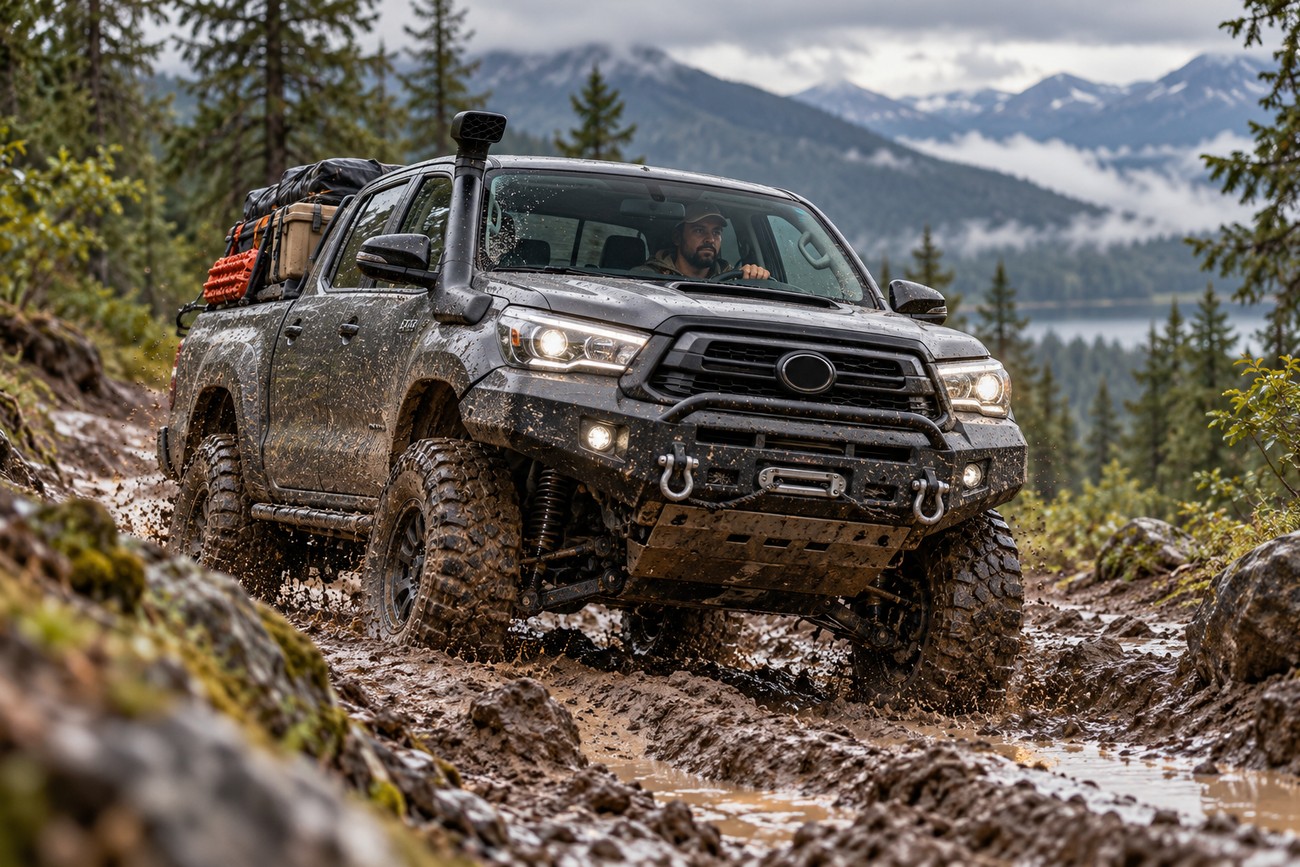
The body-on-frame layout gives the Hilux a useful foundation for rough work and equipment such as a winch, underbody protection, or a stronger recovery system. Four-wheel drive can improve traction when the driver uses it correctly, and diesel versions are valued for useful low-end torque and generally favorable highway economy in the intended configuration. Those qualities help with controlled movement over poor surfaces and with carrying a practical load.
Diesel economy becomes less attractive if the available fuel is dirty, unsuitable, or poorly stored. Modern diesel systems can be sensitive to contamination, so fuel filtration and disciplined storage matter. Petrol may be the easier choice in a region where petrol is cleaner, more widely available, or better supported by local mechanics. The badge matters less than the local fuel and repair environment.
An empty Hilux can feel surprisingly unsettled. The rear leaf-spring axle may produce a harsh, bouncy ride when lightly loaded, and the lightly loaded rear axle can lose traction or stability on slippery surfaces. Highway noise and diesel vibration can also become tiring during long relocation, particularly in older or work-focused configurations.
Standard tires and factory geometry usually provide moderate off-road ability rather than extreme capability. Torque cannot compensate for a road-oriented tread pattern, unsuitable pressure, excessive mass, or a lack of underside protection. A long wheelbase improves road stability and cargo utility, but it worsens breakover geometry when the truck crosses abrupt terrain changes.
Payload and towing figures must be checked for the exact truck. Capacity varies substantially by market, cab, engine, and transmission, and advertised figures may follow different approval standards. A truck that can move a heavy load once may still be unable to tow or carry that load for long distances without damaging the clutch, automatic transmission, cooling system, suspension, or brakes.
Which Hilux Configuration Makes the Most Sense?
Choose the configuration for the route and support network, rather than choosing the most impressive specification. Four-wheel drive is valuable on loose, steep, or damaged surfaces, but it only works as part of a system that includes suitable tires, correct pressure, low range where fitted, traction management, and controlled driving technique. A driver who never practices those functions may gain little from the hardware.
The best engine is not necessarily the most powerful one. A less ambitious engine with familiar service procedures, locally available filters and belts, and mechanics who understand its common faults can be more useful than a high-output specification supported only by distant suppliers. The same principle applies to transmissions, electronic systems, and model generations.
Cab and bed choice should follow the load. A single-cab or longer-bed configuration may carry equipment efficiently, while a larger cab can provide safer seating and more protected interior storage. Long-wheelbase trucks are calmer on paved roads and offer useful cargo space, but they need more care on sharp crests, deep ruts, and tight switchbacks.
Manual and automatic transmissions each have practical trade-offs. A manual can be familiar to local repairers and gives the driver direct control, while an automatic may reduce fatigue and help maintain smooth movement on difficult surfaces. Either can be damaged by overload, heat, repeated shock loads, or poor technique. Before purchase, inspect the service history, frame, suspension mounts, steering, electrical system, and signs of corrosion.
The healthiest locally common Hilux is usually a safer choice than a more powerful but unfamiliar version. Parts availability must be assessed for the specific generation, engine, transmission, and consumables. In a prolonged disruption, the ability to obtain a filter, belt, bearing, tire, or electrical component can matter more than the Toyota name on the grille.
Building a Survival-Ready Hilux Without Overloading It
Preparation should begin with tires and recovery basics. Suitable all-terrain or mud-capable tires can provide a larger practical improvement than cosmetic accessories, especially when their pressure is adjusted for the surface. On loose ground, correctly lowering pressure can improve flotation and traction more effectively than an expensive lift. The pressure must then be restored before sustained road speed.
A sensible loadout includes recovery straps, rated attachment points, a compressor, a pressure gauge, basic tools, spare service parts, communications equipment, water, and a realistic fuel plan. Secure storage matters because an open bed exposes equipment to weather, theft, and observation. A lockable canopy or enclosed storage solution can improve security, although it adds weight and may affect the vehicle’s center of gravity.
A weight limit should be set before fitting a winch, armor, auxiliary battery, and other equipment. After that limit is understood, adjust tire pressure and recovery technique before buying a lift kit.
Heavy bumpers, a winch, armor, suspension lifts, and extra batteries can consume payload margin quickly. Added mass at the front can stress the front axle, steering, springs, and brakes, while a tall suspension setup can worsen handling and increase strain on other components. A lifted truck that carries too much may look prepared while reducing its useful range and reliability.
Learn the vehicle before relying on it. Practice low range, any available locking functions, controlled momentum, reversing out of a bad line, and safe recovery procedures on private or permitted ground. Spinning tires, attacking obstacles at speed, or using a recovery point that is not designed for the load can turn a minor obstacle into suspension, frame, or body damage.
The open bed remains a structural limitation. It is useful for dirty, wet, or bulky items, but it offers poorer concealment and protection than an enclosed SUV or van. Valuable supplies should be secured, covered, and arranged so that a single loose container cannot damage passengers, wiring, or the truck during hard braking.
The Real Failure Points: Fuel, Cooling, Corrosion, and Maintenance
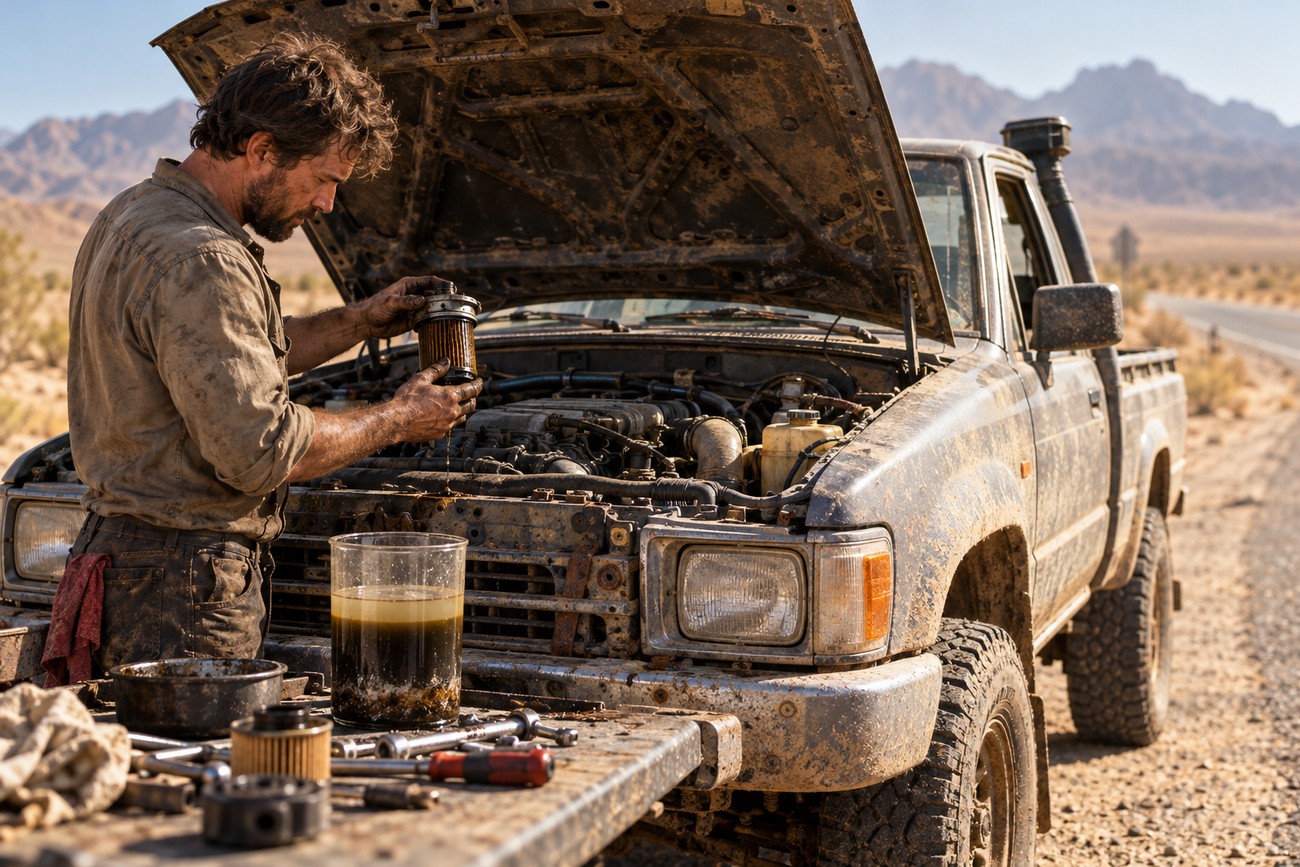
The “unbreakable Hilux” image often fails at the supporting systems. A diesel engine may continue running while contaminated fuel damages the filtration or injection system. Water and debris in fuel, neglected filters, and poor storage practices can create a breakdown far from a workshop. Fuel economy helps on long routes, but it does not remove the need for clean, suitable fuel.
Heat is another serious threat. Repeated towing, slow movement in deep sand or mud, and heavy loads place sustained demand on engine and transmission cooling. Under severe off-road use, the clutch, transmission cooling system, automatic transmission, and suspension can become greater risks than the engine itself. Moving a load once is different from hauling it for hours in heat and low-speed conditions.
Wear often appears in less glamorous parts first. Suspension components, steering parts, bushes, fasteners, electrical components, and mounting points may deteriorate before the engine shows a major fault. Impact loads can loosen hardware, bend components, or damage wiring even when the truck still starts and drives.
Corrosion deserves a close inspection, especially around the frame, crossmembers, suspension mounts, brake lines, and body attachments. Surface dirt can hide serious damage, while poorly repaired modifications may create new stress points. A reliable vehicle still requires inspection, fluid changes, lubrication, filter replacement, and preventive repairs. Reputation cannot replace those tasks.
Hilux vs. Other Apocalypse Vehicles: Choosing by Scenario
Each vehicle type solves a different survival problem. The table compares broad strengths and weaknesses rather than universal specifications.
| Vehicle type | Terrain and maneuverability | Cargo security and concealment | Fuel and parts practicality | Payload usefulness | Likely weaknesses |
|---|---|---|---|---|---|
| Toyota Hilux | Good rough-road potential; four-wheel drive helps, but length and standard tires limit difficult terrain. | Open bed is exposed unless secured or covered; high profile can reduce concealment. | Strong choice where the specific generation and engine are common; diesel needs clean, suitable fuel. | Useful for bulky, dirty, or external loads, within version-specific limits. | Empty-bed bounce, rear-axle instability, overload damage, corrosion, and added equipment weight. |
| Compact SUV | Often easier on narrow trails and sharp terrain changes; lighter mass can help on weak surfaces. | Enclosed cabin protects supplies and offers better concealment. | Depends heavily on local model popularity and drivetrain support. | Limited for large or dirty cargo, but efficient for a small group and essential equipment. | Less room, less external carrying capacity, and sometimes less tolerance for repeated heavy impacts. |
| Full-size SUV | Capable and stable with suitable equipment, but size and mass can restrict tight routes. | Strong enclosed storage and better protection for people and supplies. | May consume more fuel; parts support varies by region and specification. | Large interior volume and useful passenger capacity. | Fuel demand, width, weight, and difficult recovery if immobilized. |
| Van | Effective on roads and moderate tracks; generally less suitable for severe technical off-road work. | Best protection and concealment for supplies when properly secured. | Can be practical where commercial vans are common; drivetrain support is decisive. | Excellent interior volume and organization potential. | Lower off-road margin, vulnerable bodywork, and limited traction on some versions. |
The Hilux is strongest when the route mixes damaged pavement, rough tracks, and the need to carry awkward equipment. It offers more external cargo flexibility than many cars and better rough-use tolerance than many road-focused vehicles. Its weaknesses become more important when supplies must remain hidden, the route is narrow, or the truck will be heavily loaded for long periods.
A compact SUV may be the better choice for a small group traveling through narrow forest roads or steep, broken terrain. A full-size SUV or van may provide better protection for people and supplies, especially where concealment and weather resistance matter. These vehicles can still fail through poor maintenance, unsuitable tires, or excessive load, so their enclosed body is not a substitute for preparation.
The decisive criteria are fuel range, repairability, local parts, tire availability, cargo security, and evacuation practicality. Maximum ground clearance is only one part of that decision. A vehicle that can be repaired locally and recovered safely is generally more useful than a theoretically superior vehicle that cannot be supported.
Frequently Asked Questions
There is no universal best apocalypse vehicle. The practical choice depends on terrain, fuel, parts, cargo, concealment, and the condition of the specific vehicle.
What is the best Toyota Hilux for long-term emergency use?
The best Hilux is the soundest configuration that is common in your region and supported by local mechanics and parts suppliers. Compare generations and specifications by fuel quality, filter and belt availability, workshop familiarity, service records, and frame condition rather than by trim level or power output.
Inspect the actual truck carefully. A lower-specification Hilux with a documented history, healthy frame, and available consumables is usually a better long-term asset than a powerful imported version with uncertain maintenance and scarce parts.
How should a Hilux be stored before it is needed in an emergency?
Store it under cover when possible, keep the battery maintained with an appropriate charger, and inspect tire condition, pressure, sidewalls, and age. Check engine, transmission, brake, coolant, and differential fluids, and repair leaks before they become storage problems. Clean mud and salt from the frame and apply suitable corrosion protection to vulnerable areas.
Operate the vehicle periodically rather than leaving it untouched. Confirm that brakes, lights, wipers, belts, hoses, recovery points, and communications equipment still work, and rotate stored fuel according to local safety guidance. A short inspection schedule prevents a vehicle from becoming unavailable precisely when it is needed.
What is the best vehicle for a zombie apocalypse?
The best vehicle is the one that matches the route and can be kept running with local fuel, tires, parts, and tools. A compact SUV may suit narrow trails, a van may suit protected cargo, and a Hilux may suit rough roads with bulky equipment. There is no universal winner.
Choose a vehicle that the driver can operate safely, load without exceeding its limits, and recover without reckless use. Reliability, concealment, service support, and a realistic evacuation plan are more valuable than a dramatic specification.
What is the best Toyota Hilux?
The best Hilux is the version with the strongest local support and the best documented condition. That usually means checking the exact engine, transmission, drivetrain, parts supply, fuel compatibility, frame, corrosion, and maintenance history.
Do not select a truck solely because it is the most powerful, newest, or most heavily modified. A simpler, familiar configuration with good tires and a healthy chassis can provide more dependable service than an expensive build burdened by unnecessary weight.
What would be the best loadout for a zombie apocalypse?
Start with items that keep the vehicle moving and the occupants supplied: suitable tires, a compressor and gauge, recovery equipment, water, a fuel plan, communications, tools, secure storage, and basic service parts. Add underbody protection where the route justifies it, and carry equipment that the driver has practiced using.
Keep the load organized and within the vehicle’s verified limits. A heavy winch, armor, auxiliary battery, and lift can reduce braking, handling, and payload margin, while unsecured cargo can become dangerous during an emergency stop. Preparation should improve recovery and self-sufficiency without creating a new mechanical failure risk.







