
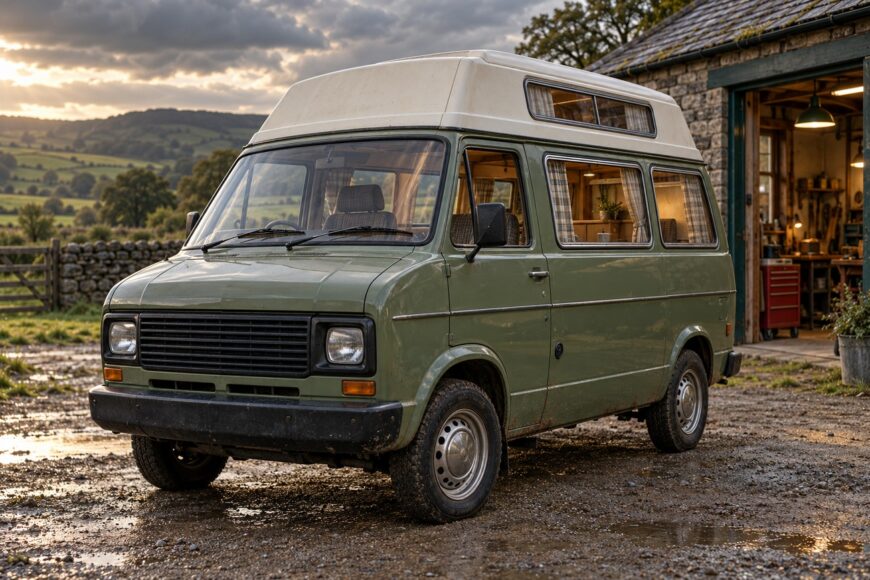
The Bedford CF remains one of Britain’s most recognizable van-life classics: a boxy, rear-wheel-drive commercial vehicle that can feel like a small piece of 1970s travel culture. Its appeal comes from period styling, simple mechanical layouts, and the individuality of surviving camper conversions.
That character is inseparable from age-related rust, uncertain alterations, limited payload, and specifications that vary by year, market, chassis, and conversion. Buy the experience of a classic camper if that is what you want, but judge the individual vehicle rather than its badge, fresh paint, or advertised model name.
- Why the Bedford CF Became a British Camper Classic
- Bedford CF Specifications: Why Year and Market Matter
- Engines, Gearboxes, and Real-World Performance
- The Biggest Buying Risk Is Usually Hidden Rust
- Camper Conversions: Water Damage, Weight, and Unsafe Modifications
- How to Verify the Exact CF You Are Looking At
- Ownership Reality: Parts, Electrics, Brakes, and Legal Use
- Bedford CF Myths That Can Make a Camper Purchase Expensive
- Frequently asked questions
- How much is a Bedford CF van or camper worth?
- Which Bedford CF engine is easiest to live with today?
- What is the best camper van ever made?
Why the Bedford CF Became a British Camper Classic
The Bedford CF occupied an important place in British commercial motoring and was available as a van, chassis-cab, and camper. Its proportions suited both professional work and leisure conversions, while the short wheelbase of approximately 2.69 m and long wheelbase of approximately 3.20 m gave converters useful choices in interior layout.
Period campers built around the CF can offer a more tangible connection with classic British travel than a modern recreational vehicle. The upright driving position, simple cabin, visible mechanical character, and hand-built interiors create an experience that many owners value more than outright speed or refinement.
That experience requires realistic expectations. The CF does not have the safety systems, corrosion protection, or emissions compliance of a current vehicle, and its behavior depends heavily on condition and conversion weight. Claims that it offered the best handling among 1970s commercial vehicles remain owner opinion rather than a universal measured result.
A sound example can still be enjoyable for touring, rallies, and short-distance travel. A tired one can become a structural restoration project with an old camper attached. The difference is usually established during inspection, long before the first overnight trip.
Bedford CF Specifications: Why Year and Market Matter
Bedford CF specifications changed across generations, markets, load classes, and body styles. The following summary is a guide to the range rather than a specification for every surviving vehicle.
| Variable | Typical or quoted specification | Important qualification |
|---|---|---|
| Wheelbase | Short approximately 2.69 m; long approximately 3.20 m | Chassis and body configuration affect the finished vehicle |
| Body forms | Van, chassis-cab, and camper | Camper construction may be original or later conversion work |
| Petrol engines | Approximately 1.6–2.3 litres; Holden inline-six engines approximately 2.85–3.3 litres; V8 engines approximately 4.2–5.0 liters | Availability depended on year and market |
| Late-engine examples | GM 2.0-litre petrol engine rated at 78 hp; 2.3-litre diesel rated at 61 hp | These figures describe particular late examples, not every CF |
| Gearboxes | ZF five-speed manual or three-speed automatic on some versions | Transmission availability varied by specification |
| Load classes | 14, 18, 22, 25, and 35 cwt | Load class is linked to the chassis specification |
| Permissible mass | Approximately 2.17–3.28 tonnes | Actual permitted limits depend on the specific chassis |
| Rear axle configuration | Some long-wheelbase and heavier versions used twin rear wheels | This affects tires, braking, handling, and running costs |
Early and late vehicles can differ substantially, as can examples built for different markets. A generic description of a “Bedford CF” therefore has limited value unless it includes the year, market, chassis index, engine, wheelbase, and body form.
Engines, Gearboxes, and Real-World Performance
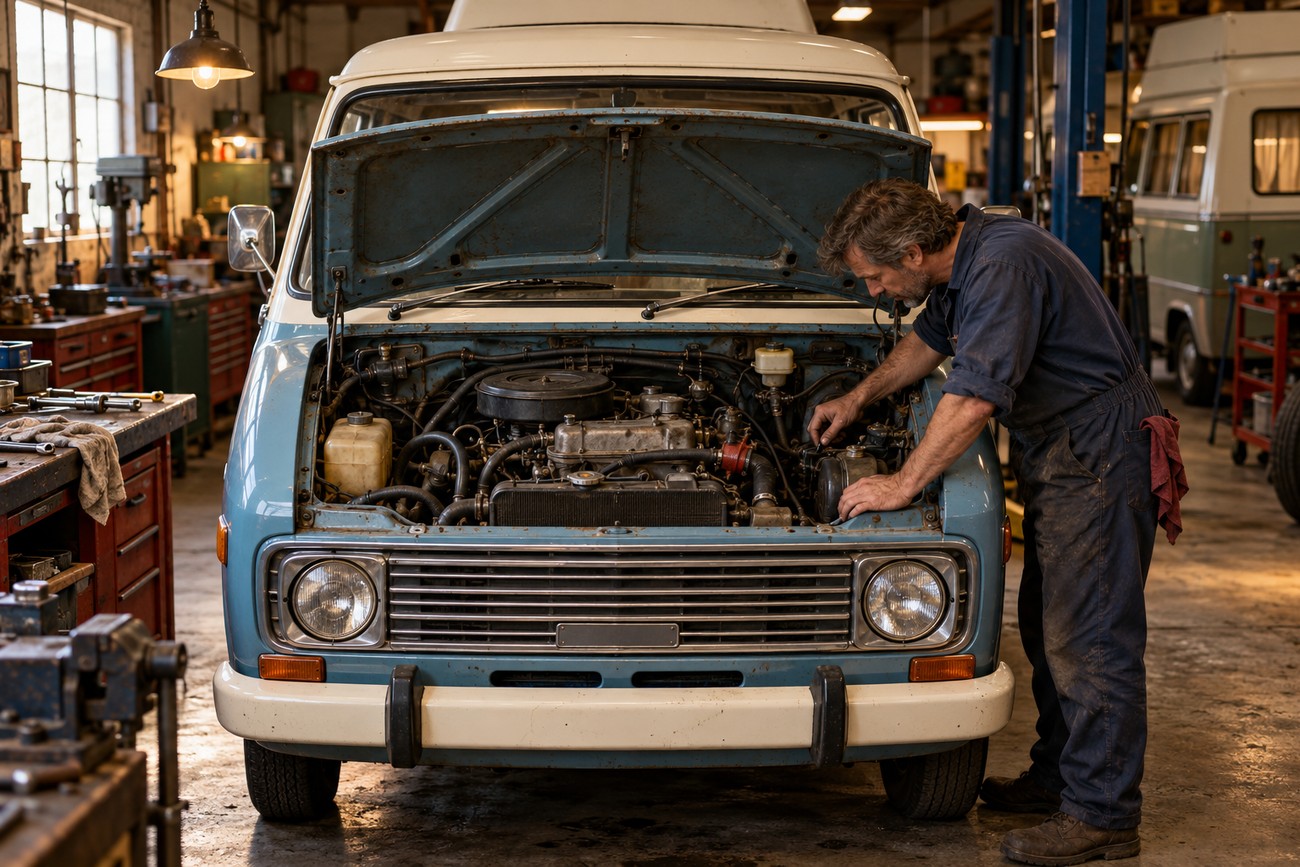
The historical engine range was broad. Depending on year and market, the CF could use petrol engines of approximately 1.6–2.3 litres, Holden inline-six engines of approximately 2.85–3.3 litres, or V8 engines of approximately 4.2–5.0 liters. These choices make engine identification an important part of verifying any listing.
Late CF examples are often described with a GM 2.0-litre petrol engine rated at 78 hp or a 2.3-litre diesel rated at 61 hp. Either can feel limited in a heavily equipped camper, particularly on hills, in strong headwinds, or when carrying passengers, water, gas, luggage, and camping equipment.
Acceleration depends on more than the advertised engine output. Final-drive gearing, transmission choice, tire size, mechanical condition, and the camper’s actual loaded mass all influence how the vehicle performs. A healthy engine with suitable gearing may be easier to use than a larger but neglected unit.
Some versions used a ZF five-speed manual, while others had a three-speed automatic. The transmission should be assessed for noise, selection quality, clutch or kickdown operation, and cooling, especially if the vehicle has spent years carrying a heavy conversion.
The Biggest Buying Risk Is Usually Hidden Rust
Rust deserves priority over paint, upholstery, and period accessories. Owners regularly report corrosion in the body, sills, wheel arches, floor, seams, window surrounds, and structural or suspension mounting areas. A small blister can mark the visible edge of corrosion that has spread behind a panel or under a seal.
Begin underneath, using safe support and adequate lighting. Check the sills, floor sections, jacking points, suspension mounts, crossmembers, wheel arches, and chassis seams. Then inspect the outer body, window frames, roof edges, door bottoms, and places where trim or equipment has trapped moisture.
Fresh paint can make a poor shell look convincing for a short time. Look for uneven repairs, bubbling at panel edges, thick underseal, mismatched textures, and paint overspray on seals or fasteners. A tidy interior can conceal floor repairs or water entry, so lift removable coverings where possible.
Body panels and model-specific trim are generally harder to source than many generic mechanical parts. That changes the economics of a restoration: welding and fabrication may be possible, while finding an original panel, window surround, or distinctive interior fitting can take substantially longer.
Where corrosion reaches structural or suspension mounting areas, arrange an assessment by a specialist familiar with older commercial vehicles. A low purchase price rarely compensates for discovering that the shell requires extensive work after the vehicle has been dismantled.
Camper Conversions: Water Damage, Weight, and Unsafe Modifications

The living module needs its own inspection. Leaks around windows, roof hatches, mouldings, vents, and equipment mounts can persist for years, allowing water into timber framing and floor structures. Upholstery may feel dry while the wood behind it has lost much of its strength.
Look for staining, soft wall sections, swollen trim, repaired sealant, musty smells, loose interior panels, and movement around windows or roof openings. Examine the joint between the cab and living module, the roof, furniture subframes, and the points where cupboards or beds attach to the body.
Old campers may also contain homemade electrical systems, gas installations, and furniture mountings. Check cable protection, fuses, battery isolation, earthing, hose condition, ventilation, appliance installation, and the quality of structural fasteners. Any gas or electrical work that appears improvised deserves qualified inspection before use.
Weight is equally important. Published kerb-weight figures range from approximately 1.4–1.6 tonnes to about 1.7 tonnes for some versions, but those figures do not automatically describe a finished camper. Water, gas, batteries, passengers, luggage, and towing equipment can consume the available payload quickly.
Use the vehicle plate, documents, actual weighing, and permitted axle and gross loads as the decisive evidence. Weigh the camper in a realistic travel condition, then check individual axle loads where possible. A conversion that appears spacious and well equipped may leave little legal or practical payload capacity.
How to Verify the Exact CF You Are Looking At
Advertisements often combine details from different generations, markets, chassis, and camper conversions. A seller’s model description may be accurate as a nickname while remaining unreliable as a technical specification.
Compare the VIN or chassis number, chassis plate, registration documents, engine number where applicable, body style, wheelbase, and conversion provenance. Record CF1 or CF2, production year, engine, chassis index, load class, and conversion manufacturer separately rather than treating them as one model label.
The first chassis-number digits identify CF, while later digits are associated with load class and body type. This information can help identify inconsistencies, although it should be checked against the vehicle plate and documentary evidence rather than used as a complete decoding chart.
Engine, weight, and camper names in an advertisement may describe a different version from the vehicle offered. If the paperwork, plate, and physical specification disagree, pause the purchase until the discrepancy is explained and documented.
Ownership Reality: Parts, Electrics, Brakes, and Legal Use
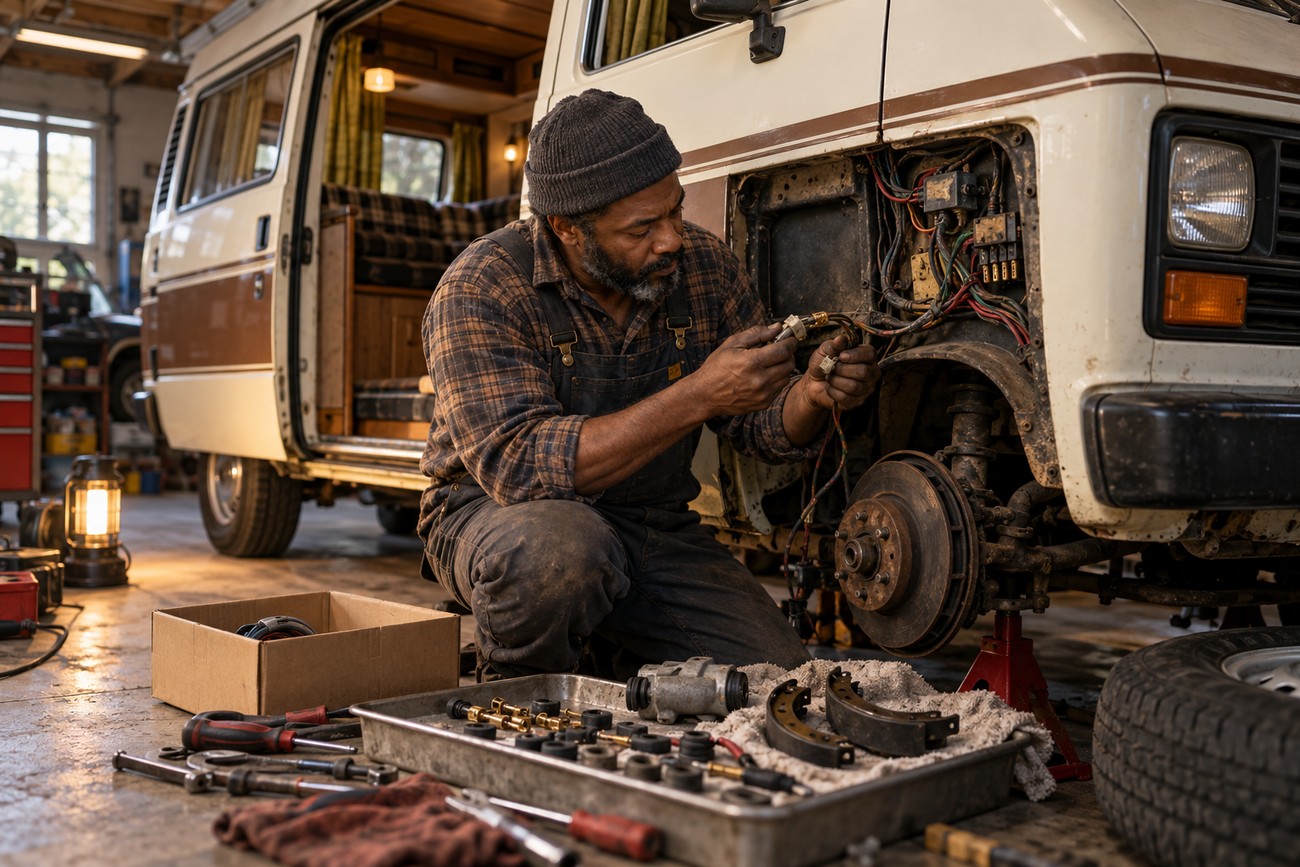
Ownership is manageable when approached as classic-vehicle maintenance rather than ordinary used-van servicing. Mechanical consumables and compatible parts are generally easier to find than model-specific body panels or original trim. Club networks, dismantles, rebuilt components, and compatible replacements can therefore become part of normal ownership.
Age-related electrical faults are common subjects for owners, including problems with wiring, indicators, and the horn. Inspect connectors, earth points, fuse arrangements, and previous repairs instead of replacing individual components blindly. A poor connection can imitate a failed switch or motor.
Before a long trip, check the brakes, tires, cooling system, fuel delivery, and charging system. Brake hoses, old tires, blocked cooling passages, deteriorated fuel lines, and weak alternator output can turn a usable local camper into an unreliable touring vehicle.
Heavy conversions place additional demands on suspension, steering, braking, tires, and wheel bearings. Twin rear wheels on some long-wheelbase or heavier versions also affect tire costs, inspection requirements, and handling. The correct maintenance plan depends on the actual chassis and loaded mass.
LEZ and ULEZ eligibility is registration- and jurisdiction-specific. Historic appearance or age alone should not be treated as proof of access; check the specific registration and local rules before planning a route.
Bedford CF Myths That Can Make a Camper Purchase Expensive
The idea that every CF has one standard engine and one standard weight is incorrect. The range included multiple petrol engines, diesel examples, Holden inline-six engines, and V8s, while load classes and permissible masses varied substantially by chassis.
A quoted 1.4–1.6-tonne figure is not automatically the mass of a ready-to-travel camper. It may refer to a particular base vehicle or published configuration. The finished vehicle must be assessed with its conversion, fluids, equipment, passengers, luggage, and towing load.
Simple mechanical design can make routine repairs accessible, but it does not make restoration easy. Structural rust, scarce body panels, rotten camper timber, and incomplete trim can require more specialist work than the engine or gearbox.
Retro styling also says little about modern usability. Brakes, wiring, tires, emissions access, payload, and conversion safety determine whether a particular CF suits contemporary travel. Character is a valid reason to buy one; it is not evidence that the vehicle is ready for daily use.
Frequently asked questions
How much is a Bedford CF van or camper worth?
There is no single market value for a Bedford CF. Price should reflect structural condition, originality, completed restoration, documentation, conversion quality, and usable payload rather than paintwork or rarity alone.
A sound shell with clear records and a properly inspected conversion may justify a stronger price than a more attractive vehicle with hidden rust or uncertain alterations. Weighing the camper and checking its documents can materially change its practical value.
Which Bedford CF engine is easiest to live with today?
The easiest engine to live with is usually the one in verified mechanical condition, supported by available parts, correctly geared, and suited to the vehicle’s loaded weight. The largest or most unusual engine is not automatically the best choice.
Check cooling, fuel delivery, charging, oil pressure, transmission operation, and service history before choosing by engine size. Intended use matters too: a lightly loaded local camper has different requirements from a heavy vehicle intended for long-distance touring.
What is the best camper van ever made?
There is no universal winner. The Bedford CF can be an excellent choice for period character, British van-life appeal, and an owner who values hands-on involvement.
It is not automatically the best option for safety, efficiency, payload, everyday convenience, or access to modern restricted zones. The best camper is the one whose condition, weight, conversion quality, maintenance needs, and legal access match the owner’s intended use.







