
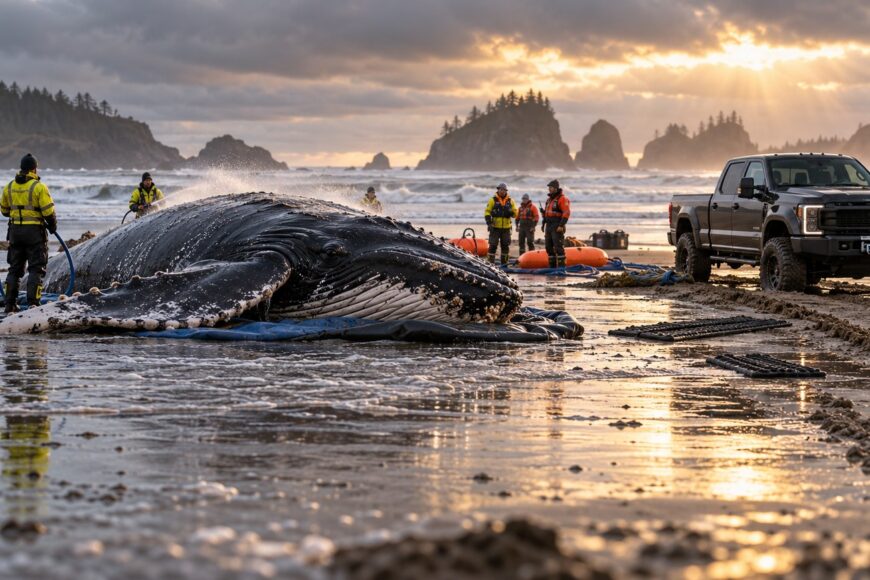
A Ford F-350 looks powerful enough to pull a beached whale back into the water. That idea overlooks two obstacles: engine power does not guarantee usable traction on a soft shore, and a whale cannot be handled like an ordinary recovery load. An improvised pull can injure the animal, trap the truck, and put people in the path of failing equipment.
An F-350 may help a coordinated rescue by carrying equipment or providing slow, controlled traction after the site has been assessed. It is not a standalone whale-rescue solution. Qualified marine-mammal responders, veterinary personnel, and the relevant local authorities must decide whether moving the animal is safe, possible, and lawful.
- Can a Ford F-350 Actually Pull a Beached Whale?
- Why Tow Ratings Fail on Sand and Wet Mud
- What Determines Whether the F-350 Can Help?
- A Safer Rescue Setup: Equipment, Control, and Coordination
- Common Failure Modes: What Breaks and Why
- The Myths That Make Whale Rescues More Dangerous
- What a Responsible Response Looks Like
- Frequently asked questions
- Why can’t beached whales always be saved?
- What is a sad fact about whales that strand on beaches?
- Why can’t beached whales be saved?
- What is a sad fact about whales?
Can a Ford F-350 Actually Pull a Beached Whale?
Possibly, in a limited support role. Whether the truck can contribute depends on the animal’s condition, the shoreline, the equipment available, and the rescue team’s plan. A vehicle that could move a heavy trailer on a road may spin its tires before it can move anything across wet sand.
There is no single F-350 tow rating. It varies by engine, drivetrain, cab, wheelbase, rear axle, and towing package. Even the correct rating for a particular truck describes a different task from moving a large animal through ground that may shift, cling, or collapse under load.
Usable pulling force is the force the truck can transmit through its tires without unacceptable wheelspin, sinking, or loss of control. On sand or wet mud, tire-soil traction can become the limiting factor before engine power or rated towing capacity is reached. A stuck truck adds another recovery problem to an already time-sensitive response.
If responders judge a vehicle useful, the F-350 might transport gear, support a winch operation, or provide gradual traction from a suitable position. Wildlife specialists must direct how the animal is protected and moved; a driver should never attach a line and attempt to tow a whale independently.
Why Tow Ratings Fail on Sand and Wet Mud
SAE J2807 is a controlled testing standard used to determine tow ratings. Those ratings help compare properly configured vehicles, but they do not guarantee the same performance on loose beach sand or wet mud. Road towing and shoreline recovery place different demands on the tires and the ground beneath them.
A heavy pickup presses into soft ground under its own weight. If the tires start digging holes, the truck can sink until its underside or axles contact the surface, sharply increasing resistance. The F-350’s substantial mass, useful for some road-towing tasks, can work against it where the shore cannot support that mass.
Four-wheel drive distributes drive force across more tires; it does not create firm ground. A diesel engine’s torque is equally unhelpful once the tires lose grip, and more throttle may deepen the holes. Wet mud adds another hazard: a surface that appears passable from a distance may give way under the vehicle.
What Determines Whether the F-350 Can Help?
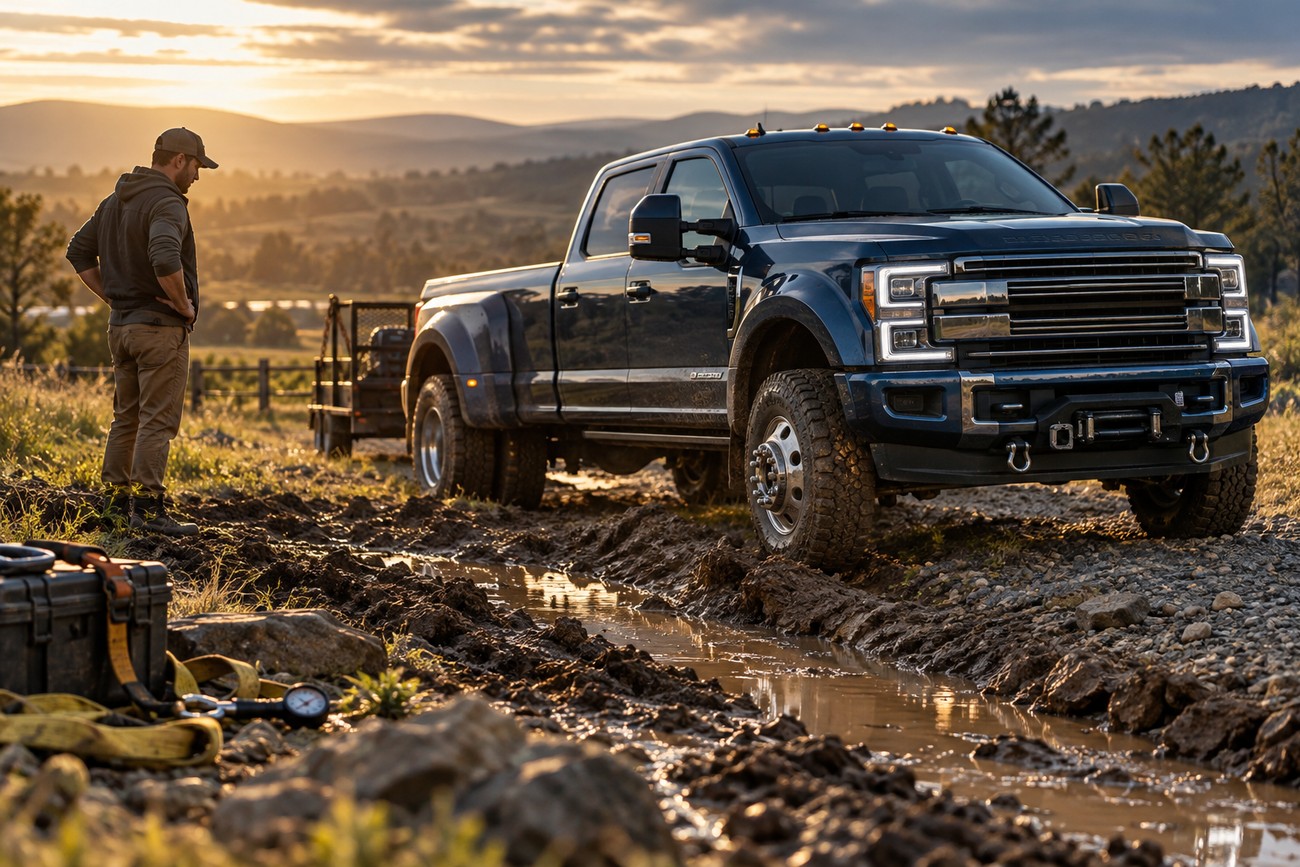
Assess the particular truck and the particular site together. Engine, drivetrain, cab, wheelbase, rear axle, towing package, and tires all affect the vehicle’s capabilities or positioning. Access and exit routes matter as well: approach and departure angles may prevent a truck from reaching a useful position without grounding itself.
On soft ground, reducing tire pressure may enlarge the contact patch and improve flotation. That is a site-specific recovery decision, subject to the tires’ and vehicle’s safe operating limits; pressure must be restored before road travel. It does not make unstable sand or mud safe to cross.
Pull direction is as important as available force. A line aligned as straight as possible reduces sideways loading, which can make the truck slide and place dangerous forces on attachments. Clearing or stabilizing an access route may achieve more than adding power or another vehicle, but the rescue team must first decide whether any pull is appropriate.
A Safer Rescue Setup: Equipment, Control, and Coordination
In a professional response, vehicle recovery equipment is only one part of the plan. Crews assess the ground, choose appropriately rated pulling or winching equipment, verify attachment points, and establish clear communication before applying tension. People must stay out of the line’s path and other areas where failed rigging could recoil or shift.
The animal requires a separate, specialist assessment. Responders work to keep its airway clear, protect exposed skin, prevent overheating, and minimize noise, vibration, stress, and unnecessary contact. An attachment or movement plan that is mechanically sound could still harm a whale if it places pressure on vulnerable parts of its body.
Before tension is applied, verified attachment points and a straight line of pull matter more than available horsepower. Gradual loading gives the crew a chance to spot slipping ground or shifting rigging before the force rises further.
Rated slings, shackles, winches, anchors, and ground-support equipment must be selected for the actual operation, rather than assumed safe because they fit together. A gradual, controlled pull generally produces fewer sudden peak loads than a jerk. The F-350 may serve as a traction source or support for properly rated equipment, but its role depends on the coordinator’s assessment.
Conditions can change while a team works. A rising tide, weakening ground, or a change in the whale’s breathing may require a pause or a different plan. Keeping the driver, rigging crew, and wildlife personnel in communication helps ensure that vehicle movement never outruns the animal-care decisions.
Common Failure Modes: What Breaks and Why
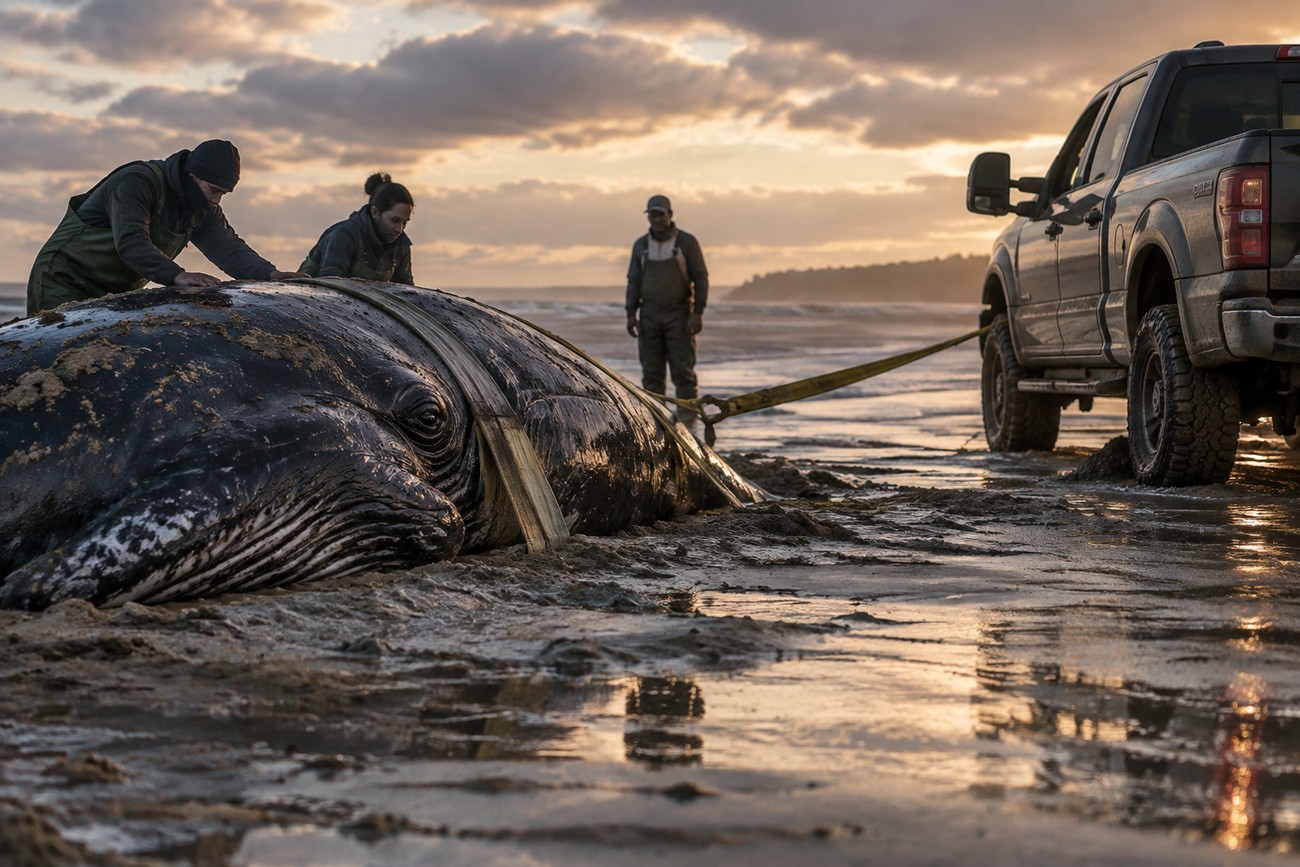
An unprepared pull can bury the truck before the animal moves. Spinning tires excavate the ground beneath them; if the F-350 settles onto its axles, a forceful self-recovery attempt may increase resistance and damage recovery hardware, the drivetrain, suspension, or frame. Another vehicle attached in haste can compound the hazard.
Wet sand and mud can cling to the animal and resist movement, so its apparent body weight tells only part of the story. A sharp jerk sends a sudden load through straps, shackles, and attachment points. Hardware may break or shift, while the animal or truck may be driven farther into the substrate.
A pull can also fail without a dramatic break. Prolonged heavy work at low speed can build heat and stress the transmission and cooling system even when the engine has ample torque. If the line runs sideways, the truck may slide or its attachments may receive loads they were not intended to carry.
The Myths That Make Whale Rescues More Dangerous
“A big diesel can pull anything” confuses engine output with usable pulling force. On loose ground, the tires may spin long before the engine reaches its potential. Applying more throttle can leave the truck deeper in sand and less able to support the rescue.
“Four-wheel drive guarantees success” makes a similar mistake. It helps distribute drive force, yet cannot prevent sinking or axle burial when the surface gives way. “A heavy load needs a hard jerk” is more dangerous still: shock loading raises the risk of failed hardware and uncontrolled movement.
A large pickup is not automatically suitable for marine-mammal rescue. Vehicle recovery asks whether a load can be moved; wildlife rescue must also ask whether moving this animal, in this way, improves its prospects. If the truck, ground, rigging, or animal’s condition is worsening, stop and let the rescue coordinator reassess.
What a Responsible Response Looks Like
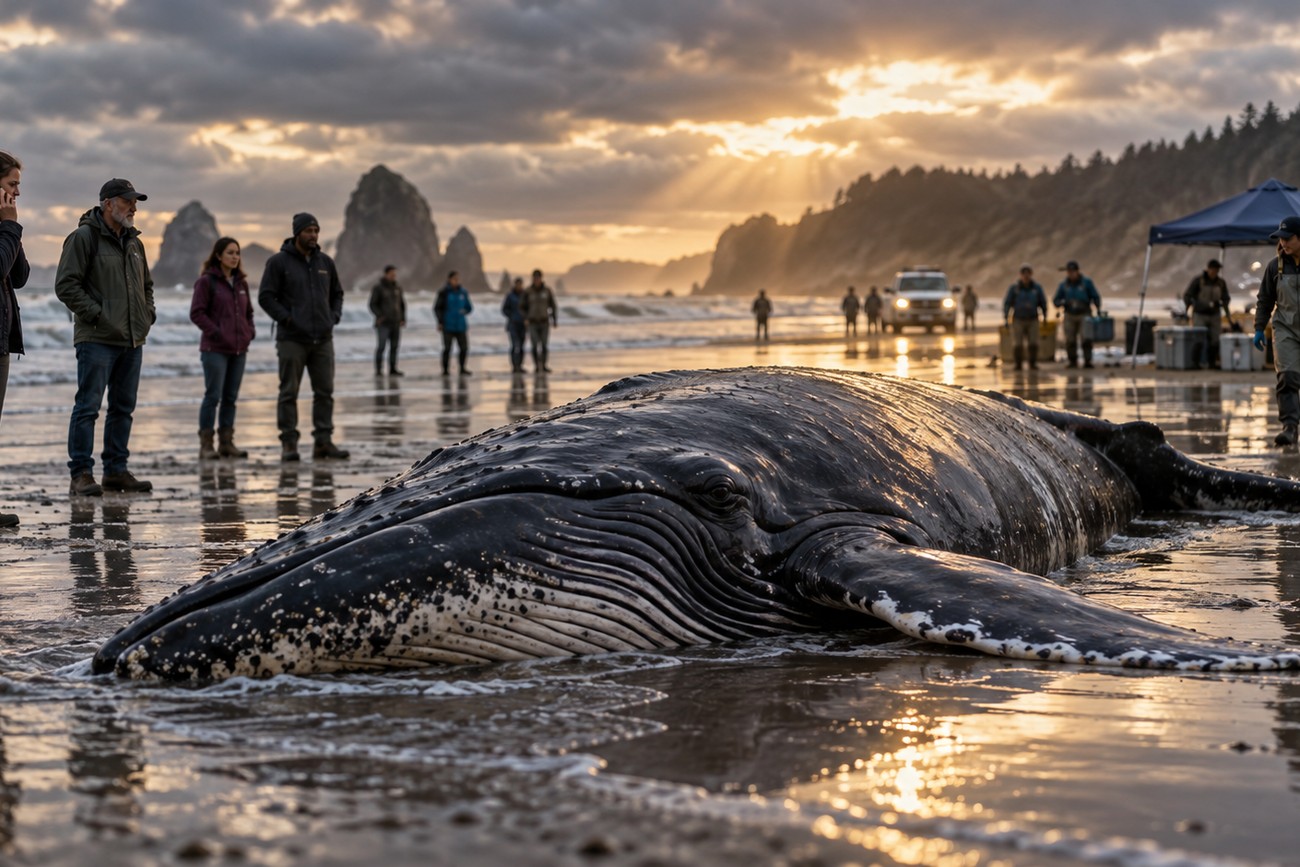
Keep people, pets, and vehicles back, and contact the relevant marine-mammal stranding network, wildlife authority, or local emergency service. Give the location and describe what you can observe from a safe distance. Do not crowd, push, roll, or attach a tow line to the whale.
While waiting, avoid obstructing the animal’s breathing and follow any instructions responders give you. A stranded whale needs protection from exposure and overheating, but well-meant handling can add stress or cause injury. The appropriate care depends on the animal’s position, condition, and species.
Once specialists arrive, they can assess the substrate, tide, animal, access route, and available equipment. The best contribution from an F-350 may be carrying supplies, supporting a controlled winch operation, or providing traction from suitable ground. Declining an unsafe pull is a successful safety decision, regardless of the truck’s power.
Frequently asked questions
Beached whales may be alive, visibly moving, and still under severe physiological stress. Their condition, the site, and the risks of movement all affect whether a return to the water is possible. Qualified responders must assess those factors before attempting a rescue.
Why can’t beached whales always be saved?
Some whales strand because they are already ill or injured, and time ashore can worsen their condition. Dehydration, internal damage, the animal’s size, and unfavorable tides or access conditions may make movement unsafe or a return to sea unlikely to succeed. Responders must weigh those factors before attempting a rescue.
What is a sad fact about whales that strand on beaches?
A whale can be alive and visibly moving while already under severe physiological stress. Prolonged exposure and the effects of being stranded can cause deterioration that is not obvious to a bystander. Movement or vocalization alone cannot show that a vehicle-assisted return to the water would help.
Why can’t beached whales be saved?
There is no single reason. In some cases, the animal’s underlying illness or injury cannot be resolved by moving it; in others, its condition or the site makes a safe return impossible. Even when responders can refloat a whale, they must consider whether it can breathe, swim, and remain at sea without stranding again.
What is a sad fact about whales?
A whale that reaches shore may need urgent specialist care even if it appears alert. Its visible behavior reveals little about internal injury or its ability to recover. For someone who finds one, the most helpful response is prompt reporting and giving qualified responders room to assess it.







