
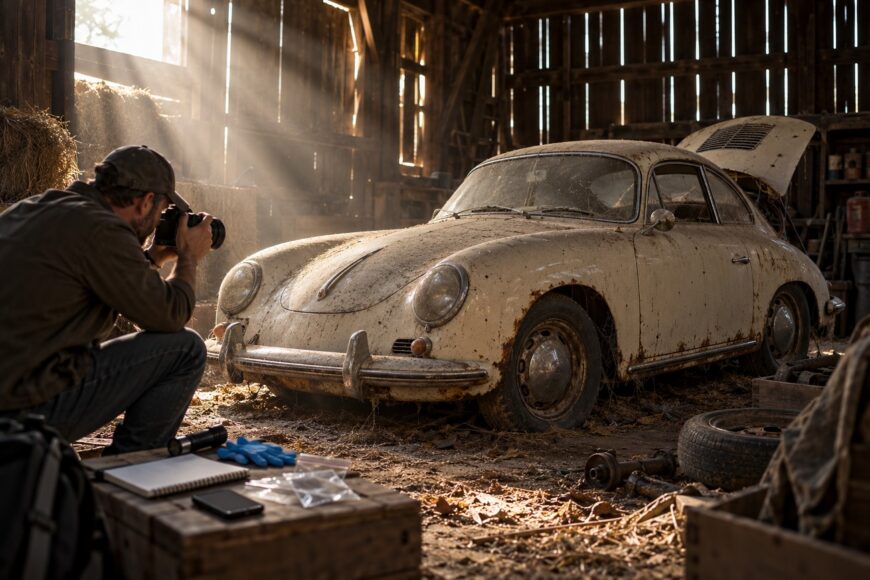
The tempting first move with a newly discovered Porsche 356 is to connect a battery, add fresh fuel, and see whether the engine still runs. That instinct can destroy evidence, pull contaminated fuel through the system, damage a seized engine, or expose deteriorated wiring to a fire risk.
Preserve the car’s as-found condition before satisfying curiosity. Photograph its position, markings, loose parts, wiring, fluids, damage, and storage environment. The first priorities are structural rust, identity, completeness, and the condition of systems affected by long storage.
A 356 with attractive paint may hide filler, corrosion, poor geometry, and incorrect repairs. Floors, longitudinal members, pillars, reinforcements, and suspension mounting points matter more than cosmetic condition, while missing small original parts can alter the project economics as much as a major mechanical fault.
- Do Not Start It Yet: Make the Porsche Safe and Preserve Evidence
- Verify the 356’s Identity, Paperwork, and Completeness
- Inspect the Structure Before Judging the Paint
- Assess the Stored Systems Before You Touch the Engine
- Barn-Find Porsche 356 Triage: What to Do in the First 24 Hours
- Count the Real Cost: Bodywork, Chrome, Interior, and Missing Parts
- Choose the Right 356 Specialist Before Buying or Disassembling
- Frequently asked questions
- What should I photograph before moving or cleaning a barn-find Porsche 356?
- What does matching numbers actually prove on a Porsche 356?
- What is the most sought-after Porsche 356?
- What’s the rarest barn find in FH5?
- What is the holy grail of Porsches?
Do Not Start It Yet: Make the Porsche Safe and Preserve Evidence
Begin with a complete visual record before moving, washing, lubricating, or dismantling the car. Photograph every identification plate, body number, engine and component marking, label, wire connection, loose part, interior detail, panel gap, damaged area, and sign of previous work. Video can capture how doors, controls, and hinges sit before anything is disturbed.
Record the car’s position as found, including its location in the building, wheel condition, visible leaks, fluid levels, disconnected wires, and parts stored inside or beside it. Bag and label loose hardware without cleaning it first. Dirt, witness marks, and unusual fasteners may help reconstruct the original configuration later.
Do not add fuel, force the controls, or energize deteriorated wiring simply to test the car. Long storage commonly produces seized brakes, dried rubber and seals, blocked or degraded fuel systems, deteriorated wiring, and corrosion in hidden areas. A safe first-start assessment begins with inspection rather than operating the starter.
Preserving evidence also protects the budget. Once a car is cleaned, moved, or partly disassembled, it becomes harder to distinguish original defects from damage caused during recovery. Documentation gives you a reference for parts ordering, assembly, negotiations, and any later dispute about what was present when the project began.
Verify the 356’s Identity, Paperwork, and Completeness
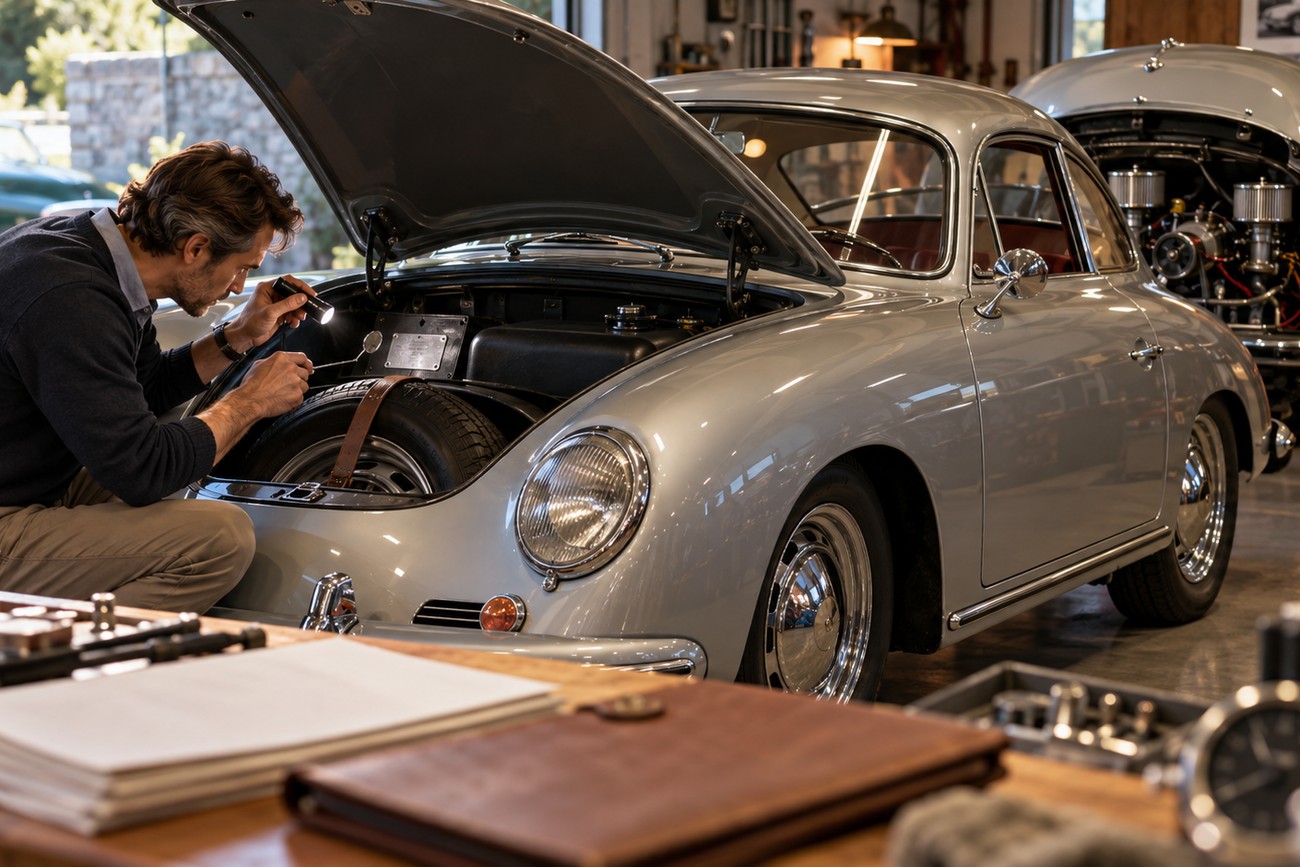
Establish what the car actually is before assigning value or buying parts. Check VIN or identification plates, body numbers, engine and component numbers, documents, and the physical configuration together. A number by itself proves little unless it corresponds to the claimed series, model year, body, and equipment.
Compare the markings with the car’s body details, interior, instruments, trim, and mechanical components. A correct-looking plate cannot confirm that every major part belongs to the car, and a replacement engine or altered body may change the project’s historical and commercial significance. Record discrepancies instead of explaining them away.
“Complete” and “mostly complete” are useful starting descriptions, not inspection results. Audit the car by major systems, then separately count small original items such as instruments, glass, seats, trim, fasteners, seals, cables, and brackets. Missing pieces in these categories can be difficult to source and may materially increase restoration cost.
Documents, numbers, and matching component information affect both negotiation and later resale. A seller’s confident description should therefore be tested against physical evidence. The safest valuation is based on what can be identified, documented, and matched, rather than on the car’s story alone.
Inspect the Structure Before Judging the Paint
Structural inspection is the decisive checkpoint. Prioritize the floors, longitudinal members, sills, pillars, reinforcements, and suspension mounting points before judging paint, chrome, or interior appearance. Rust in these areas can change the project from repairable preservation to extensive body reconstruction.
Look for corrosion in cavities, around fasteners, beneath floor coverings, inside reinforcements, and along areas that appear sealed from the outside. Visually intact paint can conceal filler, structural rust, and poor previous repairs. A smooth exterior is weak evidence if door openings, chassis alignment, or mounting points have not been examined.
Check the geometry of the door openings and the gaps around the doors, hood, and engine lid. Uneven gaps, doors that bind, and inconsistent panel lines may indicate accident damage, settling, incorrect replacement panels, or distortion from earlier welding. These clues deserve attention before any assumption about originality or easy repair.
The 356 uses many welded and stamped body elements, so restoration commonly requires accurate panel fitting and fabrication rather than simple bolt-on replacement. Incorrect panels can create a chain of fit problems across adjacent sections. Replacing one visible panel may therefore expose or create alignment work elsewhere.
A complete assessment may require extensive disassembly, potentially down to the bare body. That is why an early structural inspection by a 356-specific specialist is valuable: it can identify whether the attractive surface reflects sound structure or merely postpones the difficult part of the project.
Assess the Stored Systems Before You Touch the Engine
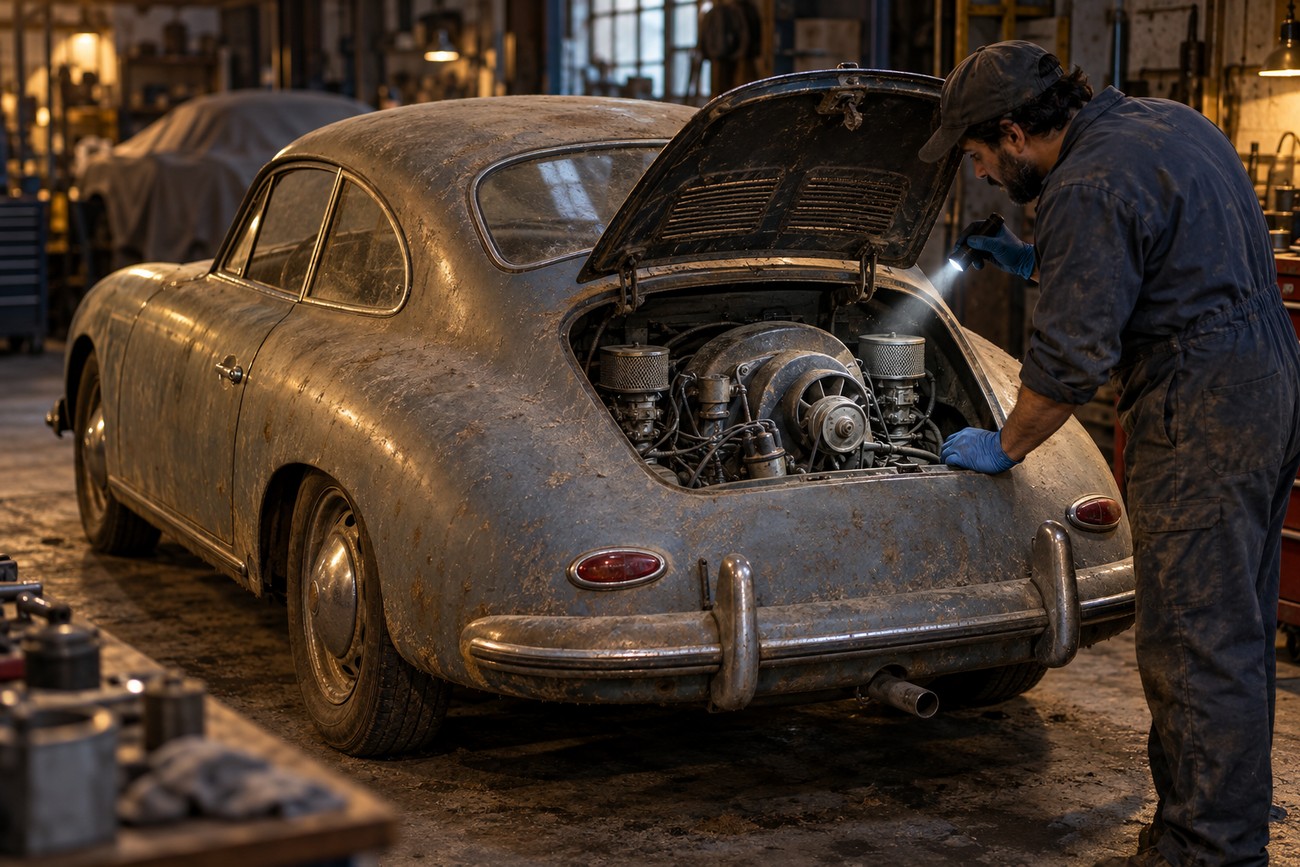
Approach the engine as a stored mechanical assembly, not as a machine waiting for fresh fuel. Assess oil condition, compression, mechanical freedom, fuel-system contamination or blockage, cooling-related concerns, wiring, and electrical safety before attempting to run it. The sequence matters because a dormant fault can become engine damage or a fire once the car is energized.
Long-stored fuel systems may contain degraded fuel, blocked passages, damaged hoses, and deteriorated seals. Fresh fuel does not make those components safe. The brakes also require separate attention because seized mechanisms can prevent controlled movement even when the engine and transmission appear functional.
Inspect wiring for brittle insulation, amateur repairs, rodent damage, exposed conductors, and connections affected by corrosion. Do not assume that a battery test is harmless. Energizing a deteriorated circuit can create heat where the original storage damage is least visible.
Mechanical freedom and compression should be assessed before the starter is used. Oil condition can reveal contamination or neglect, while compression information helps distinguish a potentially serviceable engine from one requiring deeper work. Cooling-related checks also belong in the assessment, even though a short start attempt may not immediately expose every problem.
The controlled objective is information, not drama. If fuel, electrical, brake, and mechanical safety have not been established, the correct next step is diagnosis by a qualified specialist rather than an improvised first start.
Barn-Find Porsche 356 Triage: What to Do in the First 24 Hours
Use the first day to preserve evidence and establish risk. The order below keeps documentation and identity ahead of operation, while separating the car’s structural condition from its cosmetic appeal.
| Priority | What to inspect | What not to do | Why it matters |
|---|---|---|---|
| Documentation | As-found position, photographs, video, markings, wiring, fluids, loose parts, and storage condition | Do not clean, move, or dismantle the car before recording it | Preserves the original configuration and evidence of existing damage |
| Identity | VIN or identification plates, body numbers, engine and component numbers, documents, and physical configuration | Do not value the car from a plate or seller description alone | Confirms whether the claimed series, year, body, and equipment correspond |
| Structure | Floors, longitudinal members, sills, pillars, reinforcements, suspension mounting points, openings, and gaps | Do not judge condition from paint or exterior shine | Structural corrosion and poor geometry dominate restoration risk |
| Fuel and wiring | Fuel contamination, blocked components, hoses, wiring insulation, connections, and electrical safety | Do not add fuel or energize deteriorated circuits | Prevents fire risk and avoids moving contamination through the system |
| Brakes | Seized brakes, lines, hoses, drums, and control movement | Do not tow or drive the car as if the brakes were serviceable | Long storage commonly leaves braking components unsafe or immobile |
| Engine assessment | Oil, compression, mechanical freedom, cooling-related checks, and signs of seizure | Do not operate the starter as the first diagnostic step | Reduces the chance of turning storage damage into engine damage |
| Parts inventory | Engine and body assemblies plus instruments, glass, trim, seats, fasteners, seals, and cables | Do not accept “complete” without a system-by-system audit | Small scarce parts can substantially change cost and schedule |
This triage does not replace a workshop inspection. It creates a defensible record before irreversible work begins and shows which unknowns must be priced before purchase or restoration.
The most useful outcome of the first day may be a decision to pause. A documented car with unresolved structural, identity, or completeness issues is easier to evaluate than a partially dismantled car whose evidence has been lost.
Count the Real Cost: Bodywork, Chrome, Interior, and Missing Parts
The engine is not automatically the largest expense in a 356 project. Bodywork, chrome, interior work, and scarce original parts can cost more than the engine alone, especially when hidden corrosion requires extensive metal repair and accurate panel fitting.
Budget pressure often comes from the accumulation of small omissions. Original instruments, glass, trim, correct fasteners, seals, cables, brackets, and upholstery details may be absent even when the major assemblies are present. Each item can require separate research, sourcing, restoration, or specialist work.
Incorrect reproduction parts can create a second expense through poor fit. A panel that looks close may disturb adjacent gaps, require additional fabrication, or force repeated paint and metalwork. Buying the correct component initially can be less costly than correcting a chain of inaccurate replacements.
Small original items deserve their own inventory because late-stage surprises usually come from missing hardware, trim, seals, instruments, and correct fittings rather than from the parts already visible in the photographs.
Before committing to a full restoration, stop and price the project from the evidence. Separate known work from unknown work, identify missing parts, and allow for hidden corrosion and rework. If the structure, identity, or completeness cannot be established, the responsible decision may be to preserve the car and defer irreversible restoration.
Choose the Right 356 Specialist Before Buying or Disassembling
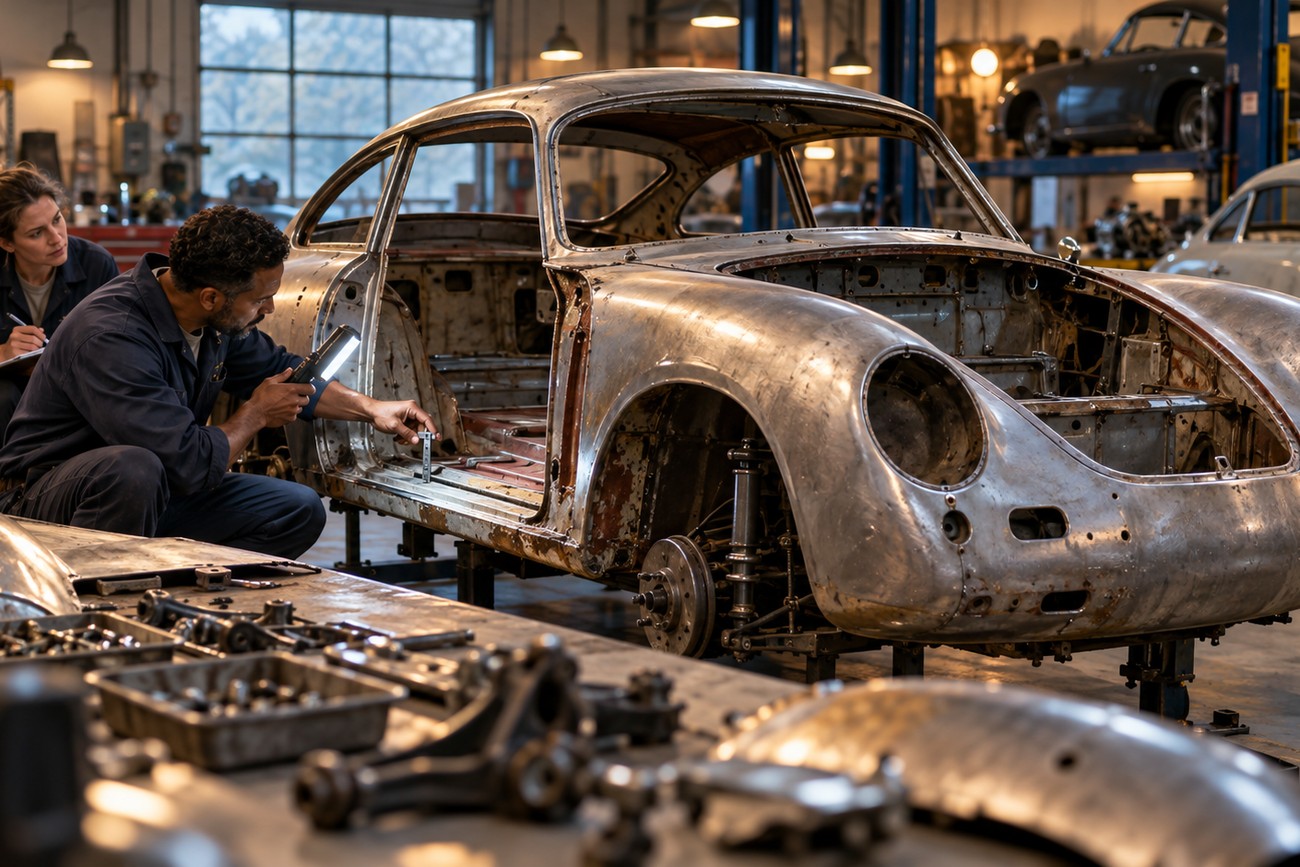
Involve a specialist familiar with Porsche 356 bodies and systems before purchase or major disassembly whenever possible. General classic-car experience does not guarantee knowledge of 356-specific construction, identification, panel fit, correct hardware, or scarce original parts.
Ask how the inspection will assess floors, longitudinal members, pillars, reinforcements, suspension mounting points, door openings, and panel gaps. The specialist should explain how hidden corrosion and previous repairs will be handled in the estimate, rather than presenting a surface-based conclusion.
Discuss identity and completeness as well as mechanical condition. Ask whether the assessor will compare numbers with the claimed configuration, inventory small original parts, and distinguish correct components from later replacements. This makes the report useful for negotiation and for planning the eventual work.
An independent assessment can show that the project’s real economics differ from its appearance or seller description. Paying for that judgment before purchase or irreversible work is usually cheaper than discovering structural or parts problems after the budget and emotional commitment have already grown.
Frequently asked questions
These answers address practical questions that are easy to overlook during an initial inspection of a Porsche 356 found after long-term storage.
What should I photograph before moving or cleaning a barn-find Porsche 356?
Photograph the entire car from every side, its position in storage, wheels, visible leaks, damage, paint defects, panel gaps, door and lid alignment, interior, engine bay, underside, and surrounding loose parts. Capture every identification mark, plate, body number, engine or component number, label, wire connection, hose, bracket, and unusual fastener.
Also record dust patterns, disconnected wiring, stored trim, damaged upholstery, missing parts, and the condition of glass and instruments. These details can establish what was original, what was already missing, and how the car was assembled before cleaning or dismantling changed the evidence.
What does matching numbers actually prove on a Porsche 356?
Matching or corresponding numbers can support the car’s identity, claimed series, model year, body, and configuration. They are useful evidence when read together with documents, physical details, and other component markings.
Numbers do not by themselves prove sound structure, originality of every component, or economic viability. A car can have credible identity evidence and still require major bodywork, scarce parts, or a complete mechanical assessment.
What is the most sought-after Porsche 356?
There is no single universal answer because desirability depends on documented history, originality, condition, body style, and market preference. The 356 Speedster and high-performance Carrera variants are commonly among the most sought-after versions, but a well-documented example with the correct configuration can be more valuable than a superficially rarer car with uncertain identity or extensive incorrect work.
For a barn find, the specific model designation should therefore be verified through numbers, documents, and physical configuration before assuming that a desirable name guarantees a worthwhile project.
What’s the rarest barn find in FH5?
Forza Horizon 5 does not provide a definitive official ranking of barn finds by rarity. The answer depends on whether rarity means the car’s production history, how it is obtained in the game, or how often players encounter it.
The game’s barn finds are fictionalized discoveries rather than evidence for evaluating a real Porsche 356. Their gameplay availability should not be confused with the historical scarcity, identity checks, and restoration risks of an actual barn-find car.
What is the holy grail of Porsches?
The Porsche 917 is often described as the marque’s “holy grail” because of its racing importance, technical significance, and extreme collectibility. The phrase is informal, however, and different collectors may apply it to cars such as a rare 356 Carrera, a 550 Spyder, or another exceptionally documented competition Porsche.
For a barn-find 356, the practical priority remains evidence. A compelling story or prestigious model label cannot replace verified identity, sound structure, complete original equipment, and a realistic restoration assessment.







