
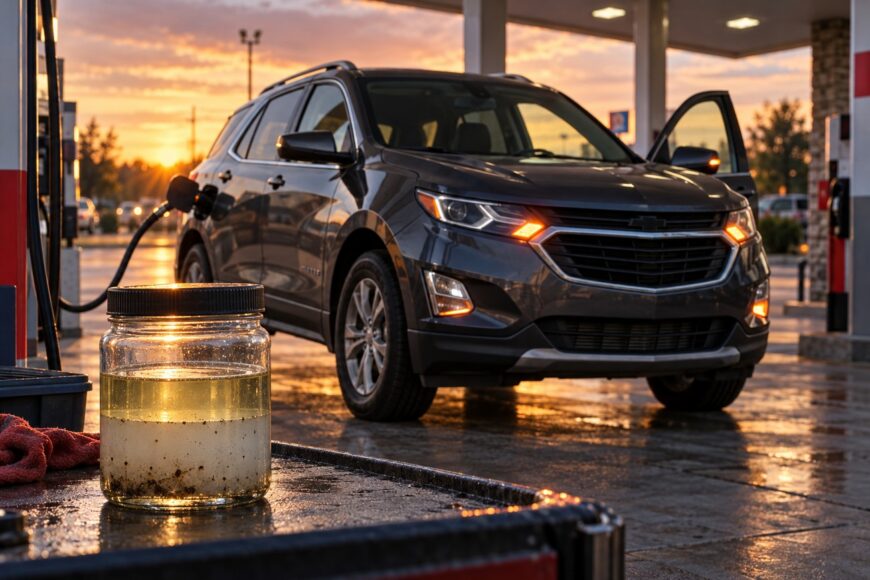
Jerking, a sudden loss of power, stalling at stoplights, or a no-start shortly after refueling can make water-contaminated gasoline a plausible cause in a Chevy Equinox. The timing matters, especially if the engine ran normally before the fill-up. Water is only one possibility, however; ignition faults, fuel-pressure problems, sensor issues, and mechanical failures can produce similar symptoms.
Stop driving when the symptoms begin, and avoid repeatedly restarting the engine. Do not assume that adding good gasoline will solve the problem. Arrange a tow if the Equinox is stumbling, losing power, or stalling, then preserve the receipt and vehicle records before the fuel is removed. A proper diagnosis should establish what is in the bottom of the tank, how the pump and filter look, and whether the contamination can reasonably be connected with the recent fill-up.
- What Water in Gasoline Does to a Chevy Equinox
- What to Do Immediately After a Suspected Bad Fill-Up
- How a Shop Should Confirm Water in the Fuel
- The Correct Repair: Drain, Flush, and Inspect the Fuel System
- Where the Water Came From—and How to Document a Claim
- Common Myths and Service Mistakes That Make the Damage Worse
- Frequently asked questions
- How long does HEET take to remove water from gasoline?
- How do I reset a water-in-fuel warning on a Chevy Equinox?
- How can I tell whether the problem is water in the tank or a bad fuel pump?
What Water in Gasoline Does to a Chevy Equinox
Water is heavier than gasoline and does not mix with it. It settles at the bottom of the tank, close to the fuel pickup, where the pump draws fuel for the engine. Automotive gasoline is expected to contain only trace moisture, with about 20–25 mg/kg or less used as an orientation; higher amounts are treated as contamination.
This explains why a contaminated Equinox may jerk, hesitate, lose power, develop an unstable idle, become difficult to start, or stall. The engine may receive a mixture with too little usable gasoline when the pickup draws from the water layer. A Check Engine light may appear as the engine misfires or fuel delivery becomes unstable, although the absence of a code does not prove that the fuel is clean.
Symptoms can change with fuel demand. During sustained driving, the engine may seem better because gasoline is being consumed and the water layer is disturbed or temporarily bypassed. After the vehicle sits overnight, water can settle again directly around the pickup, producing hard starting, brief ignition followed by stalling, or a complete loss of fuel delivery.
Water also causes damage beyond the immediate drivability problem. It can corrode metal components, clog the fuel filter, and damage the fuel pump and injectors. The longer contaminated fuel circulates, the more difficult it becomes to separate the original fuel problem from secondary component damage.
What to Do Immediately After a Suspected Bad Fill-Up

Stop the Equinox as soon as it is safe if jerking, hesitation, or loss of power starts after refueling. Repeated cranking can overheat the starter and circulate contaminated fuel through the pump, filter, lines, and injectors. If the vehicle stalls or will not maintain power, use a tow service rather than attempting to reach a repair shop under its own power.
Do not top off the tank with good gasoline as a dependable fix. Dilution may reduce the concentration of a very small amount of moisture, but it does not remove a substantial water layer from the bottom of the tank. The vehicle may run briefly and still retain water, sediment, and corrosive contamination where the pump pickup is located.
Preserve evidence before authorizing disposal of the fuel. Keep the receipt and record the station address, pump number if available, time of purchase, fuel volume, vehicle mileage, and the approximate time the symptoms began. Photographing the receipt and dashboard warnings can help if the original paper fades or is lost.
- Keep the fuel receipt, payment record, and repair order.
- Write down the exact symptoms and their timing after refueling.
- Ask the shop to document the fuel sample, tank condition, filter condition, and pump-module findings.
- Keep replaced parts and photographs if a component is found corroded or contaminated.
A vehicle that still starts and moves is not necessarily safe to drive. Continued operation can accelerate corrosion and fuel-system wear, while a water layer may cause an unexpected stall in traffic. Prompt testing protects both the vehicle and the quality of any later claim.
How a Shop Should Confirm Water in the Fuel
A fault-code scan is useful, but it is not a fuel-quality test. The shop should first record fuel pressure, drivability symptoms, and relevant codes, then compare those findings with the timing of the fill-up. Ignition faults, injector faults, sensor problems, and mechanical issues must remain part of the diagnosis until the fuel itself has been checked.
The most informative sample comes from the bottom of the tank, where water concentration is highest. A sample taken only from the fuel line may look reasonably clear because it does not reach the lowest point where free water and sediment have settled. The sample should be examined for separation, cloudiness, sediment, and an unusual stale or sour fuel odor, with laboratory testing used when the result or a claim requires stronger evidence.
The technician should inspect the filter and the fuel-pump module for rust, corrosion, debris, or signs of water exposure. These findings can indicate prolonged or repeated contamination, although they do not by themselves identify a particular fuel station. The pump may also have suffered electrical or mechanical damage after operating with restricted or contaminated fuel flow.
The timing remains important. A sudden change immediately after a fill-up supports contaminated fuel as a working diagnosis, but it is not conclusive proof. A careful shop will compare the sample and component condition with fuel-pressure results, misfire data, injector operation, and the Equinox’s maintenance history rather than replacing parts based on timing alone.
The Correct Repair: Drain, Flush, and Inspect the Fuel System
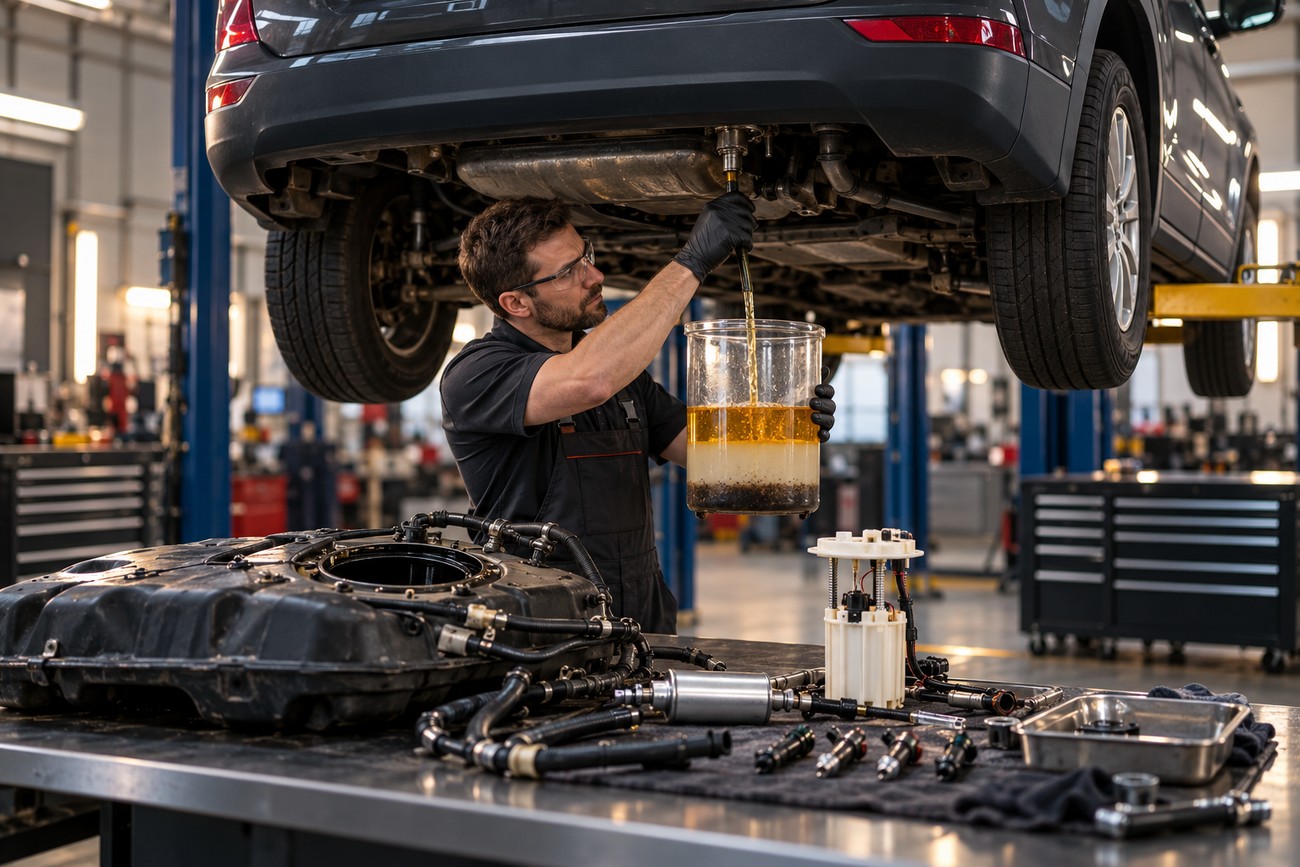
Meaningful water contamination generally requires mechanical removal. The shop should remove the contaminated fuel, clean or flush the tank and relevant fuel lines, evaluate the fuel filter, and inspect the pump and injectors. If the filter has been exposed to a significant amount of water or sediment, replacement is commonly appropriate.
Siphoning only part of the tank is often inadequate. Because water is heavier than gasoline, it can remain on the tank bottom with sediment even after much of the gasoline has been removed. A repair that leaves the lowest section of the tank contaminated can produce the same hesitation or no-start condition again as soon as the pump draws from that area.
The pump module deserves particular attention. Rust or corrosion on the pump, sender, wiring, or surrounding metal can indicate that contamination has already caused damage. Injectors should be checked when the engine has run roughly, misfired, or lost power, because contaminated fuel can affect their flow and may carry fine debris through the system.
Fuel-drying or water-dispersing additives have a limited role. They may help with a small amount of moisture after circulation, but they cannot safely deal with a substantial settled water layer, remove sediment, or reverse corrosion. Adding an additive to a visibly contaminated tank can delay the correct repair while the pump and injectors continue to be exposed.
Cold weather adds another failure mode. Water can freeze in the fuel filter or fuel line and stop fuel delivery completely, making the Equinox difficult or impossible to start or continue driving. Thawing may restore temporary flow without correcting the contamination, so a vehicle that starts after warming still needs the fuel system checked.
Where the Water Came From—and How to Document a Claim
Water can enter gasoline through more than one route. Poorly maintained station storage tanks, inadequate condensate control, and drainage problems are recognized possible sources. A station may have storage or maintenance records that are relevant, but the presence of water in your tank alone does not automatically prove which station caused it.
Owner-side causes also deserve consideration. Refueling during heavy rain, a damaged or poorly secured filler cap, or a problem around the fuel-door and filler area can admit water independently of station negligence. Repeatedly driving with a nearly empty tank during sharp temperature changes can also promote internal condensation.
For a practical claim, preserve the receipt, payment confirmation, mileage, diagnostic report, repair invoices, photographs, and removed parts. Ask the shop how the fuel was sampled and stored. A credible result benefits from sealed samples, documented handling, appropriate sampling points, and witnesses or an equivalent chain-of-custody procedure.
An ordinary repair invoice may show that contaminated fuel was found and that a pump or filter was damaged. It may not conclusively establish which fill-up caused the contamination or whether water entered through the vehicle. Formal sampling, prompt documentation, and station records provide a stronger basis for determining causation.
Common Myths and Service Mistakes That Make the Damage Worse
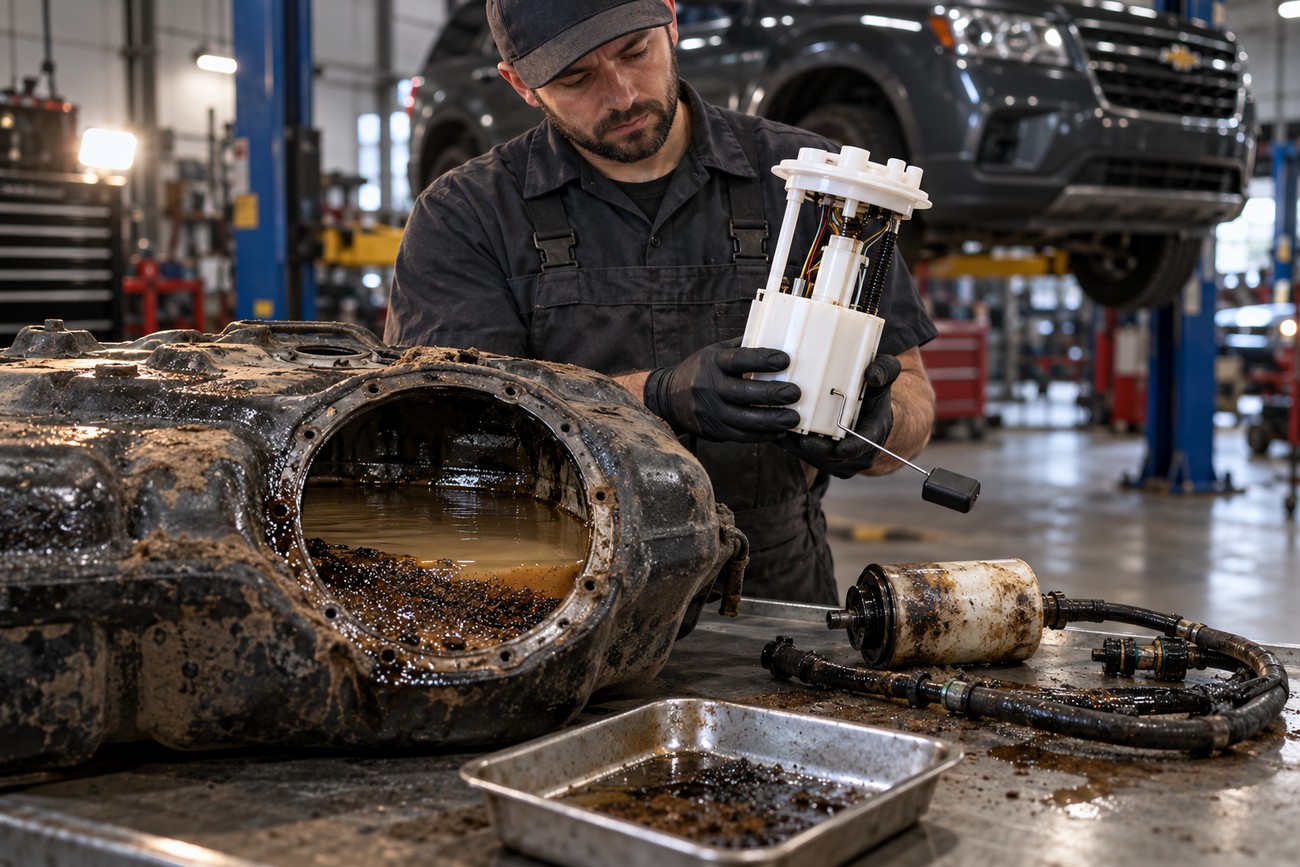
The factory fuel filter is primarily intended to catch particles and handle limited emulsified contamination. It is not designed to separate a large pool of free water settled at the bottom of the tank. Treating the filter as a water separator can allow contaminated fuel to reach the pump and injectors while giving the owner false confidence.
Replacing only the pump or filter can also produce a repeat failure. Residual water and sediment in the tank may damage the replacement component, while contaminated lines can send the same material back through the system. A proper repair addresses the source of contamination and inspects the parts that have already been exposed.
Marketing claims that fuel contains absolutely no water are stronger than real-world storage conditions support. Gasoline is expected to contain only trace moisture, while condensation, tank maintenance, and drainage problems can create contamination risks. This does not establish that every post-refueling failure is the station’s fault, but it does justify testing rather than relying on a guarantee.
Water-related failures may later be recorded broadly as fuel contamination, pump wear, or component failure. That can make the original cause less visible in repair records. An additive is reasonable only for a very small suspected moisture amount and should never be used as evidence that a tank with visible or substantial contamination is safe.
Frequently asked questions
The answers below apply to suspected water contamination in a gasoline-powered Chevy Equinox. Model year and fuel-system configuration can affect the exact warning message and repair procedure, so the vehicle should be identified correctly before parts are ordered.
How long does HEET take to remove water from gasoline?
There is no reliable countdown that makes a meaningful amount of water disappear from an Equinox fuel tank. An alcohol-based dryer may disperse a small amount of moisture after the treated fuel circulates, but it cannot make a substantial settled water layer safe or remove water and sediment from the bottom of the tank.
It also cannot undo corrosion already caused in the pump, filter, or injectors. If the Equinox stalls, repeatedly hesitates, will not start, or testing finds visible separated water, waiting or adding more product is unsafe. The appropriate response is fuel removal, system inspection, and cleaning or replacement of affected components.
How do I reset a water-in-fuel warning on a Chevy Equinox?
Resetting a warning or clearing a scan code is not a repair. The technician must first establish whether that particular Equinox has a dedicated water-in-fuel sensor or whether the message is actually reporting a broader engine or fuel-system fault. A scan tool can clear the stored information after repairs, but it cannot remove water or restore a damaged pump.
The warning should be diagnosed and cleared only after the underlying problem has been corrected. If it returns, the vehicle needs further testing rather than repeated resets. A symptom-free dashboard after clearing codes does not prove that the tank, filter, lines, or injectors are clean.
How can I tell whether the problem is water in the tank or a bad fuel pump?
The timing after refueling is an important clue, but it cannot distinguish the causes by itself. A bottom-of-tank fuel sample, fuel-pressure testing, and inspection of the pump module provide stronger evidence. Water separation, sediment, or corrosion supports contamination as the root cause, while a clean tank with an electrical or mechanical pump fault points in another direction.
Replacing the pump alone can misdiagnose the problem if water remains in the tank. If a new pump fails soon after installation, the shop should recheck the fuel condition and the rest of the delivery system before fitting another component. The diagnosis should also consider ignition, injector, sensor, and mechanical faults that can mimic a failing pump.







