
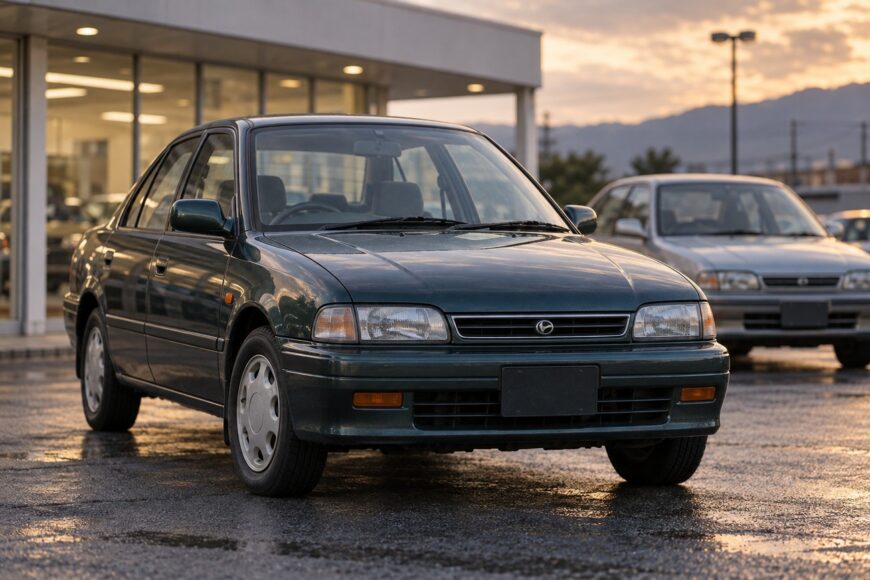
A rare sedan with an unfamiliar badge can look like a distinct Mazda creation. The Autozam Clef asks something different of a buyer: understanding the Mazda sedans behind it. That family connection can open up a useful parts search, but treating every related car as an exact donor risks ordering the wrong trim, lamp, or electrical component.
The badge also sets expectations. A Clef is uncommon, yet its appeal does not rest on an exclusive chassis or an automatic claim to collector value. Its story begins with Mazda’s Japanese dealer network and becomes most useful when you are inspecting, maintaining, or trying to identify a particular car.
- What Was the Autozam Clef, Really?
- Why a Familiar Mazda Wore an Autozam Badge
- Autozam Clef and Related Mazdas: What Can Be Cross-Shopped?
- Engines and Specifications: Why the Exact Car Matters
- The Ownership Catch: Finding Parts and Repair Information
- Buying a Clef Without Paying for the Badge
- Frequently asked questions
- How much does an Autozam Clef cost today?
- Is there a Mazda model year to avoid when buying a Clef?
- Where can I find a wiring diagram for an Autozam Clef?
What Was the Autozam Clef, Really?
The Autozam Clef was sold in Japan from 1992 to 1994 under Autozam, a separate Mazda dealer marque. It was a rebadged sedan related to the Mazda Cronos/626 family, rather than an independently engineered model. Despite the Autozam name’s association with smaller cars, the Clef was a conventional sedan, not a kei car.
That origin explains both its familiarity and the confusion around it. Mazda used different model names across markets and periods, so a listing that calls a Clef a “626” may point toward helpful technical information without identifying an exact equivalent. Capella is another name that appears in discussions of related Mazdas, but its application should be checked against the market and year rather than assumed.
For an owner, the distinction is practical. Platform ancestry is a starting point for researching mechanical parts and service procedures; the specific vehicle identifier, equipment, and original part number determine whether a proposed match is credible. A workshop that knows the Cronos or 626 may have relevant experience, provided it does not treat the Clef badge as the only specification it needs.
The short Japanese sales period helps explain why Clef-specific information and used parts can be harder to find than information for its better-known relatives. It does not, by itself, reveal how a surviving car was equipped. Its paperwork and fitted components deserve closer attention than a generic online model description.
Why a Familiar Mazda Wore an Autozam Badge
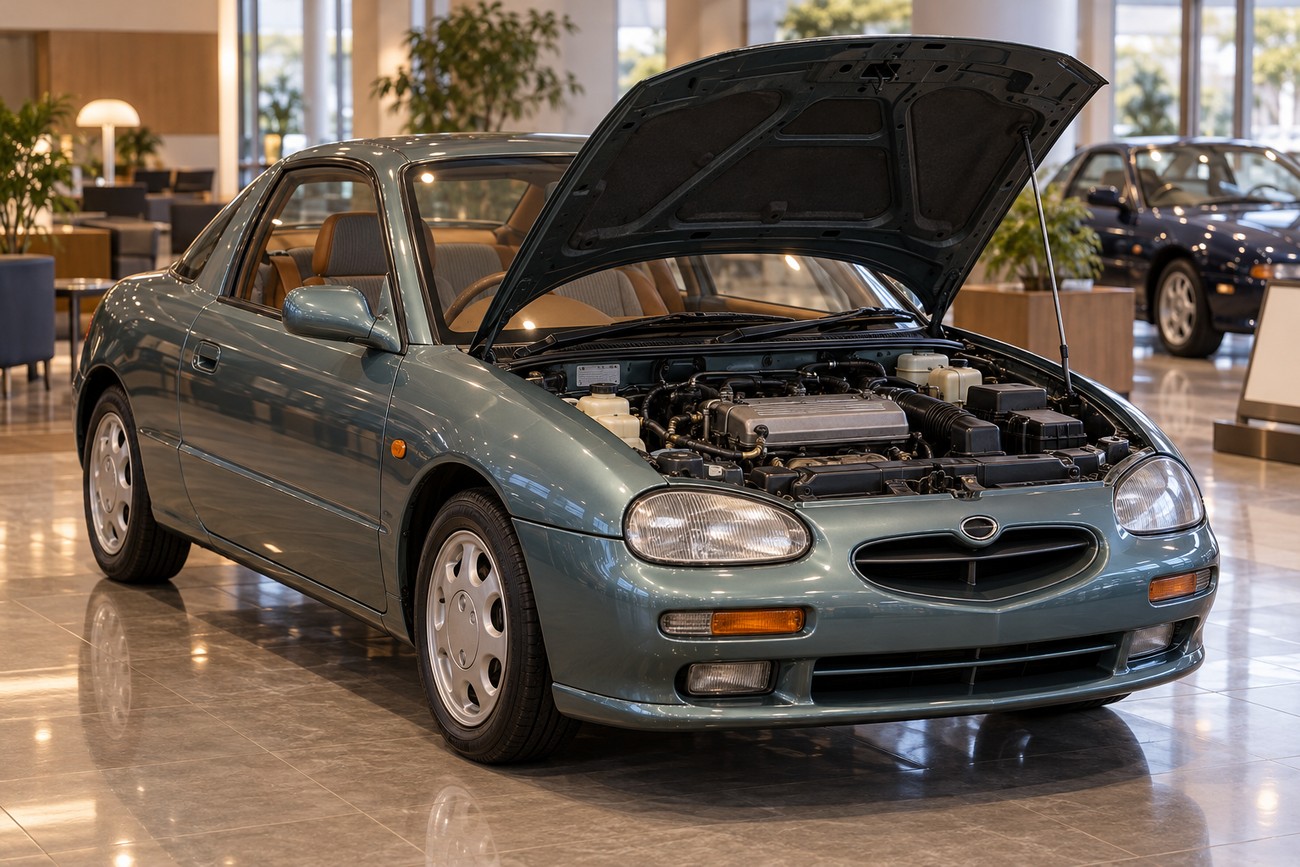
Autozam gave Mazda another way to present a familiar type of car through its Japanese dealer network. The Clef’s grille, emblems, and selected interior finishes could distinguish it from related sedans at a glance. Those details matter now because they are among the parts an owner may have the most trouble replacing accurately.
Underneath that presentation, the Clef shared its main technical basis with related Mazda sedans. The badge should therefore not be read as evidence of a special powertrain or a fundamentally more sophisticated chassis. Anyone expecting a technically premium car may find the ordinary upkeep of an aging sedan more relevant than the marque’s image.
Visual differences also create a small trap for buyers. A car wearing an appropriate Autozam emblem may have acquired replacement trim from a related Mazda, while another may have lost its original grille or cabin pieces altogether. Photos of an apparently complete Clef are useful, but close inspection of fit, finish, and equipment tells a fuller story.
Rarity can make a tidy, complete example interesting. It can also narrow the pool of buyers willing to wait for a specific part or work through uncertain documentation. Condition and completeness carry more practical weight than the badge alone when judging whether a particular Clef is worth pursuing.
Autozam Clef and Related Mazdas: What Can Be Cross-Shopped?
Catalogs for related Mazdas can widen a Clef parts search. Treat every result as a candidate until the original part number and the details of the car confirm it.
| Part category | Where to look for a candidate | What to verify before ordering |
|---|---|---|
| Mechanical service parts and assemblies | Clef records first, then catalogs for the relevant Cronos/626-family car | Vehicle identifier, engine and transmission application, original part number, and physical fit |
| Grille, emblems, and exterior trim | Clef-specific used parts and original Mazda part-number searches | Shape, mounting points, finish, and whether the piece belongs to the car’s equipment |
| Body panels and lighting | Related-model listings as leads, with Clef-specific parts considered where available | Panel edges, brackets, lamp housings, connectors, and market configuration |
| Interior pieces and controls | Clef donor parts or closely matched Mazda trim catalogs | Dashboard layout, mounting tabs, finish, and right-hand-drive fit |
| Electrical components | Original Clef documentation, followed by diagrams and catalogs for related cars | Year, equipment, connector shape, pin assignments, and original part number |
“Mazda 626” alone is too broad a description to settle compatibility. A seller may have classified a part by the best-known family name even when its brackets, finish, or wiring suit a different version. Ask for the part number and clear photographs of both sides of the item, especially where a small mismatch would stop installation.
The search can work in the other direction, too. A Clef-specific listing may omit a Mazda part number that makes equivalent stock easier to locate. Finding that number is valuable, but the final check still belongs to the individual car and the part being replaced.
Engines and Specifications: Why the Exact Car Matters
A related Mazda’s specification sheet is a poor substitute for identifying the Clef in front of you. Engine, transmission, year, and equipment determine which service information and parts may apply. Start with the vehicle identifier and its documentation, then confirm that the installed components agree with those records.
Published summaries of rare models can repeat one another without resolving differences between versions. Claims about Clef engine families, configuration, or output need support from a primary Clef catalog or factory documentation before they can be treated as established specifications. Transferring a figure from a Cronos or 626 listing only adds another uncertain link.
This matters even for routine maintenance. A supplier might locate a plausible component through a related model, while the exact engine or transmission application changes the required part. Record the identifiers visible on the car and compare them with the original catalog entry rather than ordering from a short model-name dropdown.
Equipment deserves the same discipline. A surviving car may have received replacement units or interior pieces over its life, so what is installed now does not necessarily describe its factory configuration. Keeping those two questions separate—what the car was built with and what it currently uses—makes diagnosis and future orders more reliable.
The Ownership Catch: Finding Parts and Repair Information
The Clef’s Mazda ancestry helps with common research, but its uncommon identity can slow a repair. Model-specific grilles, cabin trim, and small fittings may take longer to locate than ordinary service items. A car that drives well yet lacks one visible piece can be more difficult to return to its original appearance than its familiar mechanical layout suggests.
Begin a parts request with the vehicle identifier and equipment details. Find the original part number where documentation allows, then compare the proposed replacement’s mounting points and connectors with the item on the car. Only after those checks should a related Mazda part become a purchase candidate.
Repair information calls for similar care. Clef-specific material may be limited, and a related Mazda manual can help explain a shared system, but it should not be assumed to reproduce every trim detail or electrical connection. Mark any differences found during a repair so the next diagnosis does not start from the same uncertain assumption.
Right-hand-drive Japanese-market layout is another filter. Interior parts, controls, and some body or electrical items sourced from other markets may look close in a photograph yet fit differently. Verify which side and configuration a listing represents before treating an overseas donor as interchangeable.
Buying a Clef Without Paying for the Badge
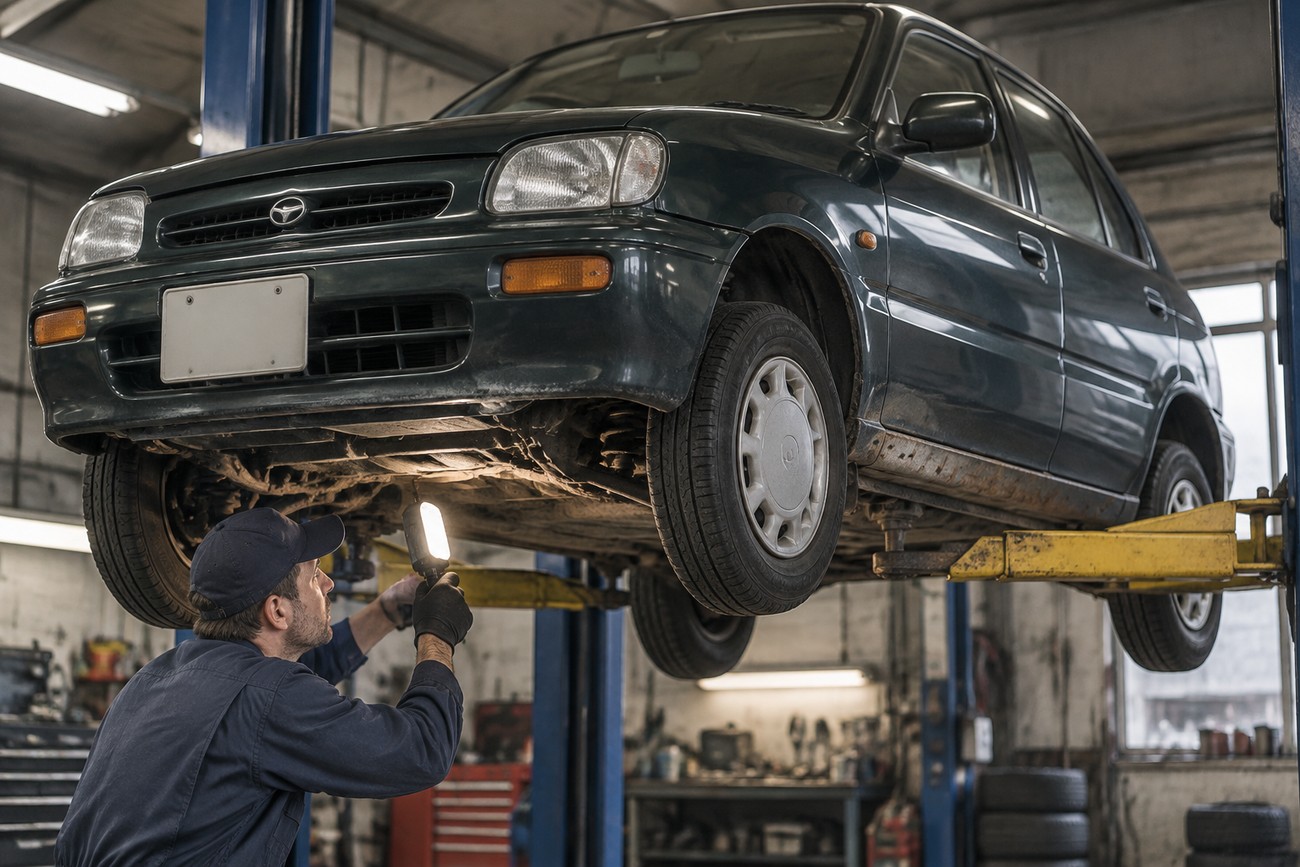
Begin an inspection with the body rather than its rarity. Examine the wheel arches, sills, and underside for age-related corrosion, then look for signs that earlier repairs have hidden rather than resolved damage. A tidy badge and fresh-looking paint cannot establish the condition of metal underneath.
Next, check whether the Clef-specific pieces are present and secure: grille, emblems, exterior details, and cabin trim. Missing or damaged items deserve attention because sourcing a correct replacement may take more time than finding a conventional mechanical service part. The issue is as much the search and verification effort as the item itself.
Compare the installed engine, transmission, controls, and other equipment with the car’s documents. Parts from a 626 or Cronos may have kept a Clef usable, but their presence cannot establish its original specification. If a replacement was fitted, determine whether it works properly and whether future parts can be identified from what is actually installed.
A sensible purchase decision weighs the condition of the structure, the completeness of the car, and the likely difficulty of unfinished repairs. Rarity can reward an owner who wants this particular badge and is prepared to research it. It offers little protection against corrosion, poor previous work, or a long wait for missing trim.
Frequently asked questions
Buying questions about the Clef usually come down to evidence for the individual car. These checks help put an asking price, a model-year claim, or a workshop document in context.
How much does an Autozam Clef cost today?
There is no dependable universal Clef price: condition, location, and the small number of comparable sales all affect an offer. Compare available completed sales of similarly complete cars rather than treating a rare advertisement as a market benchmark. Add transport, applicable taxes, and a realistic estimate for corrosion work or missing parts before deciding what the purchase would cost you.
Is there a Mazda model year to avoid when buying a Clef?
No general “bad Mazda year” rule can replace an inspection of a specific Clef. Check its vehicle identifier, service history, corrosion, and evidence of previous repairs; if relevant service campaigns are documented for that exact vehicle, verify their status through an appropriate Mazda source. A well-documented car deserves a different assessment from a neglected one of the same year.
Where can I find a wiring diagram for an Autozam Clef?
Start by seeking Japanese Clef factory documentation or catalog material using the car’s identifier and equipment details. A diagram for a related Mazda may help trace a system when Clef material is unavailable, but match the year and configuration first, then verify connector locations and pin assignments on the car before testing or modifying wiring.







