
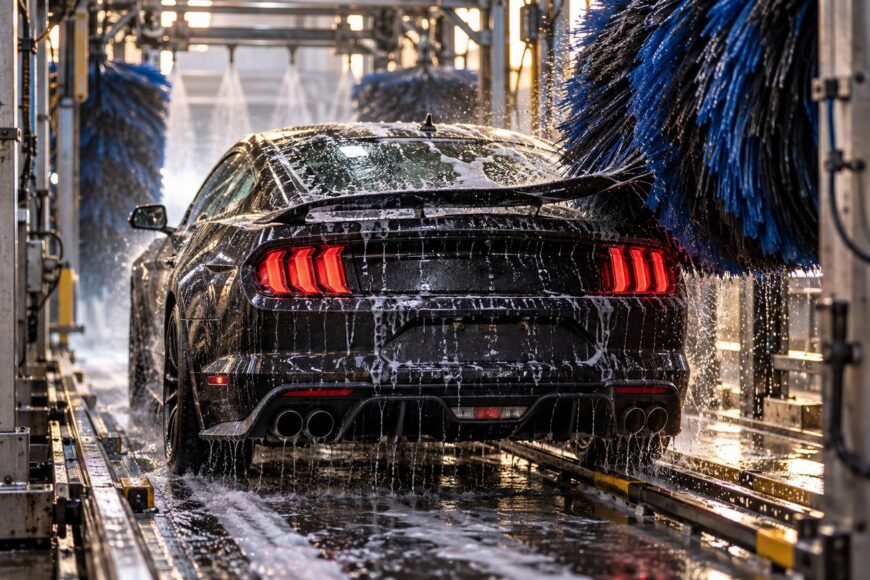
The moment a conveyor brush catches a Mustang spoiler, the event can escalate quickly. A brush may pull upward or sideways, a guide may strike the rear bodywork, or drying equipment may load an already exposed edge. The spoiler can remain attached while its fasteners, mounting points, or surrounding paint have already been damaged.
The wash may point to a liability waiver, while you need to establish what actually caused the loss. The spoiler might have had pre-existing weakness, the equipment might have been unsuitable or faulty, or both factors may have contributed. Neither side is automatically correct; the wording of the rules, the vehicle’s condition, the equipment, and the available evidence all matter.
- What Can Actually Happen to a Mustang Spoiler in an Automatic Wash
- What to Do Immediately After the Wash Damages Your Car
- Can a Car Wash Waiver Make the Damage Your Problem?
- How to Build a Strong Car Wash Damage Claim
- Which Wash Is Safest for a Mustang Spoiler?
- The Hidden Reasons Automatic Washes Damage Spoilers
- How to Prevent the Next Spoiler Failure
- Frequently asked questions
- What should I do if I discover the spoiler damage after leaving the car wash?
- What to Do if a Car Wash Damages Your Vehicle?
- Which Type of Car Wash Is Safest for a Mustang Spoiler?
What Can Actually Happen to a Mustang Spoiler in an Automatic Wash
Any exterior part that extends beyond the body profile creates another point for brushes, conveyor hardware, guides, and drying equipment to contact. A Mustang spoiler may be factory-installed or aftermarket, yet its position still matters. A brush that passes safely over an ordinary trunk line can catch an exposed spoiler edge or apply pressure to its supports.
Contact brushes can create strong sideways forces when sand, ice, or road residue is trapped in the brush material. Excessive play in the mechanism can add impact or cause an unexpected change in direction. The same event may bend a bracket, loosen fasteners, crack the spoiler, or damage the trunk lid and nearby lamps.
A spoiler designed for aerodynamic loads during driving is not automatically designed for localized pulling, impact, or sideways loads from wash equipment. Driving forces are distributed across the part differently from the force created when a brush snags one corner. Conveyor guides can also load the lower rear bodywork independently of the rotating brushes.
Complete detachment is only one possible outcome. Microcracks, loosened fasteners, and damaged mounting points may remain hidden until vibration, weather, or a later wash makes them visible. Treat a spoiler that still appears attached as potentially unsafe until its mounts have been inspected.
What to Do Immediately After the Wash Damages Your Car
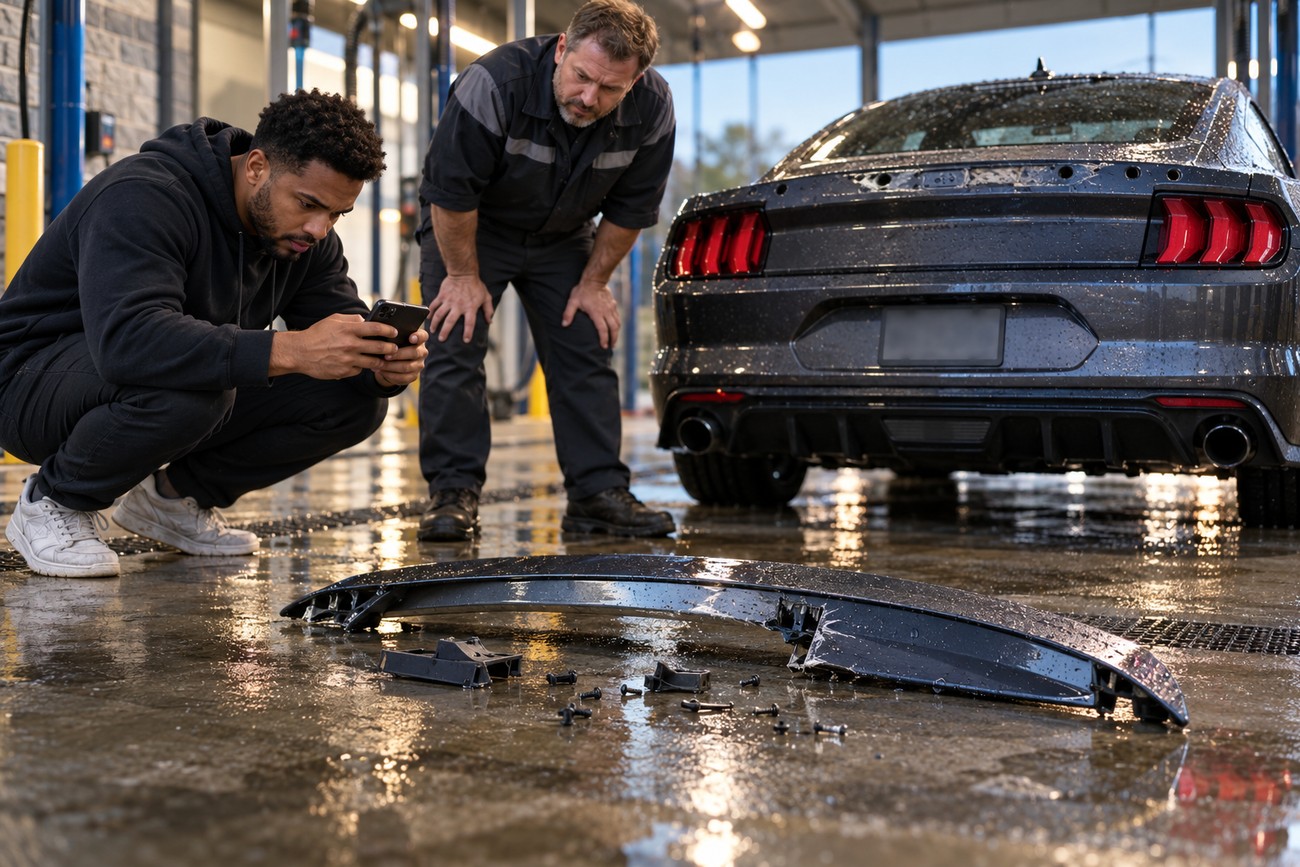
Stop using the damaged spoiler and avoid driving at speed if it is loose, cracked, or capable of separating. Photograph the vehicle from several angles, including close views of the mounts, paint transfer, broken fasteners, and any marks on the wash equipment. Keep the broken pieces, screws, clips, and fragments together rather than discarding them.
Notify the manager before leaving and ask for a written incident record describing the wash program, the vehicle’s position, the operator’s account, and the visible damage. Record the names or identifying details of staff who speak with you, along with their statements as accurately as possible. Do not authorize a cosmetic repair before the condition has been documented.
Request that the wash preserve relevant security footage and provide, where available, records of the equipment’s latest maintenance or inspection. Video may show the brush, guide, conveyor, or emergency-stop response more clearly than photographs taken afterward. Ask for the request in writing, since footage may be overwritten under the operator’s normal retention policy.
Before making a claim, arrange an independent inspection or repair assessment. Photos taken before and after washing can help, but they do not by themselves prove causation. A loose mount may fail later, so the vehicle should not be treated as undamaged simply because the spoiler remains in place.
Can a Car Wash Waiver Make the Damage Your Problem?
Car wash rules commonly limit responsibility for spoilers, body kits, antennas, mirrors, and other attached or nonstandard equipment. The same terms may require the owner to disclose exterior modifications or tuning before entering the wash. A customer who accepts those terms gives the operator an important document to rely on during a dispute.
A waiver is not automatically the final answer. Its effect can depend on the exact wording, the warnings provided at entry, whether staff inspected the vehicle, the suitability and condition of the equipment, and the law that applies to the service contract. A disclaimer may address the risk of an unusual accessory while leaving separate questions about unsafe operation or technical failure.
Safety guidance for mechanized conveyor installations generally expects basic operating controls, including a secured vehicle and an engine that is off. The installation should also operate with appropriate safeguards and low-voltage control equipment, described here as no more than 50 volts. A warning that accessories are used at the customer’s risk does not establish that every operating condition was safe.
Read the terms alongside the facts. If the wash accepted the vehicle without warning, failed to identify an exposed part, used unsuitable equipment, or continued operating after a component became trapped, those details may be relevant. The legal result remains jurisdiction-specific and depends on the evidence rather than on the waiver alone.
How to Build a Strong Car Wash Damage Claim
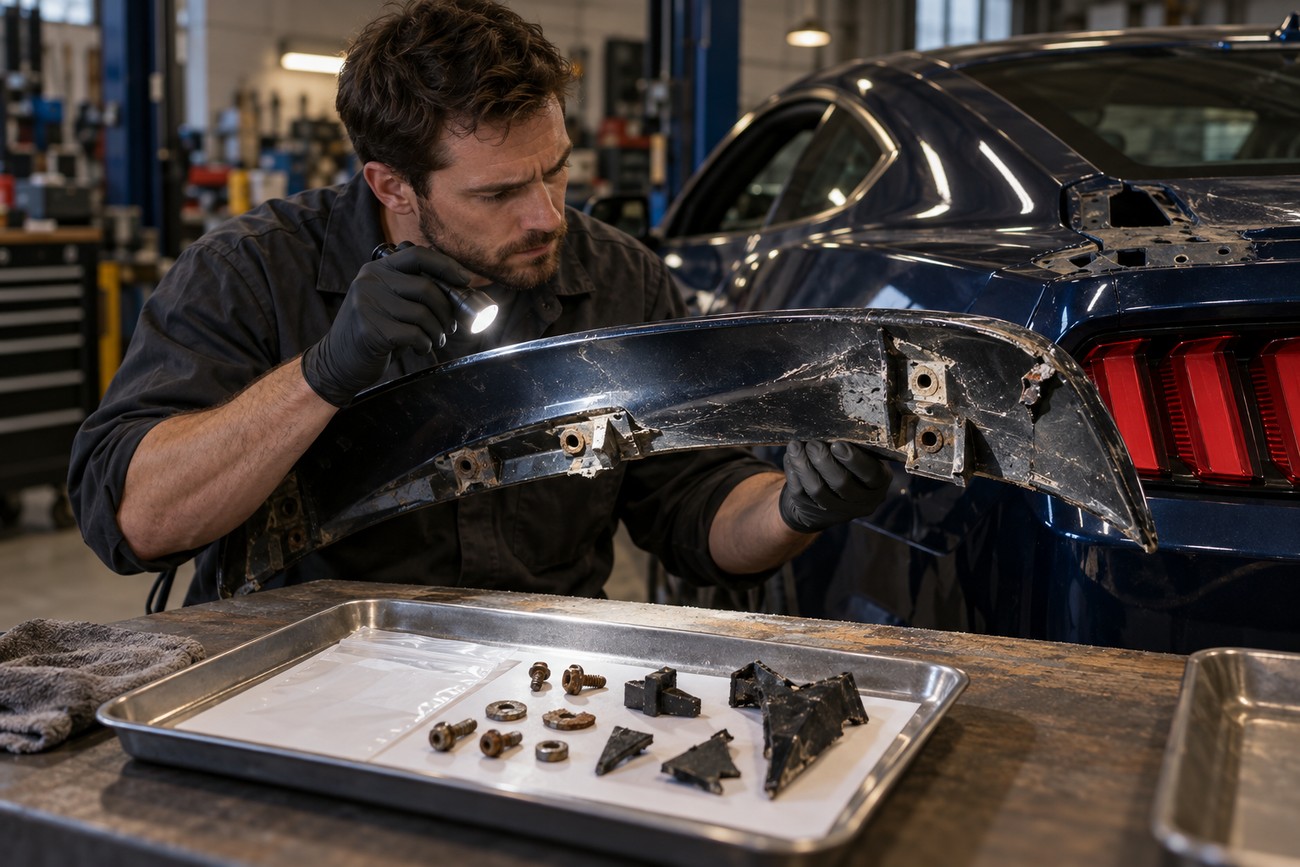
Start by preserving the spoiler and the vehicle’s condition. Obtain a written repair estimate or an independent inspection that identifies cracks, distorted mounts, fresh marks, missing hardware, and possible pre-existing deterioration. Be honest about any earlier looseness, corrosion, repairs, or modifications; hiding a known weakness can undermine an otherwise credible account.
Organize the evidence around a clear sequence: the vehicle’s condition before entry, the wash program selected, the moment of contact or the first discovery of damage, and the condition afterward. A claim is easier to assess when it connects the damage to a particular brush, guide, conveyor event, or failure to stop. Keep copies of photographs, reports, receipts, rules, emails, and messages.
Broken clips and fasteners can reveal the direction and force of a load, so they should be preserved with the damaged spoiler. Camera footage and maintenance records may also show whether the equipment responded normally before a quick cosmetic repair changes the evidence.
Compare the wash’s written exclusions with what happened in practice, then communicate in writing and ask for a specific response. You can also notify your insurer and request a coverage decision based on the policy wording. Insurers may classify wash-related damage as a service or operational risk rather than a covered loss, depending on the policy and the circumstances.
Do not assume that an insurer’s initial view or the wash’s first refusal settles the matter. If the value or safety implications justify it, an independent vehicle assessor or qualified legal adviser can help interpret the technical evidence and applicable rules. Avoid making repairs, selling the vehicle, or disposing of the damaged part before the relevant parties have had a reasonable opportunity to inspect it.
Which Wash Is Safest for a Mustang Spoiler?
Risk depends on the spoiler’s shape, mounting condition, material, and clearance. Touchless, self-service, and controlled hand washing generally reduce contact risk compared with conveyor brush systems, although no method is risk-free.
| Wash option | Contact with protruding parts | Suitability | Precautions |
|---|---|---|---|
| Conveyor brush wash | Highest contact risk because rotating brushes, guides, conveyors, and dryers can catch or load the spoiler. | Use caution with any exposed, loose, aftermarket, carbon, or complex spoiler. | Read exclusions, disclose modifications, inspect mounts, and avoid aggressive brush or drying programs. |
| Touchless automatic wash | No rotating brush contact, but high-pressure water and drying air can still affect weak mounts or damaged parts. | Generally lower risk for protruding Mustang aerodynamic parts than a conveyor brush wash. | Keep distance from damaged mounts, choose moderate settings where possible, and inspect afterward. |
| Self-service wash | Lower mechanical contact risk because you control the wand and avoid conveyor hardware. | Suitable when the spoiler is sound and the operator can keep the spray away from vulnerable edges. | Use a sensible spray angle and pressure; do not force water under a loose spoiler. |
| Careful hand washing | Among the lowest controllable contact risks when performed correctly. | Best suited to fragile, custom, carbon, or unusually shaped aerodynamic parts. | Use clean equipment, avoid lifting the spoiler by its edge, and inspect fasteners before washing. |
High-pressure water, poor technique, or a weakened mounting point can still cause trouble in a touchless or self-service wash. Lower risk describes the absence of rotating brush and conveyor contact; it does not guarantee that a damaged part will remain attached.
If a spoiler can be removed safely and practically, some experienced owners remove it and wash it separately. A removable part may take about 10–15 minutes to detach, though the correct time depends on the vehicle and hardware. Marking fasteners and protecting the paint can prevent a separate removal job from creating new damage.
The Hidden Reasons Automatic Washes Damage Spoilers
Many wash systems are configured around an average body shape rather than individually adjusted clearance and brush force for a spoiler-equipped coupe. A Mustang with an exposed wing, lip, or unusual end plate may fall outside those assumptions. A program that works on a smooth trunk profile can therefore create a different contact path around a modified rear end.
Marketing descriptions about soft or safe brushes do not remove mechanical risk. Sand and road residue trapped in brush material can add abrasion, while ice or dirt can increase resistance when the brush passes over an edge. A snag can produce a pulling force even when the brush material itself feels soft to the hand.
Safety guidance calls for a visual inspection before washing, yet formal or absent inspections at some network washes have been identified by a single source as a concern rather than a universal finding. A missed crack or loose fastener matters because the wash may complete a failure that had already begun. Owners should therefore perform their own close inspection when the part is unusual or visibly exposed.
Poorly maintained emergency-stop or interlock systems on some older installations have also been identified by a single source as a concern. If a spoiler becomes trapped and the system does not stop promptly, the duration and direction of loading can increase the damage. A wash’s safety signage and advertised brush softness are less informative than the condition and response of the actual equipment.
How to Prevent the Next Spoiler Failure
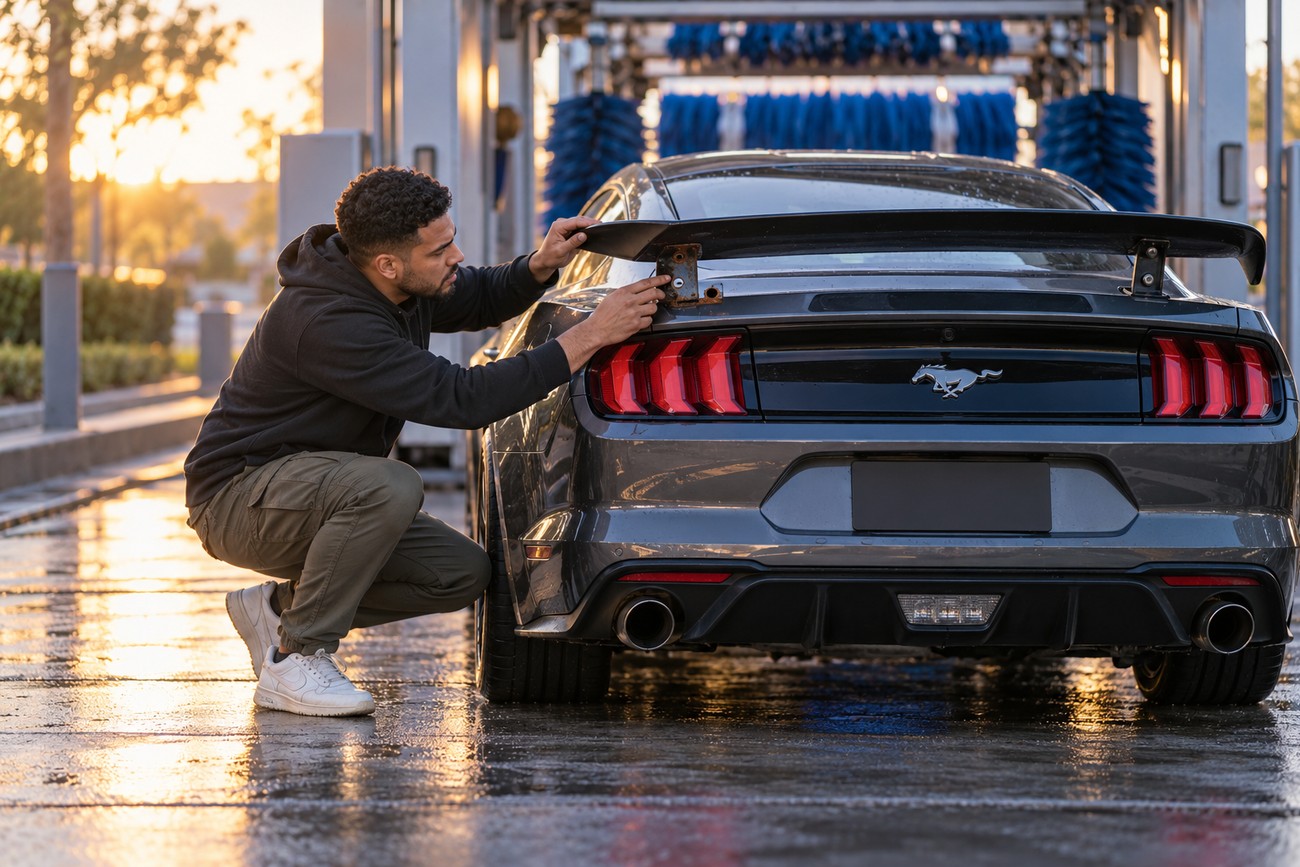
Inspect the spoiler before entering any wash. Look for cracked brackets, movement at the mounting points, corrosion, missing hardware, lifted edges, and contact marks around the trunk or rear lamps. A small amount of looseness can become a complete separation during a brush cycle, so postpone the wash until the cause has been checked.
Disclose nonstandard exterior parts and ask whether the selected program accepts them. Read the exclusions for spoilers, body kits, antennas, mirrors, and other attached equipment, then photograph the spoiler before entry. Avoid aggressive brush and drying programs when the part is unusually exposed, fragile, or made from a material that can crack around its fasteners.
Touchless, self-service, and controlled hand washing are generally lower-risk choices for complex aerodynamic parts than conveyor brush systems. Use clean tools, keep spray away from loose edges, and avoid pressing a mitt against a damaged mount. A lower-risk method still requires a sound spoiler and careful handling.
When removal is practical, taking the spoiler off before washing may be safer than relying on a brush cycle to clear it. A detachable spoiler may take about 10–15 minutes to remove. The task should be performed only with the correct tools and support for the part; rushed removal can create its own paint or hardware damage.
Frequently asked questions
What should I do if I discover the spoiler damage after leaving the car wash?
Record when and where you found the damage, photograph the vehicle before changing its condition, and return or contact the wash promptly. Ask the operator to make a delayed-discovery report and preserve the relevant camera footage. A time gap does not by itself prove that the damage existed before washing, although the gap may make the evidence harder to interpret.
Keep the vehicle available for inspection and avoid tightening, gluing, or replacing the spoiler before documentation. Note whether you heard a noise, saw a warning, or noticed a change in the spoiler during the drive away. An assessor can then compare the damage pattern with the wash sequence and any earlier wear.
What to Do if a Car Wash Damages Your Vehicle?
Make the vehicle safe, notify the manager, request a written incident record, and preserve the damaged parts. Ask for footage and equipment-maintenance information, then obtain an independent assessment before authorizing repairs. The same approach applies to damage that appears on the spoiler, trunk lid, bumper, lamps, trim, or paint.
Review the wash terms and notify your insurer, while recognizing that coverage and liability depend on the policy, jurisdiction, vehicle condition, and facts of the incident. A waiver may limit some claims, but it does not automatically determine responsibility if unsuitable equipment, unsafe operation, or a technical failure can be shown.
Which Type of Car Wash Is Safest for a Mustang Spoiler?
Touchless, self-service, and careful hand washing generally reduce the risk of mechanical contact compared with conveyor brush systems. Hand washing offers the most control for fragile, custom, or unusually shaped spoilers, provided the mounts are sound and the equipment is used carefully.
No method is risk-free if the spoiler is loose, cracked, or poorly mounted. Inspect the fasteners before washing, disclose modifications where required, and avoid high pressure or direct contact with vulnerable edges.







