
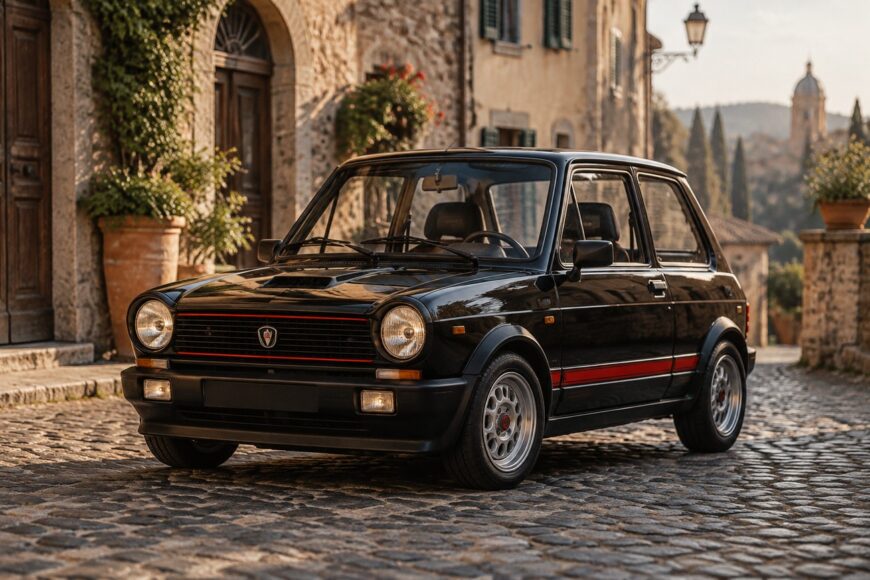
The Autobianchi A112 Abarth puts an eager engine in a tiny Italian hatchback. Its size and direct responses make it appealing on roads where a larger performance car feels out of place. That appeal is easy to understand from the driver’s seat, but it can be a poor guide to whether the car is worth buying.
A lively test drive and convincing Abarth badges can distract from corroded structure or a car assembled from parts belonging to different versions. Identify the Abarth you are viewing before judging its condition or price. Then let the shell, the evidence of its history, and the cost of making it dependable determine your offer.
- Identify the Abarth You Are Actually Buying
- Abarth 58 vs. 70 HP: Specifications Worth Checking
- Inspect the Shell Before You Start the Engine
- Check Originality Beyond the Badges
- Use a Fully Warm Test Drive to Find Mechanical Faults
- Budget for the Parts a Shiny Restoration Can Hide
- Decide Whether This Tiny Hot Hatch Suits Your Roads
- Frequently asked questions
- What should I ask a seller to photograph before traveling to view an A112 Abarth?
- How should I store an A112 Abarth between occasional drives?
- Which Abarth model is the best?
- Which year of the Fiat 500 Abarth is considered the best?
Identify the Abarth You Are Actually Buying
The Abarth 58 and Abarth 70 HP are distinct versions: the former has 982 cc and 58 PS, while the latter has 1050 cc and 70 PS. A seller’s use of “A112 Abarth” does not settle which specification is present. Establish the claimed year and version first, so that you compare the car with the right period information and with genuinely comparable examples.
Cross-check the engine against the documents and look at the carburetor arrangement, gearbox, wheels, and interior as a group. A later five-speed gearbox does not prove that every Abarth 70 left the factory with one: early Abarth 70 specifications list four speeds, and a five-speed became available later, associated with the 1979 range update. A discrepancy may reflect a documented repair or conversion, but it needs explaining before you pay for originality.
Paint and badges are easy to change, so neither establishes identity. Ask for registration records, ownership history, restoration invoices, and photographs taken before major work. Dates and descriptions on those records can help connect the present car to its claimed past, even where they cannot confirm every factory-fitted part.
Early cars may have incomplete documentation, and some attribution may remain uncertain without stronger archival evidence. That is a limit on what a buyer can confidently claim, rather than automatic evidence of dishonesty. Price the car according to the specification you can substantiate, and keep unresolved identity questions separate from its mechanical condition.
Abarth 58 vs. 70 HP: Specifications Worth Checking
Use these version distinctions as a starting point, then verify the equipment fitted to the particular year and car.
| Specification | Abarth 58 | Abarth 70 HP |
|---|---|---|
| Engine displacement | 982 cc | 1050 cc |
| Stated power | 58 PS | 70 PS at 6600 rpm, published factory output; approximately 69 US horsepower |
| Transmission identification | Check the claimed year and the car’s documentation; no single gearbox specification is asserted here. | Early specifications list four speeds. A five-speed became available later, associated with the 1979 range update; verify the specific car and year. |
Published figures vary with version, measurement conditions, and source. About 700 kg is quoted for an early 1050 cc car, while another description gives about 725 kg with a full tank. Published top speeds are approximately 155–160 km/h, and 0–100 km/h times are approximately 12.5–13.5 seconds; none of these figures guarantees an individual car’s performance.
Inspect the Shell Before You Start the Engine
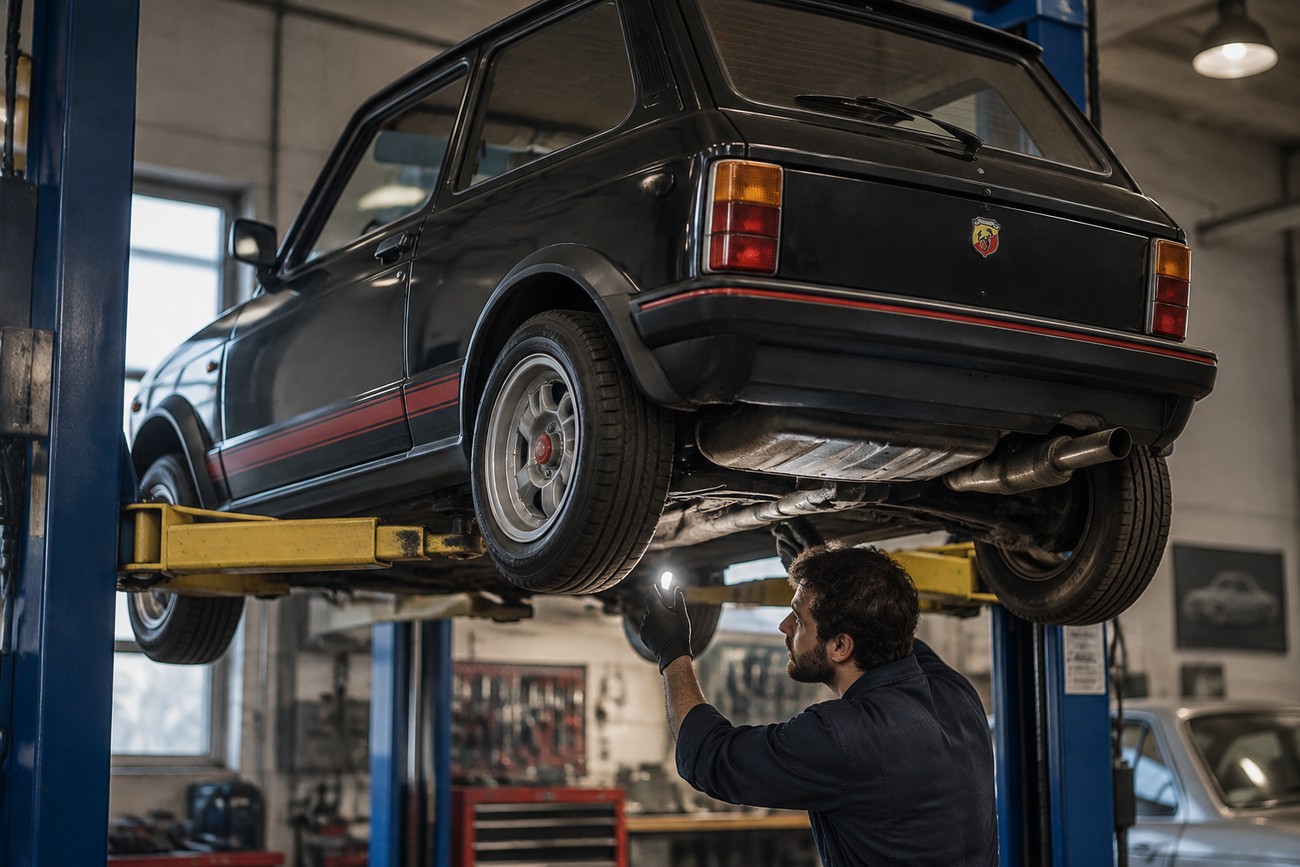
Arrange a lift inspection before committing to a purchase. Start with both sills, including their interiors where access permits, then follow the floors toward the arches. Look beyond visible paint for swollen seams, trapped moisture, perforation, and repairs that interrupt the original shape of the metal.
Next, inspect suspension mounting points and their surrounding panels, followed by concealed cavities. Examine repair edges, welds, and the condition of the metal beside each repair, rather than judging a patch solely by its finish. Request photographs or invoices for substantial bodywork; a fresh coating alone reveals little about what lies beneath it.
At a sill or suspension mounting area, a sound repair should be assessable as a repair: its extent, joins, and surrounding metal need to be visible. Fresh surface protection applied without a record of the work can make that assessment harder, even when the exterior looks tidy.
Structural findings deserve more weight than a pleasant engine note. Serious corrosion around load-bearing areas can make the purchase economically irrational regardless of whether the car has 58 or 70 PS, particularly when the extent of hidden damage is still unknown. Get a body-repair assessment before treating a low asking price as compensation for rust.
Reported trouble spots are useful inspection priorities, not a statistically verified ranking of owner complaints. A dry-looking car deserves the same methodical examination as one with obvious rust, because access to the underside and cavities determines how much confidence the inspection can provide.
Check Originality Beyond the Badges
Begin with the specification the seller claims, then compare it with what is installed. On an Abarth 70 HP, check the 1050 cc engine and the Weber carburetor together with its inlet manifold and air-filter arrangement. Finding a Weber is only the start: a mixture of parts can change how the engine runs while still looking broadly period-correct.
Apply the same scrutiny to the gearbox, wheels, instruments, interior trim, and body decoration. Record differences before viewing invoices, so that you can ask precise questions about when and why components changed. Where factory details depend on the year or series, seek matching period documentation rather than assuming a feature seen on another A112 belongs on this one.
A sympathetically restored driver with well-chosen replacement parts may be satisfying to own. Originality-minded collectors may value the same car differently if its correct fittings have been lost. Decide which outcome you want before paying a premium for a restoration described as original.
Historic FIA homologation No. 5064 relates to the A112 Abarth 70 HP and provides useful background when assessing a competition car. It does not authenticate an individual vehicle or establish that its present parts match its original build. Incomplete early records can leave some claims uncertain, so ask the seller to distinguish documented history from informed attribution.
Use a Fully Warm Test Drive to Find Mechanical Faults
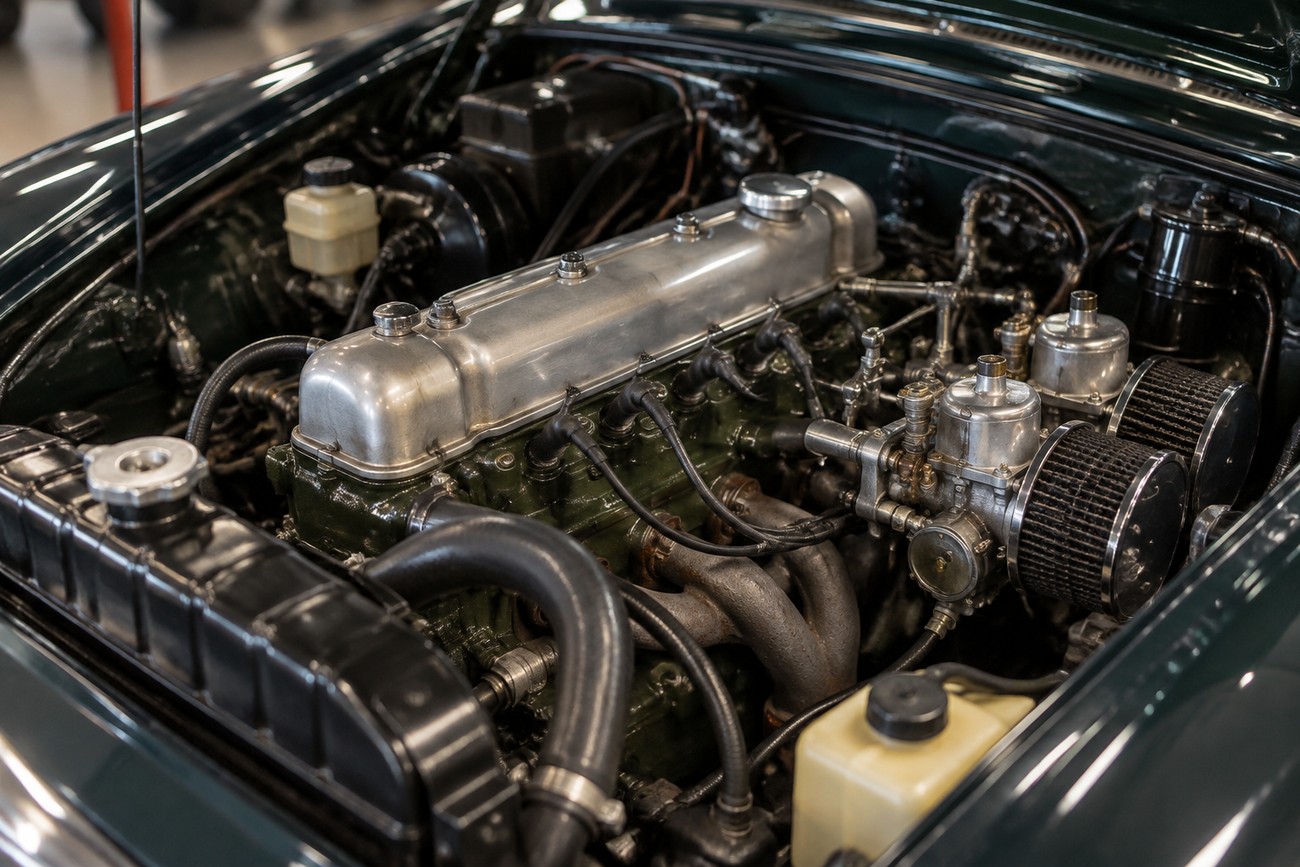
The Abarth 70 HP uses a front-wheel-drive, 1050 cc OHV inline-four with a Weber carburetor. Arrange to see the engine started cold if possible, and note whether it starts, idles, and responds cleanly as it warms. Poor starting after storage can come from the carburetor, an inlet air leak, ignition condition, or valve adjustment; it does not by itself prove that the engine needs rebuilding.
Ask for a compression test and a hot oil-pressure check, particularly if the seller describes recent engine work without supporting measurements. Listen for changes after a sustained drive and compare the results with any available service records. A short run around the block may leave both the oil and cooling system below the conditions that expose a fault.
Let the car reach operating temperature, then observe its temperature in slower traffic as well as on an open road. If it runs hot, possible contributors include the radiator, thermostat, fan, coolant plugs, and aging wiring. A cooling-system flush may be part of maintenance, but it is not a diagnosis for every overheating car.
Use the drive to check synchromesh during normal shifts and listen for drivetrain noises under power and on overrun. Inspect for driveshaft play when the car is lifted. Note the gearbox actually fitted before interpreting how it shifts, since the claimed year and transmission matter to both condition and originality.
Finally, drive on a road that resembles the one where you would use the car. Noise and a busy ride are part of judging whether this small hatchback suits you; pulling, vibration, or inconsistent running should be investigated as faults rather than dismissed as character.
Budget for the Parts a Shiny Restoration Can Hide
A presentable A112 Abarth can still require brake, fuel-system, and cooling-system work before regular use. Check the age and condition of the tires and rubber components, and review invoices for work beneath the paint and trim. A seller’s description of the car as ready to drive is less useful than a dated record of what has been renewed.
Engine service parts are generally easier to source than correct interior trim, body decoration, instruments, wheels, and series-specific pieces. Inventory missing or damaged fittings during the viewing, even if they do not prevent a test drive. Locating the right detail later may be harder than repairing a routine mechanical fault.
Altered carburetors, ignition systems, or exhausts deserve a careful look. Parts chosen without regard to the complete engine setup can complicate tuning and cold starting, while reducing appeal to a buyer who wants period-correct equipment. Ask whether removed original parts come with the car and whether there are records showing how the current setup was adjusted.
Set aside a recommissioning allowance even for a glossy example, and increase it when the history of safety-related work is unclear. That approach protects the purchase decision from a common mismatch: paying for finished appearance while inheriting the work needed to make the car dependable.
Decide Whether This Tiny Hot Hatch Suits Your Roads
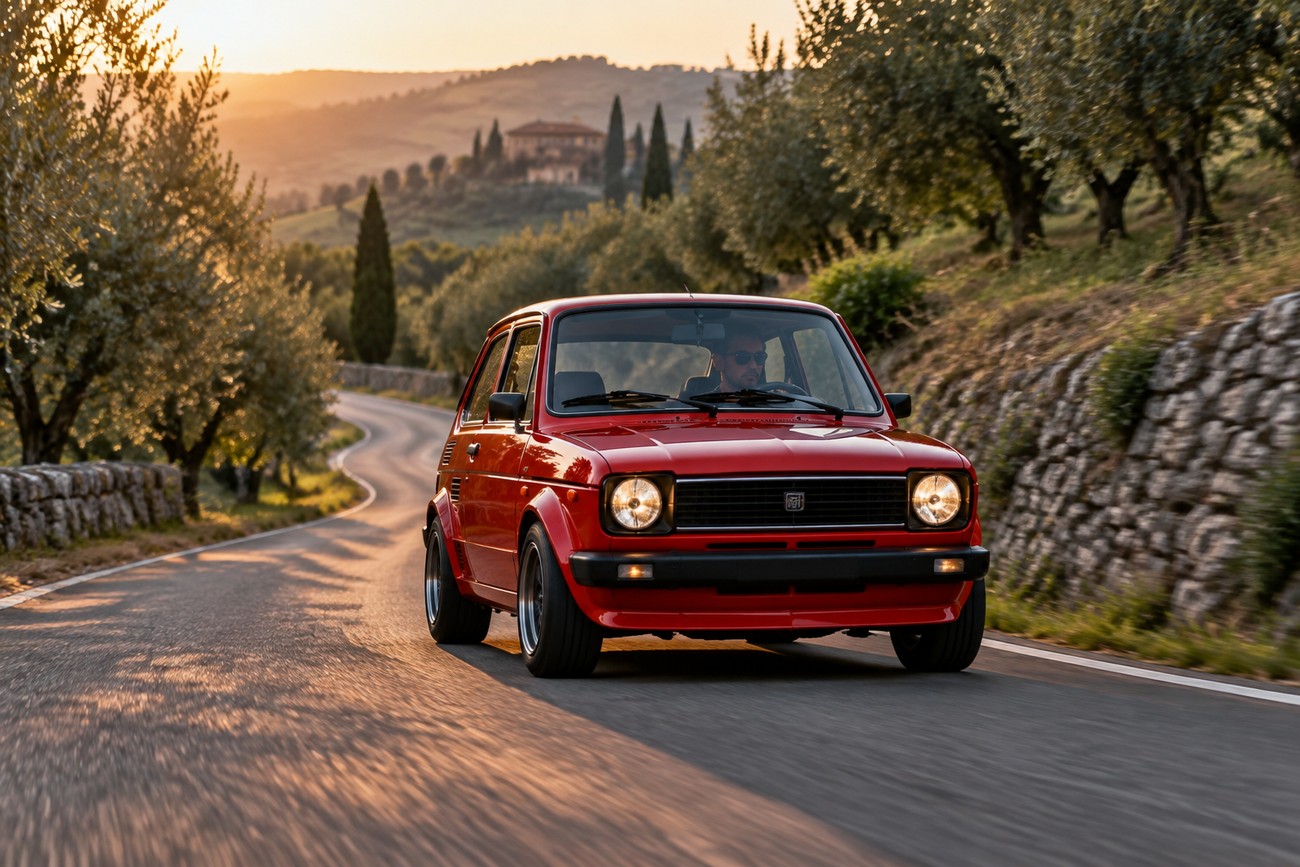
An early A112 measures about 3220 mm long and 1480 mm wide, with a 2038 mm wheelbase. Those dimensions help explain its immediate responses and its appeal on a flowing road. They also leave less margin for a settled ride on broken surfaces, where the car can feel nervous and noisy.
Low published weight contributes to that sense of agility, but the quoted figures use different conditions: about 700 kg for an early 1050 cc version, or about 725 kg in another description with a full tank. Neither figure tells you how a particular car has been restored or equipped. Judge its steering, ride, and stability through a meaningful drive rather than from a catalog entry.
Published top speeds of approximately 155–160 km/h and 0–100 km/h times of approximately 12.5–13.5 seconds vary by version and source. They provide context for the model, not promises about a used example. How readily the car starts, keeps its temperature, and behaves on your roads will matter more often than its claimed peak speed.
Favor a structurally sound, honestly documented car over a faster-sounding listing with unresolved rust or identity questions. The best purchase is the one whose condition and specification you can establish well enough to maintain and enjoy.
Frequently asked questions
These questions help narrow a search before traveling and guide care between drives. Remote evidence can rule out a poor candidate, but it cannot replace seeing the vehicle and its underside in person.
What should I ask a seller to photograph before traveling to view an A112 Abarth?
Request clear images of the identity details in the available documents, the engine bay from several angles, the carburetor and air-filter arrangement, the dashboard, seats, wheels, and any claimed series-specific fittings. Ask for well-lit underside photographs of the sills, floors, arches, and suspension mounting areas, plus records and images of previous repairs. Compare dates and identifying details across the material before booking travel.
Photographs can reveal inconsistencies and help you prepare questions, but they cannot establish the strength of concealed metal. Keep any decision on structural condition—and any final commitment that depends on it—open until a lift inspection.
How should I store an A112 Abarth between occasional drives?
Store it clean and dry in a ventilated space, following appropriate precautions for the fuel and battery during a longer lay-up. Maintain the battery according to its equipment and your storage conditions, and check tire pressures so the car is not left standing unnoticed on a soft tire. Avoid covering a damp car in a way that traps moisture against the body.
Before the next drive, check for fluid leaks, fuel-system problems, tire deterioration, and evidence of dampness. Confirm that the brakes operate normally, then warm the engine gently and watch its temperature. If the car has stood for a long time, inspect and recommission it before treating it as ready for ordinary road use.
Which Abarth model is the best?
For an A112 buyer, there is no universally best version. The Abarth 58 and 70 HP offer different specifications, and the right choice depends on whether you value a particular period and factory configuration or prefer the later car’s stated output. Compare examples within the same claimed version before drawing conclusions about value.
Choose the car with the sounder shell, clearer history, and equipment that suits your intended use. A well-documented 58 can be a better purchase than a questionable 70 HP, and the reverse can also be true.
Which year of the Fiat 500 Abarth is considered the best?
No single year can be recommended without specifying which Fiat 500 Abarth generation and market you mean. Equipment and available versions vary, so first identify the exact car you want and compare its documented specification with others from the same market.
This is a separate buying decision from the Autobianchi A112 Abarth. If you are comparing the two, arrange drives in both before choosing: the model you enjoy using and can assess and maintain with confidence matters more than a year singled out without context.







