
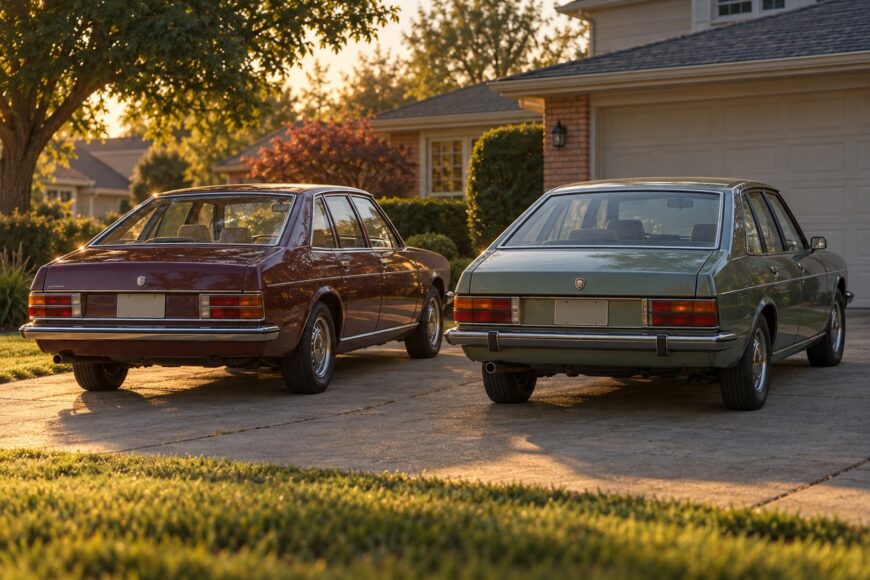
The Austin Princess presents a useful contradiction. Its sloping roof, long rear body, and formal proportions suggest a modern wedge designed around efficient space, yet the luggage compartment is a conventional boot with a separate lid. The rear glass normally stays in place when the boot opens, so the car cannot accept bulky objects in the way a liftback or hatchback can. The large-looking rear volume is therefore more visual than practical.
The name creates a second trap. “Austin Princess” can mean the large post-war Austin Princess 2-Litre presented in 1947, while “Princess 3-Litre” usually refers to the later BMC/Leyland range associated with 1956–1968. Their engines, character, and historical settings differ. Attractive advertisements and casual listings often blur those distinctions, leaving buyers to judge the wrong car by the wrong standards.
The Princess makes more sense once styling, body configuration, and real-world use are separated. It was built around presence, passenger accommodation, and six-cylinder refinement. That makes it an intriguing British classic, provided you accept the narrow loading aperture, specialist ownership demands, and the fact that rarity can make restoration harder rather than easier.
- Why the Austin Princess Looked Like a Wedge but Wasn’t a Hatchback
- Austin Princess 2-Litre and Princess 3-Litre: Do Not Mix Them Up
- A Status Car First, a Load Carrier Second
- Six Cylinders, Serious Weight, and Modest Pace
- The Ownership Problems Hidden Behind the Wedge
- What to Check Before Buying an Austin Princess
- Rarity, Collector Appeal, and the Real Verdict
- Frequently asked questions
- Was the Austin Princess a good car?
- How much is an Austin Princess worth today?
- How many Austin Princesses were made?
- What car replaced the Austin Princess?
Why the Austin Princess Looked Like a Wedge but Wasn’t a Hatchback
The word “wedge” describes the visual treatment of the body, not its method of access. A low-looking roofline, sloping rear panel, and broad rear volume give the Princess a forward-looking silhouette, especially beside more upright saloons of its period. That impression can lead a modern buyer to expect a fifth door. The relevant Princess body instead has a separate boot lid, normally opening below the rear glass.
This distinction matters as soon as the car is used. Suitcases and ordinary shopping can fit within the boot’s intended role, but a large box, tall appliance, or wide piece of furniture must pass through the available opening rather than the whole rear of the car. The boot may appear generous from outside while its aperture remains narrow. A folding rear seat, where fitted or usable, cannot fully compensate for the restricted access.
That limitation is easy to miss in photographs. Side-on views emphasize the long, uninterrupted wedge profile, while a listing may show the boot open without making clear that the glass remains fixed. Buyers who associate wedge styling with later liftbacks can therefore arrive with the wrong practical expectations. The car is not a failed hatchback conversion; it is a formally styled saloon whose body language happens to look more versatile than its structure is.
There is also a useful design lesson here. Exterior volume and usable cargo space are separate engineering decisions. The Princess devotes much of its visual mass to rear-seat accommodation, trim, and formal proportion, rather than creating a wide, tall opening. Its shape gives it distinction and presence, but it does not turn the car into a practical load carrier.
Austin Princess 2-Litre and Princess 3-Litre: Do Not Mix Them Up
The two names belong to historically distinct cars, so identification should come before any discussion of performance, parts, or value.
| Point of comparison | Austin Princess 2-Litre | Princess 3-Litre |
|---|---|---|
| Historical period | Presented in 1947 as a large post-war British saloon/limousine. | The later BMC/Leyland Princess 3-Litre is associated with 1956–1968. |
| Engine | Early examples used an Austin inline-six of approximately 2.2 litres, despite the 2-Litre name. | A BMC C-series inline-six of approximately 2.9 liters. |
| Intended character | Large, formal transport with a saloon or limousine character. | A substantial British saloon with formal presence, passenger comfort, and six-cylinder refinement. |
| Body terminology | Saloon/limousine terminology is appropriate to the early car. | “Wedge” describes the visual styling where used; it does not mean liftback or hatchback construction. |
| Main identification warning | Do not use the later Princess 3-Litre engine or performance description to identify an early Austin Princess. | Do not assume every car called Princess is the 1947 Austin model or shares its specification. |
The “2-Litre” name does not mean that every early car carried an engine of exactly two liters. Early Austin Princess examples used an Austin inline-six of approximately 2.2 liters. The designation belongs to the model’s historical naming, so an advertisement that treats the badge as a precise engine measurement is already worth checking carefully.
The later Princess 3-Litre is the car most often associated with the broad, wedge-like discussion in enthusiast circles. It used the BMC C-series inline-six of approximately 2.9 liters and belongs to the 1956–1968 period. Even within that broad span, specification and market differences matter, so photographs, documentation, and the actual engine bay should carry more weight than a casual description.
Confusing the generations affects more than historical accuracy. It can distort parts searches, expected performance, restoration plans, and comparisons with other British saloons. Before assessing a car, record its exact model designation, year, engine, and body details; “Austin Princess” alone is insufficient identification.
A Status Car First, a Load Carrier Second

The Princess was shaped around the social role of a large formal car. Long rear quarters and a substantial cabin create visual authority, while the passenger compartment gives the car more ceremony than a compact family saloon. That emphasis explains why a separate boot was acceptable. The design’s priority was the experience of occupying the car, rather than loading awkward objects through a fifth door.
Some club sources describe early Princess cars as oriented toward chauffeur-driven use and rear-seat comfort. That is a useful interpretation of their character, though it should not be treated as a universal factory statement covering every version. A car intended to make a good impression outside a hotel or office had different priorities from a family vehicle expected to carry bicycles, flat-pack furniture, or gardening equipment.
Modern buyers often read the wedge profile through the lens of later hatchbacks and liftbacks. Those cars use the rear glass as part of a large opening, making the roofline an important contribution to carrying ability. The Princess uses the roofline primarily as a styling and accommodation decision. Its formal comfort and presence remain genuine strengths, but the separate boot is a defining practical limitation rather than a minor detail.
The distinction also affects how the car feels in daily use. Rear passengers may appreciate the sense of space and occasion, while the driver has to plan around an old-fashioned luggage arrangement. Owners who buy the car for weekend gatherings, touring with soft luggage, or display use may find that acceptable. Someone expecting one vehicle to handle modern household errands will probably find the body shape misleading.
Six Cylinders, Serious Weight, and Modest Pace
The Princess’s six-cylinder engines suit its manner. An inline-six can deliver a smooth, measured flow of power and a more relaxed mechanical character than a small four-cylinder working hard in a large body. That refinement should not be mistaken for sporting urgency. The car’s mass, gearing, age, and suspension condition all shape the experience more strongly than the cylinder count alone.
Early Austin Princess models used an Austin inline-six of approximately 2.2 liters. The later Princess 3-Litre used the BMC C-series inline-six of approximately 2.9 liters. These are different engine descriptions belonging to different historical generations, and a buyer should resist the common habit of treating every Princess as a single mechanical package.
For the Princess 3-Litre, factory power figures were approximately 115–130 hp, depending on version and market. Period road-test reporting commonly quoted a top speed of approximately 160–170 km/h. Those figures describe the capability of a correctly maintained car under period conditions; they do not promise modern traffic performance from an example with tired brakes, a marginal cooling system, or imprecise steering.
A heavy body can make acceleration feel deliberate even when the engine is running properly. The reward is a calm, substantial manner rather than a sports-car response. In a roadworthy example, the engine should be judged alongside cooling, braking, steering, and suspension condition. A smooth idle cannot compensate for a car that wanders, overheats, or takes too long to stop.
There is a further trap in the word “six-cylinder”. Buyers sometimes hear it as a guarantee of effortless speed, then overlook the rest of the drivetrain and chassis. In the Princess, mechanical health is part of the performance specification. A neglected car may feel slow because its brakes drag, its ignition is poorly set, its cooling system is restricted, or its suspension has lost control, rather than because the original design was incapable of comfortable progress.
The Ownership Problems Hidden Behind the Wedge
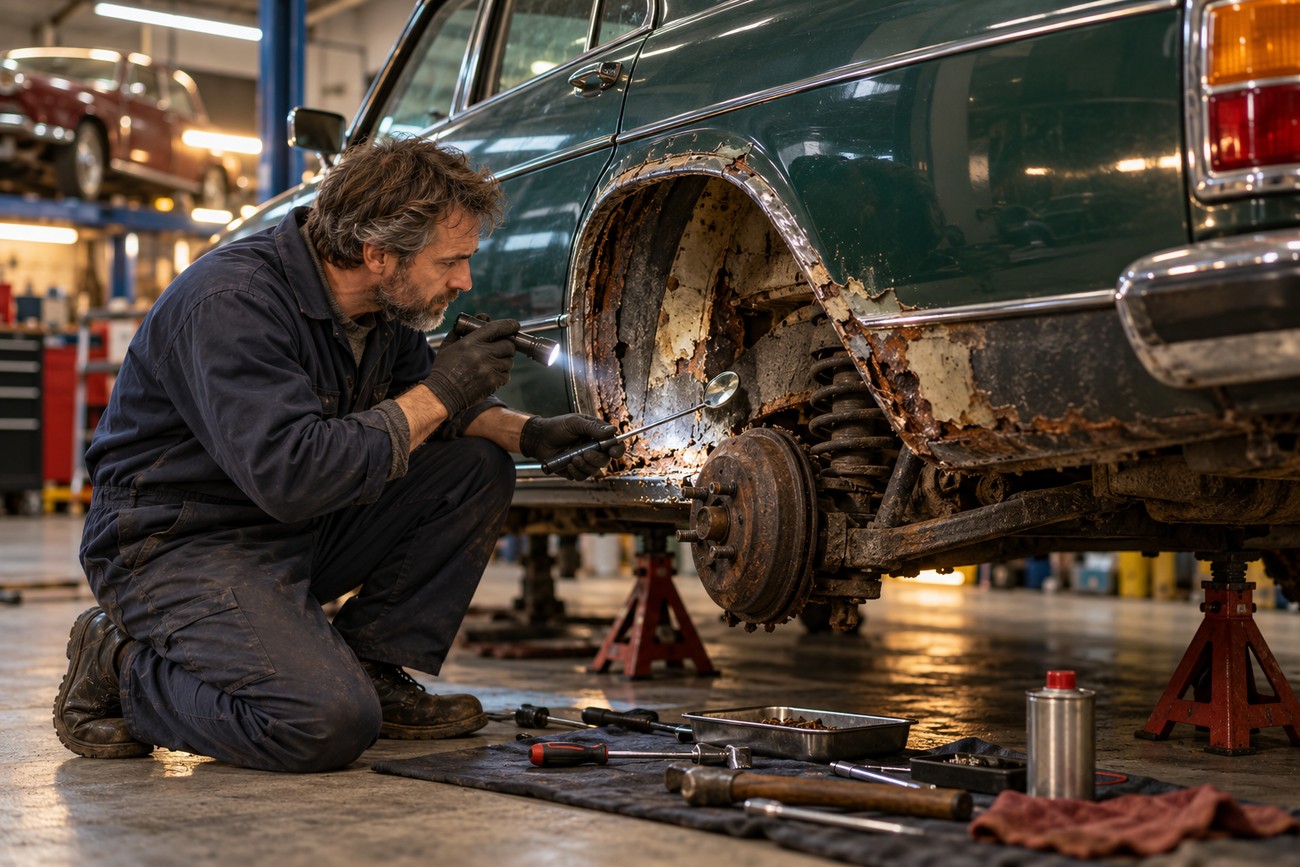
Corrosion deserves priority over paint. Hidden cavities, lower body areas, and structural zones can deteriorate while the visible panels still present an attractive shape. Old repairs may conceal weakened metal beneath filler or fresh coating, and rare body panels make poor-quality restoration more expensive to correct. A clean-looking Princess is therefore not necessarily a structurally sound Princess.
Long storage creates a separate group of problems. Steering can become vague, suspension can allow the car to float, and braking performance can weaken through seized components, deteriorated hydraulics, or neglected adjustment. A car that starts, moves under its own power, and completes a short test drive may still need substantial recommissioning. Mechanical serviceability and structural soundness must be assessed separately.
Cooling deserves the same caution. A large six-cylinder engine operating in an old cooling system can expose blocked passages, tired hoses, an inefficient radiator, or improvised repairs. Brakes, steering, and suspension should be treated as safety-critical systems rather than cosmetic restoration items. If the seller describes a car as “running and driving”, that phrase says little about whether it is ready for sustained road use.
Parts supply can turn a modest fault into a research project. Specific trim, chrome, body pieces, instruments, and interior fittings may require clubs, donor cars, or adaptation from related BMC/Leyland models. Related parts can be valuable, but interchangeability is not guaranteed without modification. The result is an ownership experience in which finding the correct small component may take longer than repairing a more common car.
The cabin can be lavish in materials and atmosphere while remaining awkward by modern standards. Visibility, seating position, and control layout may feel unfamiliar, especially to a driver accustomed to a later family car. Electrical and heating systems deserve close inspection because amateur alterations can create unreliable circuits, poor demisting, or hard-to-trace faults. These are inspection risks, not universal defects, but they are common enough to justify deliberate checking.
What to Check Before Buying an Austin Princess
Begin underneath and inside the structure, not with the paintwork. Inspect hidden cavities, lower body areas, floor sections, mounting points, and other structural zones for corrosion, previous welding, and distortion. Look for repairs that are strong, properly shaped, and protected, rather than simply covered. A documented, sound shell is usually a better foundation than an attractive project with uncertain metalwork.
Next, establish whether the car’s mechanical systems have been maintained or merely made operational. Check cooling performance under sustained running, brake response and hydraulic condition, steering play, suspension control, and evidence of leaks. A test drive should include straight-line stability, braking from different speeds, and the way the car settles after bumps. Vague steering or a floating ride may indicate more than a simple adjustment.
Verify structural metal and the availability of key trim before committing to mechanical restoration. Rare panels and interior pieces can determine the project’s true cost long before the engine becomes the most expensive component.
Then inspect the cabin and exterior finish as parts of the same decision. Original interiors, correct instruments, good chrome, and rare moldings can materially affect desirability and restoration cost. Missing pieces may be harder to replace than worn mechanical components, particularly if the car has been modified or dismantled over time.
Trace every visible electrical and heating alteration. Non-standard wiring, extra switches, substituted motors, and poorly installed heater repairs can affect reliability and demisting, while a replacement component may not be correctly integrated into the original system. Photographing wiring routes and recording part numbers before dismantling can prevent a restoration from becoming an unplanned search for missing connections.
Use related BMC/Leyland parts intelligently, with the assumption that adaptation may be necessary. Do not buy a component solely because a catalogue places it in the same broad family. Compare dimensions, mounting points, controls, and finish. The best buying decision is based on the condition of the individual example, including its structure and completeness, rather than on the appeal of the model’s rarity label.
Rarity, Collector Appeal, and the Real Verdict
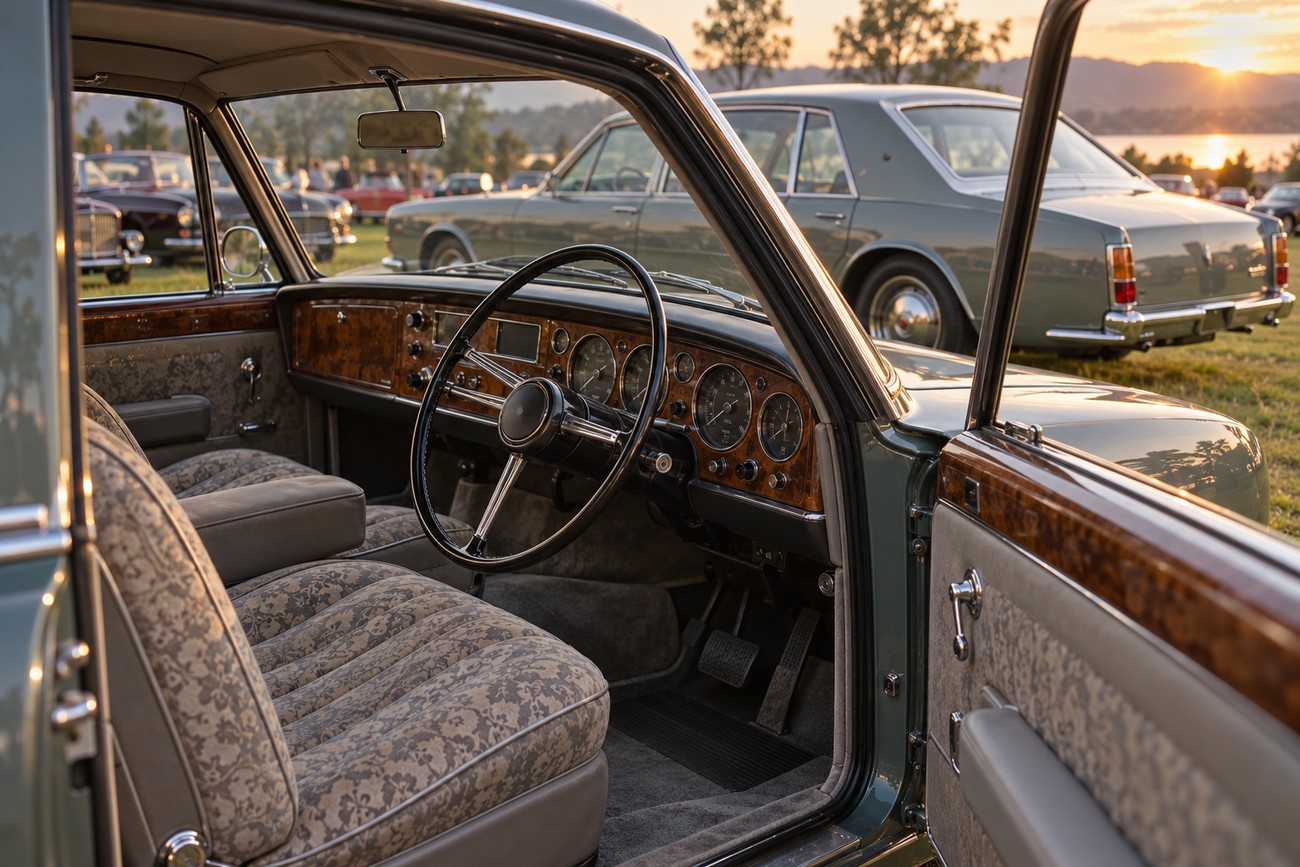
Princess-related production was relatively small compared with mass-market Austin Cambridge and Morris Oxford models. Surviving examples are consequently less common than those familiar BMC saloons. That scarcity gives the car presence at shows and makes an intact example interesting, but it does not remove the practical consequences of limited supply.
Collectors may care as much about original interior trim, instruments, and rare moldings as about the exterior body. Those details preserve the car’s identity and can be difficult to replace accurately. A mechanically complete car with an original cabin may therefore be more compelling than a heavily renovated example that has lost its period fittings.
Rarity also limits market liquidity. The Princess is harder to sell quickly and at a high price than more common British classics, partly because its audience is narrower and its condition is difficult for a casual buyer to judge. Restoration costs may be easier to justify for personal attachment or long-term enjoyment than for a straightforward financial return.
The right buyer wants unusual British design, formal presence, and six-cylinder character, and is prepared to investigate parts and maintenance carefully. The wrong buyer wants a practical hauler, easy modern loading, or brisk sporting performance. The Princess is distinctive and rewarding when judged on its own terms, but the wedge shape should never be used as evidence that it behaves like a hatchback.
Frequently asked questions
Was the Austin Princess a good car?
It was a good car for buyers who valued comfort, presence, and smooth six-cylinder progress in a large formal saloon. Its period strengths were passenger accommodation, a dignified driving character, and distinctive styling. The later Princess 3-Litre could offer approximately 115–130 hp depending on version and market, but that did not make it a sports car.
Modern ownership is more demanding. Loading access is limited by the separate boot, specific parts can be difficult to source, and neglected examples may need extensive work on corrosion, cooling, brakes, steering, and suspension. The sensible verdict is that it can be a satisfying specialist classic, provided refinement and individuality matter more to you than practicality or easy maintenance.
How much is an Austin Princess worth today?
No single figure is responsible without the exact generation, originality, structural condition, running state, and market. An early Austin Princess 2-Litre and a later Princess 3-Litre should not be valued as the same car, while a complete, original interior may be more significant than fresh paint.
A useful valuation checklist includes structural metal, quality of repairs, engine and cooling condition, braking and suspension work, completeness of chrome and trim, correctness of instruments, and the availability of documentation. Factor in parts research and specialist labor before treating a low purchase price as a bargain. The car’s rarity alone does not establish its value.
How many Austin Princesses were made?
Production figures must be tied to the specific generation. “Austin Princess” can refer to the 1947 Austin Princess 2-Litre, while the later Princess 3-Litre is associated with 1956–1968; combining them produces a misleading total.
Survivor numbers and club registers are also not factory production records. They can show that surviving cars are uncommon, especially compared with Austin Cambridge or Morris Oxford examples, but they do not establish how many were originally built. Any precise total should therefore identify the model, market, and source behind it.
What car replaced the Austin Princess?
There was no single simple replacement covering every car that carried the Princess name. The early Austin Princess 2-Litre belonged to a large post-war saloon and limousine tradition, while the later Princess 3-Litre formed part of the changing BMC/Leyland range associated with 1956–1968.
That naming history matters because the cars differ in engine, body character, and market position. A later model in the BMC/Leyland family may represent a historical continuation of the name’s role, but it should not be described as a direct mechanical successor to every Austin Princess. Check the exact generation before following a lineage claim.







