
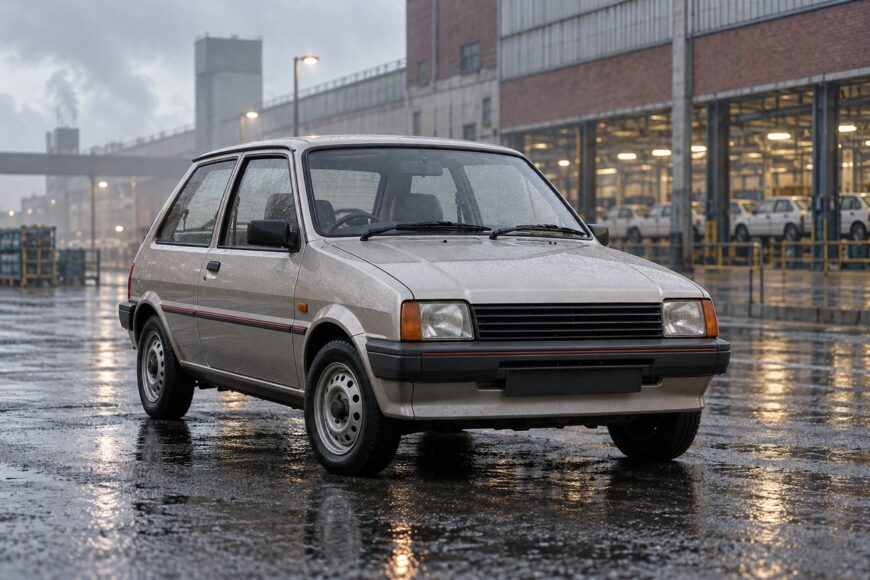
The Austin Metro is often described as “the car that saved British Leyland.” That phrase is useful historical shorthand, repeated by journalists and historians, rather than an official BL designation. The Metro did not rescue the company alone, yet it arrived when British Leyland urgently needed a competitive small car with mass-market appeal.
Its achievement was clever, economical packaging: a compact B-segment hatchback built at Longbridge that served as a mass-market replacement for the Mini. Its weaknesses were equally characteristic of the period. The underlying engineering was cost-conscious and increasingly dated, while corrosion, limited refinement, and modest safety became harder to overlook as newer small cars arrived.
- Why British Leyland needed the Austin Metro
- What the Austin Metro was: engineering, production, and evolution
- Austin Metro and Rover 100: the badge change that changed perceptions
- Austin Metro and Rover 100: what changed over the decade
- Why the Metro is called ‘the car that saved British Leyland’
- The ownership reality: rust, cooling problems, and aging hardware
- The mistakes buyers make when choosing a Metro today
- Which Metro makes sense as a classic?
- Frequently asked questions
- Was the Austin Metro a good car?
- How much is a Rover Metro worth?
- Why do original interior parts matter on an Austin Metro?
Why British Leyland needed the Austin Metro
By 1980, British Leyland needed a small car capable of carrying more commercial and symbolic weight than its size suggested. The Mini remained influential, but its basic concept was aging, and the market was moving toward practical hatchbacks with greater interior space, easier production, and broader buyer appeal. The Metro was intended to fill that gap without abandoning the compact dimensions that had made the Mini successful.
The result was a compact B-segment hatchback introduced as a mass-market replacement for the Mini in the BL range. Its three-door and five-door formats allowed it to serve both private buyers and families who needed more everyday practicality. That breadth mattered because a successful small car could generate steady production volume while keeping the company visible in one of Europe’s most competitive sectors.
The Metro also arrived with strong public validation. It won European Car of the Year in 1980, giving British Leyland a valuable boost in credibility at a time when the company’s industrial and management problems were widely discussed. The award did not erase those problems, but it confirmed that the Metro was relevant to the market beyond Britain.
Calling it the car that saved British Leyland captures its importance as a product and a national industrial symbol. It does not explain the company’s full history. British Leyland’s fate depended on finances, factories, labor relations, management decisions, and a wider range of models, so the Metro should be treated as a major contributor rather than a single-car rescue plan.
What the Austin Metro was: engineering, production, and evolution
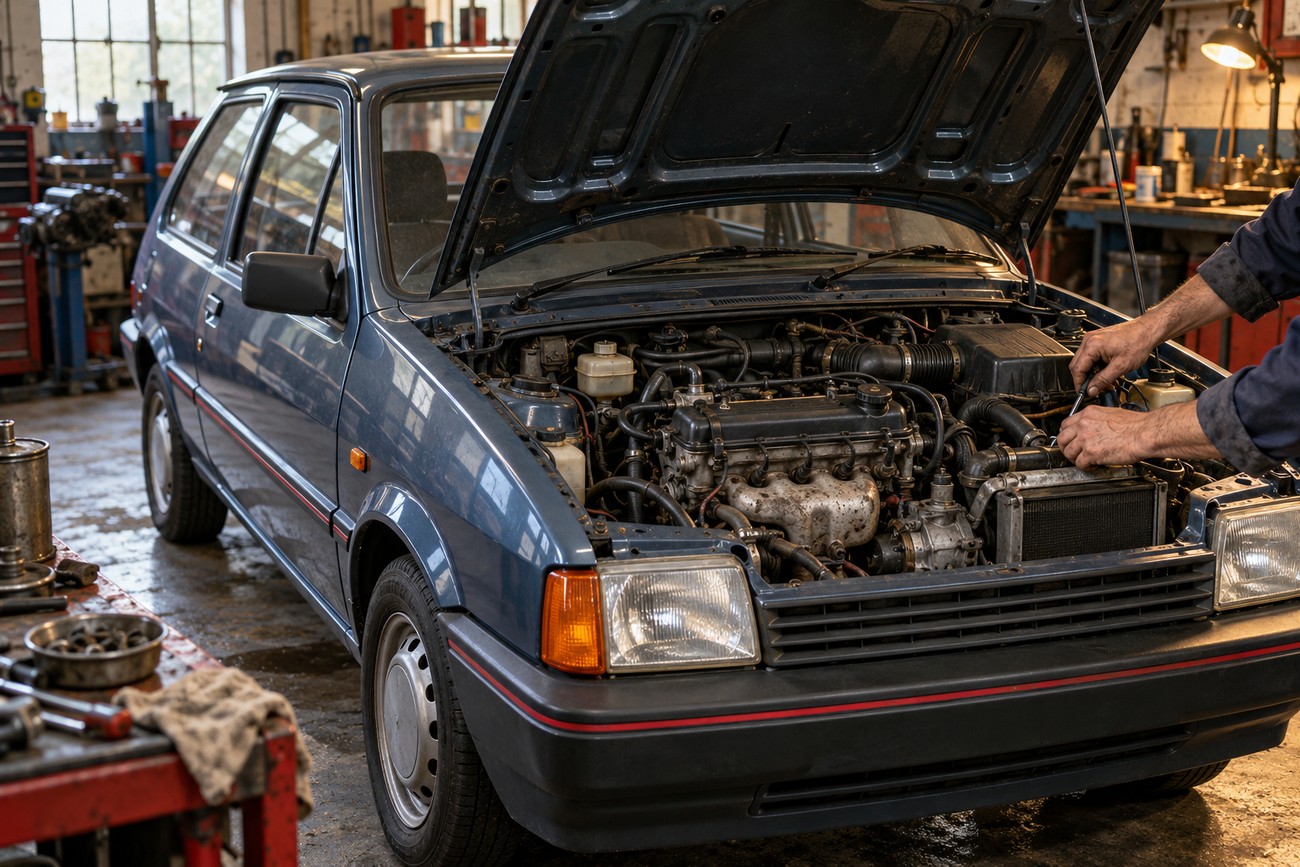
Production ran from 1980 to 1990 at Longbridge. The Metro used front-wheel drive and a transversely mounted inline four-cylinder A-Series engine, a layout that made efficient use of the short body and left useful room for passengers and luggage. This was a practical development of BL engineering ideas rather than a clean-sheet design detached from the company’s past.
Early cars commonly used a four-speed manual gearbox. Later versions gained five-speed transmissions, while automatic gearboxes were available in some markets. That progression helped the Metro remain usable as driving expectations changed, although its basic character stayed centered on light weight, low running complexity, and affordable manufacture.
Early rear suspension used torsion bars, an arrangement that supported compact packaging and controlled production cost. It also contributed to the Metro’s distinctive ride behavior. A well-maintained car can feel nimble and direct, while worn bushes, tired dampers, or neglected suspension components can make it harsh, bouncy, and unsettled on poor roads.
The engineering made sense for the intended role, especially in urban driving. The same decisions become less persuasive when the car is judged as a modern highway vehicle. A-Series noise and vibration, limited sound insulation, and the age of the chassis are part of the ownership experience, not isolated faults on an otherwise contemporary car.
Austin Metro and Rover 100: the badge change that changed perceptions
The car was initially sold under the Austin brand. During British Leyland and Rover restructuring and rebranding, it was sold as the Rover 100 from 1987 to 1990. The change placed the same basic model within a more upmarket brand strategy and altered how buyers were encouraged to view it.
A badge change could refresh showroom presentation, but it could not remove the underlying age of the design. The Rover 100 retained an old construction whose compromises had been easier to accept in the early 1980s. By the 1990s, buyers expected small cars to offer stronger refinement, more modern safety provision, and a more substantial overall feel.
That difference in expectations explains much of the later car’s weaker reputation. The Rover 100 was not simply judged as an old Metro with a different emblem; it was judged against newer rivals that had advanced during the same decade. Nostalgia can make the car’s simplicity appealing today, while the contemporary market increasingly saw that simplicity as obsolescence.
For a classic-car buyer, the badge affects historical interest and presentation more than it changes the fundamental ownership risks. The condition of the shell, the completeness of the interior, and the quality of previous repairs matter more than the name on the grille.
Austin Metro and Rover 100: what changed over the decade
The comparison is clearest when branding, market position, and the continuing age of the basic construction are considered together.
| Area | Early Austin Metro | Later Rover 100 |
|---|---|---|
| Branding | Austin | Rover 100 |
| Period | Initial part of the 1980–1990 production run | 1987–1990 |
| Buyer positioning | Mass-market compact hatchback and Mini replacement | A more mature, Rover-branded interpretation of the same small-car role |
| Mechanical continuity | Front-wheel drive, transverse four-cylinder A-Series engine, and cost-conscious suspension design | Continued the old underlying architecture rather than becoming an entirely new car |
| Market weakness | Increasingly exposed limitations in refinement and safety as the decade progressed | Those limitations conflicted more sharply with 1990s expectations and weakened its reputation |
Why the Metro is called ‘the car that saved British Leyland’
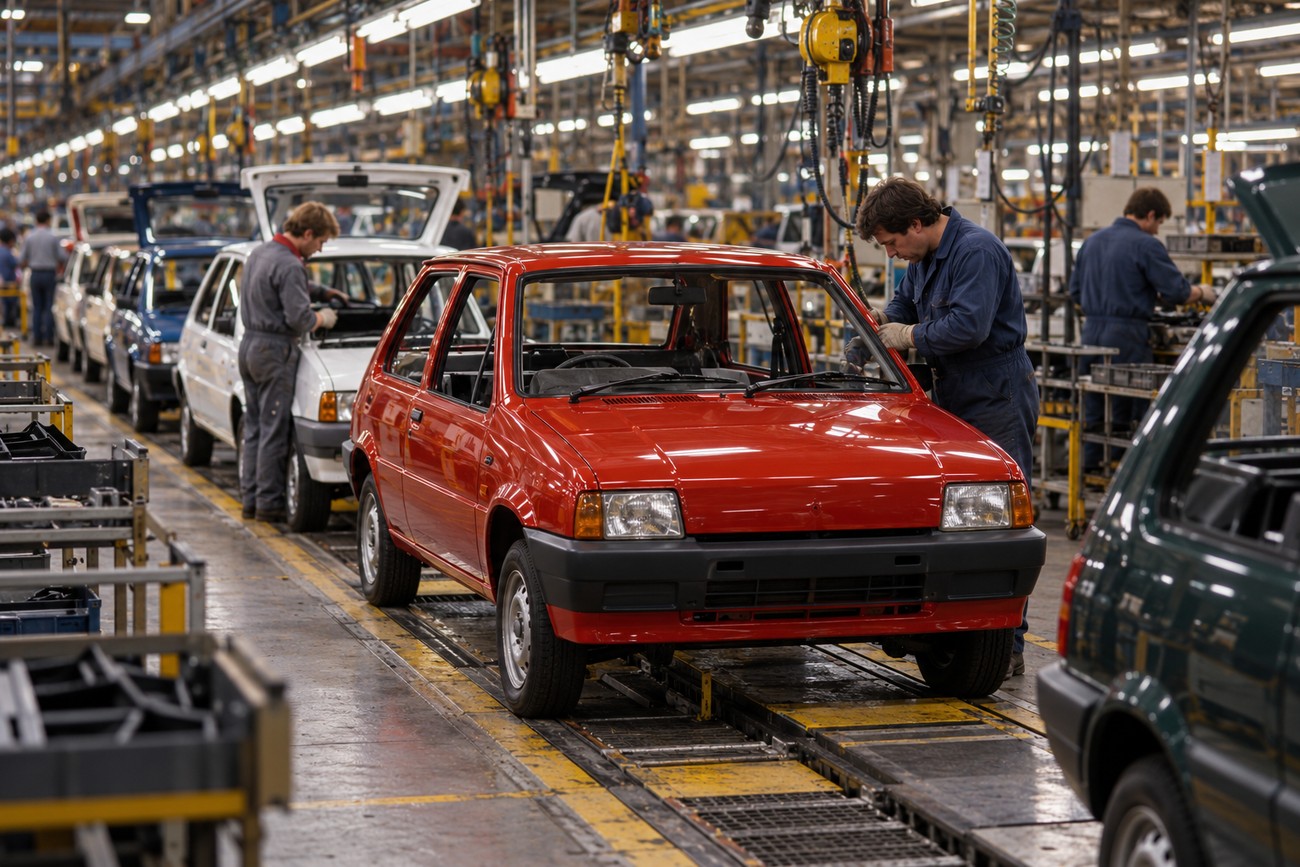
The Metro’s importance can be measured by the role it was asked to perform. It replaced the Mini in the mass-market range, filled a high-volume compact-car category, and gave Longbridge a product with broad public visibility. Its European Car of the Year award in 1980 strengthened the impression that British Leyland could still produce a convincing modern small car.
Total production is commonly estimated at approximately 1.1–1.3 million cars. That production run gave the Metro industrial significance beyond its individual sales. A model built in those numbers could support factory activity, supplier relationships, dealer interest, and a continuing presence in buyers’ minds.
The phrase “saved British Leyland” therefore communicates commercial and symbolic importance. It is also an interpretation applied retrospectively by historians and journalists, rather than an official corporate term. The Metro helped the company at a critical moment, but its success could not resolve every financial, industrial, and management problem surrounding BL.
A more accurate conclusion is that the Metro bought British Leyland valuable time and attention. It demonstrated that the company still had a product capable of winning public approval, while the wider organization remained dependent on decisions and conditions far beyond one hatchback.
The ownership reality: rust, cooling problems, and aging hardware
Rust is the first issue to investigate because it can turn a cheap-looking classic into an expensive structural project. Common areas include the sills, wheel arches, floors, lower door edges, and the metal around suspension mounting points. Exterior bubbling is only a visible clue; corrosion can continue behind trim, underseal, and apparently tidy repairs.
Suspension mounting corrosion deserves particular attention. Damage in those areas can affect suspension geometry and safety, so it belongs in the structural assessment rather than the cosmetic checklist. A car with faded paint and documented welding may be a sounder purchase than a glossy shell whose underside has never been examined.
Suspension mounting points should be judged before paint quality. A structurally repaired Metro with documented welding can be a better foundation than an unrestored shell that presents well above the sill line.
Misaligned doors and tailgates may indicate worn hinges, tired seals, or a distorted body. They can also reflect corrosion and previous repairs. Check whether the panels close consistently, whether gaps change along their length, and whether the surrounding metal feels solid rather than relying on latch adjustment to disguise movement.
The A-Series engine is simple to understand, but simplicity does not eliminate age-related failure. Owners commonly report considerable noise and vibration, particularly at higher road speeds, while weak sound insulation makes the mechanical character more noticeable. Cooling complaints often involve tired radiators, water pumps, hoses, and thermostats, so evidence of proper maintenance is more valuable than a clean engine bay.
Suspension bushes and dampers can produce a harsh or bouncy ride when worn. Brake components, rubber parts, fuel-system components, and electrical connections also need a realistic inspection. Replacement parts vary significantly in quality, and a poor aftermarket clutch, mount, or brake component can create more work than the original worn part.
The mistakes buyers make when choosing a Metro today
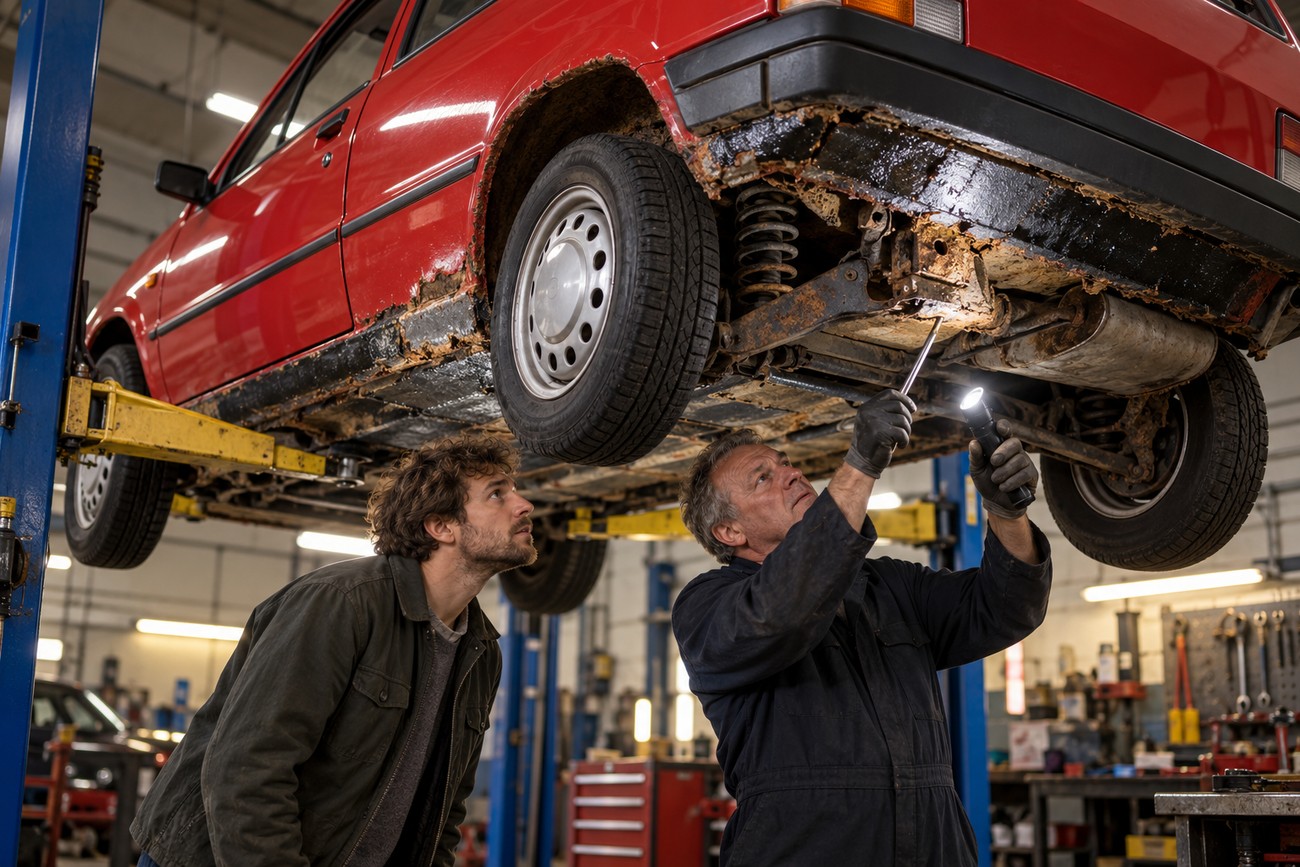
The most damaging mistake is buying from photographs without inspecting the underside. Arrange access to the sills, floors, wheel arches, and suspension mounting points, and treat fresh underseal as a reason for closer inspection rather than automatic reassurance. A lift or careful ramp inspection can reveal the condition that bright paint conceals.
Fresh paint deserves the same skepticism. It may cover welding, filler, or structural patching, especially around the lower body and door openings. Look for uneven textures, abrupt paint edges, inconsistent panel gaps, and documentation showing what metal was removed and replaced.
Mechanical checks should include cold starting, oil condition, cooling-system behavior, and evidence of maintenance. Allow the engine to reach operating temperature and inspect for signs of overheating, leaks, or unstable running. An older engine may be repairable, but that does not make neglected cooling or lubrication harmless.
Budget for age-related rubber, brakes, fuel-system work, and electrical repairs even when the car drives home. Parts associated with the Mini or other small cars are not automatically interchangeable across every year, market, and specification. Confirm compatibility by the exact car and component rather than assuming that a familiar name guarantees a direct fit.
Which Metro makes sense as a classic?
Three-door versions are generally more desirable to enthusiasts because they fit the compact hatchback image most closely and often suit period-correct presentation. Five-door cars are more practical for regular use and may be easier to find in usable condition. The better choice depends on whether the car is intended for shows, occasional driving, or light everyday duties.
Structural condition should lead the assessment. Sound sills, floors, and suspension mounting points are more valuable than superficial paint quality, especially when repairs are documented with photographs or invoices. A modest-looking car with a credible bodywork history can offer a stronger basis for preservation than a bright example with uncertain metal underneath.
Original interior parts also matter. Correct plastics, switches, seats, and trim pieces can be difficult to replace, and mismatched substitutes quickly change the character of a small cabin. For collectors, an intact factory specification and early pre-facelift details may carry more historical value than decorative upgrades.
The Metro works best as a light, simple, repairable classic. It offers direct controls, compact dimensions, and accessible mechanical ideas, but it should not be bought as a fast retro hatchback or expected to feel like a modern daily driver. Unnecessary modifications can reduce historical value while adding parts and tuning problems to an already old vehicle.
Frequently asked questions
These questions address the practical difference between appreciating the Metro as history and choosing one for ownership.
Was the Austin Metro a good car?
The Austin Metro was a good fit for buyers who valued low weight, compact dimensions, simple mechanical, and repairability. Those qualities made it effective as an urban car and helped it serve as a practical mass-market successor to the Mini.
It is a weaker choice as a modern daily driver because refinement, corrosion resistance, and safety are limited by its age. A well-preserved example can be enjoyable, but regular use requires acceptance of noise, vibration, age-related repairs, and closer structural inspection than a newer small car demands.
How much is a Rover Metro worth?
A Rover Metro’s value depends primarily on the shell rather than the badge alone. Examine the sills, floors, wheel arches, suspension mounting points, and the quality of any welding, then consider originality, documentation, trim completeness, and mechanical readiness.
A structurally sound car with correct interior parts and a clear repair history can justify stronger interest than a shinier example with hidden corrosion. Mechanical work is important, but missing trim and poor structural repairs may be harder and more expensive to resolve properly.
Why do original interior parts matter on an Austin Metro?
Original interior plastics, switches, seats, and trim preserve the car’s period identity and can be difficult to source in the correct design and condition. Exterior paint can be renewed relatively easily, while small cabin components are often specific to a model, year, or specification.
That scarcity affects both collector appeal and restoration quality. A factory-correct interior supports the car’s historical credibility, whereas attractive exterior upgrades cannot compensate for missing or incorrectly substituted cabin parts.







