
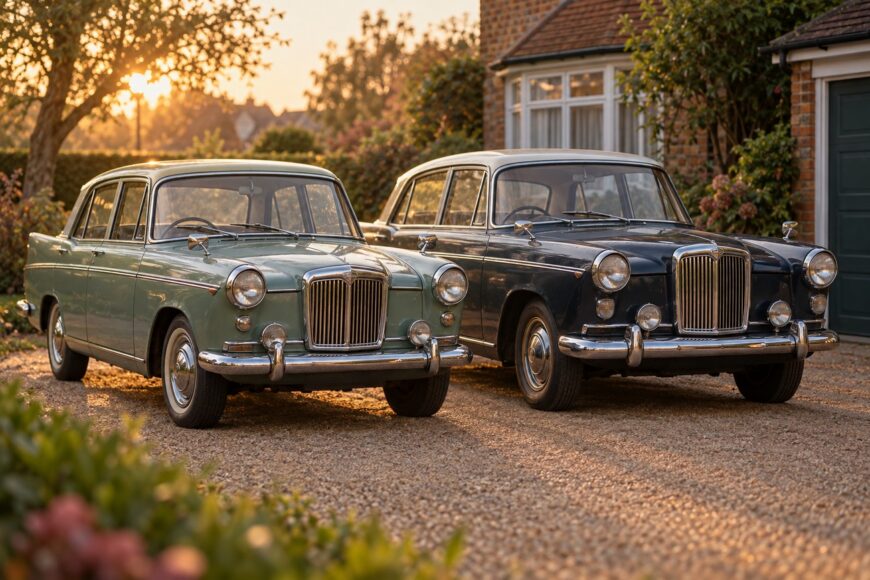
The Austin Cambridge has the reassuring shape of a serious family sedan: a separate-looking trunk, a broad cabin, and the visual weight that once suggested durability rather than speed. That solidity can still appeal to a buyer seeking an unusual classic for relaxed touring.
Its limitations are equally important. A Cambridge is slow by modern traffic standards, and a polished photograph can conceal decades of structural, mechanical, or trim-related work. The name also covers several generations—A40, A50, A55, and A60—while the familiar Farina appearance belongs mainly to the later versions.
- Which Austin Cambridge was Farina-styled?
- Why so many BMC cars shared the Farina shape
- A55 Mark II and A60 Cambridge: the useful figures
- What driving a Cambridge feels like today
- Simple to understand, not necessarily cheap to keep
- How to inspect a Cambridge before buying
- Frequently asked questions
- What happened to the Austin car brand?
- What is the worst car ever made?
- How much does an Austin-Healey car typically cost?
- Which Austin-Healey model is the most desirable?
Which Austin Cambridge was Farina-styled?
Austin Cambridge is a model family rather than one single car. The name was used for the A40, A50, A55, and A60, with substantial changes taking place during that sequence. Treating every Cambridge as the same design makes it easy to misidentify a car or assume that parts will automatically interchange.
The early Cambridge models should be separated from the later BMC Farina cars. Their appearance was shaped within Austin, with Dick Burzi playing a notable role in the styling of the early cars. It is therefore inaccurate to attribute every Cambridge body to Pininfarina.
The Farina connection belongs primarily to the later family, including the A55 Mark II and A60. These cars adopted a more unified, formal shape with cleaner surfaces and a broader visual relationship to other BMC saloons. The A60 is recognizably related to the A55 Mark II, although its lines are somewhat softer and its interior offers more room.
This distinction matters to collectors because a car described simply as a “Farina Cambridge” may refer to a particular late body style, while an A40 or A50 belongs to an earlier stage of the nameplate’s development. The badge alone is not enough to establish the year, body, or mechanical specification.
Why so many BMC cars shared the Farina shape
BMC used the Farina family as a way to rationalize several brands around related architecture. The aim was practical as well as visual: shared engineering could serve different dealer networks, while trim, grilles, interiors, and badges gave each marque its own showroom identity.
The Austin Cambridge and Morris Oxford Series V were close BMC versions of the same basic car. Their principal visible differences were the radiator grille and finishing details. That relationship is a useful reminder that badge engineering involved a broad manufacturing and sales strategy, rather than a completely separate car for every badge.
The later BMC Farina family also included the MG Magnette, Riley 4/68 through 4/72, and Wolseley 15/60 through 16/60. These cars shared important solutions, but their different trim levels and brand positions still affect rarity, parts demand, and the value of an intact example.
For a buyer, common architecture is helpful only up to a point. A mechanical component may be easier to source through the wider BMC network, while a correct grille, dashboard piece, badge, or interior fitting can be specific to one version. A car assembled from visually plausible parts may work perfectly yet no longer represent the model claimed in its paperwork.
A55 Mark II and A60 Cambridge: the useful figures
The following figures are period reference points for the specified versions. They describe cars in suitable mechanical condition and should not be treated as a guarantee for a surviving example with unknown compression, gearing, brakes, or rolling resistance.
| Model | Engine | Power | 0–60 mph | Top speed |
|---|---|---|---|---|
| A55 Mark II | 1,489 cc inline OHV | 53 bhp | Approximately 24 seconds | About 80 mph |
| A60 | 1,622 cc inline OHV | 61 bhp | Approximately 21 seconds | About 82 mph |
The A60’s larger engine gives it a modest advantage, but the figures remain firmly in the family-transport category. Reference material commonly places fuel consumption for cars of this type in the broad region of 27–35-plus mpg, depending on traffic, condition, driving style, and the gallon standard used.
What driving a Cambridge feels like today
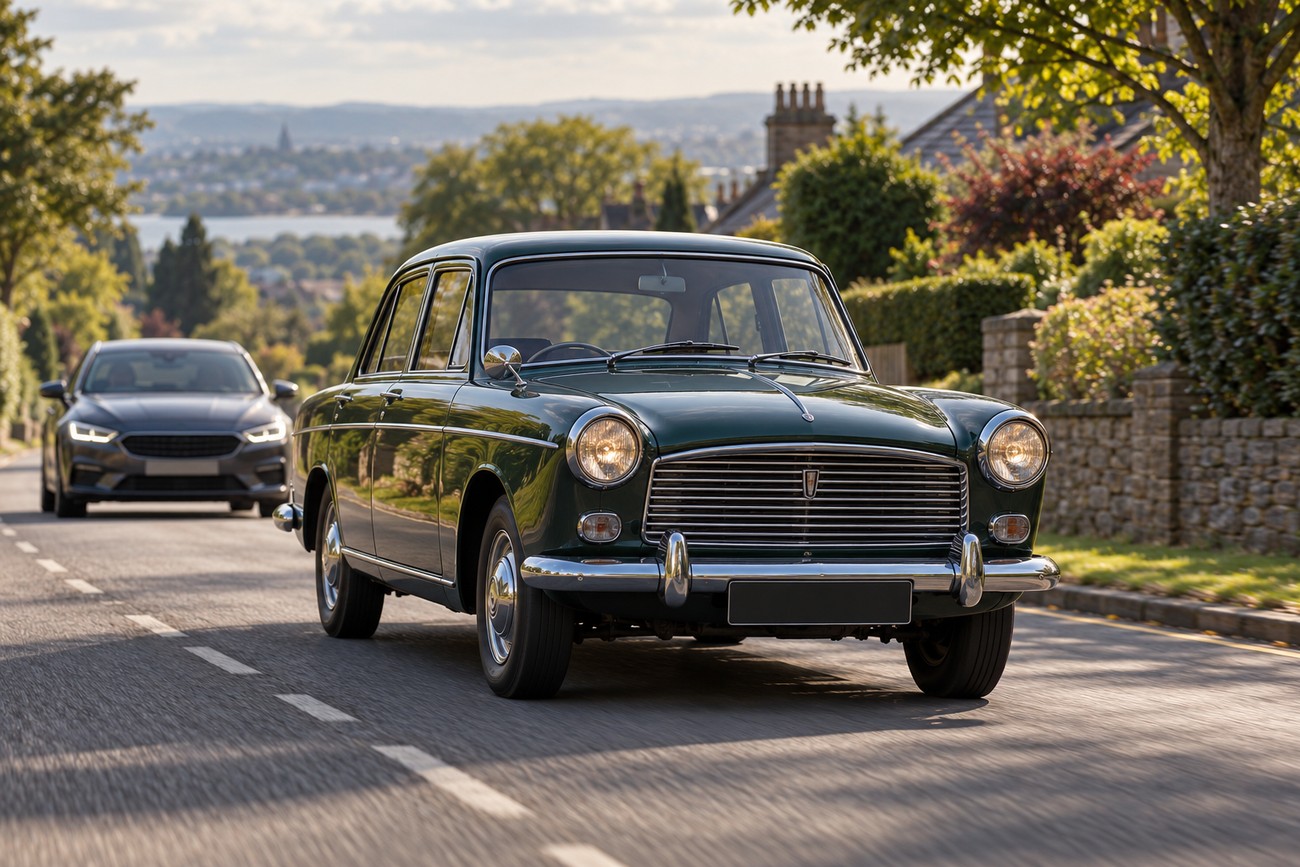
A Cambridge feels deliberate rather than eager. The engine delivers its effort progressively, and the car’s mass, suspension character, and long gearing encourage a calm driving style. The A60 is somewhat quicker than the A55 Mark II by period figures, yet it remains a slow classic rather than a sports sedan.
Planning is part of driving one in modern traffic. Joining a fast road, passing a slower vehicle, or climbing a long grade requires more space and earlier decisions than most contemporary drivers expect. A healthy engine is not necessarily a lively engine; sluggish acceleration can be an inherent part of the design rather than evidence of a fault.
The steering and handling also reflect the car’s original purpose. Owners often describe the response as heavy or wooden compared with later family cars, especially when the suspension, tires, or steering components are not in excellent condition. The Cambridge was built for stable, respectable transport, not rapid cornering or sharp feedback.
Even the early A40’s quoted unladen weight of 2,248 lb shows why performance was never its central attraction, although that figure applies to the early version and should not be transferred to the whole Farina family. A sound Cambridge can be pleasant on secondary roads, provided its driver accepts its pace and leaves room for its braking and acceleration limits.
Simple to understand, not necessarily cheap to keep
The Cambridge is mechanically approachable by modern standards. Its conventional engine, straightforward controls, and largely understandable systems are useful to an owner who prefers repairable engineering over electronic complexity. That simplicity reduces diagnostic mystery, but it does not remove the cost of age.
Body condition is often more important than the apparent originality of the engine bay. A car that has survived many decades may have tired structure, old repairs, worn suspension, or brakes that need comprehensive attention. Once several systems require work at the same time, routine maintenance becomes restoration.
The A60 remained in production until 1969, and the related Morris Oxford VI continued until 1971. Those later dates can create a false sense that every A60 is comparatively modern or ready for regular use. A late production year says when the model was built; it says little about how the individual car was stored, repaired, or driven afterward.
Shared BMC mechanical heritage can make a repair possible without making the correct trim piece easy to find. Owners should separate service parts from model-specific body and interior items before assuming that a donor car solves the whole problem.
Club networks and specialist breakers can be valuable because the wider BMC ecosystem provides useful knowledge and occasional donor parts. Compatibility still has to be checked by generation, specification, and part number. “BMC” is a starting point for research, not proof that every component fits.
How to inspect a Cambridge before buying
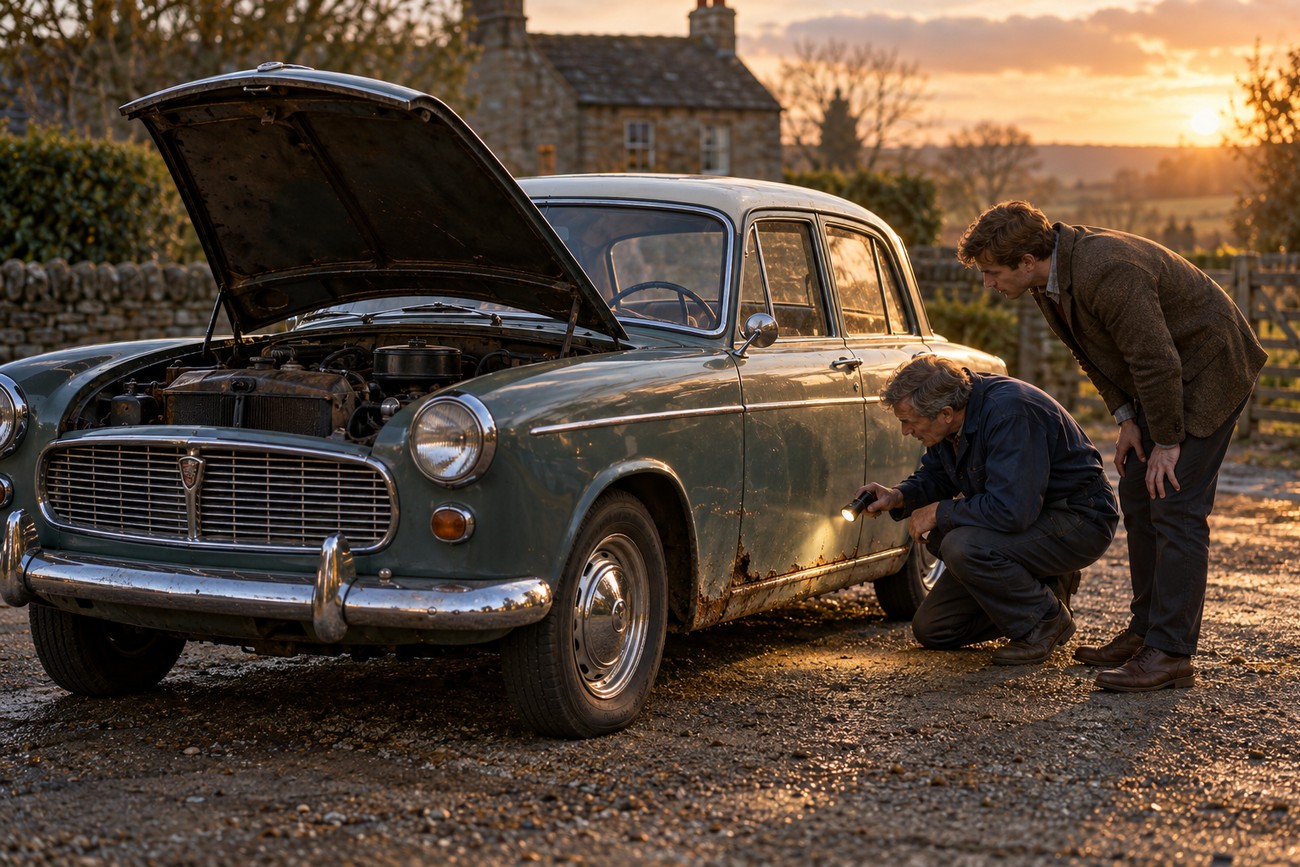
Begin with identity rather than paint. Confirm whether the car is an A40, A50, A55, or A60, then compare the stated version with the documents, identification data, engine details, grille, interior, and other characteristic trim. The close relationship between an A55 Mark II and Morris Oxford Series V makes an incorrect description especially easy to miss in photographs.
- Check the title or registration records, identification numbers, engine number, and any restoration history. Look for unexplained changes between the paperwork and the car.
- Inspect the body in good daylight, including evidence of old repairs, uneven panel gaps, mismatched paint, and areas where filler may conceal previous work. A magnet, inspection light, and independent assessment are more useful than a seller’s description.
- Examine the braking system, steering, suspension, tires, and fluid leaks before concentrating on cosmetics. These systems determine whether the car can be driven safely, while the appearance may only indicate how recently it was polished.
- Take a road test at realistic speeds. Observe straight-line stability, brake response, steering play, gear selection, engine temperature, and the car’s ability to maintain speed without distress.
A test around the block can hide the exact weaknesses that matter most. The Cambridge should be assessed on a road where its acceleration, braking, and cooling can be observed under normal conditions, subject to local safety requirements. If the seller will not permit a meaningful inspection or independent test, treat that as a buying risk.
Keep the purchase budget separate from the recommissioning budget. Even a running car may need work before it is dependable for regular trips, and the cost of scarce trim can be unrelated to the cost of common mechanical servicing. A modest-looking project can therefore be a more demanding proposition than a visibly complete car with a documented history.
Frequently asked questions
What happened to the Austin car brand?
Austin was absorbed into the changing British motor industry and eventually ceased to be used as a standalone new-car brand. Its history passed through BMC and later corporate reorganizations, while the Austin name disappeared from new production after the final stages of those changes.
That does not mean Austin cars vanished from ownership. Cambridge saloons remain supported through specialist suppliers, owners’ clubs, shared BMC knowledge, and used or reproduced parts. Support is strongest when the owner identifies the exact model and part rather than searching only for “Austin” components.
What is the worst car ever made?
There is no objective single answer. Reliability, safety, comfort, production quality, and suitability for a particular market can produce different judgments, and a badly maintained example can make a fundamentally sound model seem terrible.
The Austin Cambridge should not be dismissed in those terms simply because it is slow. Its weaknesses are clear: modest performance, old-fashioned handling, and potentially expensive age-related restoration. A structurally sound, correctly maintained car can still fulfill its original role as calm family transport.
How much does an Austin-Healey car typically cost?
There is no useful single typical price for an Austin-Healey. The range depends on the model, body style, originality, documentation, restoration quality, and mechanical condition, with project cars and fully sorted examples occupying very different parts of the market.
Austin-Healey is a separate sports-car line from the family-oriented Austin Cambridge. A buyer should therefore identify the exact Healey model and inspect the car’s condition before comparing prices. Auction results and specialist listings can indicate the market, but they do not replace an appraisal of the individual vehicle.
Which Austin-Healey model is the most desirable?
The Austin-Healey 3000 is often regarded as the most broadly desirable model because it combines the marque’s recognizable sports-car character with a strong enthusiast following. Desirability still varies by body style, specification, originality, restoration standard, and available history.
Some buyers prefer a particular 3000 variant, while others value the smaller Sprite for its lighter, simpler character. The best choice depends on intended use and condition; a well-documented, correctly restored car is generally a safer purchase than a more fashionable model with uncertain structural or mechanical work.







