
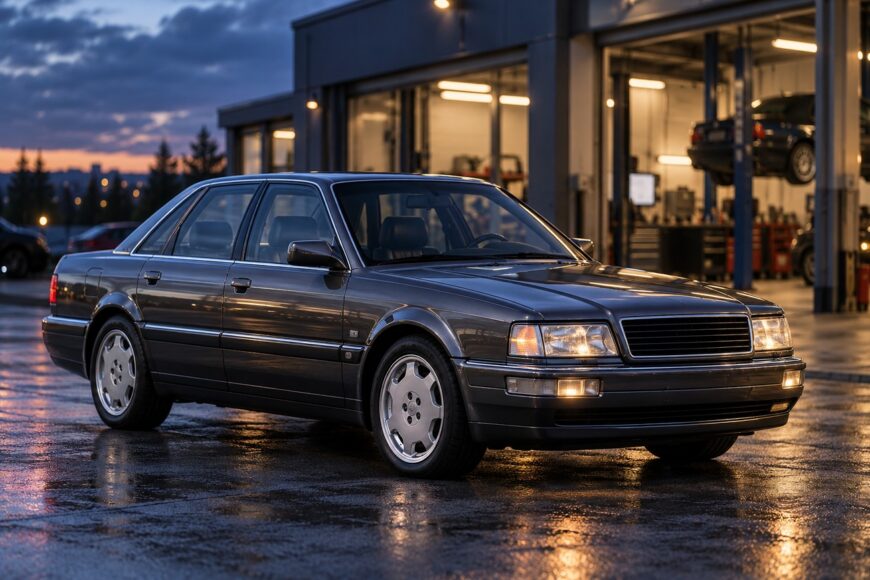
The Audi V8 was a genuine flagship with V8 power and permanent quattro, yet it is often remembered only as a footnote before the A8. That undersells the car. Produced approximately from 1988 to 1994, it was Audi’s first production flagship to combine these two defining technologies in one executive model.
Today, the meaningful choice is between a documented, usable survivor and a superficially cheap car that can trigger repairs across several systems. A low purchase price says little about the condition of an old automatic gearbox, cooling system, suspension, electronics, or quattro driveline. On this Audi, history and inspection quality matter more than a glossy body or rare specification.
- Why the Audi V8 Was More Than a Pre-A8 Placeholder
- The Hardware: D1, V8 Engines, and Permanent Quattro
- Audi V8 Powertrains: What the Numbers Actually Mean
- Why the Flagship Experience Does Not Match the Numbers
- The Ownership Trap: Age, Automatic Gearboxes, and Quattro Costs
- How to Inspect an Audi V8 Survivor Before You Buy
- The Audi V8 Myths That Lead Buyers Into Trouble
- Frequently asked questions
- What year Audi A8 should you stay away from?
- Which Audis had a V8?
- What is the rarest Audi ever made?
Why the Audi V8 Was More Than a Pre-A8 Placeholder
The Audi V8 occupied a distinct position above the Audi 100/C4. Its D1 architecture was related to early executive Audi models, but the V8 carried a separate flagship identity before Audi introduced the A8 name and its later aluminum-bodied direction. Treating it as merely a renamed Audi 100 misses the engineering and commercial ambition behind the car.
Audi aimed the V8 at the Mercedes-Benz S-Class and BMW 7 Series, using a large V8, permanent quattro, and a higher level of equipment to establish credibility in the luxury market. That formula gave the car strong traction and a composed long-distance character while also adding weight, complexity, and cost. It was a serious competitor in concept, even if the market did not reward it to the same extent.
Sales were noticeably lower than those of its principal German rivals. That limited production helps explain its present-day rarity, but low sales alone do not make every surviving example desirable. A neglected car with unusual trim can be a worse purchase than a less exotic example with clear service records and sound mechanical systems.
The V8 is best understood as a transition model. It preserved much of Audi’s established executive-car architecture while testing the mechanical and brand formula that would lead toward the A8 era. Its value to enthusiasts comes from that independent identity, its old-school quattro character, and the fact that it represents a short, consequential chapter in Audi history.
The Hardware: D1, V8 Engines, and Permanent Quattro
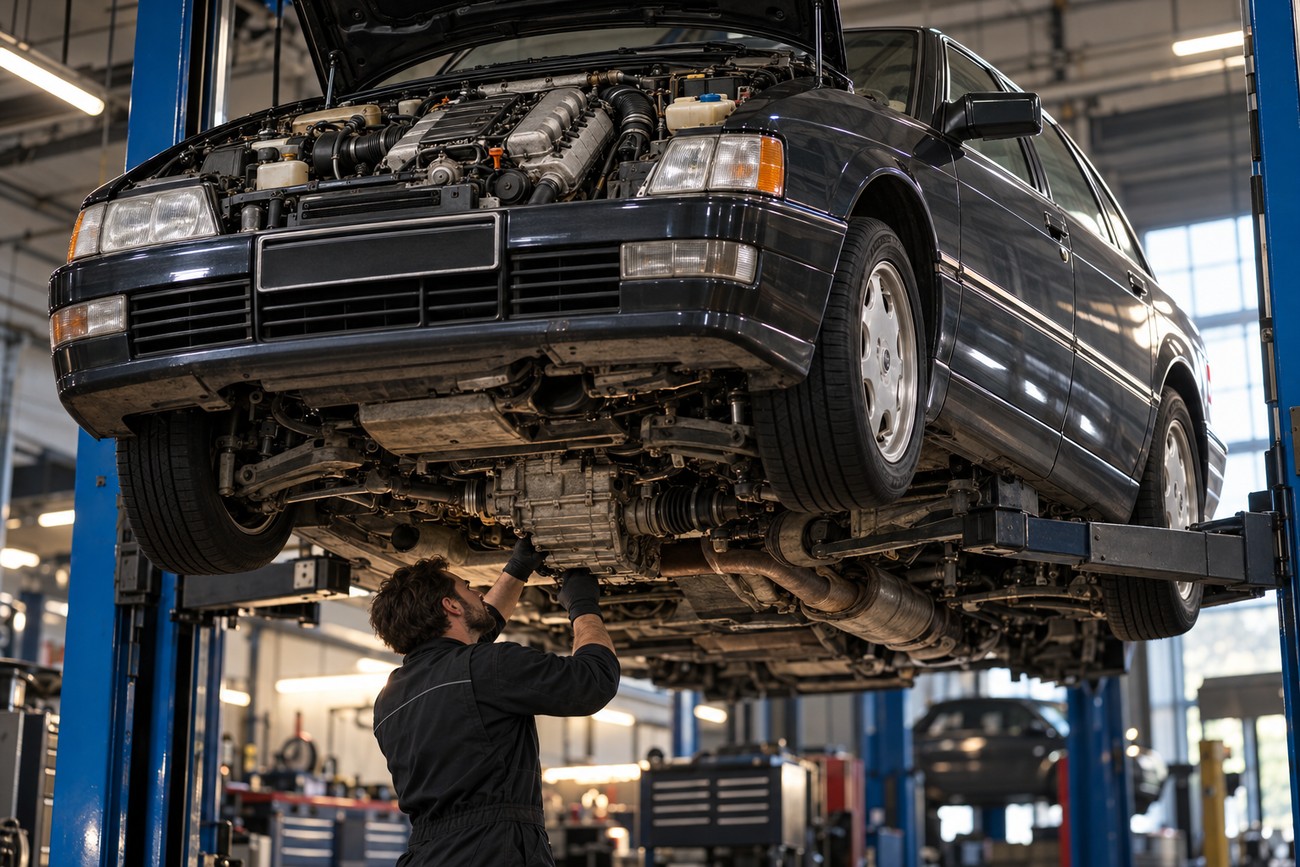
The engine range consisted of a 3.6-liter V8 and a 4.2-liter V8. The larger engine is commonly listed at approximately 280–290 hp, with the published figure varying by market, model year, and measurement method. That discrepancy should be treated as a documentation issue rather than a reason to assume that one number applies to every 4.2-liter car.
Transmission choice is central to the character and value of a surviving Audi V8. Cars were available with a four-speed automatic or a five-speed manual, while the manual is rare and particularly valued by enthusiasts. The automatic suits the car’s executive mission, but its condition can determine whether ownership remains manageable or becomes financially disproportionate.
Permanent quattro gives the V8 confident traction in poor weather and contributes to its distinctive driving feel. It also adds more driveline components, seals, bearings, and service points than a comparable front-wheel-drive Audi. Quattro improves traction; it does not protect a worn gearbox, tired suspension, leaking differential, or neglected driveline from eventual failure.
The mechanical specification matters because it shapes both the buying decision and the repair plan. A manual 4.2 may attract collectors, while a well-maintained automatic can be the more usable car for long-distance driving. In either case, the condition of the complete system matters more than engine displacement or transmission rarity in isolation.
Audi V8 Powertrains: What the Numbers Actually Mean
The table separates the main engine and transmission choices by what they mean for a buyer. Published specifications should be checked against the individual car’s market, model year, engine code, and gearbox documentation.
| Component | Specification | Buyer relevance | Documentation concerns |
|---|---|---|---|
| 3.6 V8 | 3.6-liter V8 | Provides the core Audi V8 character, with smooth delivery and substantial low-end presence. | Confirm the engine identification, service history, cooling-system work, and evidence of previous repairs. |
| 4.2 V8 | 4.2-liter V8; approximately 280–290 hp | Offers the larger-engine specification enthusiasts often seek, though the car remains heavy by 1990s standards. | The 280-versus-290-hp discrepancy varies by market, model year, and measurement method. Do not use one published figure as universal proof of specification. |
| Four-speed automatic | Four-speed automatic transmission | Matches the flagship’s relaxed character when healthy, but shifting quality has a direct effect on ownership cost. | Check for hesitation, harsh shifts, delayed engagement, fluid leaks, and evidence of servicing under previous ownership. |
| Five-speed manual | Five-speed manual transmission | Rare and particularly valued by enthusiasts; it gives the car a more involved character and can influence collector interest. | Verify that the gearbox, clutch, and related components are original or properly documented. Rare does not mean mechanically sound. |
Club references may separate engine and gearbox codes more precisely, but a complete official public summary covering every market combination is difficult to find. That makes the car’s paperwork unusually important. A specialist can often establish what a particular example is more reliably from its identification numbers and records than from a generic online specification sheet.
For buyers, the useful question is whether the advertised configuration is supported by the car itself. A claimed 4.2 manual with incomplete records deserves careful verification, while a less fashionable 3.6 automatic with consistent maintenance may be the safer ownership proposition. Specification creates interest; evidence determines value.
Why the Flagship Experience Does Not Match the Numbers
A typical V8/quattro car weighs approximately 1.8 tonnes or more, depending on specification. That is substantial for a 1990s performance-oriented executive sedan, and the mass affects both acceleration feel and fuel consumption. The car can feel authoritative without delivering the immediate response many drivers now expect from a modern V8 luxury vehicle.
The appeal lies in smooth power delivery, low-end torque, secure traction, and the sense of mechanical reserve. Permanent quattro gives the car a planted character, while the V8 delivers its effort with less drama than a smaller, highly stressed engine. It is a fast-enough classic in the right context, rather than a machine that should be judged by modern acceleration expectations.
Good sound insulation and comfortable seating can still make the V8 an excellent long-distance car. Age changes that experience. Squeaks, rattles, tired suspension bushes, worn door components, and deteriorated rubber can gradually replace the original sense of solidity with noise and looseness.
That distinction matters during a test drive. A short run may confirm that the engine starts and the car moves while revealing little about long-duration cooling, charging performance, fluid leaks, or suspension fatigue. The best examples retain the quiet, composed character that made the model credible as a flagship; neglected ones expose their weight through every worn component.
The Ownership Trap: Age, Automatic Gearboxes, and Quattro Costs
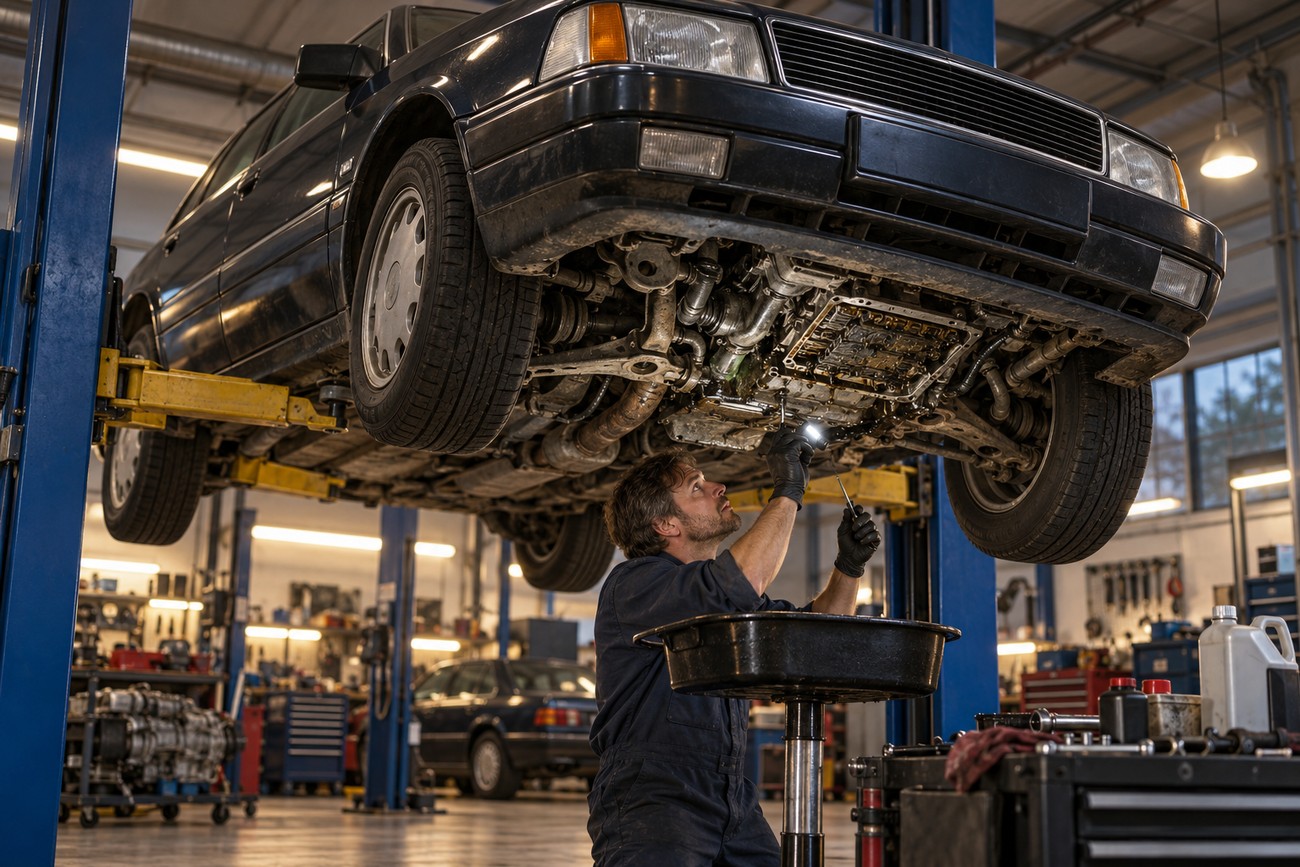
The most serious ownership complaints usually concern systems around the engine rather than the basic V8 block. An aging automatic transmission may hesitate, shift harshly, or engage inconsistently, and a major repair can exceed the purchase price of the car. A brief drive around the block is insufficient evidence that the gearbox is healthy.
Cooling and leakage risks deserve equal attention. An old V8 may need work on the cooling system, seals, charging system, brakes, suspension, and rubber components at the same time. Any one fault may appear manageable, but several deferred systems can turn a modest purchase into a long restoration project.
Cooling performance, charging behavior, gearbox operation, and quattro leaks should be diagnosed together; an engine-only test can approve a car that is already developing expensive problems elsewhere.
Permanent quattro improves traction while increasing drivetrain complexity and potential maintenance cost. Leaks, play, and worn components in the driveline are harder to ignore than on a comparable front-wheel-drive Audi because access and parts sourcing can involve more labor. The system is a major part of the V8’s appeal, but it is also part of the financial exposure.
Interior electronics add another layer of uncertainty. Window regulators, climate controls, instrument clusters, and other small electrical items can fail after years of use, and these parts may be harder to source than major engine components. Specialist suppliers, owner clubs, dismantles, and carefully selected quality alternatives may all be necessary.
The practical conclusion is simple: an old Audi V8 often needs a cascade of work across several systems rather than one isolated repair. A cheap car can become expensive through accumulation, while a more costly example with documented maintenance may require less immediate intervention. Purchase price and total ownership cost are separate calculations.
How to Inspect an Audi V8 Survivor Before You Buy
Begin with the body and its structure, even if the car appears straight in photographs. Inspect corrosion-prone areas, panel alignment, paint transitions, underbody condition, and signs of low-quality accident repair. A sound-looking exterior can conceal corrosion or repairs that were made quickly for resale.
Next, assess the car after it has reached operating temperature. Watch for delayed overheating, fluid leaks, weak charging, warning lights, and changes in idle or electrical behavior. A short, cold test drive can hide faults that appear only after heat has built through the cooling system, transmission, and driveline.
Give the automatic transmission time to demonstrate its behavior in normal driving, low-speed maneuvering, and engagement from rest. Hesitation, harsh shifts, slipping, or delayed response require investigation rather than optimistic interpretation. Manual cars still need checks of the clutch, gearbox, driveline, and quattro system.
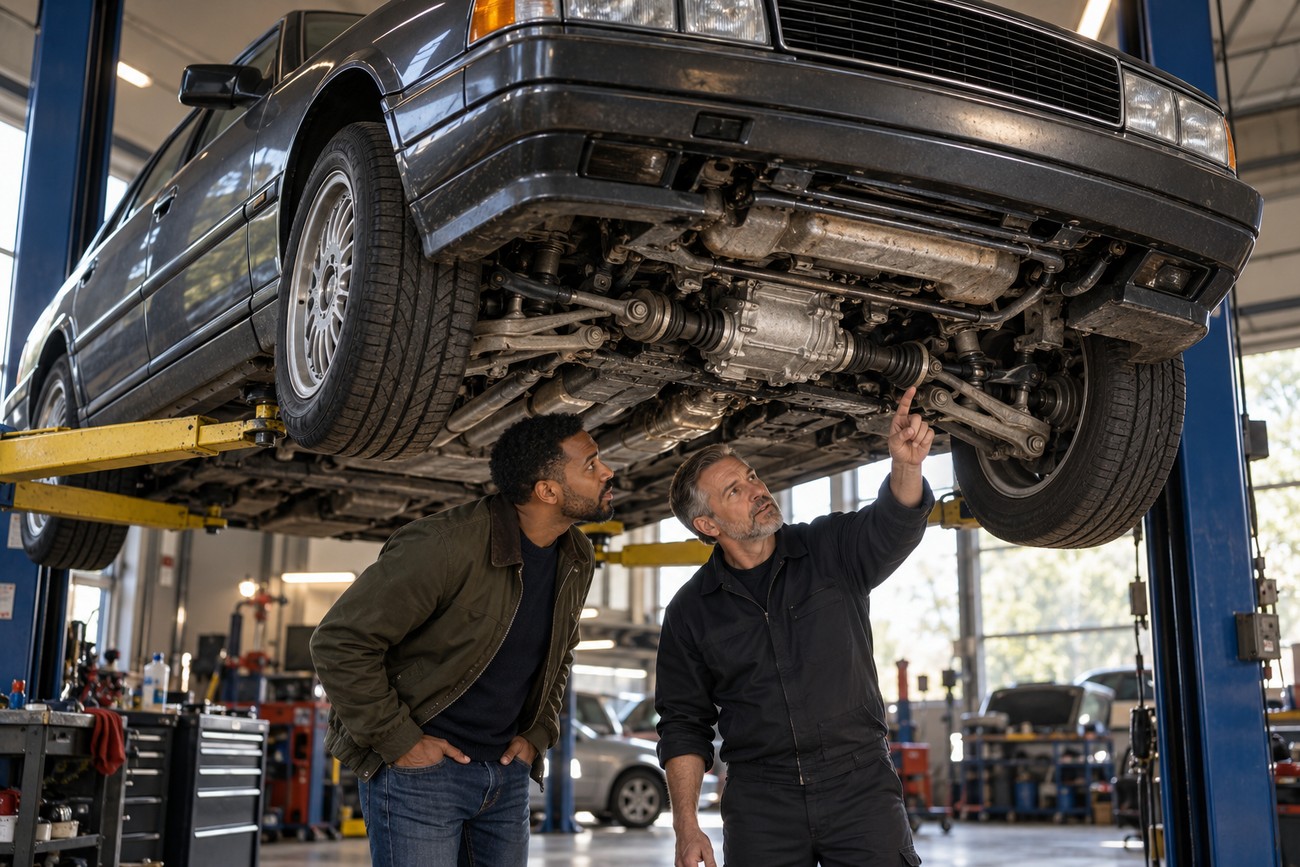
Listen for driveline play and inspect for leaks around the transmission, differentials, and related components. Examine the suspension, brakes, and rubber parts with the same seriousness as the engine. The car’s weight and permanent all-wheel drive place meaningful demands on these systems, so deferred maintenance can be expensive.
Operate every electrical feature, including windows, climate controls, instruments, lighting, and switches. Then compare the result with the service records. A complete history is often more valuable than cosmetic perfection, while rarity does not guarantee liquidity: even an expensive, attractive example may take years to sell.
Budget before buying for suspension, brakes, cooling-system work, and replacement of aged rubber parts. Also identify likely sources for rare interior and electrical components. Buying from photographs, or reserving funds only for the purchase itself, is one of the quickest ways to turn an interesting classic into an unfinished project.
The Audi V8 Myths That Lead Buyers Into Trouble
The first myth is that the Audi V8 has value only as an ancestor of the A8. In reality, it was an independent flagship and an important transition toward the A8 era. Its D1-based architecture, V8 engines, and permanent quattro gave it a distinct identity, even though the later A8 became the better-known name.
The second myth is that quattro makes the car indestructible. It improves traction and stability, especially in poor conditions, but it cannot prevent wear in the gearbox, suspension, differentials, seals, or other drivetrain components. A neglected quattro system can be more expensive to restore than a simpler front-wheel-drive layout.
Another common assumption is that an old V8 must be simple and cheap because its engine design predates modern electronics. Age-related cooling faults, wiring problems, charging issues, interior electronics, and automatic-transmission wear can create more trouble than the engine block itself. Mechanical age matters more than the apparent simplicity of the period.
Finally, a clean body does not prove that restoration will be affordable. Parts availability and labor can dominate costs, particularly where interior electrical components or specialized driveline parts are involved. A documented, unmodified car with honest wear is often a stronger foundation than a shiny example assembled through poor repairs.
Frequently asked questions
What year Audi A8 should you stay away from?
There is no universally bad Audi A8 year without specifying the market, engine, transmission, and maintenance history. A blanket blacklist can direct buyers away from an otherwise sound car while leaving a poorly maintained example untouched simply because it falls within a supposedly desirable year.
Use a condition-and-history framework instead. Check the specific powertrain, evidence of cooling and transmission maintenance, electrical operation, corrosion, previous repairs, and parts support in your region. For a used luxury Audi, documented care and a proper inspection are more useful than a single model-year rule.
Which Audis had a V8?
The Audi V8 was a specific flagship model produced approximately from 1988 to 1994. Its nameplate should be separated from later Audi models that used V8 engines, including various A6, A8, S, and RS versions. Calling every V8-powered Audi an “Audi V8” creates confusion about the car’s identity and parts information.
For research, identify the model, generation, engine, market, and transmission separately. That distinction matters because a later V8-powered Audi may share neither the D1 architecture nor the same drivetrain, electrical systems, or specialist support as the original Audi V8.
What is the rarest Audi ever made?
The Audi V8’s low sales and enthusiast value do not prove that it is the rarest Audi ever made. An absolute rarity claim requires reliable production records, market boundaries, body-style definitions, and confirmation of how many examples survive.
A better buying question is whether a particular V8 has a documented history, an uncorrupted specification, and usable mechanical condition. A rare manual car or an unusual market configuration may attract attention, but rarity without evidence, parts support, and sound systems can make ownership harder rather than more rewarding.







