
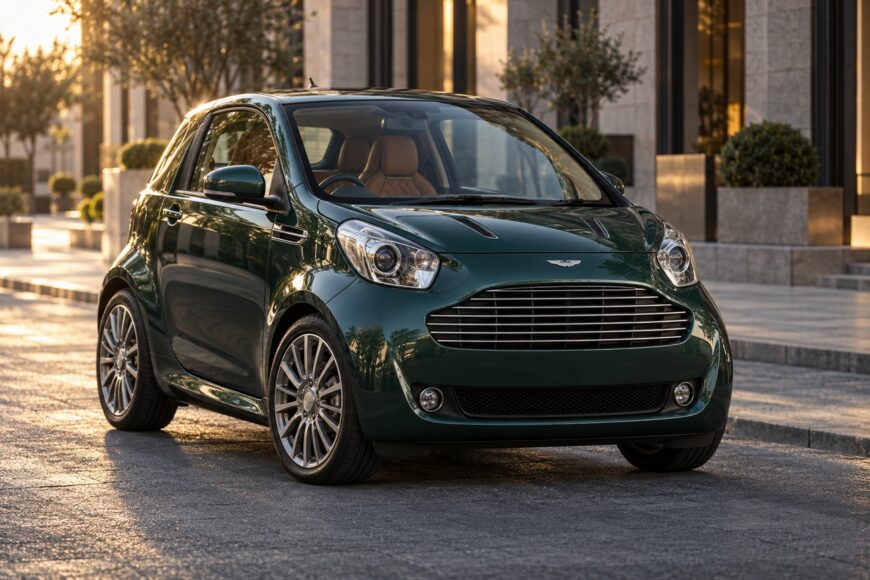
A rare Aston Martin with Toyota iQ mechanical can interest a collector without justifying every asking price. The Cygnet is a genuine part of the marque’s history, yet its appeal lies in an unusual idea and its Aston Martin-specific finish, rather than speed.
That distinction matters when you buy one. A sound, original car with a documented specification may be rewarding to own; a tired example priced chiefly for its badge can leave you paying for scarce trim while driving a familiar small Toyota. Judge the car in front of you, and allow for what it will cost to keep it complete.
- Why the Cygnet exists—and what Aston Martin changed
- The Toyota iQ hardware behind the badge
- Rare does not automatically mean valuable
- What to inspect before buying a Cygnet
- The ownership compromises collectors can miss
- So, is the Aston Martin Cygnet collectible?
- Frequently asked questions
- How many Aston Martin Cygnets are left?
- What insurance should I consider for an occasionally driven Cygnet?
- What should I do before driving a long-stored Cygnet?
Why the Cygnet exists—and what Aston Martin changed
Produced from 2011–2013, the Cygnet was Aston Martin’s unusually small answer to an urban-car brief. It was conceived in part to lower the company’s European fleet-average emissions. That purpose explains the choice of a compact Toyota iQ base more clearly than any claim that this was a miniature sports car.
Aston Martin substantially reworked the bodywork, interior, and equipment. Those changes give the Cygnet a distinct appearance and cabin, and they are central to why anyone would collect one. Treating it as an iQ with a different badge overlooks the parts that make a complete, original example desirable.
The underlying layout and much of the mechanical hardware still have substantial iQ kinship. That helps define both sides of the ownership proposition: familiar small-car engineering beneath finishes that can be harder to replace. A buyer should understand where the Toyota ends and the Aston Martin-specific work begins before deciding what premium is reasonable.
The Toyota iQ hardware behind the badge
The front-wheel-drive Cygnet uses a naturally aspirated 1.33-litre four-cylinder petrol engine. Aston Martin lists approximately 97 bhp (98 PS) at 6,000 rpm and 125 Nm at 4,400 rpm. At approximately 3.0–3.08 m long, with a wheelbase of around 2.0 m, its useful talent is fitting into city spaces, rather than covering ground like a sports Aston Martin.
Official figures put 0–100 km/h at 11.8 seconds with the manual and 11.6 seconds with the CVT; top speed is 170 km/h. The small difference between those acceleration figures is a poor reason to choose a gearbox on its own. In use, the manual offers more involvement, while the CVT suits relaxed urban driving and can make hard acceleration feel more labored.
Aston Martin specifies a six-speed manual or a CVT. Some catalogues list a five-speed manual, apparently through confusion with Toyota iQ specifications; use the manufacturer’s figure and verify the transmission fitted to the individual car. Neither gearbox carries an automatic collector premium: condition, originality, and the preferences of a future buyer will matter more.
Rare does not automatically mean valuable
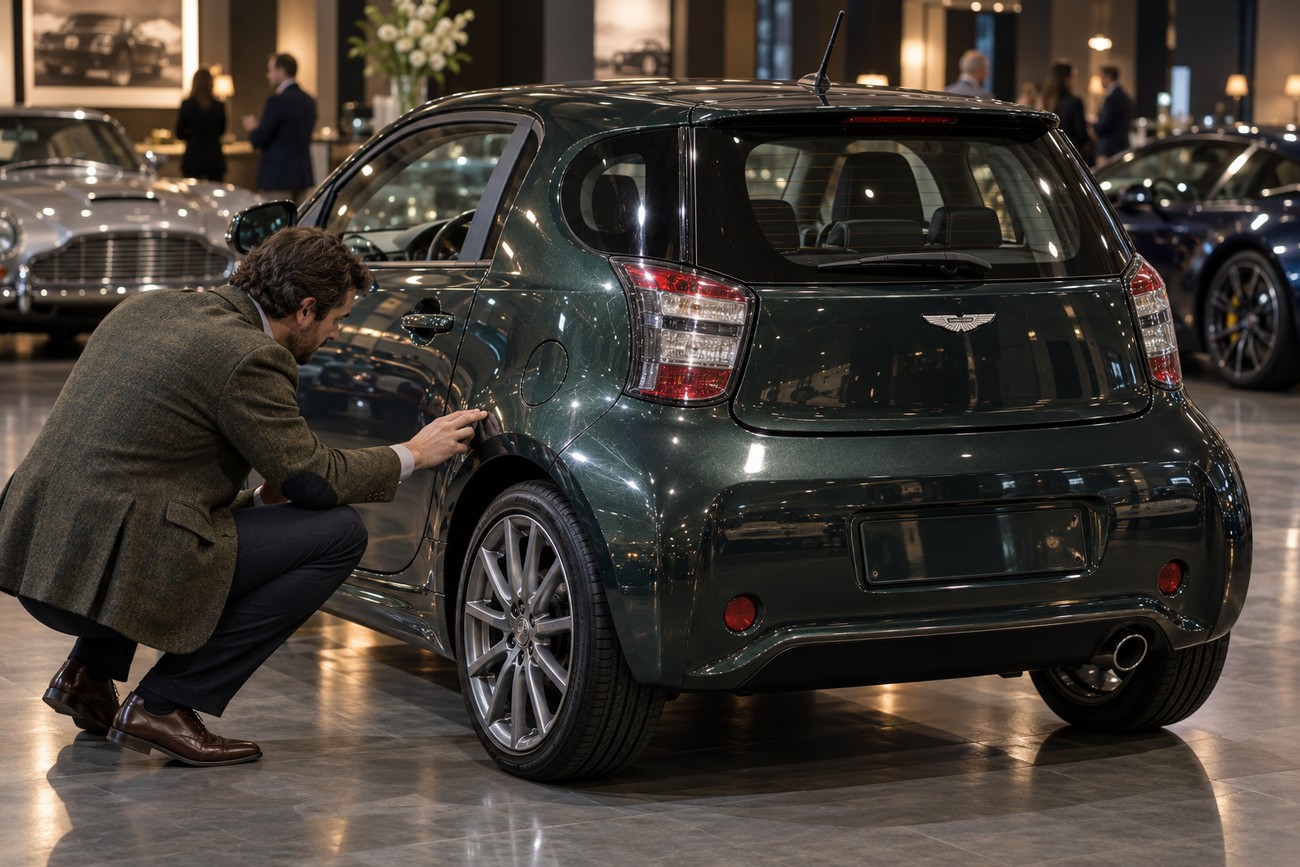
The Cygnet’s collector case starts with its concept. A roughly three-metre premium city car from Aston Martin, made during 2011–2013, occupies an unusual place in the company’s story. That can draw interest from marque collectors even though its mechanical character is closely related to the Toyota iQ.
The figure of approximately 786 cars built is frequently repeated, but the official material identified for this article does not confirm it. Check a factory archive or credible marque register before treating that number as exact. A production total would not, in any event, tell you how many cars survive worldwide or how many are available to buy.
Scarcity and demand are separate tests. An uncommon car can sit unsold if few buyers want its particular colour, transmission, condition, or asking price. Equally, an auction result for a well-presented example cannot establish the value of a car with missing history or damaged original trim; country and specification also affect the comparison.
For a prospective collector, verified identity is more useful than a headline production claim. Records supporting the original colour, interior, equipment, and subsequent care make a car easier to assess and explain to the next buyer. They do not guarantee appreciation or a quick sale, but they reduce the uncertainty that makes a niche model difficult to price.
What to inspect before buying a Cygnet
Plan the inspection on two tracks. Check the engine, manual gearbox or CVT, suspension, and electrics as you would on a related Toyota iQ, with a road test that reveals how the car behaves once warm. Familiar mechanical hardware is an advantage only if its condition has been established; an Aston Martin badge does not excuse deferred maintenance.
Then examine the parts that make this particular car a Cygnet. Look closely at the bodywork, wheels, upholstery, cabin fittings, and equipment, and compare them with the stated specification and available records. Damage or undocumented substitutions may be much more consequential where a replacement must match an Aston Martin-specific finish.
Ask for service invoices rather than relying on a stamped record alone. Confirm the claimed transmission, colour, and interior against the car and its paperwork, and investigate modifications or repairs that the seller cannot explain. This matters particularly when an attractive low-mileage car has had several owners but little evidence of work between changes of hands.
Low mileage also leaves room for deterioration during storage. Inspect the age and condition of the tyres, test the battery, assess fluids, and look for aged seals before assuming the car is ready for regular use. Allow for an independent pre-purchase inspection and a post-purchase service budget; either can be modest beside the cost of discovering a problem after delivery.
The ownership compromises collectors can miss
Mechanical kinship with the iQ may give you access to specialists familiar with some of the Cygnet’s routine maintenance. It does not make its distinctive body panels, cabin trim, or wheels ordinary Toyota parts. Before committing to a car with cosmetic damage, establish whether correct replacements can be sourced and what the repair would involve.
The city-car dimensions have practical limits. The rear seats are best suited to children or short trips, and luggage space is severely restricted when those seats are occupied. If you expect to carry passengers and bags regularly, a brief drive around town will reveal less than a trial with the people and items you actually intend to carry.
Performance is another constraint worth accepting before purchase. The 1.33-litre engine provides measured progress, and the CVT can emphasize that relaxed character under hard acceleration. The Cygnet works best for an owner who enjoys its small footprint and unusual finish without expecting the response of a larger Aston Martin.
Exit costs deserve attention too. A rare car can have a narrow audience, so a future sale may take time even when the example is sound. Purchase with enough financial room to maintain it properly rather than depending on a quick resale to cover unexpected work.
So, is the Aston Martin Cygnet collectible?
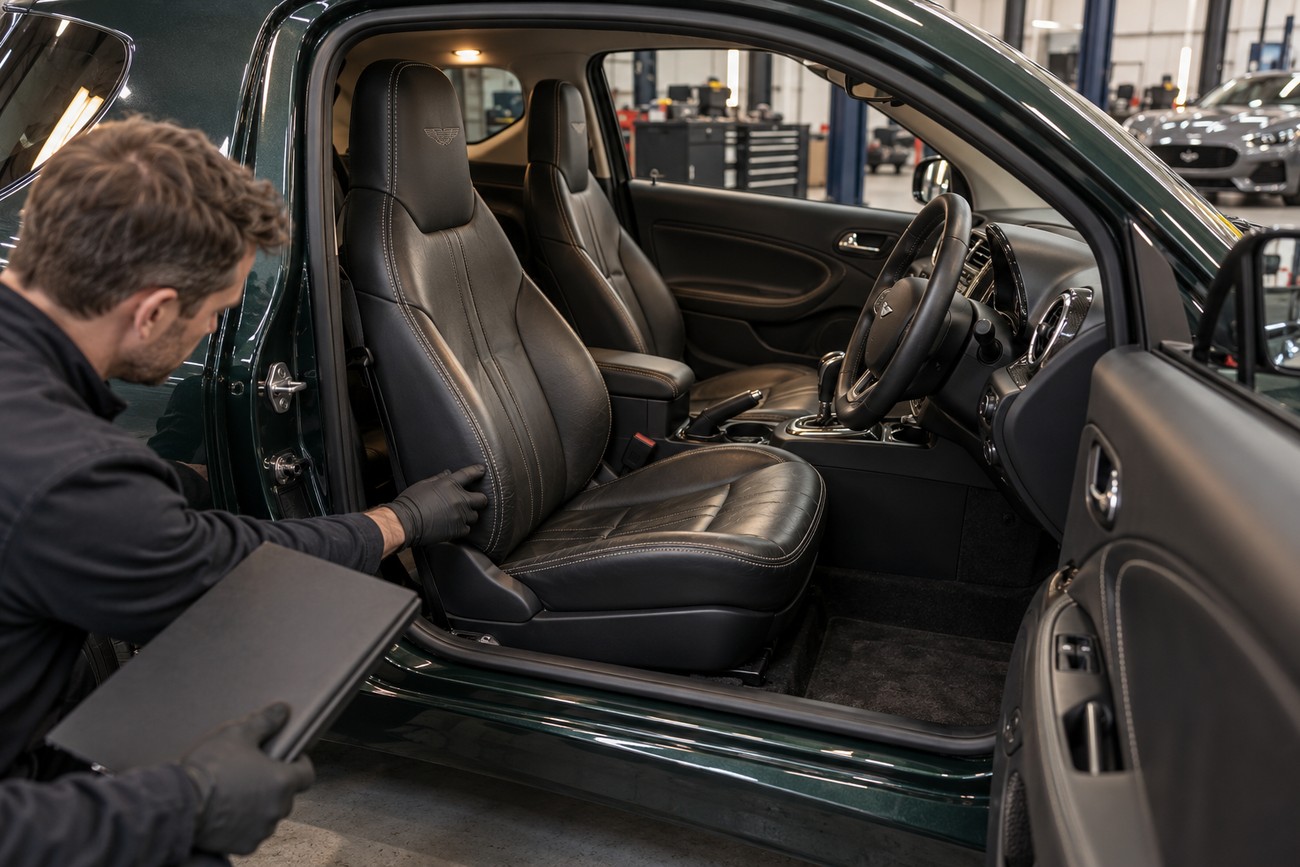
Yes, conditionally. The Cygnet is a distinctive, limited-production chapter of Aston Martin’s 2011–2013 history: a city car with substantially reworked bodywork and interior over Toyota iQ-related mechanicals. That combination gives an original example a clearer collector identity than its modest performance might suggest.
The strongest candidates have a documented specification, intact Aston Martin-specific details, convincing service history, and a condition that matches the seller’s account. Those qualities are more persuasive than an unverified production figure or low mileage viewed in isolation. A manual may appeal to some collectors, while a CVT may better suit the city use for which the car was conceived.
Buy at a price you can justify against the car’s condition and the likely costs of specialist parts, inspection, and upkeep. Its Toyota relationship can make some maintenance approachable, but it cannot remove the cost of preserving its distinctive finish. Collector interest is real; future appreciation and easy resale remain uncertain.
Frequently asked questions
Ownership questions often need answers about the individual car and the place where you will use it. The distinctions below can help you check a seller’s claims, compare cover, and put a stored Cygnet back into service. They are worth resolving before treating the car as ready to drive.
How many Aston Martin Cygnets are left?
There is no verified worldwide survivor count in the information available here. The often-quoted figure of approximately 786 refers to cars reportedly built, and it is not confirmed by the official material identified for this article. Even a verified production total would include cars that may since have been damaged, scrapped, or left unregistered; a reliable current register would be needed to estimate how many remain.
What insurance should I consider for an occasionally driven Cygnet?
Compare ordinary cover with an agreed-value policy if the car’s condition and originality make a standard valuation a poor fit. Ask how each policy would value a total loss and whether it covers appropriate repair or replacement of Cygnet-specific parts. Mileage limits, storage requirements, permitted drivers, and commuting or other use restrictions vary by insurer and jurisdiction, so check the written terms against how you will actually use the car.
What should I do before driving a long-stored Cygnet?
Start with a stationary inspection of the tyre and seals, then check the battery and the condition and levels of the fluids. Address any deterioration before a road test, and arrange a mechanical diagnosis before regular use, including checks of the transmission, suspension, and electrics. Low mileage offers no assurance that consumables have aged well while the car was parked.







