
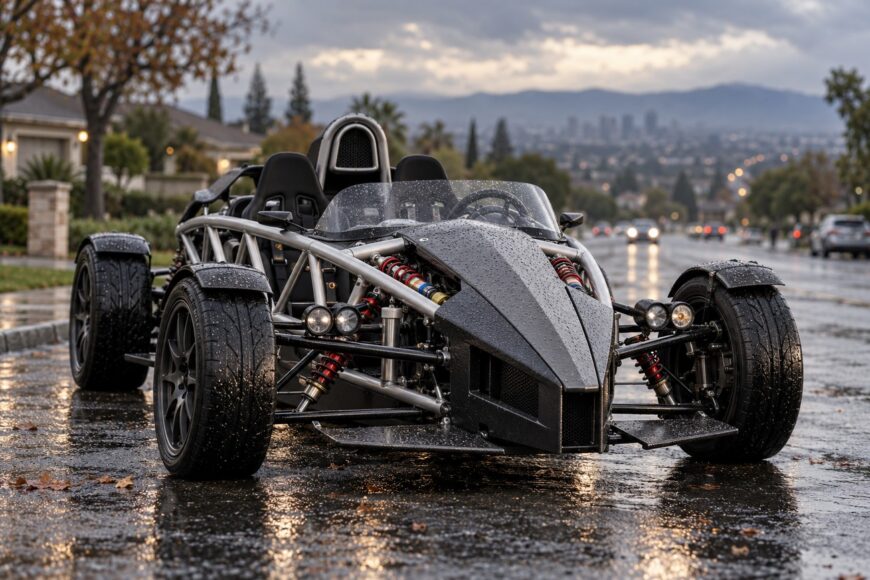
The Ariel Atom can be road legal while remaining exposed, noisy, and heavily dependent on weather. Its visible tubular frame, open cockpit, and lack of conventional bodywork preserve the car’s lightweight purpose, yet they also leave the driver responsible for much of the protection a normal vehicle provides.
Removing the roof, side windows, and enclosing panels reduces the barrier between you and the road. Water, grit, wind, insects, and noise become part of the driving experience, while cleaning and inspection become routine ownership tasks. The practical verdict is clear: an approved Ariel Atom works best as a road-legal track car for short, dry drives rather than as universal everyday transport.
- What “Without Bodywork” Actually Means on an Ariel Atom
- Is the Ariel Atom Practical on Public Roads?
- Rain, Cold, and Tires: The Conditions That Change the Answer
- The Hidden Ownership Costs of an Open Cockpit
- Road Legality Depends on the Exact Configuration
- Safety, Fit, and Equipment Before You Buy
- Ariel Atom 4 Performance Versus Practicality
- Frequently asked questions
- How much does an Ariel Atom car cost?
What “Without Bodywork” Actually Means on an Ariel Atom
The Ariel Atom has a visible tubular frame with no roof and no side windows. The open cockpit is part of the design, rather than a removable feature that turns the car into a conventional convertible. You sit close to the mechanical components, with the road and surrounding air remaining unusually present throughout the drive.
A small windscreen is available as an option, but it does not create a sealed cabin. It offers some reduction in direct airflow, while the sides and upper structure remain open. Rain can still enter from above and from the front wheels, and passing traffic can throw spray into the cockpit.
The open wheels and parts of the suspension receive direct exposure to water, dirt, sand, and stones. Those materials can reach the occupants, brake components, cooling areas, and other exposed mechanisms. A journey on a clean, dry road therefore places far less demand on the car and its occupants than the same journey on a wet or dirty route.
Wings and panels affect real-world use because they help limit spray and debris. Removing them may preserve mechanical operation while making the car harder to live with, especially in traffic or poor weather. They should be treated as functional parts of the approved configuration, rather than as decorative pieces that can be discarded without consequence.
Is the Ariel Atom Practical on Public Roads?
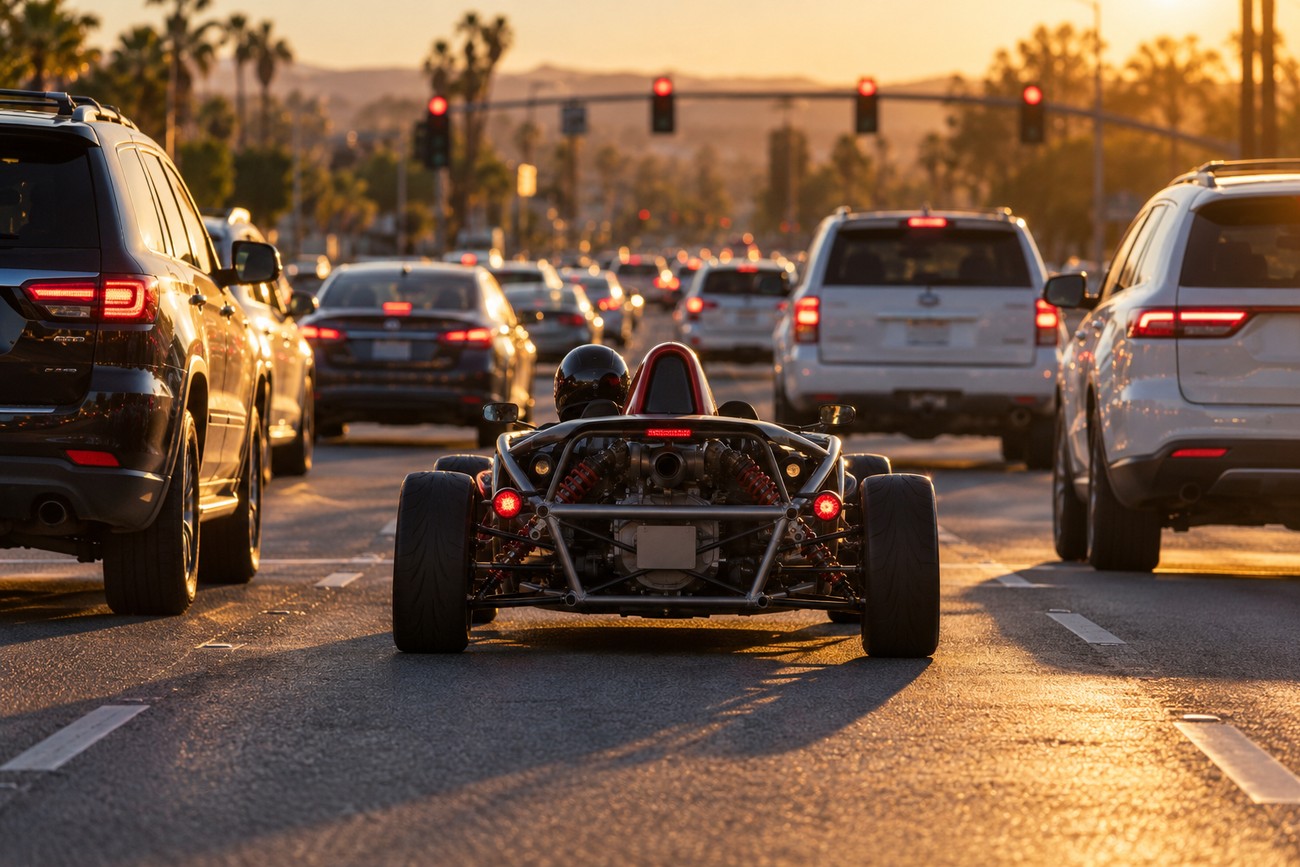
The Ariel Atom is most practical on public roads as a road-legal track car for short, dry drives. It can cover ordinary routes, yet its usefulness depends heavily on weather, tire choice, road surface, and your tolerance for exposure. Mechanical capability and everyday livability are separate judgments.
The low seating position helps create the car’s direct, focused character, but it can reduce visibility in dense traffic. Larger vehicles may have difficulty noticing a low open car, and the driver has less visual separation from surrounding traffic. Extra care is required at junctions, in parking areas, and beside trucks or SUVs.
Wind, engine noise, and airflow can become tiring at ordinary motorway speeds. The optional windscreen reduces some of the direct blast, though it does not provide the quiet, stable environment of a closed car. A route that feels engaging on a dry back road can become physically demanding after a longer highway journey.
Daily use also brings awkward practical details: weather can change during the drive, luggage space is limited by the design, and a wet return may require immediate cleaning. A road-legal configuration can therefore be perfectly usable without making every modified Atom suitable for commuting, long-distance travel, or year-round transport.
Rain, Cold, and Tires: The Conditions That Change the Answer
Rain reaches the occupants from several directions. Water can fall directly into the open cockpit, rise from the front wheels, and arrive as spray from passing traffic. The small windscreen does not provide the protection of a roof and side windows, so clothing, eye protection, and route choice matter as much as the car’s mechanical condition.
Yokohama V105 tires are offered as standard road tires, while Yokohama A052 tires are offered as road/track tires. The labels describe intended use, not identical behavior in every environment. Neither option makes the Atom equally suitable for cold weather, heavy rain, standing water, or aquaplaning conditions.
Tire selection should follow the surface and forecast, rather than the road/track label alone. A route with cold pavement, standing water, gravel, or frequent puddles can change the sensible choice of drive before the car leaves the garage.
Cold temperatures can reduce the confidence available from a tire that feels highly effective on a dry, warm road. Standing water and aquaplaning create a separate problem from ordinary wet grip, while sand and gravel can reduce stability and increase the amount of debris reaching the car. The Atom’s open layout makes those conditions more intrusive as well as more demanding.
Experienced ownership therefore involves planning the surface, not only checking the destination. A short, dry route with clean pavement may suit the car well; the same vehicle can become uncomfortable and difficult to manage on a wet route with puddles, road grit, and heavy traffic. The practical limit often arrives from the conditions before it arrives from the engine.
The Hidden Ownership Costs of an Open Cockpit
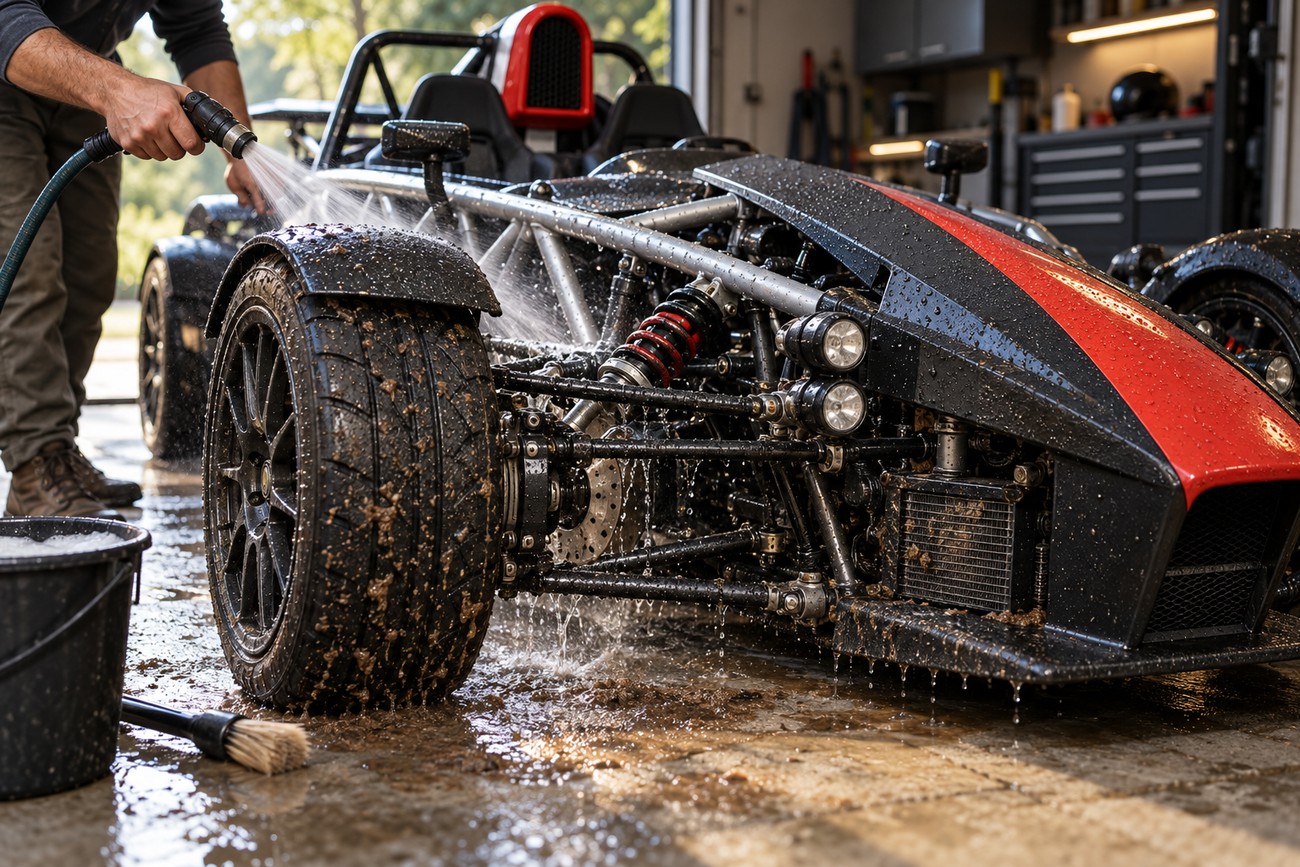
Open suspension, wheels, and mechanical components receive direct exposure to road dirt, water, and stones. The absence of bodywork removes protection from salt, spray, and minor road debris, so a dirty drive creates more follow-up work than it would in a closed car. This is a recurring ownership burden, rather than an occasional inconvenience.
After a wet or dirty trip, thorough cleaning may be needed around the exposed suspension, wheels, brakes, and cooling areas. The owner also needs to inspect visible components for trapped grit, contamination, or signs of damage. Washing alone is insufficient if it replaces rather than accompanies a careful check.
Regular attention to fasteners, brake components, radiators, and other exposed parts helps identify problems before the next drive. Open construction can make many items easy to see, but visibility does not eliminate the need for inspection. Dirt can still collect in places that are difficult to assess without getting close to the car.
Dry storage, a suitable cover, and a post-drive routine are practical requirements. Keeping the Atom outside in changing weather increases the work involved and can expose vulnerable parts to unnecessary moisture and contamination. Reduced bodywork may reduce mass; it does not mean reduced maintenance.
Road Legality Depends on the Exact Configuration
“Road legal” refers to an approved configuration, not automatically to every Ariel Atom assembled or modified by an owner. Legality depends on the market, exact specification, and local registration procedure. A car accepted in one jurisdiction may require different equipment or approval in another.
Local requirements can cover lighting, mirrors, wings, noise, emissions, insurance, and registration. The relevant details may also depend on whether the car is supplied, imported, individually approved, or subsequently modified. Checking the paperwork and local rules before purchase is more reliable than treating a general manufacturer description as universal permission.
Track-oriented changes can alter that position. A decat exhaust may affect emissions or noise compliance, while altered aerodynamics, removed panels, or changes to lighting and mirrors may conflict with the approved specification. The car can remain mechanically functional and still become unsuitable or unlawful for public-road use.
Insurance deserves separate attention because a modification can affect cover even where registration remains valid. Confirm the exact specification, intended use, and proposed changes with the relevant registration and insurance authorities before committing to the car. This is particularly important when importing an Atom or buying one that has already been prepared for track use.
Safety, Fit, and Equipment Before You Buy
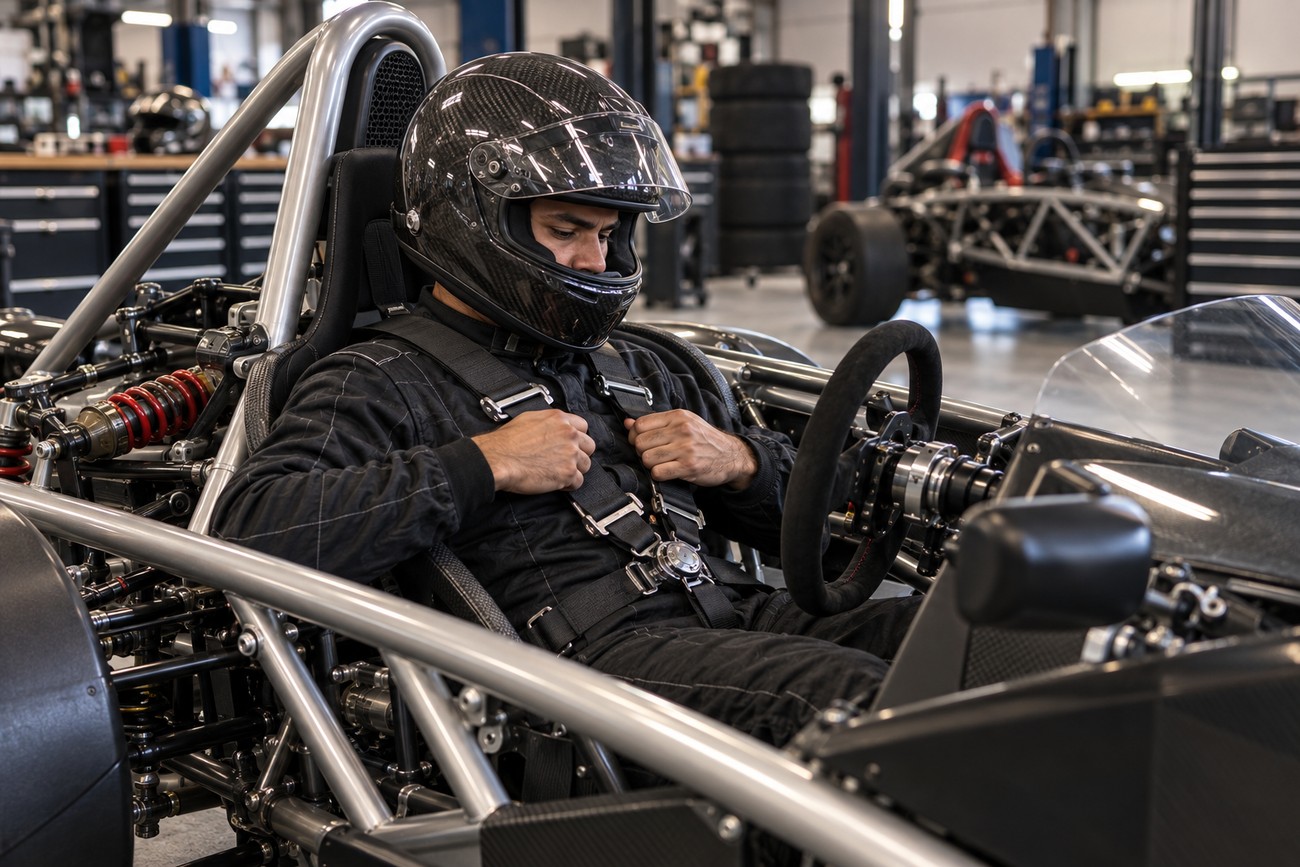
A catalogue specification cannot replace a physical seating test. Four-point harnesses, racing seating, an open cockpit, the roll hoop, and the steering wheel must work together for the individual driver. Road use and track-day requirements may also differ, so equipment accepted in one setting may not automatically satisfy another.
Helmet fit can interact with the roll hoop, harnesses, steering wheel, and driver visibility. The correct position for a bare-headed seating test may change once you wear your own helmet and tighten the harnesses. A poor fit can affect comfort, control access, and the ability to see clearly around the car.
Before purchase, test the exact seat, harness, and helmet combination you intend to use. Check that you can enter and exit without difficulty, reach the controls securely, and maintain a clear view. The practical point is to try the helmet with the chosen seat and hoop, since the precise result depends on the driver’s height, build, and specification.
Eye protection and suitable clothing matter because airflow, stones, and insects enter the open cockpit. Ordinary casual clothing may be inadequate for a longer drive or a route with loose debris. The right equipment does not make the Atom weatherproof, but it reduces exposure to hazards that a conventional cabin would normally block.
Ariel Atom 4 Performance Versus Practicality
The current Ariel Atom 4 uses a 2.0-liter turbocharged Honda engine rated at 320 bhp and 420 Nm. Its claimed 0–60 mph time is 2.8 seconds. Those figures explain the car’s appeal, but they do not answer whether it suits your roads, climate, or routine.
Acceleration capability is useful on a track because it gives the car strong performance over short distances. On public roads, the available performance is constrained by traffic, speed limits, visibility, and surface quality. A fast car still needs clean pavement and appropriate conditions before its power can be used responsibly.
The Atom 4’s open cockpit places the driver close to the sensations that make the car memorable. It also exposes the driver to wind, noise, rain, cold, and debris during the same journey. Performance remains available in poor conditions, while the practical value of using it can fall sharply.
That separation should shape the buying decision. Choose the Atom 4 for its focused driving experience and accept that weather, tires, route condition, and maintenance will influence when it is enjoyable. The headline figures describe what the car can do; they do not make it a universal daily vehicle.
Frequently asked questions
How much does an Ariel Atom car cost?
There is no single universal ownership figure for an Ariel Atom. The relevant cost varies by market, exact specification, options, import status, insurance, registration, and any work required to meet local road rules.
Purchase price is only one part of the decision. A buyer should also establish whether the car is in an approved road-legal configuration, whether track modifications need to be reversed, and how local insurance and registration treat the vehicle. Confirming those details before purchase gives a more useful ownership estimate than relying on a general advertised price.







