
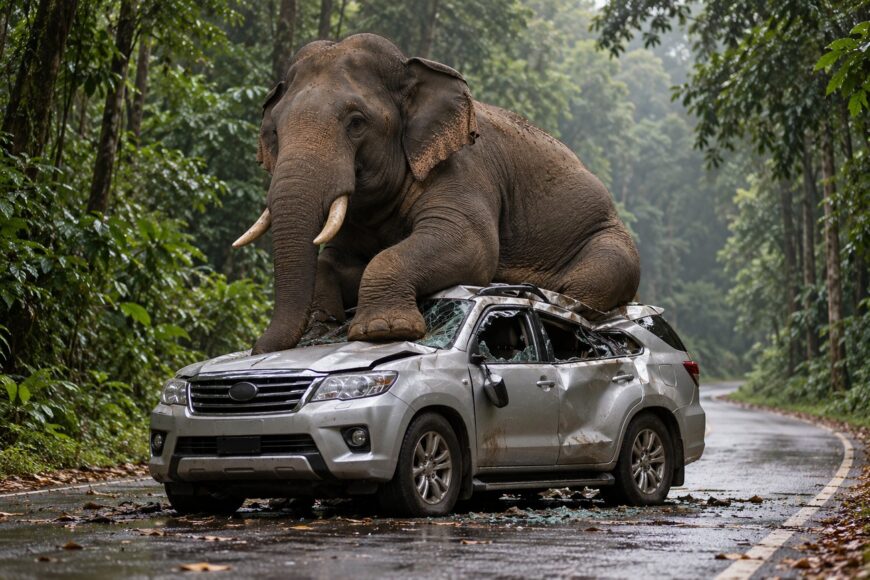
In January 2026, an elephant sat on a Toyota Fortuner in Khao Yai, Thailand. The vehicle’s roof was dented and its windows were broken, but no one was injured. The incident shows how quickly a wildlife encounter can become a vehicle-safety problem.
The central risk is human behavior around a wild animal: moving closer to observe it, trying to control its movement, or stopping without a clear escape route. A vehicle may offer protection, but the driver still needs distance, a running engine, and enough open road to retreat.
- What Happened to the Toyota Fortuner in Khao Yai
- What to Do When an Elephant Approaches Your Vehicle
- Why a Fortuner Is Not Elephant-Proof
- Driving Mistakes That Make a Wildlife Encounter Worse
- What to Do After Contact or Vehicle Damage
- Frequently asked questions
- What should a rental-car driver do after an elephant damages the vehicle in Thailand?
- How can drivers photograph an elephant without creating another hazard?
- What evidence should be collected for an insurance claim after an elephant encounter?
What Happened to the Toyota Fortuner in Khao Yai
According to the reported incident, an elephant sat on a Toyota Fortuner in Khao Yai in January 2026. The reported damage included a dented roof and broken windows. No one was injured.
The available evidence is limited. The incident and damage details come from one reported news source, with no independently confirmed repair estimate or exact load calculation. The report supports a description of the event and its visible consequences but leaves technical questions unanswered.
There is no confirmed figure for the elephant’s mass, the load placed on the roof, or the cost of returning the vehicle to safe road condition. The incident therefore cannot establish a precise roof-load limit, prove a universal weakness in every Fortuner, or show that every similar SUV would respond the same way.
What to Do When an Elephant Approaches Your Vehicle
Khao Yai guidance recommends stopping at least 30 m from an elephant. Keep the vehicle positioned so the road behind remains open, and avoid stopping where other cars could trap you between the animal and a queue. Distance gives both the elephant and the driver more room to change direction.
If the elephant approaches, reverse slowly and wait for it to leave. Keep the engine running so you can retreat immediately. Steer smoothly rather than accelerating or braking suddenly or trying to force a passage.
Stay inside the vehicle while the elephant is nearby. Do not exit for a photograph, sound the horn, make sudden noises, or use a camera flash. These actions can attract attention or provoke the animal, even if it appears calm.
At night, use low-beam headlights and avoid hazard lights. If you need to move, choose the direction with fewer elephants and proceed cautiously. A calm appearance does not make close contact safe.
Why a Fortuner Is Not Elephant-Proof
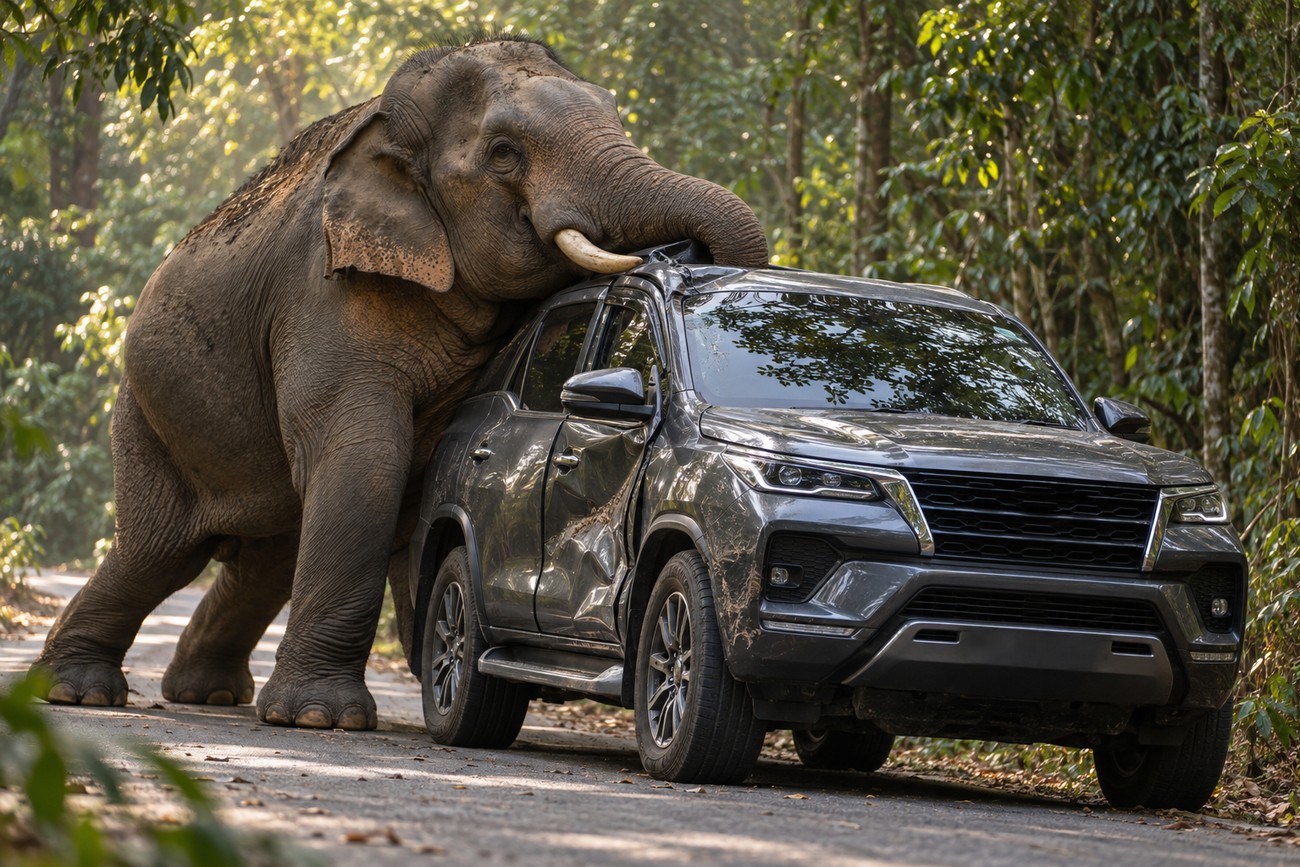
The Fortuner is a road SUV, not a vehicle certified to withstand elephant pressure. Its body and safety systems are designed for ordinary road hazards and crash scenarios, not for a large wild animal sitting on, leaning against, or rubbing along the vehicle.
Official warnings state that even light contact from an elephant can cause serious vehicle damage. An elephant does not need to charge for the result to be severe. Pressure against a roof, side panel, door, or window can exceed what those parts are designed to tolerate.
Visible damage may also underestimate the problem. A roof that appears to have held its shape can conceal damage to pillars, door mounts, curtain airbags, window mechanisms, or body alignment. Broken glass and distorted doors can make the cabin unsafe even when the engine still starts.
Driving Mistakes That Make a Wildlife Encounter Worse
Approaching within 30 m to see an elephant more clearly removes the safety margin recommended in Khao Yai. Stopping for photographs can also block the road, leaving the vehicle in the animal’s path or between the elephant and following traffic. The driver may then have fewer options just as the animal begins to move.
Switching off the engine is another dangerous choice. The driver loses the ability to retreat immediately and may need extra time to restart, select a gear, and move. The engine should remain running while the elephant is close enough to affect the vehicle’s movement.
Horns, sudden noises, camera flashes, high beams, and hazard lights can attract attention or provoke the animal. Attempts to frighten an elephant away can produce an unpredictable response. Smooth, quiet movements give the driver a better chance of leaving when the route is clear.
Moving forward toward the elephant compounds the risk. If the road is blocked, reverse slowly and wait rather than forcing a passage. A vehicle stopped for a photograph can create a second hazard by obstructing other drivers, who may approach without seeing the animal or block the first vehicle’s escape route.
What to Do After Contact or Vehicle Damage
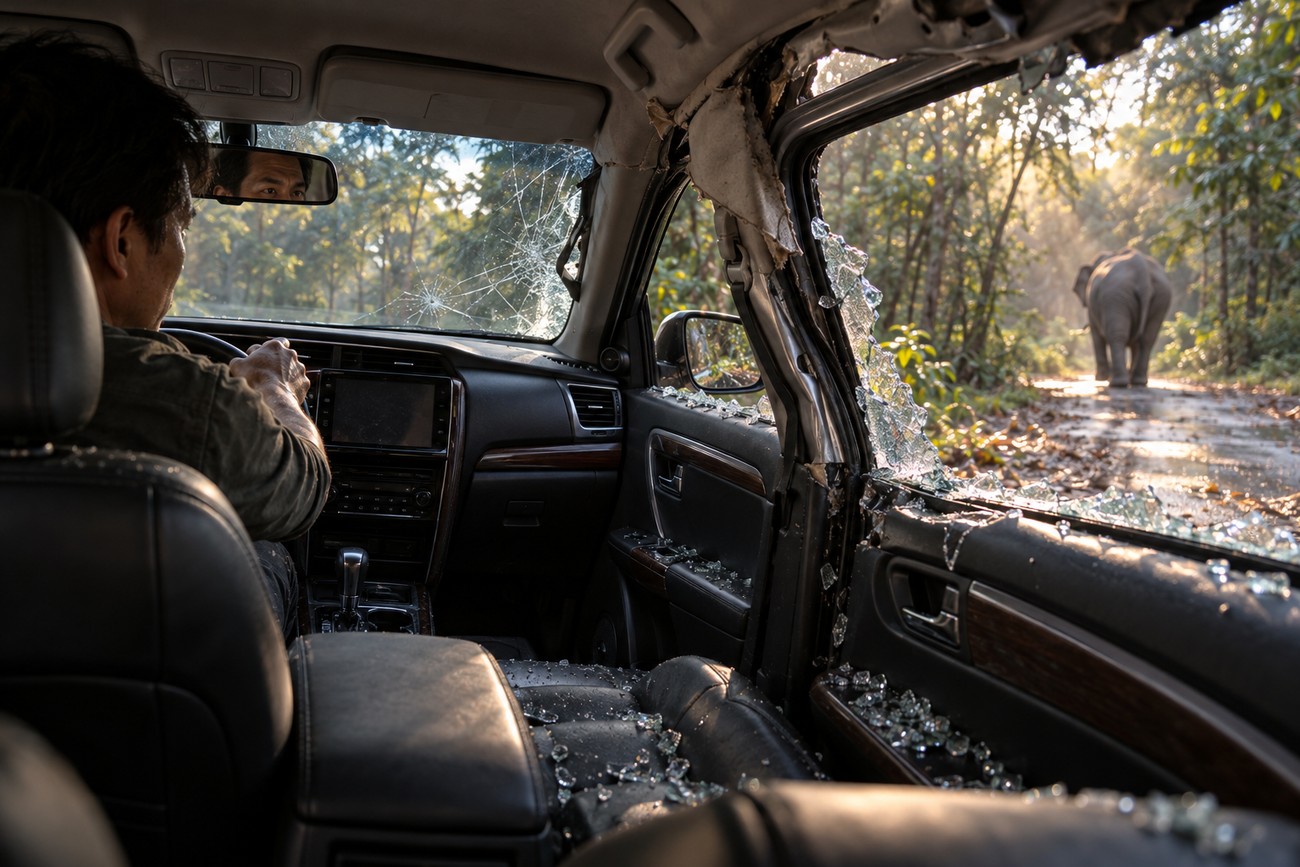
Remain inside the vehicle until the elephant has moved away and the surrounding road is safe. Do not leave to inspect broken glass or photograph the roof while the animal is still nearby. The immediate priority is keeping people out of reach and avoiding another encounter.
Once the area is clear, assess whether the vehicle can be moved safely. Broken windows can expose occupants to glass and weather, while roof damage may affect pillars, doors, curtain airbags, or body alignment. A working engine does not by itself show that the vehicle is safe to drive.
Document the damage only after the elephant and traffic situation are safe. Contact park staff or rangers, roadside assistance, and the rental company if the vehicle is rented. Preserve any incident record and follow instructions before moving the vehicle farther than necessary.
Animal-related damage may be covered by insurance, but check the policy for exclusions involving park-rule violations, deliberate risk, or use outside an authorized area. Keep photographs, location and time details, park or ranger reports, and rental documents together. Avoid making assumptions about personal liability before reviewing the rental agreement and insurance terms.
Frequently asked questions
These answers focus on decisions that follow an elephant encounter, including rental reporting, photography, and insurance documentation.
What should a rental-car driver do after an elephant damages the vehicle in Thailand?
Stay in the vehicle until the elephant has left, then contact park staff or a ranger and the rental company. Provide the location, time, vehicle position, and a factual description of the damage. Preserve reports, messages, photographs, and any instructions you receive.
Do not accept personal liability or authorize repairs before checking the rental agreement and insurance terms. Animal-related damage may be covered, while exclusions can apply to park-rule violations, deliberate risk, or unauthorized use.
How can drivers photograph an elephant without creating another hazard?
Remain inside the vehicle, keep it out of the elephant’s path, and avoid flash, sudden movement, horns, and high beams. Photography should never require moving closer, blocking the road, or leaving the cabin.
Photograph vehicle damage only after the elephant and nearby traffic are safely clear. If the animal remains close, wait and follow park staff instructions rather than prioritizing an image.
What evidence should be collected for an insurance claim after an elephant encounter?
Record the time, location, vehicle position, visible damage, and sequence of events while the details are fresh. Take photographs from inside the vehicle or after the area is safe, and obtain park or ranger reports when available.
Keep witness details, rental documents, policy information, and all notifications to the insurer and rental company. Do not approach the elephant or delay safety actions to collect evidence.







