
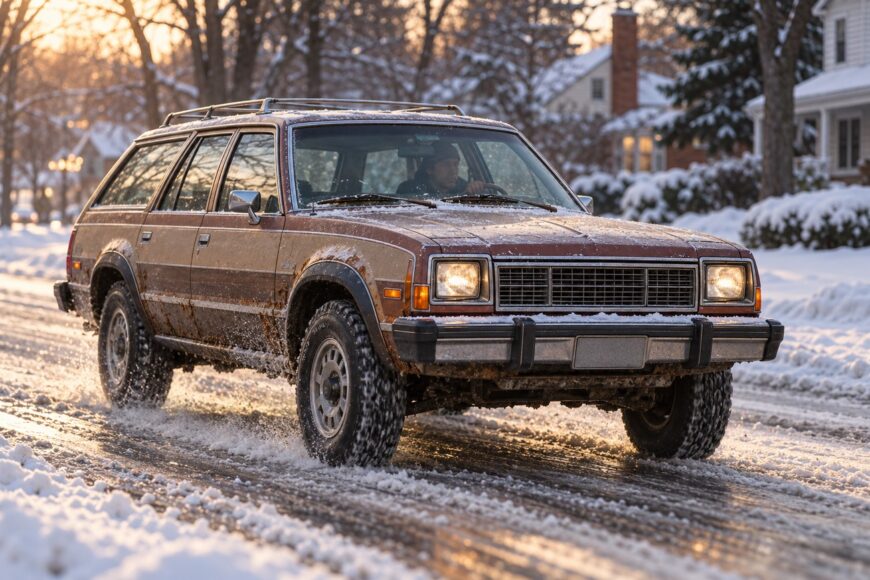
The AMC Eagle looks like a modern crossover decades before that label became common. Its raised passenger-car body, useful ground clearance, and full-time four-wheel drive suggest an easy winter vehicle. Age, corrosion, period fuel consumption, and an unusual drivetrain make ownership far less simple than its shape suggests.
The sensible choice is between a historically important classic that can handle snow and poor roads, and a cheap project that may consume more money than its purchase price. The Eagle was an important early passenger-car-based crossover, although it was not the first four-wheel-drive or all-wheel-drive passenger car ever made.
That distinction matters during a purchase. A sound, documented wagon can be an engaging collector car with genuine utility. A neglected example with hidden structural rust and damaged 4WD components can become a specialist restoration before you have driven it home.
- Why the AMC Eagle Is Considered an Original Crossover
- How the Eagle’s 4WD System and Raised Chassis Worked
- AMC Eagle Body Styles, Engines, and Model Lineup
- The Real Cost of Owning an AMC Eagle Today
- What to Check Before Buying an AMC Eagle
- Winter Classic, Not a Serious Off-Roader: Myths and Sensible Upgrades
- Frequently Asked Questions
- How much is an AMC Eagle worth?
- Which AMC car is the rarest?
- Which AMC Eagle body style is the best collector choice?
Why the AMC Eagle Is Considered an Original Crossover
AMC built the Eagle from a modified AMC Concord/Spirit passenger-car platform rather than from a conventional truck chassis. The recipe combined a familiar road-car body, increased ground clearance, and permanent 4WD. That gave the Eagle more traction and rough-road ability without the size, weight, and truck-like manners of a traditional SUV.
The model years ran from 1979 through 1987, with series production beginning as the 1980 model. AMC produced the cars at its Kenosha, Wisconsin, facilities, in much smaller numbers than the major Detroit manufacturers produced their mainstream passenger cars. Limited production now affects both parts supply and the number of good restoration candidates.
The Eagle’s importance lies in the combination of features and its intended use. It was a passenger car designed to make winter roads, wet surfaces, and poorly maintained rural roads easier to manage. Earlier 4WD and all-wheel-drive passenger cars existed, so calling the Eagle the world’s first crossover is inaccurate. Calling it a major early crossover design is justified.
How the Eagle’s 4WD System and Raised Chassis Worked
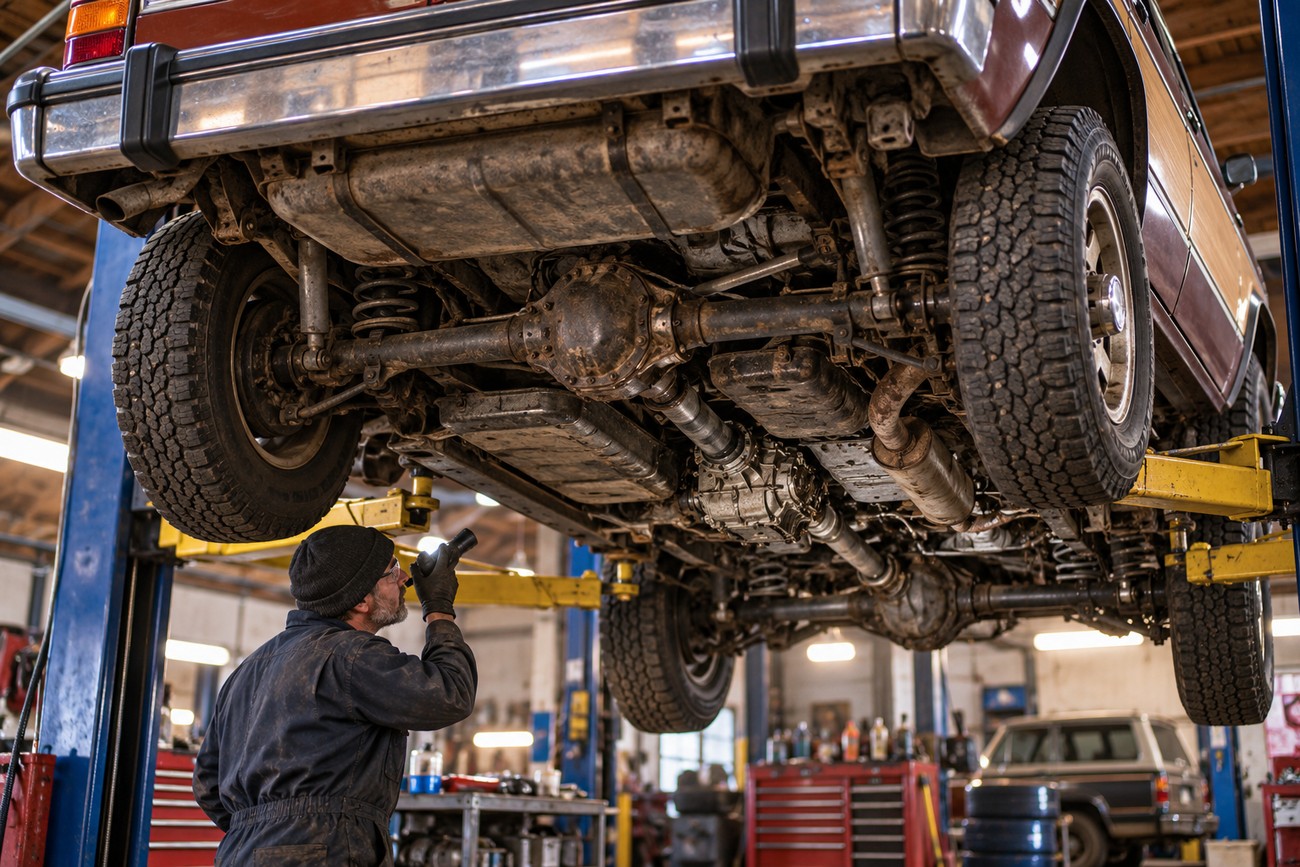
Early Eagles used permanent 4WD with a central differential. In simple terms, the system could send drive to both axles while allowing the front and rear wheels to turn at different speeds through a corner. That arrangement suited normal road use far better than a part-time system left locked on high-traction pavement.
New Process 119/129 units belong to the transfer-case family used during the Eagle’s drivetrain development. Some later versions offered selectable 2WD/4WD, so a buyer should identify the exact drivetrain rather than assume every car has identical hardware. The transfer case, front differential, driveshafts, and CV joints are central to the car’s value.
Stock ground clearance was approximately 200–220 mm, or about 76–100 mm higher than comparable non-4WD AMC models. That height helps the car clear ruts and snow, while the permanent system improves traction on slippery roads. It does not provide the low-range gearing, locking differentials, underbody protection, or structural toughness expected of a serious off-road vehicle.
Using an Eagle on difficult trails can also expose weaknesses that remain invisible on a road test. Wheel bearings, CV joints, mounts, and the transfer case all receive greater loads when the car is lifted or fitted with oversize tires. Its best environment is a snowy highway, gravel road, or rough access track, not extreme trail work.
AMC Eagle Body Styles, Engines, and Model Lineup
The Eagle range covered several passenger-car shapes. The wagon is the most common and commonly sought-after used-market choice, while the less familiar bodies attract collectors for different reasons.
| Body style | Practical character | Market and restoration note | Engine availability |
|---|---|---|---|
| Wagon | Most useful cargo space and strongest winter-car identity | Most common used-market choice; usually the easiest starting point | Primarily the 4.2L AMC inline-six |
| Sedan | Passenger-car comfort with Eagle clearance and 4WD | Less fashionable, but condition can matter more than body style | 4.2L AMC inline-six; limited 2.5L inline-four applications |
| Coupe | Sportier profile with limited rear practicality | Unusual and harder to find with intact trim | Primarily the 4.2L AMC inline-six |
| SX/4 hatchback | Compact two-door hatchback character | Collectible and scarce; restoration can be expensive | Primarily the 4.2L AMC inline-six |
| Kammback | Distinctive compact utility body | Unusual, with difficult-to-source body and interior pieces | Limited applications; no factory-installed V8 |
The main engine was the 4.2L AMC inline-six. A 2.5L inline-four was offered in limited applications. The AMC Eagle did not receive a factory-installed V8, despite occasional claims based on engine swaps, other AMC models, or confusion with later modifications.
The wagon normally makes the most practical collector purchase because it combines recognition, usable space, and a broader supply of surviving examples. An SX/4 or Kammback can draw more attention, yet rarity does not remove the need to inspect rust, trim, and drivetrain condition.
The Real Cost of Owning an AMC Eagle Today
Rust deserves priority over paint, upholstery, and running condition. Inspect the rocker panels, wheel arches, floors, and rear structural or suspension areas from above and below. A car that starts easily can still have rotten mounting points, and cosmetic repairs may conceal damage that makes safe restoration uneconomical.
Parts availability is mixed. Some suspension and body components interchange with AMC Concord/Spirit parts, which helps with ordinary mechanical repairs. Key 4WD components, original interior panels, moldings, and certain trim pieces remain much harder to source, sometimes requiring a donor car or patient searching through specialist networks.
Many Eagles use carbureted engines that may suffer from cold-start problems, flooding, and repeated tuning issues. A smooth warm idle proves little if the choke, fuel system, ignition, and cooling system have not been checked from cold. Period marketing emphasized passenger-car economy, while owners commonly report approximately 15–18 mpg in real use.
Age affects the electrical system as much as the engine. Oxidized connectors, weak grounds, damaged wiring, and unstable instruments can create faults that appear unrelated to one another. Interior plastics and fabric also wear, loosen, and rattle, so “complete” should mean more than having four seats and a dashboard.
The practical cost is therefore a combination of parts research, specialist labor, and time. A standard AMC component may be manageable, while one unusual transfer-case part or missing trim piece can delay a project. That is why a solid, unmodified car is often a better buy than a cheap example with an attractive paint job.
What to Check Before Buying an AMC Eagle
Begin underneath the car, before evaluating the engine sound or the quality of the paint. Check the floors, rocker panels, wheel arches, rear suspension mounting areas, and structural seams with a light and a probe where appropriate. Fresh undercoating, uneven repairs, or thick filler deserve closer investigation rather than reassurance.
Inspect the 4WD system independently of the engine. Identify whether the car has permanent 4WD or selectable 2WD/4WD, then check the transfer case, front differential, driveshafts, CV joints, mounts, and wheel bearings for leaks, noise, looseness, or vibration. Use the correct fluids; filling a transfer case or differential with whatever oil is available can accelerate wear.
Load-testing the transfer case and front differential makes sense only after the correct fluid type, intact CV joints, and sound mounting points have been confirmed. A harsh test on damaged hardware can turn an inspection into a repair bill.
Next, examine the brakes, steering, suspension, and cooling system. Factory braking hardware may feel inadequate for the Eagle’s mass in modern traffic, while old hoses, bushings, seals, and other rubber parts can fail even when they look acceptable. Preventive replacement of these components after purchase is often more sensible than waiting for each one to deteriorate separately.
Oversized wheels and aggressive lifts are warning signs unless the work is documented and engineered correctly. They can damage CV joints and wheel bearings, alter suspension geometry, and worsen handling. A specialist inspection is cheap compared with discovering that a low-priced project needs structural welding, a transfer-case rebuild, and a complete suspension correction.
Test every electrical function, including lighting, gauges, wipers, heater controls, and charging. Inspect the car cold, drive it long enough to reach operating temperature, and listen for drivetrain noise under acceleration and overrun. If the seller will not permit those checks, treat the car as a parts or restoration purchase rather than a running classic.
Winter Classic, Not a Serious Off-Roader: Myths and Sensible Upgrades
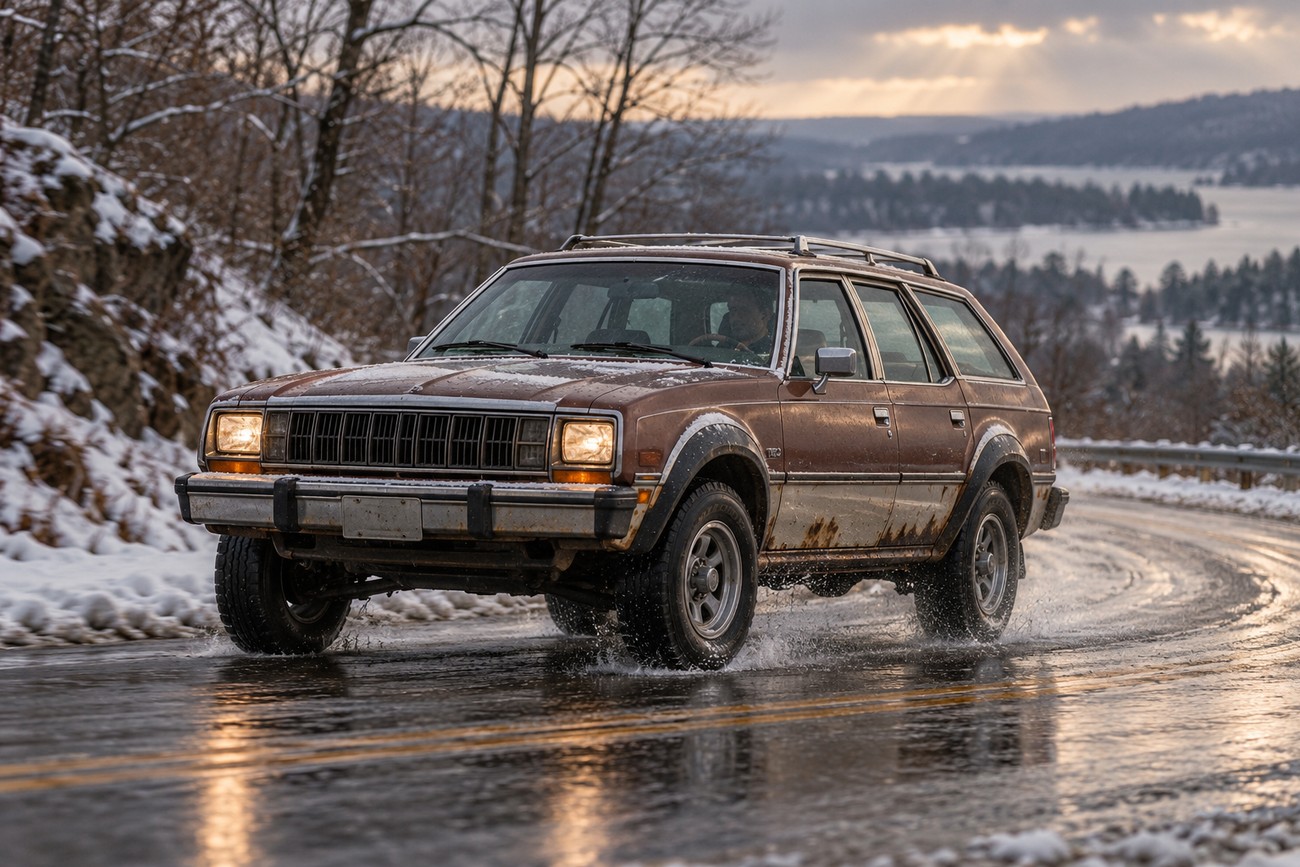
The Eagle’s useful niche is winter driving and poor roads. Its raised body and chassis create a higher center of gravity, noticeable body roll, and less forgiving behavior during abrupt direction changes. That is a different set of compromises from a low passenger car, even though the Eagle began with passenger-car architecture.
There are no factory locking differentials and only limited underbody protection. The car can maintain traction on snow and wet roads, but its hardware is poorly suited to repeated impacts, deep ruts, or extreme trail work. Its modest braking performance also deserves respect when the car is loaded or driven in modern traffic.
Restoring the original ride height and suspension settings often improves comfort and handling more than a fashionable lift. Renew the rubber components, correct worn steering and suspension parts, and use sensible tire dimensions before changing the geometry. A taller stance may look convincing while making the drivetrain and wheel bearings work harder.
SX/4 and Kammback versions are unusual and collectible, but their scarcity can make restoration more expensive. A wagon with sound structure, working 4WD, and complete trim may be the wiser long-term purchase. The best Eagle is usually the one with the least hidden work, not the one with the most dramatic appearance.
Frequently Asked Questions
How much is an AMC Eagle worth?
There is no useful single value without inspecting the car. Structural rust, working 4WD, body style, originality, and restoration quality determine whether an Eagle is a repairable classic, a usable driver, or an expensive project.
Separate the asking price from the cost of making the car reliable. A rough car with a cheap entry price may need structural welding, drivetrain work, trim, and electrical repairs. A sound wagon with documented maintenance can justify a stronger price even if its paint is less impressive.
Which AMC car is the rarest?
“Rarest” depends on the standard used: original production totals, surviving examples, or the number of complete cars available today. Without defining that standard, there is no single universally accepted answer.
Eagle SX/4 and Kammback cars attract attention because they are unusual and less frequently encountered than wagons. Their rarity alone does not guarantee high value; poor structure, missing trim, or incomplete 4WD can make restoration costs exceed collector appeal.
Which AMC Eagle body style is the best collector choice?
The wagon is usually the safest all-around choice because it has the strongest practical identity, useful cargo space, and broader market familiarity. It is also easier to justify as a running winter classic rather than a display-only car.
The SX/4 and Kammback offer greater visual distinction, while the sedan and coupe can be rewarding when unusually complete. For any body style, condition, originality, and drivetrain health matter more than rarity alone. Choose the best-preserved example you can inspect properly.







