
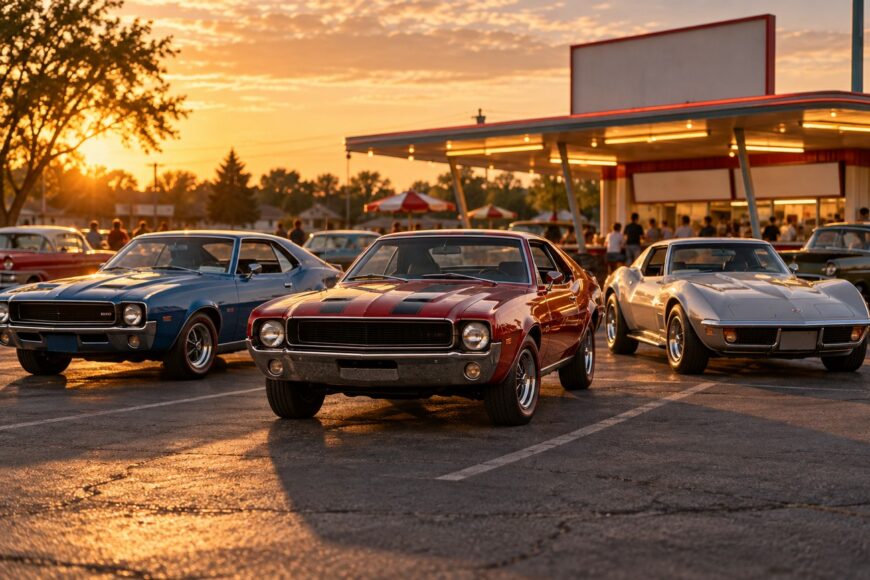
The AMC AMX is often introduced as a Corvette rival, yet that label can obscure what the car actually was: a rare, compact AMC muscle car with two seats, short-wheelbase manners, and a much narrower support network. Its appeal rests on the combination of a small cabin, V8 character, and unusual engineering choices rather than on a simple horsepower comparison.
Engine claims vary by year, specification, and measurement method. Originality matters more than a headline figure, while hidden corrosion, poor structural repairs, scarce AMC-specific parts, and incomplete interiors can turn an apparently affordable AMX into an expensive restoration. The sensible way to assess one is to understand its history first, then inspect the individual car with unusual care.
- Why AMC Built the AMX as a Two-Seat Statement
- AMX, Javelin, and AMX/3: Do Not Confuse Them
- How Fast Was the Production AMX?
- AMX vs. Corvette: Rival, Alternative, or Marketing Shortcut?
- The Real Ownership Problem: Rust, Parts, and Fit
- Buying and Restoring an AMX Without Losing the Plot
- The AMX Myths That Distort Its Value
- Frequently asked questions
- What car is commonly called the poor man’s Corvette?
- What was AMC’s fastest car?
- What car rivals the Corvette?
- What is the holy grail of muscle cars?
Why AMC Built the AMX as a Two-Seat Statement
The early AMX was AMC’s two-seat sports car for the late 1960s and early 1970s. Its short wheelbase gave it a distinct visual and dynamic identity within AMC’s performance range. The car was compact, direct, and deliberately separate from the company’s more practical performance models.
That separation is clearest beside the Javelin. The Javelin was the more family-oriented related model, while the AMX sacrificed rear-seat usefulness for a tighter cabin and a more focused sports-car profile. This distinction matters to buyers because an AMX is not simply a Javelin with a different badge or an options package.
AMC’s positioning also explains the car’s Corvette-rival reputation. A two-seat body and available V8 power gave the AMX a strong performance image, while its compact dimensions made it feel more concentrated than a typical American coupe. Its actual market scale and chassis development were more modest than the slogan suggests.
The AMX name returned in 1978 on a separate Concord-based version. That later car belongs to a different period and product concept, so its existence should not blur the identity of the original two-seat sports car. Collectors should establish which AMX they are examining before comparing specifications, parts, or values.
AMX, Javelin, and AMX/3: Do Not Confuse Them
These names describe related AMC ideas, but they do not identify the same vehicle. Production status, seating, and the source of performance figures are essential when reading advertisements, auction descriptions, or restoration claims.
| Vehicle | Production status | Seating | Historical role | Safe interpretation of performance claims |
|---|---|---|---|---|
| Early production AMX | Series-produced in the late 1960s and early 1970s | Two seats | Compact AMC sports car with V8 power | Use figures for the specific engine, year, and test method |
| Javelin | Series-produced related AMC model | More family-oriented configuration | Broader-use performance coupe related to the AMX | Do not treat Javelin specifications or trim as AMX specification |
| 1978 Concord-based AMX | Separate version using the AMX name | Different from the early two-seat sports car | Later return of the AMX name | Do not use its identity to authenticate an early AMX |
| AMX/3 | 1970 concept, not a production AMX | Concept-car configuration | More ambitious design study associated with the AMX name | Claimed 340 hp, 583 N·m, 0–100 km/h in 5.7 seconds, and 260 km/h; these figures cannot be transferred to a production AMX |
The AMX/3 is especially easy to misuse in online material because its claimed specifications sound like a natural extension of the production car. They describe a 1970 concept, not a road-going AMX available through AMC dealers. A seller who uses AMX/3 figures to describe a production car is mixing two different historical subjects.
Identification should begin with the body, documentation, and factory details rather than with a general resemblance. A Javelin-based project, a later Concord-based AMX, and an early two-seat AMX can all be described loosely as “an AMX” in casual conversation, yet they carry different implications for parts, authentication, and value.
How Fast Was the Production AMX?
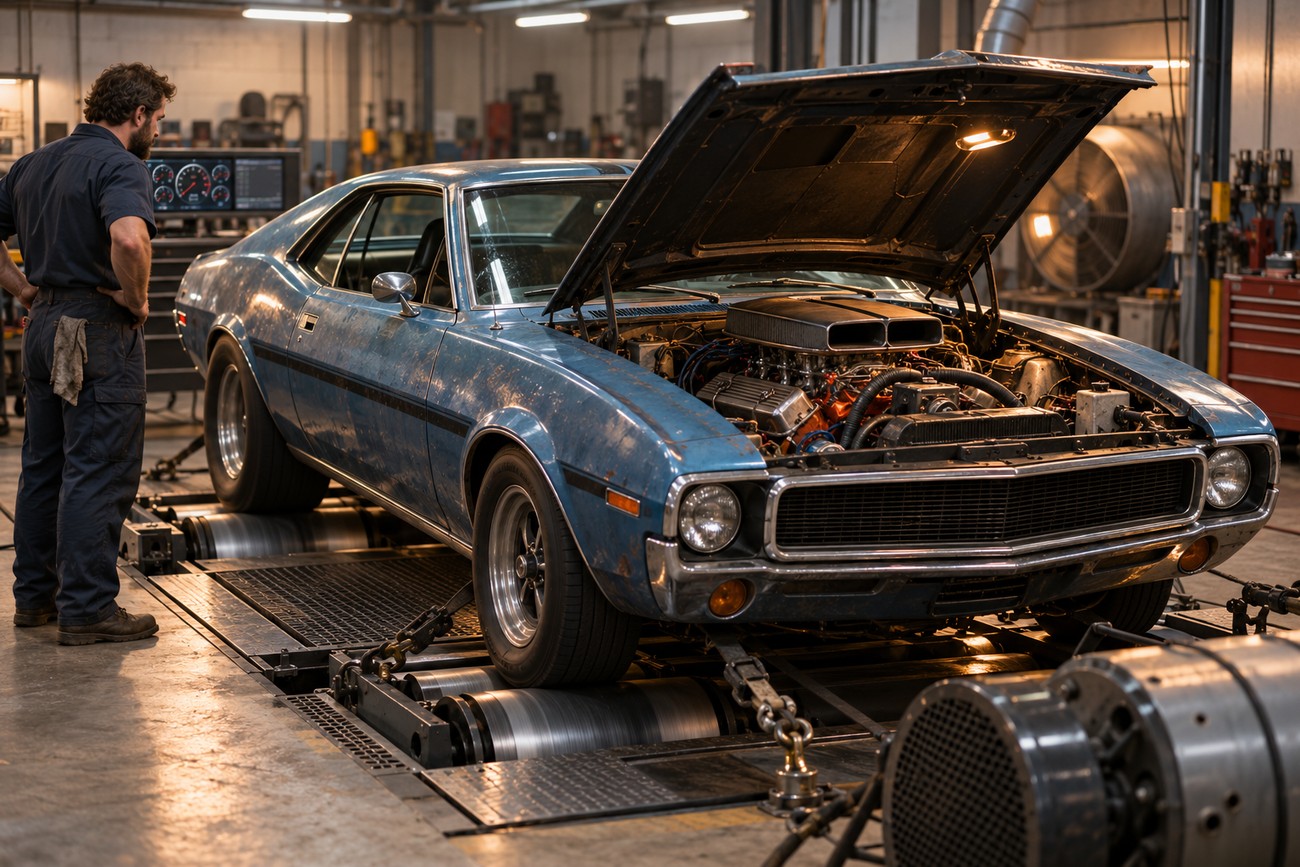
Early AMX V8 choices included 290, 343, and 390 cubic inches. Reported power figures vary across sources, with figures of 225, 290, and 315–325 hp appearing in period and later material. Certain versions are cited at up to 340 hp with Ram Air, but the exact specification and measurement convention must be established before making a comparison.
The variation is not necessarily evidence of inaccurate advertising. Older American horsepower figures can reflect different SAE standards, engine configurations, and test conditions, while later summaries may combine gross and net-style figures or confuse optional equipment. A buyer should record the year, engine code, induction system, and test method before treating any power number as definitive.
For a 1970 AMX, commonly cited specifications are about 3,000 lb, 0–60 mph in roughly 7 seconds, and a quarter mile in about 15 seconds. Reported top-speed figures range from approximately 114 to 122 mph, or about 183–196 km/h. These are useful period-reference ranges, not guaranteed results from every surviving car.
One source lists a 1970 AMX at 325 hp, 576 N·m, and 6.7 seconds from 0–100 km/h. That claim requires verification against primary AMC data and the SAE measurement method before it is presented as settled fact. It should also remain separate from the AMX/3 concept’s claimed 340 hp, 583 N·m, 5.7-second 0–100 km/h time, and 260 km/h top speed.
The driving impression can exceed the stopwatch impression. The short wheelbase, close-feeling two-seat cabin, V8 sound, and upright period driving position create a concentrated sense of speed. That character is part of the AMX’s appeal, but it does not make every production car equal to a later or more developed sports car in acceleration, braking, or chassis refinement.
AMX vs. Corvette: Rival, Alternative, or Marketing Shortcut?
The AMX was marketed and remembered as a Corvette rival, but the comparison works best as a statement of intent rather than a claim of equal market scale or engineering development. AMC offered a niche, comparatively low-volume alternative with American V8 muscle-car priorities. It was a distinctive response to the two-seat sports-car market, not a mass-market Corvette equivalent.
The AMX’s strongest argument is its different balance of size, sound, and usability. Its compact body and two-seat layout make the driver feel closely connected to the mechanical noise and forward motion. That experience can be more memorable than its period acceleration figures, especially when the car is judged on road presence rather than test-track performance alone.
A Corvette comparison becomes misleading when it encourages buyers to expect identical refinement, development, or performance. The AMX has its own strengths, including rarity, an unusual AMC identity, and a more compact muscle-car character. It also carries the disadvantages of a smaller manufacturer’s limited parts ecosystem and a narrower collector market.
For valuation, the useful question is whether the car is a correct, complete example with the right identity and specification. A V8 alone does not establish desirability, and AMX/3 concept figures should never be used to inflate the performance case for a production car. The Corvette label may explain the AMX’s place in history, but it should not replace inspection or documentation.
The Real Ownership Problem: Rust, Parts, and Fit
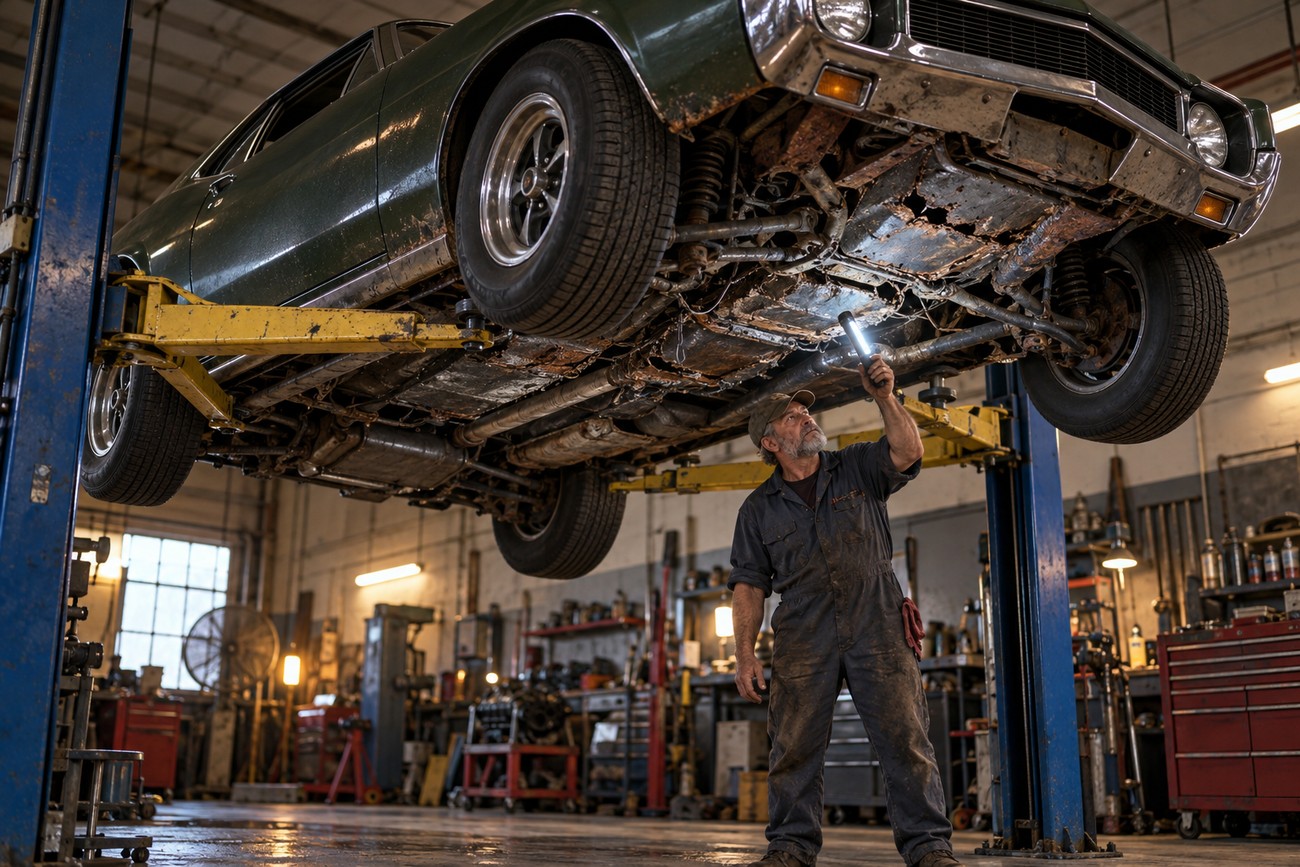
Hidden corrosion is the first serious threat. Rust can affect the body, floors, and structural areas, while an attractive exterior may conceal old repairs or weakened mounting points. Poorly executed welding can be more costly than visible rust because it complicates geometry, restoration, and later authentication.
Age-related systems create a second layer of work. Owners commonly report difficult parts sourcing, aging electrical systems, vacuum-line problems, and carburetor tuning issues. Each fault may be manageable alone, but several together can make a car unreliable and consume time before the owner reaches the enjoyable part of driving it.
Factory mounting points and structural geometry deserve attention before the engine or paint. A strong-running V8 cannot compensate for a distorted shell or hidden repair work in the areas that determine how the car sits, tracks, and accepts replacement panels.
Recurring owner complaints also include tight cabin space and difficult seating, especially for taller drivers. This is an owner-reported concern rather than a universal measurement, so a buyer should sit in the actual car, check steering-wheel clearance, and assess pedal and seat travel before committing.
A practical inspection sequence starts underneath and moves inward:
- Check body alignment, door gaps, floor condition, structural mounting areas, and evidence of concealed welding.
- Inspect suspension and drivetrain mounting points for distortion, corrosion, or improvised repairs.
- Test the electrical system, vacuum-operated equipment, instruments, and charging behavior.
- Assess cold starting, carburetor response, oil pressure, cooling, and driveline noise.
- Inventory glass, seals, trim, interior panels, and AMC-specific hardware before estimating restoration cost.
Restoration can cost more than the initial purchase because body, trim, glass, seals, interior, and electrical parts may be difficult to source. A cheap project with a missing interior can therefore be less rational than a more expensive, complete car. The engine is only one line in the budget.
Buying and Restoring an AMX Without Losing the Plot
Value an AMX only after confirming what it is. The inspection should cover body geometry, floors, structural mounting areas, hidden welding, and the quality of previous repairs. A clean paint finish can conceal substantial work, so the underside and factory attachment points deserve as much attention as the engine bay.
Documentation is equally important. VIN and engine originality, correct engine codes, rare options, and overall completeness can matter more than merely having a V8. A car assembled from attractive but incorrect parts may be enjoyable to drive, yet its collector value and ability to pass authentication can be substantially reduced.
Confusion with the Javelin creates a specific buying risk. A seller may describe a related car or a mixed-parts project using broad AMX language, while a buyer pays for the identity of a genuine early two-seat model. Compare the body, documentation, tags, drivetrain details, and interior components before accepting a premium.
Budget for the parts that are easiest to overlook: chrome, glass, weather seals, upholstery, interior trim, wiring, and correct fasteners. These items can determine whether a restoration feels complete and whether later buyers trust its history. A mechanically sound car with missing or incorrect finishing parts may remain a long-term project.
Liquidity is another practical concern. The AMX can be harder to resell than to buy because its rarity narrows the audience and makes condition differences difficult for casual buyers to judge. Buy the best-documented, most complete example you can justify, and assume that a future sale may require patience rather than an immediate return.
The AMX Myths That Distort Its Value
Myth: every AMX had one official horsepower figure. Reality: reported power varies by engine, year, version, optional equipment, and measurement standard. Figures of 225, 290, and 315–325 hp appear in sources, with certain versions cited at up to 340 hp with Ram Air, so a single number without context is weak evidence.
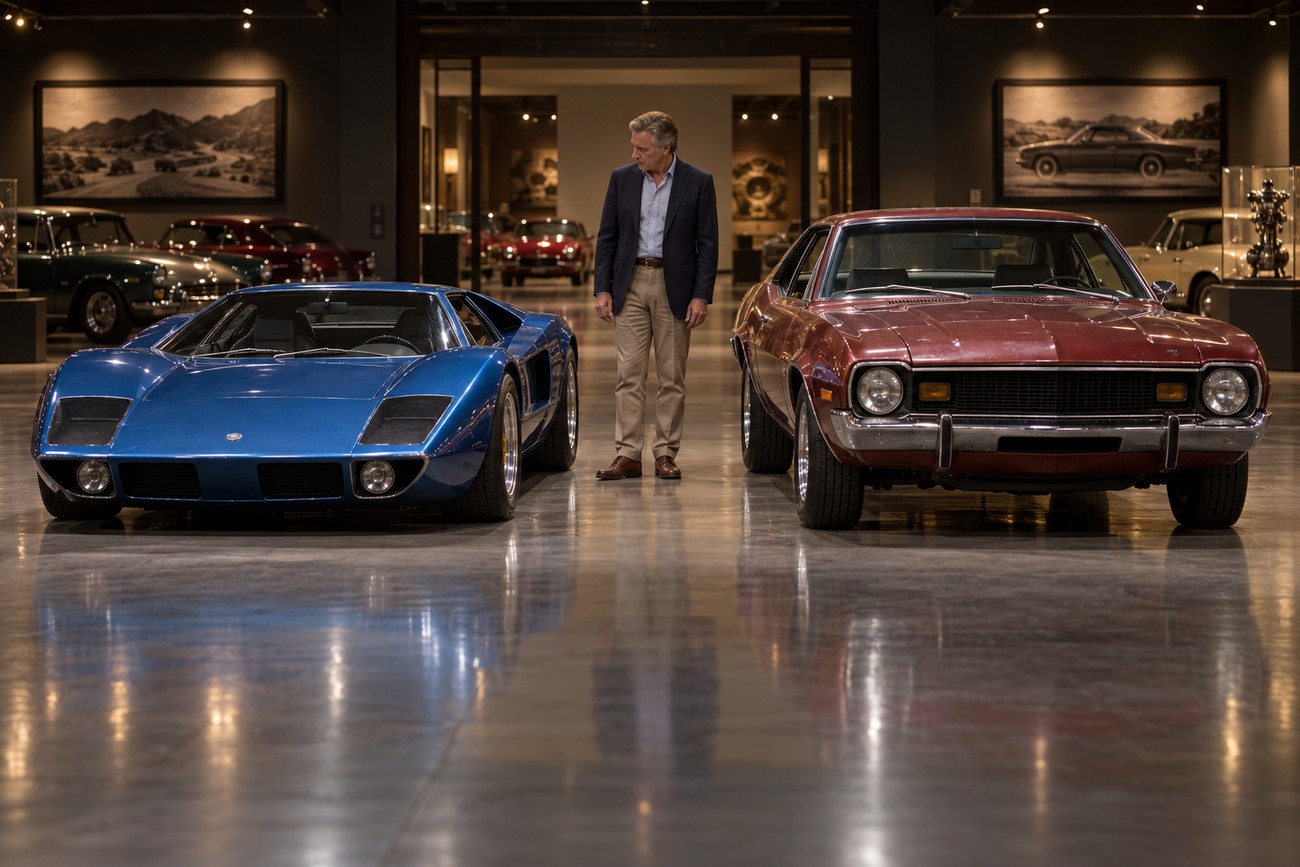
Myth: the AMX/3 was the ultimate production AMX. Reality: it was a 1970 concept, not a production AMX. Its claimed 340 hp, 583 N·m, 5.7-second 0–100 km/h time, and 260 km/h top speed belong to the concept discussion and should not be used to describe an ordinary road-going AMX.
Myth: any V8 AMX is easy to restore. Reality: rare AMC-specific body, interior, trim, glass, and electrical parts can make the project difficult. The presence of a running V8 says little about structural condition, completeness, or the cost of returning the car to a credible original specification.
Myth: the AMX was an equal Corvette competitor. Reality: the Corvette-rival label describes AMC’s positioning and the car’s public image more reliably than equal market scale or chassis development. The AMX is best understood as a distinctive, niche alternative whose value depends heavily on identity, condition, and documentation.
Frequently asked questions
The answers below separate historical nicknames from technical claims. They also distinguish production AMX evidence from concept-car specifications, which is essential when comparing cars or assessing advertisements.
What car is commonly called the poor man’s Corvette?
The AMC AMX is commonly associated with the “poor man’s Corvette” nickname because it offered a two-seat American performance-car format with available V8 power and was positioned as a more accessible alternative. Its rarity later changed the economics: a well-preserved AMX can be difficult to find and expensive to restore even if its original market position was more affordable.
The nickname is therefore useful historical shorthand, not a current specification or value guarantee. A present-day buyer should compare condition, originality, parts availability, and documentation rather than assume the AMX provides the same performance or ownership experience as a Corvette.
What was AMC’s fastest car?
There is no safe universal answer without defining “fastest.” Acceleration, top speed, engine version, gearing, test condition, and measurement method can produce different results, while period horsepower figures vary across sources.
The AMX is among AMC’s best-known performance cars, with early V8s including 290, 343, and 390 cubic inches and commonly cited 1970 performance of about 7 seconds from 0–60 mph. Those figures identify a period performance range, not a definitive ranking of every AMC model or specification.
What car rivals the Corvette?
The AMX is one of the clearest American examples of a Corvette alternative from the late 1960s and early 1970s. It used a two-seat layout and V8 power to occupy similar cultural territory, while remaining a niche AMC model with its own compact muscle-car character.
Other cars may rival a Corvette in particular periods or categories, but the comparison must specify whether the basis is price, acceleration, handling, body style, or market position. Treating every “rival” as an equal engineering competitor produces misleading buying conclusions.
What is the holy grail of muscle cars?
There is no single universally accepted holy grail of muscle cars. Collectors may apply the phrase to a rare factory specification, an original engine-and-body combination, a scarce option package, or a historically important surviving example.
Within the AMX world, desirability depends on originality, VIN and engine correctness, specific engine codes, rare options, and completeness. A plain but authentic and structurally sound car can therefore be more significant than a heavily modified example with a larger-sounding specification.







