
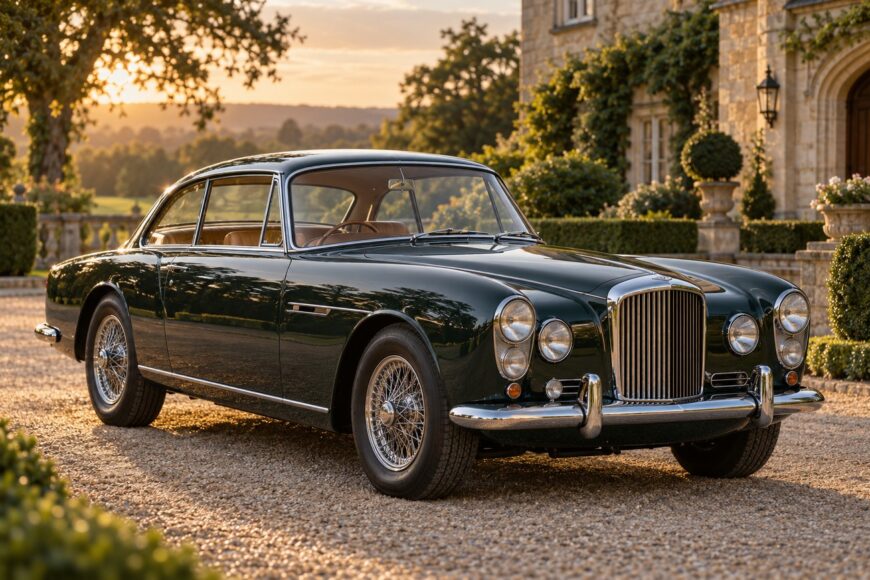
The Alvis TE21 combines a rare British grand tourer’s long-distance intent with bodywork shaped largely by hand. Its restrained lines and small production run make it appealing, especially as a fixed-head coupé or the scarcer convertible.
Photographs, however, reveal little about the cost of restoring a damaged panel or replacing missing trim. On the road, the TE21’s period performance remains engaging; at purchase, completeness and the quality of earlier work matter as much as its appearance.
- A rare Alvis shaped by Park Ward
- Engineering and the grand touring reality
- The ownership costs a polished body can hide
- How to judge a TE21 before buying
- Frequently asked questions
- What is an Alvis TE21 worth?
- How can I register a TE21 where Alvis is not listed in vehicle databases?
- Which records can verify a TE21’s original specification?
A rare Alvis shaped by Park Ward
Built from 1963 to 1966, the TE21 followed the TC21 and TD21 in Alvis’s postwar line of six-cylinder touring cars. Approximately 350–352 were made across coupé and convertible body styles. That small total helps explain its collector interest, though rarity alone cannot make a poor example desirable.
Its coachbuilt bodywork was principally the work of Park Ward. Here, coachbuilt means panels and fittings assembled and finished with considerable hand work, rather than bodywork produced to the uniformity expected of a mass-market car. Panel fit and trim can therefore differ between individual TE21s.
The fixed-head coupé is the more common form; convertibles are rarer. An open car’s scarcity deserves attention, but its roof, seals, and associated trim also need close inspection because replacement is difficult. A sound coupé with an intact, documented interior may be a more manageable purchase than an incomplete convertible.
That distinction between model and individual car is central to the TE21. A careful buyer looks past the shared silhouette to the particular coachwork, evidence of repairs, and surviving original fittings.
Engineering and the grand touring reality
The TE21 uses a 2993 cc straight-six with an aluminum cylinder head, producing approximately 150 bhp. Most cars have a four-speed manual gearbox with overdrive; a Borg-Warner automatic was an uncommon option. Overdrive suits sustained cruising, while the automatic changes the driving character and should be verified as part of a car’s specification.
Standard four-wheel disc brakes were a notable feature for a British tourer of the period. Independent front suspension and a leaf-sprung live rear axle give the car its underlying road manners. Its ability to cover ground depends on the condition and setup of those components, as well as the engine.
Period road tests recorded approximately 115–120 mph and 0–60 mph in 11–12 seconds. Those figures describe tested cars when relatively new, not what any surviving TE21 will deliver. A present-day test drive is more useful for judging whether the engine pulls cleanly, the overdrive operates correctly, and the car tracks and brakes consistently.
The TE21 is a capable period grand tourer, particularly on open roads. Heavy steering effort at low speeds, wind noise, and fatigue over long journeys can temper expectations formed by the GT label. Comfort varies with the car’s condition and the driver; a long test drive reveals more than a short run around the block.
The ownership costs a polished body can hide
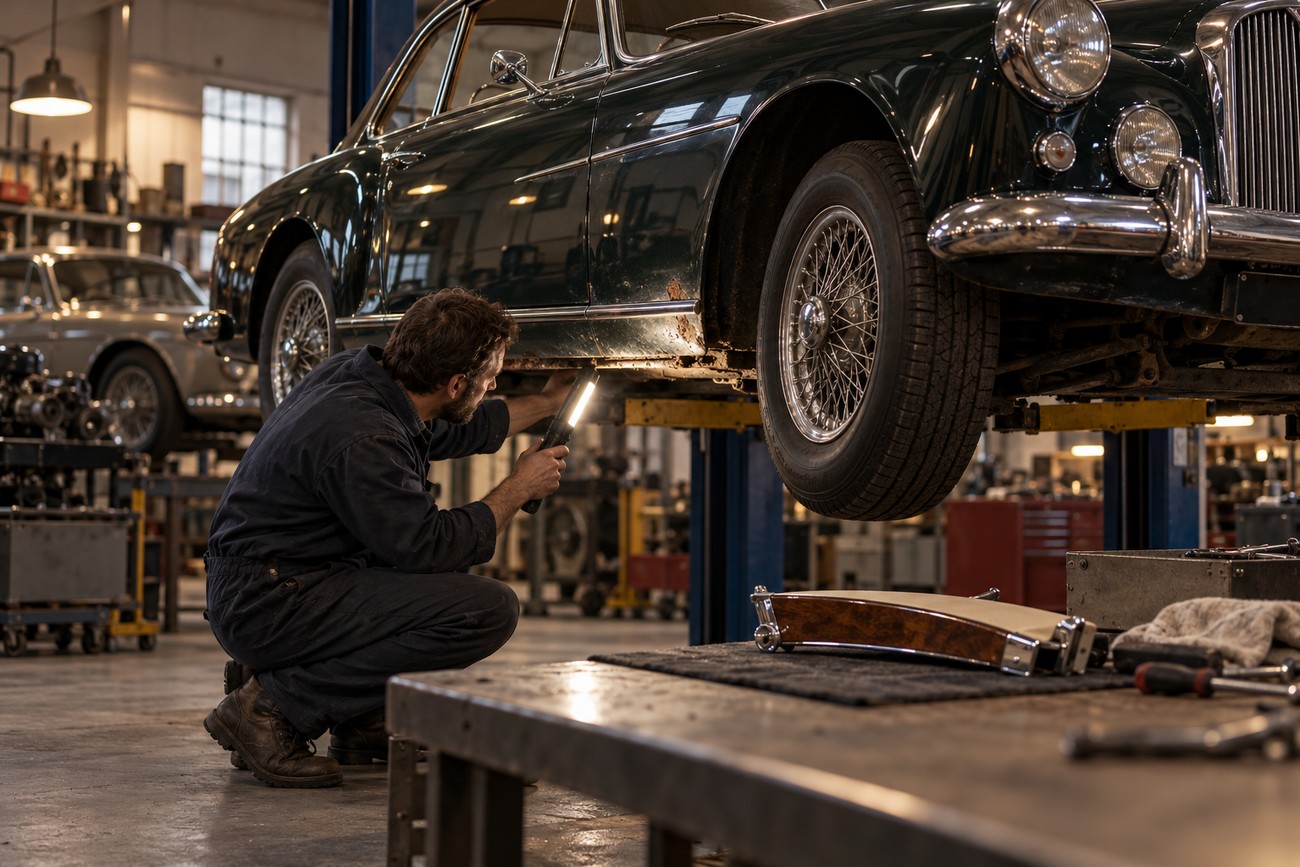
Some mechanical parts and standard period electrical components can be sourced, although specialist knowledge remains valuable. Park Ward-specific panels, chrome, and interior fittings are considerably harder to replace. An apparently modest missing trim item can delay a restoration long after routine mechanical work is complete.
Fresh paint deserves particular scrutiny. Check the chassis and lower body for corrosion, then examine gaps and evidence of earlier repairs rather than treating a glossy finish as proof of sound metal. Before buying a project, establish whether its chrome and interior are complete enough to restore.
The aluminum cylinder head also makes cooling-system history important. Overheating or an unsuitable coolant can cause damage, so ask about past work, look for leaks, and have a specialist assess any warning signs. There is no substitute for checking the actual car rather than assuming an ordinary service record settles the issue.
Suspension play, knocks, and poorly executed earlier repairs merit the same individual assessment. Hand-fitted components may need careful adjustment during repair, but these faults should not be presumed to affect every TE21. An inspection by someone familiar with Alvis can help distinguish routine wear from work that calls for fabrication or extensive correction.
How to judge a TE21 before buying
Begin with the records: establish the car’s identity, ownership history, original specification, and scope of any restoration. Compare the paperwork with its present body style, transmission, colors, and fittings. A claimed factory automatic or original convertible specification is stronger when supported by documents than by appearance alone.
Next, assess completeness before assigning value to the finish. Inspect the body from below, including the chassis and lower panels, and account for the interior and chrome. A cheaper project missing coachbuilt parts may cost more to complete than a sound, complete car because suitable replacements can be difficult to find.
During a mechanical inspection, pay particular attention to cooling, suspension play, and evidence of previous repairs; follow it with a proper road test. Substituted Jaguar or Triumph components and altered seats or trim should be identified and judged against the car’s documented specification. An Alvis specialist is better placed to assess whether such changes are reversible and whether body repairs have preserved the correct fit.
The TE21 is generally valued above TC/TD21 cars and below especially rare TF21 or Speed 25 examples, but that is a broad market position, not a price guide. Condition, completeness, documented history, and verified original specification determine the appeal of an individual car. Restoration quality matters more than the mere fact that money has been spent.
Frequently asked questions
TE21 ownership involves questions that a model description cannot settle for a particular car. Valuation, registration, and originality each depend on evidence specific to the vehicle. Gather that evidence before relying on an asking price or a seller’s description.
What is an Alvis TE21 worth?
There is no single representative price for an Alvis TE21. Obtain a car-specific assessment by comparing its verified specification, condition, and completeness with recent sales of genuinely comparable cars. Allow for differences in restoration quality and documented history before treating a sale result as a useful guide.
How can I register a TE21 where Alvis is not listed in vehicle databases?
Ask the relevant local authority what evidence it requires before arranging import or inspection. Prepare the car’s identification details and supporting ownership and vehicle documents, then check how the authority handles a manufacturer absent from its database. Requirements vary by jurisdiction, so a procedure that worked elsewhere may not apply.
Which records can verify a TE21’s original specification?
Look for surviving factory or coachbuilder records, early registration documents, and dated ownership or restoration paperwork that identify the individual car. Compare any recorded body style, color scheme, and transmission with what is fitted now. A feature present today is evidence of its current configuration, not proof that it left the factory that way.







