
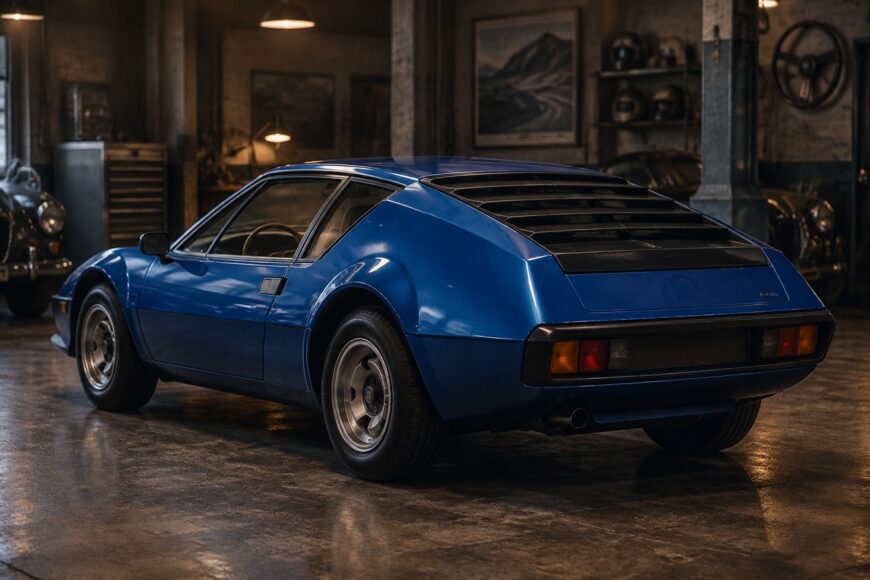
The Alpine A310 V6 has the visual drama of a lightweight wedge and the practical complications of a rear-engined French sports car. Its fiberglass body can look excellent after a fresh repaint, yet the metal structure underneath may be corroded, distorted, or poorly repaired.
Restoration can also expose seized differentials, reluctant carburetors, improvised wiring, and scarce trim or transmission parts. Published specifications vary by year and equipment, so a seller’s figure for weight, gearing, or top speed is a starting point for inspection, not proof of what sits in front of you.
- What the Alpine A310 V6 Really Is
- The Hidden Problems a Fiberglass Body Can Conceal
- Reviving the Engine, Carburetors, and Rear Drivetrain
- Making the Restored A310 Safe, Usable, and Correct
- Frequently asked questions
- How do you move an A310 V6 when the rear wheels are locked?
- How can a buyer verify the claimed production year and specification?
- What should be checked before restarting a stored Alpine A310 V6?
What the Alpine A310 V6 Really Is
The A310 V6 was produced from 1976 to 1984. Its defining engine is a 2664 cm³ aluminum PRV V6 with a 90-degree cylinder-bank angle, two overhead camshafts, and two Solex carburetors. Factory and reference material commonly gives about 150 hp at 6000 rpm, but that figure describes a specification, not the output of a neglected or incorrectly tuned car.
The engine is mounted longitudinally behind the cabin and drives the rear wheels. Independent suspension with double wishbones suits the car’s sporting purpose, while the rear weight bias makes tire condition, alignment, and throttle discipline important. A car that feels entertaining on a dry road can become abrupt on wet pavement if its rear geometry or tire pressures are wrong.
Early cars used a 4-speed gearbox. A 5-speed transmission became available as an option from model year 1979, so gear ratios, cruising rpm, acceleration claims, and replacement parts must be matched to the actual transmission. Treating every A310 V6 as a 5-speed car leads to incorrect restoration decisions.
Published mass figures range from approximately 980 to 1045 kg, depending on series, equipment, and measurement method. Top-speed figures are commonly given as approximately 220–225 km/h; a claim of 230 km/h requires confirmation for the specific car. Reported production is approximately 9276 A310 V6 cars, although series and market records still deserve archival verification.
The Hidden Problems a Fiberglass Body Can Conceal
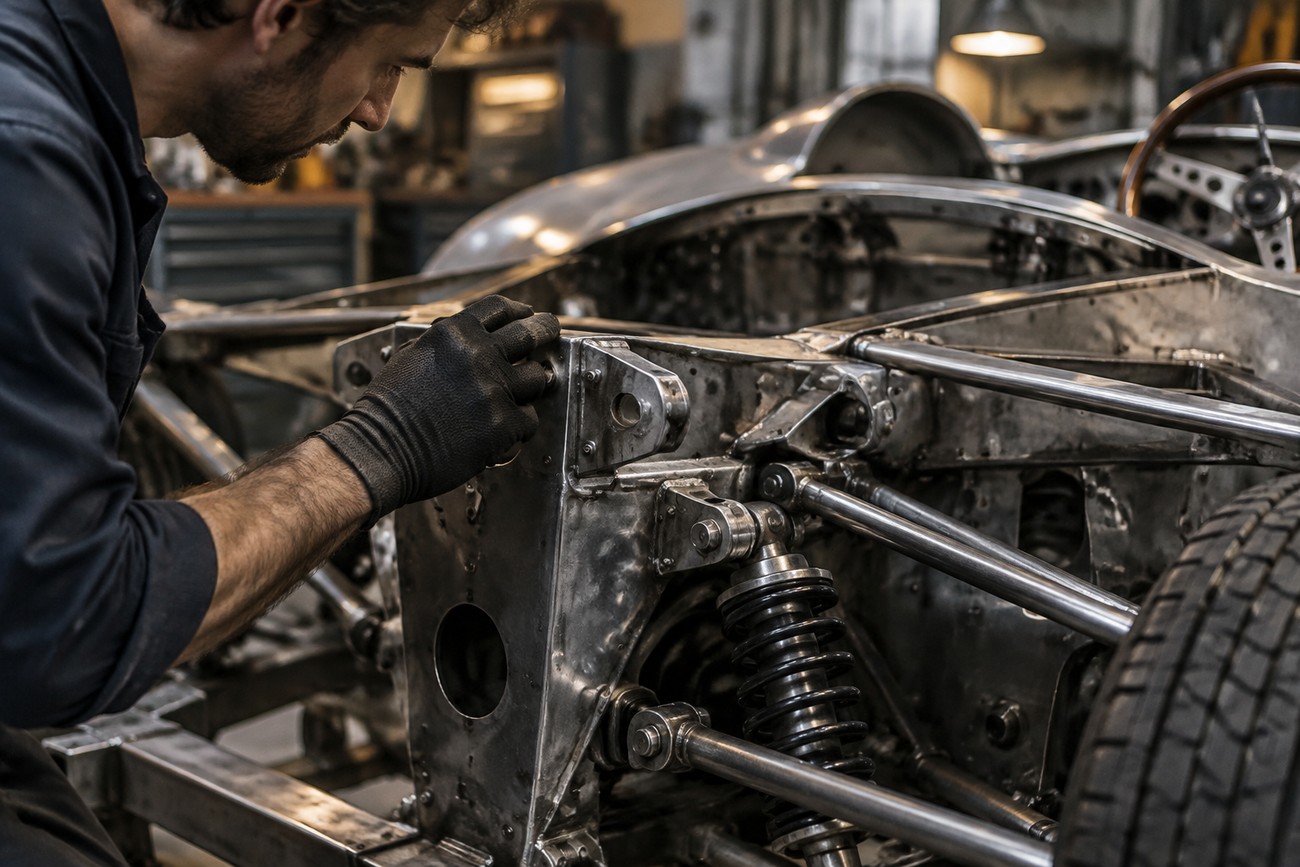
Fiberglass panels do not rust like steel, which is one reason an A310 can appear healthier than it is. They can still crack, delaminate, distort, and preserve evidence of old repairs beneath thick filler or paint. Panel gaps, waviness, stress cracks around fasteners, and differences in surface texture deserve closer attention than a polished exterior.
The serious corrosion usually concerns the steel chassis and its mounting structure. Inspect the suspension mounting points, subframes, lower rails, embedded hardware, and brake lines. A small rust blister on a visible bracket may be less important than corrosion hidden inside a structural section or around a load-bearing attachment.
A magnet is of little use on fiberglass. Examine panel backs where possible, tap suspicious areas for changes in sound, compare both sides of the car, and check the chassis for straightness and previous welding. The low seating position also works against the buyer: without a lift, it is difficult to inspect the underside, lines, lower mounts, and suspension thoroughly.
Storage adds another risk. Locked rear wheels may result from seized brakes, a differential problem, or a gearbox that has deteriorated internally. Do not assume the car only needs air in its tires. Forcing it onto a trailer can turn a diagnosable fault into damaged shafts, gears, or mounting points.
Reviving the Engine, Carburetors, and Rear Drivetrain
Begin with evidence rather than replacement parts. The PRV V6 uses an 88 mm bore, a 73 mm stroke, and a nominal compression ratio of about 10:1. Check compression, ignition timing and spark quality, fuel pressure, and vacuum leaks before condemning the carburetors. Long storage commonly produces hard starting, hesitation, and an unstable idle, but those symptoms have several possible causes.
The two Solex carburetors must be synchronized only after intake leaks, throttle-linkage faults, and fuel-pressure problems have been eliminated. Adjusting them “by ear” can conceal a mechanical fault and leave one bank doing more work than the other. Replacing the carburetors or installing electronic fuel injection may be sensible for a particular project, but it should follow diagnosis of the original system.
Carburetor synchronization is the final adjustment, not the first repair. Vacuum leaks, an uneven throttle linkage, or incorrect fuel pressure can make a careful tune appear to fail within minutes.
Inspect the cooling system as a complete system, including hoses, seals, radiator condition, and the compatibility of replacement fluids with older materials. Modern oil or coolant is not automatically suitable for every aged component. Document what is already installed before flushing or changing specifications, especially on a car with an unknown maintenance history.
The gearbox and differential need the same suspicion as the engine. Old oil, corrosion, and seized bearings can cause expensive damage after storage, even if the transmission initially selects gears. Access to the rear engine compartment is limited, so apparently simple work may require removing surrounding components or, eventually, the engine itself.
Making the Restored A310 Safe, Usable, and Correct
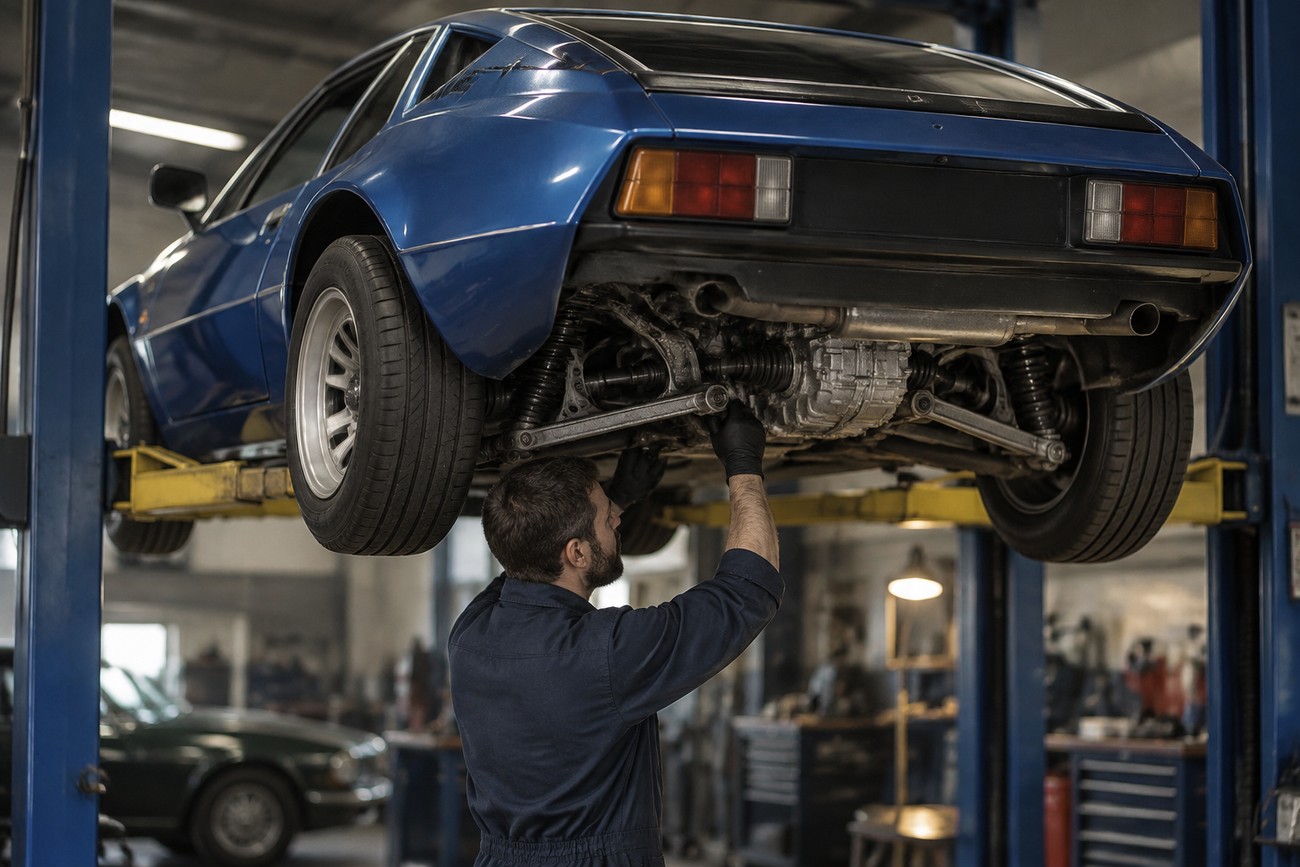
Cosmetic completion should come after checking rear suspension and driveline play. Clunks from the rear suspension or driveshafts are recurring owner complaints, and worn joints or mounts can change the car’s behavior under load. Verify fasteners, bushings, wheel bearings, half-shafts, and alignment rather than quieting a symptom with fresh interior trim.
Wheel and tire changes need more thought than a width comparison. Original 13-inch or metric wheels and modern replacements can differ in rolling diameter, bearing load, and speedometer readings. Confirm tire condition, cold pressures, and alignment together; rear-engine weight distribution makes those details particularly consequential on wet roads.
Electrical work is another place where a shiny restoration can hide poor workmanship. Extra relays, alarms, non-original wiring, and weak grounds should be traced and documented before they create intermittent ignition or charging faults. Replacement Renault parts may fit physically while having the wrong geometry, stiffness, or gear ratio, so apparent compatibility is not enough.
Keep the car’s identity consistent during the final build. Do not transfer performance expectations or cruising rpm from a 5-speed specification to a 4-speed car, or use equipment from another series without checking the year and market. A correct restoration is mechanically safe first and cosmetically convincing second.
Frequently asked questions
The A310 V6 is easiest to assess by comparing documents, physical components, and measured condition. Unverified numbers should remain provisional until the individual car supports them.
How do you move an A310 V6 when the rear wheels are locked?
First establish whether the wheels are held by the brakes, differential, or gearbox. Release or inspect the brakes, raise the rear safely, and determine whether each wheel and the drivetrain can turn independently. Do not drag the car with the rear wheels locked, because that can worsen damage to tires, shafts, bearings, gears, or mounting points.
Use a winch or suitable recovery equipment to load the car while keeping the locked wheels supported. A flatbed trailer is the safer default. Once at a workshop, drain and inspect the drivetrain fluids before attempting prolonged rotation or running the engine.
How can a buyer verify the claimed production year and specification?
Compare the identification data and available records with the car itself. Check the gearbox type, engine details, wheel format, interior and exterior equipment, wiring, and market-specific features. A claimed model year should make sense alongside the 4-speed or 5-speed arrangement, rather than relying on a description copied from another A310.
Record discrepancies instead of assuming they are harmless upgrades. Ask for photographs or documentation of altered components, inspect the chassis and identification markings, and verify unusual equipment through club or archival records. This is especially important when the seller quotes a universal weight, a 230 km/h top speed, or a fuel-tank capacity without identifying the exact series.
What should be checked before restarting a stored Alpine A310 V6?
Check the engine oil, coolant, fuel system, battery, ignition, belts, hoses, and brake condition before attempting to start the car. Test compression, look for vacuum leaks, verify fuel pressure, and inspect the carburetors rather than assuming hard starting is caused by adjustment alone.
Also confirm that the gearbox, differential, driveshafts, and rear wheels turn freely. Replace contaminated fluids and address seized components first, because starting or driving a car with storage-related mechanical faults can cause avoidable damage.







