
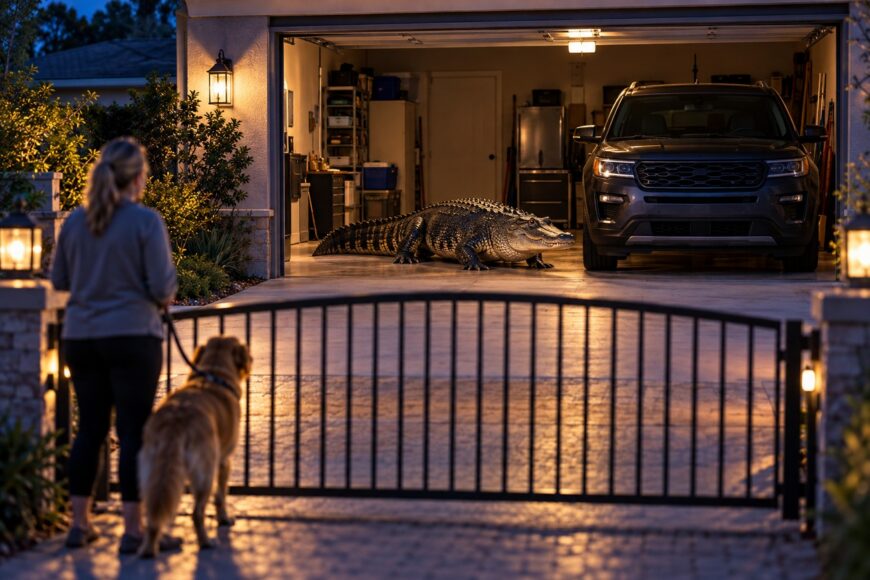
An American alligator is between you and your Ford Explorer, and approaching the vehicle or garage door may put you within striking distance. Leave the car where it is. Protecting people and pets matters more than retrieving it, even if the garage is open, the animal appears small, or the vehicle is blocking access to the house.
Move to a safe location without passing the alligator, reaching around it, or entering the garage to collect keys or belongings. From there, keep others away and contact the local animal-control service or wildlife agency. If someone is trapped or in immediate danger, call emergency services. Do not attempt a household capture method.
- What to do before anyone approaches the garage
- Why the Ford Explorer changes the risks—not the response
- Who to call and what responders need to know
- Why DIY capture and a ride in the Explorer are bad ideas
- After removal: inspect the garage without rushing back in
- Frequently asked questions
- What scares an alligator away?
- How can you tell whether an alligator is nearby before opening a garage?
- What months are alligators most aggressive in Florida?
What to do before anyone approaches the garage
Keep people and pets well away from the garage opening, driveway, and any route the alligator could use to leave. Close a gate or other barrier only if you can do so without approaching the animal or reaching past it. A closed garage is still a confined space, and it is not a safe place to confront an alligator.
Do not enter, lean into the doorway, or try to retrieve keys, phones, tools, or personal items. Even a young alligator can bite, and its behavior may change quickly when it feels cornered. A large animal can also move farther than expected in a short burst, especially if the vehicle or wall limits its escape route.
Keep clear of the animal’s head and tail. An alligator’s tail can injure a nearby person and damage the Explorer, garage door, windows, or stored property when the animal thrashes. Do not test sprays, noises, poles, blankets, or other deterrents from close range; an improvised tactic may increase stress without creating a safe exit.
Give responders the time and space to manage the scene. If the animal moves out of sight, do not assume it has left the property. Maintain the exclusion area, warn anyone approaching, and report the last known location rather than searching for it.
Why the Ford Explorer changes the risks—not the response
The Explorer can create blind spots between the animal, the garage wall, and the vehicle. A person standing at the driver’s door may be unable to see the alligator’s head, while someone looking from the front may miss its tail. The vehicle’s size can make the space feel protected even though it leaves little room to retreat.
Do not open a door, start the engine, honk the horn, or try to drive out unless responders have made the area safe and specifically direct you to do so. A sudden sound or movement may cause the animal to lunge or thrash. In a confined garage, that movement can injure a person and damage the Explorer at the same time.
Keep children and pets away from both ends of the vehicle. An alligator pressed against a tire, bumper, or wall may use the vehicle as an obstruction or support during a sudden movement. The safest position is one that leaves you outside the animal’s reach and gives you a clear route away.
The Explorer’s available payload varies by model year and configuration. That carrying capacity does not make an SUV suitable for transporting a live alligator, with or without a cage or other equipment. Vehicle capacity, animal control, ventilation, containment, and legal authority are separate issues.
Who to call and what responders need to know
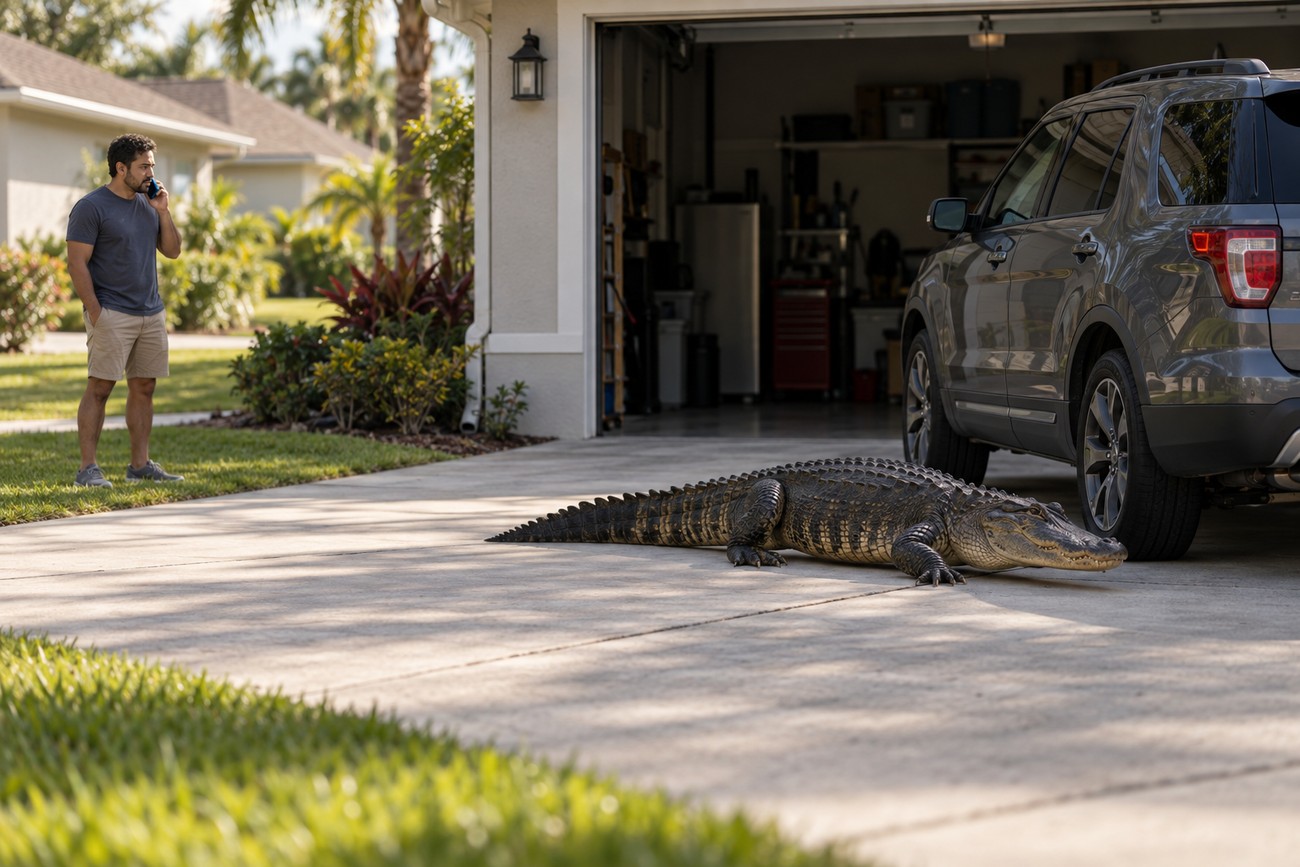
Contact the local animal-control service or wildlife agency responsible for nuisance or dangerous wildlife in your area. The responsible service varies by jurisdiction. If a person faces immediate danger, cannot leave safely, or has been injured, call emergency services first and explain that a live alligator is involved.
Report only what you can see safely. Useful details include the animal’s approximate size, whether its head is visible, its position relative to the Explorer and garage exits, whether anyone is trapped, and whether there is an unobstructed access route. Do not move closer to improve the estimate or confirm a detail.
The position of the head and a clear description of the safest access route can help responders more than a precise size estimate obtained by approaching the animal. A rough size estimate from a safe distance is enough for an initial report.
Tell the dispatcher whether the garage door is open, whether the animal has access to the driveway or yard, and whether people or pets are nearby. Mention visible injuries, damage, or blocked exits without entering the area. Follow the agency’s instructions and do not assume that a particular tool, response time, or capture procedure applies everywhere.
Why DIY capture and a ride in the Explorer are bad ideas
Throwing a rope, blanket, tarp, or net over an alligator can bring you within reach of its jaws and tail. Pushing it toward a box or narrow doorway can make it feel trapped and trigger a forceful response. Even a young alligator can bite, and its tail can injure a nearby person while damaging the vehicle or garage.
Placing an alligator in a household container also creates serious control problems. A box may fail under the animal’s weight or movement, while an unsecured head or tail can remain dangerous. Professional capture equipment and methods vary by agency; references to specialized tools are not a shopping list or a DIY restraint procedure.
Do not load the animal into the Explorer’s cargo area, passenger compartment, or a homemade container. An unsecured live alligator could injure people during loading, escape during travel, or damage the vehicle. Heat, ventilation, containment, and animal stress also matter during transport.
Possession and transport rules vary by jurisdiction, and a live alligator should not be placed in the Explorer. Even if the animal appears to be someone’s escaped pet, ownership does not give an untrained person the authority or safe means to capture and move it. Let the responsible agency determine the lawful and appropriate destination.
After removal: inspect the garage without rushing back in
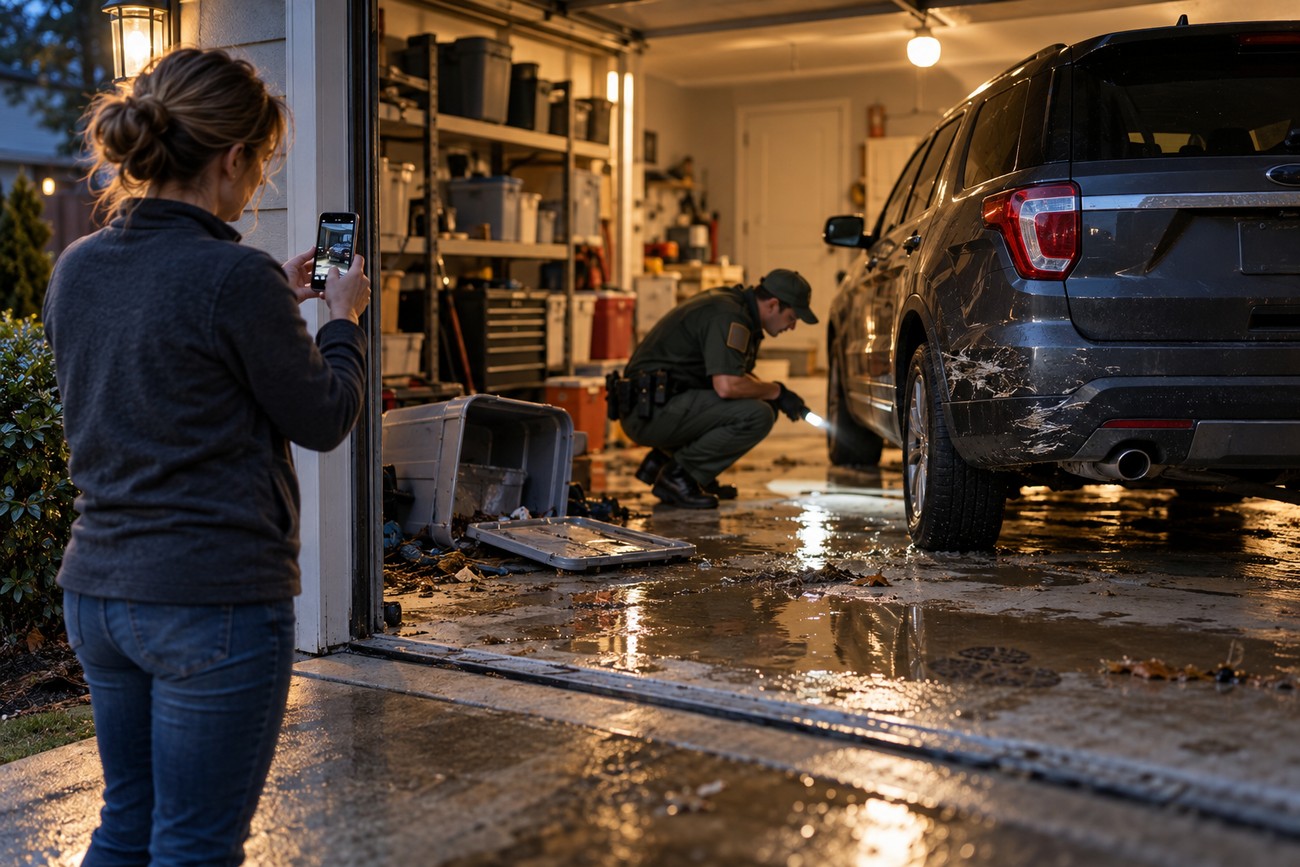
Wait until responders confirm that the area is safe before inspecting the Explorer, garage door, floor, walls, or stored items. An animal may have moved into a dark corner, beneath the vehicle, or outside the original viewing area. Do not rely on the fact that the garage looks empty from the doorway.
Once access is cleared, photograph damage before moving items where practical. Record marks on the vehicle, damaged doors or trim, broken storage containers, standing water, and visible waste. Keep children and pets away during the inspection, and avoid contact with blood, feces, or contaminated water.
Professional cleaning or repair may be appropriate if the garage has bodily waste, blood, contaminated water, strong odors, or damage to flooring and drainage areas. Use local public-health or cleaning guidance for disinfection decisions, especially if contamination has spread into porous materials. Do not combine household chemicals in an attempt to clean quickly.
Ask the wildlife or animal-control agency whether any additional exclusion or inspection is needed. Possession rules vary by jurisdiction, so the incident does not establish that the animal was a legal pet or that someone may keep it. Insurance coverage depends on the policy and circumstances; notify the insurer with photographs and a factual description rather than assuming the claim will be covered.
Frequently asked questions
What scares an alligator away?
No household deterrent should be treated as a reliable way to move an alligator. Loud noise, sprays, lights, thrown objects, or attempts to block its path may fail and can require a dangerous approach. In a garage, those tactics can also make the animal thrash against the Explorer, walls, or door.
Keep your distance, remove people and pets from the area, and contact the responsible local agency. Do not test a deterrent simply because the alligator appears young or inactive.
How can you tell whether an alligator is nearby before opening a garage?
Before opening a garage, look from a safe position for tracks, disturbed mud, drag marks, standing water, damaged barriers, unusual movement, or an animal visible near the doorway. Use outdoor lighting if it can be switched on without entering the area. These signs can indicate activity, but their absence does not prove that the garage is clear.
Do not place your hands, feet, or a phone around the door edge to inspect blind spots. If the garage connects to water, dense vegetation, or an area where an alligator has recently been seen, arrange a safer inspection through local responders when appropriate.
What months are alligators most aggressive in Florida?
Alligator activity in Florida often increases during warmer periods, with mating and nesting behavior contributing to encounters at certain times of year. Local weather, water conditions, habitat, and human activity also affect behavior, so no single month makes an encounter automatically safe.
Treat an alligator near a garage, vehicle, walkway, or home as a safety issue in any season. Keep away from the animal and contact the appropriate local service rather than relying on a seasonal assumption.







