
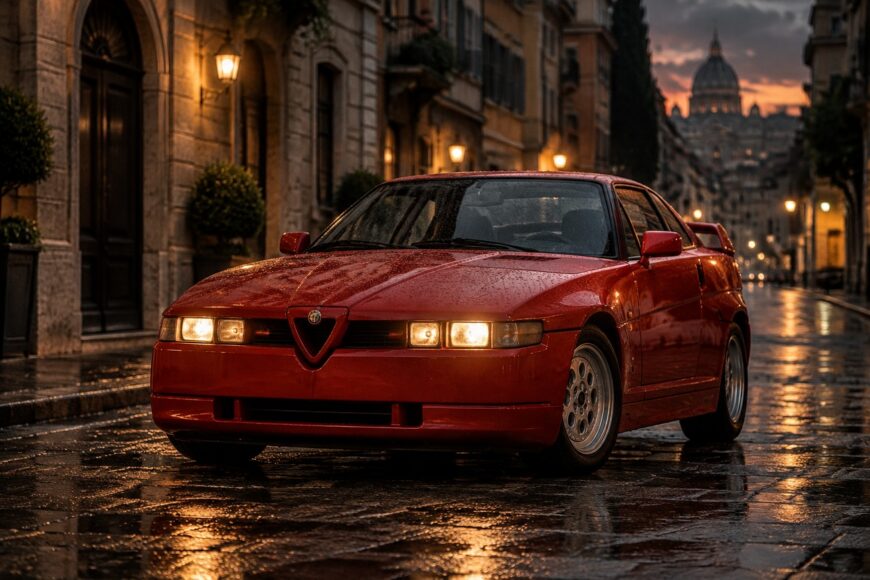
Alfa Romeo built its reputation on elegant proportions, delicate details, and a certain Italian lightness. The SZ arrived with a blunt nose, a stepped roofline, black-framed glass, and surfaces that seemed cut with a ruler. Its stance looked more like a prototype from a wind tunnel than a traditional Alfa coupe.
That collision between a familiar marque and a confrontational shape explains the nickname Il Mostro. It also raises a harder question for anyone considering ownership: does the “monster” describe only the appearance, or does it capture the demands of living with a rare, highly focused sports car? The answer begins with the car’s unusual origin.
- Why the SZ became Il Mostro
- Who actually designed the Sprint Zagato?
- The familiar Alfa hardware beneath the shock
- A composite body that can hide expensive trouble
- What buyers miss when they fall for the monster
- How rare is the SZ, and what changed with the RZ?
- Frequently asked questions
- How should an SZ be stored if it is driven only occasionally?
- What should an owner confirm with an insurer before a repair?
- How can you assess an SZ repaint without assuming every uneven gap is damage?
Why the SZ became Il Mostro
The SZ’s shape challenged nearly every expectation attached to an Alfa Romeo. Its high tail, narrow glasshouse, long nose, and sharply segmented body created unusual proportions even before the details came into view. The broad black fascia and rectangular lamps gave the front end an almost architectural severity, while the rear treatment made the car look shorter and taller than it was.
The reaction was immediate and divided. Some observers saw an uncompromising expression of late-1980s design; others saw an awkward collection of angles where an Alfa should have had flowing curves. The nickname Il Mostro, meaning “the monster,” grew from that response in the Italian press and among enthusiasts. It was an informal description associated with the angular ES30 design, rather than an official model name.
That distinction matters because the SZ was never sold as a separate “Il Mostro” variant. Its official name was SZ, short for Sprint Zagato, while ES30 identified the development project. The nickname survived because it captured the car’s visual shock more effectively than a marketing phrase could have done.
Decades later, the design has gained strength through distance. Its awkwardness is now part of its identity, and the shape remains recognizable from across a parking lot. The same visual individuality also makes replacement bodywork difficult, which turns admiration into a practical ownership consideration.
Who actually designed the Sprint Zagato?
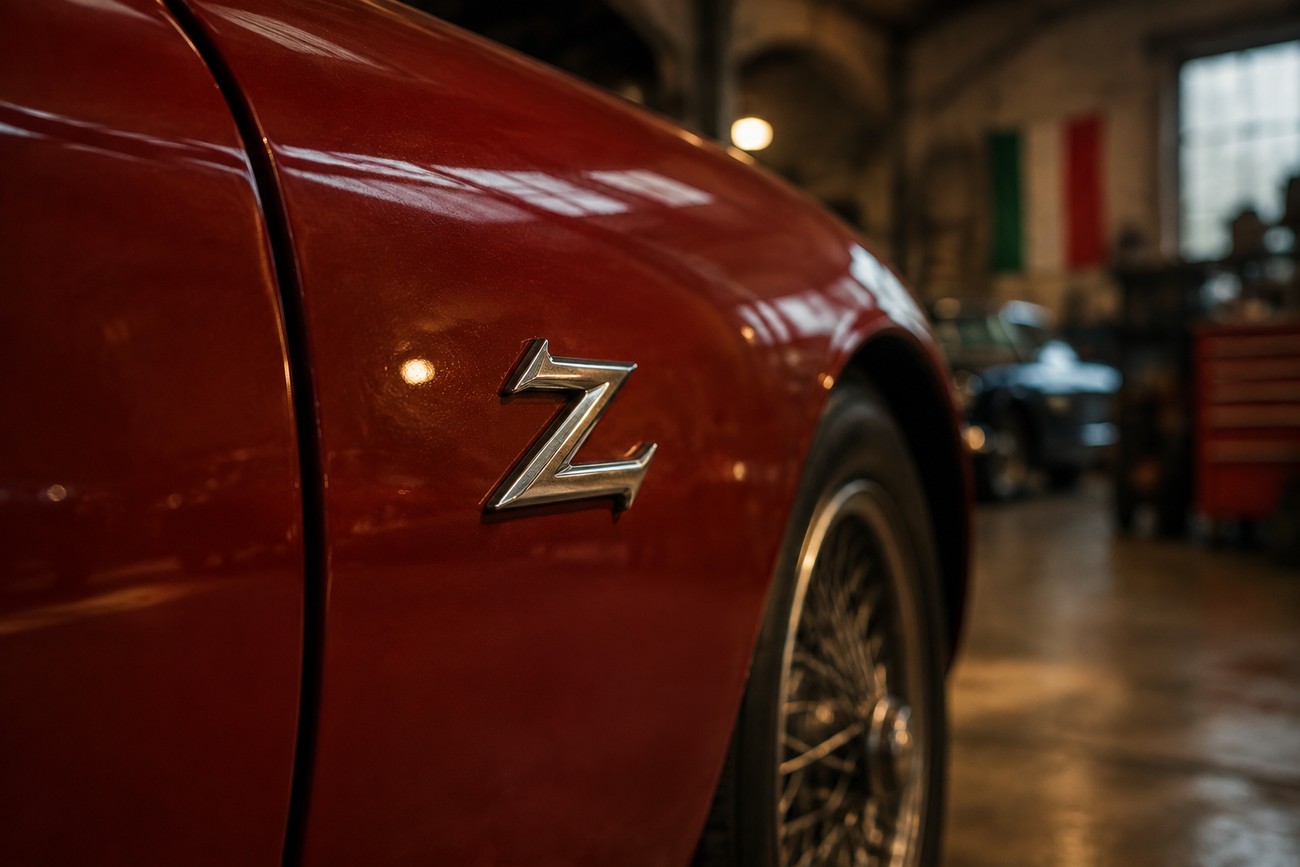
SZ means Sprint Zagato, and the name naturally encourages a simple conclusion: Zagato designed the entire car. The historical picture is more collaborative. The design was developed principally within Fiat and Alfa Romeo, with Robert Opron and Antonio Castellana associated with the work, while Zagato played a body-production role.
This arrangement was significant. Fiat and Alfa supplied the engineering direction and the design environment; Zagato manufactured the distinctive composite bodywork in limited production. A Zagato badge therefore identifies an important partner in the car’s creation, without establishing that the coachbuilder drew every line or engineered the complete vehicle.
The ES30 project brought together a shortened Alfa 75-derived platform, a Busso V6, and a body that could be produced in small numbers. That combination explains the SZ’s unusual character better than assigning authorship to one studio. Its appearance came from a joint industrial project with a strong internal Fiat/Alfa design influence.
Il Mostro belongs to the car’s reception rather than its formal identity. Treating the nickname as an official designation, or as a separate Zagato model, obscures the useful distinction between the people who developed the design and the company that produced the bodies.
The familiar Alfa hardware beneath the shock
Under the startling body lies a shortened, modified Alfa 75-derived chassis. The transaxle layout places the gearbox at the rear, helping create weight distribution close to 50:50. That architecture gives the SZ a more balanced foundation than its theatrical appearance suggests and connects it to Alfa’s serious sporting engineering of the period.
Power comes from a naturally aspirated 3.0-liter, 12-valve Busso V6, quoted at approximately 210–215 hp and 245 Nm. Its delivery is linear and immediate, with the mechanical sound and throttle response doing much of the emotional work. The car feels fast because the engine, gearing, steering, and chassis communicate clearly, rather than because it relies on forced induction or electronic assistance.
Some tests reported approximately 1.1–1.2 g in cornering, although that figure depends on tires, surface, alignment, temperature, and measurement method. Official weight figures are approximately 1,250–1,280 kg, while some press or club measurements of equipped cars exceed 1,300 kg. Those differences reflect conditions and equipment, so neither number should be treated as a universal description of every SZ.
The car’s reputation for being ferocious can therefore be misleading. A sound example with correct suspension settings is generally described as predictable and exceptionally stiff, with a strong reserve of grip. Poor alignment, tired dampers, unsuitable tires, or hidden chassis damage can make the same car feel nervous and unforgiving.
A composite body that can hide expensive trouble
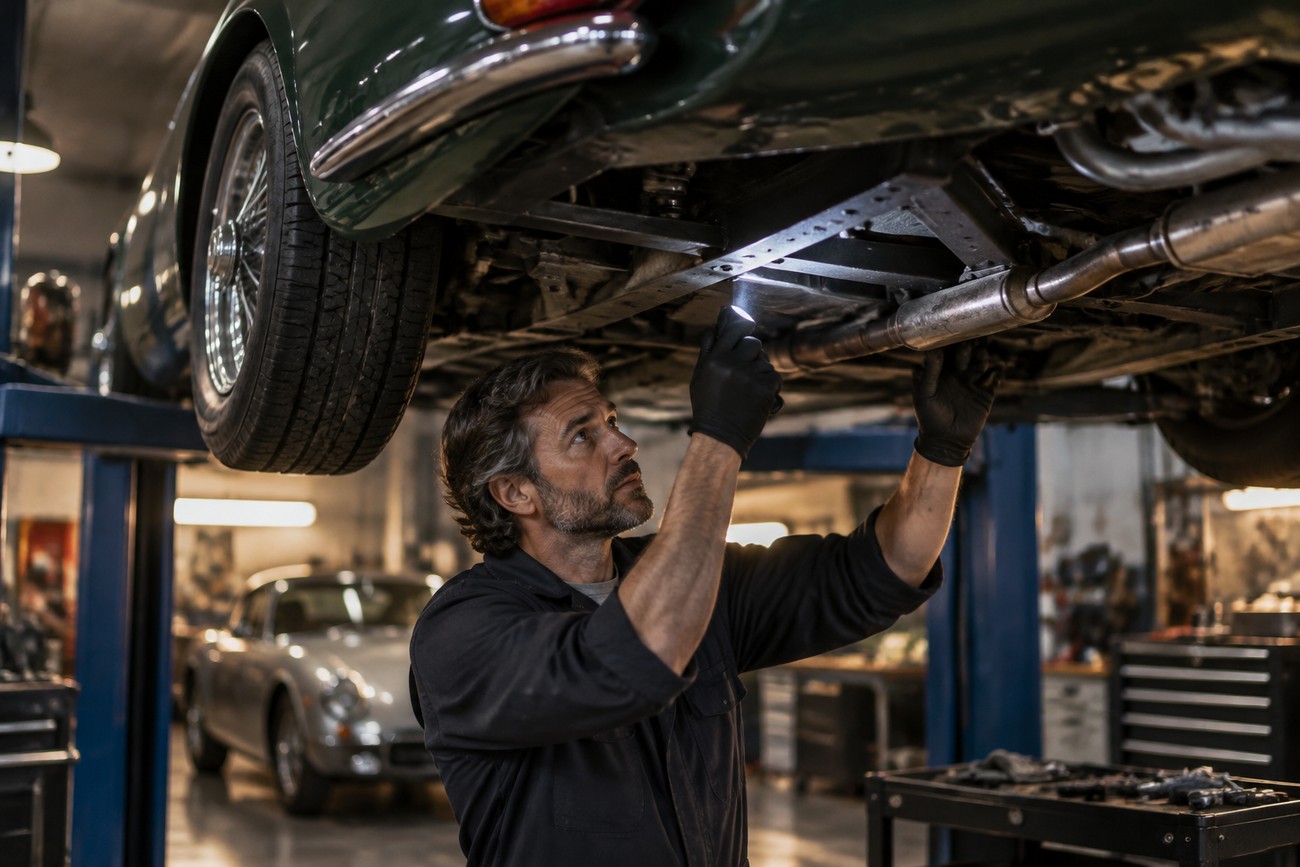
The SZ is not an all-composite car. Its outer panels are composite, while the underlying structure is steel. That distinction is central to inspection because the visible skin can remain presentable while corrosion develops in concealed steel sections, mounting areas, or structural edges.
Factory panel fit also varied. Uneven gaps are therefore not automatic proof of accident damage, and an apparently perfect line does not guarantee an untouched car. The useful clues are consistent panel relationships, fastener evidence, paint transitions, and the condition of the structure beneath the panels.
Original panels, lamps, and other body-specific components are scarce. Even a small collision can become a long restoration project if the correct replacement cannot be sourced. Ordinary filler-based bodywork is especially risky on composite panels: movement, poor preparation, or incompatible materials can lead to cracks and delamination after the repair appears finished.
A specialist repair must account for the panel material, its mounting points, and the way the finish moves with the structure. Cosmetic improvements that ignore those factors may look acceptable at sale time and fail after a few seasons. The best-looking car is valuable only when its visible finish agrees with the condition of its concealed steelwork.
What buyers miss when they fall for the monster
Inspection should begin underneath the drama. Verify chassis geometry, suspension mounting points, and evidence of impact before spending time on minor trim. A car with a convincing history of track use can still be sound, but a bent mounting point or altered alignment may change the way the SZ drives until repaired.
Next, examine the steel structure beneath the composite body and inspect every previous panel repair. Then assess the electrical system: unstable instruments, poor illumination, reluctant window motors, and bad ground connections are familiar sources of frustration. Heat around the Busso V6 can also affect wiring and plastic components in the tightly packed engine bay.
Age has consequences inside the cabin, too. Plastics and seals can crack or shrink on cars that were driven little but stored poorly, while original suspension components may be difficult to source. Alfa 75 knowledge is valuable because many mechanical principles and some parts are related, yet visually similar components are not automatically interchangeable with SZ parts.
Tire selection and ride height need equal care. Installing springs or dampers without resetting alignment can spoil the chassis balance, reduce usable comfort, and accelerate inner-edge wear. The market adds another practical risk: the buyer pool is small, so rarity does not guarantee quick resale, and a car bought as an investment may remain unsold for a long time.
How rare is the SZ, and what changed with the RZ?
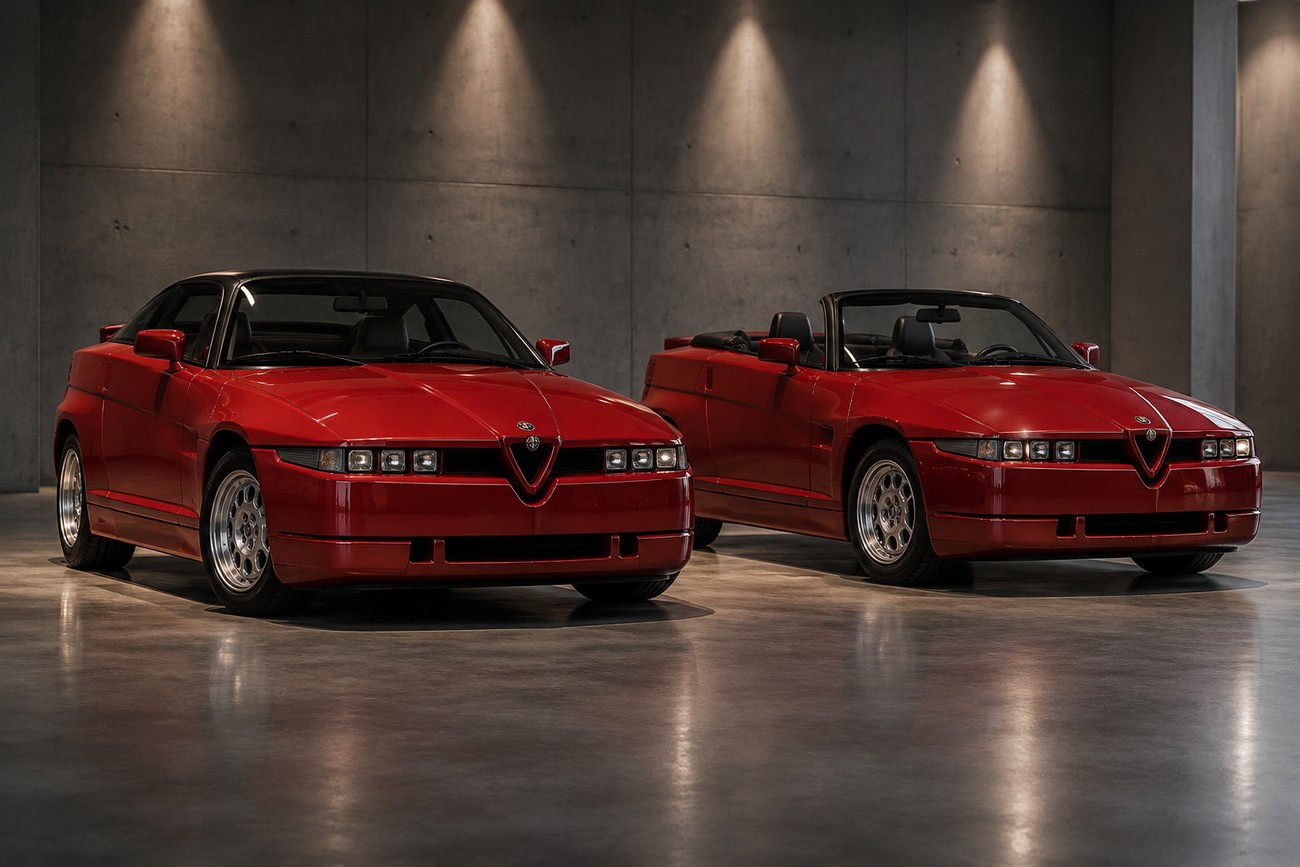
The SZ coupe was produced from 1989 to 1991, with approximately 1,036 built. That figure is small enough to make provenance unusually important, especially because individual cars have moved between countries and may have passed through several restorations.
The open version was called the RZ and was produced in a separate run of approximately 278–284 cars. It shares the family resemblance and much of the engineering identity, but the RZ should not be added to the SZ coupe total when describing SZ production.
Rarity strengthens the car’s presence at events and helps explain its following among collectors. It also limits the supply of lamps, panels, trim, and specialist suspension parts. Club registers, period photographs, and repair records can reveal more than a polished presentation or a seller’s confident description.
The reward is a driving experience that can feel remarkably usable when the chassis is straight and correctly set up. The challenge is that condition determines far more than the badge does. Il Mostro attracts attention instantly; keeping one healthy requires patience, technical judgment, and a realistic repair budget.
Frequently asked questions
Storage, insurance, and paintwork raise different questions for an SZ driven only occasionally. Each calls for attention to the car’s age, scarce parts, and composite panels. The answers below focus on practical checks rather than appearance alone.
How should an SZ be stored if it is driven only occasionally?
Keep it in a dry, ventilated space with stable conditions, and avoid trapping moisture beneath a cover. Before storage, check fluid levels and look for leaks, then inspect the engine bay, seals, and electrical connections during the storage period rather than leaving the car untouched for months.
Periodic movement can help reveal sticking components and developing leaks, provided the car reaches operating temperature and is driven safely. A storage routine should include the battery, tire condition, window seals, and signs of water entry, since neglected rubber and electrics can become expensive on a rarely used SZ.
What should an owner confirm with an insurer before a repair?
Confirm whether the policy uses an agreed value and how the insurer handles a specialist repair. Ask whether the chosen repairer must be approved in advance, and request written clarification on scarce SZ panels, lamps, and other model-specific components.
It is also sensible to establish how an estimate will treat sourcing delays and repair methods for composite panels. A standard valuation process may underestimate the cost of correct restoration, leaving the owner to cover a substantial difference if the policy wording does not recognize specialist parts and labor.
How can you assess an SZ repaint without assuming every uneven gap is damage?
Inspect the finish in consistent light and compare color, gloss, texture, and overspray around panel edges, apertures, seals, and fasteners. Uneven gaps deserve measurement and explanation, yet factory fit was variable, so gap size alone cannot establish accident history.
Look for documented repairs, photographs taken before restoration, and consistent evidence on the concealed structure. A repaint with clean edges and a coherent history may be preferable to original-looking panels hiding corrosion or an undocumented structural repair.







