
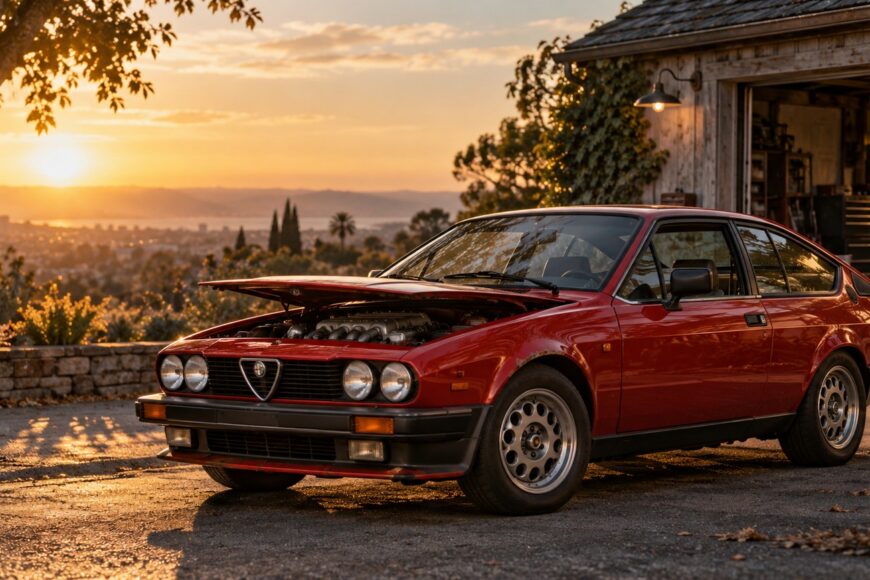
The first note arrives before the car has properly moved: a hard-edged V6 bark, metallic and uneven in the way modern engines rarely manage. In the Alfa Romeo GTV6, that sound comes with rear-wheel drive, a manual transaxle, and the mechanical texture of an older performance car. It is an unusually effective way to turn a short drive into an event.
The same soundtrack can make a poor purchase feel like a great one. The GTV6 is an emotionally powerful classic, yet its real condition matters more than its reputation. Rust, concealed accident repairs, tired driveline components, old electrics, and missing history can cost far more than the initial attraction suggests.
Terminology matters before money changes hands. The GTV6 usually means the Alfetta-based 1980–1987 fastback with a rear-mounted transaxle; the later 1990s–2000s GTV V6 models are different cars. Judge the shell, drivetrain, and maintenance record before judging the exhaust note.
- Why the GTV6’s Sound Is Only Half the Story
- What the 1980s Alfa Romeo GTV6 Actually Is
- How the V6 and Transaxle Change the Driving Experience
- GTV6 2.5, GTV6 3.0, and Later GTV V6 Models: Do Not Mix Them Up
- The Problems That the V6 Sound Hides
- What to Check Before Buying One
- Living With a GTV6: Romantic Classic or Expensive Project?
- The Biggest GTV6 Myths, Corrected
- Frequently asked questions
- What does the GTV6 name actually refer to?
- Which Alfa Romeo is considered the most beautiful?
- How much horsepower does an Alfa Romeo GTV6 engine have?
Why the GTV6’s Sound Is Only Half the Story
Enthusiasts are drawn to the GTV6 because its V6 feels like part of the car’s identity rather than a sealed power unit. Throttle response, induction noise, and the rising mechanical pitch combine with the long, low fastback shape to create a strong sense of occasion. Rear-wheel drive adds another layer, giving the driver a connection that front-drive contemporary coupes often lack.
That character comes from an older engineering philosophy. The controls, suspension, and drivetrain communicate more directly, while the body and cabin provide less isolation from noise and vibration. A good example can feel vivid at ordinary road speeds, although the same lack of isolation may become tiring on a long trip.
Age changes the calculation. A GTV6 that sounds healthy may still have corrosion in important areas, worn suspension bushes, degraded rubber, electrical faults, or an abused transaxle. The engine note confirms that the engine is running; it does not confirm that the car is structurally sound or financially sensible.
Daily practicality is limited by the compact rear accommodation, aging interior materials, and the effort required to keep an old performance car properly sorted. The buying decision therefore rests on condition and intended use. A carefully maintained weekend car can be rewarding, while an apparently cheap example may become a long restoration project.
What the 1980s Alfa Romeo GTV6 Actually Is
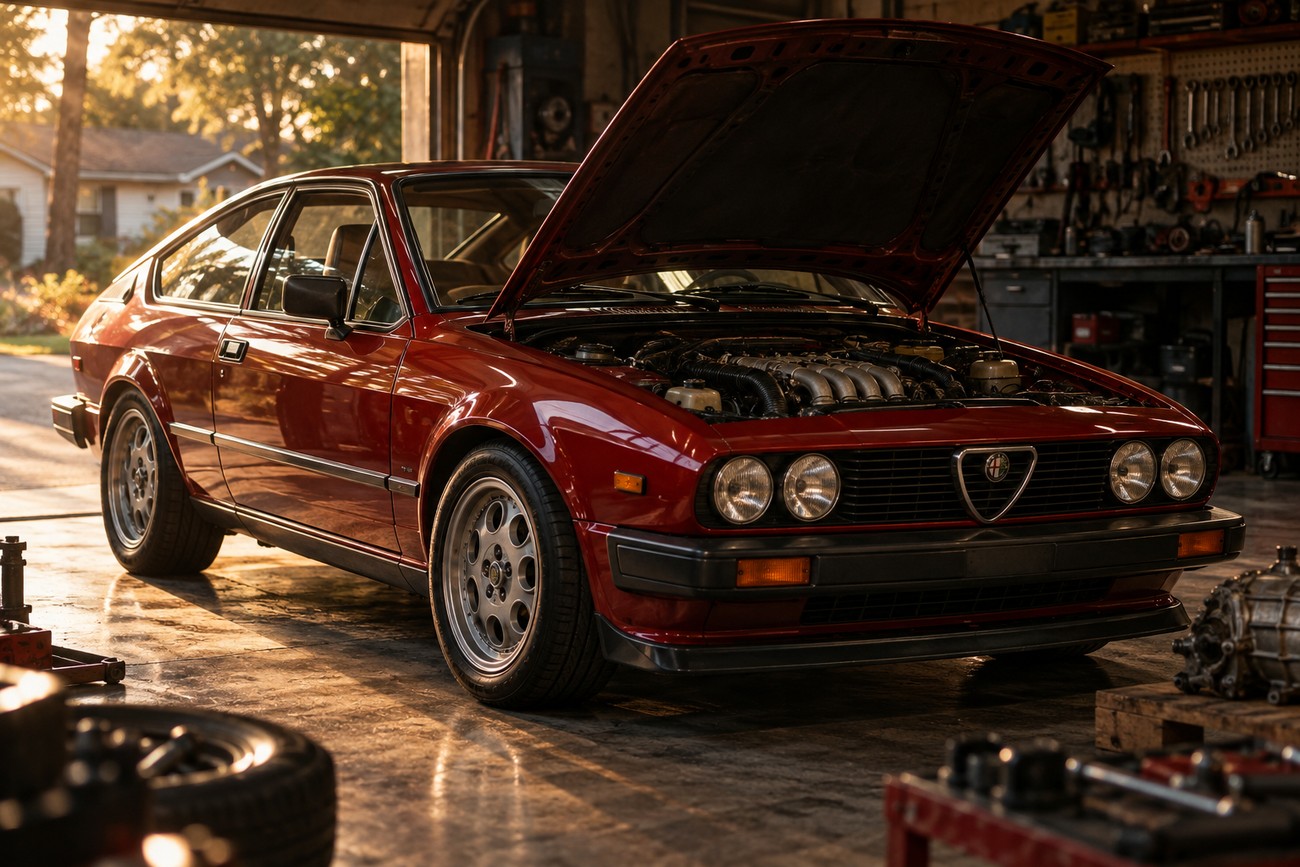
The 1980s Alfa Romeo GTV6 is a 3-door fastback based on the Alfetta and produced from 1980 to 1987. It uses rear-wheel drive and a rear-mounted transaxle, with the gearbox and differential positioned at the back of the car. That layout distinguishes it clearly from the later GTV models that share the name but use a different platform and drivetrain concept.
The standard road engine is a 2492 cm³ V6 rated at 160 hp and approximately 213 Nm. Its appeal lies in the way it delivers that output, with a distinctive soundtrack and a sense of mechanical participation rather than headline acceleration alone. Specification details can vary by market and year, so an individual car should be checked against its documentation.
Moving the transaxle rearward helps distribute mass through the chassis and reduces the concentration of drivetrain weight at the front. It also makes the car’s service requirements more specialized, since clutch, gearbox, differential, and driveshaft components form a system that needs proper diagnosis. A neglected example may require attention far beyond a routine engine service.
The Alfetta connection is important for buyers because it identifies the car’s engineering family. A later Alfa Romeo GTV with a V6 may be quicker, newer, and easier to use, but it is not a substitute for the 1980s GTV6 experience. The names overlap; the cars do not.
How the V6 and Transaxle Change the Driving Experience
The V6 gives the GTV6 its emotional center. Its response builds with revs, and the exhaust note becomes increasingly urgent as the engine works through the gears. The performance is best appreciated through sound, rhythm, and the relationship between throttle and gearing rather than through modern acceleration expectations.
The rear transaxle places the gearbox and differential behind the passenger compartment. That materially affects the car’s balance and behavior, helping explain why the GTV6 feels different from a front-heavy coupe with the same engine. It also changes the driver’s expectations: smooth clutch work, deliberate shifts, and sympathy for an older transmission are part of the experience.
Some owners report that the front end can feel heavy, particularly in town and over uneven surfaces. This is a reported tendency rather than a universal verdict, and suspension condition has a major influence on the impression. Worn dampers, bushes, or springs can make any classic feel reluctant to change direction.
The mechanical character is therefore as important as the V6 itself. The sound attracts attention, while the transaxle, rear-wheel drive, and period controls provide the deeper reason many enthusiasts keep returning to the car. A test drive should include low-speed maneuvering, rough pavement, and clean acceleration, since the GTV6’s charm and compromises appear in the same few miles.
GTV6 2.5, GTV6 3.0, and Later GTV V6 Models: Do Not Mix Them Up
The figures below separate the Alfetta-based GTV6 from later Alfa Romeo GTV V6 models. The 3.0 references require particular care because catalogues and versions cite different displacements.
| Version | Generation and layout | Engine and output | Performance or identification warning |
|---|---|---|---|
| GTV6 2.5 | 1980s Alfetta-based GTV6; rear-wheel drive with rear transaxle | 2492 cm³ V6, 160 hp, approximately 213 Nm | The principal road-going 1980s GTV6 specification |
| GTV6 3.0 | 1980s GTV6 family or related version references | 2934 cm³ or 2959 cm³, depending on version or catalogue; approximately 210 hp in commonly cited references | Do not merge its figures with the 2.5-litre road engine |
| GTV 2.0 V6 TB | Later 1990s–2000s GTV; separate model generation | 1996 cm³, 202 hp, 271 Nm at 2400 rpm | 0–100 km/h in 7.4 seconds; 235 km/h; urban fuel consumption listed at 16.6 L/100 km |
| GTV 3.0 V6 24V | Later GTV; separate model generation | 2959 cm³, 218–225 hp | Maximum speed listed at up to 240–242 km/h |
| GTV 3.2 V6 | Later-generation GTV | 3.2 V6, 240 hp | This is not the 1980s GTV6 |
The most common error is to quote 160 hp and approximately 210 hp as though they describe the same engine. The former belongs to the 2.5-litre road engine; the latter commonly appears with 3.0-litre references. A catalogue should always be read alongside the exact engine, market, and generation.
The later GTV 2.0 V6 TB and 3.0 V6 24V belong to a different period of Alfa Romeo engineering. Their power, torque, and performance figures can be impressive, yet they do not describe the Alfetta-based GTV6’s chassis or driving character.
The Problems That the V6 Sound Hides
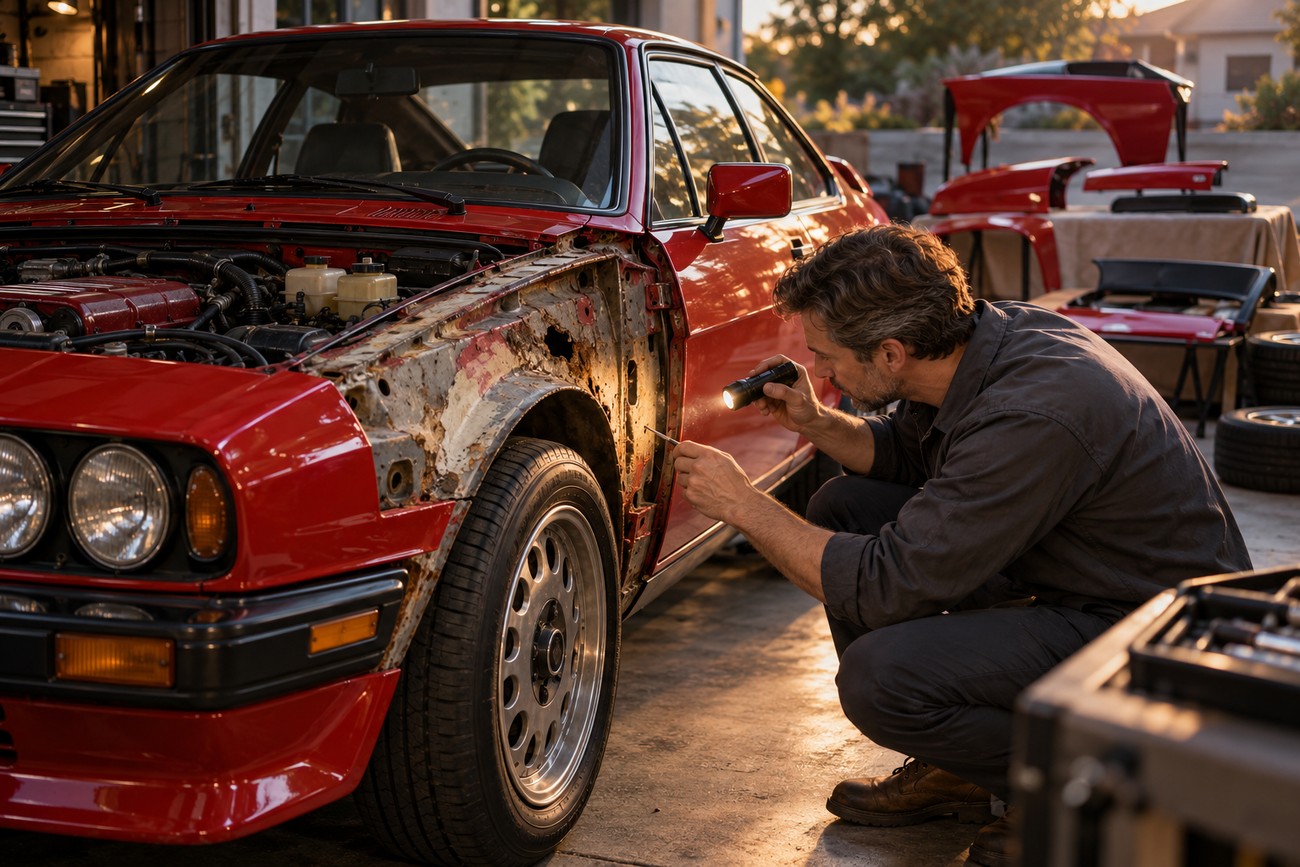
Age and corrosion are the central risks. A shiny exterior can conceal rust beneath the body, around structural areas, or underneath layers of filler and paint. Earlier cars can also carry poor-quality accident repairs, where panel alignment and fresh paint disguise more serious work.
Body parts and trim can be difficult to source, especially for early GTV6 cars. Replacement panels may be rare or expensive, and restoring originality adds another layer of cost when a car has accumulated aftermarket parts or incomplete repairs. A minor-looking exterior defect can therefore become a substantial ownership issue.
Owners commonly report aging electrical systems, deteriorated rubber, and brittle plastic components. These faults may appear individually, yet several small failures can make the car unreliable and difficult to diagnose. The cabin also deserves attention: a healthy engine cannot compensate for a tired interior, damaged controls, or missing trim.
The suspension and drivetrain reveal how the car has been used. A good V6 sound says little about worn dampers, bushes, clutch components, driveshafts, or transaxle wear. Hard use and deferred maintenance often arrive together, particularly when a previous owner treated the car as a cheap sports coupe.
These are reported ownership complaints rather than automatic defects in every car. Condition varies widely. The important point is that a strong engine note should start an inspection, not end it.
What to Check Before Buying One
Begin with the shell, underside, and structural areas before starting the engine. Inspect corrosion carefully, look for uneven panel gaps, compare paint texture across panels, and search for signs of filler or overspray. A lift is preferable because an attractive car can hide serious deterioration below the visible bodywork.
Next, examine previous accident repairs. Inconsistent seams, mismatched finishes, and poorly positioned brackets can indicate work that was completed for appearance rather than long-term integrity. Documentation, photographs of restoration, and invoices are more useful than a seller’s description alone.
Only then evaluate the V6. It should start, idle, and respond cleanly, while the cooling system deserves careful attention during a full warm-up. Listen for driveline noises under load and overrun, test the clutch for smooth engagement, and check every gear rather than accepting a short, gentle drive.
Inspect the driveshafts, suspension, and steering for age-related wear, then test the electrics methodically. Lights, gauges, windows, ventilation, and switches can expose deferred maintenance quickly. V6 servicing also requires experienced diagnosis and adjustment; a generic garage may miss faults or apply the wrong assumptions.
An undocumented car needs a realistic budget for scarce parts, restoration, and originality work. If the seller cannot show meaningful service history, treat the purchase price as the beginning of the calculation. Emotion is useful for choosing a GTV6; it is a poor substitute for evidence.
Living With a GTV6: Romantic Classic or Expensive Project?
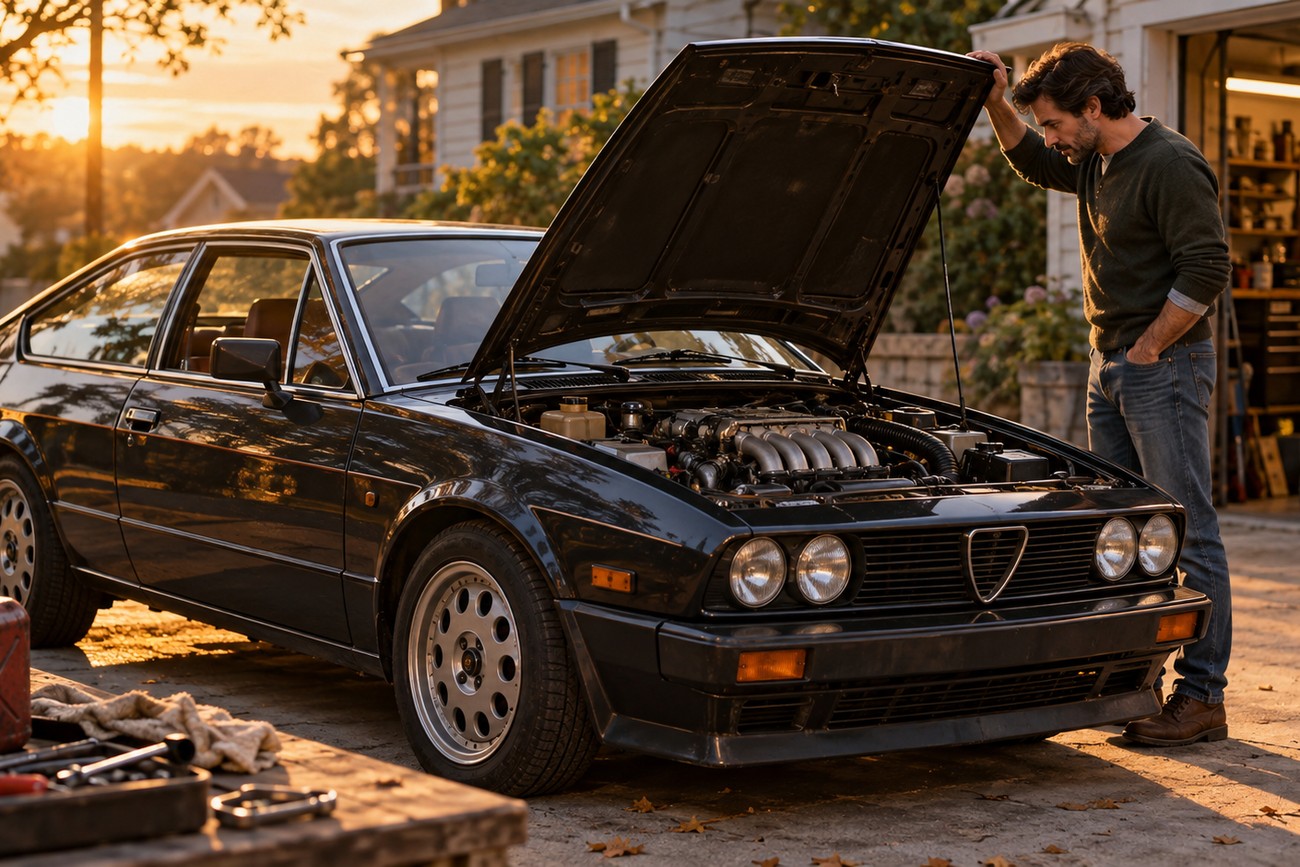
The GTV6 works best as an enthusiast classic with a clear purpose. It offers a memorable engine, rear-wheel-drive balance, and an engaging mechanical feel, yet it does not provide modern refinement or the easy parts supply of a newer coupe. Noise, vibration, and limited practicality are part of the ownership bargain.
Fuel consumption is another compromise. V6 versions are associated with high fuel use, and the later GTV 2.0 V6 TB is listed at 16.6 L/100 km in urban driving. The 1980s GTV6 figures vary with condition, driving style, and specification, but buyers should not approach the car expecting economy.
Maintenance can also cost substantially more than the purchase price suggests. Specialist labor, scarce body components, electrical troubleshooting, and restoration of original trim may arrive in sequence rather than as one predictable bill. Regular attention is usually cheaper than allowing several systems to deteriorate together.
The sensible decision rule is simple: buy the best-documented shell and drivetrain you can afford, not the cheapest car with the best noise. A more expensive usable example may be the less costly route to ownership. A project can still make sense, provided its corrosion, parts supply, and total restoration scope are understood before purchase.
The Biggest GTV6 Myths, Corrected
GTV6 is not a generic name for every Alfa Romeo GTV with a V6. It most strongly denotes the Alfetta-based 3-door fastback produced from 1980 to 1987, with rear-wheel drive and a rear-mounted transaxle. Later 1990s–2000s GTV V6 models are separate cars.
The engine story is broader than one specification. The 1980s road-going GTV6 is principally associated with the 2.5-litre V6, while references also exist for GTV6 3.0 versions. Later GTV models added 2.0 V6 turbo, 3.0 V6 24V, and 3.2 V6 engines, each belonging to a different generation and specification.
Published power figures should therefore be tied to the exact engine and market version. The 160 hp figure describes the 2492 cm³ 2.5-litre road engine; approximately 210 hp commonly refers to a 3.0-litre GTV6 reference. Treating the numbers as contradictory errors creates confusion where version differences explain the result.
The final myth is that the sound makes the car a safe purchase. It does not. The best GTV6 is the one with a sound shell, properly maintained transaxle, and credible history; the soundtrack is the reward for finding that car.
Frequently asked questions
The name, styling reputation, and quoted power figures often cause confusion because several Alfa Romeo coupes share related terminology. These answers separate the commonly used descriptions from the specific cars behind them.
What does the GTV6 name actually refer to?
GTV6 most strongly refers to the Alfetta-based Alfa Romeo fastback produced from 1980 to 1987. It is a 3-door, rear-wheel-drive coupe with a rear-mounted transaxle and a V6, principally the 2492 cm³ 2.5-litre engine.
The badge should not be used as a blanket term for every later Alfa Romeo GTV with a V6. The later GTV 2.0 V6 TB, GTV 3.0 V6 24V, and GTV 3.2 V6 are separate-generation cars with different platforms and engines.
Which Alfa Romeo is considered the most beautiful?
There is no official single answer to which Alfa Romeo is the most beautiful. Enthusiast opinion varies with period, designer, proportions, and personal taste, which is why the GTV6’s low fastback shape has a strong reputation without holding a universal beauty ranking.
The GTV6 is admired for combining compact dimensions with a long bonnet, a low roofline, and distinctive period details. Its appeal is subjective, while its condition is measurable; styling reputation should never replace an inspection.
How much horsepower does an Alfa Romeo GTV6 engine have?
The 1980s GTV6 2.5 uses a 2492 cm³ V6 rated at 160 hp and approximately 213 Nm. References to approximately 210 hp generally describe a GTV6 3.0 version, not the standard 2.5-litre road engine.
Sources can also list 2934 cm³ or 2959 cm³ for the 3.0 depending on version or catalogue. Later GTV V6 figures, including 202 hp for the 2.0 V6 TB and 218–225 hp for the 3.0 V6 24V, belong to different cars and should not be merged with the 1980s GTV6 specification.







