
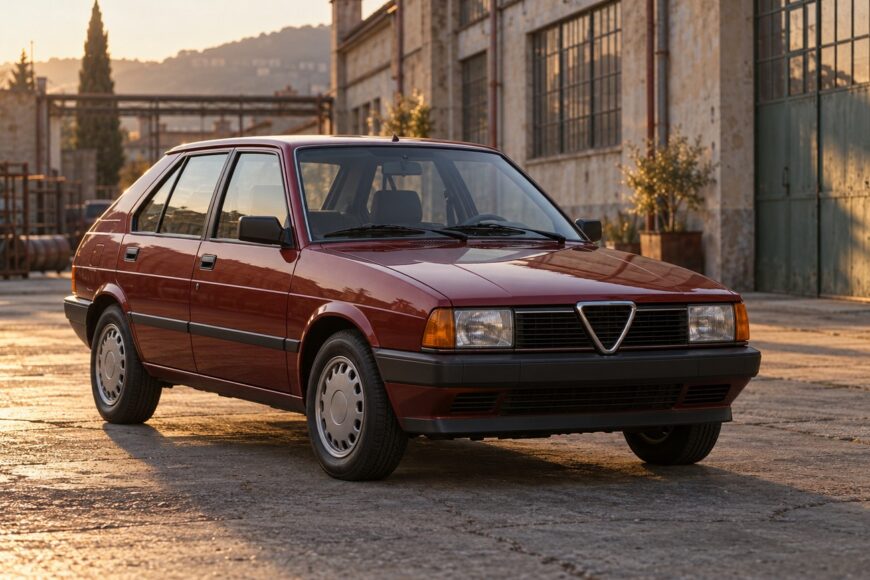
The Alfa Romeo Arna seemed to offer a sensible formula: Japanese practicality, an affordable hatchback body, and an Alfa Romeo boxer engine under the hood. For buyers in the early 1980s, that combination promised everyday usability without abandoning the character associated with the Italian badge.
The reality was more complicated. The Arna was a joint project with a largely Nissan-derived body and platform, while its petrol powertrain came from Alfa Romeo. It could serve as a useful family hatchback, yet many buyers expected sharper steering, more distinctive handling, and a stronger sense of occasion. The central question is whether the Arna was a bad car or a car that failed its badge.
- Why Alfa Romeo and Nissan built the Arna
- What was Nissan, and what was Alfa, under the skin?
- Why it did not feel like the Alfa buyers expected
- Why the collaboration became a commercial flop
- The restoration trap: rust, rare trim, and misleading parts matches
- Is the Arna worth preserving today?
- Frequently asked questions
- What does the name Arna stand for?
- Was there a Nissan-badged counterpart to the Arna?
- Was the Alfa Romeo Arna officially sold in the United States?
- What records help establish a surviving Arna’s originality?
Why Alfa Romeo and Nissan built the Arna
Alfa Romeo needed an affordable hatchback that could bring new customers into the brand. Its larger and sportier models carried more emotional appeal, but a compact family car offered access to a wider European market. The Arna was conceived as an entry-level Alfa with practical packaging and lower production costs.
Nissan brought experience with compact front-wheel-drive cars, along with the body and much of the underlying structure. Alfa Romeo supplied the boxer powertrain and the brand identity. In theory, the arrangement allowed each company to contribute what it did best without developing an entirely new car alone.
The collaboration produced a car built in Italy from 1983 to 1987. Its place in the European family-hatchback market was clear, even though its exact competitive positioning varied by country and period source. Buyers could see the Arna as a rational alternative to established compact cars, while Alfa hoped its badge and engine would add distinction.
That division of responsibilities also created the model’s central weakness. A driver experiences a car as one object, not as a collection of separately sourced components. The engine might suggest Alfa Romeo, while the controls, cabin, body, and road manners could suggest a more ordinary compact hatchback.
What was Nissan, and what was Alfa, under the skin?
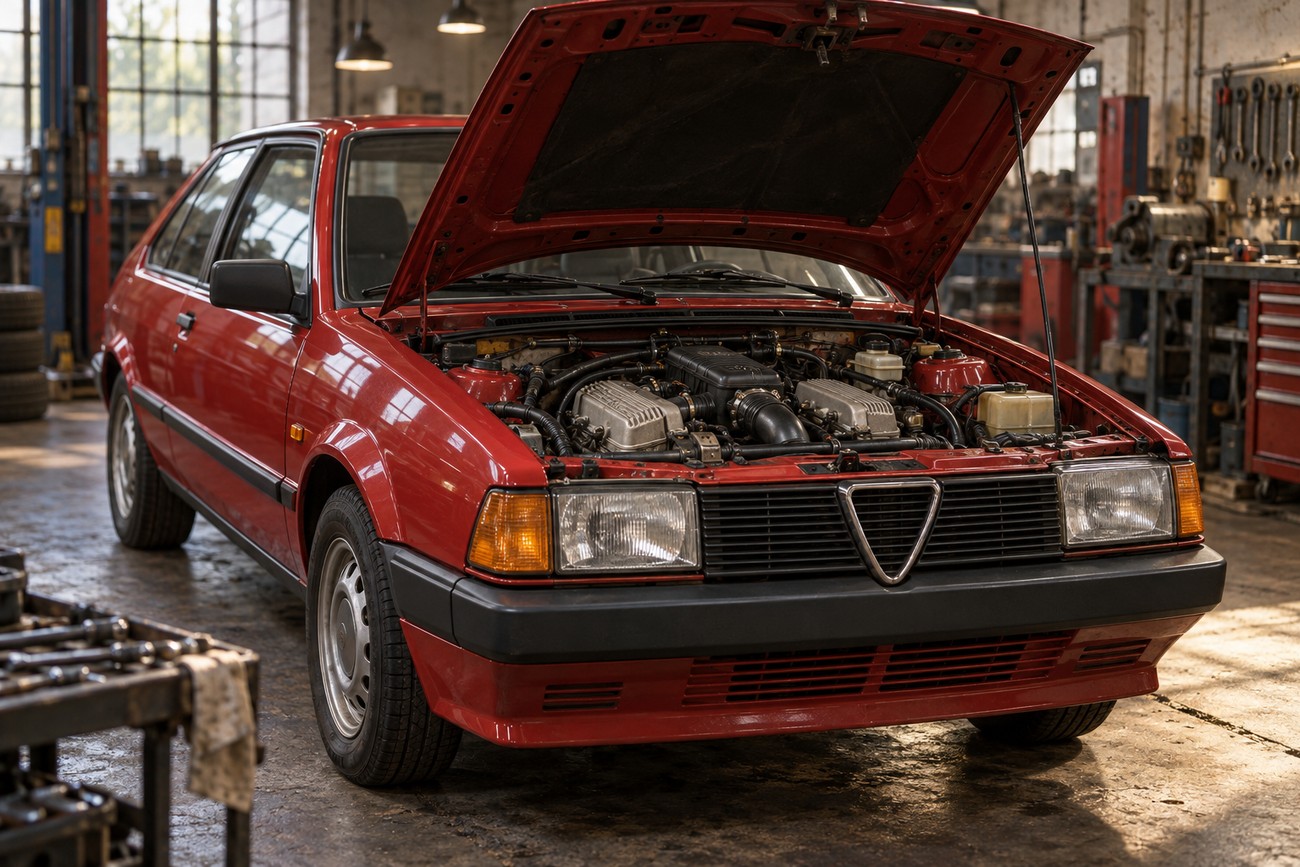
The Arna was not simply a Nissan with an Alfa Romeo emblem attached. Its body and much of its structure were Nissan-derived, with links to the Cherry and Pulsar family, while Alfa Romeo supplied the petrol boxer powertrain. That makes the car a genuine hybrid rather than a straightforward rebadge.
Reported versions used 1.2- and 1.3-liter petrol boxer engines. Output is generally given as roughly 63–79 hp, with top speeds of approximately 150–170 km/h depending on the version and market. Those figures describe a modest compact car of its period, rather than a small sports car.
The boxer layout gave the Arna a mechanical identity that ordinary Nissan relatives did not share. It also brought a characteristic engine note and useful performance higher in the rev range. For daily driving, the powertrain could be serviceable when maintained correctly, especially compared with more complicated performance-oriented Alfa models of the same era.
Parts research requires more care than the shared ancestry might suggest. Nissan Cherry or Pulsar origins do not establish direct interchangeability, and a part that looks similar may differ in dimensions, mounting points, trim, or specification. The VIN, the individual component, and the details of how it fits the specific car matter more than a broad catalog description.
Why it did not feel like the Alfa buyers expected
Many owners describe the Arna’s handling and overall feel as less engaging than they expected from an Alfa Romeo. The steering, chassis response, and cabin atmosphere could seem ordinary beside the sharper image of the brand. The boxer engine supplied some character, yet the rest of the car did not always deliver the same level of involvement.
Reported complaints also include inexpensive-looking plastics, disappointing interior finish, and awkward or dated ergonomics. Noise and vibration are recurring themes in owner discussions, particularly when a modern driver compares the car with a newer compact hatchback. These impressions are subjective, and condition varies widely, but they explain why the badge created expectations the car struggled to meet.
The Arna remained capable of ordinary transport. Its hatchback layout, compact dimensions, and relatively simple mechanical arrangement suited commuting and light family use. A well-maintained example could be useful rather than disastrous, provided its owner judged it as an early-1980s economy hatchback with an Alfa engine.
That distinction matters when assessing mechanical reputation. Disappointment with the steering, cabin, or road manners does not prove wholesale mechanical failure. The Arna’s problem was often the distance between what the driver felt and what the Alfa Romeo name appeared to promise.
Why the collaboration became a commercial flop
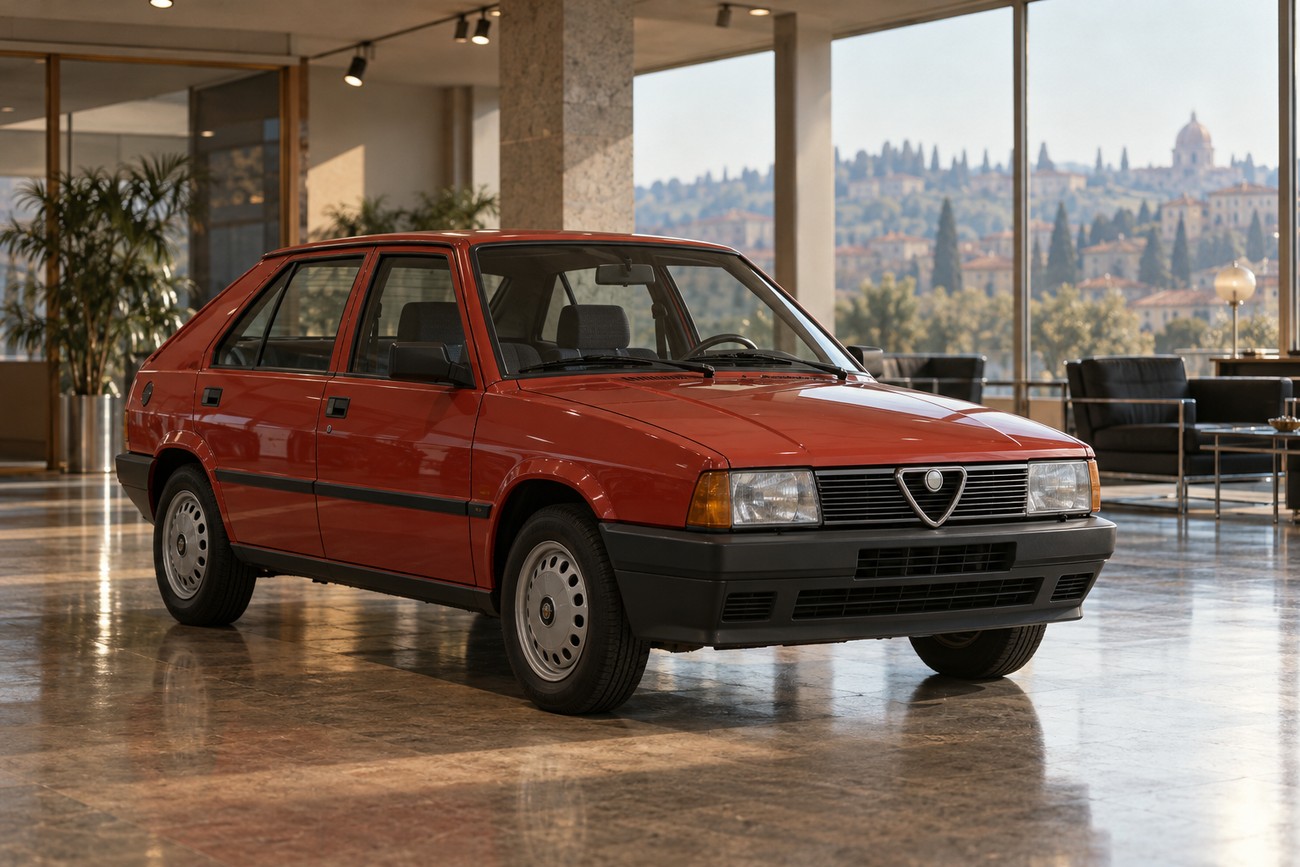
The Arna’s limited appeal came from a difficult combination of image and product character. Customers attracted by Alfa Romeo expected a degree of visual and dynamic distinction, while buyers seeking rational Japanese-style practicality could compare the car with more established compact models. The Arna occupied an uncertain middle ground.
Approximately 53,000 cars were built across the 1983–1987 production run. That is a small number for a model intended to broaden a major automotive brand’s reach. Production volume alone does not prove why the car failed, but it helps explain why the Arna became a footnote rather than a familiar part of the European car landscape.
The model is widely remembered as a commercial and image failure. Some observers place greater weight on the mismatch between marketing expectations and the finished car than on any single mechanical defect. That remains an interpretation rather than a settled ranking of causes, since product quality, market timing, styling, and brand expectations all influenced the result.
The failure also says little about Japanese engineering as a whole. The Nissan-derived elements were part of an attempt to control cost and create a practical compact car. The difficulty was the way those elements interacted with Alfa Romeo’s badge, boxer engine, and enthusiast reputation. Engineering logic could not by itself resolve that contradiction.
The restoration trap: rust, rare trim, and misleading parts matches
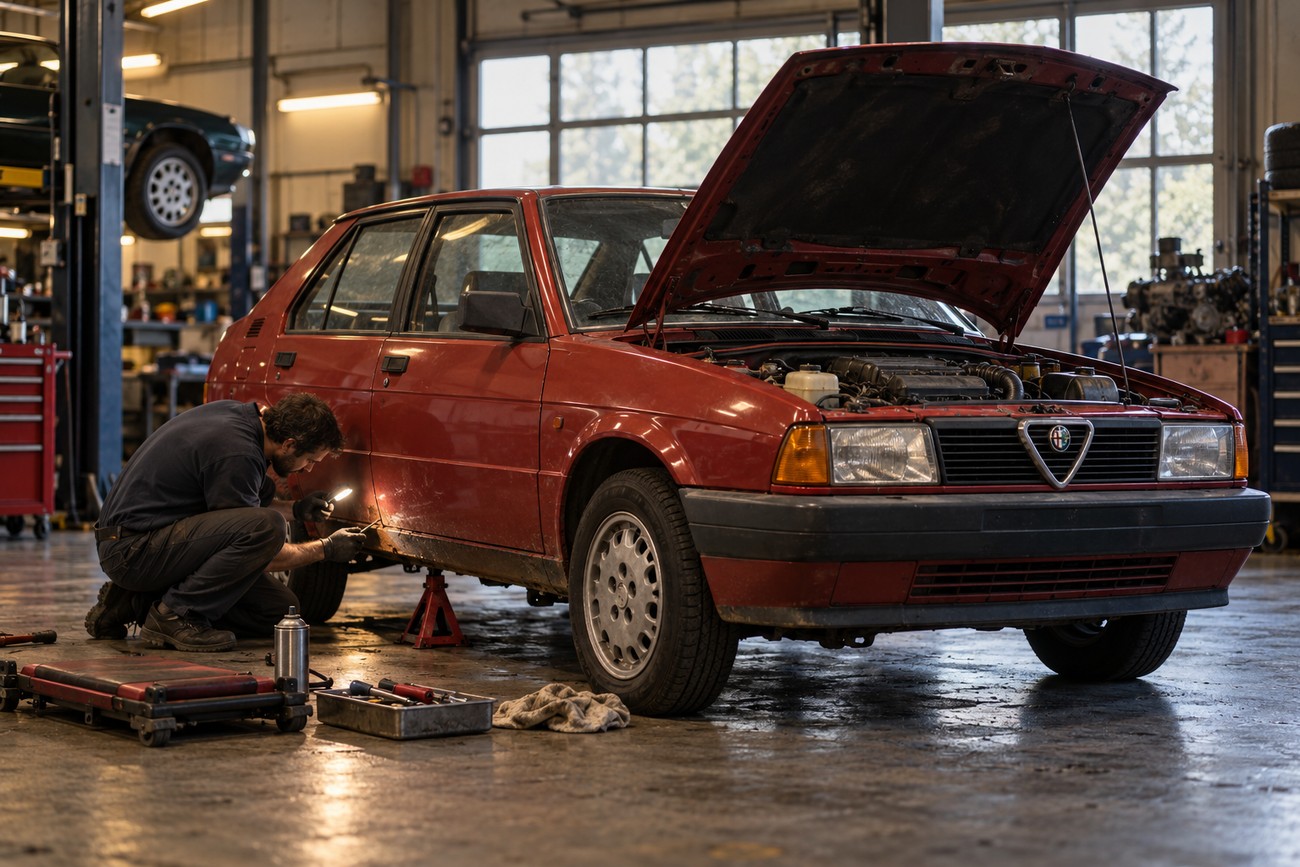
Rust deserves priority over the engine when inspecting a surviving Arna. Check the sills, wheel arches, floor sections, and suspension mounting areas before being reassured by a boxer that starts and idles. Corrosion in structural areas can turn a superficially cheap project into extensive fabrication, while cosmetic damage may conceal wider weakness.
Once the shell has been assessed, examine the interior, glass, lights, bumpers, moldings, and model-specific fittings. Body and cabin pieces can be scarce because production was limited and few cars were retained as donors. An incomplete car may therefore cost less to buy while costing substantially more to return to a correct, usable condition.
The mixed construction complicates parts searches. Nissan ancestry can help identify a possible source, yet it does not make every Cherry or Pulsar component a direct replacement. Catalog names may also vary by market, so check a photograph, the original part, mounting details, and the car’s identification number before ordering.
Engine work is usually easier to plan than body restoration because a conventional workshop can diagnose and repair basic mechanical faults. That advantage can mislead buyers who focus on compression, oil leaks, or a running motor while overlooking missing trim and weakened structure. A sensible budget includes bodywork, specialist searches, and the possibility of custom repair work.
Passive safety and corrosion protection also reflect the car’s period. A surviving Arna should be treated as an early-1980s classic, with appropriate expectations about crash protection and long-term body durability. Those limitations matter during inspection and when deciding whether the car is suitable for regular modern traffic.
Is the Arna worth preserving today?
The Arna makes most sense as a document of an unusual industrial partnership. It shows an attempt to combine Japanese platform discipline with an Italian powertrain and a recognizable European brand. That historical story is stronger than the claim that the car provides a cheaper route to the experience of an Alfa Romeo GTV or Spider.
Rarity adds interest, yet it does not automatically create broad collector demand. The model’s reputation as a curiosity can limit its appeal outside a narrow group of Alfa Romeo, Nissan, and automotive-history enthusiasts. A neglected example may remain difficult to sell even after significant restoration work.
Condition and originality are therefore more important than a low odometer reading. Correct trim, original equipment, an intact interior, and a sound body may matter more to a collector than an apparently small mileage figure. A car with imperfect cosmetics but complete, authentic parts can be a better preservation candidate than a heavily modified project.
An original, structurally sound Arna can reward an informed enthusiast who accepts its ordinary hatchback manners and plans maintenance carefully. Rarity alone does not make a neglected car a sound investment. The strongest purchase is usually the most complete example with evidence of careful preservation, access to knowledgeable owners, and enough patience for model-specific parts searches.
Frequently asked questions
The Arna’s name and its relationship to the Nissan Cherry Europe can make period records and parts listings confusing. Its European-market history also matters when assessing a car found in the United States. For surviving examples, documentation can help establish identity and originality.
What does the name Arna stand for?
Arna expands to Alfa Romeo Nissan Autoveicoli. The name identifies the joint venture and is not a trim level, engine designation, or separate Nissan model name.
That distinction is useful when searching period documents and parts references. A listing may describe the car through its Alfa Romeo identity, its Nissan-related construction, or a market-specific catalog term, so the full venture name helps connect otherwise inconsistent records.
Was there a Nissan-badged counterpart to the Arna?
The related Nissan model was known as the Nissan Cherry Europe. It belongs to the same broad collaboration story, but it should not be treated as identical in every detail to an ordinary Nissan Cherry.
Market, equipment, body, and component differences can affect parts compatibility. A Cherry reference may provide a lead, but the individual part still requires verification against the Arna before purchase or installation.
Was the Alfa Romeo Arna officially sold in the United States?
The Arna was not officially marketed as a new car in the United States. Its principal context was the European market, where compact hatchbacks and the Alfa Romeo brand occupied a different commercial landscape.
A car later imported privately should therefore be assessed as an individual gray-market or collector vehicle, with its own documentation and parts history. Its presence in the United States does not mean it had normal local dealer support when new.
What records help establish a surviving Arna’s originality?
Useful evidence includes registration history, identification numbers, period specifications, and dated photographs. These records can confirm the car’s identity, equipment, color, and changes made during its life.
Invoices, old inspection documents, and photographs of the interior or engine bay can also help distinguish an original survivor from a car assembled from mixed parts. For a rare model, that paper trail may be as valuable as a claimed mileage figure.







